
Stress Accumulation: How Daily Micro-Stress Builds Into Burnout
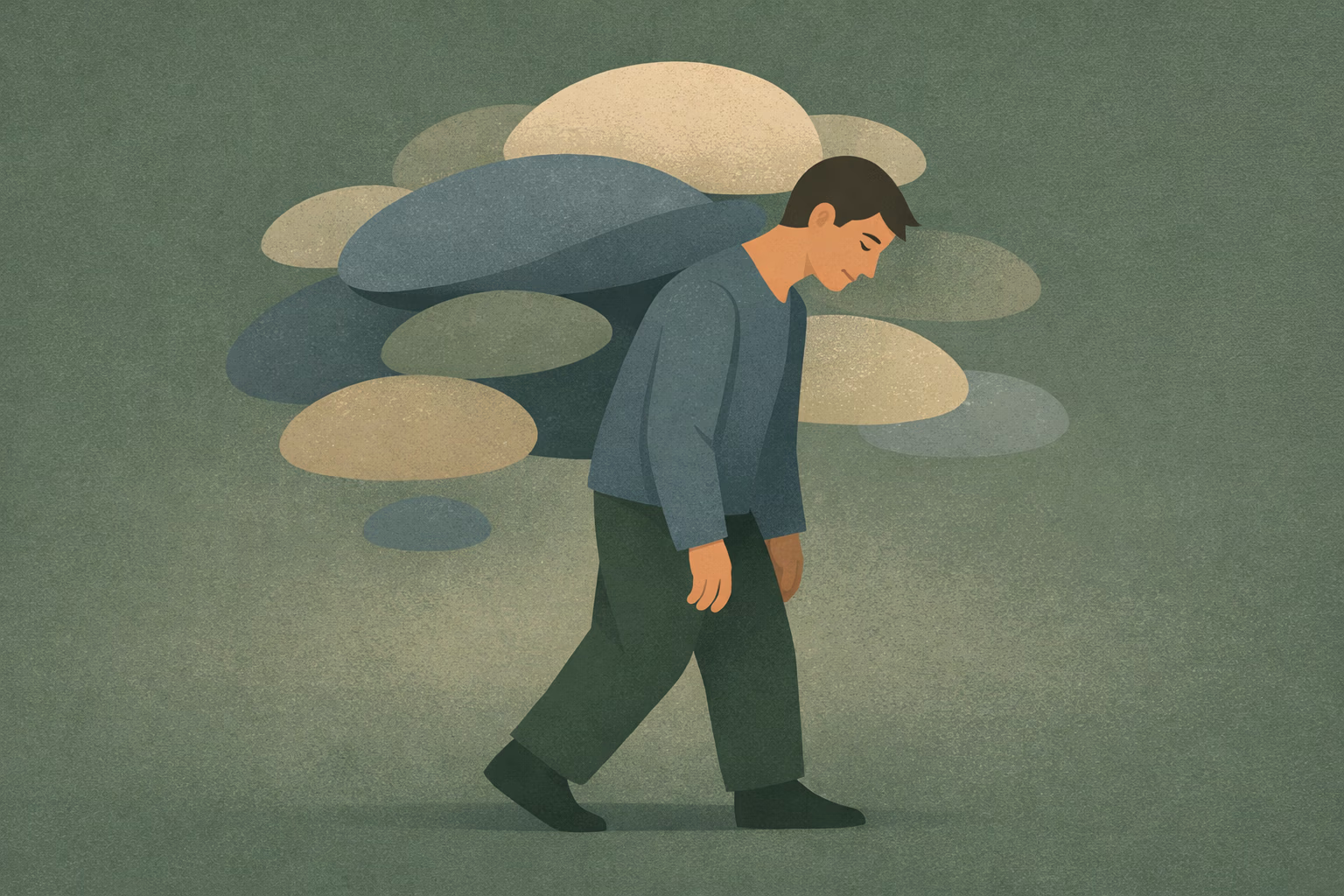
In short: The sense that everything takes more effort than it should. You might still be functioning—showing up, replying, doing what needs to be done—yet internally it can feel like you’re carrying something you can’t set down.
Emotional weight often shows up as a quiet, persistent heaviness: the sense that everything takes more effort than it should. You might still be functioning—showing up, replying, doing what needs to be done—yet internally it can feel like you’re carrying something you can’t set down.
What if that heaviness isn’t your personality—just your nervous system holding unfinished strain?
In modern life, many experiences don’t get a clean “done” signal. When strain can’t complete—through resolution, repair, or clear endings—it can remain as background load. This isn’t about being dramatic or fragile. It’s about how human systems conserve safety and continuity when closure isn’t available.
Emotional weight can be hard to describe because it isn’t always tied to one clear event. It can feel like moving through the day with a mild gravity: getting dressed takes effort, conversations feel taxing, and even pleasant plans can carry a faint sense of drag.
What makes it confusing is the mismatch between the moment and the effort. On the outside, life may look stable. On the inside, the system is spending energy managing something that hasn’t fully settled.
This kind of heaviness is often the lived experience of ongoing regulation—your body and brain continually balancing demands, scanning for risk, and keeping you organized enough to continue. Over time, that balancing act adds up. [Ref-1]
When experiences don’t reach completion, they tend to remain “open” in the system. Not necessarily as vivid memories or intense feelings, but as a steady need to monitor, brace, and stay ready. That readiness costs energy.
Biologically, this is part of allostatic load: the cumulative wear of staying adapted to stressors without sufficient stand-down and recovery. Burnout isn’t only about too much work; it’s also about too much ongoing internal load—too few true endings. [Ref-2]
Emotional weight, in this sense, is not mysterious. It’s what it can feel like to run many small background processes at once: vigilance, restraint, impression management, conflict monitoring, self-correction, and “holding it together” without a clear release point.
From an evolutionary perspective, it makes sense that unresolved strain lingers. If something important is incomplete—an interpersonal rupture, a loss without acknowledgment, a situation with unclear stakes—the safest approach isn’t always immediate discharge. Often it’s sustained readiness until conditions change.
That readiness can be subtle: a slightly elevated baseline, a narrower attention field, less spontaneity. Over time, it can create the felt sense of internal heaviness because the system is allocating resources toward protection and continuity.
Chronic stress also changes how the body responds to new stressors—sometimes making the response bigger, sometimes blunting it—because the baseline has already shifted. The result isn’t “weakness.” It’s adaptation under load. [Ref-3]
Many people carry emotional weight because it helped them continue. When expression, repair, or resolution felt risky—socially, financially, relationally, culturally—your system found another route: containment.
Containment is not a character flaw. It’s a survival-compatible strategy: keep functioning, keep connected, keep stable. The cost is that what couldn’t complete stays active in the background, requiring ongoing regulation.
Over time, this can shape the brain and body toward a more defended baseline—less flexible, more effortful—especially when there’s little space for recovery or closure. [Ref-4]
Sometimes “I’m fine” doesn’t mean nothing happened. It means your system learned how to keep going anyway.
One of the hardest parts is normalization. When heaviness builds gradually, it can start to feel like a personality trait or the natural cost of adulthood. People may assume: life is supposed to feel like this; everyone is tired; ease is for other people.
But emotional weight often reflects accumulated experience without enough closure points: disappointments without repair, grief without room, chronic uncertainty, prolonged self-monitoring, or years of being evaluated.
Stress biology doesn’t only react to acute danger. It reacts to prolonged ambiguity and persistent demand—especially when your system can’t locate a clear endpoint. [Ref-5]
Emotional weight often grows inside an avoidance loop—but not in the simplistic sense of “avoiding feelings.” More often, it’s structural: postponing completion because the environment doesn’t offer enough safety, time, privacy, support, or consequence-resolution to finish what was started.
In this loop, the system learns a practical rule: later. Later to process. Later to address. Later to name. Later to repair. Later to rest. Later to grieve. Each “later” is understandable—but it can also keep the internal ledger open.
Over time, the body can hold these incomplete loops as tension patterns, muted needs, and persistent readiness—an embodied form of unfinished business rather than a conscious choice. [Ref-6]
What if your “stuckness” is simply a lack of completion, not a lack of effort?
Emotional weight rarely announces itself as a clear emotion. It more often appears as a change in capacity—less margin, less bounce-back, less openness to the day.
It can look like:
These experiences connect to how the brain interprets body signals (interoception). When the body is carrying ongoing load, the brain often reads the world through that load—making everything feel more effortful and less spacious. [Ref-7]
As emotional load becomes chronic, the nervous system can shift toward protection. That doesn’t always look like panic. Sometimes it looks like flatness, disconnection, or a narrower range of engagement.
In this state, cues of safety—warmth in a conversation, a calm evening, a supportive message—may not land fully. Not because you don’t care, but because the system is busy maintaining baseline stability.
Frameworks that focus on safety and social engagement describe how physiology changes when the system perceives threat or overwhelm: digestion, breath, voice, and attention can all shift. These are not moral outcomes; they are state outcomes. [Ref-8]
As strain accumulates, the distance to relief can feel longer. This is one of the quiet cruelties of emotional weight: the heavier it gets, the harder it becomes to imagine a lighter internal state—even if nothing “new” is happening.
Structurally, that makes sense. When completion is repeatedly postponed, the system learns that endings are unreliable. The body stays partially mobilized or partially braced because it has evidence that stand-down isn’t safe yet.
In that context, quick forms of relief can become more appealing—not because of poor self-control, but because the system is looking for a state change when closure is unavailable. And when strain is carried alone, load tends to concentrate rather than distribute. Social buffering—the calming effect of safe connection—can reduce stress responses, which is one reason isolation often makes heaviness worse. [Ref-9]
Emotional weight often becomes personal in the most painful way: people interpret it as a defect. But heaviness is frequently a signal of responsibility without completion—care given without restoration, conflict managed without resolution, loss endured without acknowledgment, pressure sustained without a true endpoint.
This is where meaning matters—not as positive thinking, but as orientation. When the mind can locate what the system has been carrying, the burden becomes more intelligible. Not instantly lighter, but less confusing. Confusion increases load; coherence reduces it.
Importantly, understanding is not the same as integration. Integration is what happens when the system finally receives enough completion to stand down—when the body stops spending energy on maintaining the loop. Conditions like belonging and connection can influence perceived isolation and physiological stress, which affects how heavy life feels from the inside. [Ref-10]
Humans regulate in relationship. When someone else can reliably share the emotional space—without fixing, evaluating, or escalating—it changes the math of the nervous system. The load becomes distributed instead of privately contained.
This isn’t about confessing everything or performing vulnerability. It’s about not having to carry the entire regulatory job alone. A steady relational context can support self-trust returning over time: the sense that your signals make sense, that your experience is trackable, that you don’t need to override yourself to stay connected. [Ref-11]
It’s not that another person “saves” you. It’s that your system finally gets evidence that it doesn’t have to do all the holding by itself.
When emotional weight begins to reduce, the first change is often not dramatic happiness. It’s room. A bit more breath between moments. A little less bracing. More flexibility in attention.
People may notice ordinary markers of restored capacity:
Self-compassion research often points to a reduction in harsh self-attack and an increase in steadiness under difficulty. That steadiness is less about “feeling more,” and more about having enough safety and closure to stay organized inside stress. [Ref-12]
Emotional weight doesn’t only drain energy; it narrows orientation. When you’re carrying a lot, life becomes about getting through—maintaining, managing, preventing. Meaning can feel distant, not because you don’t have values, but because there isn’t enough internal bandwidth to live them.
As load decreases, attention tends to come back online for what matters: relationships, creativity, contribution, play, spiritual life, learning, rest. Identity becomes less about coping and more about direction—who you are when you aren’t bracing.
Attachment research and related work on self-care pathways suggest that secure connection and kinder internal relating support healthier regulation over time—conditions that make it easier to orient toward care and meaning rather than constant protection. [Ref-13]
Not “Who should I be?” but “What is my life trying to be about once I’m not carrying so much?”
If you’ve been carrying an invisible load, it likely formed for a reason: to help you function when completion wasn’t available. In that light, emotional weight isn’t proof that you’re broken. It’s proof that your system adapted to keep you moving.
And because it’s an adaptation, it can change when conditions change—especially when strain is allowed to resolve and redistribute instead of remaining privately contained. Freeze and shutdown responses are not choices so much as protective state shifts when the system gets flooded or trapped without exits. [Ref-14]
Agency, here, is less about forcing yourself into positivity and more about recognizing what has been carried, what has been unfinished, and what kinds of endings your system has been missing.
Heaviness is not a verdict. It’s a sign of load—and load is responsive to completion. When the nervous system has been flooded for a long time, shutdown can look like numbness or exhaustion, but it’s still an intelligent attempt to protect what matters. [Ref-15]
As weight gradually eases, many people don’t become “new.” They become more available to themselves: more room to move, more clarity about what fits, and more capacity to live from meaning instead of endurance.
From theory to practice — meaning forms when insight meets action.
Because emotional weight isn't always tied to a clear event. The article describes it as moving through the day with mild gravity — getting dressed takes effort, conversations feel taxing, even pleasant plans carry a faint drag. The mismatch between the moment and the effort is what makes it confusing. Outside, life looks stable. Inside, the system spends energy managing something that hasn't fully settled. This is the lived experience of ongoing regulation — your body and brain continually balancing demands, scanning for risk, keeping you organized enough to continue. That balancing act adds up as allostatic load: the cumulative wear of staying adapted without sufficient stand-down.
No — the article reframes it as evidence of endurance. Many people carry weight because containment helped them function when expression, repair, or resolution felt risky. Containment isn't a character flaw; it's a survival-compatible strategy. The cost is that what couldn't complete stays active in the background, requiring ongoing regulation. 'I'm fine' often doesn't mean nothing happened — it means your system learned how to keep going anyway. Heaviness is proof your system adapted to keep you moving. And because it's an adaptation, it can change when conditions change, especially when strain is allowed to resolve and redistribute instead of remaining privately contained.
Because heaviness builds gradually and gets normalized. The article points to this trap directly: when weight accumulates over years, it can start feeling like a personality trait or the natural cost of adulthood. People assume life is supposed to feel like this; everyone is tired; ease is for other people. But emotional weight often reflects accumulated experience without enough closure points — disappointments without repair, grief without room, chronic uncertainty, prolonged self-monitoring. Stress biology doesn't only react to acute danger. It reacts to prolonged ambiguity and persistent demand, especially when the system can't locate a clear endpoint.
More room, not more intensity. The article is specific about this: the first change usually isn't dramatic happiness — it's room. A bit more breath between moments, less bracing, more flexibility in attention. Less effort to start small tasks. More ease in transitions. A softer internal tone. Greater ability to receive support without immediately tensing. Self-compassion shows up as reduction in harsh self-attack and increased steadiness under difficulty. As load decreases, attention comes back online for what matters — relationships, creativity, contribution, play. Identity becomes less about coping and more about direction. Who you are when you aren't bracing.
From Science to Art.
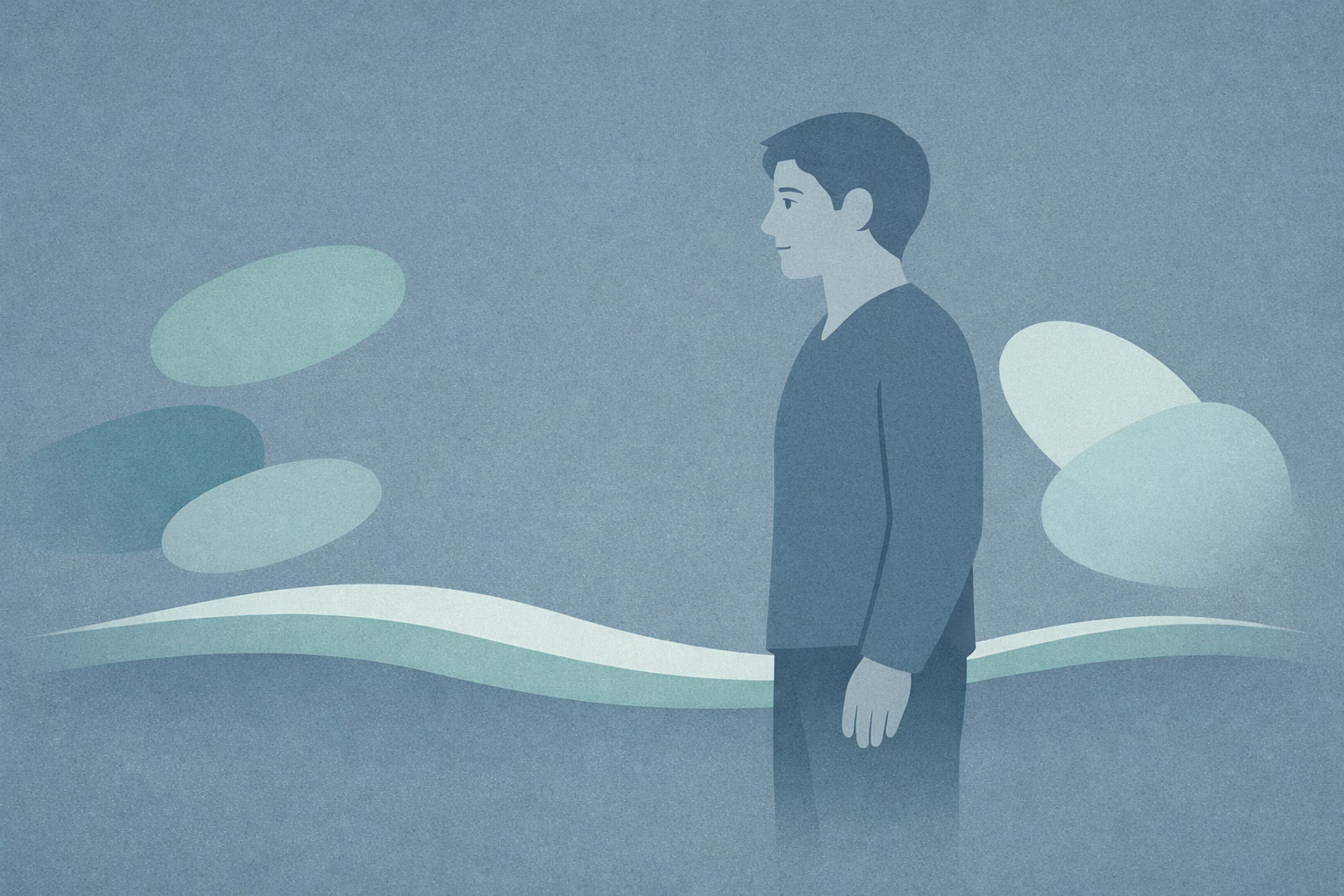
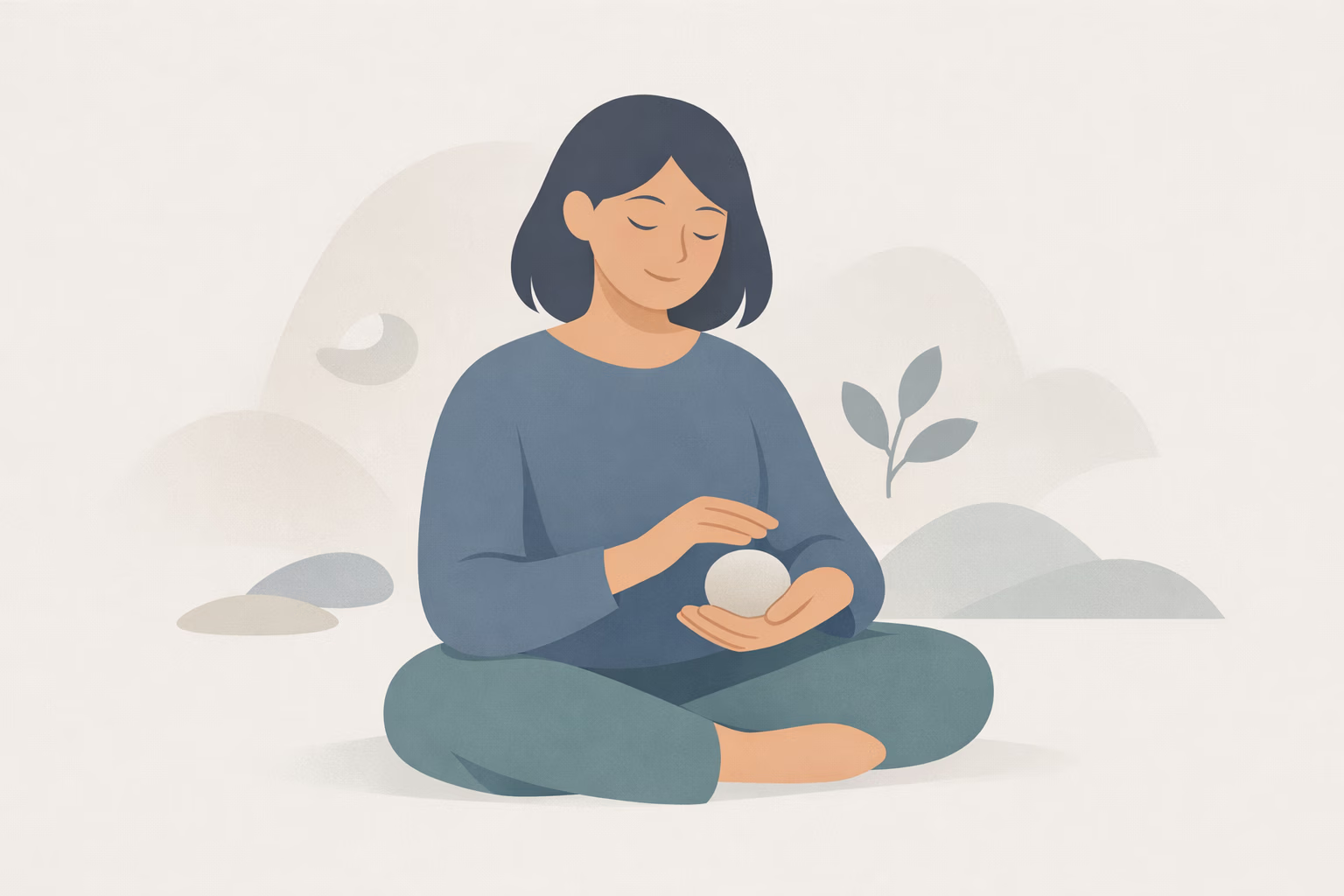
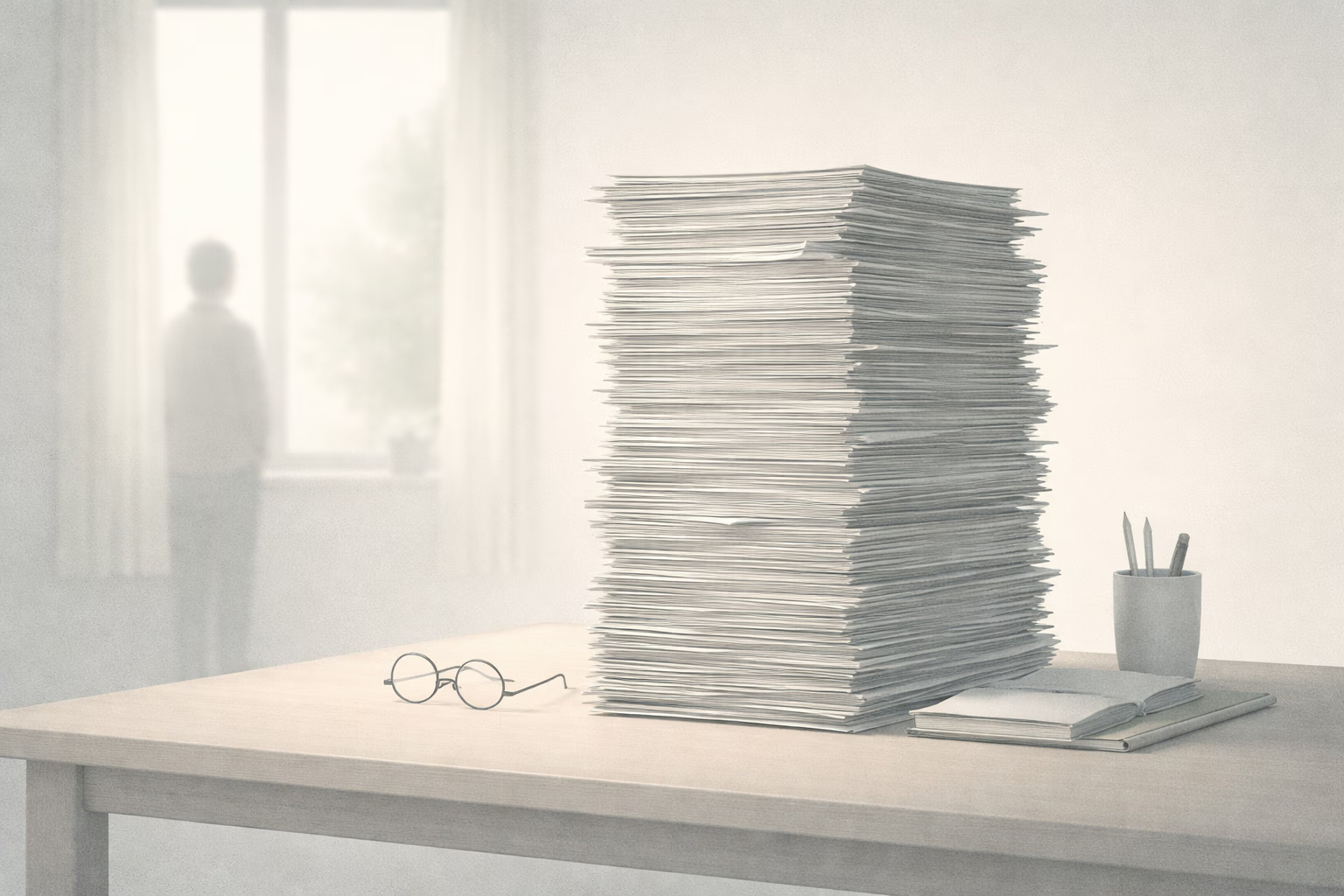
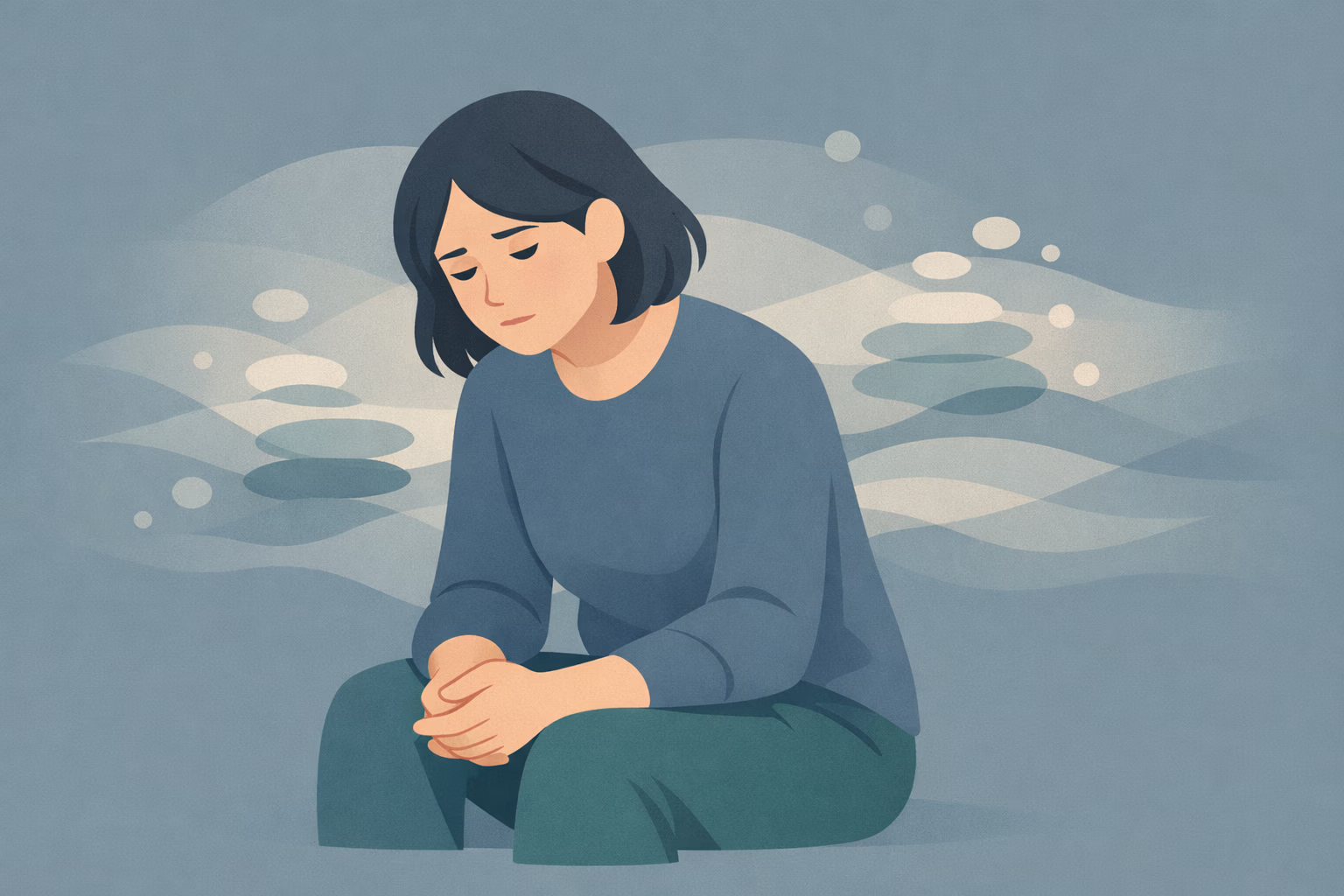
Understanding explains what is happening. Art allows you to feel it—without fixing, judging, or naming. Pause here. Let the images work quietly. Sometimes meaning settles before words do.
One Quiet Window, one insight, one reflection — every Sunday