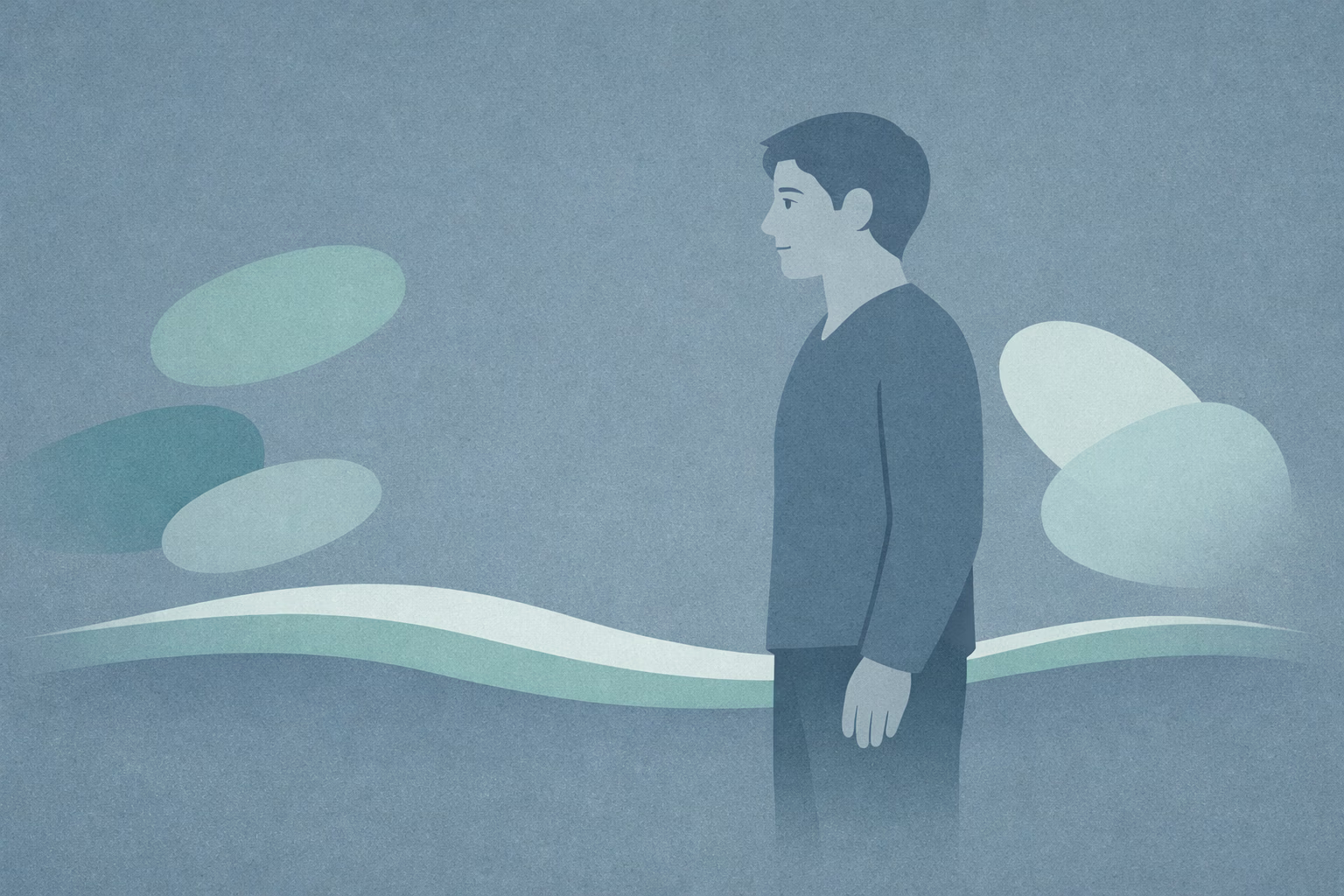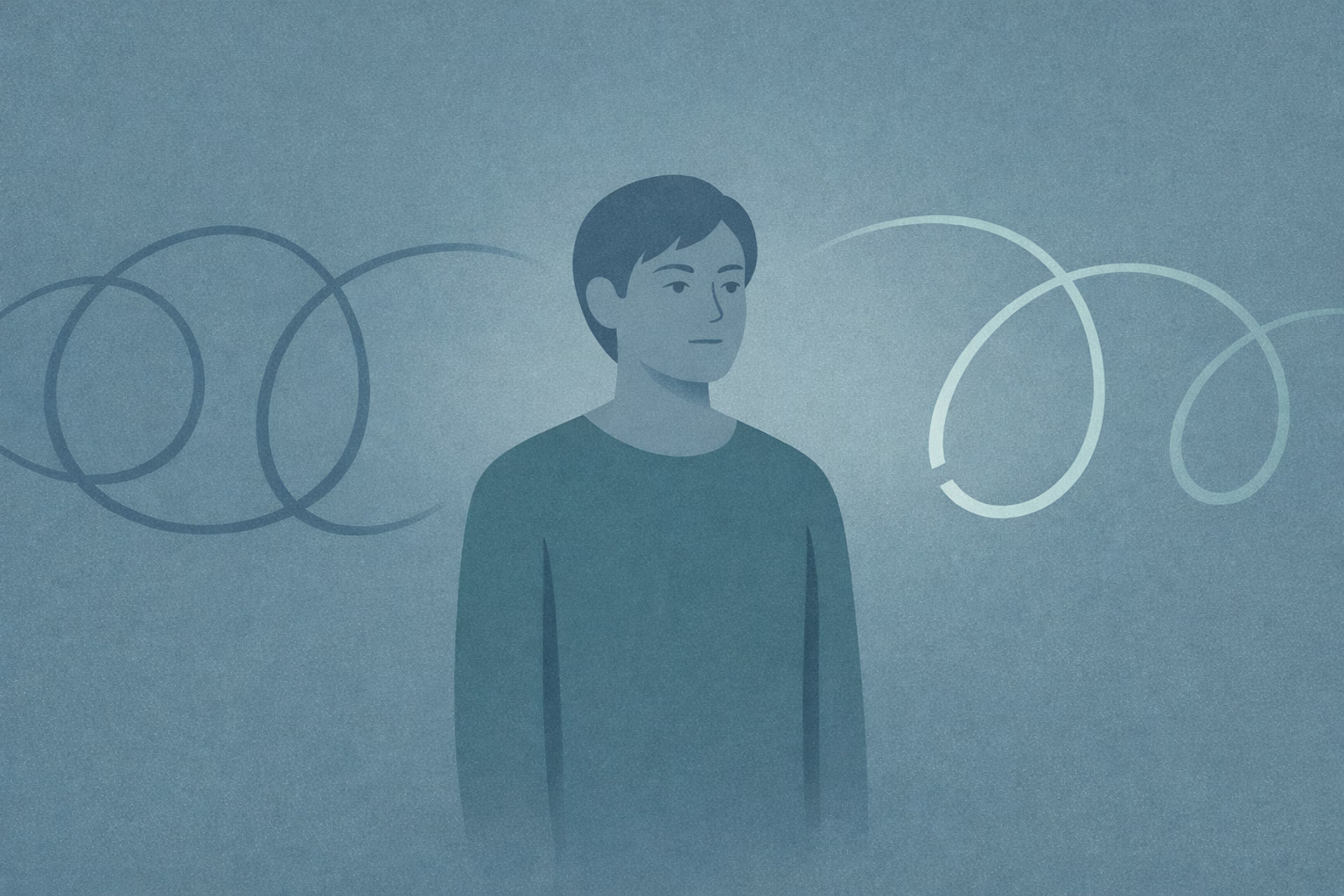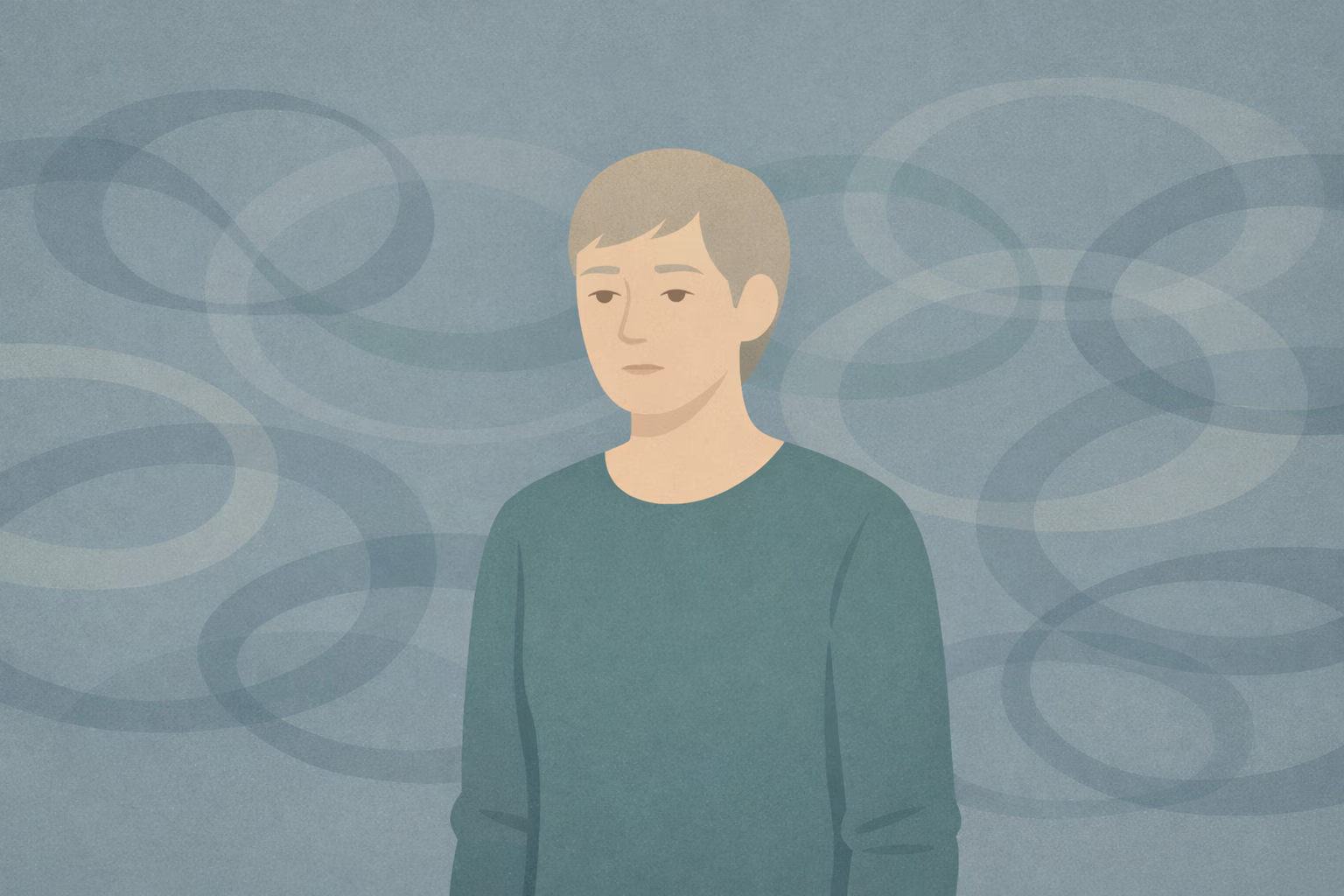
Chronic Stress Patterns: The Loops You Stop Noticing
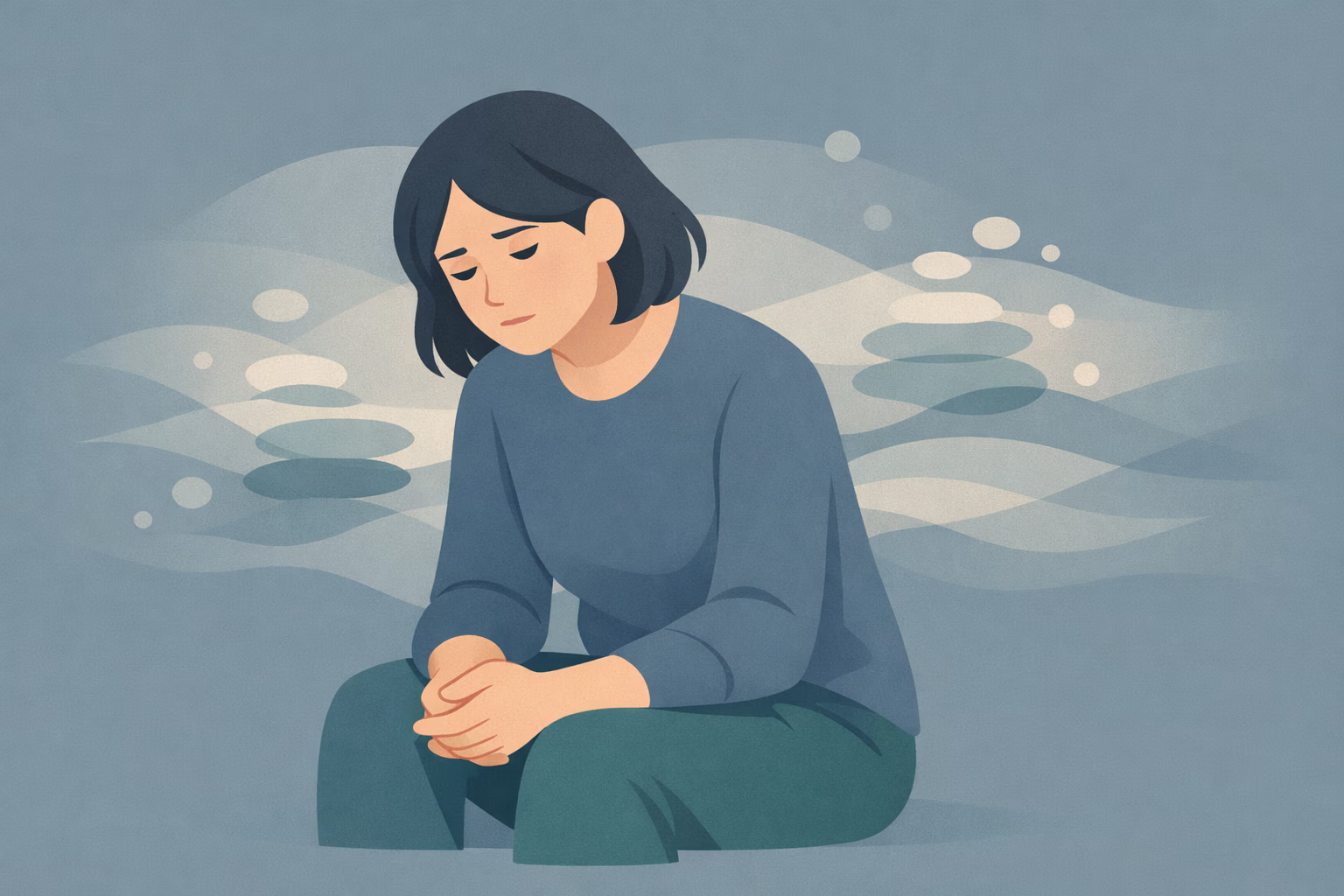
In short: Burnout rarely arrives as one dramatic event. More often, it’s the slow stacking of small pressures that never quite finish—tiny frictions, background vigilance, constant “not done yet” signals that the body keeps carrying.
Burnout rarely arrives as one dramatic event. More often, it’s the slow stacking of small pressures that never quite finish—tiny frictions, background vigilance, constant “not done yet” signals that the body keeps carrying.
What if the problem isn’t that you’re too sensitive—but that your system hasn’t been allowed to fully stand down?
In a high-demand environment, micro-stress doesn’t just come and go. It can accumulate into a new baseline: less buffer, quicker reactivity, more effort required for ordinary life. This isn’t a personal failure. It’s what happens when the nervous system is repeatedly asked to mobilize without enough completion and closure.
One of the most confusing parts of stress accumulation is how it shows up: a small email can feel like an alarm, a minor interruption can trigger a sharp response, a tiny mistake can feel unbearable. From the outside, it can look “disproportionate.” From the inside, it feels immediate and hard to override.
That pattern tends to make people ashamed: “Why can’t I handle normal life?” But the more accurate frame is capacity. When many small stressors have been left open, the system has fewer resources to meet the next demand smoothly. Daily stressors have measurable wear-and-tear effects over time, even when each one seems minor on its own. [Ref-1]
Sometimes “overreacting” is just what reaction looks like when the buffer is already spent.
Stress responses are designed to help you mobilize—focus, speed up, protect, solve. The problem is not activation. The problem is activation that doesn’t get to complete.
When stress is frequent and recovery windows are thin, the body can start treating “on” as normal. Baseline arousal creeps upward: sleep can become lighter, attention more jumpy, and calm less accessible. Over time, the cost isn’t just emotional—it’s physiological, reflected in cumulative strain across systems often discussed under the umbrella of allostatic load. [Ref-2]
Why does it feel like you’re always catching up—even when nothing huge is happening?
Human regulation systems evolved around threats that were intense but time-limited: a conflict, a chase, an injury, a storm. In those conditions, the body mobilizes, the situation resolves, and a “done” signal arrives—allowing energy to return to baseline.
Modern stressors often lack clean endings. They’re abstract (deadlines, reputation, money), socially distributed (messages, expectations), or constantly updating (news, platforms, metrics). That makes closure harder to reach, and without closure, the system stays partially recruited. This is part of why cumulative stress is frequently described in terms of allostatic load—adaptation that becomes costly when it never fully stops. [Ref-3]
Many people survive intense seasons by narrowing attention and doing what must be done. That isn’t denial or weakness. It’s a functional strategy: stay online, keep moving, reduce complexity.
The hidden cost is that the micro-stressors don’t disappear; they queue. The body can defer restoration when circumstances demand it, but the deferred load still exists. Over time, that backlog can show up as tension, irritability, shutdown, or a sense of being permanently behind. This is a common way allostatic load builds: the system keeps compensating, until compensation itself becomes strain. [Ref-4]
Micro-stressors are often dismissed because each one feels survivable. A meeting runs long. A password fails. A child is sick again. A comment lands oddly. A plan changes. None of these is catastrophic, and that’s the point: they slip under the radar of concern while still requiring mobilization.
The body doesn’t measure stress by how “serious” a situation looks on paper. It measures demand, uncertainty, and the need to adapt. When adaptations are constant, the cumulative wear-and-tear can rise—even without a single headline-worthy event. Chronic load is associated with downstream impacts on health and cognition, which is one reason small daily strain deserves respect. [Ref-5]
In the Meaning Density frame, an avoidance loop isn’t primarily about fear. It’s a structural pattern: the system learns to bypass short-term friction by postponing restoration and closure. You keep going, which works—until it doesn’t.
Over time, strain becomes normalized. The body adapts to operating under load, and “not okay” starts to feel ordinary. This is one reason cumulative physiological stress can be linked with changes in cognition and brain structure over longer timelines: the organism is living in a state that was meant to be temporary. [Ref-6]
When strain becomes normal, you can lose your reference point for what “enough” used to feel like.
Micro-stress accumulation often expresses itself through patterns that look like “temperament” or “attitude,” especially when the load has been present for months. These are not identities. They’re outputs of a system running close to its limit.
Stress is measurable in many ways—subjective, behavioral, and physiological—and daily hassles can shift these signals even when life appears stable. [Ref-7]
Burnout is often described as emotional exhaustion, cynicism or detachment, and reduced sense of efficacy. From a nervous-system view, it can also be understood as a protective downshift: when ongoing mobilization doesn’t lead to completion, the system eventually limits output.
At that stage, rest may not feel restorative, because the internal “open tabs” are still running. Even small tasks can feel heavy—not because you’ve lost character, but because capacity has been eroded by repeated incomplete cycles of demand and recovery.
Research on micro- and macro-stressors suggests that frequent stressors, combined with limited resilience factors and recovery conditions, are associated with worse mental health outcomes over time. [Ref-8]
Once baseline arousal is high, each additional hassle lands on a system already leaning forward. This is why the same event can feel manageable one month and impossible the next. The event didn’t necessarily change; the platform it landed on did.
Daily hassles come in recognizable categories—time pressure, interpersonal friction, financial uncertainty, logistical snags—and they can accumulate until they shape how the day is experienced. [Ref-9] The result is not just “more stress,” but less room for normal variation: fewer safety cues register, and more signals get interpreted as urgent.
What if the goal isn’t to handle more—but to stop needing to handle so much at once?
There’s an important distinction between relief and completion. Relief can shift state quickly—distraction, pleasure, numbing, scrolling, a glass of wine, a burst of productivity. Completion is different: it’s when the system receives enough closure to stop allocating resources to an unfinished demand.
Micro-stress is often called “daily hassles,” and the research tradition around hassles highlights that the frequency of small stressors can predict outcomes as much as major events do. [Ref-10] In Meaning Density terms, the key issue is not the presence of hassles but the absence of physiological and narrative “done.” Without enough endings, identity starts to organize around coping rather than living.
When life doesn’t close its loops, the body keeps paying for yesterday while trying to meet today.
Stress accumulation intensifies in isolation—not because you’re “supposed to be social,” but because shared processing distributes load and reduces constant self-monitoring. When expectations soften and demands become more realistic, the nervous system receives more safety cues, and fewer signals require mobilization.
Daily hassles are strongly shaped by context: how many roles you’re carrying, how much unpredictability exists, and how often you are being evaluated (by others or by metrics). Changes in daily affect following hassles have been linked with longer-term mental health patterns, suggesting that the everyday environment matters deeply. [Ref-11]
Importantly, this isn’t about “thinking differently.” It’s about conditions that allow the system to downshift—because it no longer has to hold everything alone.
When cumulative strain decreases, people often notice something simple and profound: they return faster. Not “never stressed,” not perfectly calm—but less stuck in activation. The same inputs create less turbulence, and recovery is more available.
This can show up as a larger emotional buffer, fewer spikes of urgency, and a body that releases tension more readily. In broader public-health conversations, micro-stress is increasingly recognized as a meaningful contributor to mental health strain because it steadily reduces resilience when left unaddressed. [Ref-12]
One of the quiet losses of stress accumulation is meaning. Not because you stop caring, but because so much energy goes into stabilization. Life narrows to management: keeping things from falling apart, staying on top of messages, holding the line.
As capacity returns, attention can orient outward again—toward relationships, craft, curiosity, and values that feel like you. This is where coherence becomes protective: actions align with identity, not because you force them, but because the system isn’t spending all day compensating for unfinished load.
Micro-stressors can gradually reshape how people see their days and themselves, which is why reducing cumulative strain often restores a sense of agency and direction. [Ref-13]
Noticing micro-stress isn’t self-absorption. It’s accurate data about the conditions your nervous system is living in. When the small pressures are named as real, the story shifts from “I’m failing” to “My system has been carrying too much for too long.”
That shift matters because shame fragments meaning. Orientation restores it. And often, micro-stress is the most available place to see what’s been quietly stealing closure—tiny demands that never finish, expectations that never soften, background evaluations that never turn off. Many everyday examples of micro-stress are surprisingly ordinary, which is exactly why they can accumulate unnoticed. [Ref-14]
Capacity is not a moral trait. It’s a condition—one that can be protected when it’s recognized.
Burnout doesn’t mean you were weak. It often means you were effective for a long time under conditions that didn’t allow completion. The system did what it could: it adapted, compensated, and kept going—until the costs surfaced.
When small signals are treated as meaningful, the nervous system doesn’t have to escalate to be heard. Over time, that’s how steadiness returns: not through more pressure, but through fewer unfinished loops and more genuine “done.” [Ref-15]
From theory to practice — meaning forms when insight meets action.
It's usually a load issue, not a 'you' issue. When many small stressors have been left open, the system has fewer resources to meet the next demand smoothly — a small email feels like an alarm, a tiny mistake feels unbearable. From the outside it looks disproportionate; from inside it's immediate and hard to override. The accurate frame is capacity: daily stressors have measurable wear-and-tear effects over time, even when each seems minor. Sometimes 'overreacting' is just what reaction looks like when the buffer is already spent. Capacity isn't a moral trait — it's a condition that erodes when load stays high without recovery.
Through accumulation without completion. Stress responses are designed to mobilize, then resolve — but when stress is frequent and recovery windows are thin, the body starts treating 'on' as normal. Baseline arousal creeps upward: lighter sleep, jumpier attention, less accessible calm. The Threat & Safety System evolved for short dangers with clear endings; modern stressors are abstract, socially distributed, and constantly updating, so closure rarely arrives cleanly. The body keeps compensating until compensation itself becomes strain. Pushing through works short-term because it preserves function while quietly borrowing from capacity — the deferred load still exists, queued.
No — the body doesn't measure stress by how serious a situation looks on paper. It measures demand, uncertainty, and the need to adapt. When adaptations are constant, cumulative wear-and-tear rises even without a headline-worthy event. Small stressors matter when they're frequent. They matter more when they don't resolve cleanly. They matter most when they become the background texture of life. Once baseline arousal is high, each new hassle lands on a system already leaning forward — that's why the same event can feel manageable one month and impossible the next. The event didn't change; the platform it landed on did.
Relief shifts state quickly — distraction, pleasure, numbing, scrolling, a productivity burst. Completion is different: it's when the system receives enough closure to stop allocating resources to an unfinished demand. Stress accumulation often runs as an Avoidance Loop where recovery keeps getting deferred — strain becomes normalized, and 'not okay' starts to feel ordinary. When life doesn't close its loops, the body keeps paying for yesterday while trying to meet today. Restored capacity looks less like 'never stressed' and more like faster return: more buffer, steadier release of tension, rest that actually lands. Burnout prevention isn't endurance; it's honoring small signals before they stack.
From Science to Art.
Understanding explains what is happening. Art allows you to feel it—without fixing, judging, or naming. Pause here. Let the images work quietly. Sometimes meaning settles before words do.
One Quiet Window, one insight, one reflection — every Sunday