

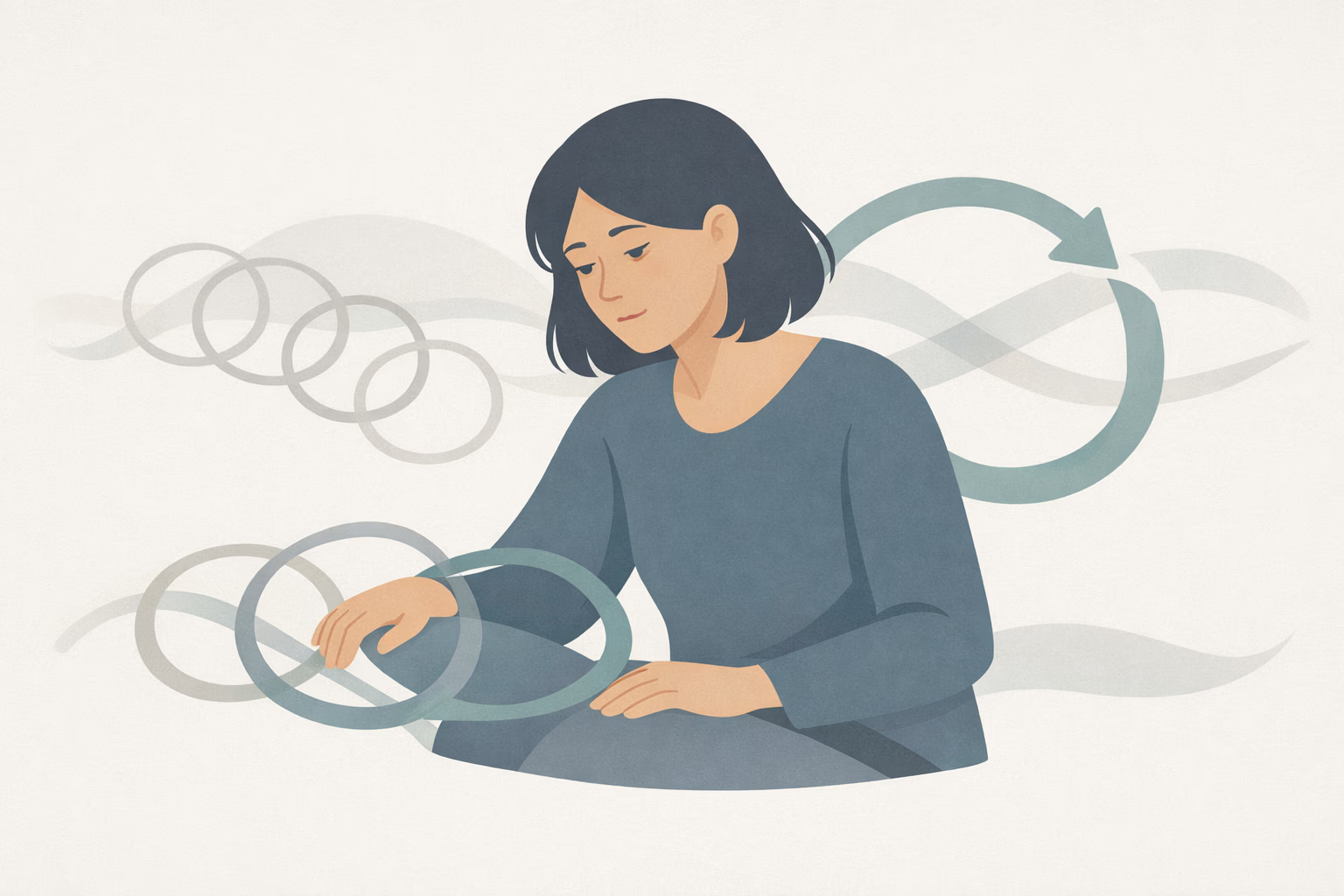
The Role of Habitual Thought Patterns in Emotional Loops
Repetitive thinking reinforces emotional states.
Read articleArticles about thought spirals, micro-stress accumulation, decision fatigue, mental overload, and clarity practices—plus how AI and information flooding can distort attention, increase cognitive strain, and weaken internal thinking loops.
When the mind repeats the same questions, it’s often trying to prevent threat—emotionally, socially, or existentially. These articles map the mechanics of rumination, mental chatter, ambivalence, and recurring emotional patterns.
Repetitive thinking reinforces emotional states.
Read article
Ambivalence as adaptive survival scanning.
Read article
Conflicting emotional signals confuse decision-making.
Read article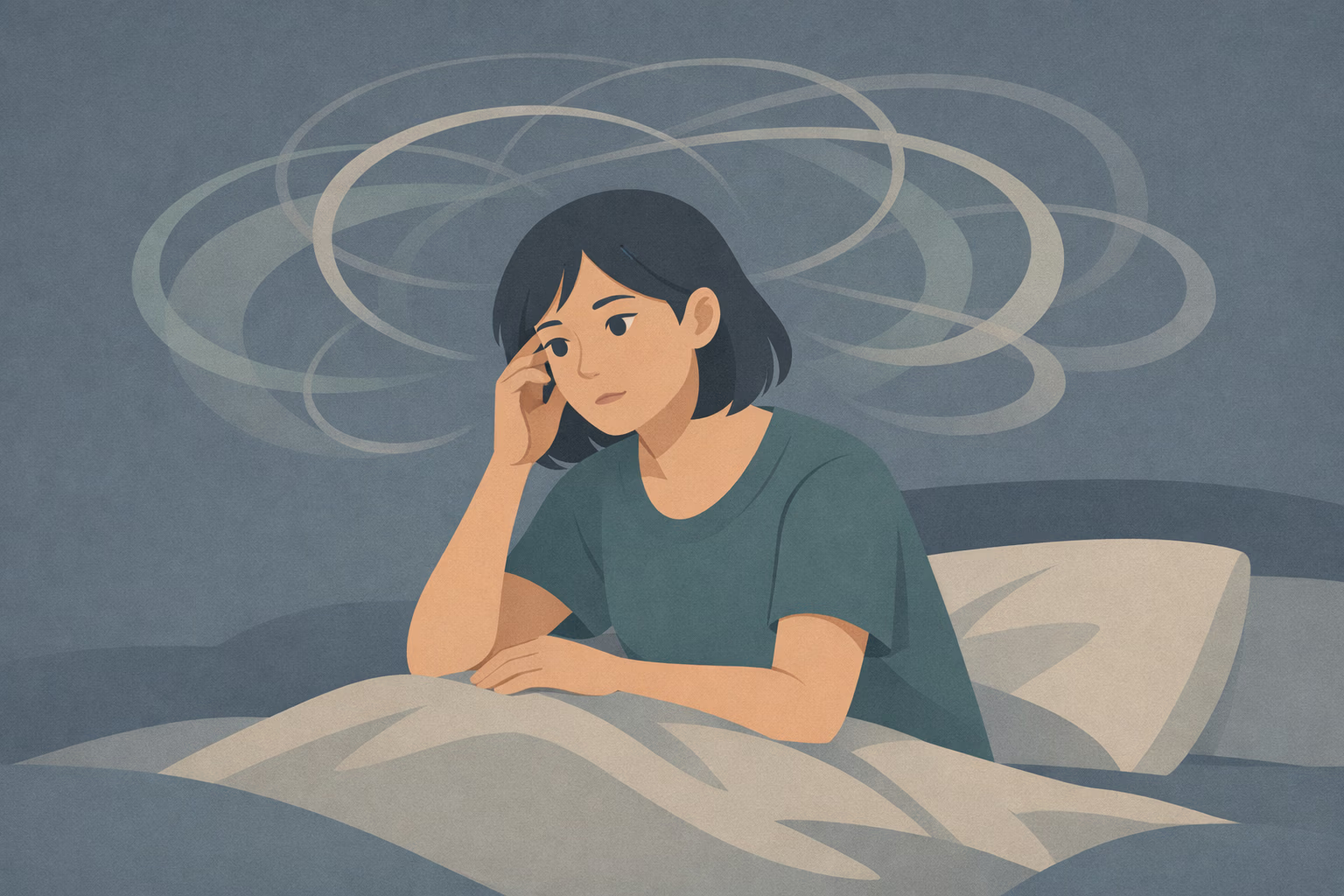
Racing thoughts at night triggered by unresolved threat cues.
Read article
Cognitive load triggers full-body fatigue.
Read article
Competing neural circuits create mental fragmentation.
Read article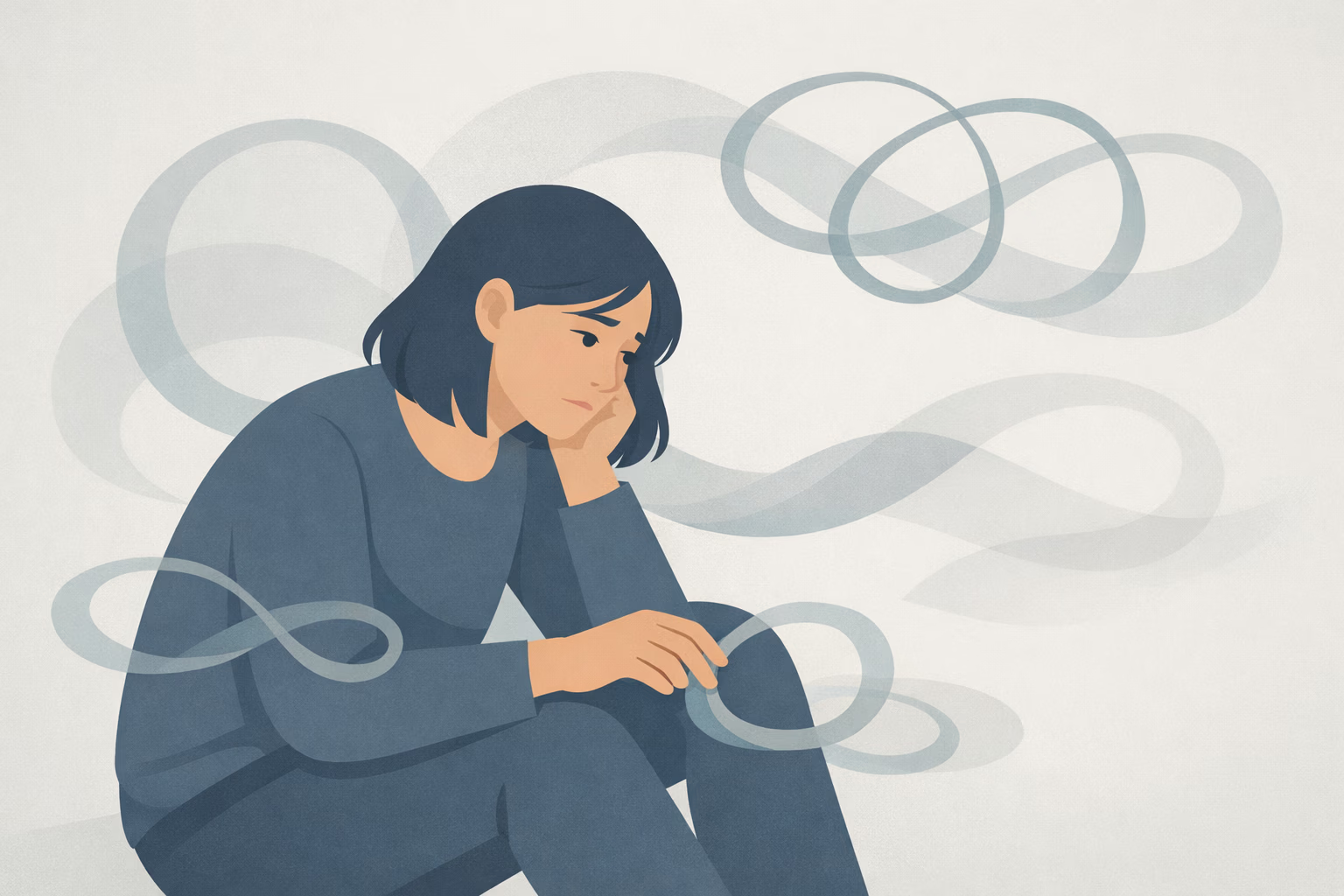
Overthinking as threat-prevention gone rogue.
Read article
Loops run automatically through conditioned reward/threat cycles.
Read article
Noise = unprocessed emotional + cognitive loops.
Read article
Patterns repeat because the brain conserves energy.
Read article
Patterns form through efficiency + survival coding.
Read article
Frequent emotions = reinforced neural pathways.
Read article
Awareness reveals the hidden structure behind behavior.
Read article
Noise reduction requires removing loops + stimuli.
Read article
Echo chamber = rumination + physiological feedback loop.
Read article
Elasticity improves adaptation + reduces catastrophizing.
Read article
Unhooking reduces thought fusion + anxiety.
Read articleThis is the Overactive Brain Loop. During the day, constant stimuli act as "noise" that drowns out unresolved threat cues; in the dark, those cues surface. Your Power System interprets unresolved thoughts as an "unsecured perimeter," keeping you awake to scan for danger. Rest returns when you provide your system with a "Structural Ending"—a way to acknowledge the day's "load" as finished so the mind no longer feels tasked with midnight protection.
Absolutely. This is Cognitive Load Fatigue. Sustained overthinking keeps your physiology in high vigilance, which is metabolically expensive. Your brain uses roughly 20% of your body's energy; when caught in an Avoidance Loop, that consumption spikes. You feel depleted because energy is being diverted into "Mental Defense." Energy returns when you move from "Predictive Scanning" to Values-Aligned Action, which has a lower biological cost.
This is Emotional Ambivalence. Your Cognitive System is receiving signals from different internal needs—perhaps a need for "Safety" and a need for "Growth." Confusion arises when you try to force them into a single, logical "truth." Ambivalence is high-density data. Clarity emerges not by choosing one emotion, but by holding both with Pattern Awareness, allowing you to see the layered needs of your nervous system.
This is the practice of Cognitive Unhooking. When you "fuse" with a thought, your Executive System treats it as an external reality that must be managed. This opens a loop that cannot be closed because you cannot "fix" a hypothetical. Unhooking is the process of seeing a thought as a "mental event" rather than a command. By creating this Freedom Point, you reclaim the authorship of your attention, placing it back in service of your meaning.
Your brain prioritizes Efficiency through Neural Highways. Habitual thought patterns are shortcuts your brain uses to save energy. Once a path is coded for survival, the brain defaults to it automatically. This is a Psychological Loop. To change it, you don't fight the old thought; you build a new one through Mental Elasticity. By intentionally anchoring new thoughts in your current values, you eventually "repattern" the mind to serve your meaning.
Stress isn’t always one big event. Often it’s small, repeated signals that never fully clear—notifications, hidden emotional labor, anticipatory tension, and learned reactivity that builds momentum across the day.

Anticipating notifications increases cortisol.
Read article
Emotional labor drains energy more than physical work.
Read article
Persistent load leads to cognitive burnout.
Read article
Micro-stress compounds into major overwhelm.
Read article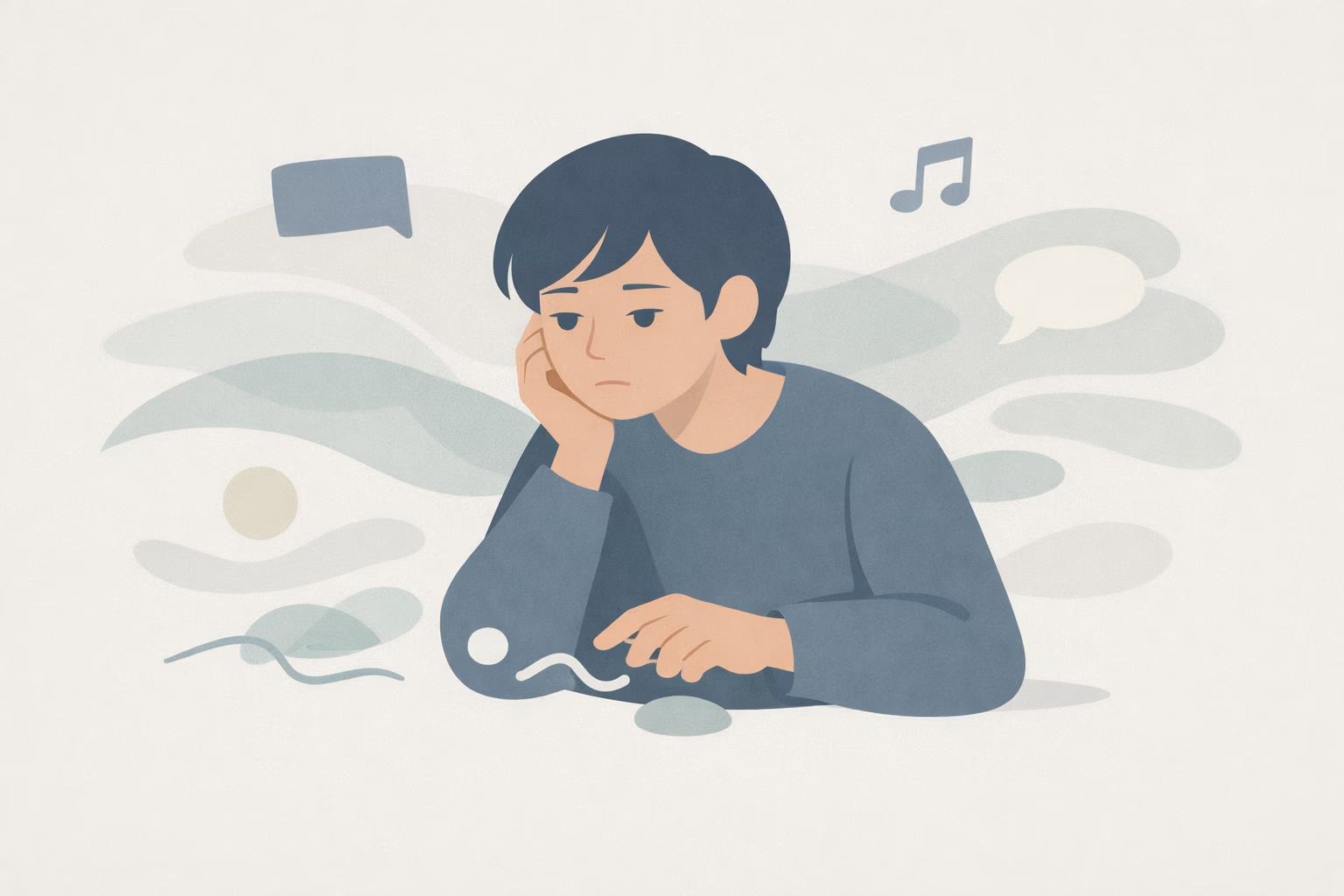
Dopamine adaptation makes stillness uncomfortable.
Read article
Echoes = unprocessed emotional residue.
Read article
The body becomes conditioned to stress patterns over time.
Read article
Momentum builds when stress isn’t interrupted early.
Read article
Preloading = anticipatory stress based on past patterns.
Read articleYou are likely experiencing Emotional Labor Fatigue. This is the invisible work of regulating your emotions while navigating others'. Your brain is constantly "scanning" for social safety and performing emotional management, consuming more glucose and oxygen than physical labor. Because there is no "Done Signal" for caring, you stay in an Avoidance Loop of perpetual vigilance. Energy returns when you set "Somatic Boundaries" that prioritize your internal safety over external performance.
This is Notification Anticipation. Your Threat & Safety System has been conditioned to treat digital pings as high-priority survival cues. Even in silence, your brain is "Power Looping"—maintaining a state of micro-stress (cortisol spikes) to ensure you don't miss a signal. Restoration occurs when you retrain your system to recognize digital silence as Safety rather than Absence, allowing your nervous system to fully de-escalate.
You are caught in Stress Momentum. When a stressor isn't resolved, your nervous system remains in a "reactive state," filtering subsequent events through an Avoidance Loop. This is a failure of "Loop Closure." By not interrupting the momentum with a brief moment of regulation, you allow old stress to "echo" into new moments. Breaking the chain requires a deliberate "pattern interrupt" to signal to your brain that the previous threat is over.
Not exactly; you are experiencing Stimulation Chasing. High-intensity digital inputs have shifted your Reward System's baseline. In this state, "Boredom" is interpreted as a "drop in resources," which feels like a threat. You reach for your phone to close the discomfort loop. At Dojowell, we reframe boredom as a Gateway State. If you can move through the initial agitation without reaching for input, your system "settles," and deeper, high-density meaning can emerge.
This is Stress Preloading. Your nervous system has learned that "vigilance equals safety." You are waking up in a Power Loop, activating stress responses before your day even begins. This "anticipatory tension" consumes your cognitive capacity before you can even use it for your goals. Recovery involves Stress De-conditioning—using somatic practices to prove to your body that it is currently safe, freeing that "preloaded" energy for intentional direction.
Modern life floods the brain with micro-choices and constant input. These articles explain why decisions feel heavier over the day, how overload compresses thinking, and why simplifying the environment restores mental ease.
Too many subscriptions create cognitive burden and decision fatigue.
Read article
Excess micro-decisions deplete cognitive resources.
Read article
Overthinking paralyzes decision circuits.
Read article
Spirals arise from threat + catastrophizing loops.
Read article
Overload = capacity exceeded by input + demands.
Read article
Mental load = cognitive + emotional responsibilities.
Read article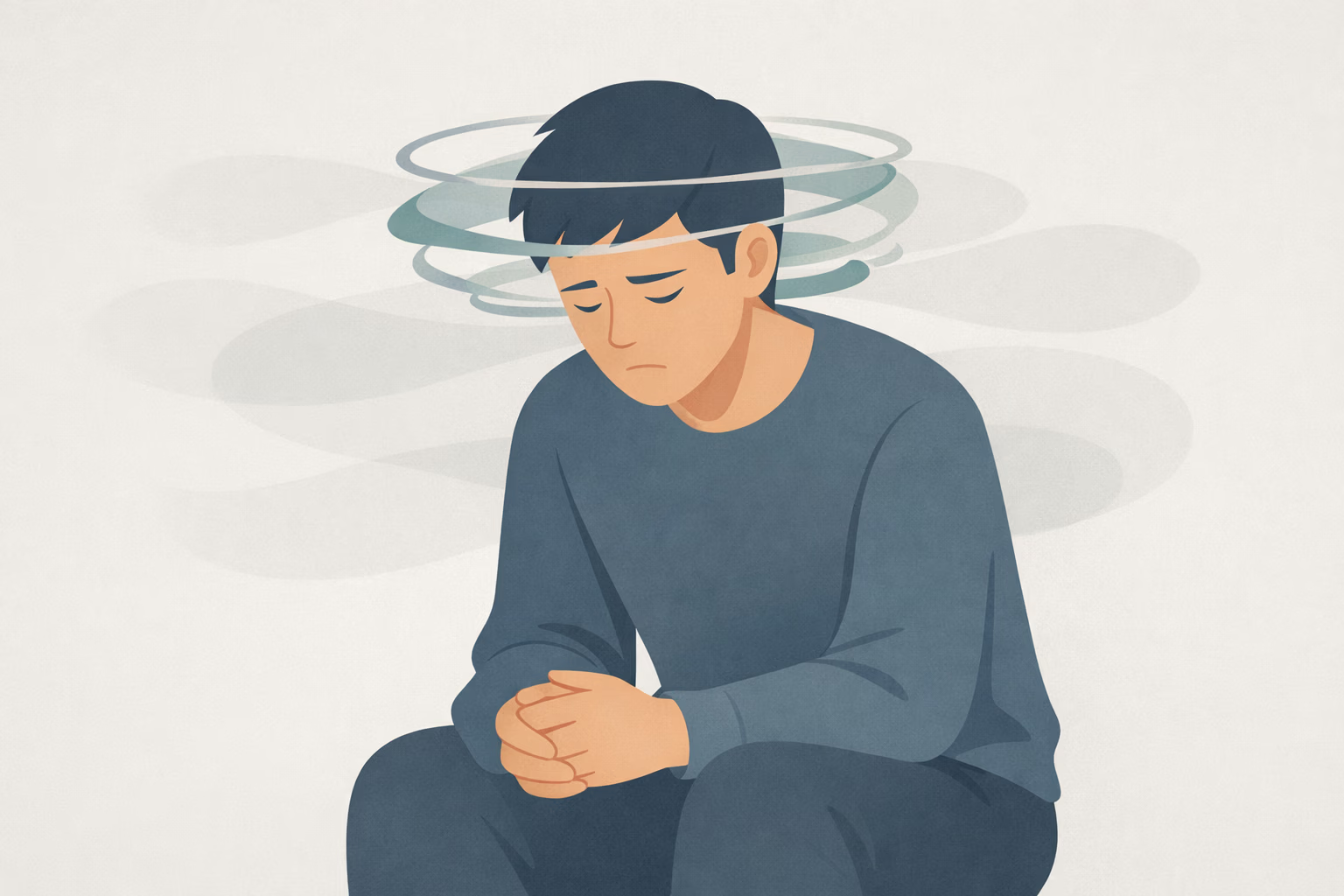
Tightness = narrowed cognitive flexibility.
Read article
Simplification lowers cognitive load + emotional agitation.
Read article
Decluttering restores cognitive efficiency.
Read article
Letting go creates cognitive lightness.
Read article
Micro-subscriptions overwhelm cognitive budget.
Read articleYou are experiencing Decision Fatigue. Every choice you made today cost a specific amount of metabolic energy. By evening, your Executive System is "bankrupt," defaulting to the path of least resistance. Clarity returns not by "trying harder," but by Stress Simplification—reducing micro-decisions in your morning to preserve "Decision Capital" for your evening values.
This is the Mental Load. Your brain is running background "maintenance scripts"—reminders and social obligations—that stay open in your Executive System, creating Cognitive Tightness. It’s like having 50 tabs open on a computer. Restoration begins with Cognitive Decluttering—externalizing these loops into a physical system so your brain can "offload" the data and return to a state of Cognitive Lightness.
A Thought Spiral occurs when the Executive System is too tired to regulate the Threat System. One worry opens a loop, and because you lack the "Cognitive Bandwidth" to close it, your brain catastrophizes to find a "worst-case safety net." Breaking the spiral requires slowing down the "input speed" to allow your brain's processing capacity to catch up with the incoming signals.
Yes, it leads to Subscription Overload. Each subscription is a "Micro-Commitment" that demands a sliver of your attention, creating a "Cognitive Tax." This often turns into an Avoidance Loop where the "Guilt of Unused Value" makes you avoid the very tools meant to help you. Reclaiming your energy requires protecting your brain's limited "Attentional Real Estate" through aggressive unsubscribing.
This is Paralysis by Overthinking. Your brain is using "Error Prevention" as a survival strategy, treating a wrong choice as a potential threat. You are caught in a Power Loop, seeking a level of certainty that doesn't exist. We reframe decision-making as Direction Setting. By making a "Good Enough" choice quickly, you close the loop, stop the energy drain, and allow meaning to emerge from action rather than analysis.
Clarity isn’t more thinking—it’s better relationship with thinking. These articles focus on pause habits, reflection, mental resets, stillness, and softening rigid cognition so you can see clearly and choose deliberately.

Thought spirals neutralized by cognitive slowing.
Read article
Reflection integrates emotional + cognitive systems.
Read article
Quick methods to reduce cognitive overload and regain clarity.
Read article
Micro-pause introduces conscious choice.
Read article
Stillness emerges through regulation + mindfulness.
Read article
Flow requires non-resistance + awareness.
Read article
Stillness requires nervous system safety + awareness.
Read article
Perspective expands through deliberate pause.
Read article
Softening reduces rigidity and emotional suffering.
Read article
Pause points create openings for transformation.
Read article
Rituals reset looping cognitive circuits.
Read article
Softening reduces cognitive self-judgment.
Read articleYou are lacking Internal Pause Points. Your Executive System is stuck in a high-speed "Scan and Solve" mode. In the Dojo, we reframe slowing down as Cognitive Slowing. By intentionally reducing thought speed, you interrupt the runaway loops that create false urgency. Clarity isn't found by thinking faster; it's found by slowing down enough to let the "mental silt" settle so you can see the bottom.
You are missing the Freedom Point. Between a stimulus and your response, there is a micro-second of opportunity called the Pause Habit. Without this gap, your Threat System takes the wheel. By training the "Pause," you create a clearing where your Meaning Loop can activate, allowing you to choose a response based on your values rather than your reflexes.
You are experiencing Cognitive Rigidity. Your mind has become a "Harsh Inner Environment" because it uses strict rules to maintain a false sense of safety. We use Cognitive Softening to reduce this tension. Softening isn't about positive thinking; it's about making your thoughts more flexible and spacious. When you relax the grip of your thoughts, you move from a state of control to a state of Curiosity.
Yes, through Cognitive Reset Rituals. When your circuits are looping, "thinking your way out" only adds fuel to the fire. You need a structural interruption to provide a Done Signal to the brain. Whether it's a breathing pattern or physical movement, a reset clears the Cognitive Clutter and returns your nervous system to a baseline of safety. This is essential maintenance for your meaning.
This is a lack of Emotional Flow. When you resist a feeling, you "trap" it in an Avoidance Loop, making it feel permanent. In the Meaning Density Model™, emotions are treated as Movement and Information. Flow occurs when you stop resisting and start observing. Once the emotion is allowed to move through your system without being judged, it ceases to be a trap and becomes a guide.
When learning becomes a substitute for integration, the brain collects tools but doesn’t change. These articles explore self-help overload, “learning without applying,” and the quiet anxiety of never feeling caught up.

Too much learning → no integration.
Read article
Learning replaces doing, creating growth illusion.
Read articleThis is "Learning but Never Applying" Syndrome. Your Executive System can become addicted to the "aha!" moment because it feels like progress. However, without Loop Integration, that knowledge is just "Cognitive Saturation." In the Dojo, we say that meaning is only created when insight is converted into action. Until you act, you are just overeducated and under-integrated. Growth begins when you stop consuming and start applying—deeply and deliberately.
You are likely in Self-Help Overload. This is an Avoidance Loop where the search for a solution becomes a way to avoid the discomfort of the problem itself. Too much information creates "Cognitive Noise," drowning out your internal signals of direction. Settlement occurs when you reduce your "Information Intake" and focus on one single value-aligned practice. Learning must be the servant of meaning, not a substitute for it.
You are experiencing AI Decision Fatigue. When you delegate judgment and synthesis to an algorithm, you bypass the "Neural Effort" required to build internal confidence. This creates a Cognitive Distortion where your brain begins to doubt its own capacity to solve problems. Thinking Effort is a meaning-building act; by reclaiming your autonomy, you restore the "Problem-Solving Loops" that strengthen your identity and mental clarity.
Yes, this is the "Hidden Cognitive Decline" of outsourcing thought. Your brain is a "Use-it-or-Lose-it" system. Habitual outsourcing to AI moves you into a Pleasure Loop of easy answers, thinning your Narrative System. When you don't do the "Heavy Lifting" of reasoning, your identity becomes fragile. True clarity comes from amplifying your mind with tools, not replacing the inner work that gives your thoughts weight and significance.
When thinking is outsourced, internal problem-solving can weaken. These articles explore AI-driven decision fatigue, cognitive dependency, and how algorithmic convenience can quietly increase mental load.
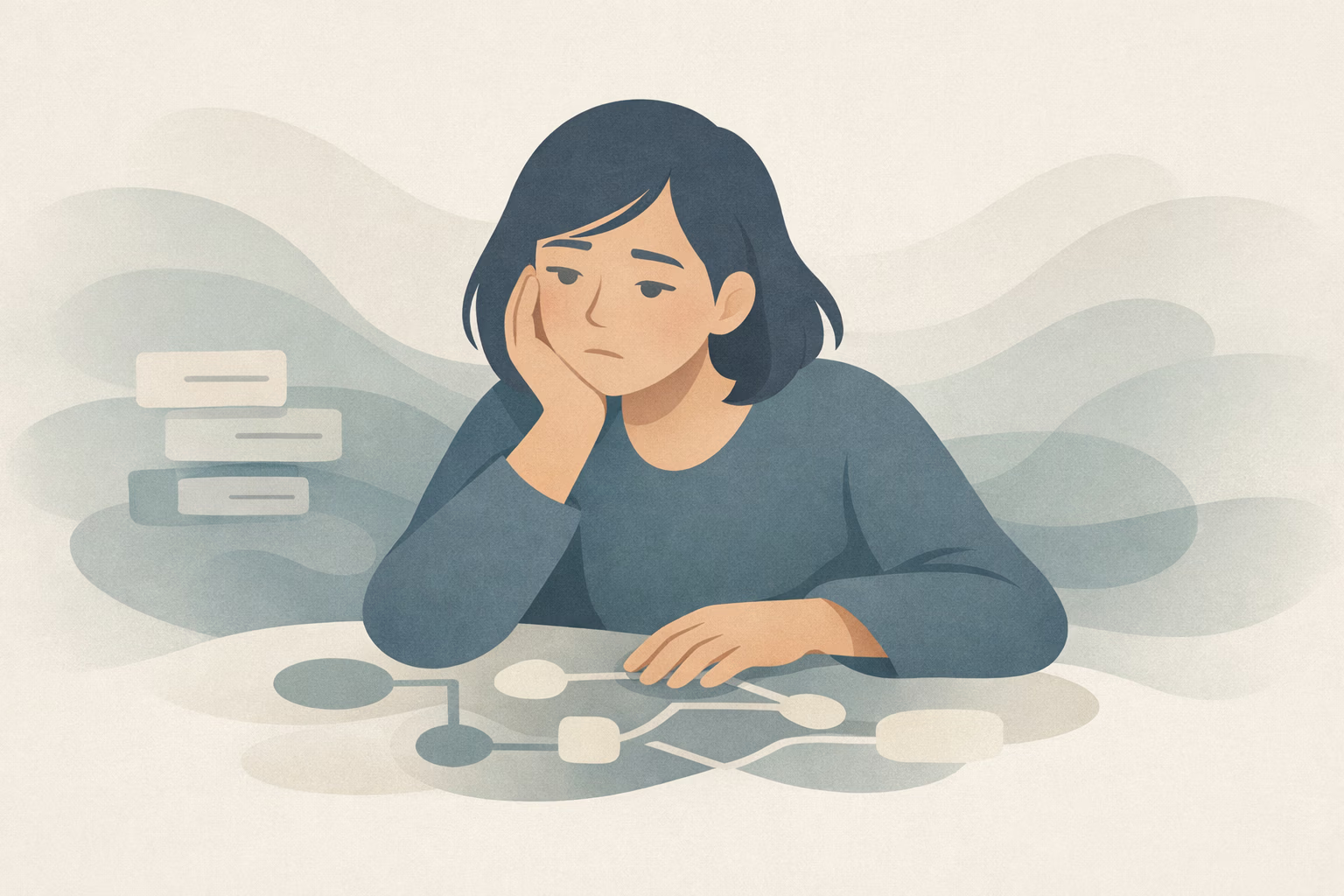
Over-reliance on AI increases cognitive load.
Read article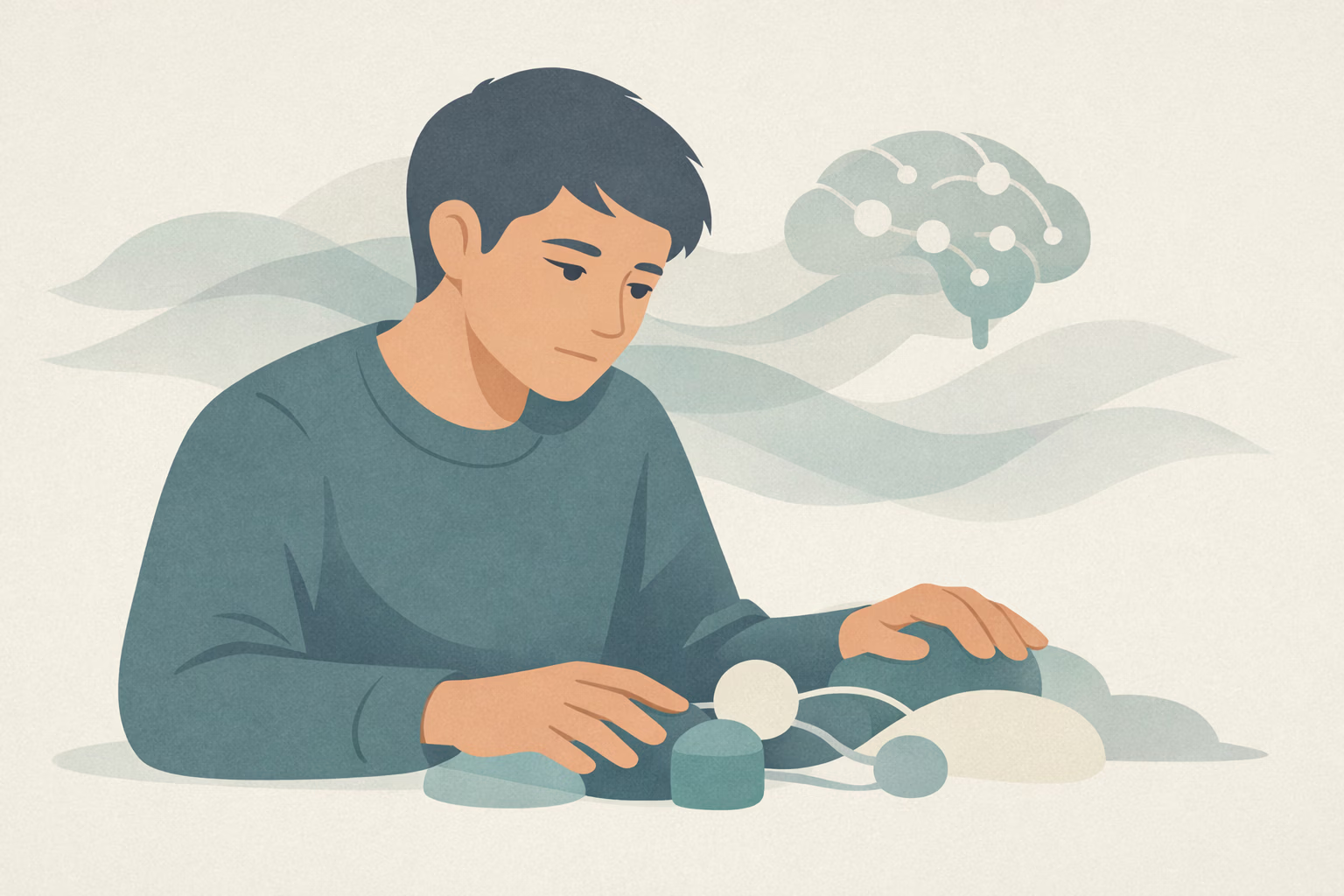
AI weakens internal problem-solving loops.
Read articleOne Quiet Window, one insight, one reflection — every Sunday