Panic Loops: Why They Repeat and How to Break Them
In short: Some emotions don’t just visit. They return with a recognizable rhythm—irritability on Sunday nights, dread before a message, emptiness after a busy day, tightness when things finally slow down. And when the same feeling shows up again, it can start to feel personal, like evidence of a fixed inner truth.
Some emotions don’t just visit. They return with a recognizable rhythm—irritability on Sunday nights, dread before a message, emptiness after a busy day, tightness when things finally slow down. And when the same feeling shows up again, it can start to feel personal, like evidence of a fixed inner truth.
What if repetition isn’t a verdict—what if it’s a pathway?
“Emotional frequency” is one way to describe how certain states get reactivated more easily over time. Not because you chose them, and not because you are them, but because your brain and attention systems learn what to expect, prioritize what’s familiar, and conserve energy by reusing well-worn routes.
One of the most disorienting experiences is noticing that your circumstances shift—new job, new relationship, better habits, more information—yet the same emotional “song” plays again. The feeling may attach to different details, but the tone is familiar.
This is often less about the current moment being objectively the same, and more about your system carrying forward a practiced pattern of activation. Emotional memory circuits can “reverberate,” meaning once a familiar state is lit up, it can sustain itself for a while—even when the original trigger is small or already gone. [Ref-1]
When that happens, it’s easy to assume you must not be healing, trying, or growing. A more accurate frame is that your nervous system is using a known route because it’s efficient and predictable under pressure.
Brains learn by reinforcement. When a certain set of sensations, interpretations, and actions repeatedly occur together, the connections between them tend to strengthen. This is the basic logic behind Hebbian learning: repeated co-activation builds a more reliable pathway. [Ref-2]
In everyday terms, the “sadness loop” or “panic loop” is not just a feeling. It’s an entire linked sequence: a body state, a focus pattern, a meaning guess, and a set of protective behaviors that have worked before (even if they come with costs). Over time, the threshold for activating that sequence drops.
This is not a character flaw. It’s how nervous systems reduce uncertainty and conserve energy. The more often a circuit is used, the more automatic it can become—especially during stress, when the brain favors fast, familiar options over flexible exploration.
Attention is not a neutral spotlight. It’s a survival system. Under strain, it tends to prioritize what has mattered often, what has been costly before, or what seems most urgent. That makes repeated emotional states more “visible,” even when other experiences are also present.
Stress load can narrow cognitive control and flexibility, which makes it harder to shift attention once a familiar emotional theme has been selected. [Ref-3] The result is not simply “thinking too much.” It’s an attentional economy: the brain invests in what it predicts will need managing.
So an emotion can keep coming back partly because your attention system has learned, “This is the channel we monitor.” Frequency becomes a form of priority.
There’s a quiet reason familiar emotions can persist: they reduce uncertainty. If your internal world has a predictable response, the system can prepare. Even unpleasant predictability can feel stabilizing compared to not knowing what will happen next.
From a learning perspective, repeated patterns become easier to access because the network is well-organized and efficient. [Ref-4] That efficiency can be protective when life is chaotic. The “known” emotion becomes an internal script that provides structure: this is what happens here.
Sometimes the emotion isn’t returning because it’s true. It’s returning because it’s familiar—and familiarity is a kind of safety cue for a tired system.
It’s common to translate frequency into identity: “I’m just an anxious person,” “I’m someone who always feels empty,” “I’m built this way.” But repetition is not proof of essence. It’s often proof of plasticity: nervous systems change according to what they repeatedly do and repeatedly need. [Ref-5]
Personality language can accidentally increase pressure—because if the feeling is “who you are,” then every return feels like confirmation. A pathway frame is gentler and more accurate. Pathways can be reinforced, and pathways can also be outgrown when conditions change and completion becomes possible.
This matters because identity-based conclusions tend to tighten the system, while pathway-based understanding can create room for the body to stand down when it’s no longer required to run the same protective sequence.
In an avoidance loop, the repeated emotion isn’t just a response—it becomes a default route that prevents other signals from fully registering. Not because you are “afraid of feelings,” but because certain sequences bypass friction and provide immediate structure.
A familiar emotional state can arrive with built-in behaviors that mute consequence and postpone closure: scrolling, checking, rehearsing conversations, working late, numbing with stimulation, overexplaining, overcontrolling. These aren’t moral failures; they’re efficient state-management moves.
Over time, the loop maintains itself: the circuit becomes strong, and the system compensates to keep it stable across different timescales. [Ref-6] The result is a pattern that feels like “I keep ending up here,” even when your intentions are elsewhere.
Emotional frequency often looks less like one dramatic episode and more like a reliable groove. The mind and body recognize the entry points, and the rest of the sequence follows quickly—because the system has learned it.
This is consistent with how habit-like learning builds: repeated pairings create efficient, repeatable responses. [Ref-7]
The cost of a dominant emotional frequency isn’t only discomfort. It can shrink your lived bandwidth. If the system keeps selecting the same state, it has fewer opportunities to practice other responses—curiosity, steadiness, grief that resolves, anger that completes, satisfaction that lands.
Over time, experience-driven changes can make the dominant pathway feel even more central, especially when life conditions repeatedly reinforce it. [Ref-8] This can create a sense of sameness: the week changes, the people change, but the inner landscape doesn’t.
Not because you’re incapable of change, but because your system hasn’t been getting “done signals.” Without completion, activation continues to recycle.
Once an emotional pathway is frequent, it shapes interpretation. The same neutral event can be read through the dominant lens, which then reactivates the body state, which then makes the interpretation feel even more convincing. This is how frequency becomes self-reinforcing.
Affective flexibility—your system’s ability to shift emotions in response to changing conditions—tends to support resilience. [Ref-9] When flexibility is reduced (often under high stress load), attention and interpretation can become more rigid, making the familiar emotion more likely to return and linger.
This isn’t “negative thinking” as a personal failing. It’s a predictable outcome of a system trying to manage uncertainty with well-practiced tools.
It can be tempting to treat awareness as the solution: “Now that I understand why this happens, it will stop.” But understanding is not the same as integration. Many people can explain their patterns brilliantly while their bodies continue to run the same circuits.
What actually changes frequency is often quieter: conditions that reduce load, increase safety cues, and allow the nervous system to stay present long enough for an experience to complete—so the brain can update what is required now. Developmentally and neurobiologically, self-regulation grows through repeated experiences that are sufficiently supported to be digested and consolidated. [Ref-10]
When that happens, the old pathway doesn’t get “fought.” It simply stops being the only reliable option. A different response becomes available because the system has learned, at a physiological level, that more than one outcome is possible.
Many emotional loops are maintained not in isolation, but in relational contexts—because humans are social nervous systems. Different kinds of contact can introduce something the loop lacks: a new sequence with a different ending.
Experience-dependent plasticity describes how repeated lived experience shapes neural organization over time. [Ref-11] In relational life, this can look like being met with steadiness instead of escalation, being believed instead of argued with, being allowed to pause instead of pushed to perform, or encountering repair after rupture rather than prolonged threat.
These experiences are not “positive thinking.” They are data. When the body receives new data repeatedly enough, old predictions can soften, and emotional frequency can diversify.
When flexibility increases, life often becomes less predictable internally—in a good way. Instead of one dominant emotion arriving on schedule, you might notice more variety, more nuance, and more context-sensitivity.
This doesn’t necessarily feel like constant calm. It often feels like quicker settling after activation, fewer “sticky” states, and a wider menu of responses depending on what’s actually happening. Emotion regulation variability and flexibility are associated with better adaptation to shifting demands. [Ref-12]
Importantly, this is not about “accessing emotions” or amplifying intensity. It’s about capacity returning: signals move through and conclude more often, rather than looping without an ending.
As emotional range expands, agency tends to feel more real—not as force, but as orientation. When you’re not locked into one familiar state, you can sense what matters with less distortion, and your responses can align more closely with your values.
This is one of the understated gifts of coherence: the system stops spending so much energy managing recurring activation, and more energy becomes available for connection, repair, creativity, and purposeful direction. Shifts in connectivity and stress responding are part of how the brain supports this kind of adaptation over time. [Ref-13]
Meaning here isn’t a slogan. It’s the lived experience that things can complete, that your internal world can update, and that you are not required to repeat yesterday’s pattern to survive today.
When the same feeling keeps returning, it can help to see it as a signal your system learned to prioritize—sometimes because something stayed unfinished, sometimes because the environment kept demanding the same protective stance. That doesn’t make the feeling “wrong.” It makes it informative.
In this frame, emotional frequency points less toward personal defect and more toward unmet completion: places where your nervous system never got the stand-down cue, never received a different ending, or never had enough bandwidth for the loop to close.
Flexibility tends to support steadier recovery over time, not by forcing a better mood, but by widening what responses are possible when conditions change. [Ref-14]
Emotions that repeat are often doing a job: keeping you ready, keeping you consistent, keeping you moving through a world that hasn’t offered much closure. Seeing that job clearly can reduce shame, because the pattern starts to look like adaptation rather than identity.
And when repetition is met with enough stability for the system to update, new responses can become real—not as a performance, but as a broadened capacity. Emotional change is often less about winning against a feeling and more about becoming flexible enough to meet the moment that is actually here. [Ref-15]
Over time, that flexibility can make space for meaning—not as pressure to improve, but as a quiet return of coherence: your experiences land, your choices make sense, and your inner world no longer has to keep replaying the same unfinished note.
From theory to practice — meaning forms when insight meets action.
Because the nervous system carries forward practiced pathways. Brains learn by reinforcement: when sensations, interpretations, and actions repeatedly co-occur, the connections strengthen, and the threshold for activating the sequence drops. The "sadness loop" or "panic loop" is a whole linked sequence — body state, focus pattern, meaning guess, protective behavior — that runs efficiently because it has run before. New circumstances can attach to the same emotional song because the route is well-organized. Emotional memory circuits also reverberate, sustaining a familiar state even when the original trigger is small or already gone.
Repetition isn't proof of essence. It's proof of plasticity — nervous systems change according to what they repeatedly do and repeatedly need. Personality language can accidentally tighten the loop because if the feeling is "who you are," every return feels like confirmation. A pathway frame is gentler and more accurate. Pathways can be reinforced and pathways can be outgrown when conditions change and completion becomes possible. Recurring feelings aren't a life sentence; they're a learned signal your system prioritized — sometimes because something stayed unfinished, sometimes because the environment kept demanding the same protective stance.
Because understanding isn't integration. Many people can explain their patterns brilliantly while their bodies continue running the same circuits. Pathways don't loosen through awareness alone — they loosen when the system has room to update. That looks like reduced load, increased safety cues, and enough presence for an experience to complete so the brain can revise what's required now. Affective flexibility — the ability to shift emotions in response to changing conditions — drops under stress, which is why the same emotion lingers. The shift happens at a physiological level: more than one outcome becomes possible.
By introducing a new sequence with a different ending. Humans are social nervous systems; many emotional loops are maintained relationally. Experience-dependent plasticity means repeated lived experience reshapes neural organization. Being met with steadiness instead of escalation, being believed instead of argued with, encountering repair after rupture rather than prolonged threat — these aren't positive thinking. They're data. When the body receives new data repeatedly, old predictions soften and emotional frequency diversifies. Range returns, signals move through and conclude, and choices can organize around values rather than habit.
From Science to Art.
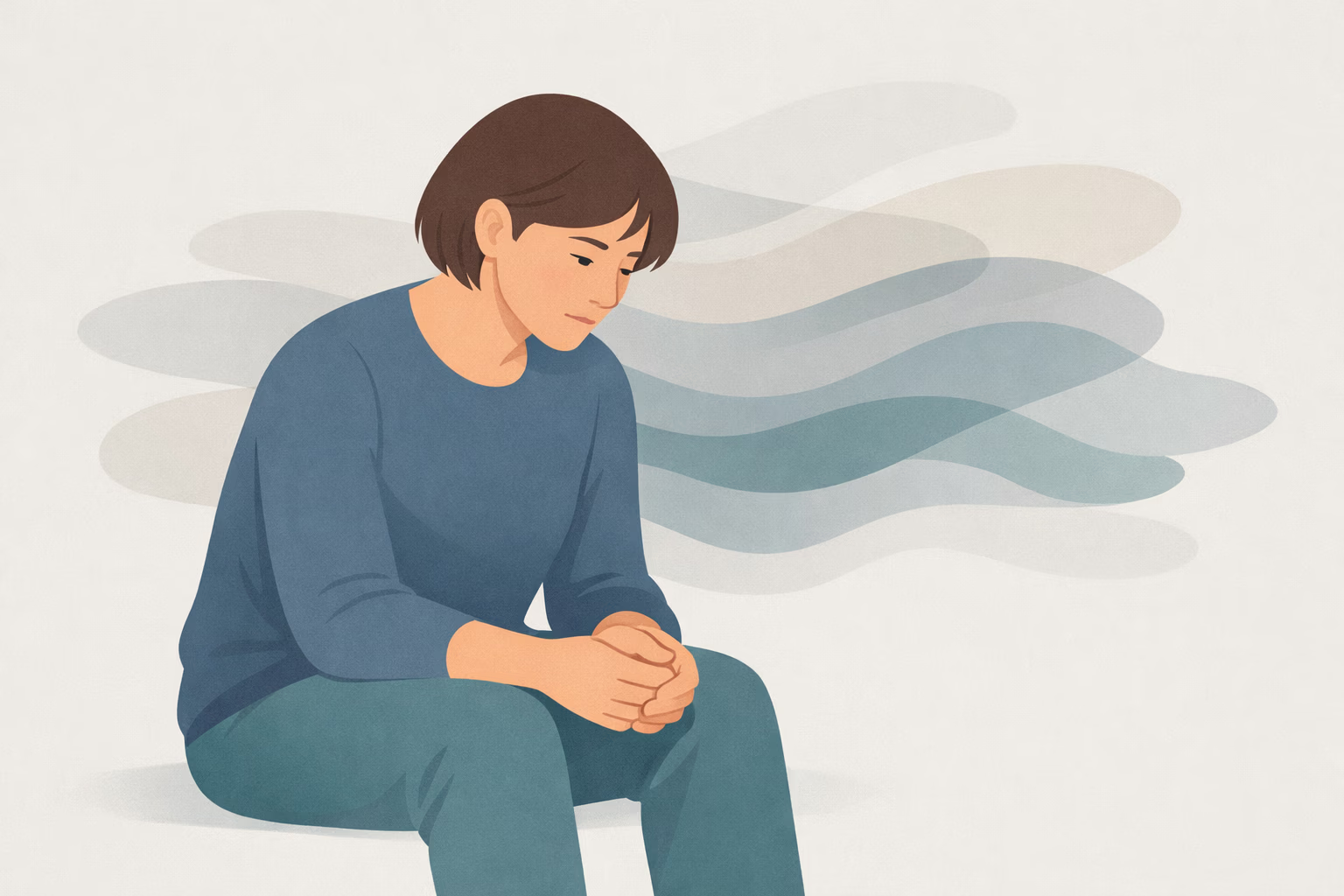
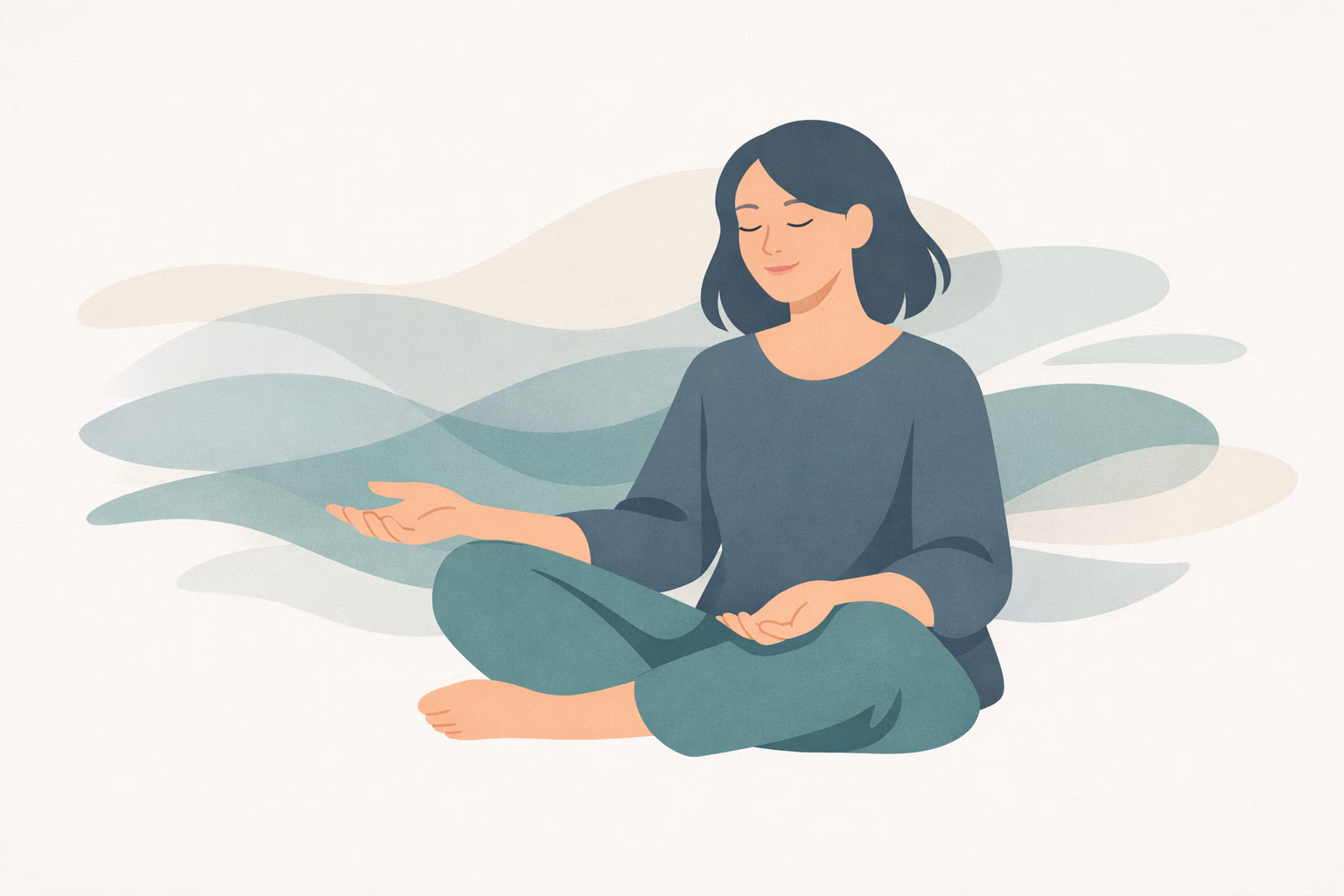
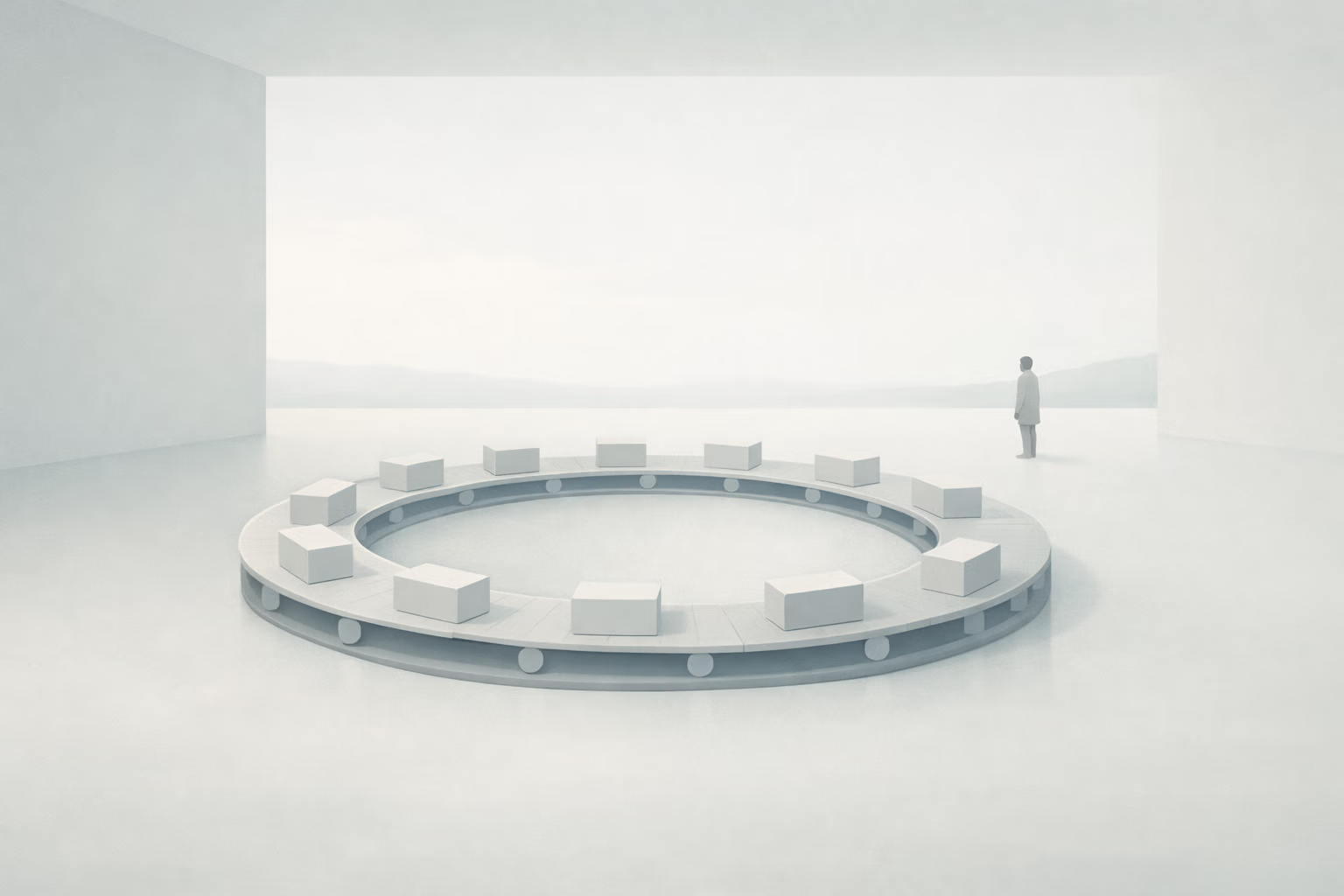
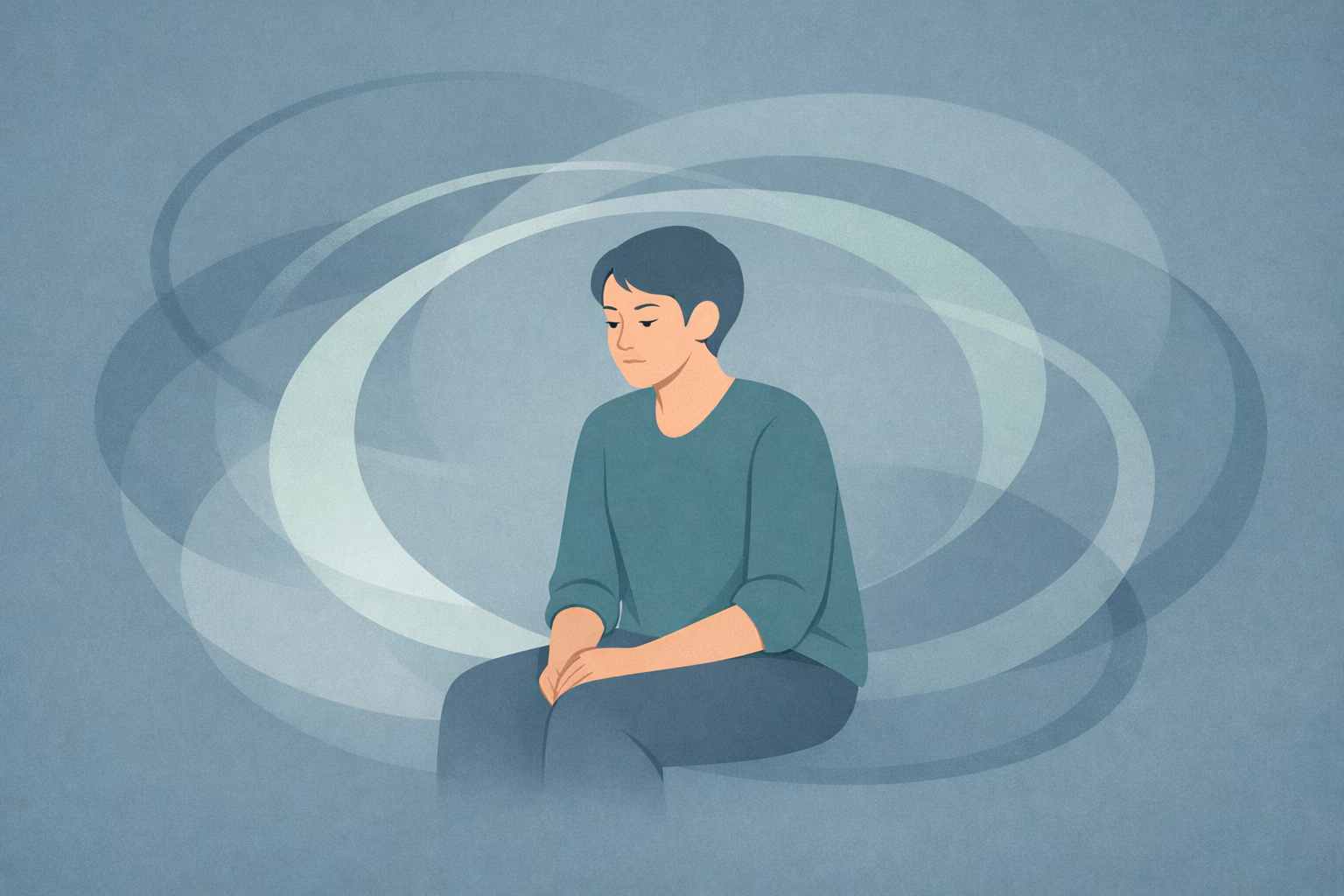
Understanding explains what is happening. Art allows you to feel it—without fixing, judging, or naming. Pause here. Let the images work quietly. Sometimes meaning settles before words do.
One Quiet Window, one insight, one reflection — every Sunday