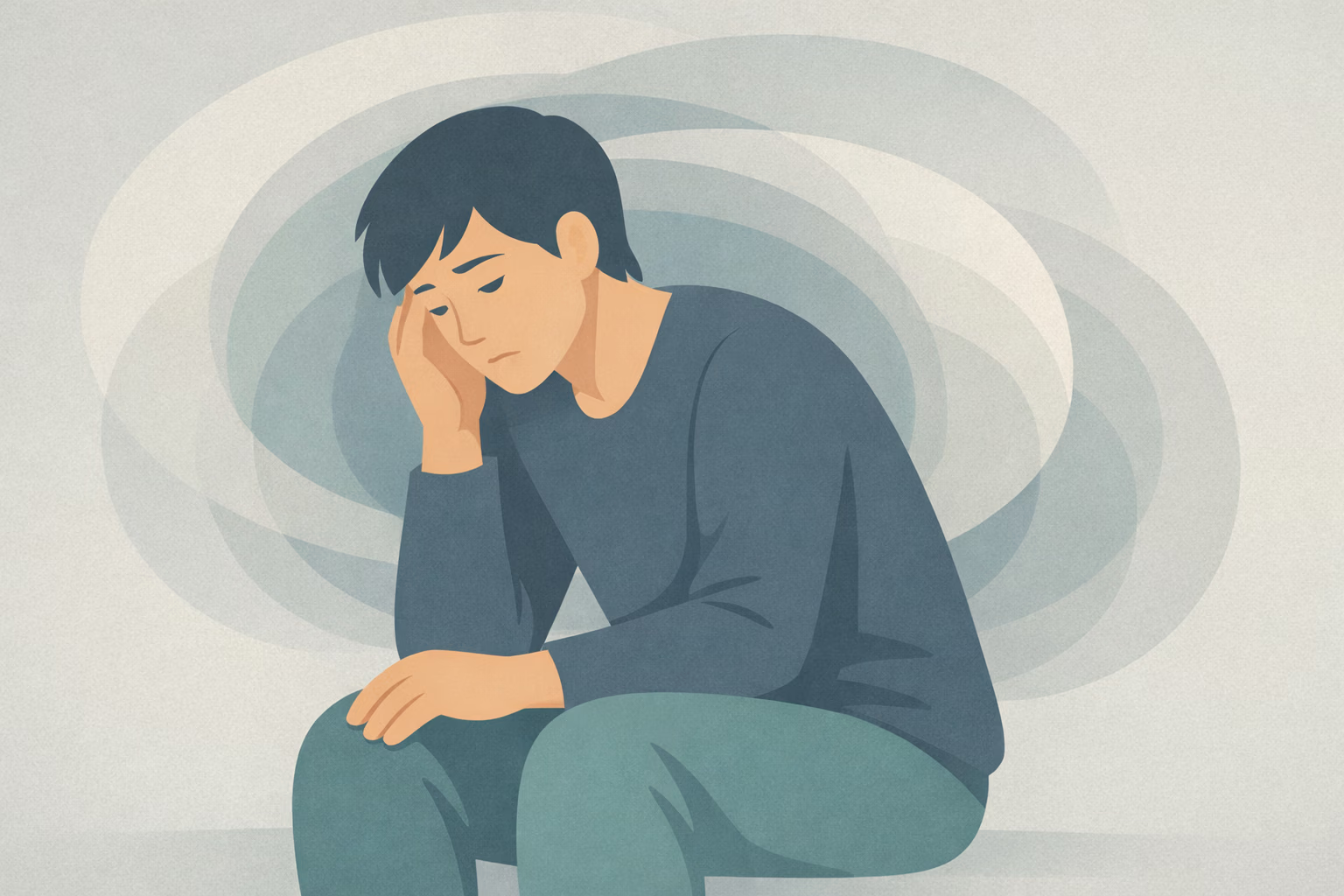
Emotional Frequency: Why Some Feelings Keep Coming Back
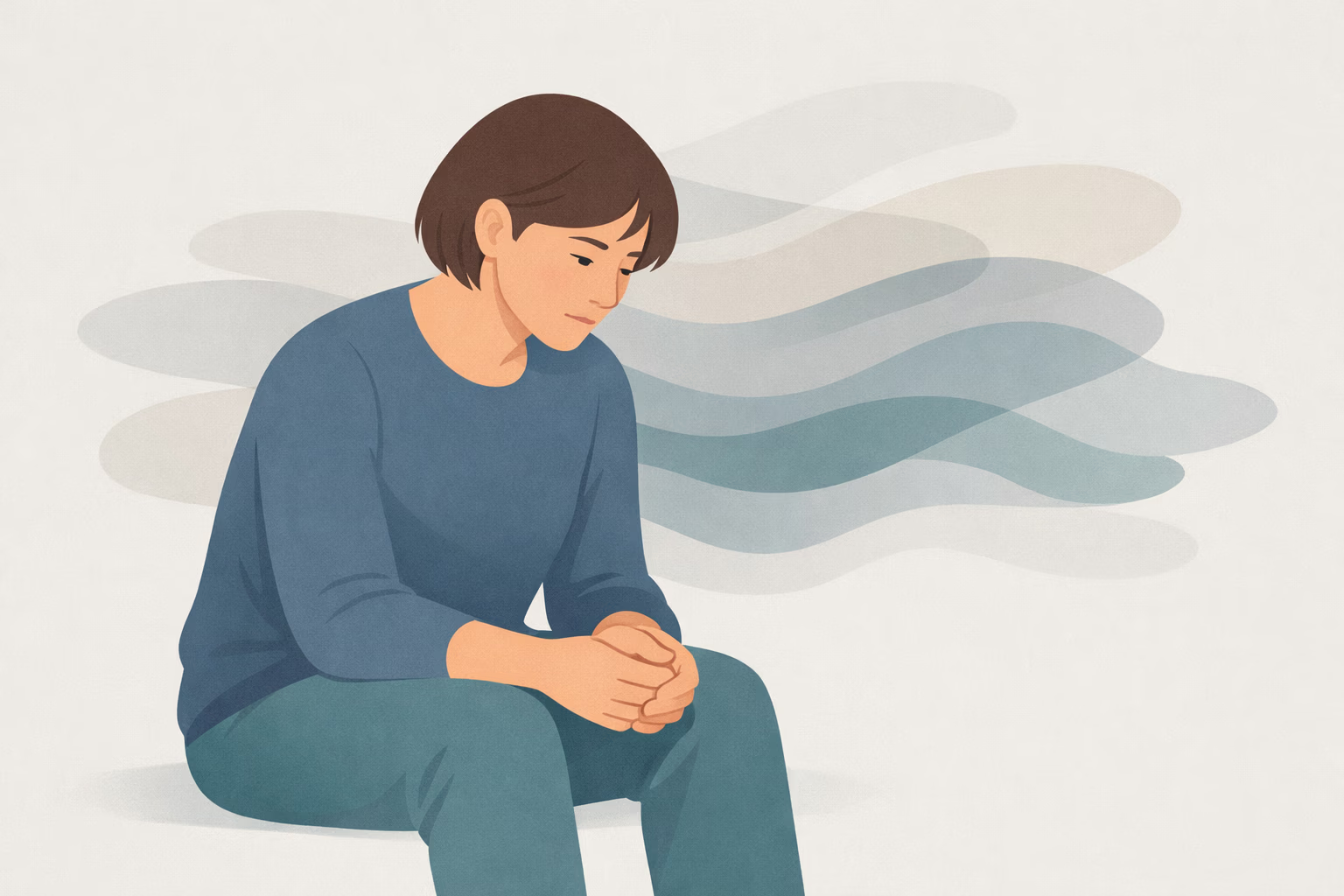
In short: Sometimes a small, ordinary moment lands like a wave: your heart jumps, your stomach tightens, your thoughts speed up, or your mood drops. And it can feel confusing—because nothing “big” is happening.
Sometimes a small, ordinary moment lands like a wave: your heart jumps, your stomach tightens, your thoughts speed up, or your mood drops. And it can feel confusing—because nothing “big” is happening.
These moments are often less about personality and more about physiology. A nervous system can carry residue from earlier strain, and when today resembles yesterday in even a thin way, the system can re-run an old readiness pattern—fast, automatically, and without needing a clear story.
What if the reaction isn’t proof you’re fragile—what if it’s an echo from a stress cycle that never got a clean ending?
A stress echo can feel like your body “misread” the present. You’re in a meeting, a grocery store, a text thread—yet your system responds as if there’s danger, scrutiny, or loss. The mismatch is often what makes it so disorienting.
This isn’t imagination and it isn’t a character flaw. It’s a real-time shift in state: attention narrows, muscles brace, breathing changes, and the mind searches for an explanation that fits the intensity. The body can bring forward an old pattern faster than the mind can narrate it. [Ref-1]
It can feel like you got pulled into a different timeline—your body insists something is happening, even when your eyes can’t confirm it.
Not all stress gets completed. Sometimes life moves on before your system receives enough safety cues to stand down—before the body gets the “done” signal. When that happens, the residue isn’t stored like a neat memory you can recall on demand; it can remain as a readiness template.
Later, similar cues—tone of voice, a hallway smell, a certain type of silence, the feeling of being evaluated—can reactivate that template. The reaction can appear sudden, but it’s often the nervous system recognizing a pattern it learned to treat as significant. [Ref-2]
In other words: the system isn’t trying to sabotage you. It’s trying to prevent a repeat.
Human survival systems didn’t evolve for modern schedules, inboxes, or constant social comparison. They evolved to keep a body alive in environments where danger could repeat. Remembering what preceded harm—locations, faces, sounds, sensations—was protective.
This kind of remembering is often sensory and state-based. The body can “recognize” a configuration of cues and shift into mobilization (tension, urgency) or conservation (numbness, shutdown) without needing a conscious narrative. [Ref-3]
In earlier contexts, carrying a leftover charge made sense. If a past event had no clear resolution—no safety, no repair, no protected pause—staying somewhat ready could reduce exposure next time. The body’s job was not to help you feel calm; it was to help you stay alive.
That’s why stress memory can be somatic: tension patterns, startle responses, stomach shifts, headaches, jaw clenching, a specific kind of vigilance. These are not “overreactions” so much as stored readiness. [Ref-4]
Readiness becomes costly, though, when the environment keeps triggering the same circuits without offering real closure.
From the outside, a stressful season can be finished: you moved, changed jobs, ended the relationship, survived the illness, got through the crisis. But completion is not only a calendar fact. Completion is a nervous-system fact—an internal stand-down that happens after enough safety and resolution have been registered.
When there wasn’t time, support, or space for the system to close the loop, the residue can keep shaping reactions in the background. You may think you’ve “moved on,” and still find your system responding as if something is pending. [Ref-5]
This is one reason people can feel baffled by their own intensity. The present isn’t creating the whole reaction; it’s activating what never fully settled.
A useful way to understand stress echoes is structurally: the body ramps up, but the cycle doesn’t reach a clean endpoint. Without a natural completion—without the internal shift that says “threat resolved”—activation can recur in fragments.
This can create an avoidance loop, not because a person is “afraid of feelings,” but because the system learns that activation is disruptive and costly. So it looks for the fastest route back to functioning: distraction, control, numbing, over-explaining, overworking. These are regulation attempts under load.
When the loop repeats, the nervous system gets practice at reactivating—without getting practice at ending. [Ref-6]
Stress echoes aren’t always dramatic. Often they’re subtle shifts that change how the world feels: less spacious, more urgent, harder to trust. People may notice them as “random” states, but they usually follow recognizable patterns. [Ref-7]
None of these are identities. They’re state shifts—signals that the system has moved into protection mode.
One of the hardest parts of recurring stress echoes is the uncertainty they create. If your system can turn on a dime, you may start living with a background question: Can I trust myself to be steady?
Over time, this can narrow life—not through conscious choice, but through reduced capacity. The nervous system becomes more reactive, recovery takes longer, and everyday decisions carry extra weight because the cost of activation feels high. Some people describe it as living with “thin skin,” even when they’re doing their best. [Ref-8]
When your body surprises you often enough, you begin organizing your life around avoiding surprise.
It’s common to assume avoidance is a moral or psychological issue—like not wanting to face something. But structurally, avoidance often functions as load management. If certain cues reliably spike activation, the system learns to bypass them, shorten exposure, or keep situations controllable.
The cost is that bypassing can also bypass completion. When stress cycles are repeatedly truncated—cut off mid-activation by distraction, overcontrol, or immediate escape—the body doesn’t necessarily receive the full sequence of “mobilize → resolve → stand down.” The alarm can remain easy to re-trigger. [Ref-9]
What looks like “overreacting” may be a system that never got confirmation of safety at the end of the story.
Many people try to think their way out of stress echoes: analyze the trigger, find the cause, create the right interpretation. Understanding can be clarifying, but it doesn’t automatically create the physiological settling that marks completion.
Because echoes are frequently state-based, the pathway back to completion tends to involve the body’s own signaling systems—interoception, sensation, breath rhythms, muscle tone, and the gradual re-learning of “present time” in the tissues. This isn’t about pushing into intensity; it’s about conditions that allow the system to register safety without needing to stay on guard. [Ref-10]
When completion happens, it’s less like a mental insight and more like an internal exhale: the same cues no longer demand the same level of readiness.
Humans are regulated in relationship. Not because we need constant reassurance, but because connection is a powerful safety cue. When stress was originally carried alone—without support, without repair, without someone helping the experience reach an ending—the system may have encoded “I have to stay ready by myself.”
Being witnessed—calmly, without urgency—can change what the nervous system predicts will happen next. Support can provide the missing context that allows stress traces to resolve rather than replay. In many trauma-informed frameworks, this is part of what “completing the cycle” refers to: the system finally gets the conditions it needed to finish. [Ref-11]
Sometimes what heals isn’t a new explanation. It’s a new ending.
When old stress begins to complete, people often notice changes that are surprisingly practical. It’s not constant calm or perpetual positivity. It’s a steadier baseline and a quicker return after disruption.
Signals that used to feel scrambled become more readable: hunger cues, fatigue cues, “enough” cues, social capacity. The startle may still happen, but it passes through rather than taking over. This is what increased continuity can look like—less whiplash, more internal sequencing. [Ref-12]
Stress echoes pull attention toward threat-monitoring: scanning, anticipating, managing. When that demand eases, something important becomes available again—orientation. The mind has more room to notice what matters now, not just what might go wrong.
This is where meaning density quietly rebuilds. Life feels more coherent when actions can be chosen from values and identity rather than from emergency management. You’re not “fixing yourself”; you’re regaining the ability to live in present time with fewer internal interruptions. [Ref-13]
With more closure, the nervous system can spend less effort on protection—and more on participation.
It can be tempting to read stress echoes as regression: “I thought I was past this.” A more dignified framing is that the system is surfacing what never got a clean finish. The echo is not a verdict on your strength; it’s information about what remained open. [Ref-14]
When you view these moments as unfinished loops rather than personal defects, shame tends to loosen. And when shame loosens, the system often has more capacity to move toward the kind of closure that creates real stability—closure that shows up as a quieter baseline, not just a better story.
Carrying old stress is costly. It adds invisible weight to decisions, relationships, and rest. Over time, that accumulated strain can look like irritability, numbness, urgency, or constant self-management—less because you’re doing life “wrong,” and more because the system has been compensating for too long. [Ref-15]
When old stress completes, something simple becomes possible again: being here. Not perfectly, not forever—but more often, with more agency, and with a sense that your attention belongs to your life now.
From theory to practice — meaning forms when insight meets action.
Often that's a stress echo — a real-time shift in state where attention narrows, muscles brace, breathing changes, and the mind searches for an explanation that fits the intensity. The body can bring forward an old pattern faster than the mind can narrate it. Not all stress gets completed; sometimes life moves on before the system receives enough safety cues to stand down. The residue isn't stored as a tidy memory — it remains as a readiness template. Later, similar cues (a tone, a smell, a feeling of being evaluated) can reactivate it. The reaction looks sudden, but it's the nervous system recognizing a pattern it learned to treat as significant.
Because completion is not a calendar fact — it's a nervous-system fact. From the outside, a stressful season can be finished: you moved, changed jobs, ended the relationship, survived the crisis. But completion is an internal stand-down that happens after enough safety and resolution have been registered. When there wasn't time, support, or space for the system to close the loop, residue keeps shaping reactions in the background. You may think you've moved on, and still find your system responding as if something is pending. The present isn't creating the whole reaction; it's activating what never fully settled.
Avoidance is usually load management, not denial. If certain cues reliably spike activation, the system learns to bypass them, shorten exposure, or keep situations controllable. The cost is that bypassing can also bypass completion. When stress cycles are repeatedly truncated — cut off mid-activation by distraction, overcontrol, or immediate escape — the body doesn't receive the full sequence of mobilize → resolve → stand down. The alarm remains easy to re-trigger. What looks like overreacting may be a system that never got confirmation of safety at the end of the story. The Avoidance Loop persists not from fear but from missing closure.
The pathway is typically bodily, not intellectual. Many people try to think their way out — analyze the trigger, find the cause, create the right interpretation. Understanding can clarify, but it doesn't automatically create the physiological settling that marks completion. Because echoes are state-based, the path involves the body's own signaling — interoception, sensation, breath, muscle tone, gradual re-learning of present time in the tissues. Co-regulation matters too: being witnessed calmly without urgency can change what the system predicts will happen next. Sometimes what heals isn't a new explanation; it's a new ending. When old stress completes, being here becomes possible again — not perfectly, but more often.
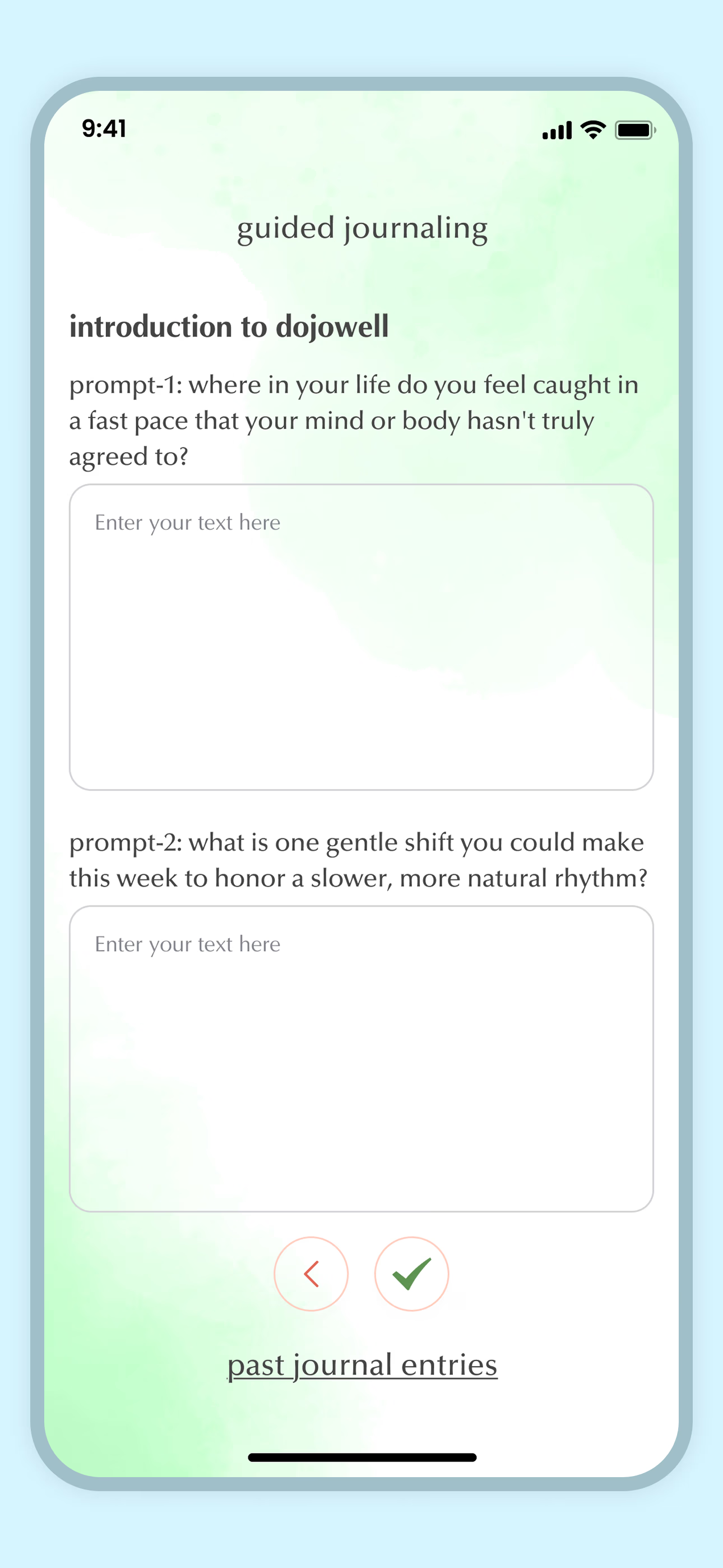
From Science to Art.
Understanding explains what is happening. Art allows you to feel it—without fixing, judging, or naming. Pause here. Let the images work quietly. Sometimes meaning settles before words do.
One Quiet Window, one insight, one reflection — every Sunday