News Addiction: Global Stress Loops You Don’t Notice
In short: When Your Mind Amplifies Tension Sometimes stress doesn’t just feel present—it feels like it’s multiplying inside you. A tight chest prompts a worried thought. The worried thought tightens the body further.
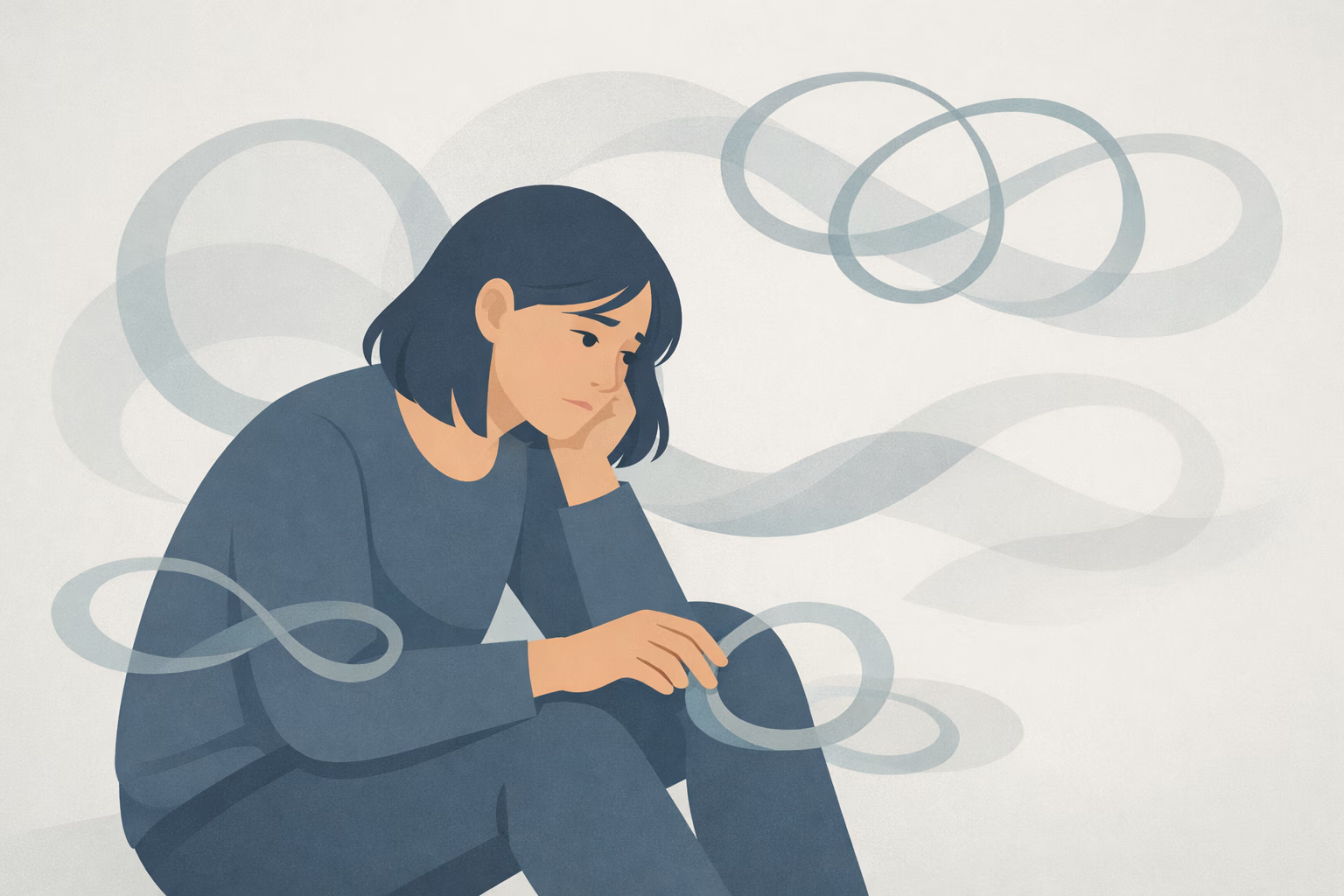
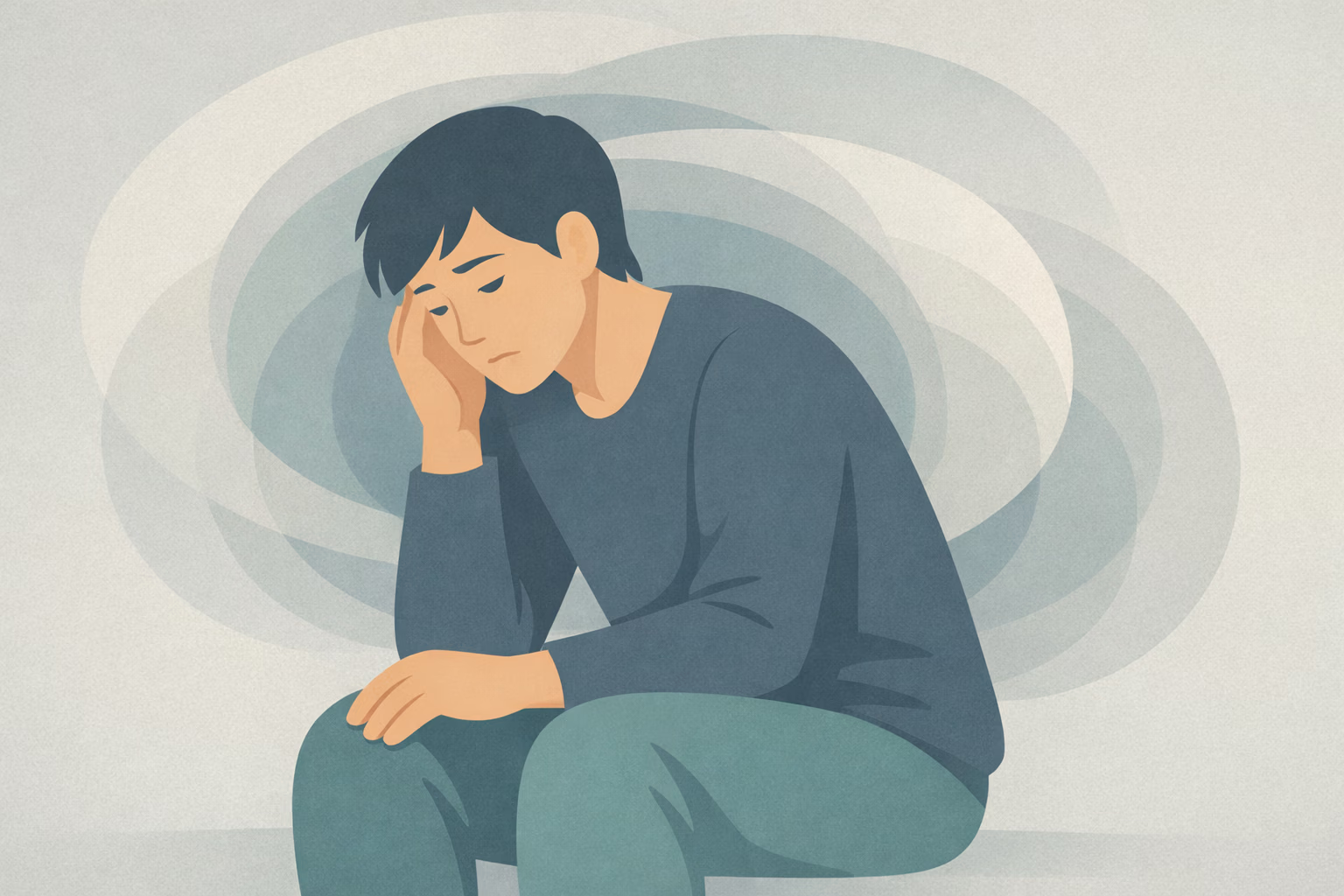
Sometimes stress doesn’t just feel present—it feels like it’s multiplying inside you. A tight chest prompts a worried thought. The worried thought tightens the body further. Soon, your inner world can feel like a room where every sound bounces back louder than it started.
This “stress echo chamber” isn’t a personal flaw. It’s what can happen when a nervous system under load keeps scanning for resolution, but keeps receiving partial signals—unfinished tasks, unclear outcomes, constant evaluation, or too many open tabs in life.
What if the problem isn’t that you think too much—but that your system can’t find a clean “done” signal?
Stress is designed to help you mobilize: focus, act, and then stand down when the situation is complete. But in a stress echo chamber, internal activity keeps the mobilization going even when nothing is changing on the outside.
Thought can start behaving like an amplifier instead of a problem-solver. The mind turns toward the body’s tension, reads it as important, and stays engaged—re-running scenarios, rehearsing conversations, reviewing choices—trying to secure an ending that feels safe enough to stop. This pattern aligns with the perseverative cognition framework: prolonged worry or rumination can extend stress-related activation beyond the original trigger. [Ref-1]
It can feel like you’re “doing something” by thinking—while your body experiences it as ongoing alarm.
Rumination isn’t just “mental.” When the brain repeatedly simulates threat, conflict, or uncertainty, the body often responds as if the event is still happening—maintaining arousal signals like muscle bracing, faster heart rate, shallow breathing, or digestive disruption.
In research on perseverative cognition, repeated worry is associated with prolonged physiological activation, even when the stressor is no longer present in the environment. [Ref-2] The key detail is structural: the body doesn’t require a new external event to stay activated—it only requires ongoing internal cues that the situation is unresolved.
That feedback loop can then feel self-confirming: physical tension becomes “evidence” that something must be wrong, which fuels more scanning and more thinking.
Human attention did not evolve to create a calm, evenly distributed awareness. It evolved to prioritize what could harm you, especially when the outcome is uncertain or incomplete. An unfinished threat captures attention because it demands closure.
Perseverative thinking can be understood as an extension of that priority system: if your brain can’t finish the loop through action, resolution, or clear social repair, it may keep the loop “running” through cognition. This is one reason persistent worry is so sticky—it behaves like an attempt to keep the threat on the dashboard until it can be handled. [Ref-3]
In this light, overthinking is not an identity. It’s a regulatory workaround that makes sense in a system that can’t get completion.
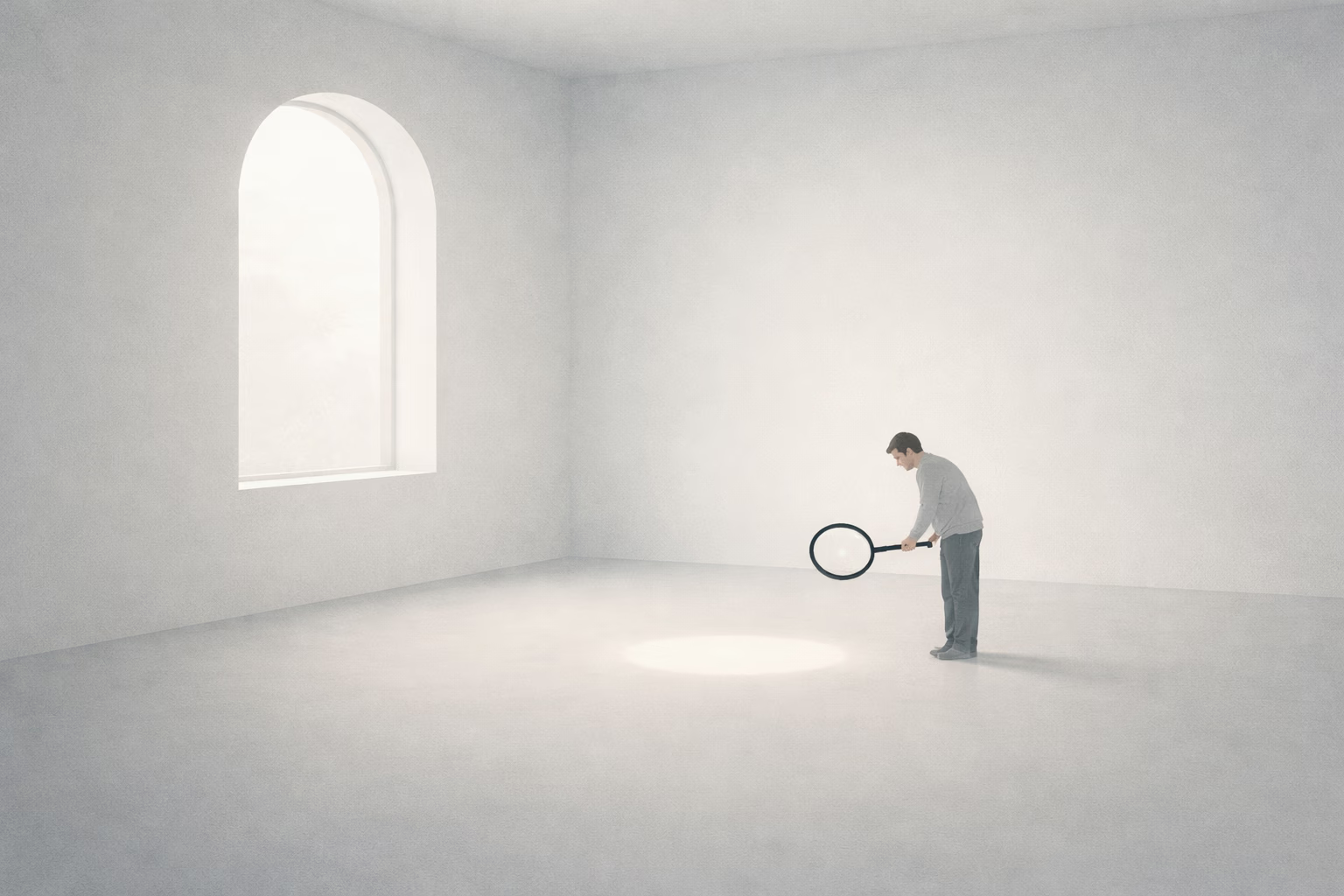
Constant monitoring can create a brief sense of readiness: “If I keep an eye on it, I won’t be blindsided.” That sensation can be soothing for a moment because vigilance mimics agency.
But vigilance is metabolically expensive. The body reads ongoing monitoring as ongoing demand. Over time, the cost is paid in sleep disruption, irritability, difficulty concentrating, and reduced capacity for pleasure or connection—signals that the system has been held “up” for too long. This aligns with work linking perseverative cognition to stress-related patterns that spill into daily functioning and health behaviors. [Ref-4]
What if the weariness isn’t weakness—what if it’s the bill coming due for prolonged readiness?
Many people learn, implicitly, that mental engagement is protection. If you keep replaying what happened, you won’t repeat it. If you anticipate every possible problem, you won’t be caught off guard. If you analyze your feelings, you’ll finally calm down.
Yet in an echo chamber, more thinking can function like more exposure to threat—more simulations, more alarms, more internal noise. The intent is safety; the effect is escalation. Research on worry as a perseverative process emphasizes that it can maintain stress activation rather than resolve it. [Ref-5]
This mismatch can be especially confusing because it looks like effort and responsibility from the outside, while it feels like stuckness from the inside.
A stress echo chamber often lives inside an avoidance loop—not avoidance as fear or refusal, but as a structural substitution. Thinking becomes a stand-in for completion. Instead of contacting the real endpoint (a decision, an apology, a boundary, a rest cycle, a finished task), the system circles the issue in cognition.
In that loop, rumination can function like “motion without movement.” The mind stays busy, but the nervous system doesn’t receive the closure signals it needs to stand down. This fits with the broader literature on perseverative cognition as a process that extends stress responses through ongoing mental engagement. [Ref-6]
From the inside, this can feel like responsibility. From a regulation lens, it’s often an overworked system trying to resolve without a clear path to resolution.
The stress echo chamber has a recognizable texture. It’s not only “worry.” It’s the way the whole system starts orienting around stress cues—internally and externally.
Body: jaw clenching, stomach tightness, shallow breathing, frequent sighing, shoulder bracing
Mind: repetitive reviewing, “what if” chains, mental rehearsals, difficulty landing on a conclusion
Attention: hypersensitivity to messages, tone, deadlines, headlines, or ambiguous feedback
Behavioral drift: postponing decisions, checking and re-checking, starting many things but finishing few
These patterns are consistent with descriptions of perseverative cognition as a default stress response linked with somatic strain. [Ref-7] None of them mean you are broken; they mean your system is carrying open loops.
When the echo chamber runs long enough, it can create a particular kind of fatigue: not just tiredness, but reduced resilience. Small stressors feel bigger. Recovery takes longer. Your internal baseline starts trending toward activation.
Rumination has been shown to predict heightened responses to stressful events over time, suggesting that repeated cognitive engagement can sensitize the stress system rather than settle it. [Ref-8] In everyday terms, the volume knob gets stuck higher.
This is one reason “burnout” can feel less like emotional intensity and more like a narrowed bandwidth: fewer resources available for patience, creativity, appetite, or social ease.
Arousal changes what you notice. When your nervous system is activated, your attention naturally tilts toward potential problems: what’s unresolved, what might go wrong, what needs fixing. That bias is not pessimism—it’s physiology.
Then attention feeds the loop. Noticing more stress cues creates more internal evidence that things are unsafe or unfinished, which sustains arousal. Research links rumination to anxiety and depression partly through this ongoing stress linkage—stress increases rumination, rumination increases stress. [Ref-9]
In an echo chamber, the mind can become a high-powered microphone pointed at the body’s tension signals. The goal is clarity; the result is louder noise.
In a stress echo chamber, it’s easy to treat thoughts as the primary engine and the body as a passenger. But often the direction is reversed: the body’s activation level shapes the kind of thinking that becomes available.
When physiological load lowers—when the system receives more safety cues and fewer “unfinished” signals—cognition tends to shift from repetitive simulation to more flexible problem-solving. Rumination is associated with a range of affective, cognitive, and somatic symptoms, which highlights how closely thinking style and bodily state travel together. [Ref-10]
This isn’t a motivational story. It’s a state-dependent one: different nervous system states make different narratives feel convincing.
Sometimes “clarity” arrives not through more analysis, but because the system finally has room to see.
Humans are social regulators. Signals of safety—steady presence, predictable connection, supportive tone—can reduce internal stress feedback in ways that solitary effort cannot fully replicate. This isn’t about dependence; it’s about biology.
When the social environment provides cues of stability, the body can downshift, and the mind has less arousal to interpret. Conversely, when a person has to carry everything alone, the system may stay on watch. Research on stress responses shows that how we manage internal states relates to physiological reactivity, underscoring that regulation is embodied, not purely cognitive. [Ref-11]
In the echo chamber, reassurance is not “convincing yourself.” It’s the nervous system receiving evidence—through relationship and context—that the loop can safely close.
When the echo chamber begins to ease, the change is often subtle at first. It can feel less like a dramatic emotional release and more like signals returning to baseline: shoulders drop without being forced, breathing becomes less guarded, attention stops snapping back to the same problem every few minutes.
Rumination-oriented responses to anxiety are associated with ongoing distress patterns, so a quieter mental field often tracks with reduced perseveration rather than “better attitude.” [Ref-12] The system isn’t being powered through—it’s receiving enough closure and reduced load to stand down.
How do you know it’s real settling?
Not because you understand your stress perfectly, but because the body stops insisting on the same urgent scan.
A key cost of the echo chamber is that it crowds out priority signals. When the system is busy managing internal alarms, it has less capacity to notice what matters: values, relationships, craft, contribution, rest, play, or long-range direction.
As stress noise reduces, attention can reorient. Not toward constant positivity, but toward coherence—what fits, what’s aligned, what can be completed. This is where agency starts to feel less like forcing yourself and more like being able to choose. When physiological strain is lower, the mind is less pulled into suppression-or-escalation dynamics and more able to stay present with priorities. [Ref-13]
Meaning, in this sense, isn’t a thought you adopt. It’s what becomes available when the system isn’t dominated by unfinished threat simulations.
If you live in a stress echo chamber, it can be tempting to blame your personality: “I’m just an overthinker.” A more accurate frame is often simpler and kinder: your system is trying to regulate without enough closure.
The amplification is a signal. It suggests that what’s needed is not more internal monitoring, but conditions that support regulation—reduced load, clearer endpoints, and more cues of safety in body and environment. Polyvagal-informed perspectives highlight how powerfully safety cues and co-regulation shape state. [Ref-14]
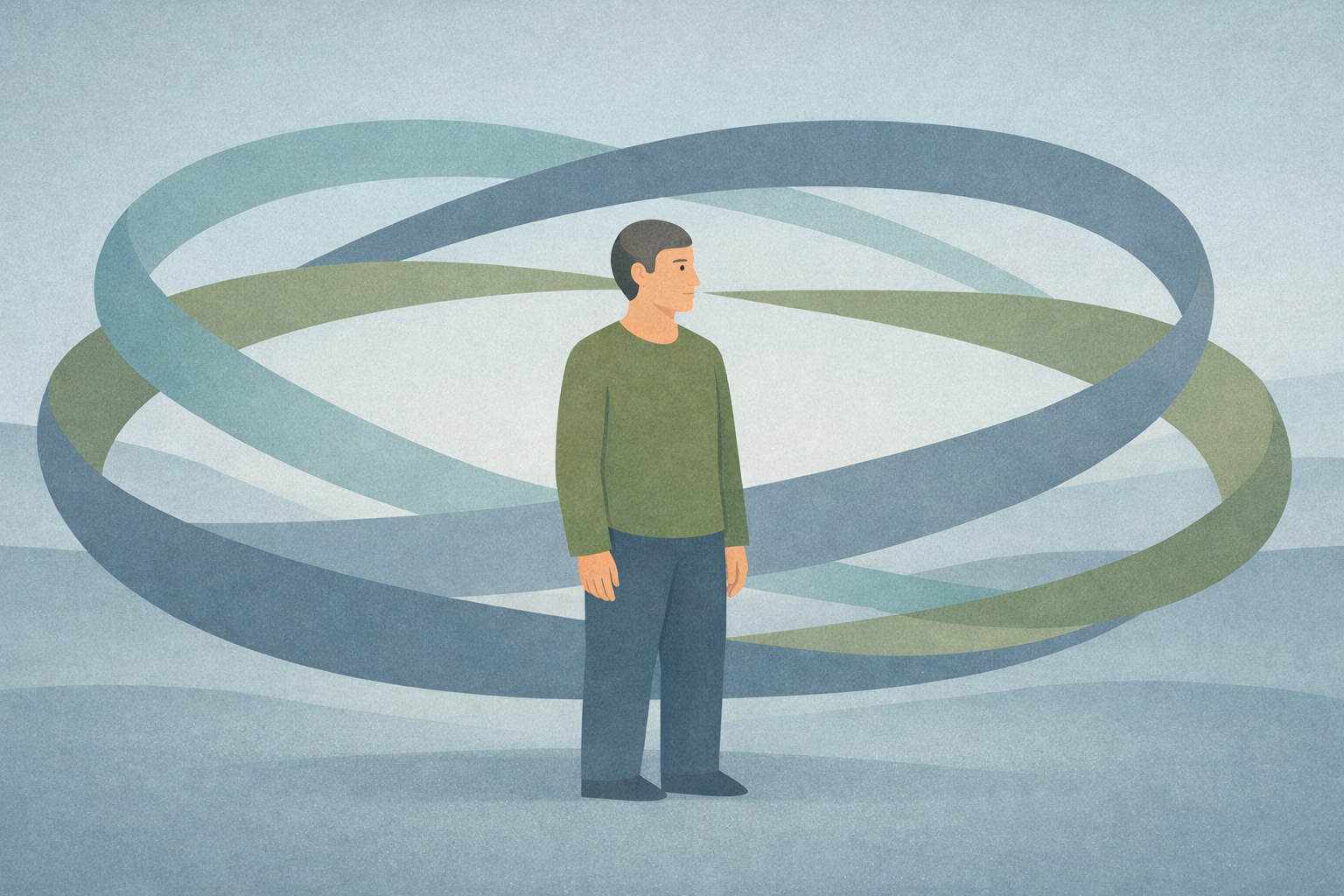
Agency tends to return when life offers more “complete loops” than “open loops.” When the system can finally register done-ness, the mind doesn’t have to keep echoing the same alarm.
The stress echo chamber is not proof that you’re failing at life. It’s often proof that your nervous system has been asked to hold too much, too long, with too few clean endings.
When mind and body stop reinforcing alarm, something steadier becomes possible: quieter internal weather, more room for connection, and a clearer sense of what matters. In polyvagal terms, safety is not an idea—it’s a state shift that changes what your system believes is possible. [Ref-15]
And when that shift arrives, it can feel less like “fixing yourself” and more like coming back into coherence—where your attention is no longer owned by tension, and meaning can take up space again.
From theory to practice — meaning forms when insight meets action.
It's the feedback pattern where a tight chest prompts a worried thought, and the worried thought tightens the body further. The article frames stress as designed to mobilize and then stand down, but in an echo chamber internal activity keeps mobilization going even when nothing changes externally. Thought starts behaving like an amplifier instead of a problem-solver — the mind reads body tension as important and stays engaged, re-running scenarios trying to secure a safe enough ending to stop. It can feel like 'doing something' by thinking while the body experiences it as ongoing alarm. The system can't find a clean Done Signal.
Because the body doesn't require a new external event to stay activated — it only requires ongoing internal cues that the situation is unresolved. The article describes how repeated mental simulation of threat, conflict, or uncertainty maintains arousal signals: muscle bracing, faster heart rate, shallow breathing, digestive disruption. Then the loop becomes self-confirming — physical tension becomes 'evidence' that something must be wrong, which fuels more scanning and more thinking. Attention systems evolved to privilege unfinished threat because incomplete situations demand closure. Overthinking isn't an identity; it's a regulatory workaround in a system that can't reach completion.
Because in an echo chamber, more thinking functions like more exposure to threat — more simulations, more alarms, more internal noise. The intent is safety; the effect is escalation. The article frames this as motion without movement: the mind stays busy but the nervous system never receives the closure signals it needs to stand down. Many people learn implicitly that mental engagement equals protection — replaying prevents repetition, anticipating prevents being caught off guard. The mismatch is confusing because it looks like effort and responsibility from outside while feeling like stuckness from inside. Thinking has substituted for completion.
State change rather than insight. The article frames the direction as often reversed from what people assume — the body's activation level shapes what kind of thinking becomes available, not the other way around. When physiological load lowers and the system receives more safety cues and fewer unfinished signals, cognition shifts from repetitive simulation to flexible problem-solving. Co-regulation dampens the feedback because humans are social regulators: steady presence and supportive tone reduce internal stress in ways solitary effort can't. Sometimes 'clarity' arrives not through more analysis but because the system finally has room to see. When stress noise drops, meaning becomes audible again.
From Science to Art.
Understanding explains what is happening. Art allows you to feel it—without fixing, judging, or naming. Pause here. Let the images work quietly. Sometimes meaning settles before words do.
One Quiet Window, one insight, one reflection — every Sunday