Internal Noise Reduction: How to Quiet the Overactive Mind
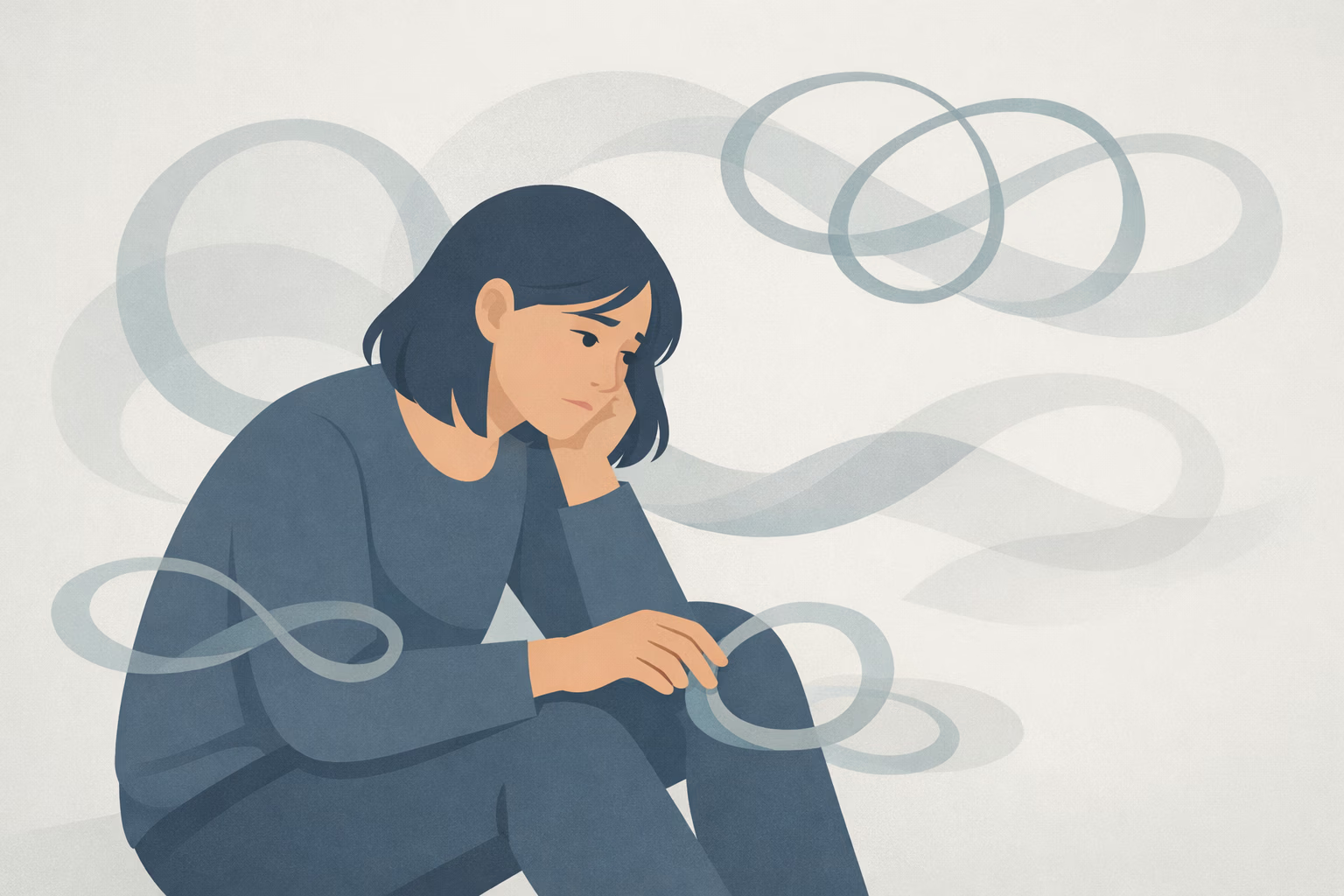
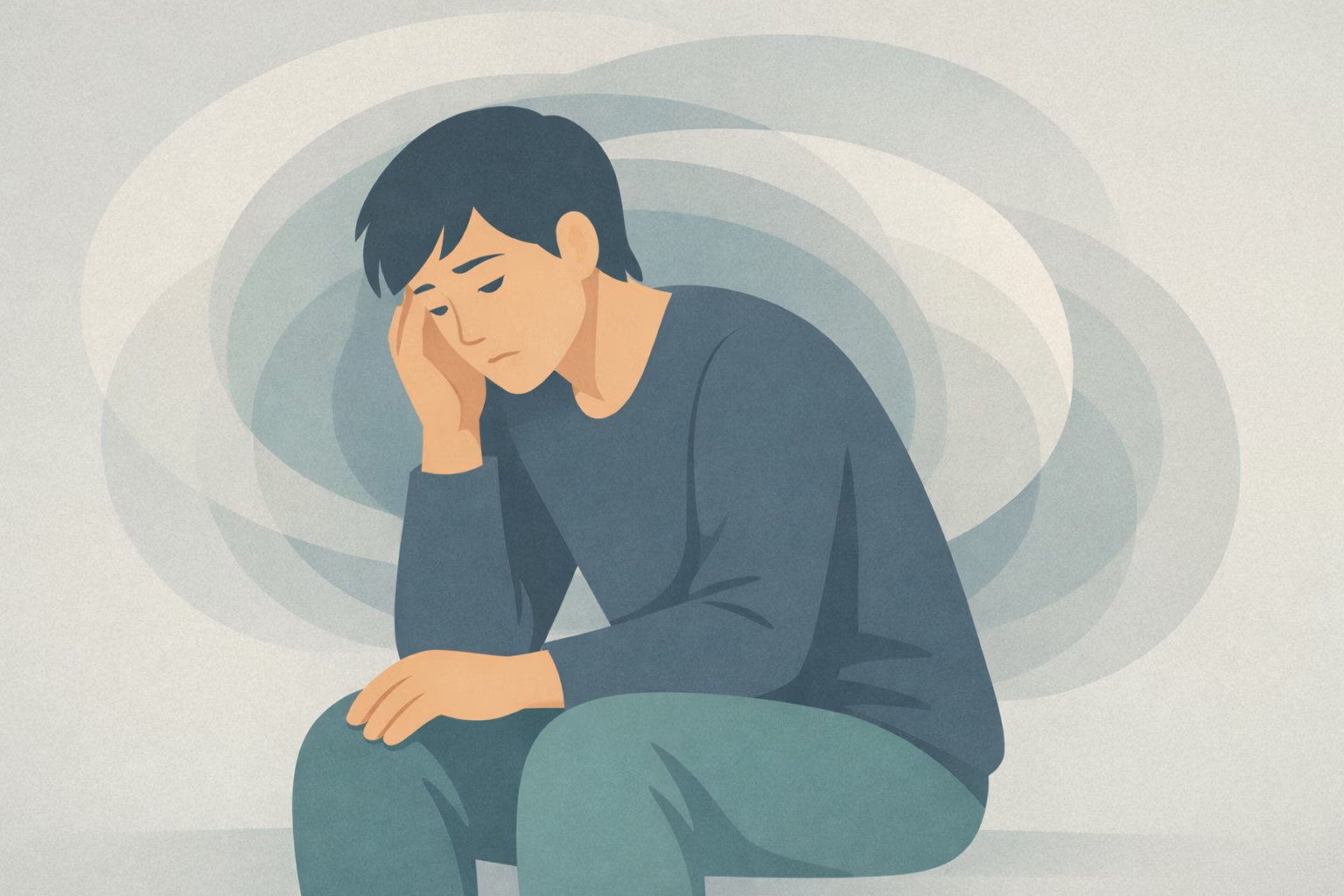
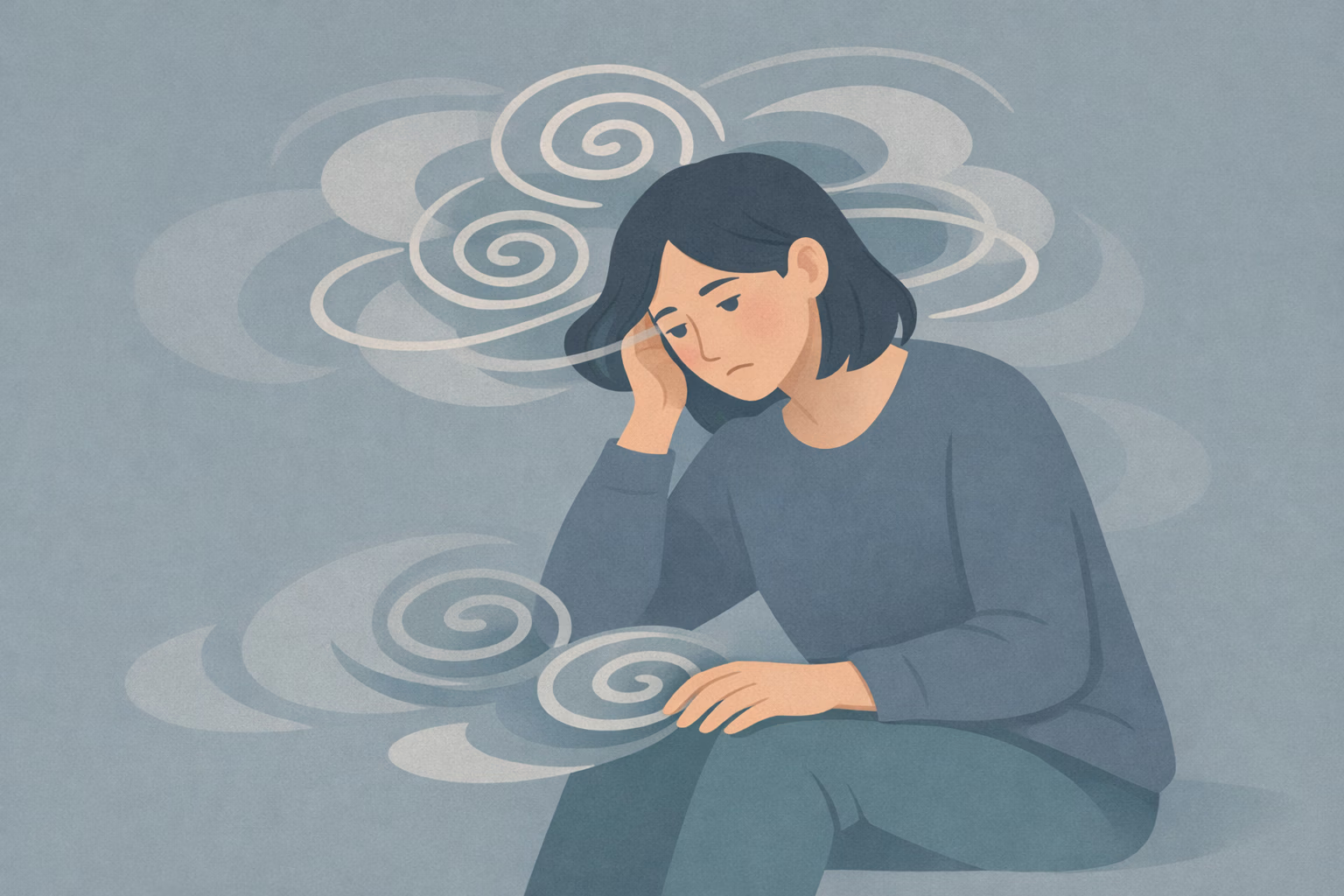
In short: Overthinking can look like productivity from the outside: a mind running simulations, checking angles, replaying conversations, forecasting outcomes. Inside, it often feels like being kept awake by your own brain—alert, busy, and somehow unable to land.
Overthinking can look like productivity from the outside: a mind running simulations, checking angles, replaying conversations, forecasting outcomes. Inside, it often feels like being kept awake by your own brain—alert, busy, and somehow unable to land.
What if the loop isn’t a personality trait, but a nervous system trying to finish something it can’t complete?
In modern life, many experiences don’t resolve cleanly. There’s no clear ending, no settled consequence, no “safe to stand down” signal. When closure doesn’t arrive through lived completion, the mind may keep generating more thought in an attempt to create it.
A mind that “won’t quiet down” usually isn’t chasing drama. It’s trying to stabilize. The spinning scenarios, the constant re-checking, the mental replay—these are signs of ongoing activation, not a lack of character.
Many people describe the same paradox: you want rest, but your attention keeps snapping back to the same topics, as if your brain is keeping something on the stove so it doesn’t boil over. Repetitive negative thinking is a common human pattern, and research connects it to persistent internal self-focus and ongoing network activation that can make mental settling harder to access in daily life. [Ref-1]
“I’m not choosing to think; it feels like thinking is choosing me.”
Your executive attention system helps you plan, prioritize, and solve problems. Under strain, that same system can become a re-triggering engine: it keeps reopening the question of “What’s the risk?” and “What did I miss?” as if more analysis will finally produce certainty.
This is one reason overthinking feels both active and stuck. The mind is working hard, but it’s working on a loop—evaluating, predicting, and re-evaluating—without reaching a point that registers as complete. Repetitive negative thinking shows up across many forms of distress because it recruits the same attention-and-evaluation machinery again and again. [Ref-2]
When the brain can’t find a clean “all clear,” it often chooses “keep scanning.”
Human brains evolved to anticipate danger in environments where threats were more concrete and consequences were more immediate. Prediction helped you prepare, avoid harm, and protect relationships and resources. In that setting, many loops could close: something happened, you responded, the result became known.
Modern life is different. Many stakes are abstract (status, reputation, future security), and many outcomes remain ambiguous. That ambiguity can keep prediction systems online longer than they were designed for—especially when there are many variables and no clear endpoint. Repetitive negative thinking is consistently associated with subjective cognitive strain and “mental noise,” which makes sense when prediction systems are running in high gear. [Ref-3]
Overthinking often brings a short-lived feeling of vigilance: “If I keep going, I’ll prevent the bad outcome.” That sense of preparedness can be regulating in the moment, because it mimics control and reduces the discomfort of not knowing.
But the relief is typically partial and unstable. The mind may interpret that brief reduction in uncertainty as proof that more thinking is required, which reinforces the cycle. Research links repetitive negative thinking with perceived cognitive dysfunction and ongoing self-reflection that can feel urgent rather than resolving. [Ref-4]
A common story inside overthinking is: “If I stop, I’ll miss something.” It’s an understandable belief in a world that punishes errors, rewards vigilance, and rarely offers clean closure. The mind tries to protect you from regret by staying engaged.
Yet repetitive negative thinking tends to correlate with higher distress and disrupted sleep, partly because it sustains arousal and keeps the system from downshifting into rest. [Ref-5] What looks like prevention can function like perpetuation: the loop itself becomes a source of strain.
When thinking is treated as the only safety strategy, stopping can feel like risk—even when continuing is exhausting.
It can be tempting to describe overthinking as “avoiding feelings,” but a more accurate frame is structural: thinking can substitute for resolution. When lived completion isn’t available—because a conversation didn’t happen, an outcome isn’t knowable, a boundary wasn’t enacted, or the environment keeps changing—cognition becomes the stand-in for an ending.
In cognitive avoidance models of worry, repetitive thinking can reduce immediate arousal in the short term by keeping attention in the abstract and hypothetical, which can feel more manageable than direct contact with consequence, uncertainty, or social risk. [Ref-6] The key is that this doesn’t produce closure; it produces ongoing management.
“My mind keeps negotiating with the future because the present doesn’t feel settled.”
Overthinking loops aren’t always loud. Sometimes they’re quiet, persistent, and automatic—like background apps draining the battery. Over time, the mind learns that returning to the loop is the default way to regulate unsettledness.
In experiential avoidance frameworks, worry and rumination can function as patterns that narrow experience and keep attention from moving toward completion signals. [Ref-7]
Overthinking consumes resources. Not because you’re “too sensitive,” but because sustained evaluation is metabolically and neurologically costly. The brain treats unresolved risk like unfinished business; it allocates attention accordingly.
As loops persist, people often notice reduced clarity, weaker decision-making, and lower frustration tolerance. Worry can operate as an avoidance strategy that changes how threat is appraised and how control is perceived—sometimes helping briefly, but ultimately keeping the system organized around threat. [Ref-8]
The cost isn’t just fatigue. It’s a shrinking of mental spaciousness—the room where perspective and choice usually live.
Overthinking often becomes self-fueling: activation increases mental scanning; mental scanning finds more risk; more risk increases activation. This is not a moral failure—it’s a closed circuit.
When cognition is used as the primary regulator, the nervous system may stay oriented to detection rather than resolution. Measures of cognitive avoidance describe strategies like distraction-by-thought, transformation of images into words, and mental control attempts—moves that can keep the loop intact even while feeling like “doing something.” [Ref-9]
The opposite of overthinking isn’t “positive thinking.” It’s the nervous system receiving enough safety cues and completion signals that constant prediction is no longer required. When the system detects stability—internally or relationally—attention can loosen its grip without force.
In the repetitive negative thinking literature, cognitive mechanisms and threat-focused processing help explain why loops persist, and why shifts in perceived safety and controllability can change their intensity. [Ref-10] Importantly, this isn’t about convincing yourself you’re safe; it’s about the body-mind registering that scanning is no longer the best available strategy.
“Quiet isn’t something you achieve. It’s something that arrives when your system stops needing to guard.”
Overthinking is often solitary work: the mind tries to be its own witness, judge, protector, and problem-solver at once. That’s a heavy load for one nervous system to carry.
External perspective can interrupt closed loops because it introduces new information, new timing, and new cues of social safety. This is one reason reassurance, co-regulation, and being understood can reduce rumination—not by “fixing” you, but by changing the conditions that keep threat evaluation running. Research on rumination notes how self-focused repetitive thought can become self-defeating, especially when it lacks new data and keeps circling the same interpretations. [Ref-11]
Sometimes the most regulating input is simply: “I see what’s happening, and you’re not alone in it.”
Mental quiet isn’t the absence of thought. It’s the return of flexibility: attention can move; concerns can be set down; the body can shift out of constant readiness. The mind still plans, but it no longer has to rehearse every possible failure to feel allowed to rest.
Polyvagal-informed science describes how cues of safety support shifts toward states associated with social engagement, restoration, and expanded capacity. [Ref-12] In everyday terms, this can look like less urgency, fewer “compulsion-to-solve” sensations, and more natural stopping points.
When the system isn’t spending most of its energy on threat scanning, attention naturally reorients toward what matters: relationships, craft, contribution, repair, play, and rest. This isn’t forced motivation; it’s coherence returning as bandwidth returns.
From a nervous system perspective, safety supports connection and exploratory engagement—states where identity can be lived rather than defended. [Ref-13] Meaning becomes more available not because you “think better,” but because experience can complete: actions land, consequences clarify, and the day develops endings that register as done.
“When I’m not guarding the future, I can finally inhabit the present.”
Overthinking is rarely a sign that you’re broken. More often, it’s a sign that your system learned to use cognition as protection in a world that doesn’t offer easy closure. The loop is an attempt to keep you safe, informed, and ready—even when it costs you rest.
Agency often begins with orientation: seeing the pattern as a regulatory response to load and uncertainty, rather than as “who you are.” When safety and co-regulation are present, the mind doesn’t have to work as hard to hold everything together. [Ref-14]
What you’re looking for may not be the perfect answer—so much as a life that gives your nervous system more true endings.
A mind settles when it no longer has to patrol imagined futures alone. Not because you finally out-argued uncertainty, but because your system received enough safety, support, and completion to stand down.
In that settled space, meaning isn’t manufactured. It’s revealed as coherence returns—when attention is free to belong to your life rather than to endless prediction. [Ref-15]
From theory to practice — meaning forms when insight meets action.
Because it isn't choosing to think — it's trying to stabilize. A restless mind is usually a system that won't settle, not a personality trait. Spinning scenarios, constant re-checking, mental replay — these are signs of ongoing activation searching for closure that lived experience hasn't supplied. When a conversation didn't happen, an outcome isn't knowable, or an environment keeps shifting, the brain keeps generating thought to manufacture an ending. Rest gets postponed because the system reads stopping as risk. The paradox is that thinking harder won't quiet it; what helps is the body receiving evidence that scanning is no longer the best available strategy.
Structurally, cognition can substitute for resolution. When closure isn't available — because the boundary wasn't enacted, the consequence isn't clear, or the conversation can't be had — the mind keeps the situation in the abstract and hypothetical. That feels more manageable than direct contact with uncertainty or social risk, which is why it briefly reduces arousal. But it doesn't produce closure; it produces ongoing management. This is the Avoidance Loop in cognitive form: thinking replaces completion. The mind keeps negotiating with the future because the present doesn't feel settled, and the loop becomes the default way to regulate unsettledness.
Because they share a closed circuit: activation increases mental scanning, scanning finds more risk, more risk increases activation. Higher load makes uncertainty feel intolerable, intolerance drives more analysis, analysis raises load again. Each rotation feels like doing something — distraction-by-thought, transformation of images into words, mental control attempts — but the moves keep the loop intact. The brain treats unresolved risk like unfinished business and allocates attention accordingly, which is metabolically expensive. Over time, mental spaciousness shrinks, and so does the room where perspective and choice usually live. The cost isn't just fatigue; it's reduced flexibility.
Not blankness. It's the return of flexibility: attention can move, concerns can be set down, and the body can shift out of constant readiness. The mind still plans, but it no longer rehearses every possible failure to feel allowed to rest. Thoughts arise and pass without recruiting a full investigation team. Decisions feel good enough rather than endlessly provisional. Co-regulation often supports this — another person's steady presence introduces new safety cues that the looping mind can't supply alone. Within Loop Sovereignty, quiet isn't something you achieve. It arrives when your system stops needing to guard.
From Science to Art.
Understanding explains what is happening. Art allows you to feel it—without fixing, judging, or naming. Pause here. Let the images work quietly. Sometimes meaning settles before words do.
One Quiet Window, one insight, one reflection — every Sunday