Overthinking Loops: When the Mind Won’t Quiet Down
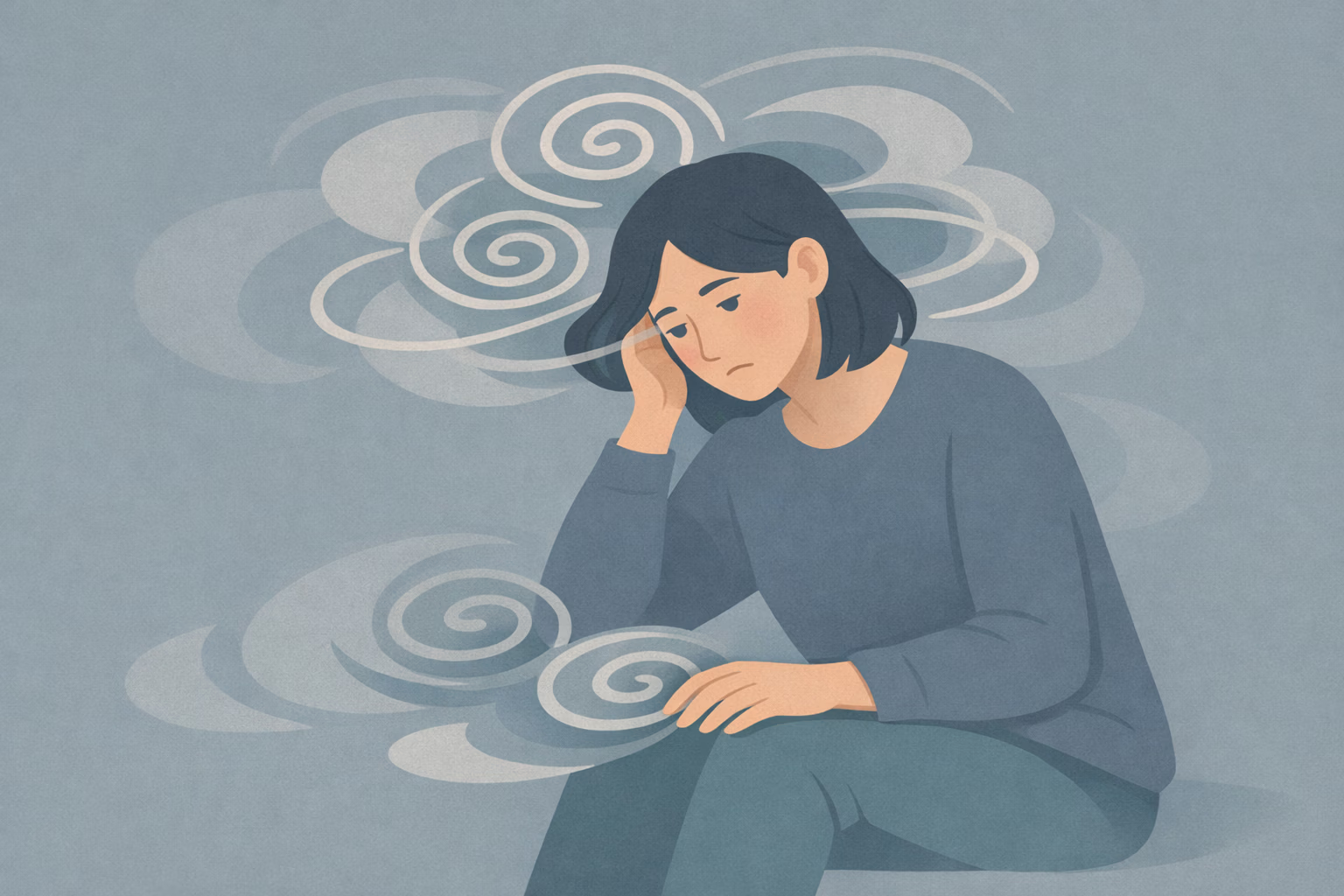
In short: A thought spiral often starts as something reasonable: a single unanswered question, a small social ambiguity, a decision with real stakes. And then, almost without permission, it multiplies—new scenarios, new consequences, new “what ifs.” What feels like thinking “harder” is often your system trying to locate a reliable safety signal in a world that doesn’t always provide one.
A thought spiral often starts as something reasonable: a single unanswered question, a small social ambiguity, a decision with real stakes. And then, almost without permission, it multiplies—new scenarios, new consequences, new “what ifs.” What feels like thinking “harder” is often your system trying to locate a reliable safety signal in a world that doesn’t always provide one.
What if a thought spiral isn’t a character flaw—what if it’s an unfinished safety loop looking for closure?
In the Meaning Density Model™ lens, spiraling is less about being “too sensitive” and more about fragmentation: many partial threads, few completed endings. When the nervous system can’t land a “done” signal, cognition stays online, scanning and recombining pieces until it finds something that feels final.
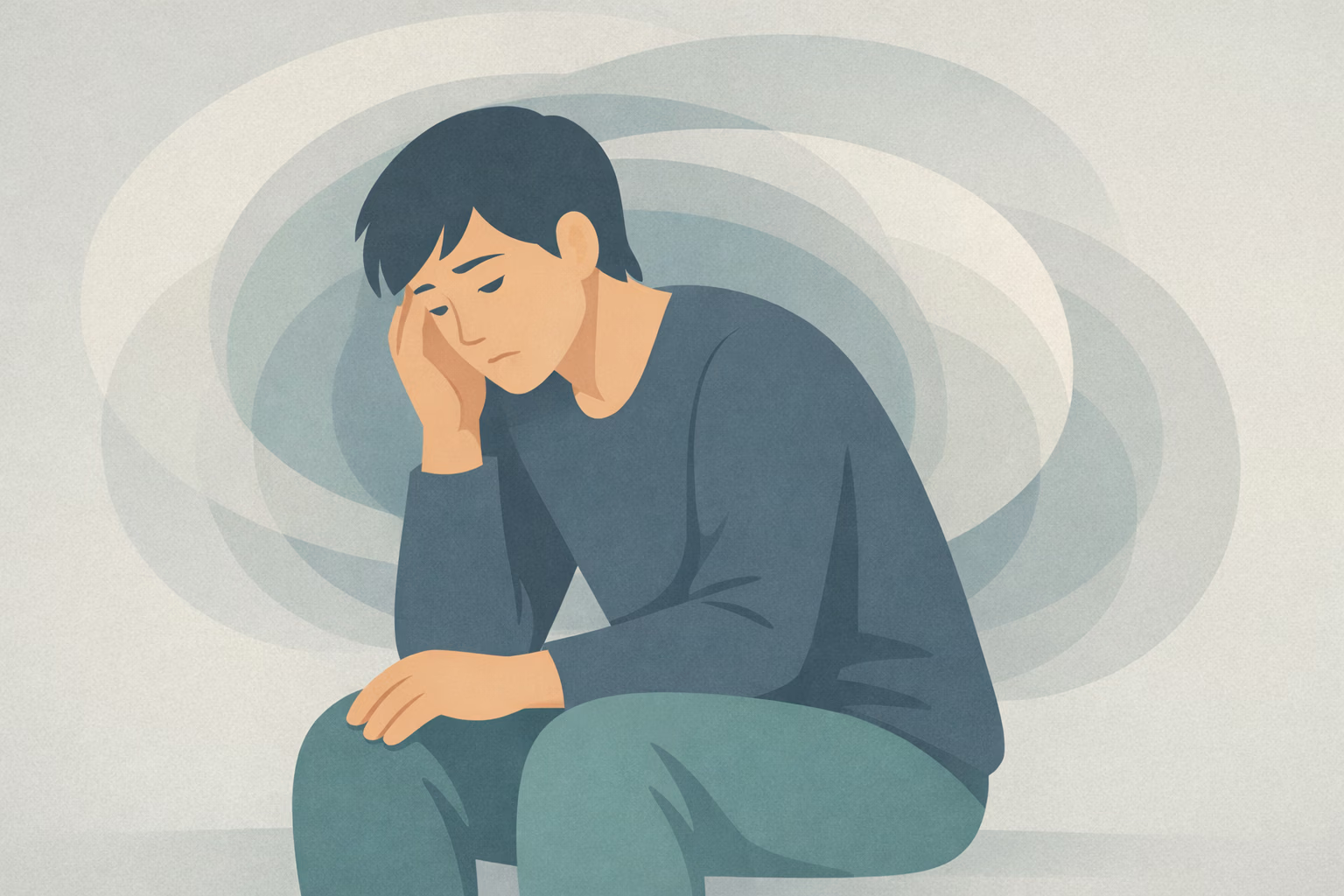
Spiraling doesn’t only happen in the mind. It often comes with a specific physiology: a sense of mental urgency, narrowed attention, and a pressure to keep reviewing the same situation from slightly different angles. The body can feel braced even while you’re sitting still.
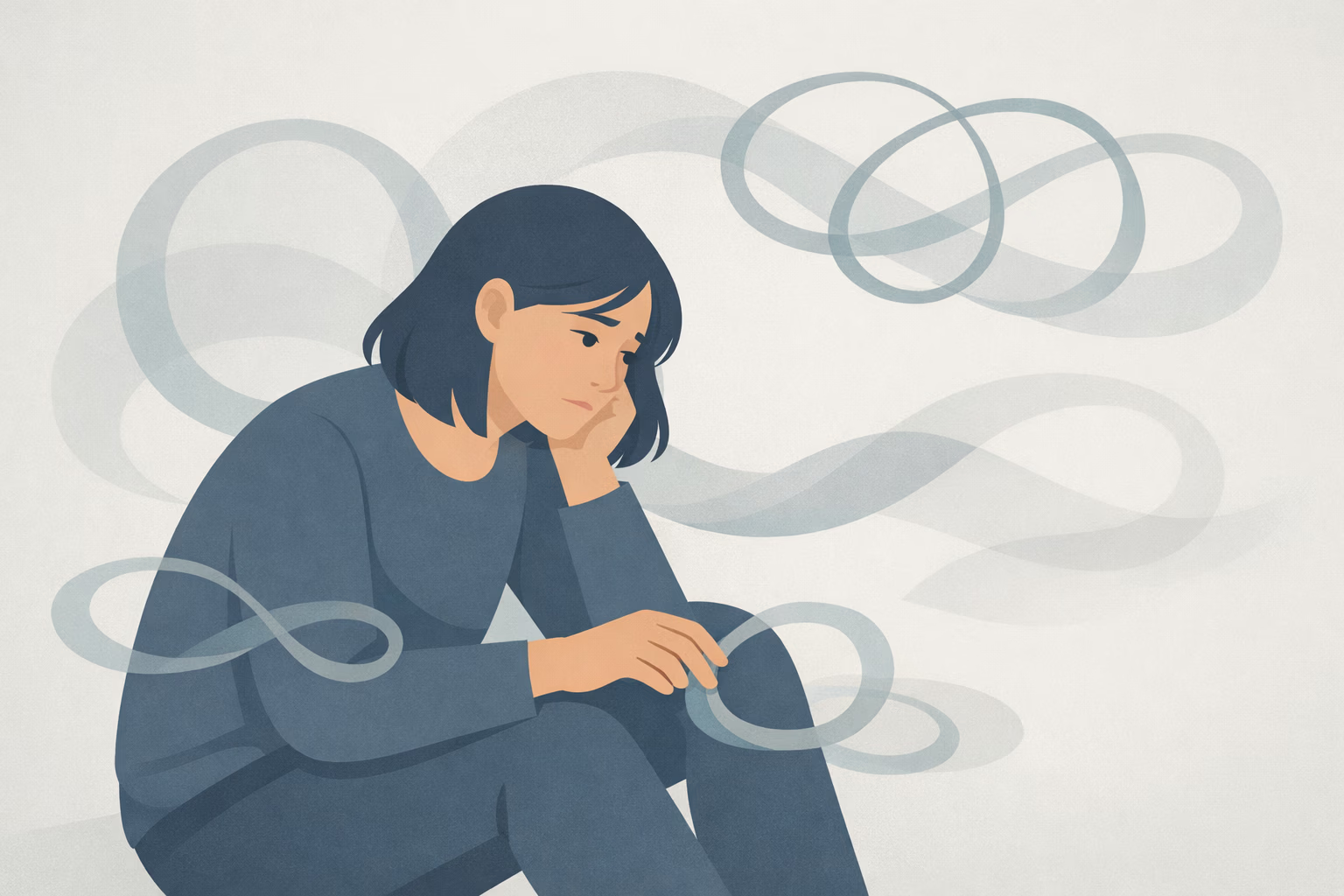
Many people describe it as a snowball effect: one concern becomes a chain of concerns, and each link adds more speed. The mind may feel “loud,” but the deeper sensation is often incomplete settling—like the system can’t stand down yet. [Ref-1]
It’s not that you want to think this much. It’s that your system doesn’t trust it’s safe to stop.
Humans are built to notice potential danger quickly. When a cue is ambiguous—an email tone, a symptom, a financial unknown—the threat system prefers false alarms over missed alarms. That bias can be protective, but it also creates momentum: each “possible problem” invites another “possible problem.”
Catastrophizing is one way the mind tries to map uncertainty into something concrete: if it can predict the worst, it can prepare. But prediction under load tends to widen rather than narrow the possibilities, which can make the loop feel self-fueling. [Ref-2]
From an evolutionary standpoint, repeated checking makes sense. If the environment contains unresolved risk, returning to the question again and again is a rational survival strategy. The problem is that modern threats are often social, abstract, and ongoing—there isn’t always a clear “we are safe now” signal. [Ref-3]
When safety can’t be confirmed, the nervous system keeps recruiting cognition. Not because you’re doing it wrong, but because the system is organized around completion: once the loop closes, attention can release. Until then, it keeps circling the same terrain, hoping repetition will produce certainty.
Thought spirals often masquerade as responsibility. The mind can generate a sense that if you keep thinking, you’re preventing harm, staying ahead, being thorough. That feeling isn’t vanity—it’s a temporary regulatory effect.
In other words, spiraling can create an illusion of control: more scenarios can feel like more readiness. But “more scenarios” is not the same as “more closure.” The system may become more activated while believing it’s becoming more prepared. [Ref-4]
When thinking speeds up, is it actually solving—or is it trying to quiet uncertainty by volume?
A common cultural story is that worry is protective: worry means you care; worry keeps you vigilant; worry prevents mistakes. Yet prolonged cognitive alarm changes the internal environment. It raises stress load, narrows perspective, and makes ambiguous cues feel more threatening than they were at baseline. [Ref-5]
Under that kind of load, thinking can become less discriminating. Instead of sorting signal from noise, the mind produces more noise in the name of searching for signal. The result is often more confusion, not more clarity—because the loop is running on activation rather than completion.
In an Avoidance Loop, “avoidance” doesn’t have to mean deliberate refusal or suppression. It can look like a structural substitution: thinking becomes the primary way the system manages discomfort, because thinking is available, fast, and socially rewarded.
When a situation lacks closure, cognition can step in as a stand-in for resolution. The mind keeps generating contingencies, not necessarily to feel something less, but to avoid the cost of being without an endpoint. In that sense, spiraling is a regulatory response: it creates movement when the system can’t find a place to land. [Ref-6]
Thought spirals tend to follow recognizable tracks. These are not “bad habits” so much as predictable outputs of a brain under threat load trying to restore certainty.
These patterns are sticky because they create the sensation of progress without delivering a true “done” signal. The loop feels active, but it remains open-ended. [Ref-7]
Spiraling consumes executive resources—attention, working memory, and the capacity to prioritize. Over time, this can create a specific kind of fatigue: you’re tired, yet the mind still feels busy. That combination can be disorienting.
As mental energy drops, the brain becomes more reliant on shortcuts and threat-biased interpretations, which can make future spirals more likely and more intense. This is one reason spiraling can start to feel like “my brain always does this,” when it’s often a predictable effect of sustained load. [Ref-8]
When the system is depleted, it doesn’t become wiser. It becomes more protective.
Repetitive negative thinking doesn’t always end with closure; sometimes it ends with exhaustion. When a loop ends by collapse rather than completion, the nervous system may treat the topic as still unresolved. That leaves a residue—an easier re-entry point next time. [Ref-9]
This is how spirals can begin faster and last longer over time. The threshold drops: smaller cues trigger bigger cascades. It’s not that you’re “more anxious as a person.” It’s that your system has learned, through repetition, that certain uncertainties stay open and therefore require continued monitoring.
Thought speed and physiological arousal are tightly linked. When the body is in a high-alert state, the mind tends to generate more threat hypotheses, more rapidly. When arousal decreases, cognitive acceleration often loses its fuel—not because you forced yourself to think differently, but because the system is no longer being pushed to scan at maximum speed. [Ref-10]
This is an important bridge in meaning: spirals are not only “ideas.” They are a whole-body state where the brain is recruited to create safety. When the state shifts toward safety cues, the same situation can look less like a cliff and more like a landscape with options.
Many spirals intensify in isolation. Not because you’re “not strong enough alone,” but because threat-processing becomes self-referential when it lacks external calibration. Another nervous system—steady, reality-based, not alarmed—can provide a different tempo and restore proportion.
Grounding conversations often help because they reintroduce context: timelines, probabilities, alternatives, and the reminder that a single uncertainty is not the whole world. This isn’t about being reassured into denial; it’s about restoring meta-control—your capacity to step back from repetitive thinking and reorient attention. [Ref-11]
When the system begins to regain capacity, the first sign is often not a dramatic insight—it’s a change in tempo. Thoughts arrive with more space between them. The urge to check, replay, or problem-scan reduces. Attention becomes less sticky.
Quieter mental space can feel unfamiliar at first. For people who have lived with high cognitive vigilance, calm can register as “I’m missing something.” But often it’s simply the nervous system receiving enough safety cues to stand down, and the brain tolerating uncertainty without needing to multiply scenarios. [Ref-12]
In a spiral, agency narrows: the mind is busy, but direction is lost. When cognition settles, a different kind of movement becomes possible—the kind guided by values and identity rather than urgency.
This is where coherence shows up. Not as a motivational speech, but as a felt alignment: “This is what matters,” “This is who I am in situations like this,” “This is the next truthful step,” even if the full outcome remains uncertain. Calm cognition doesn’t eliminate uncertainty; it makes uncertainty livable without constant escalation. [Ref-13]
Agency isn’t pushing harder. It’s having enough internal room to choose a direction.
Thought spirals are often interpreted as proof that something is wrong with you: that you’re too much, too fragile, too obsessive, too incapable of “letting it go.” A more humane reading is simpler: your system is registering unmet safety needs and incomplete closure, and it’s using the tool it has most available—thinking—to try to complete the loop. [Ref-14]
When you view spiraling as a state response to load and uncertainty, shame has less to stick to. You’re not your spiral. You’re a person whose nervous system is trying to reduce risk in an environment that frequently withholds clear endpoints.
For many people, the deepest relief isn’t “never worrying again.” It’s recognizing that worry tends to persist where uncertainty stays unclosed—and that the mind escalates when it can’t find a stable stopping point. [Ref-15]
As the system finds more closure and the internal tempo softens, meaning can re-enter the picture: not as a concept, but as a lived orientation. And in that orientation, one worry doesn’t have to become twenty—because the mind no longer has to run at speed to keep you safe.
From theory to practice — meaning forms when insight meets action.
Because the threat system prefers false alarms over missed alarms when cues are ambiguous. Each possible problem invites another, and the mind tries to map uncertainty into something concrete by predicting the worst — if it can predict, it can prepare. But prediction under load tends to widen rather than narrow possibilities, which makes the loop self-fueling. Spiraling isn't a character flaw; it's an unfinished safety loop looking for closure. Many partial threads, few completed endings. When the nervous system can't land a Done Signal, cognition stays online, scanning and recombining pieces until it finds something that feels final. It's not that you want to think this much — your system doesn't trust it's safe to stop.
Because spiraling can create a temporary illusion of control. The mind generates a sense that if you keep thinking, you're preventing harm, staying ahead, being thorough. That feeling is a real regulatory effect — more scenarios can feel like more readiness. But more scenarios isn't more closure. The system becomes more activated while believing it's becoming more prepared. Catastrophizing tries to map uncertainty into something concrete, but prolonged cognitive alarm raises stress load, narrows perspective, and makes ambiguous cues feel more threatening than they were at baseline. Thinking can become less discriminating: more noise produced in the name of searching for signal.
Avoidance doesn't have to mean deliberate refusal. It can be structural substitution: thinking becomes the primary way the system manages discomfort because it's available, fast, and socially rewarded. When a situation lacks closure, cognition steps in as a stand-in for resolution. The mind keeps generating contingencies not necessarily to feel less, but to avoid the cost of being without an endpoint. The Avoidance Loop here is regulatory: thinking provides motion when completion is missing, motion temporarily reduces helplessness, and that temporary reduction reinforces the loop. It feels active but stays open-ended — and ending in exhaustion rather than completion leaves an easier re-entry point next time.
A change in tempo, not a better thought. Thought speed and physiological arousal are tightly linked. When the body is in a high-alert state, the mind generates more threat hypotheses more rapidly. When arousal decreases, cognitive acceleration loses its fuel — not because you forced yourself to think differently, but because the system is no longer being pushed to scan at maximum speed. Grounding conversations help by reintroducing context and tempo from another nervous system. The first sign of recovery isn't a dramatic insight; it's space between thoughts, less compulsive checking, more stable focus, a clearer sense of enough for now. Quiet is the signal.
From Science to Art.
Understanding explains what is happening. Art allows you to feel it—without fixing, judging, or naming. Pause here. Let the images work quietly. Sometimes meaning settles before words do.
One Quiet Window, one insight, one reflection — every Sunday