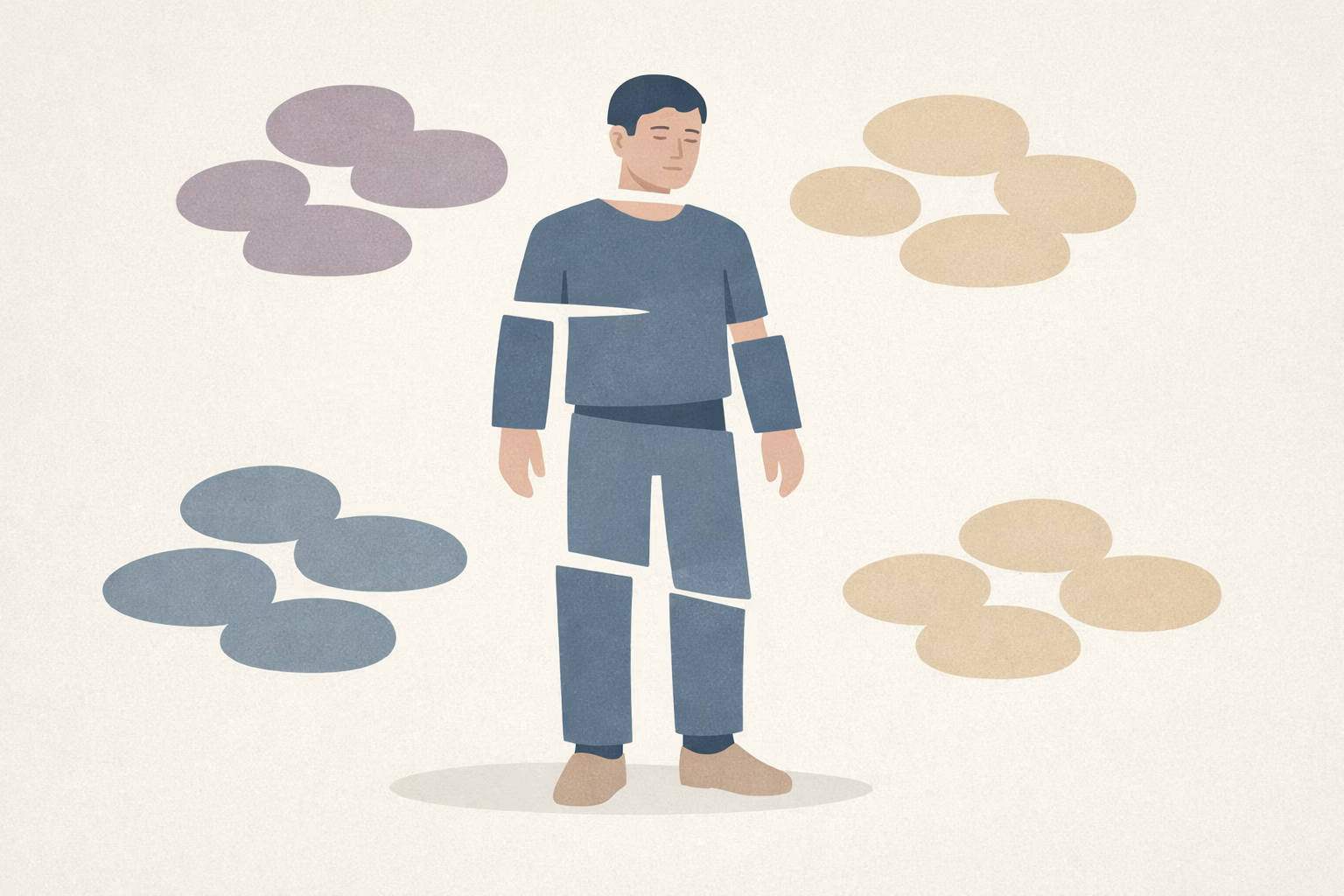
Emotional Fragmentation: When Parts of You Stop Communicating
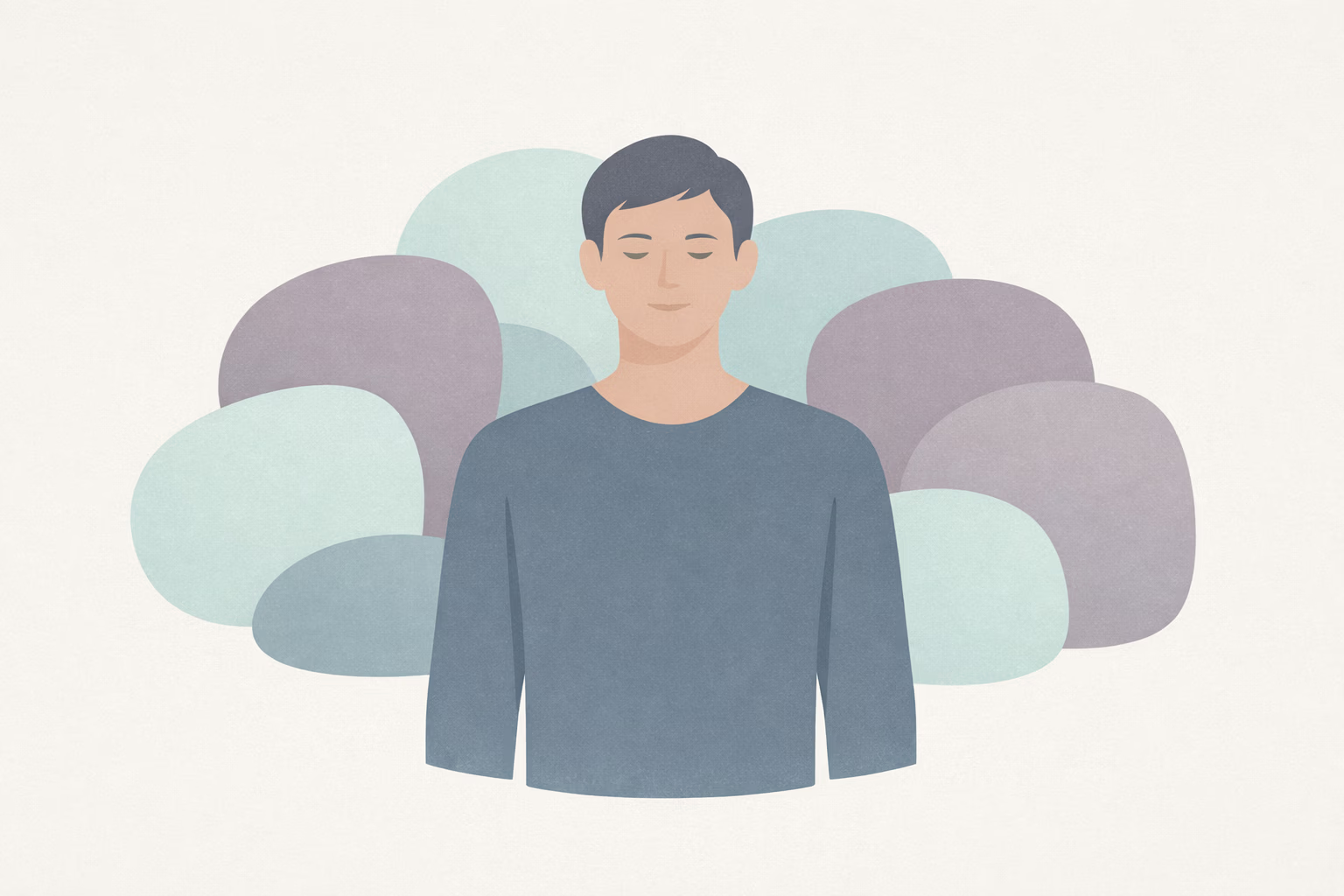
In short: Most people know the feeling: one part of you wants something different—more rest, less scrolling, a better boundary, a healthier rhythm—and another part quietly jams the gears. You can call it “self-sabotage,” “lack of discipline,” or “not wanting it enough.” But those labels usually increase pressure without increasing clarity.
Most people know the feeling: one part of you wants something different—more rest, less scrolling, a better boundary, a healthier rhythm—and another part quietly jams the gears. You can call it “self-sabotage,” “lack of discipline,” or “not wanting it enough.” But those labels usually increase pressure without increasing clarity.
Stress reconciliation is a different frame. It describes the process of making peace with the inner parts that resist change because change can register as risk: risk to safety, identity, belonging, or stability. This isn’t about convincing yourself harder. It’s about understanding why the system is pulling the emergency brake.
What if resistance is not the enemy—what if it’s loyalty to something your body learned to protect?
Inner resistance often shows up as a push–pull: you set an intention, feel a brief surge of hope, and then something in you stalls, forgets, deflects, or gets exhausted. From the outside it looks like inconsistency. From the inside it can feel like you’re being “outvoted” by yourself.
This conflict isn’t necessarily about weak will. It can be the nervous system managing competing jobs at once: moving toward growth while also preserving predictability. When change threatens the “known,” the system may prioritize stability over novelty—especially under high stress load. [Ref-1]
Sometimes the part that won’t move isn’t stubborn. It’s standing guard.
Change asks the body to update its predictions. That can mean more uncertainty, more social exposure, more loss of familiar coping, or more contact with unmet needs. Even positive change can increase arousal because it requires new coordination—new choices, new consequences, new feedback loops.
When the brain reads that uncertainty as threat, protective physiology can come online: increased vigilance, urgency, shutdown, or a narrow focus on short-term relief. In that state, “resistance” is often a regulatory response—an attempt to reduce activation and restore a sense of control. [Ref-2]
Why would a system block something it consciously wants?
Because different layers of the system are solving different problems at different time-scales: one layer imagines a better future; another prevents an immediate spike in threat.
Many “parts” that resist change are not random. They are shaped by earlier relational environments: what was rewarded, what was punished, what made you safer, what made you more acceptable. Over time, those patterns become an internal working model—an embodied sense of how to stay connected and avoid relational cost. [Ref-3]
This is why certain changes can feel oddly socially dangerous, even in private. Setting a boundary can register as “I might lose people.” Rest can register as “I might be judged.” Succeeding can register as “I’ll be seen.” The resistance is not necessarily about the task; it’s about what the task implies in the social world your nervous system expects.
Familiar patterns— even painful ones—often come with a kind of internal closure: you know how the story goes. That predictability can produce a stand-down signal in the body. Not because the situation is good, but because it’s legible.
Change interrupts that legibility. It can create open loops: unfinished conversations, unclear identity, uncertain outcomes. When the system can’t complete the loop, it may default to what it already knows, because the known offers a fast path to certainty. In this way, resistance can temporarily reduce uncertainty and keep the self feeling coherent. [Ref-4]
So the “stuckness” is sometimes the nervous system choosing a familiar ending over an unfamiliar beginning.
Resistance often works in the short term. It lowers immediate arousal by postponing the moment of exposure: the conversation, the risk, the new habit, the unknown. The body gets a quick reduction in load, and that reduction can feel like proof that stopping was “right.”
But over time, the unresolved loop remains active in the background. The mind keeps returning to it. The body carries the tension of something not completed. This is one way chronic stress can become a lifestyle: not because life is always dramatic, but because too many “almosts” never settle. [Ref-5]
Relief isn’t the same thing as resolution.
Seen structurally, inner resistance often forms an avoidance loop: an intention arises, discomfort or uncertainty spikes, the system diverts to something that reduces load, and the diversion gets reinforced because it worked—immediately.
This loop doesn’t require fear as a storyline. It can run on simple mechanics: bypassed resistance, muted consequence, and quick relief. When the immediate cost of avoiding is low and the immediate relief is high, the nervous system learns: this is the safer route. [Ref-6]
Over time, the loop becomes less about the original goal and more about protecting the system from repeated activation without completion.
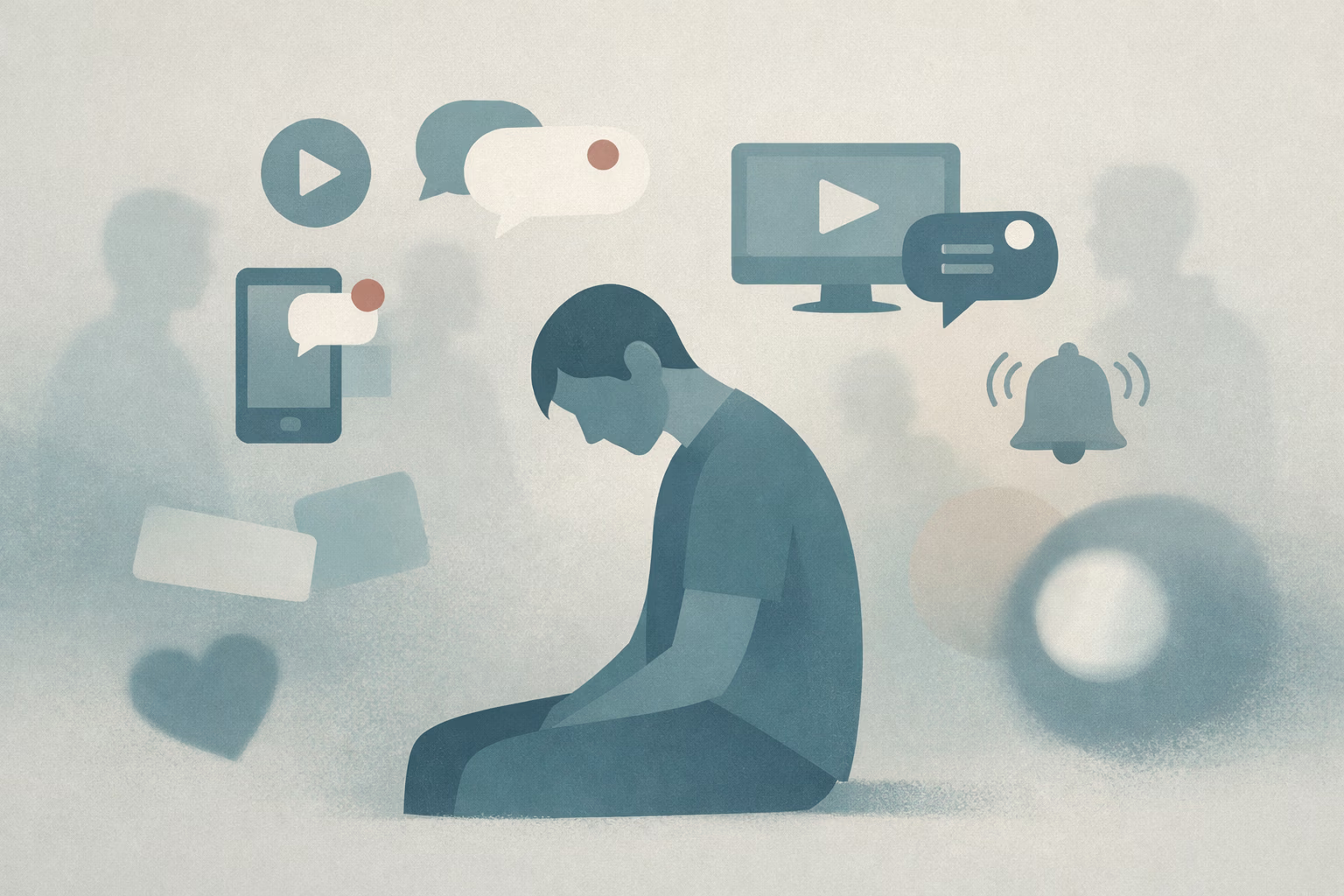
Modern resistance often doesn’t appear as a clear “no.” It appears as drift—small diversions that keep the system from crossing a threshold where identity, relationship, or uncertainty would need updating.
These are not “types of people.” They are states the body moves into when the conditions don’t support safe completion. [Ref-7]
If a loop repeats long enough, it can start to feel like identity: “I’m just someone who can’t change.” But what often erodes first is not character—it’s self-trust. You make a promise, meet resistance, break the promise, and then add evaluation on top of the load. That evaluation can become its own stressor.
When the system expects inner conflict, it may tighten further: more monitoring, more self-critique, more overcontrol—attempts to force coherence through pressure. Yet pressure usually increases activation, which increases the need for protection, which strengthens resistance.
A non-shaming view matters here because shame is not neutral. It’s an amplifier. It increases arousal while decreasing flexibility, making completion harder, not easier. [Ref-8]
Resistance persists because it reliably changes state. The moment you avoid, the system gets a quick drop in uncertainty. That drop is a powerful teacher. The brain learns: when discomfort rises, disengage. And because the avoided step remains incomplete, it returns—creating another opportunity for the same relief cycle.
This is how patterns become stable even when they are unwanted. Not through preference, but through reinforcement: the body is trained by what reduces load fastest.
Over time, the cost shows up as a background hum—less confidence in your own follow-through, more vigilance about “failing again,” and a thinner sense of internal cooperation. [Ref-9]
Stress reconciliation becomes possible when change stops being interpreted as an attack on safety or identity. That shift is not mere insight. It’s a physiological reclassification: the system no longer needs to mobilize defenses for the same situation.
In many lives, the conditions that allow this are relational and contextual: enough support, enough time, enough permission, enough stability to let uncertainty be present without escalating into threat. Humans regulate in connection; a body that feels accompanied often has more capacity to update its predictions. [Ref-10]
When safety cues increase, resistance doesn’t have to shout.
In that state, values can become more than concepts. They can become organizing signals—less like pressure, more like orientation.
When people say compassion helps, it’s easy to misunderstand it as “being nice to yourself.” The deeper mechanism is safety signaling. Validation reduces threat escalation. Support reduces isolation. A settled social nervous system has more room to tolerate uncertainty without flipping into protection. [Ref-11]
Internally, compassion can function like a de-escalation cue: you’re not in trouble for having this response. Externally, being met without judgment can reduce the need to maintain defensive strategies that were built for harsher conditions.
This is not about forcing the resistant part to agree. It’s about reducing the conditions that require it to block.
When resistance relaxes, people often report something quieter than a breakthrough: fewer internal arguments, less urgency, less “bracing.” Decisions take less energy because the system isn’t splitting resources between opposite aims.
Importantly, this isn’t just emotional intensity changing. It’s a capacity shift: signals return more reliably, and actions stop feeling like they require constant override. Completion becomes more available—conversations can finish, boundaries can hold, rest can actually restore, and the body can receive a “done signal.”
As more experiences complete, identity coherence can strengthen. The story of “I can’t” is replaced not by hype, but by a lived sense of continuity: this is who I am becoming, and my system can tolerate it. [Ref-12]
When inner life has been governed by conditional acceptance—perform, please, stay easy, don’t need too much—change can trigger a harsh internal supervisor. That supervisor often tries to motivate through critique. But critique can function like social threat, tightening the very resistance it targets. [Ref-13]
Collaborative inner leadership is a different posture. It’s not permissive, and it’s not punitive. It’s an orientation where the system doesn’t need to exile any response in order to move forward. The goal becomes coherence: actions that align with values while also respecting the nervous system’s need for safety cues and completion.
Real leadership isn’t winning a civil war. It’s ending the war.
If you have parts that resist change, it may help to see what they’ve been protecting: predictability, belonging, reduced conflict, reduced arousal. In many cases, those protections were intelligent responses to earlier conditions—even if they now create constraints.
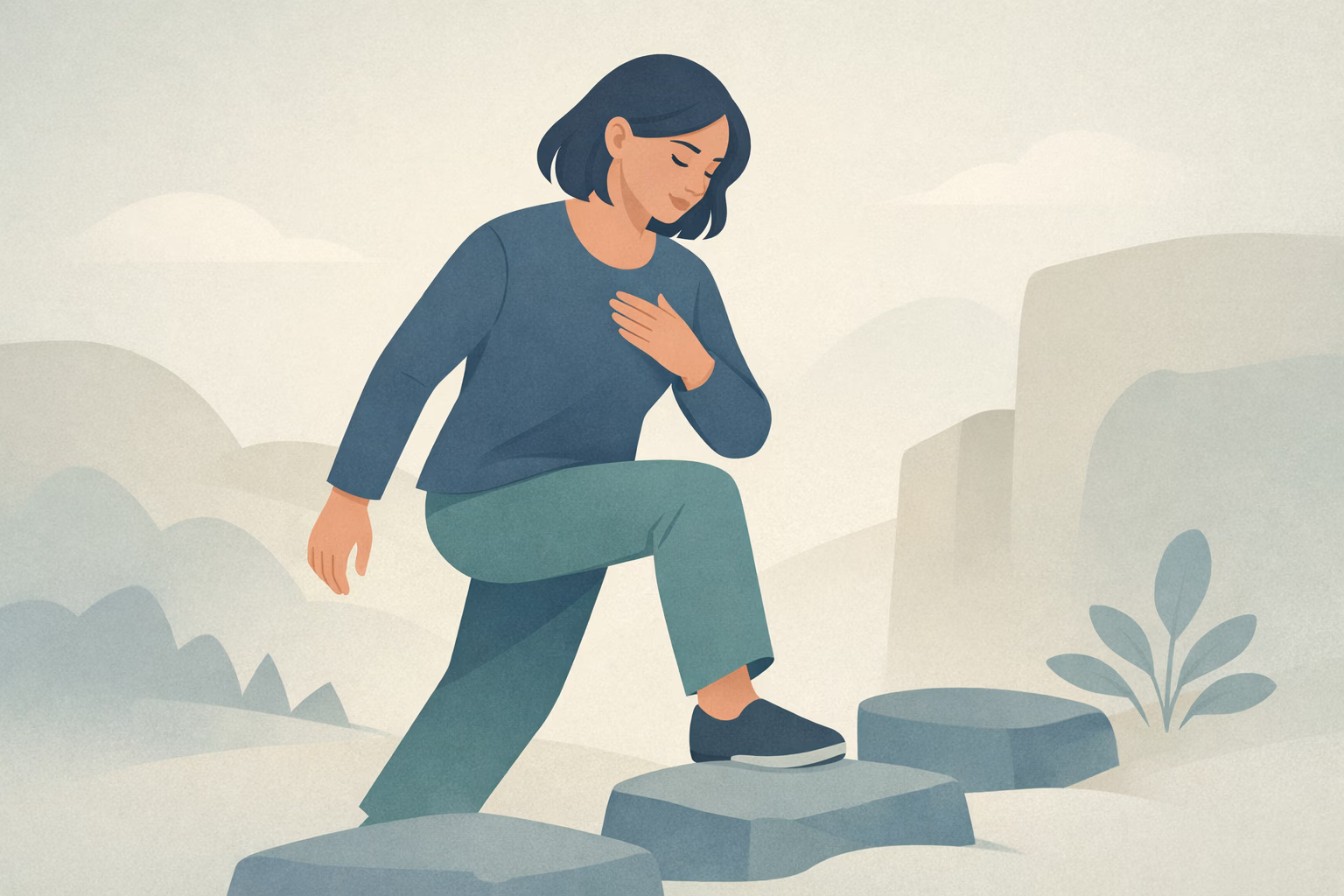
When change is guided by meaning rather than force, the nervous system is less likely to interpret it as danger. That doesn’t mean everything becomes easy. It means the system has a chance to update: “This movement is not abandonment. This boundary is not exile. This new identity is not a threat.” Over time, as stress physiology settles and completion becomes possible, agency can feel less like pushing and more like steering. [Ref-14]
There is dignity in the idea that resistance is not a defect. It is a sign that your system has been working hard to keep life survivable and coherent.
As stress load decreases and more experiences reach completion, the need for internal opposition can soften. Not because you argued yourself into it, but because the body no longer needs the same defenses to maintain stability. The deepest kind of change is the kind that includes you—fully—so that progress doesn’t require self-abandonment. [Ref-15]
From theory to practice — meaning forms when insight meets action.
Because different layers of the system are solving different problems at different time-scales — one layer imagines a better future, another prevents an immediate spike in threat. The article frames inner resistance not as weak will but as the nervous system managing competing jobs: moving toward growth while preserving predictability. Even positive change asks the body to update its predictions, which means more uncertainty and new coordination. When the brain reads that as threat, protective physiology comes online. Sometimes the part that won't move isn't stubborn — it's standing guard. Resistance can be loyalty to something your body learned to protect.
Because familiar patterns — even painful ones — come with internal closure: you know how the story goes. That predictability produces a stand-down signal in the body, not because the situation is good but because it's legible. Change interrupts that legibility, creating open loops: unfinished conversations, unclear identity, uncertain outcomes. When the system can't complete the loop, it defaults to what it already knows because the known offers a fast path to certainty. The article frames this clearly: stuckness is sometimes the nervous system choosing a familiar ending over an unfamiliar beginning. Relief isn't the same thing as resolution.
Because shame is an amplifier — it increases arousal while decreasing flexibility, making completion harder rather than easier. The article frames critique as functioning like social threat that tightens the very resistance it targets. When the system expects inner conflict, it tightens further: more monitoring, more self-critique, more overcontrol — pressure that increases activation, which increases the need for protection, which strengthens resistance. The avoidance loop runs on simple mechanics: bypassed resistance, muted consequence, quick relief. The brain learns 'when discomfort rises, disengage,' and shame just adds another layer of activation that the system also needs to defend against.
Reducing the conditions that require resistance to block, rather than negotiating with it. The article frames stress reconciliation as physiological reclassification: change stops being interpreted as an attack on safety or identity. Compassion works as safety signaling, not as 'being nice' — validation reduces threat escalation, settled social nervous systems tolerate uncertainty without flipping into protection. When resistance relaxes, people report fewer internal arguments, less urgency, less bracing. Decisions take less energy because the system isn't splitting resources between opposite aims. Real leadership isn't winning a civil war — it's ending the war. Lasting change is the kind that includes you, so progress doesn't require self-abandonment.
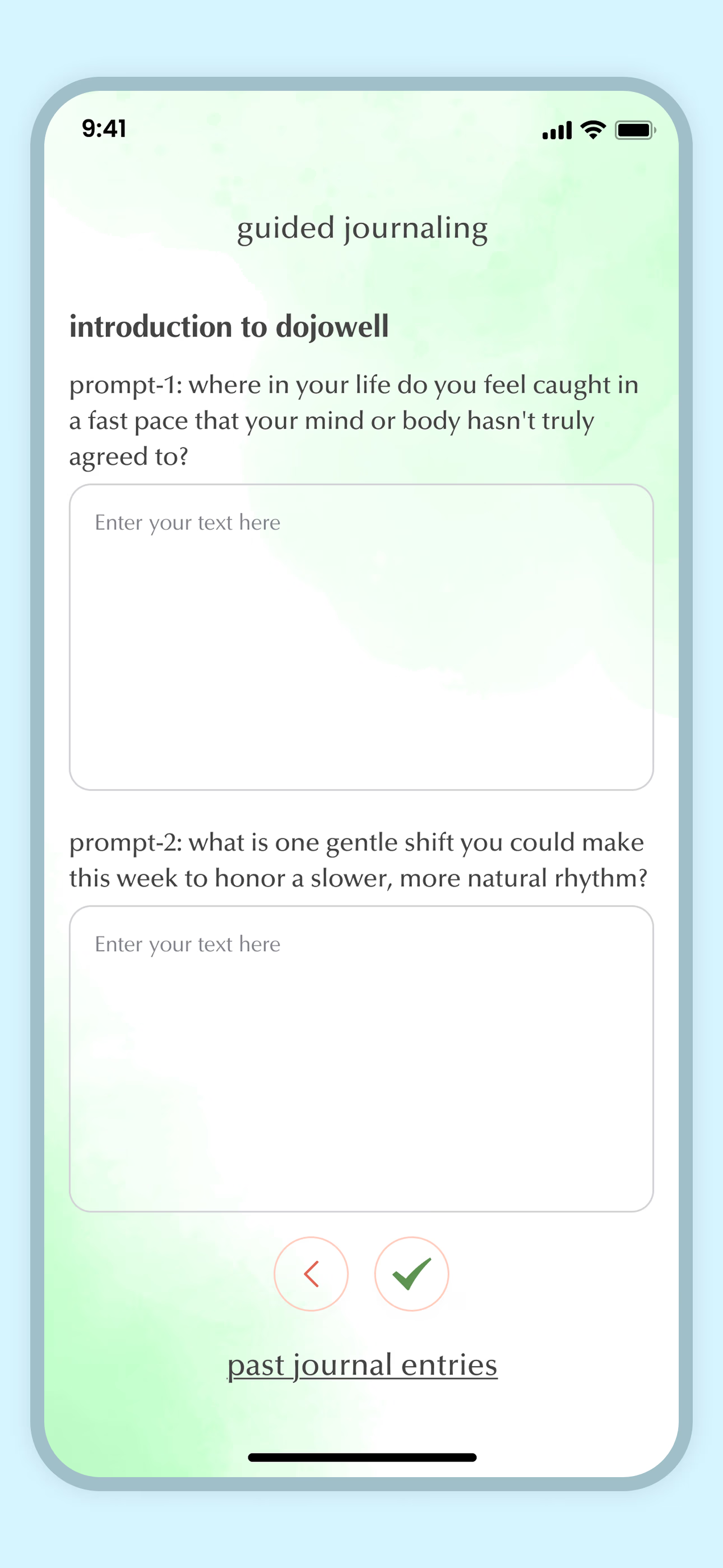
From Science to Art.
Understanding explains what is happening. Art allows you to feel it—without fixing, judging, or naming. Pause here. Let the images work quietly. Sometimes meaning settles before words do.
One Quiet Window, one insight, one reflection — every Sunday