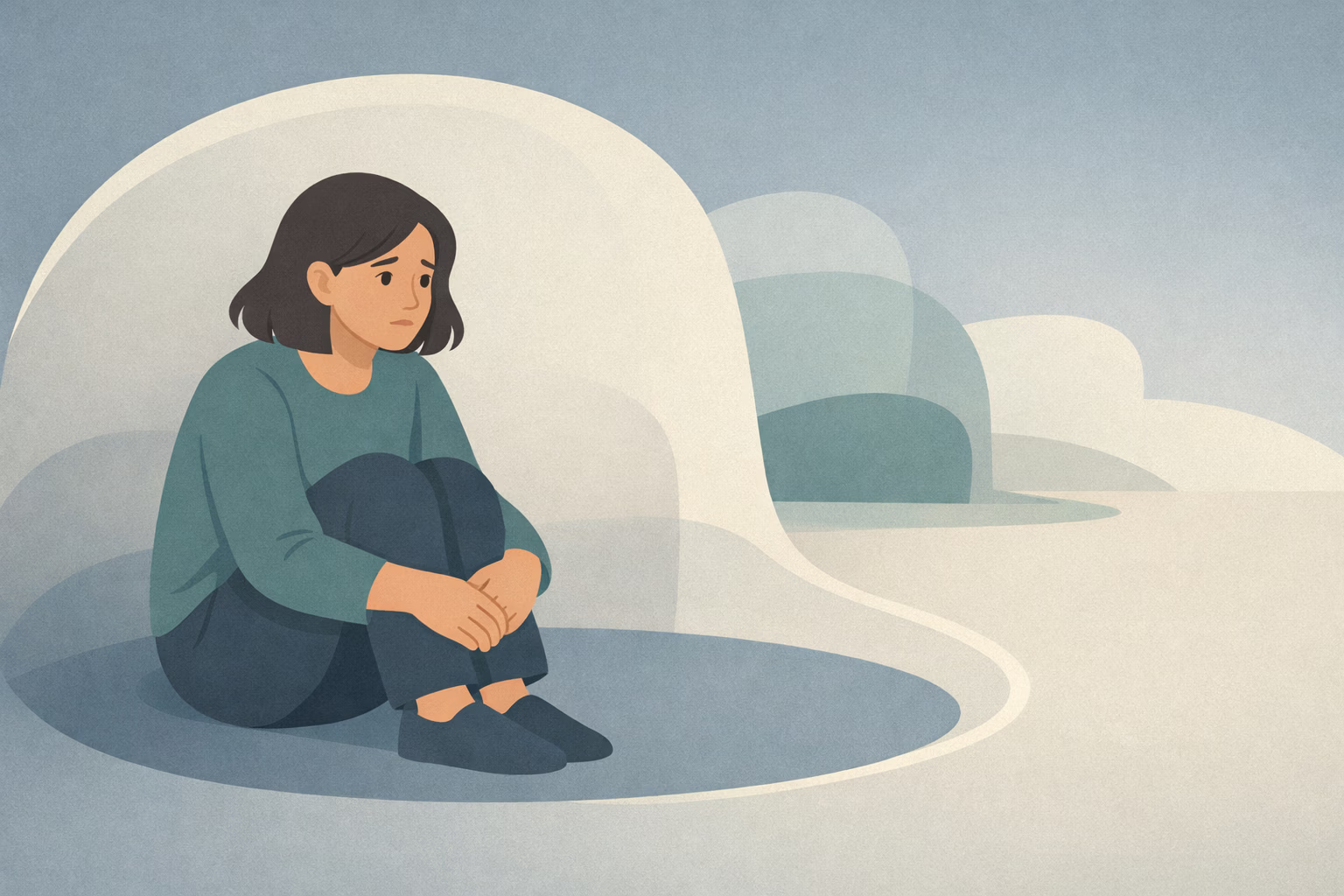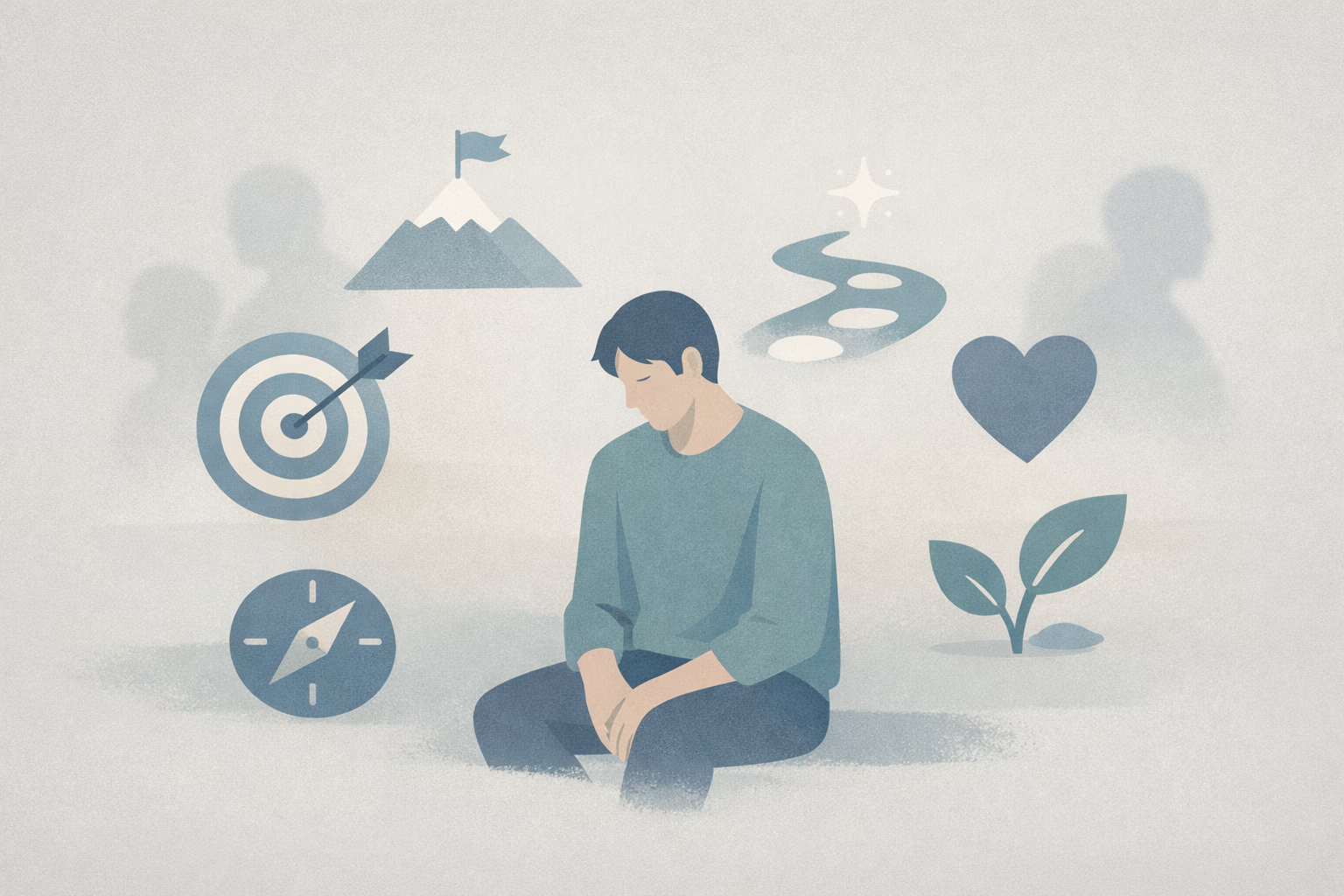
Avoiding Discomfort: The Modern Epidemic

In short: Self-leadership is often described as “doing the hard thing.” But in real life it usually looks quieter than that: staying present with internal strain long enough for your next step to become clear, without needing to numb, rush, perfect, or outsource your direction. What if discomfort isn’t proof that you’re off track—but evidence that something important is trying to complete?
Self-leadership is often described as “doing the hard thing.” But in real life it usually looks quieter than that: staying present with internal strain long enough for your next step to become clear, without needing to numb, rush, perfect, or outsource your direction.
What if discomfort isn’t proof that you’re off track—but evidence that something important is trying to complete?
Through the Meaning Density lens, modern distress isn’t a personal defect. It’s what happens when your days are fragmented, your nervous system is overworked, and too many experiences stay unfinished—leaving your body and identity without the “done” signal that creates stability.
When internal resistance shows up—tightness in the chest, mental fog, a spike of urgency—many people find themselves postponing decisions, avoiding conversations, or switching into distraction. This isn’t a character flaw. It’s a regulatory move: the system senses increased load and tries to reduce it. [Ref-1]
Avoidance can look sophisticated. It can be “research,” “waiting until I feel ready,” “getting organized,” or “checking one more thing.” The common thread is that the original loop stays open: a choice isn’t completed, a boundary isn’t set, a value isn’t enacted.
“Tolerating discomfort” is sometimes framed like grit. A more accurate frame is bandwidth: the nervous system has enough capacity to stay online while signals fluctuate. That capacity supports executive functioning—planning, inhibiting impulses, holding context, and choosing direction instead of defaulting to the nearest relief. [Ref-2]
Importantly, knowing why you react a certain way isn’t the same as integration. Insight can live entirely in the mind while the body stays braced. Integration is when a loop completes—when your system stands down because something has been carried through to a real endpoint and incorporated into “this is who I am and how I operate now.”
Self-leadership often feels less like forcing yourself forward and more like staying steady enough for the next true step to take shape.
Human regulation systems evolved to prioritize survival: avoid harm, conserve energy, stay connected to the group. In environments where danger was concrete, “move away from discomfort” was often the right call. In modern life, the cues are different—more social, more ambiguous, more constant—and the same circuits can fire even when the situation is not physically threatening. [Ref-3]
This is why discomfort can arrive in ordinary moments: sending an email, naming a need, starting a project, choosing a direction. The body reads uncertainty as potential cost and tries to minimize exposure.
So the problem often isn’t the task—it’s the system’s prediction of load.
Avoidance is effective at one thing: it reduces activation quickly. When you don’t make the call, don’t have the conversation, don’t submit the work, your nervous system receives immediate “safety” feedback—less arousal, less risk, less effort. That relief is real, and it teaches the body a simple rule: backing away lowers the signal. [Ref-4]
The catch is that the original experience remains incomplete. The mind may move on, but the system keeps a subtle tab open—an unfinished loop that continues to generate background tension, self-monitoring, and second-guessing.
Over time, the goal quietly shifts from living by values to managing internal weather.
Many of us are taught—explicitly or implicitly—that if we can just feel calm enough, then we’ll be safe enough to act. But calm is a state, not a direction. And comfort is not the same as coherence. [Ref-5]
Growth, leadership, and meaningful change rarely arrive with perfect internal conditions. They often arrive with mixed signals: excitement plus dread, clarity plus vulnerability, relief plus responsibility.
When comfort becomes the prerequisite, the nervous system ends up in charge of the compass. Not because you’re weak—but because the environment has trained the body to treat immediate ease as the primary metric.
In the Meaning Loop, experience becomes stabilizing when it completes: intention → action → consequence → closure → identity. Discomfort often shows up right before completion—where the old pattern ends and the new identity begins.
When discomfort triggers a detour, the loop breaks. You don’t just avoid a feeling; you lose the completion that would have produced orientation. And without completion, meaning thins: life feels less authored, more reactive, more externally driven. [Ref-6]
This is why avoidance can feel like “stuckness,” even when you’re busy.
When a system is under load, it will often reach for strategies that reduce immediate strain while postponing closure. These strategies can look like personality, but they’re often structural responses to unfinished experiences.
In leadership contexts, these patterns often intensify because the social stakes are real: approval, belonging, reputation, livelihood. The nervous system treats these as safety variables. [Ref-7]
Self-trust is not a pep talk. It’s the nervous system’s lived evidence that you can move through strain and arrive somewhere real. When avoidance becomes the default, the evidence doesn’t accumulate—so self-trust can’t consolidate.
Instead, the system learns a different lesson: “I can feel better quickly, but I don’t finish.” That can create a subtle fragility in identity—an ongoing sense that you must keep managing your state to stay functional. [Ref-8]
It’s hard to feel steady when your life keeps starting things that never get to land.
Avoidance reduces the chance for exposure-based learning: the body doesn’t get to discover, through lived completion, that discomfort can rise and fall while you remain safe and effective. Without that learning, future challenges are predicted as more dangerous and more expensive than they may actually be. [Ref-9]
This is a key reason the “threshold” drops. Tasks that were once manageable begin to trigger more activation—because the system has fewer completed reference points and more open loops.
So discomfort expands, not because you’re deteriorating, but because your nervous system is trying to prevent another unresolved cost.
Self-leadership doesn’t require you to eliminate discomfort. It relies on a different relationship to it: discomfort becomes a signal you can carry while still holding a direction. This is not about thinking positively or reframing in your head; it’s about the body learning that activation can be present without taking over the steering wheel.
In many clinical frameworks, this is described as paced exposure paired with self-support—gradual contact with the hard thing, with enough internal and external safety cues to prevent overwhelm. [Ref-10] In Meaning Density terms, the aim is simple: allow more loops to complete so the system can stand down more often.
When completion happens, the need for constant self-management tends to ease—not through effort, but through closure.
In relationships and teams, self-leadership shows up as a kind of grounded presence. Not performative confidence, but the ability to remain contactable while stress signals move through. This can include naming uncertainty, holding boundaries, or staying transparent without collapsing into apology or defensiveness. [Ref-11]
This matters because nervous systems are social. When one person stays regulated enough to remain coherent, it provides safety cues to others—slowing escalation and reducing the need for control dynamics.
People often trust the person who can stay here with reality, even when reality is uncomfortable.
When discomfort is no longer treated as an emergency, life can start to feel more “joined up.” Not perfect, not always calm—just less fragmented. There’s more room for signals to rise and return without needing a detour every time.
Common markers of this shift include:
This is how steadiness emerges: not as a mood, but as a settled pattern of finishing what matters often enough that your system believes you. [Ref-12]
Discomfort is often the edge of an identity update: the place where an old protection strategy no longer fits the life you’re trying to live. When you repeatedly meet that edge and complete the loop, discomfort gradually shifts from “stop” to “signal.” It starts indicating where meaning is trying to form.
Research on experiential avoidance describes how attempts to escape unwanted internal experiences can narrow behavior over time, even when the intention is relief. [Ref-13] From a Meaning Density view, the reversal is not forcing yourself through pain; it’s allowing enough completion that your life becomes less dominated by incomplete loops.
Self-leadership, then, is the capacity to keep choosing direction while the body updates its predictions.
If you’ve been avoiding discomfort, it doesn’t mean you lack discipline or depth. It often means your system has been carrying too much, for too long, without enough closure to stand down. Avoidance can be a sign of load—an attempt to find safety when safety cues are scarce.
When discomfort is met with presence and completion (rather than detours), meaning tends to thicken again. Life feels more authored. Choices feel less like emergencies and more like expressions of who you are. In that sense, discomfort isn’t the enemy—it’s frequently the doorway where direction becomes real. [Ref-14]
Self-leadership begins when you can remain contactable to your life—even with internal noise—and still let your values hold the wheel. Not perfectly. Not constantly. Just often enough that your nervous system learns a new ending: “I can stay here, move through, and finish.”
Over time, reduced experiential avoidance is associated with improved outcomes across anxiety-related difficulties, suggesting that openness to internal experience supports more flexible, values-consistent behavior. [Ref-15]
And that is the quiet dignity of self-leadership: choosing direction anyway, until the choice becomes part of your identity—settled, coherent, and lived.
From theory to practice — meaning forms when insight meets action.
It's quieter than that. Self-leadership usually looks like staying present with internal strain long enough for your next step to become clear, without needing to numb, rush, perfect, or outsource your direction. Tolerating discomfort isn't toughness or grit — it's bandwidth. The nervous system has enough capacity to stay online while signals fluctuate, which supports planning, inhibiting impulses, and choosing direction instead of defaulting to the nearest relief. Discomfort isn't proof you're off track. It's often evidence that something important is trying to complete. The Meaning Loop closes at the edge where old protection strategies stop fitting the life you're trying to live.
Because it's effective at one thing: it reduces activation quickly. When you don't make the call, don't have the conversation, don't submit the work, the nervous system gets immediate safety feedback — less arousal, less risk, less effort. That relief teaches the body a simple rule: backing away lowers the signal. Avoidance can look sophisticated too — research, getting organized, waiting until ready, checking one more thing. The catch is that the original loop stays open. The mind moves on but the system keeps a subtle tab open, generating background tension and second-guessing. The goal quietly shifts from living by values to managing internal weather.
Self-trust, mostly. Self-trust isn't a pep talk — it's the nervous system's lived evidence that you can move through strain and arrive somewhere real. When avoidance is the default, that evidence doesn't accumulate, so self-trust can't consolidate. Instead, the system learns 'I can feel better quickly, but I don't finish.' That creates a fragility in identity: the ongoing sense you must keep managing your state to stay functional. Future challenges then get predicted as more dangerous than they are, because the body has fewer completed reference points. So discomfort expands — not because you're deteriorating, but because the system is trying to prevent another unresolved cost.
It starts indicating where meaning is trying to form. Self-leadership doesn't require eliminating discomfort. It relies on a different relationship to it: discomfort becomes something you can carry while still holding direction. Not by thinking positively, but by the body learning that activation can be present without taking the steering wheel. Markers of this shift are quiet: less bargaining before ordinary tasks, more follow-through that feels matter-of-fact rather than heroic, fewer identity swings between 'I've got it' and 'I can't.' A clearer 'this is what I do,' built from completion rather than intention. Steadiness emerges as a settled pattern of finishing what matters often enough that your system believes you.
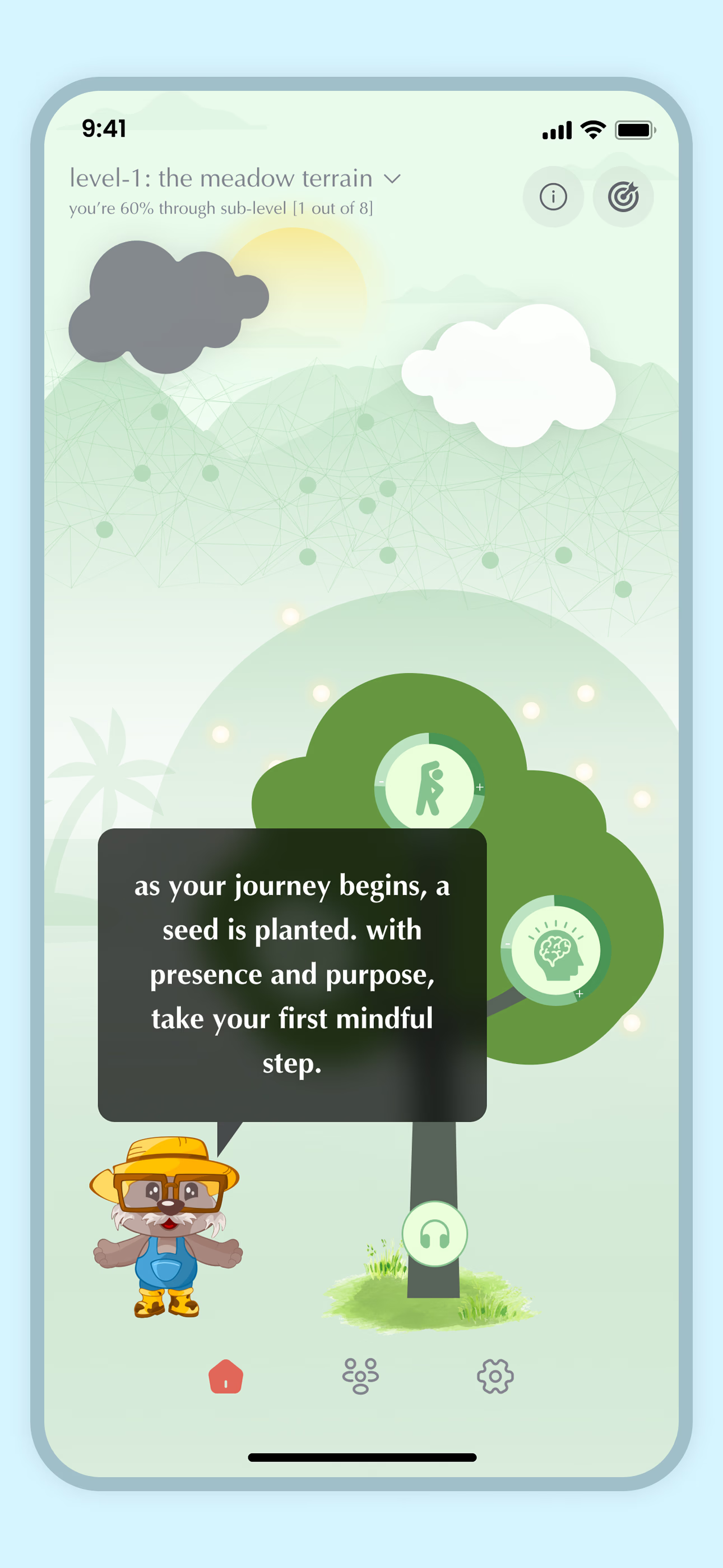
From Science to Art.
Understanding explains what is happening. Art allows you to feel it—without fixing, judging, or naming. Pause here. Let the images work quietly. Sometimes meaning settles before words do.
One Quiet Window, one insight, one reflection — every Sunday