Values Alignment: How to Live What Truly Matters
In short: Purpose alignment is often described as a motivational peak—like you finally “get it” and start doing what matters. But in real nervous systems, alignment is less like a breakthrough and more like a settling: fewer internal contradictions, fewer competing alarms, and more reliable follow-through without constant self-negotiation.
Purpose alignment is often described as a motivational peak—like you finally “get it” and start doing what matters. But in real nervous systems, alignment is less like a breakthrough and more like a settling: fewer internal contradictions, fewer competing alarms, and more reliable follow-through without constant self-negotiation.
When actions match values, the day stops feeling like a series of small self-interruptions. The mind doesn’t have to keep re-litigating what matters. The body doesn’t have to keep bracing for the next moment of self-disappointment. Coherence becomes a kind of quiet infrastructure.
What if the problem isn’t a lack of discipline—what if it’s a lack of closure between what you care about and what your life keeps requiring?
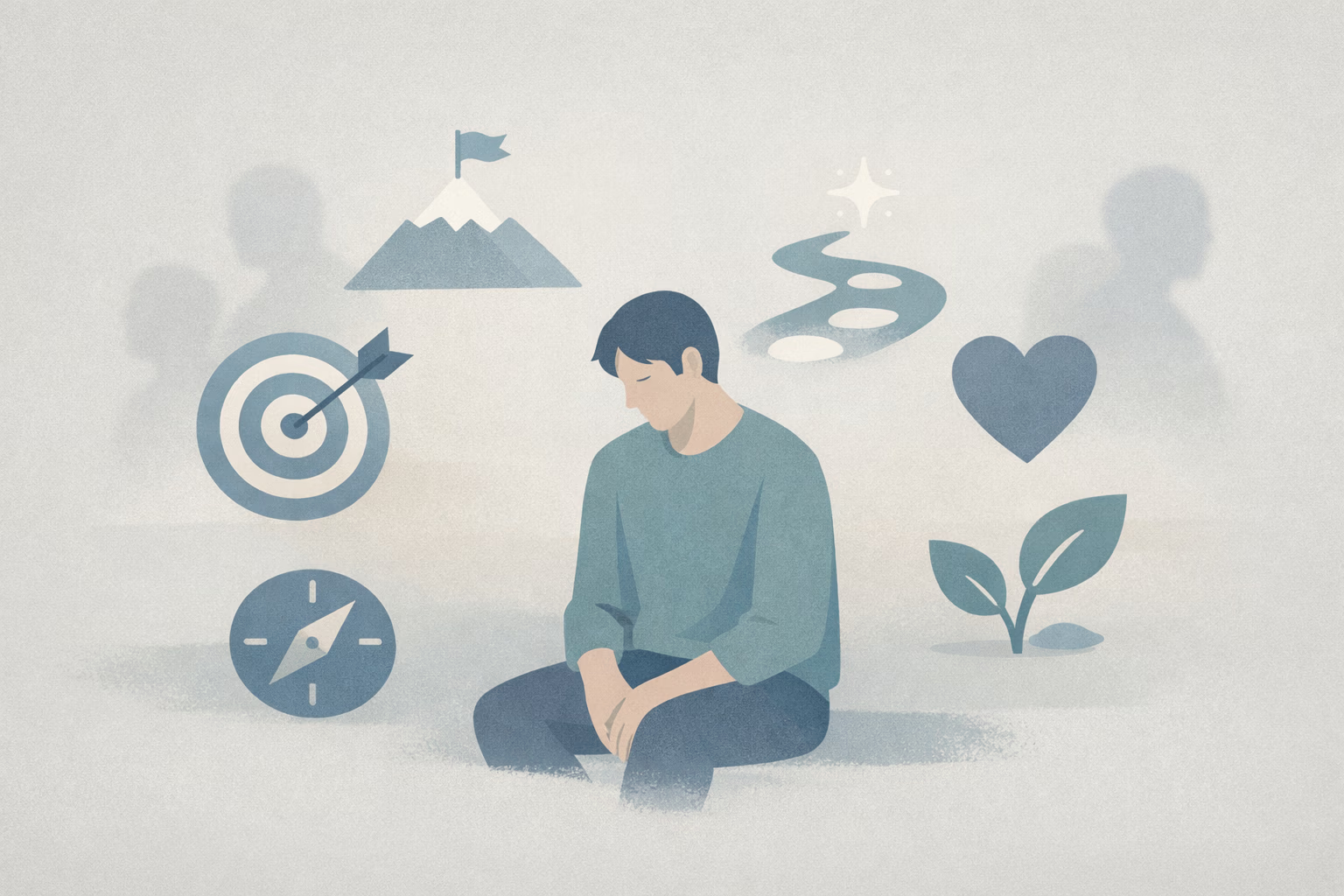
There’s a particular kind of discomfort that shows up when your values are clear but your days don’t reflect them. It can sound like inner noise: a running commentary, a moral inventory, a low-grade agitation. Not because you’re “broken,” but because your system is tracking mismatch.
In that mismatch, guilt and self-criticism often appear as regulatory signals—attempts to restore order when behavior and identity aren’t lining up. The experience can feel like self-betrayal, but structurally it’s the nervous system flagging an unfinished loop: “this isn’t resolved yet.” [Ref-1]
It’s not that you don’t care. It’s that your life keeps forcing decisions that don’t add up.
When values and actions point in the same direction, your internal systems stop fighting for control. The narrative system (the part that tracks “who I am”) and the regulatory system (the part that manages safety and load) can run the same program: conserve energy, complete tasks, return to baseline.
Misalignment creates drag. Even if nothing “bad” happens externally, the body registers unresolved tension: competing impulses, repeated re-starts, and a chronic sense of not being done. Alignment reduces that friction because fewer internal messages contradict each other. [Ref-2]
Noticing your values can be clarifying—but alignment is when your system no longer has to argue with itself.
Humans don’t just survive on calories and shelter—we also survive on being legible to ourselves and others. Across time, consistent behavior helped communities build trust: people could predict one another, coordinate, and rely on shared norms.
That’s part of why value congruence matters so much. When your actions repeatedly contradict your stated standards, it doesn’t only feel “wrong”; it destabilizes identity. The system loses a dependable storyline, and that uncertainty increases load. Stable identity is not a luxury—it’s an organizing principle. [Ref-3]
Alignment doesn’t require dramatic life changes to affect the nervous system. Even small, value-consistent actions can reduce inner tension because they supply a “done signal”—a sense that something important has been completed rather than postponed.
This relief isn’t about earning worth. It’s about resolution. The system stops scanning for unfinished business, and self-trust gets a tiny deposit: evidence that your behavior can match your standards, even under constraint. [Ref-4]
A common myth is that purpose alignment means never contradicting yourself again. But coherence doesn’t come from flawless performance; it comes from repeated returns to what matters—especially when conditions are messy.
Perfectionism often adds a second layer of strain: not only “I’m not aligned,” but “I must become someone who never slips.” That turns values into a surveillance system rather than an orientation. In real life, alignment grows through imperfect, ongoing congruence—enough consistency that your system can relax. [Ref-5]
Many people assume misalignment happens because they “don’t want it enough.” But structurally, misalignment is often what happens when short-term pressures repeatedly override long-term standards—deadlines, social evaluation, financial stress, chronic fatigue, caretaking load.
In those conditions, the nervous system prioritizes immediate stabilization: reduce conflict, get through the moment, seek quick relief. Over time, this can weaken identity orientation—not because values disappeared, but because the loop that connects values to lived behavior keeps getting interrupted. [Ref-6]
When pressure becomes the main decision-maker, values can start to feel theoretical—even to you.
When values and behavior repeatedly diverge, the system often compensates with control, withdrawal, or constant evaluation. These aren’t character flaws; they’re attempts to manage contradiction and keep life moving.
Some common signs look like this:
Research on self-concordance suggests that when goals fit deeper values and needs, they tend to sustain well-being more reliably over time—because they create less internal resistance and less friction. [Ref-7]
Over time, ongoing misalignment can erode self-respect—not as a moral judgment, but as a systems outcome. If your behavior repeatedly contradicts your standards, the body learns a painful expectation: “My choices won’t protect what matters.” That expectation can reduce emotional steadiness and confidence, even when your external life looks functional. [Ref-8]
It can also blunt your capacity to feel oriented. When the meaning loop is repeatedly left incomplete, the system conserves energy by narrowing attention: less openness, less initiative, more short-term coping. The result isn’t “apathy” as a trait—it’s load management under chronic contradiction.
Sometimes the hardest part isn’t what you did. It’s the quiet assumption that you’ll keep doing it.
When misalignment repeats, disengagement can start to look like “not caring.” But often it’s a protective adjustment: if caring produces constant internal conflict without resolution, the system may reduce investment to reduce pain.
This is how alignment can start to feel unattainable. Not because you lost your values, but because your nervous system has learned that values equal strain. The “distance” from purpose is frequently a learned gap created by repeated incomplete cycles—choices made under pressure that never fully reconcile with identity. [Ref-9]
In a discipline-based story, the solution to misalignment is more effort. In a coherence-based story, the stabilizing factor is congruence: fewer internal contradictions to manage.
When actions and values start to match again, the nervous system doesn’t have to spend as much energy on internal monitoring and self-correction. There’s less need for force because there’s less internal friction. This is one reason congruence is often associated with psychological steadiness: it reduces the load created by living in two directions at once. [Ref-10]
Alignment isn’t a mood. It’s the relief of not having to override yourself all day.
Values aren’t only private—they shape how people experience you. When you act in line with what you say matters, relationships often gain steadiness: fewer mixed signals, fewer repairs, less defensiveness.
This doesn’t mean relationships become conflict-free. It means your “self” is more coherent, which can create clearer social cues—predictability, accountability, follow-through. Over time, that tends to increase trust and reduce interpersonal stress load. [Ref-11]
In social systems, alignment can function like a stabilizer: you don’t need to manage impressions as intensely when your behavior already matches your stated orientation.
When the values-action conflict quiets down, many people describe a specific kind of calm: not excitement, not constant positivity—more like reduced internal static. Choices feel simpler because fewer parts of you are arguing.
This steadiness isn’t “more emotion.” It’s more capacity for signals to return to baseline after stress. The system spends less time in self-evaluation loops and more time in completion. Over time, even moral emotions like guilt can become less destabilizing when they integrate into a stable self-concept rather than constantly threatening identity. [Ref-12]
It’s not that life gets easy. It’s that you stop being divided inside it.
When alignment is restored, values stop functioning like a poster on the wall—something you agree with but can’t live. They become a real-time compass: a practical orientation that shapes choices without constant self-coercion.
Importantly, this doesn’t turn values into a purity test. It turns them into identity-in-motion: standards that become believable because they’re repeatedly expressed in lived behavior. In that state, moral emotions tend to point toward repair and coherence rather than global self-condemnation, supporting a more stable moral identity. [Ref-13]
Values guide best when they feel inhabitable—not when they feel like a verdict.
Purpose alignment is often treated like a finish line: once you’re “aligned,” you’re done. But for real humans in real environments, alignment is more like ongoing self-honesty—an orientation you return to as conditions change.
When guilt shows up, it can be understood less as punishment and more as information about belonging and responsibility—signals that something matters and wants reconciliation. When handled as a cue toward coherence rather than self-attack, it can support prosocial direction without collapsing the self. [Ref-14]
Over time, alignment tends to feel less like self-improvement and more like self-consistency: a life that is increasingly readable to your own nervous system.
Living in alignment is rarely one dramatic choice. More often, it’s the accumulation of small, repeated moments where your behavior confirms your values—enough times that your identity can settle into something trustworthy.
Effort can start movement, but coherence is what creates stability. And stability is what makes purpose feel real: not as an idea you hold, but as a direction your life recognizes. [Ref-15]
From theory to practice — meaning forms when insight meets action.
Less like a motivational peak and more like a settling. The article frames alignment as fewer internal contradictions, fewer competing alarms, more reliable follow-through without constant self-negotiation. When actions match values, the day stops feeling like a series of small self-interruptions. The mind doesn't have to keep re-litigating what matters; the body doesn't have to keep bracing for the next moment of self-disappointment. Alignment isn't a mood — it's the relief of not having to override yourself all day. Coherence becomes quiet infrastructure rather than a peak experience.
Because your system tracks mismatch as an unfinished loop. Guilt and self-criticism often appear as regulatory signals — attempts to restore order when behavior and identity aren't lining up. The narrative system that tracks 'who I am' and the regulatory system that manages safety run different programs, creating drag even when nothing externally bad happens. The body registers competing impulses, repeated re-starts, and a chronic sense of not being done. The article reframes self-betrayal not as moral failure but as the nervous system flagging that something hasn't resolved yet — the loop wants closure between values and lived behavior.
Because misalignment usually isn't from not wanting it enough. The article frames it structurally: short-term pressures repeatedly override long-term standards under deadlines, social evaluation, financial stress, fatigue, caretaking load. The nervous system prioritizes immediate stabilization — reduce conflict, get through the moment, seek quick relief. Over time the loop connecting values to lived behavior keeps getting interrupted, and disengagement can look like 'not caring' when it's really a protective adjustment after caring produced constant unresolved conflict. In a coherence-based story, the stabilizing factor is congruence, not effort — fewer contradictions to manage, less internal friction.
By supplying a Done Signal — a sense that something important has been completed rather than postponed. Even minor value-consistent acts reduce inner tension because the system stops scanning for unfinished business and self-trust gets a small deposit: evidence that behavior can match standards even under constraint. The article frames alignment as identity in motion rather than a purity test — standards become believable because they're repeatedly expressed in lived behavior. A decision that matches your ethics, a boundary that reduces internal contradiction, a follow-through that confirms 'I do what I say matters' — these accumulate into a self that's increasingly readable to your own nervous system.
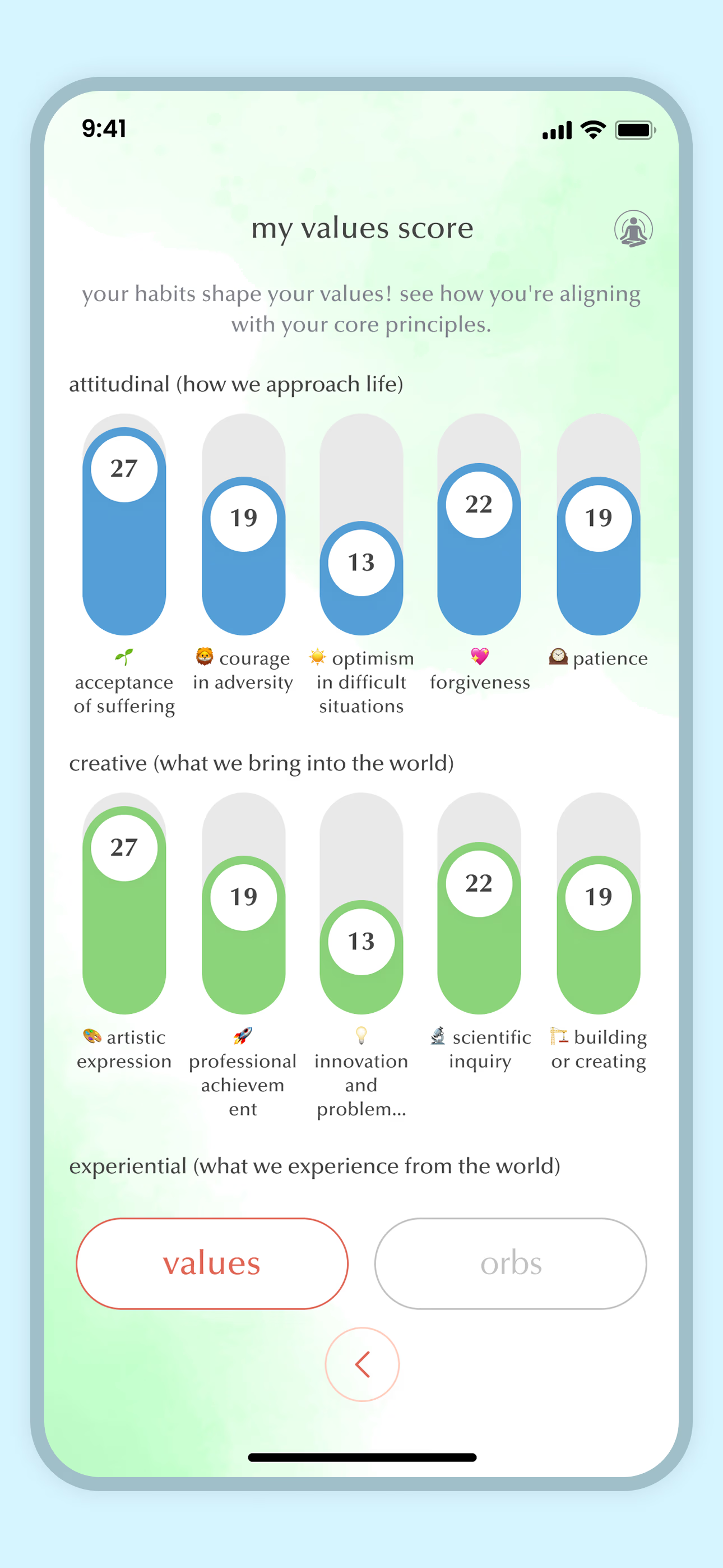
From Science to Art.
Understanding explains what is happening. Art allows you to feel it—without fixing, judging, or naming. Pause here. Let the images work quietly. Sometimes meaning settles before words do.
One Quiet Window, one insight, one reflection — every Sunday