
Avoidance Loops: Why You Delay What You Care About

In short: Discomfort used to be a normal background feature of being alive: uncertainty, effort, awkwardness, waiting, hunger, cold, conflict, and the small friction of doing anything new. In many modern settings, those sensations are treated like errors to eliminate—something to smooth, mute, or escape as quickly as possible.
Discomfort used to be a normal background feature of being alive: uncertainty, effort, awkwardness, waiting, hunger, cold, conflict, and the small friction of doing anything new. In many modern settings, those sensations are treated like errors to eliminate—something to smooth, mute, or escape as quickly as possible.
What if your discomfort intolerance isn’t a personal weakness, but a system that has been trained to interpret ordinary strain as a threat?
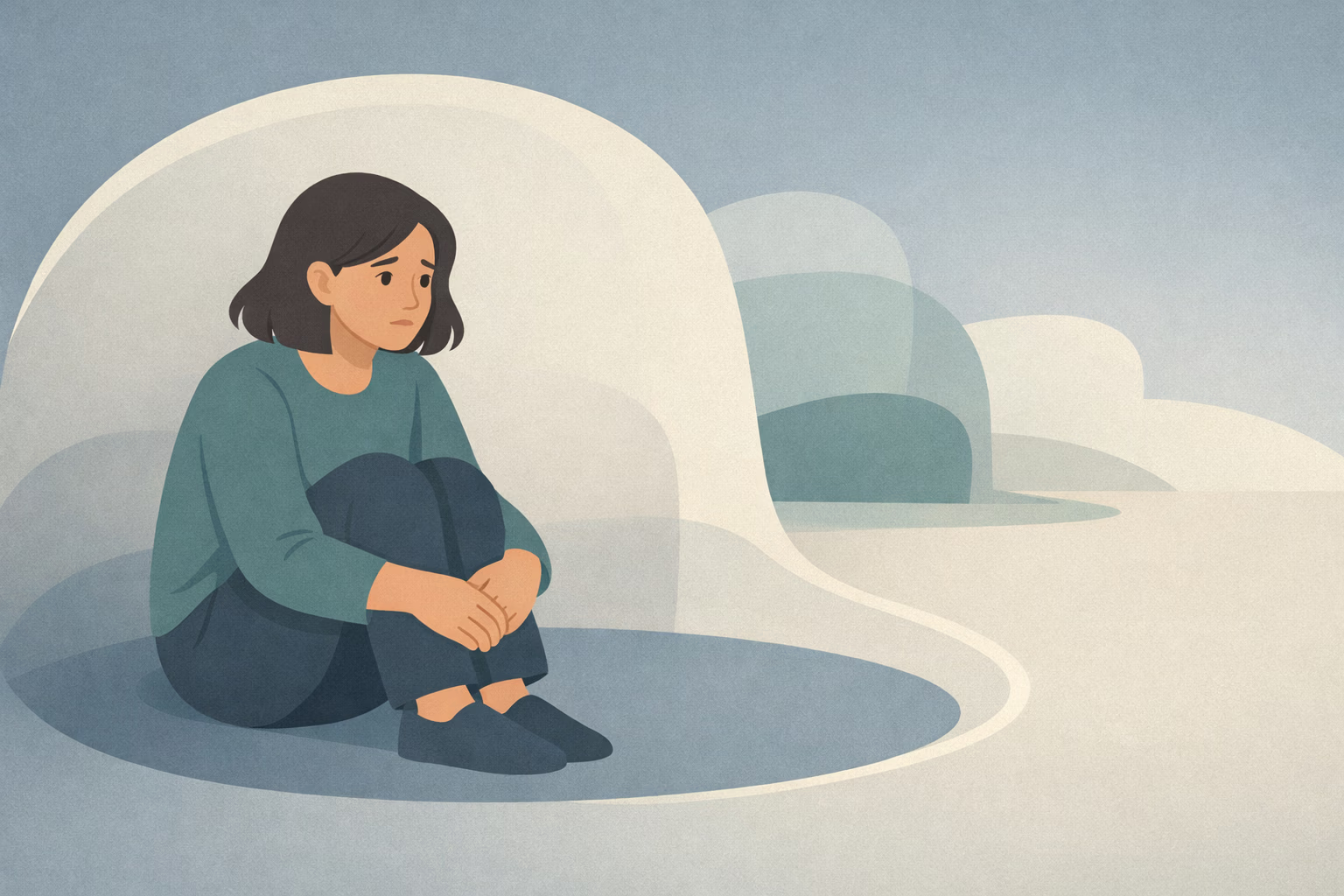
This doesn’t make avoidance “good” or “bad.” It makes it understandable. When your body learns that relief is always available, it can start using relief the way it once used shelter: as a safety signal. Over time, that can shrink the range of sensations your system can hold without urgently trying to exit.
Avoiding discomfort doesn’t always look dramatic. Often it looks like a constant steering away from mild strain: postponing a message, switching tasks the moment it gets tedious, leaving plans when the vibe shifts, or needing conditions to be “just right” before you begin.
When this pattern gets strong, the body can start behaving as if inconvenience is danger. That can show up as irritability, fragility, and a low tolerance for challenge—not because a person is incapable, but because the system is running close to its limits and treats added load as unacceptable.
Research on distress tolerance describes how the perceived ability to endure unpleasant internal states relates to a range of symptoms and difficulties, suggesting this is a capacity issue shaped by conditions and learning, not identity. [Ref-1]
Your nervous system is built to classify: safe enough, or not safe enough. That classification is fast, embodied, and often nonverbal. It doesn’t wait for a thoughtful conclusion; it moves the body toward exit, control, or shutdown.
In a high-load life—sleep debt, social evaluation, constant alerts, financial uncertainty—ordinary discomfort can get misfiled as a threat. The body may respond with urgency, tension, or avoidance behaviors that were designed for acute danger, even when the “threat” is simply uncertainty, effort, or awkwardness.
Distress tolerance theory highlights that reactions to aversive states depend not only on the state itself, but on how tolerable and survivable it feels in the moment. [Ref-2]
From an evolutionary perspective, discomfort often meant something practical: injury risk, exposure, depletion, conflict, or loss of group standing. Pulling back wasn’t a moral failure; it was a conservation strategy.
Modern life contains plenty of signals that look like risk to a body—even when physical danger is low. Many discomforts are informational rather than lethal: feedback, deadlines, ambiguity, social complexity, internal sensations. Yet the same protective architecture is still running.
Models of experiential avoidance describe how systems can become organized around reducing unpleasant internal experiences, especially when those experiences are repeatedly followed by quick relief. [Ref-3]
Avoidance works in the short term because it closes a loop immediately: the uncomfortable sensation drops, the body gets a “stand down” signal, and control returns. The system learns: exiting equals safety.
This is why avoidance can feel so rational in the moment. It reduces exposure to unease and restores predictability. It can also create a sense of being “back in charge,” which is deeply regulating when your system has been running hot.
Relief can feel like proof that leaving was the right choice.
Over time, though, repeated relief without completion can teach the body that discomfort itself is intolerable, rather than teach the body that discomfort can resolve. [Ref-4]
There’s a common assumption that if you reduce discomfort, you preserve mental health. But comfort and wellbeing are not the same signal. Comfort is a state; wellbeing is a capacity to move through states without getting stuck in emergency mode.
When the path of least discomfort becomes the default, the system gets fewer opportunities to experience a full arc: strain → engagement → completion → settling. Without that arc, confidence doesn’t consolidate. Not as a thought, but as a lived bodily expectation that “this can end and I can stay with it.”
Educational materials on avoidance and aversive states often note that avoidance can amplify sensitivity over time, even when it brings immediate relief. [Ref-5]
In an avoidance loop, the most important reinforcer isn’t pleasure—it’s relief. Relief reduces activation quickly, which teaches the body to repeat the exit strategy next time.
Structurally, it can look like this:
Distress tolerance is often discussed as the capacity to endure aversive states without immediately escaping them; when escape becomes the main route to relief, that capacity can narrow. [Ref-6]
Avoidance isn’t always “doing nothing.” Sometimes it’s doing many things—just not the one that would complete the loop. The goal is not laziness; the goal is reducing internal friction.
Common patterns include:
Many popular discussions frame this as “fear” or “lack of motivation,” but it often functions more like a fast safety behavior: an automatic detour around rising load. [Ref-7]
When avoidance is frequent, the system can start treating comfort as the requirement for functioning. That’s not indulgence; it’s conditioning plus depletion. The body learns to expect low friction, and anything else feels like a violation of safety.
This can create a subtle fragility: not because a person is fragile, but because the tolerance window has narrowed. The costs show up as reduced adaptability, lower confidence in uncertainty, and a growing reliance on conditions being controlled.
Contemporary writing on “intentional discomfort” often points to the way small exposures to challenge can expand perceived capacity; the key point is that capacity tends to grow through completion, not through more pressure. [Ref-8]
The nervous system learns by association. If discomfort repeatedly predicts immediate escape and relief, then discomfort itself becomes a louder alarm. The “threat” isn’t the task or conversation—it’s the internal spike that has come to mean, something is wrong.
That’s how the threshold shrinks. What once felt like mild tension can start feeling like an urgent problem to solve. The system isn’t being dramatic; it’s being consistent with its training history: discomfort → exit → safety.
When relief is the only ending you practice, your body starts demanding it sooner.
Many cultural narratives celebrate comfort as the highest good, which can inadvertently strengthen this learning cycle by treating any strain as unnecessary or suspect. [Ref-9]
There’s a quiet shift that changes everything: recognizing that internal safety is not identical to constant ease. Safety is the body’s sense that a sensation can be present without requiring immediate escape, and that experiences can complete.
This is not about “thinking differently” or forcing yourself through misery. It’s about what the system expects will happen next. When life repeatedly provides endings—resolved conversations, finished tasks, repaired ruptures, rested bodies—your nervous system gets more evidence that discomfort can move toward closure rather than escalation.
Many cultural discussions about the “comfort crisis” point out that comfort can become a default coping environment; the deeper issue is often that completion and coherence have been replaced by endless management. [Ref-10]
Humans regulate in groups. Not as a slogan, but as biology. When another person is present in a steady way—witnessing, collaborating, or simply staying oriented—your system receives cues of support and reduced threat.
Shared challenge can lower the cost of discomfort because it adds containment: someone else helps hold the context so your body doesn’t have to treat the moment as a solitary survival test. This is one reason difficult things often feel more doable with companionship, mentorship, or a team rhythm.
Relational support is frequently described as increasing resilience by making stress feel more manageable and less isolating, which can widen tolerance for discomfort over time. [Ref-11]
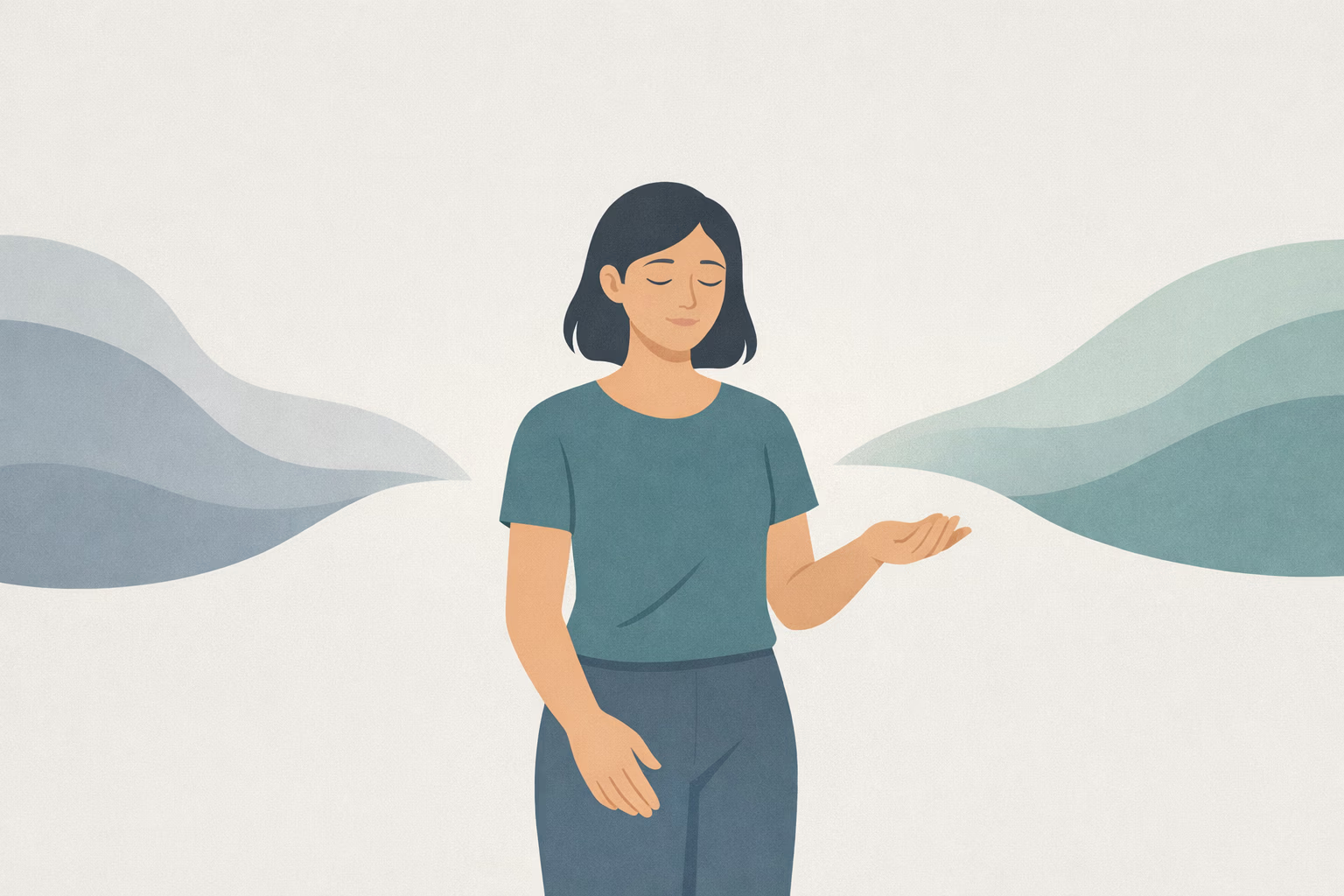
When tolerance returns, it’s often less emotional and more practical. There’s more room between a sensation and a reaction. The system stops treating mild discomfort as an emergency requiring immediate strategy.
This steadiness can look like:
Importantly, this isn’t about validating comfort as the goal. It’s about recognizing when comfort is being used as an avoidance currency—purchased at the cost of completion. Some critiques of “comfort-first” approaches note that excessive soothing can inadvertently maintain avoidance patterns. [Ref-12]
A meaningful life reliably includes effort, tradeoffs, and moments of not knowing. When discomfort is automatically coded as danger, meaning gets filtered out—because meaningful commitments are exactly the places where stakes exist.
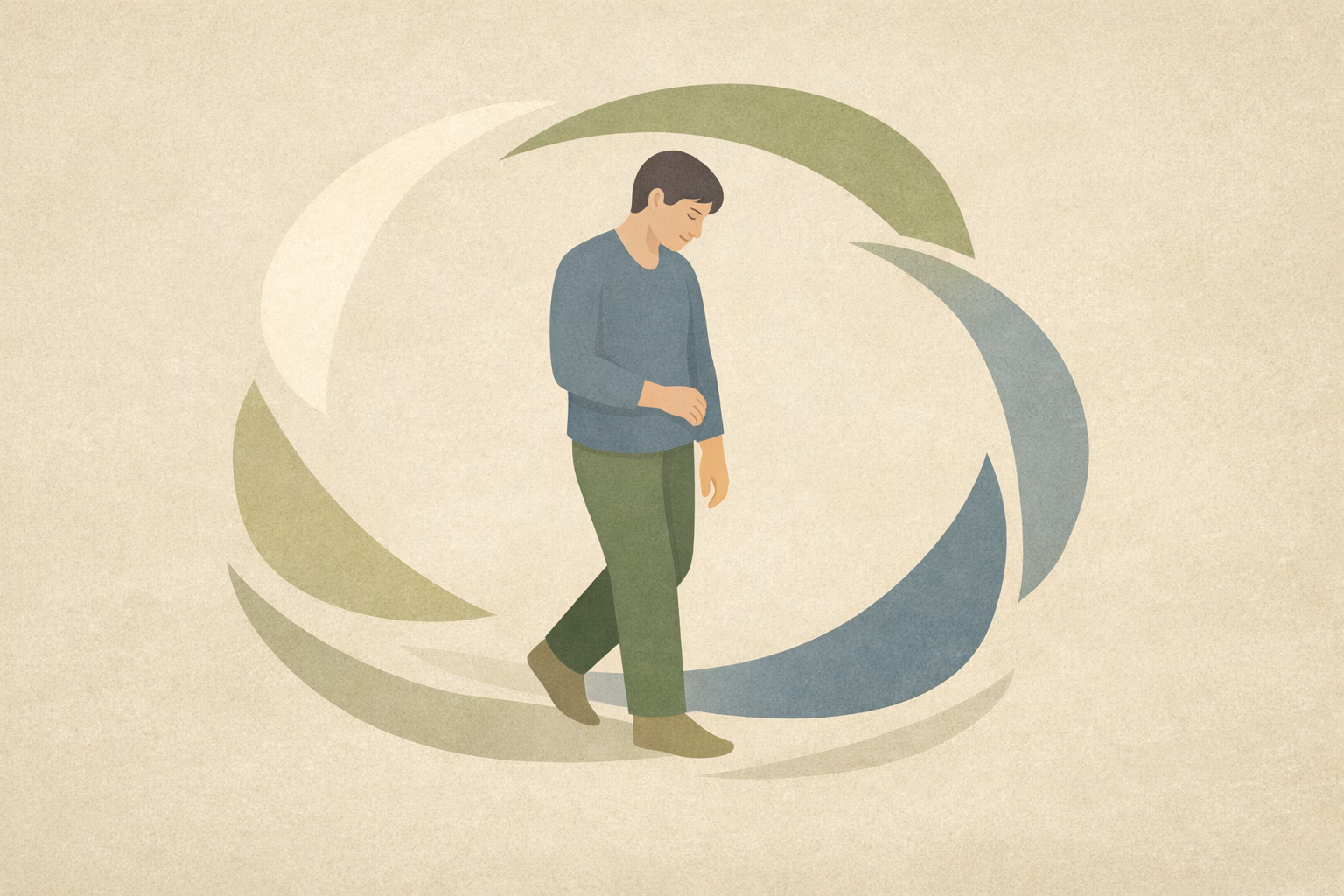
As avoidance loosens, a different orientation can reappear: discomfort becomes information rather than a stop sign. Not every discomfort is worth pursuing, but discomfort no longer automatically controls the steering wheel.
Research on threat learning and avoidance habits suggests that avoidance can become self-reinforcing and harder to update, which helps explain why the return to meaningful effort often requires new experiences of safety and completion rather than more self-pressure. [Ref-13]
If you’ve been avoiding discomfort, it doesn’t mean you’re broken. It can mean your system has been overloaded, trained by quick relief, and deprived of the “done” signals that let the body settle.
Discomfort, in this frame, isn’t automatically a problem to eliminate. It can be the edge where something real is trying to form: a boundary that needs to be stated, a value that needs a life, an unfinished loop that wants completion. Distress tolerance is often described as the ability to move through internal pain without immediate escape; what matters most is that the system learns there is an ending other than withdrawal. [Ref-14]
Agency often returns when your body believes the moment can complete.
Resilience isn’t a personality trait you either have or don’t. It’s the nervous system’s earned expectation that challenge can be met and brought to a close—without needing to erase every uncomfortable sensation along the way.
When coping becomes primarily about quick exit, life can stay perpetually unfinished. When life contains more completion, the system doesn’t have to grip so tightly. The result is not constant comfort, but a steadier capacity to stay engaged with what matters. [Ref-15]
From theory to practice — meaning forms when insight meets action.
Because the threat-detection system doesn't always distinguish between real danger and informational discomfort. In a high-load life — sleep debt, social evaluation, alerts, financial uncertainty — your body classifies sensations fast, often treating effort, ambiguity, or awkwardness as something to escape. The article calls this Evolutionary Mismatch in motion: protective architecture built for acute risk firing in response to a delayed message or a clumsy beginner phase. It's not fragility. It's a window of tolerance that has narrowed because the system has been trained, repeatedly, that quick relief is the answer to any rising internal load.
No, and conflating them is part of the trap. Comfort is a state; wellbeing is the capacity to move through states without getting stuck in emergency mode. When the path of least discomfort becomes the default, the system loses the full arc — strain, engagement, completion, settling — that lets confidence consolidate as a bodily expectation rather than a thought. The article notes that excessive soothing can quietly maintain avoidance patterns. You can spend years lowering friction and still feel fragile, because capacity grows through completion, not through the absence of strain.
Because the nervous system learns by association inside the Avoidance Loop. If discomfort reliably predicts immediate exit and relief, then discomfort itself becomes the alarm. The threat is no longer the task or the conversation — it's the internal spike that has come to mean something is wrong. Each cycle of discomfort-exit-relief teaches the body that sensations of strain require quick withdrawal. Over time, the threshold shrinks, and what once felt like mild tension starts registering as urgent. The system isn't being dramatic; it's being consistent with its training history.
Yes, and the article points to co-regulation as biology rather than slogan. Humans regulate in groups. When another person stays steadily present — witnessing, collaborating, simply holding orientation — your system receives cues of support that lower the cost of the moment. Difficulty stops being a solitary survival test and becomes a shared context the body can tolerate. This is one of the cleanest exits from the Avoidance Loop: tolerance widens not through more self-pressure, but through experiences of completion that happen alongside someone else, where the sensation can move toward resolution rather than escalation.
From Science to Art.
Understanding explains what is happening. Art allows you to feel it—without fixing, judging, or naming. Pause here. Let the images work quietly. Sometimes meaning settles before words do.
One Quiet Window, one insight, one reflection — every Sunday