
Panic Cycles & Nervous System Fatigue: What’s Really Happening
In short: Panic can feel like a sudden takeover: a rush of sensation, a sharp shift in reality, and the urgent sense that something must be stopped immediately. And when it repeats, it can start to feel personal—like your body is “doing this to you,” or like you should be able to prevent it by thinking better, trying harder, or staying more in control.
Panic can feel like a sudden takeover: a rush of sensation, a sharp shift in reality, and the urgent sense that something must be stopped immediately. And when it repeats, it can start to feel personal—like your body is “doing this to you,” or like you should be able to prevent it by thinking better, trying harder, or staying more in control.
But panic loops are less about personal weakness and more about how a human nervous system learns. When intense activation gets paired with certain sensations, places, or moments, the system can begin to treat those cues as if they are danger—whether or not danger is actually present.
What if the repeat pattern isn’t proof that you’re broken—but proof that your threat system learned something too well?
Panic often has a distinctive speed. One moment there’s a minor sensation—tightness in the chest, dizziness, a skipped beat—and the next moment the whole system is mobilizing. That rapid escalation isn’t random. It reflects a survival design: when the body detects threat, it prioritizes fast action over careful interpretation. [Ref-1]
In the middle of it, the most destabilizing part may be the sense of inevitability: “This is happening and I can’t stop it.” That feeling isn’t a character assessment. It’s what it’s like from the inside when the nervous system shifts into high-alert physiology—where urgency becomes the dominant signal.
When the alarm is loud, everything else sounds far away.
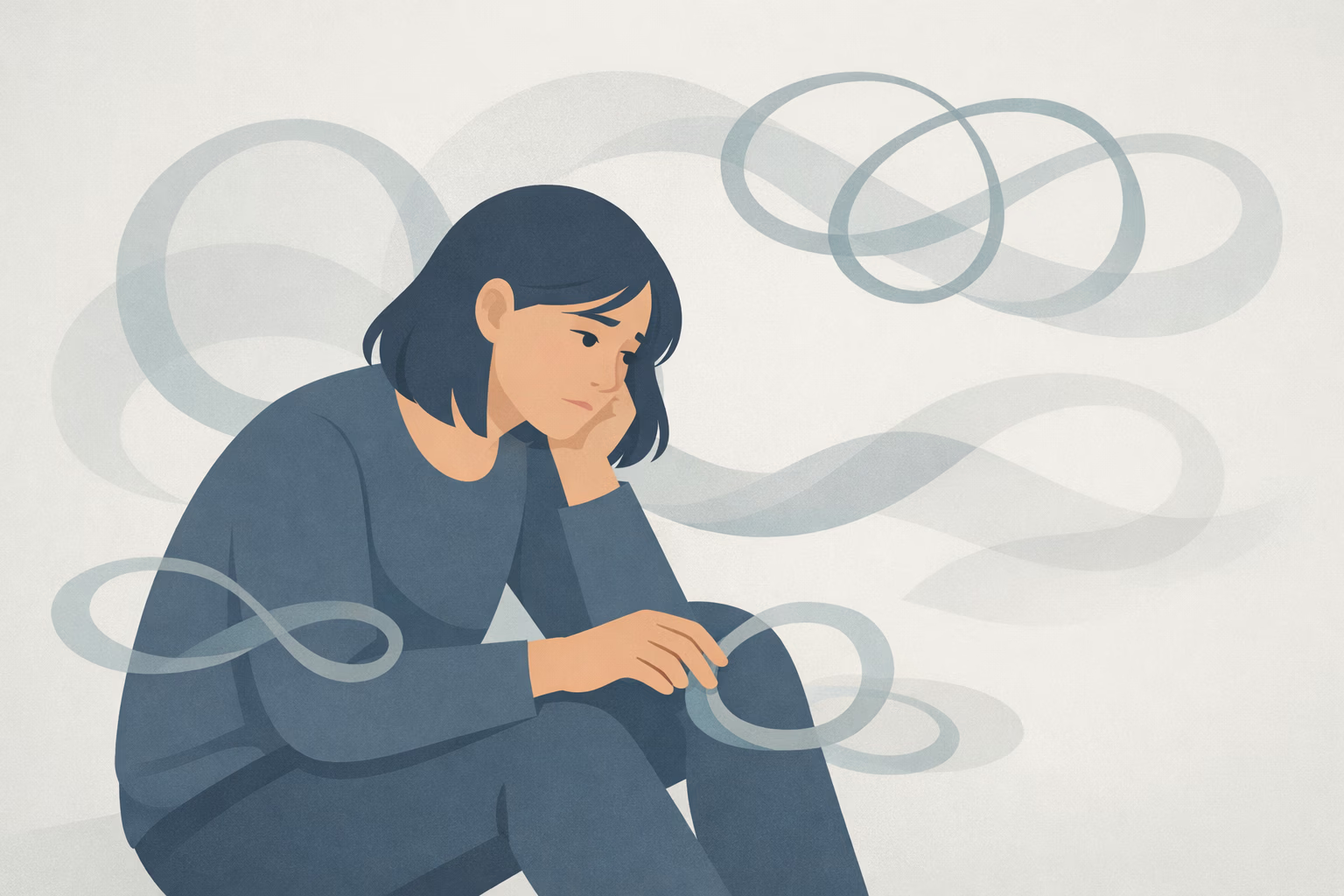
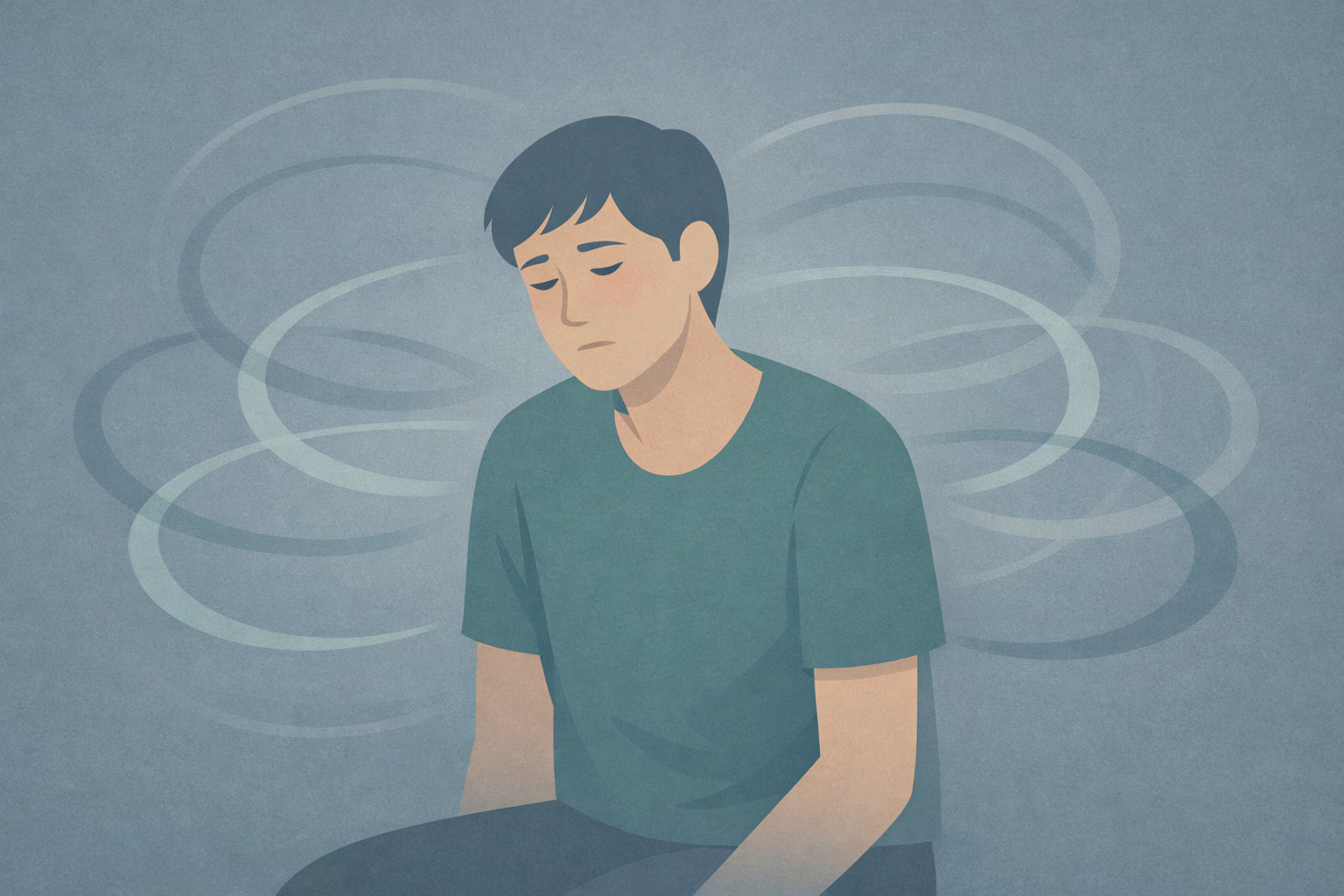
Panic loops often run on a simple but powerful circuit: a bodily sensation gets interpreted as a threat, that interpretation increases autonomic activation, and the increased activation creates more intense sensations. The loop then “confirms itself” through the body’s escalation. [Ref-2]
What makes this loop sticky is interoception—your nervous system’s ability to detect internal signals like breath, heart rate, warmth, tingling, or pressure. When internal sensations are tagged as danger, the monitoring system turns up, and ordinary fluctuations start arriving with extra volume.
Noticing more doesn’t mean you’re getting worse.
It can mean the system has shifted into a scanning mode where internal cues are treated like high-priority information.
Panic conditioning makes sense in evolutionary terms. If the body once experienced a surge of intense threat activation—whether from a specific event, a period of stress load, or a surprising physical sensation—the brain’s fear circuits may store that episode as something to prevent from happening again. [Ref-3]
This is not “overreacting” as a personality trait. It’s a learning rule: intense activation creates strong memory traces. The system begins to generalize—linking the panic state to nearby cues (a location, a time of day, a bodily feeling) so it can mobilize earlier next time.
The trouble is that early mobilization can become its own trigger. The body’s attempt to prevent danger becomes the experience that feels dangerous.
When panic hits, many people find themselves narrowing life in perfectly understandable ways: leaving a store, canceling plans, sitting near an exit, keeping certain places “off limits,” or performing small rituals that create a sense of control. The nervous system reads that reduction in intensity as evidence that the move was protective.
Structurally, this is how the loop gets reinforced: the moment you exit, distract, escape, or neutralize, activation drops. The nervous system registers a quick “danger ended” signal and links it to whatever you did right before the drop. Over time, the system learns: avoidance equals safety. [Ref-4]
This isn’t about fear as a flaw. It’s about how bodies learn through consequence—especially quick, powerful consequence.
Panic is persuasive because it arrives with the body’s strongest credibility cues: breath changes, heart acceleration, derealization, trembling, nausea, heat, cold, tingling. Those signals are designed to be taken seriously. The mind often builds a story that matches the intensity: “Something is wrong with my heart,” “I’m going to pass out,” “I’m losing control.”
In many panic loops, the core mismatch is not between you and reality, but between a learned alarm and the present moment. The alarm is real; the emergency may not be. This is one reason panic can repeat: the system keeps responding to internal sensations as if they are external danger. [Ref-5]
Intensity is not the same thing as accuracy.
Over time, panic loops often become less about the original situation and more about the body itself. Sensations that once felt neutral—breathlessness after stairs, warmth after coffee, lightheadedness from dehydration—start to arrive with extra meaning. The body becomes a place you have to manage.
This is sometimes described as “fear of fear”: the anticipation of panic becomes a trigger, and the vigilance aimed at preventing panic keeps the system activated. [Ref-6]
Notice the structure here: scanning increases detection; detection increases interpretation; interpretation increases activation; activation increases sensation. The loop doesn’t require a new external threat. It can run on internal cues alone.
Panic loops aren’t only the acute attack. They often reorganize the day around preventing another spike. This reorganization can be subtle enough to look like “being careful,” even while it steadily consumes bandwidth.
These are not moral failures. They are regulatory attempts—ways the system tries to keep activation from reaching the point of overwhelm.
When the nervous system is repeatedly pulled into high-alert states, it doesn’t just affect a single moment. It changes baseline capacity. Sleep can become lighter. Social contact can feel harder. Decision-making can feel narrower. Ordinary tasks start requiring more preparation because they now carry threat weight.
As choices shrink, confidence often shrinks with them—not as a mindset problem, but as a lived data problem. The body collects evidence that fewer and fewer contexts are safe. Meanwhile, the ongoing effort to prevent panic adds chronic load, which can make the system easier to trigger. [Ref-8]
It’s exhausting to live like every normal day has emergency conditions.
One of the most frustrating parts of panic loops is the sense that they become easier to trigger. This can happen when the nervous system learns that rapid activation prevents catastrophe. The system begins to fire earlier, with less input, because early firing feels protective.
In conditioning terms, the fear response spreads: more cues become associated with the panic state, and the body’s “tripwire” becomes more sensitive. Fear of the panic state itself adds fuel, because it turns the first wave of sensation into a high-stakes event. Avoidance and safety behaviors can unintentionally support this learning by repeatedly pairing relief with escape. [Ref-9]
If it feels like your system is watching for panic, that may be exactly what it’s doing.
Panic loops weaken when the body stops treating internal sensation as an open-ended emergency. Not through force or perfect thinking, but through a different kind of learning: sensations can rise, crest, and return without requiring escape. When that completion happens enough times, the nervous system gains a new “done” signal.
This is a subtle but important shift in meaning. The signal changes from this must be stopped to this is activation that can resolve. That shift isn’t merely insight. It’s a physiological update that only becomes credible when the system repeatedly reaches an endpoint. [Ref-10]
In that update, control becomes less about preventing sensations and more about regaining orientation while sensations move through their cycle.
Humans regulate in relationship. A steady presence—someone who stays near, speaks normally, and doesn’t escalate the emergency framing—can act as a safety cue. This kind of support communicates: “Your system can come back down here; you’re not alone.”
At the same time, some forms of reassurance can accidentally keep the loop intact—especially when the interaction becomes a repeated ritual that only happens during panic and ends only when certainty is achieved. The nervous system can learn that relief requires an external confirmation, keeping the alarm dependent on reassurance cycles.
Support that buffers stress tends to work best when it increases steadiness without increasing checking, bargaining, or urgency. Over time, this reduces allostatic wear-and-tear—the cost of repeated activation. [Ref-11]
As panic conditioning loosens, people often notice changes that are more about capacity than emotion. The body returns to a wider window where signals can rise and fall without tipping into catastrophe mode. Breath becomes less supervised. Heart sensations become less “important.” Attention returns to the room more easily.
This is what increased safety looks like in the nervous system: not constant calm, but more reliable recovery and a quicker return to social-engagement states—where voice, face, digestion, and connection function with less effort. [Ref-12]
Confidence rebuilds in a grounded way: the system gathers lived evidence that activation can complete and stand down.
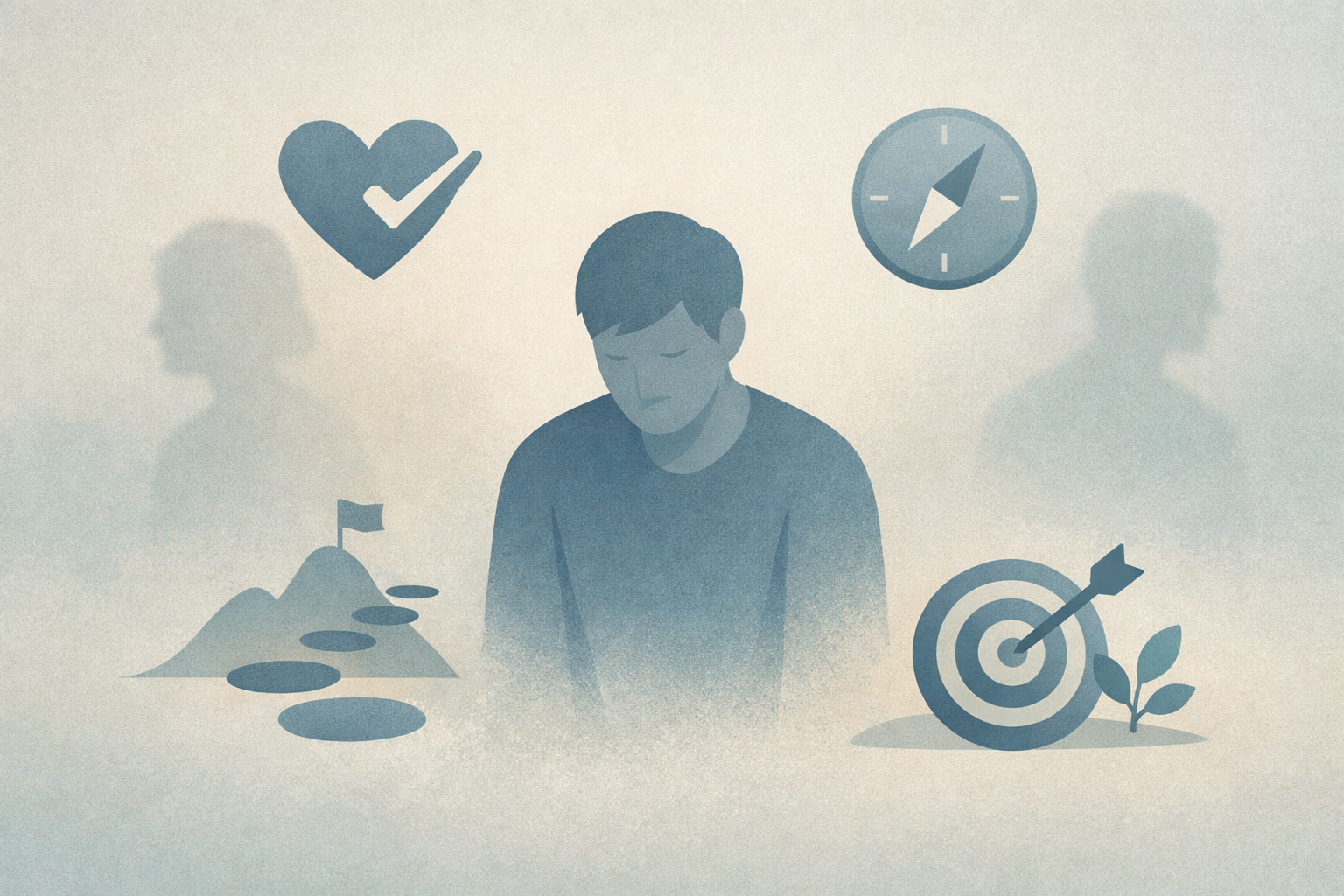
Panic loops don’t only interrupt comfort; they interrupt coherence. When the day is organized around preventing spikes, identity can narrow into a management role: the one who must monitor, avoid, or control. As the loop softens, something else becomes possible—an orientation toward life rather than an orientation toward danger.
This doesn’t require grand transformation. It can look like small returns of agency: more spontaneous decisions, less pre-planning, fewer negotiations with the body. The system is no longer spending so much meaning-making power on threat interpretation, so values and relationships can become louder than symptoms. Approaches that change one’s relationship to internal sensations often describe this as making room for experience without being driven by it. [Ref-13]
When the alarm stops running the schedule, the rest of you can show up again.
Panic loops are not a verdict on your character. They are a predictable outcome of a nervous system that learned to protect you through fast escalation, quick relief, and repeated checking for danger. When those conditions repeat, the loop repeats.
And because it is learned, it is also learnable in the other direction—through experiences that provide real closure: activation that reaches an endpoint, support that lowers load without amplifying urgency, and a gradually restored sense that your body is not an enemy to outsmart. Social buffering matters here, not as dependency, but as a biological resource that helps systems settle. [Ref-14]
When life stops being organized around avoiding internal alarms, meaning tends to re-form naturally: not as forced positivity, but as a quieter sense of “I can be here, and I can choose.”
It’s hard to remember, in the middle of a panic loop, that bodies are designed to come down. Stress physiology has a beginning, middle, and end—and recovery is part of the cycle, not a reward for doing it perfectly. [Ref-15]
As fear-of-fear diminishes, the nervous system gets more chances to complete what it started. And when completion becomes more common, presence becomes more available. Not every day is easy—but the future stops being organized around the next alarm, and life can expand again in ordinary, meaningful ways.
From theory to practice — meaning forms when insight meets action.
Because the design prioritizes speed over interpretation. When the body detects a possible threat, it mobilizes immediately and lets careful analysis come later. So a minor sensation — chest tightness, dizziness, a skipped beat — can flip the whole system into high-alert physiology in seconds. The most destabilizing part is often the felt inevitability: this is happening and I can't stop it. That isn't a character assessment; it's what it's like from the inside when the Threat & Safety System takes over and urgency becomes the dominant signal. Intensity is a property of the alarm, not proof that an emergency is real.
A self-reinforcing circuit: a bodily sensation gets read as threat, the interpretation increases autonomic activation, and the increased activation creates more intense sensations — which the system reads as further proof. Interoception turns up, and ordinary fluctuations start arriving with extra volume. The brain's fear circuits also store intense activation as something to prevent next time, so they generalize: nearby cues like a location, a time of day, a body feeling get linked to the panic state. Early mobilization then becomes its own trigger. The body's attempt to prevent danger becomes the experience that feels dangerous.
Because the moment you exit, distract, or escape, activation drops fast — and the nervous system reads that drop as evidence that whatever you just did was protective. Over time, the system learns avoidance equals safety. Reassurance loops, body-checking, sitting near exits, carrying specific items: these are intelligent regulatory attempts, not failures. But each one repeatedly pairs relief with escape, which strengthens the conditioning. Fear of the panic state itself adds fuel, turning the first wave of sensation into a high-stakes event. The Avoidance Loop here doesn't require external danger; it can run entirely on internal cues being treated as alarms.
Through a different kind of learning: sensations rising, cresting, and returning without requiring escape. When that completion happens enough times, the system gains a new Done Signal — the meaning of the sensation shifts from this must be stopped to this is activation that can resolve. That update isn't insight; it's a physiological credibility built only through repeated endpoints. Steady relational presence helps as co-regulation, not as reassurance ritual. As fear-of-fear reduces, identity stops narrowing into a management role, the window of tolerance widens, and meaning has room to return because the day is no longer organized around preventing the next alarm.
From Science to Art.
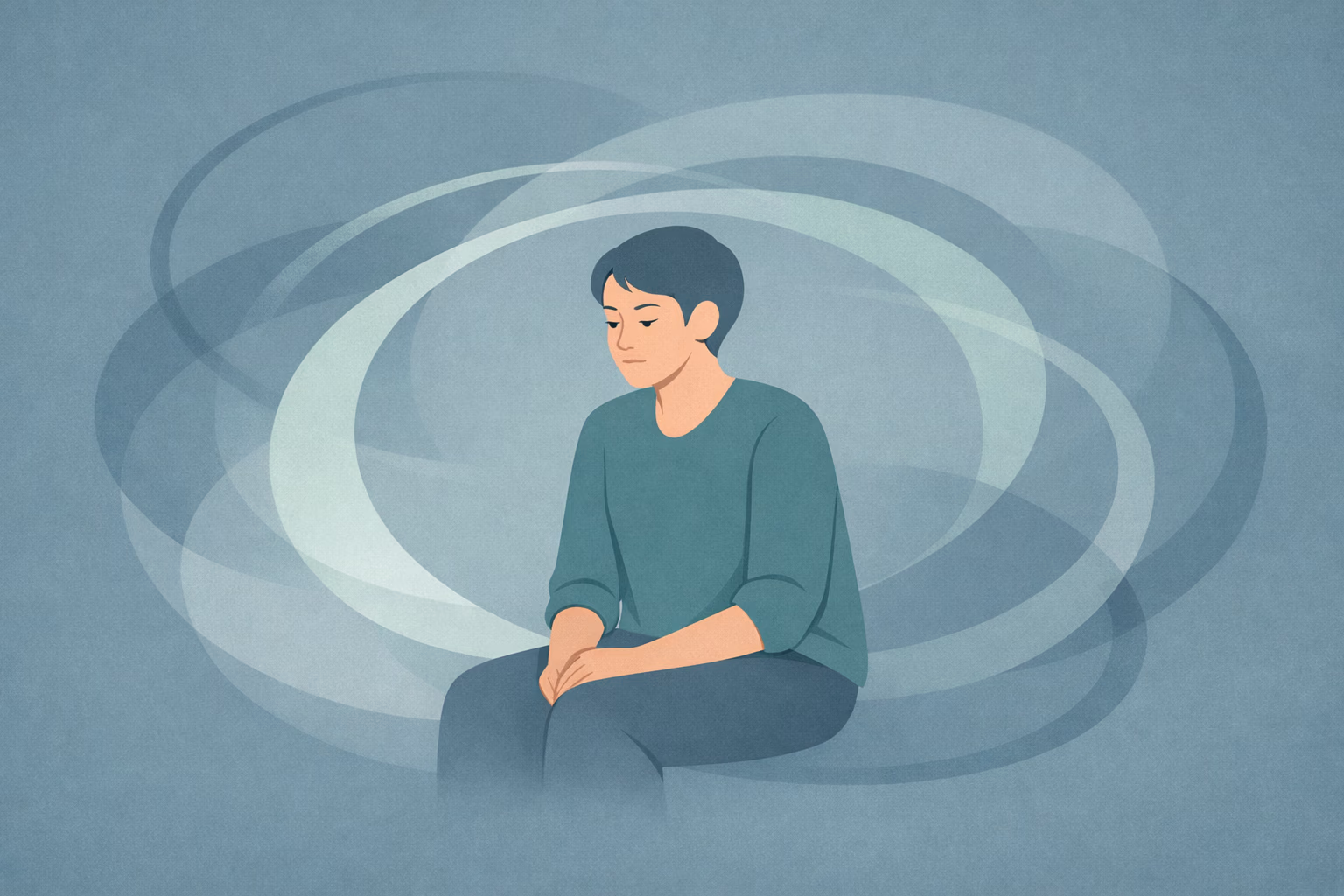
Understanding explains what is happening. Art allows you to feel it—without fixing, judging, or naming. Pause here. Let the images work quietly. Sometimes meaning settles before words do.
One Quiet Window, one insight, one reflection — every Sunday