Fight, Flight, Freeze: Understanding Shutdown Mode
In short: Panic can feel like a sudden betrayal: your heart races, your breathing changes, your body surges with urgency—and your mind scrambles to explain why. Later, you may replay it all, trying to find the “cause,” as if the right explanation could prevent the next wave.
Panic can feel like a sudden betrayal: your heart races, your breathing changes, your body surges with urgency—and your mind scrambles to explain why. Later, you may replay it all, trying to find the “cause,” as if the right explanation could prevent the next wave.
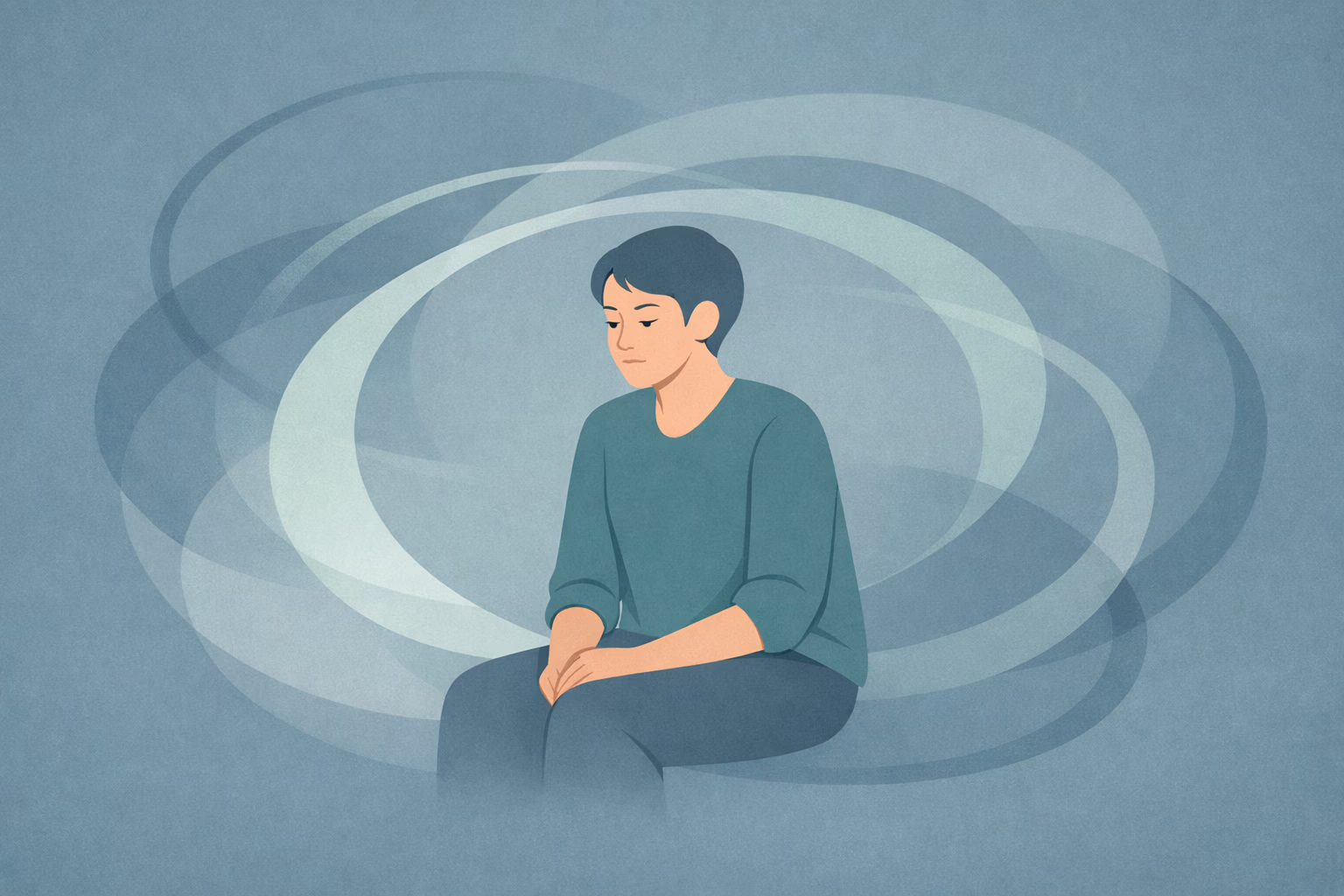
But panic cycles are often less about personal weakness and more about a nervous system that’s been asked to stay on alert for too long without getting a clear “done” signal. In that state, the system can start responding to internal sensations the way it would respond to external threat.
What if the panic isn’t proof that something is wrong with you—what if it’s a predictable pattern of a tired alarm system?
One of the hardest parts of panic is its unpredictability. Even when life looks “fine” on paper, the body can surge into alarm: heat, dizziness, tightness, trembling, a sense of unreality, a rush of urgency that seems to come from nowhere. The experience is so physical that it can feel like your body is no longer a safe place to live. [Ref-1]
Afterward, many people become understandably vigilant for signs of recurrence. Not as a personality trait, and not because they “like control,” but because the system has learned that danger can arrive without warning. The mind tries to protect you by scanning—yet the scanning itself can keep the alarm circuitry close to the surface.
The most confusing part is not the intensity. It’s the uncertainty—how quickly “normal” becomes “emergency.”
The threat system is built for speed. When it has been activated repeatedly, it can become more reactive—like a smoke detector that’s been turned up too high. Sensations that once registered as neutral (a faster heartbeat, a warm face, a shallow breath after stairs) can start to land as “signal of threat.” [Ref-2]
This is sensitization: not a conscious choice, and not a failure of logic. It’s a biological adjustment that can happen when the system spends too long in high gear. Over time, the body may initiate sympathetic activation sooner and more intensely, because from a survival standpoint, early activation is safer than late activation—even if it’s inaccurate in a modern context.
In evolutionary terms, panic-like activation makes sense when danger is immediate and time-limited. A burst of mobilization helps you get away, defend yourself, or seek safety quickly. The problem in modern life is that threats are often ambiguous, social, internal, or chronic—deadlines, uncertainty, health worries, relationship strain, ongoing overstimulation.
When danger doesn’t clearly “end,” the nervous system doesn’t receive the kind of completion signal it expects. The body can stay partially mobilized, and future activation becomes easier to trigger. Panic can then appear less like a response to what’s happening now and more like a replay of a system that hasn’t been able to fully stand down. [Ref-3]
When the alarm goes off, the system naturally looks for ways to reduce load fast. Avoiding places, sensations, conversations, exercise, caffeine, conflict, driving, crowds—these can all reduce immediate activation. That relief matters; it’s a real change in state.
At the same time, repeated “escape to relief” can teach the nervous system an unfortunate rule: “I only return to safety if I get away.” This makes the alarm more likely to fire next time, because the system hasn’t learned completion; it has learned interruption. Over time, the threshold can keep dropping, and the pattern can become more easily kindled. [Ref-4]
Noticing the loop isn’t the same as exiting it—but it can explain why it keeps repeating.
During panic, the body’s signals are intense enough to convince you that something catastrophic is happening. That interpretation isn’t irrational—it’s the brain trying to match intensity with meaning. If the sensations are strong, the mind assumes the cause must be strong too.
But a sensitized, overworked system can produce strong sensations without a matching external threat. This is one reason panic can be so disorienting: the body is delivering “high-volume” messages, while the environment may look ordinary. Anxiety sensitivity and hypervigilance can grow in this gap, because the system starts treating internal sensations as the primary danger to monitor. [Ref-5]
Panic cycles often become self-sustaining through a structural process: the system begins to respond not only to life events, but to the possibility of activation itself. This is sometimes called “fear of fear,” but it isn’t simply a thought problem—it’s an anticipatory loading of the threat system.
When the day is organized around preventing activation, the nervous system rarely gets a clean experience of “activation completed, safety confirmed, energy discharged, return achieved.” Instead, it gets many micro-interruptions and quick exits. That pattern can maintain panic over time because avoidance reduces immediate consequences and removes the conditions that would allow a full stress response to resolve. [Ref-6]
Panic cycles usually have recognizable features. These aren’t character flaws; they’re regulatory strategies that become more likely under high load.
These patterns can look like “overthinking,” but underneath is a nervous system trying to prevent another overwhelming surge by increasing monitoring and control. In the short term, that can reduce uncertainty; in the long term, it can keep the system calibrated to threat. [Ref-7]
When the body cycles through repeated alarm without clear resolution, it pays a cost. This is not just emotional exhaustion; it can be physiological wear-and-tear—sleep disruption, digestive changes, muscle tension, headaches, reduced concentration, and a general sense that your capacity is shrinking.
Over time, life can narrow. Not because you’re “avoiding feelings,” but because the system has learned that many environments create too much activation to metabolize. The result can look like emotional restriction or numbness, not as a psychological choice, but as a load-management response: fewer inputs, fewer spikes, less strain. [Ref-8]
Fatigue isn’t laziness. It’s what happens when the body has been running emergency power for too long.
Stress physiology is meant to move through a sequence: mobilize, respond, then complete and return. When panic is repeatedly interrupted—by escape, by rapid suppression, by constant preemption—the system may not receive the full set of cues that signal completion.
From a safety-science perspective, the nervous system relies on safety signals and co-regulating cues to come back online after threat. If those cues are inconsistent, the system can remain organized around threat monitoring, even during objectively safe moments. [Ref-9]
This is one reason panic can recur “randomly”: the system isn’t always responding to the present. It may be responding to an internal context of unfinished activation—an open loop that keeps recruiting attention and energy.
Many people approach panic as a problem to solve through force—more control, more analysis, more vigilance. That makes sense in a culture that treats discomfort as something to optimize away. Yet panic cycles often persist not because effort is insufficient, but because completion is missing.
Physiological recovery has a different “feel” than relief. Relief is the drop that comes from getting away; recovery is the settling that comes after the body finishes what it started and receives credible safety cues. When completion happens, the system can downshift without needing constant management, and capacity gradually returns. [Ref-10]
This isn’t about insight or positive thinking—it’s about the body learning, through lived sequences, that activation can end.
Humans are social nervous systems. For many people, the strongest safety cues are not internal commands, but external signals: a steady voice, non-urgent eye contact, predictable routines, a sense of being met rather than evaluated. This is not dependency; it’s biology.
When panic has been frequent, the system may not respond to logic in the moment because it is operating in a fast survival mode. Calm, attuned relational presence can support downregulation by providing the nervous system with information it trusts: “I’m not alone, this is containable, we can return.” [Ref-11]
Over time, repeated experiences of co-regulation can become internalized as increased stability—less because you “learned a concept,” more because your system has accumulated credible evidence of safety.
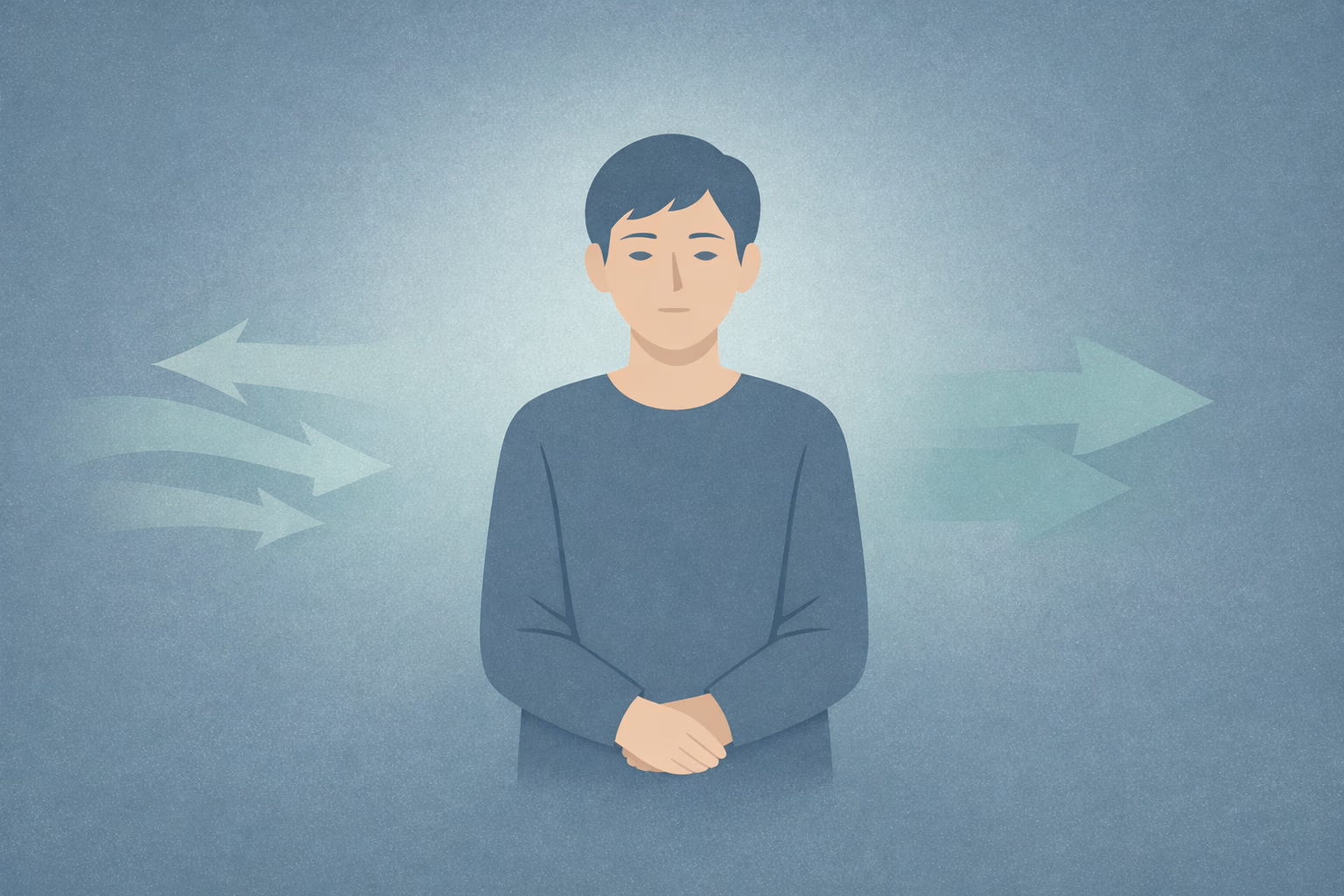
As load reduces and closure becomes more available, many people notice a subtle but important shift: sensations start to register as information rather than emergencies. A faster heartbeat can become “a body doing body things,” not a trigger for a full alarm cascade.
This shift is rarely dramatic. It often shows up as small changes: fewer spikes from minor stressors, a quicker return after activation, less compulsion to check, less urgency to escape. The system becomes better able to carry internal sensations without converting them into threat narratives. Interoceptive signals become easier to interpret because the baseline is steadier. [Ref-12]
Trust doesn’t arrive as a thought. It arrives as a quieter body.
With improved regulation, attention can widen again. Instead of scanning the body and environment for danger, the nervous system has more room for ordinary orientation: conversations, curiosity, creativity, work, play, and connection. That widening is not “confidence” as a mindset—it’s capacity as a condition.
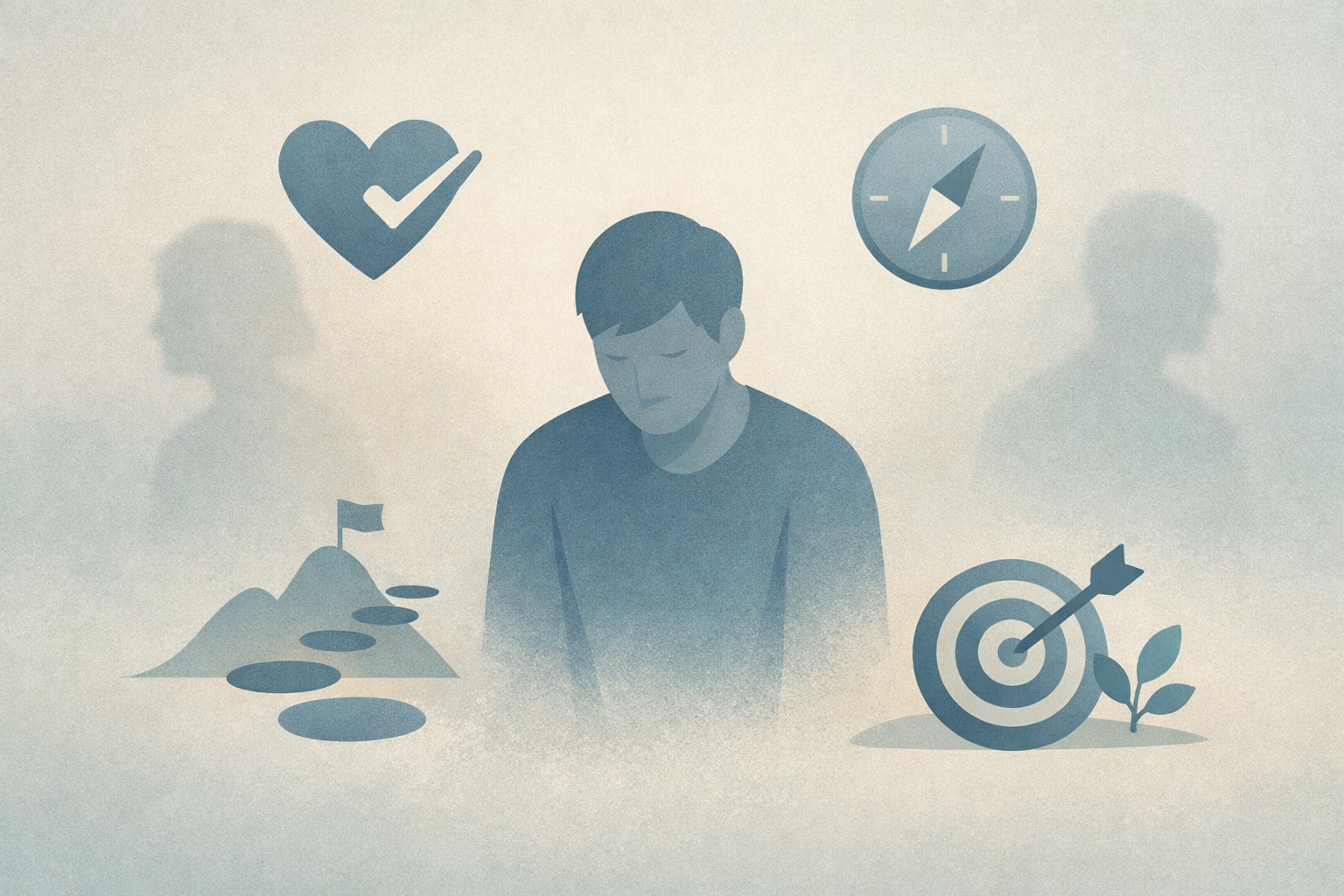
In this state, identity often shifts too. When panic is frequent, a person can start to live as a manager of risk: planning, evaluating, bracing. As coherence returns, identity becomes less about preventing the next episode and more about moving toward what matters—relationships, values, and a life that feels inhabitable. [Ref-13]
The absence of constant monitoring is one of the clearest signs that the system is finally getting credible “safe enough” signals.
Panic cycles can be terrifying, but they are also legible. When you look closely, they often follow a predictable logic: repeated activation, lowered threshold, short-term relief loops, and fatigue from too much emergency physiology without completion.
Seeing panic as a biological cycle—rather than a personal defect—can reduce the secondary burden of shame. And when shame drops, even slightly, the system often has more room to recognize what’s already true: panic is a signal of load and unfinished activation, not proof that you are broken. [Ref-14]
Meaning often returns in the same way stability returns: not through pressure, but through coherence—when your lived experience starts to include credible endings, safety cues, and a sense that your life is organized around more than the prevention of symptoms.
If panic has been part of your life, it makes sense that you’ve adapted around it. Those adaptations are not your identity; they are what a nervous system does when it’s trying to protect you under strain.
With time and the right conditions, threat systems can recalibrate. The body can relearn safety through completion and consistent cues, and the sense of self can become less defined by emergency management and more by direction. Panic is not a character verdict—it’s an alarm system asking for restoration, safety, and a way back to “done.” [Ref-15]
From theory to practice — meaning forms when insight meets action.
No. Panic cycles are usually less about personal weakness and more about a tired alarm system that has been asked to stay on alert for too long without a clear stand-down signal. Repeated activation lowers the threshold — like a smoke detector turned up too high — so sensations that were once neutral (a faster heartbeat, a warm face, a shallow breath) start landing as 'signal of threat.' That sensitization isn't a logic failure. It's a biological adjustment when the system has spent too long in high gear. The body chooses early activation over late activation, even when it's inaccurate in modern context.
Because the system learns the wrong rule. Every escape-to-relief cycle teaches the nervous system 'I only return to safety if I get away.' That makes the alarm more likely to fire next time, not less. The Avoidance Loop tightens: the day becomes organized around preventing activation, which means the body never gets a clean experience of activation completed, safety confirmed, energy discharged, return achieved. Instead, it gets micro-interruptions and quick exits. Panic persists because the loop offers relief without closure, and the threshold can keep dropping. The fear of fear becomes its own anticipatory load on the threat system.
Real wear-and-tear, not just emotional exhaustion. Sleep disruption, digestive changes, muscle tension, headaches, reduced concentration, and a general sense that capacity is shrinking. Life can narrow — not because you're avoiding feelings, but because the system has learned that many environments create more activation than it can metabolize. The result can look like emotional restriction or numbness, but it's load management: fewer inputs, fewer spikes, less strain. Common signatures show up too: anticipatory anxiety, body hyperawareness, safety behaviors, and outsized reactions to small stressors. Fatigue isn't laziness. It's what happens when the body has been running emergency power for too long.
Yes, but through completion rather than effort. Relief is the drop that comes from getting away. Recovery is the settling that comes after the body finishes what it started and receives credible safety cues — often relational, not just internal. Co-regulation matters here: a steady voice, non-urgent eye contact, predictable routines provide the kind of evidence the system trusts when logic alone won't reach it. As load reduces, sensations start registering as information rather than emergencies. A faster heartbeat becomes 'a body doing body things.' Trust doesn't arrive as a thought. It arrives as a quieter body, accumulated through small, completed cycles.
From Science to Art.
Understanding explains what is happening. Art allows you to feel it—without fixing, judging, or naming. Pause here. Let the images work quietly. Sometimes meaning settles before words do.
One Quiet Window, one insight, one reflection — every Sunday