
Shutdown Mode: When the Mind and Body Freeze
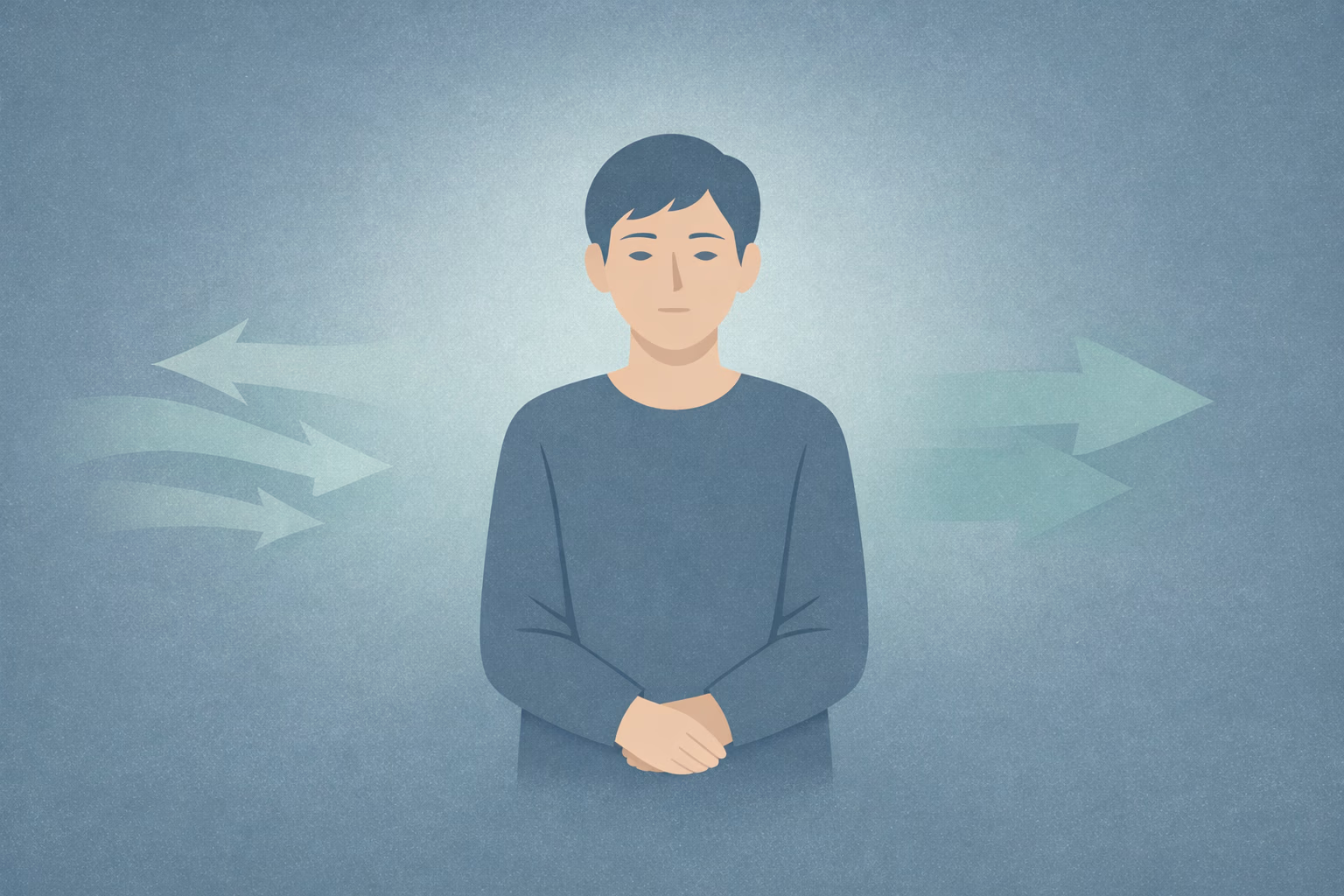
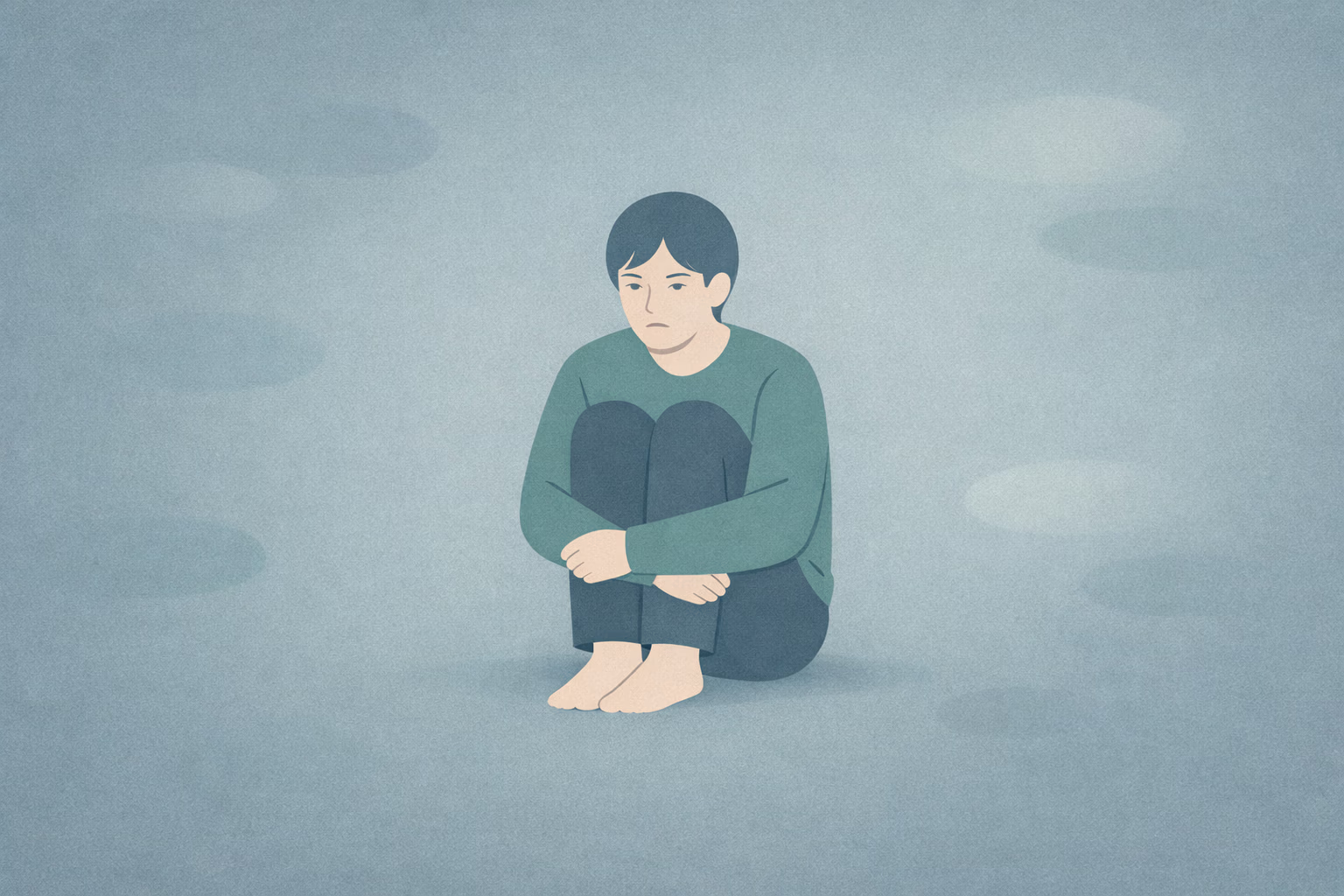
In short: Fight, Flight, Freeze: Understanding Shutdown Mode Shutdown mode can feel confusing from the inside: you want to respond, but your body doesn’t organize around movement. Words might disappear. Decisions feel far away. Time can turn syrupy, or oddly blank.
Shutdown mode can feel confusing from the inside: you want to respond, but your body doesn’t organize around movement. Words might disappear. Decisions feel far away. Time can turn syrupy, or oddly blank. And because the outside world often reads stillness as “fine,” you may end up carrying the extra weight of explaining what you can’t yet change.
What if freeze isn’t a character flaw—what if it’s your nervous system applying the safest setting it can find?
Fight, flight, and freeze are not personality types. They’re state shifts—fast, automatic reorganizations of attention, energy, and perception designed for survival. When a situation doesn’t resolve, the nervous system keeps looking for closure. Shutdown is one way the system limits damage when closure can’t be reached through action.
Many people describe shutdown as a mismatch: intentions are present, but initiation is missing. You might know what matters to you and still feel unable to start, respond, speak, or choose. That gap can be followed by harsh interpretations—“I’m lazy,” “I’m broken,” “Why can’t I just do it?”—even though the experience is often more biological than moral. [Ref-1]
In shutdown, the system isn’t refusing life. It’s reallocating resources. Attention narrows. Sensation can dampen. Social engagement can feel effortful. This is not “lack of care.” It’s the body reducing output when output doesn’t feel safe or effective.
Shutdown often feels like being present enough to notice the world, but not resourced enough to meet it.
When the brain’s threat detection networks flag danger, the body tends to mobilize first. That mobilization is what we commonly call fight or flight: increased arousal, faster scanning, more urgency, stronger impulse to act. The goal is simple—resolve the situation and return to baseline.
Freeze can appear when mobilization doesn’t create resolution. If action doesn’t work, or if action itself would increase risk, the system may shift into a different strategy: immobilization, reduced output, and a kind of internal “hold.” This is not a conscious decision; it’s an automatic recalibration under load. [Ref-2]
In ancestral environments, fighting wasn’t always possible, and fleeing wasn’t always available. In those conditions, stillness could reduce harm: less visibility, less provocation, less chance of escalating injury. Freeze is often best understood as a last-line option when other options are constrained.
That’s why shutdown can show up even when you intellectually know you’re “safe.” The nervous system doesn’t run on logic alone; it runs on pattern recognition. If the body learns that effort leads to more threat, it may conserve by default—especially when uncertainty is high and outcomes are hard to predict. [Ref-3]
Freeze is not simply “doing nothing.” It’s an organized state with a purpose. The body may conserve energy, reduce movement, and dampen sensation. Thought can slow, not because you are incapable, but because the system is prioritizing survival efficiency over complex exploration. [Ref-4]
This is why shutdown can include numbness, fogginess, flatness, or a sense of distance from your own preferences. The system is reducing signal complexity so it can endure what it perceives as unworkable. It’s a protective narrowing.
It’s common to interpret shutdown as failure because our culture rewards visible effort. But freeze is not “giving up.” It’s a high-stakes calculation made by the nervous system: minimize cost when cost can’t be controlled. [Ref-5]
Seen this way, shutdown is less about who you are and more about what your system has learned: that pushing may not lead to completion, relief, or safety. When the body expects that a loop will stay unfinished, it may choose the lowest-risk posture—stillness—until the environment changes.
What if your immobility is not the problem, but the signal?
In modern life, “danger” often isn’t a predator—it’s persistent pressure without completion: endless messages, ambiguous expectations, social comparison, and problems that can’t be fully solved. When stressors are continuous and outcomes are unclear, the body may not receive a clean done signal.
Over time, freeze can become a loop: stress increases, initiation drops, consequences accumulate, stress increases again. Not because you “don’t want it,” but because the system has learned that movement leads to more activation without resolution. Shutdown becomes a way to reduce exposure to more unfinishedness. [Ref-6]
Shutdown is easy to mislabel because it can resemble disinterest or avoidance. Internally, it often feels like reduced access to traction—the capacity to translate intention into motion. [Ref-7]
Common presentations include:
These aren’t identities. They’re state-dependent outputs. When the nervous system changes state, the same person can look entirely different.
When shutdown becomes frequent, it can quietly alter how life feels. If your system regularly drops into immobilization, you may have fewer experiences of effective response—fewer moments where action leads to closure. That can make ordinary challenges feel disproportionately hard, because the body is calculating cost based on recent history, not on today’s objective stakes.
Chronic stress can also heighten reactivity and reduce flexibility in stress-response circuits, making it harder to shift smoothly between mobilization and rest. [Ref-8] The result isn’t just “more stress.” It’s less capacity to meet stress with adaptive variation.
When the body doesn’t get completion, it stops trusting effort to work.
Repeated shutdown can condition the nervous system toward faster immobilization. The threshold for “too much” gets lower—not because you are less capable, but because your system has learned that activation is expensive. If past activation led to unresolved outcomes, the body may move more quickly to conservation.
This is one reason shutdown can seem to arrive “out of nowhere.” The triggering inputs may be subtle: a tone of voice, a deadline, too many open tabs, a familiar kind of ambiguity. Under the surface, the system is matching patterns and preparing for what it expects next. [Ref-9]
In this sense, freeze is predictive. It’s the nervous system trying to prevent another round of mobilization without payoff.
It’s tempting to approach shutdown with more force—more urgency, more self-talk, more pressure. But pressure often resembles threat to a taxed nervous system, even when the intent is “motivation.” In shutdown states, what restores movement is not intensity, but the return of safety cues and reduced load—conditions that allow the system to risk engagement again. [Ref-10]
This is not about “thinking differently” as a shortcut. It’s about the body reclassifying the moment as workable. When the nervous system senses that response will not increase harm, small amounts of movement and initiative can reappear naturally, without the strain of overriding.
What changes when your body believes effort will lead to completion?
Humans regulate in relationship. When another person’s presence is steady, non-threatening, and not demanding performance, the nervous system often receives a different kind of data: “I’m not alone with this.” That signal can reduce threat load and make engagement more available. [Ref-11]
This is sometimes called social buffering—supportive contact that lowers physiological stress responses. Importantly, it works best when it doesn’t add a new task (explaining, justifying, proving). It’s less about being fixed and more about being met without escalation.
A calm witness can be a safety cue: not a solution, but a softer environment.
When shutdown begins to lift, the earliest sign is often not a dramatic breakthrough. It can look like micro-mobility: a little more initiative, a little more ability to pivot, a little less internal drag. The system starts to tolerate stimulation without immediately needing to go offline. [Ref-12]
Over time, responsiveness can return in a practical way: you notice signals sooner, you recover faster after stress, and choices feel more available. Confidence tends to rebuild as a byproduct of lived completion—moments where your actions actually land and the body registers “done.”
Restored regulation isn’t a permanent calm state. It’s flexibility—the ability to mobilize when needed and settle when the moment is complete. When flexibility returns, life becomes more navigable because your nervous system is no longer forced into one dominant strategy.
In that flexibility, identity coherence strengthens. You don’t have to manufacture agency; it becomes easier to recognize what matters and to respond in ways that match it. As self-trust rebuilds through repeated experiences of workable engagement, the system becomes less dominated by prediction and more capable of orientation. [Ref-13]
That’s what “getting your life back” often feels like: not constant energy, but a steadier access to choice.
If you recognize yourself in freeze, it can help to hold a different story: shutdown is not your personality. It’s your nervous system communicating that the current load, pace, or uncertainty exceeds what it can process to completion right now. [Ref-14]
When you see freeze as a state—and as an attempt at protection—the shame tends to soften. And when shame softens, there is often more room for the conditions that create genuine closure: fewer open loops, clearer edges, and environments that signal safety rather than evaluation. Meaning returns not by forcing yourself forward, but by the gradual restoration of coherence between what matters, what’s possible, and what actually gets to be finished.
Shutdown mode is often the body’s way of surviving without a safe exit. But bodies can learn new exits when life offers more completion and fewer impossible demands. Functional freeze can look like “still working” while feeling far away, and it deserves the same respect as more obvious distress. [Ref-15]
As the system receives enough safety and enough done signals, it doesn’t need to conserve in the same way. What emerges on the other side is not a new personality—it’s the return of mobility, agency, and direction that were always there, waiting for conditions that allowed them to be lived.
From theory to practice — meaning forms when insight meets action.
Shutdown mode is a mismatch: intentions are present, but initiation is missing. You know what matters and still feel unable to start, respond, speak, or choose. Words might disappear. Decisions feel far away. Time turns syrupy or blank. The system isn't refusing life — it's reallocating resources. Attention narrows, sensation can dampen, social engagement feels effortful. This isn't lack of care; it's the body reducing output when output doesn't feel safe or effective. Shutdown often feels like being present enough to notice the world, but not resourced enough to meet it. It's biological, not moral.
When the brain's threat detection flags danger, the body mobilizes first — that's fight or flight: increased arousal, faster scanning, urgency, impulse to act. Freeze appears when mobilization doesn't create resolution. If action doesn't work or would increase risk, the system shifts into immobilization, reduced output, and an internal hold. In ancestral environments, fighting wasn't always possible and fleeing wasn't always available — stillness could reduce harm. The Threat & Safety System runs on pattern recognition, not logic. If the body learned that effort leads to more threat, it conserves by default — especially when uncertainty is high and outcomes hard to predict.
In modern life, danger often isn't a predator — it's persistent pressure without completion: endless messages, ambiguous expectations, problems that can't be fully solved. When stressors are continuous and outcomes unclear, the body never receives a clean Done Signal. Over time, freeze becomes a loop: stress increases, initiation drops, consequences accumulate, stress increases again. Not because you don't want it, but because the system has learned that movement leads to more activation without resolution. Shutdown reduces exposure to more unfinishedness. The threshold for too much gets lower — the system has learned activation is expensive and moves more quickly to conservation.
Not pressure. Pressure resembles threat to a taxed nervous system, even when the intent is motivation. What restores movement is the return of safety cues and reduced load — conditions that allow the system to risk engagement again. Co-regulation helps powerfully: when another person's presence is steady, non-threatening, and not demanding performance, the nervous system receives I'm not alone with this. Social buffering lowers physiological stress responses. As shutdown lifts, the earliest sign isn't a breakthrough — it's micro-mobility: a little more initiative, a little less internal drag. Confidence rebuilds as a byproduct of lived completion, not as a precondition for it.
From Science to Art.
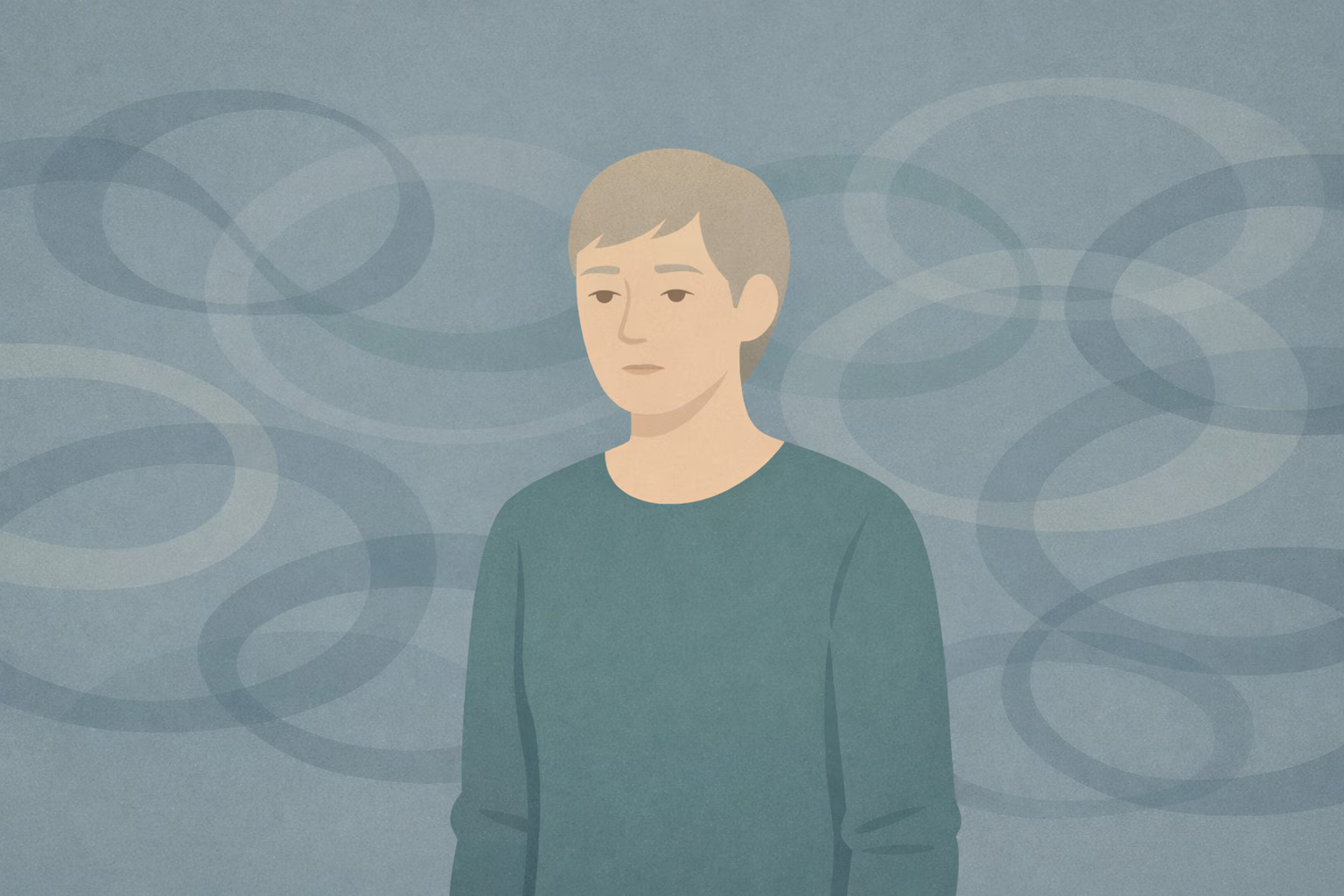
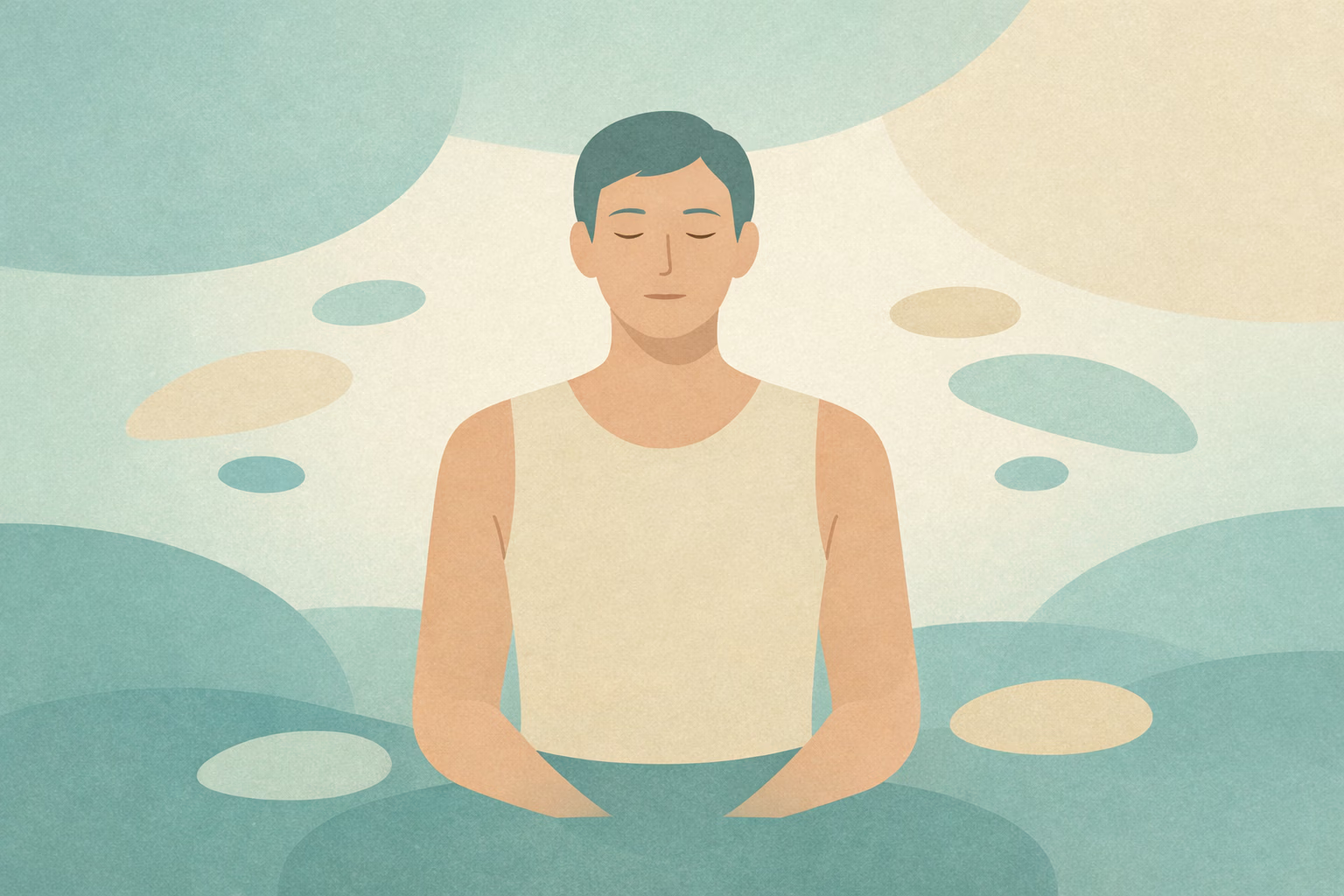
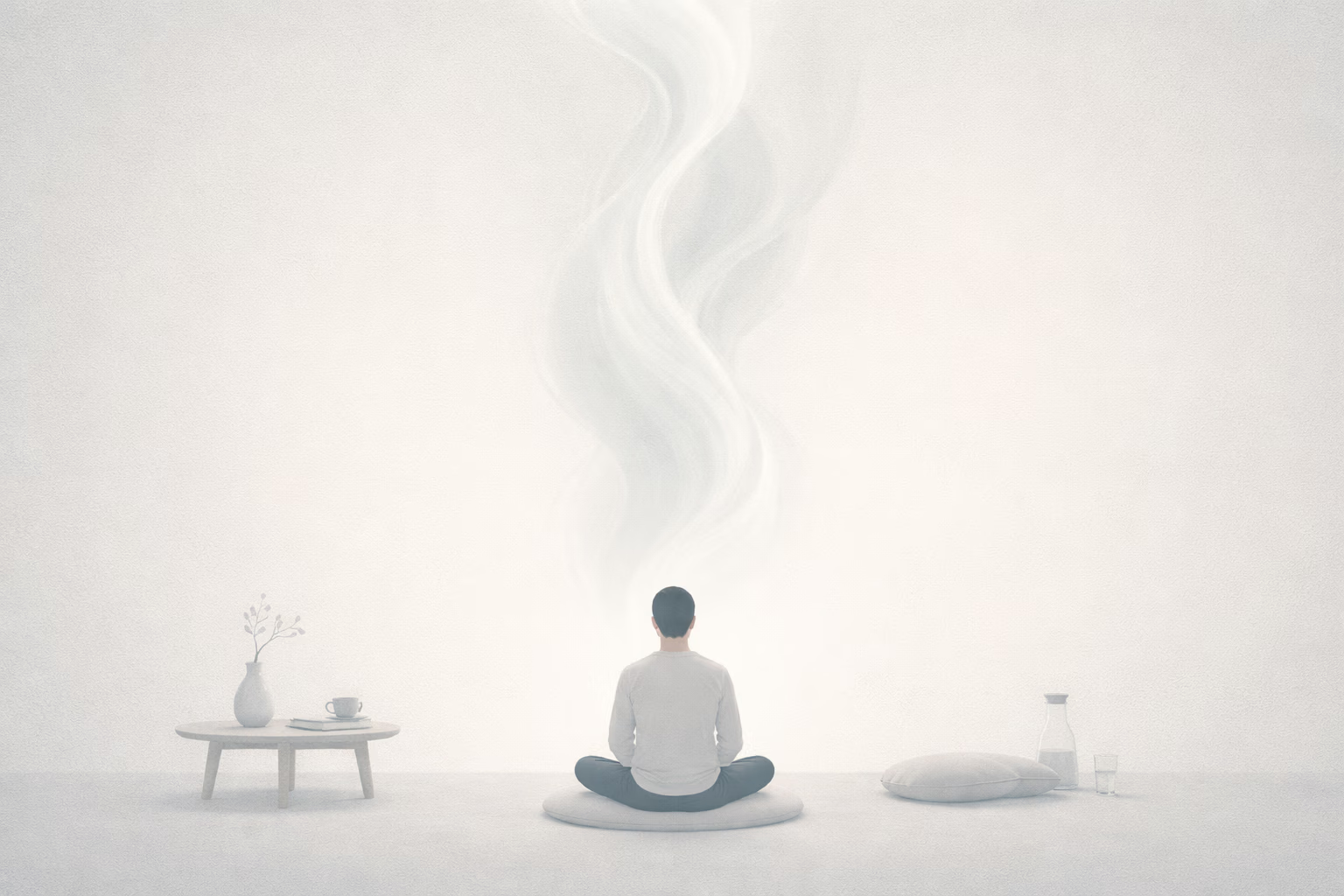
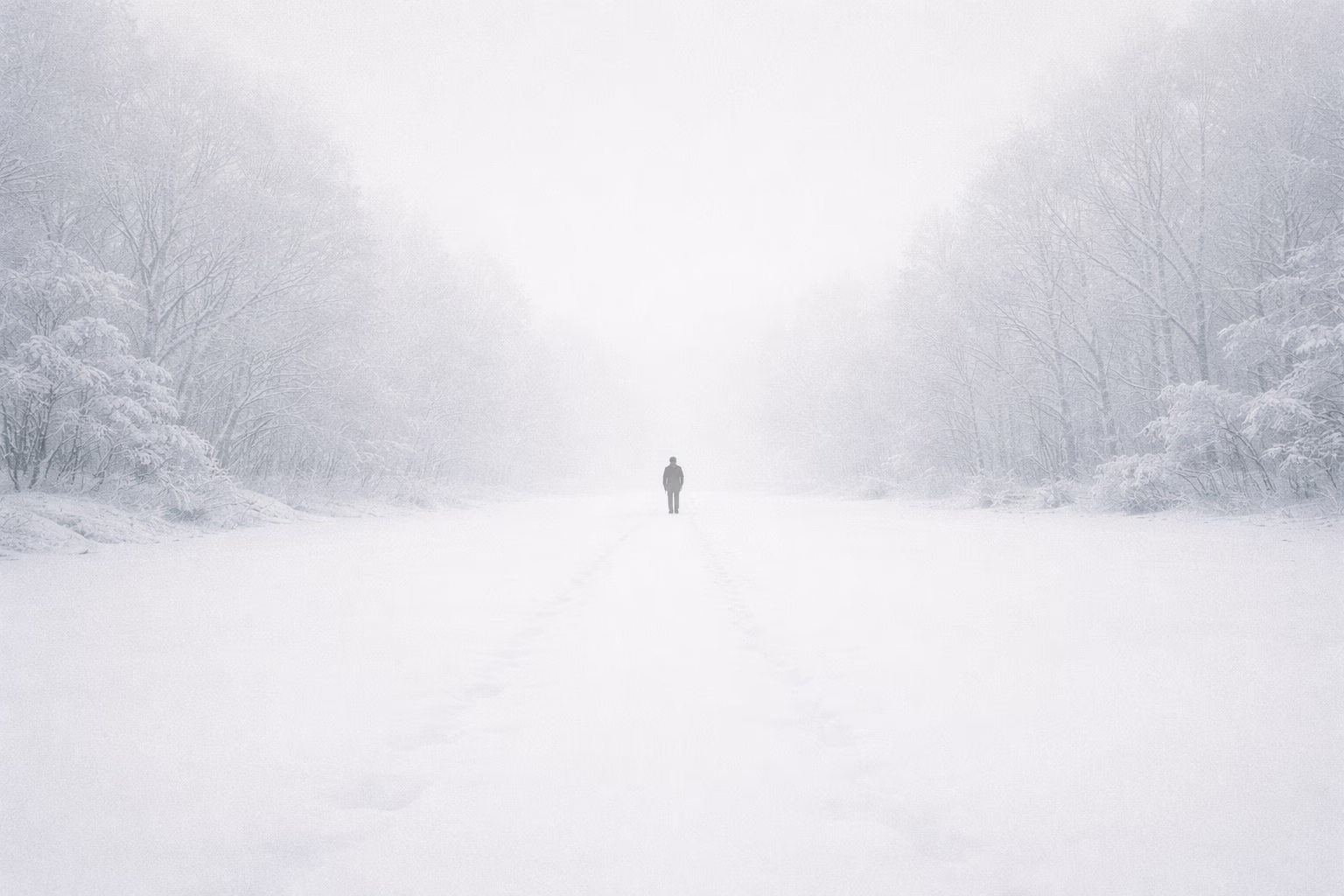
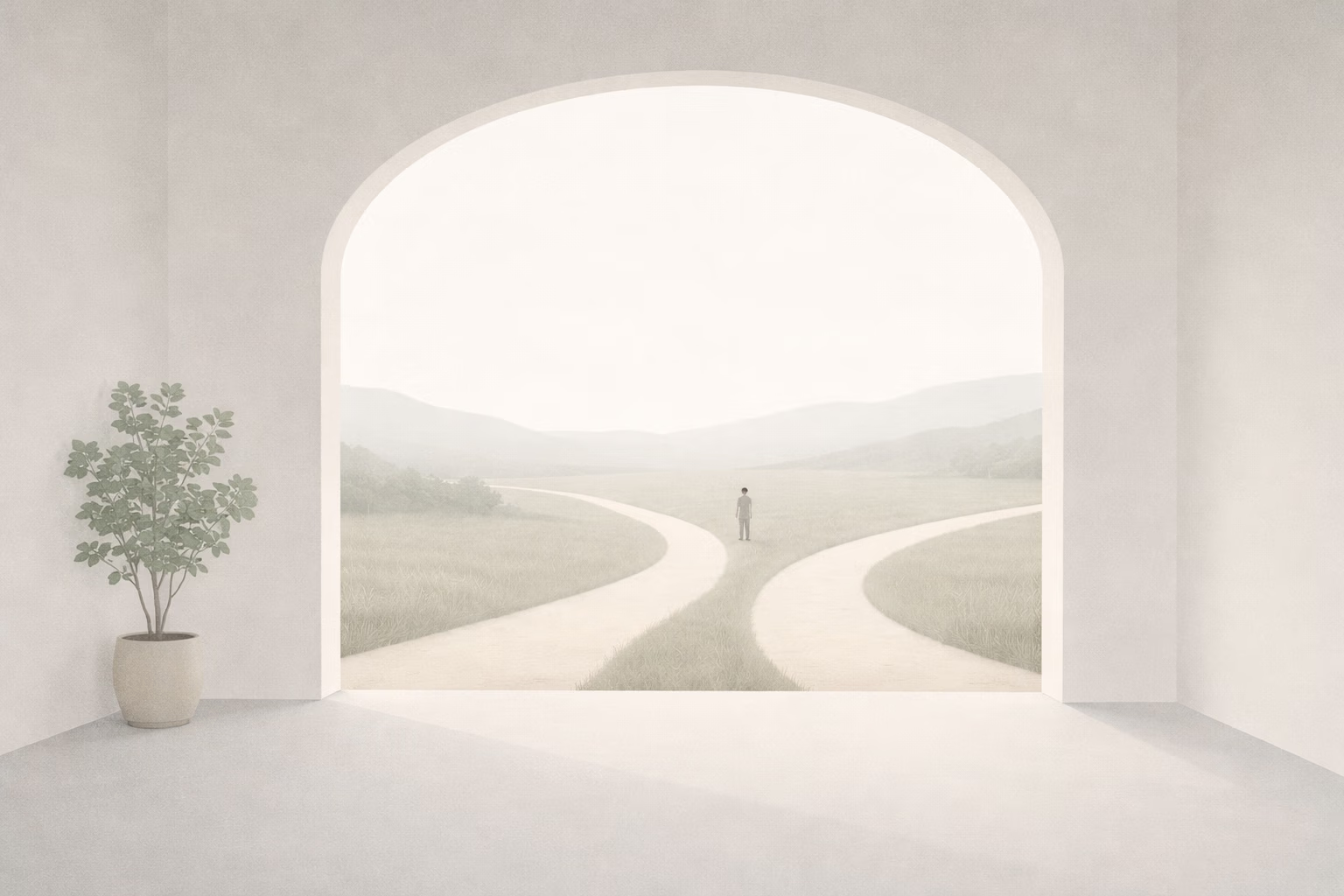
Understanding explains what is happening. Art allows you to feel it—without fixing, judging, or naming. Pause here. Let the images work quietly. Sometimes meaning settles before words do.
One Quiet Window, one insight, one reflection — every Sunday