Fight, Flight, Freeze: Understanding Shutdown Mode
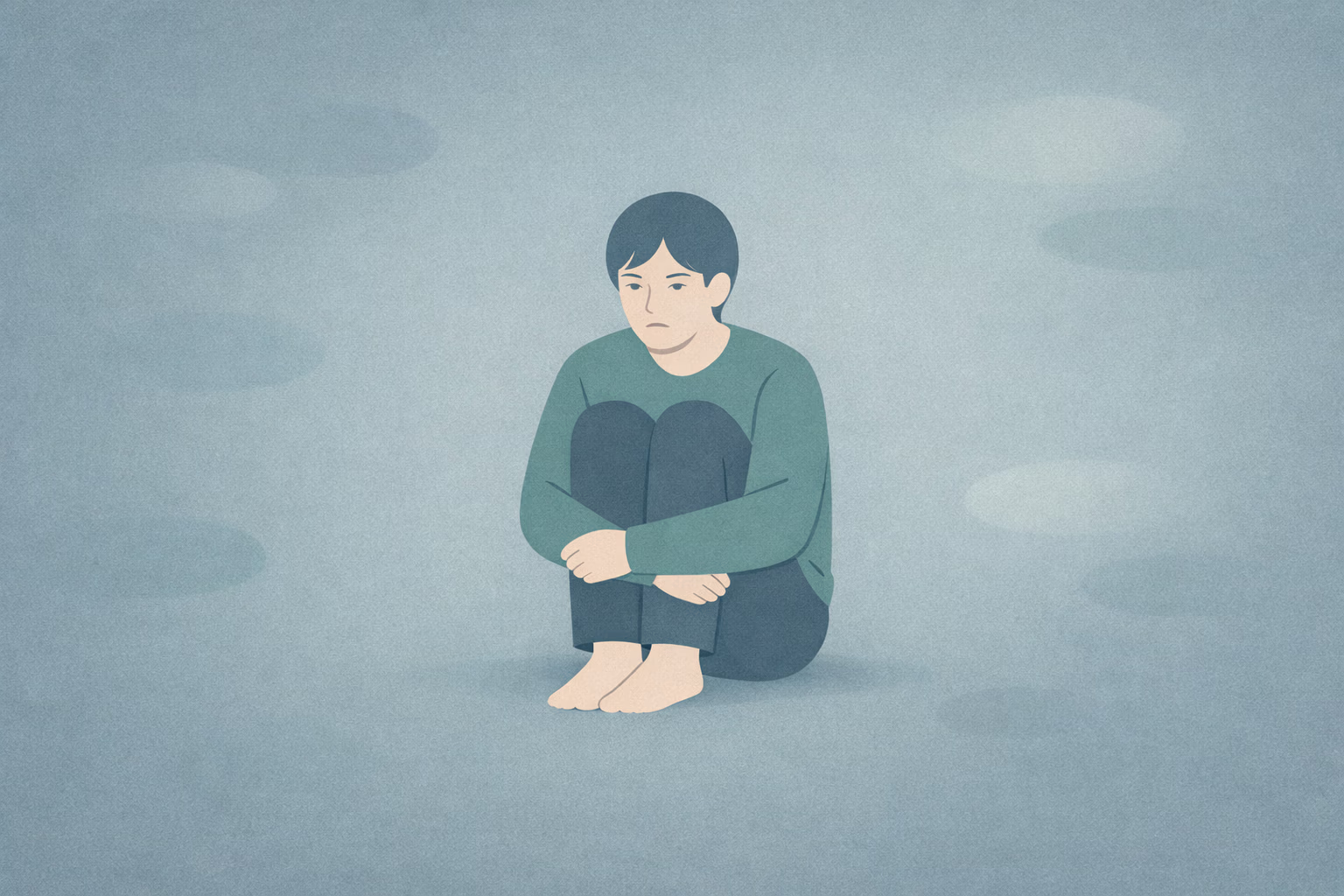
In short: Shutdown mode can look like “nothing is happening,” but inside the body, something very real is happening: a coordinated conservation response. When demands, uncertainty, or stimulation stack up beyond capacity, the nervous system may reduce output—less movement, fewer words, fewer available options—not as a choice or a character flaw, but as a way to prevent further cost.
Shutdown mode can look like “nothing is happening,” but inside the body, something very real is happening: a coordinated conservation response. When demands, uncertainty, or stimulation stack up beyond capacity, the nervous system may reduce output—less movement, fewer words, fewer available options—not as a choice or a character flaw, but as a way to prevent further cost.
What if going blank isn’t laziness or brokenness—but a safety strategy that turned on automatically?
This article describes shutdown as a freeze state that dampens both mental and physical activity when the system reads overwhelm or threat. The goal here isn’t to label anyone, but to restore orientation: why this happens, why it can persist in modern life, and what it feels like when coherence begins to return.
People often describe shutdown with the same small set of sensations: a blank mind, a heavy body, a sudden “I can’t” that isn’t a preference. It can feel like being present but unreachable, like your system has lowered the volume on everything—including your ability to respond.
It may show up in ordinary moments: a message you can’t answer, a task you can’t start, a conversation where words don’t arrive in time. Not because you don’t care, but because the body has moved into a low-output state where mobilizing energy is no longer the default.
In this state, the nervous system is prioritizing safety cues and energy conservation over performance and social smoothness. That shift is part of how humans stay alive under overload. [Ref-1]
When a system perceives that active strategies won’t work—too risky, too costly, too much—freeze can act like an internal override. Movement slows, speech can thin out, and decision-making narrows. The body isn’t “refusing.” It’s downshifting.
From the outside, this can be misread as indifference or avoidance. From the inside, it often feels like losing access to gears you normally use: initiating, organizing, reacting in real time. It’s not a lack of insight; it’s reduced availability.
Freeze states can also mute expressive signals—facial animation, tone, spontaneity—because the system is minimizing what it broadcasts to the world. In biology, less output can equal less exposure. [Ref-2]
Freeze isn’t a modern glitch. It’s an ancient survival pattern. In many threat scenarios, fighting or fleeing isn’t possible—there’s nowhere to go, the odds are bad, or movement would attract attention. In those conditions, stillness can increase safety.
This matters for how we interpret shutdown today. The body doesn’t only scan for objective danger; it also scans for viability—whether the situation feels workable with the resources available. When “workable” drops below a threshold, immobilization becomes a protective option.
That doesn’t mean a person is in constant physical danger. It means the nervous system is using an old template to manage a present-day situation that feels like “too much, too fast, too exposed.” [Ref-3]
Shutdown mode often reduces incoming and outgoing signal at the same time. Sensory information can feel distant or irritating. Thoughts may become sparse. The world can seem far away, like the system has put itself behind glass.
There’s a reason for that. When stimulation is high and closure is low—when nothing feels complete, finished, or resolved—continuous input can keep the body in an ongoing state of activation. Freeze can function like an emergency dimmer switch, lowering the total load.
In the short term, this can create relief through reduced intensity. The cost is that relief comes from constriction rather than completion, so the nervous system doesn’t necessarily receive a true “stand down, it’s done” signal. [Ref-4]
Freeze often brings a kind of quiet. Not peace exactly—more like lowered demand. For a taxed nervous system, that can register as safety: fewer choices, fewer exposures, fewer moments where something could go wrong.
Over time, though, the same strategy that reduces immediate strain can reduce vitality and agency. When output stays low, life can start to feel smaller: fewer conversations, fewer initiatives, fewer experiences that create a sense of participation and personal continuity.
It’s a paradox: the body found a way to reduce threat, but the ongoing reduction also reduces the opportunities for closure—projects finishing, relationships repairing, moments landing and integrating into identity. That’s one reason shutdown can linger. [Ref-5]
In the Meaning Density view, an avoidance loop isn’t a moral failure. It’s what happens when a regulatory response repeatedly succeeds at lowering load in the short term, so the system begins to prefer it under similar conditions.
Each time freezing reduces immediate consequences—social friction, performance pressure, sensory intensity—the nervous system learns, “This is how we get through.” That learning can become automatic, especially if the environment keeps presenting high-demand moments without offering completion or recovery.
This is why shutdown can show up even when you “know” you’re safe. Understanding doesn’t automatically restore access to action. The body is running a learned safety program that prioritizes conservation. [Ref-6]
Shutdown mode doesn’t always look dramatic. Many people function “well enough” on the outside while feeling internally slowed, distant, or unavailable. The pattern is less about what you think and more about what your system can mobilize.
These are not identities. They’re state-dependent outputs. When the system shifts state, the same person often has different access to language, energy, and connection. [Ref-7]
When freeze states become frequent, the nervous system gets fewer experiences of successful engagement. Not because the person isn’t capable, but because the system keeps choosing low output at the first sign of overload.
That has downstream effects. Responsiveness decreases. Confidence can erode—not as a belief problem, but as a result of fewer completed loops. If conversations don’t finish, tasks don’t land, and repair doesn’t happen, the system has less evidence that engagement leads to closure.
Over time, life can start to feel like a series of suspended moments—many open tabs, few completions. That fragmentation is exhausting, and exhaustion makes freeze more likely. [Ref-8]
A nervous system recalibrates through lived experiences of tolerable activation followed by completion—an arc where energy rises, something resolves, and the body gets the message: “that ended.” When activation is consistently bypassed by shutdown, that arc is interrupted.
This can make freeze easier to trigger. The threshold lowers not because someone is fragile, but because the system hasn’t been getting clear end points. Without end points, the body treats many situations as ongoing, and ongoing strain increases the likelihood of conservation responses.
In other words, shutdown isn’t maintained by a lack of insight. It’s maintained by incomplete cycles—activation that never gets to finish, so the safest move becomes not starting. [Ref-9]
In shutdown mode, “more effort” can feel like asking a depleted system to spend money it doesn’t have. What changes the state is usually not intensity, but a different kind of signal: small, non-threatening indications that movement is possible without immediate cost.
This is where the idea of gentle, incremental activation matters—not as a to-do list, but as a description of how bodies return from immobilization. Systems often re-enter engagement in partial steps: a little more motion, a little more voice, a little more orientation to time and place. [Ref-10]
When the body believes it can move without paying for it later, movement starts to reappear.
Notice the frame: not “push through,” but “the system regains permission.” That permission is physiological, and it tends to arrive through completion and safety cues, not through self-critique.
Humans regulate in relationship. A calm, supportive presence can act as an external safety signal—steady voice, predictable pace, non-demanding attention. This isn’t about someone “saving” you. It’s about nervous systems sharing cues about whether the moment is safe enough to re-engage.
When shutdown is active, the system may be monitoring for evaluation, urgency, or consequences. Supportive contact can reduce those signals, making it more likely that speech, eye contact, or initiative comes back online.
This is one reason environments matter as much as internal mindset. The body responds to what surrounds it: tone, timing, pressure, and the availability of repair if something goes imperfectly. [Ref-11]
Coming out of freeze is often subtle. It can feel like the return of “response-ability”—not grand motivation, but the simple sense that a response exists and can be reached.
People commonly report small markers: more fluid movement, clearer sequencing of thoughts, easier access to words, a slightly wider window of tolerance for noise, complexity, or social contact. These are capacity signals.
What if the goal isn’t to feel intensely alive—but to become reachable again?
That reachability is what allows experience to complete. When moments can finish—when conversations land, tasks conclude, and repair is possible—the nervous system receives the closure signals that stabilize state over time. [Ref-12]
Under chronic stress load, the brain and body prioritize survival functions: monitoring, conserving, preventing additional cost. That can keep attention pinned to a threat dashboard—what might happen, what might be demanded, what might go wrong. [Ref-13]
As shutdown loosens and completion becomes more available, attention can gradually reallocate. Not into constant positivity, but into participation: the ability to take in the present, track what matters, and move toward life without immediate collapse.
This is where meaning becomes practical. Meaning isn’t a pep talk—it’s what emerges when actions, values, and lived identity line up enough that the system stops bracing. Coherence feels like “I can be here and still be me.”
Shutdown mode is evidence of a nervous system that tried to protect you with the tools it had. When the world delivers high velocity, constant evaluation, and few clean endings, freezing can become the most available way to reduce load.
Seen through that lens, the question shifts. It’s less “What’s wrong with me?” and more “What conditions kept my system from getting closure, and what would completion feel like?” That shift can return agency without demanding instant change.
Meaning tends to rebuild when life offers more finished moments—when experiences can settle into memory and identity as “that happened, and it ended.” Over time, reduced allostatic load supports that settling. [Ref-14]
Coming out of freeze is rarely a dramatic switch. It’s often a gradual re-entry: a little more movement, a little more voice, a little more sense of direction. The nervous system doesn’t need to be convinced it was wrong—it needs enough safety and completion to stand down.
And because humans are social mammals, that return is often supported by buffering—moments of contact, steadiness, and non-urgent connection that help the body remember it doesn’t have to do everything alone. [Ref-15]
Shutdown isn’t your identity. It’s a state your system used to get through. When the conditions change and closure becomes possible again, participation tends to return—quietly, steadily, and with dignity.
From theory to practice — meaning forms when insight meets action.
Because freeze is an override, not a choice. When the system perceives that fighting or fleeing won't work — too risky, too costly, too much — it downshifts. Movement slows, speech thins, decision-making narrows. From the outside it can look like indifference; from the inside it feels like losing access to gears you normally use. The blank isn't lack of insight; it's reduced availability. Your nervous system is using an old survival template — stillness as protection — to manage a present-day situation that feels like 'too much, too fast, too exposed.' The body isn't refusing. It's protecting you with the only tool it has left.
No. Shutdown is a coordinated conservation response, not a character trait. When demands, uncertainty, or stimulation stack beyond capacity, the nervous system reduces output to prevent further cost. The pattern can become a conditioned default — each time freezing reduces immediate consequences, the system learns 'this is how we get through.' That's an Avoidance Loop driven by structure, not weakness. It's why shutdown can show up even when you intellectually know you're safe. Understanding doesn't automatically restore access to action; the body is running a learned safety program that prioritizes conservation over performance and social smoothness.
Because the system has been getting fewer experiences of activation followed by completion. A nervous system recalibrates through arcs where energy rises, something resolves, and the body registers 'that ended.' When activation is consistently bypassed by shutdown, that arc gets interrupted. The threshold lowers — not because you're fragile, but because clear endpoints have been missing. Without endpoints, the body treats many situations as ongoing, and ongoing strain increases conservation responses. Shutdown isn't maintained by lack of insight. It's maintained by incomplete cycles — activation that never finishes, so the safest move becomes not starting at all.
By degrees, not by force. In shutdown, 'more effort' is asking a depleted system to spend money it doesn't have. What changes the state is small, non-threatening signals that movement is possible without immediate cost. Systems re-enter engagement in partial steps: a little more motion, a little more voice, a little more orientation to time and place. Supportive presence helps because nervous systems share safety cues — calm tone, predictable pace, non-demanding attention reduce monitoring for evaluation or urgency. The frame isn't 'push through.' It's the system regaining permission, which arrives through completion and co-regulation, not self-critique.
From Science to Art.
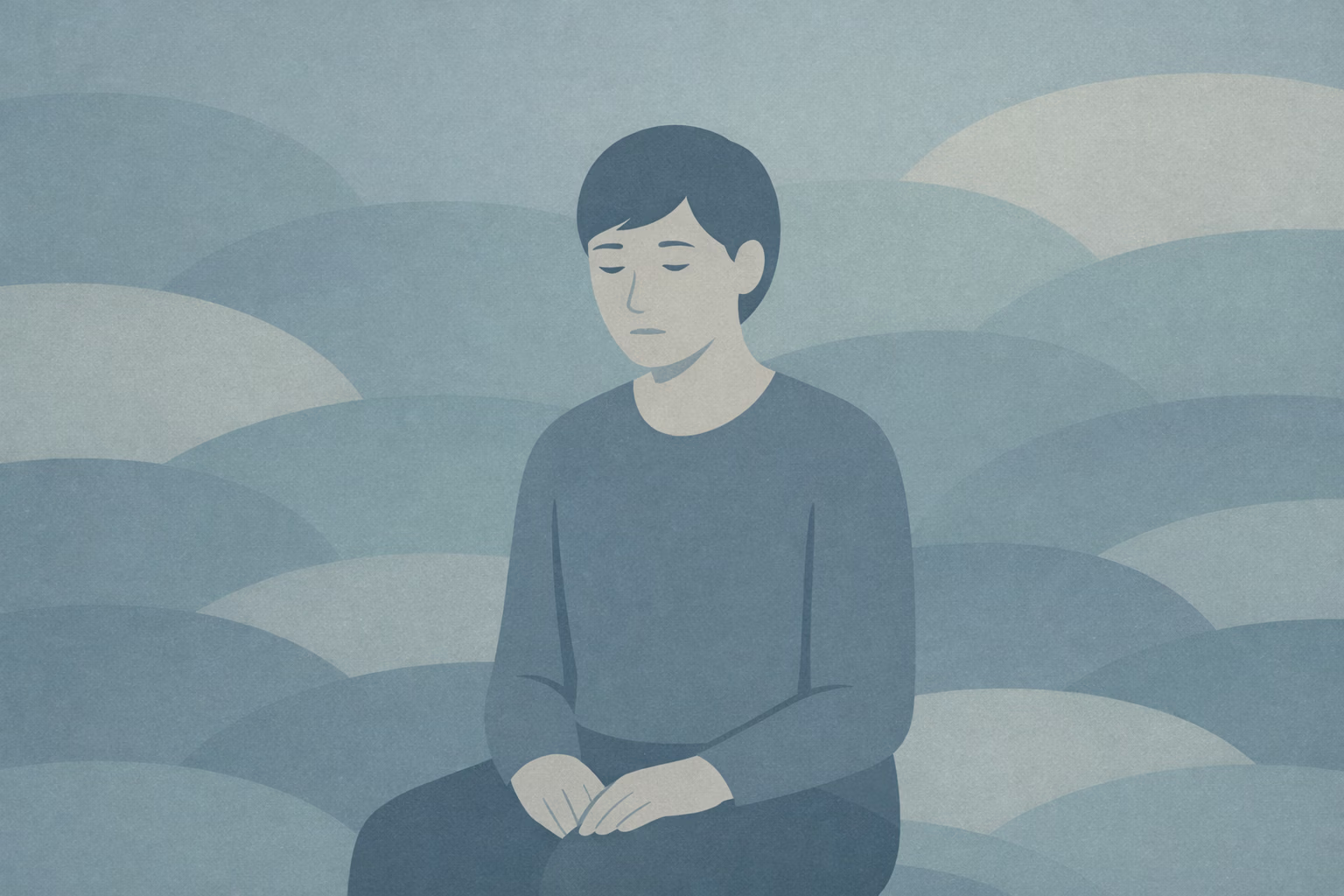
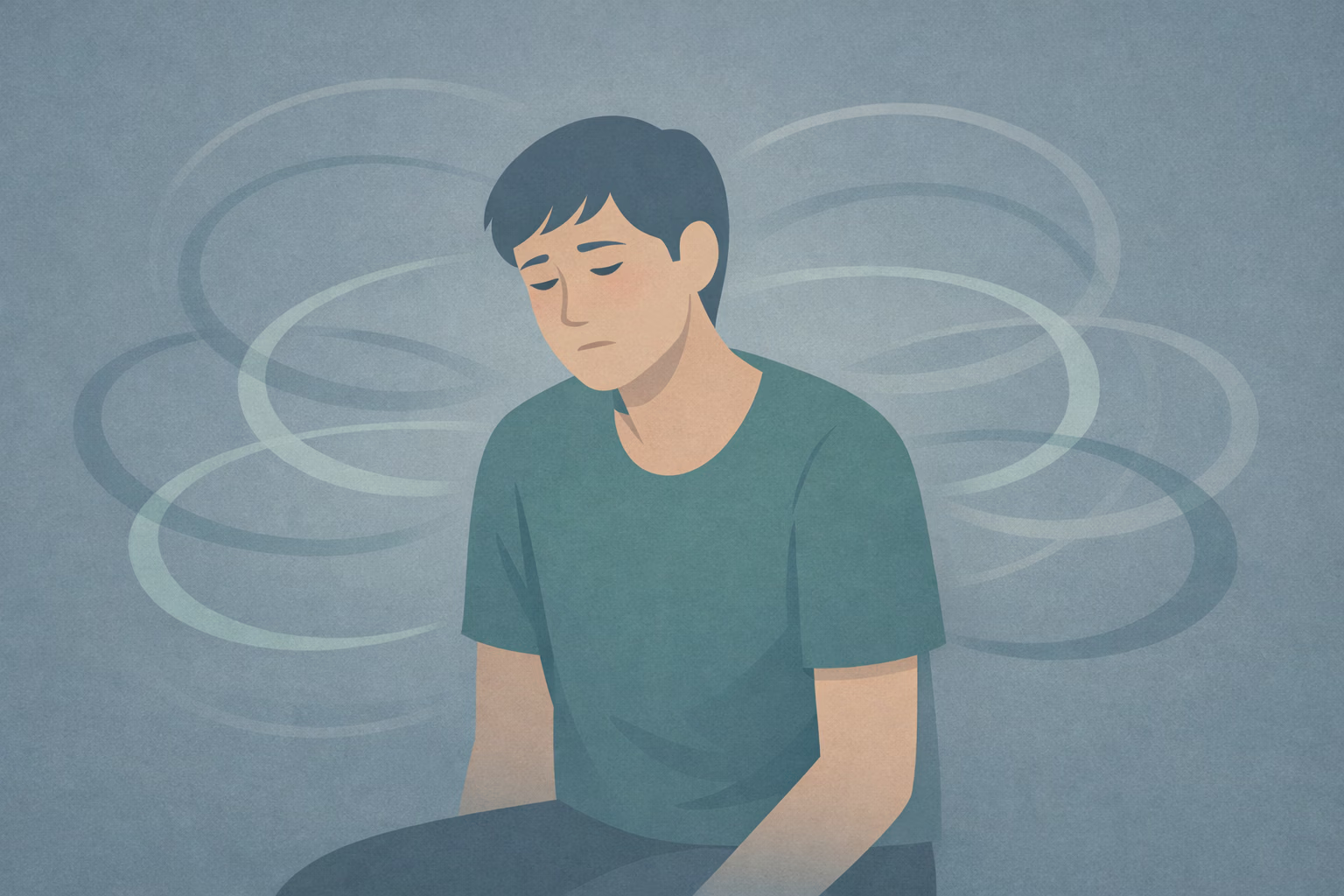
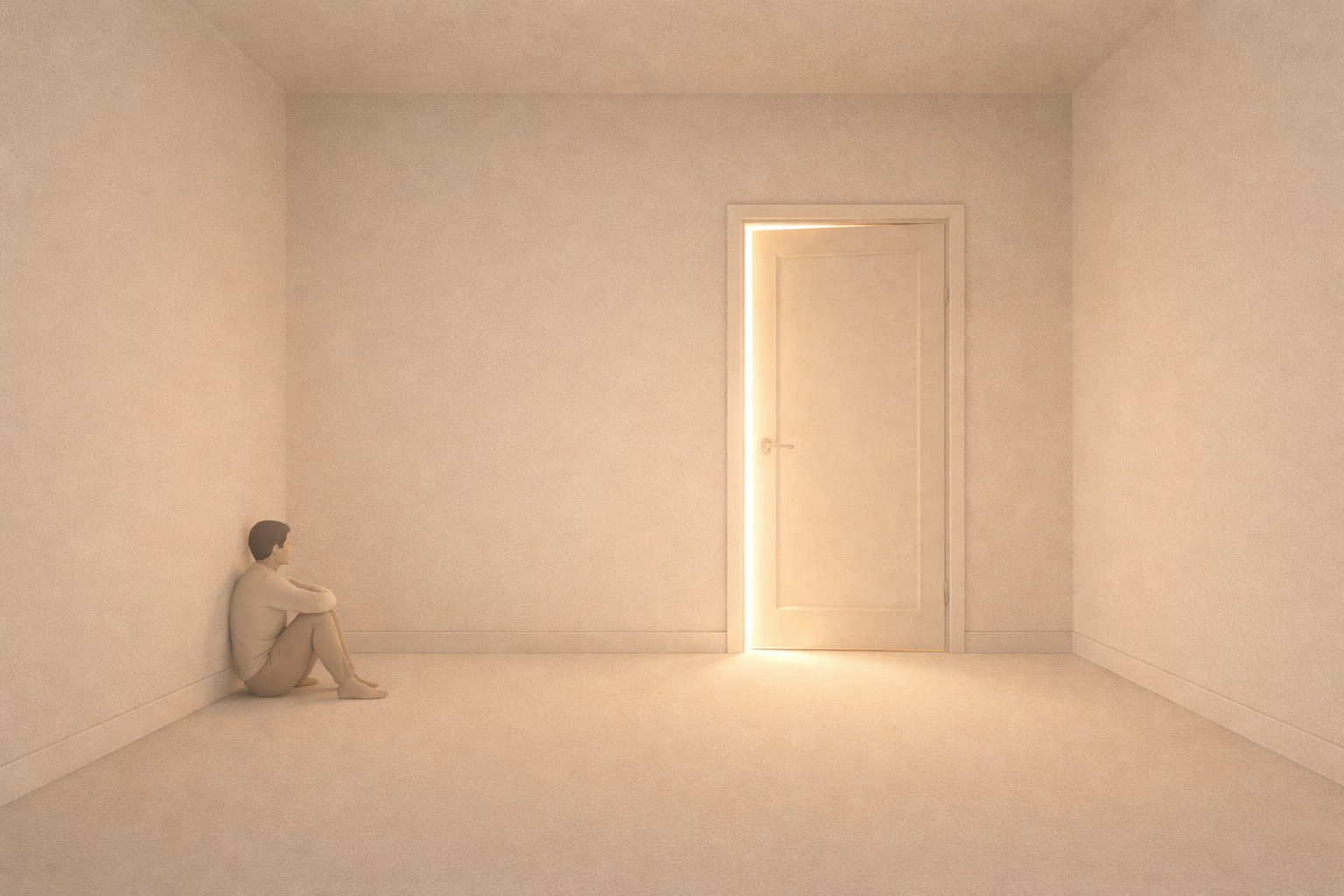
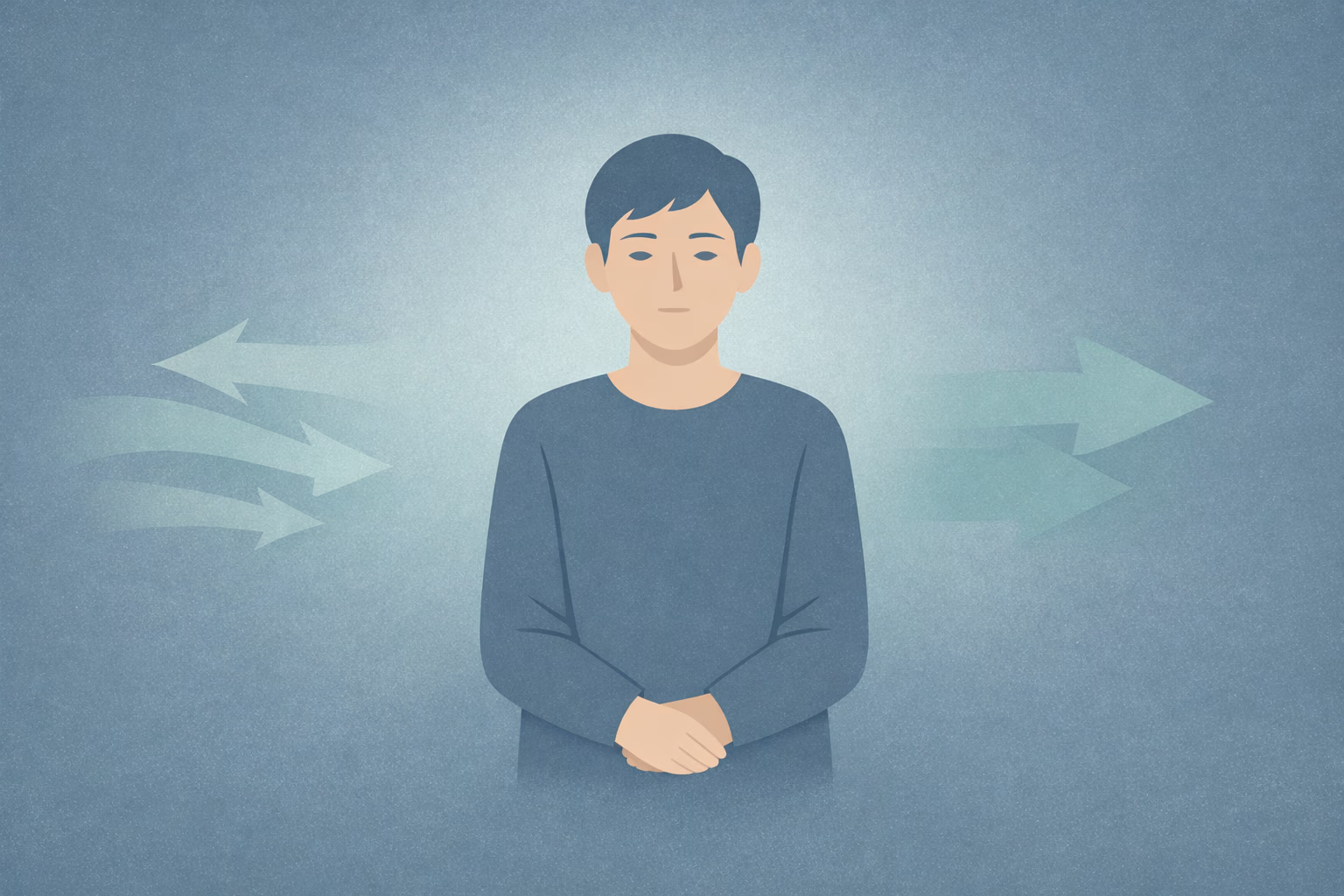
Understanding explains what is happening. Art allows you to feel it—without fixing, judging, or naming. Pause here. Let the images work quietly. Sometimes meaning settles before words do.
One Quiet Window, one insight, one reflection — every Sunday