

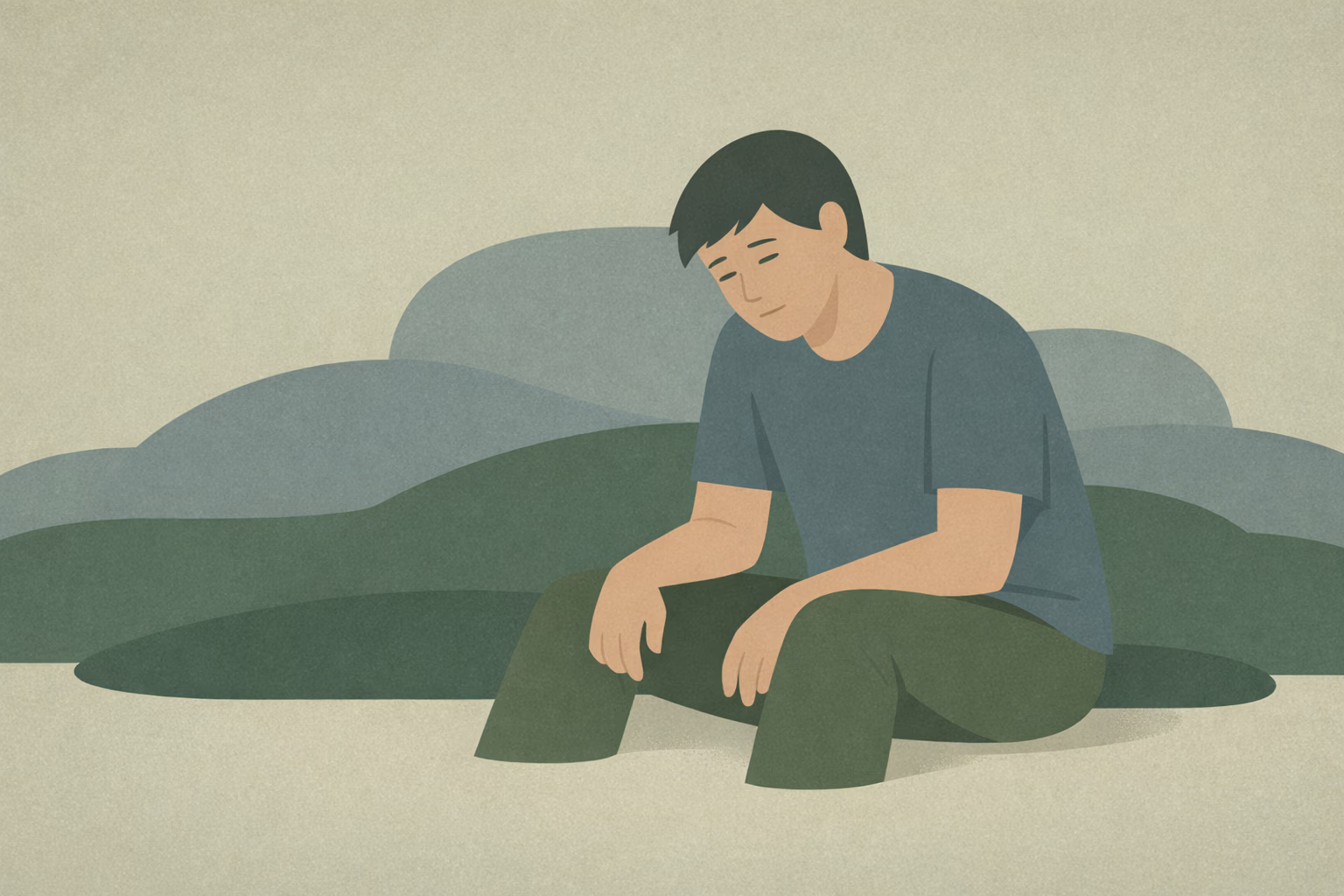
Low Motivation & Emotional Shutdown
Understand why low motivation often signals nervous system exhaustion—not laziness.
In context: Your system followed a very understandable mechanic: it “powered down“ to preserve stability. When the Narrative & Identity system is bombarded with more data than it can integrate, the “Meaning Integrator“ hits a limit. To prevent a total collapse or fragmentation of self, the nervous system cuts the power to the emotional systems.
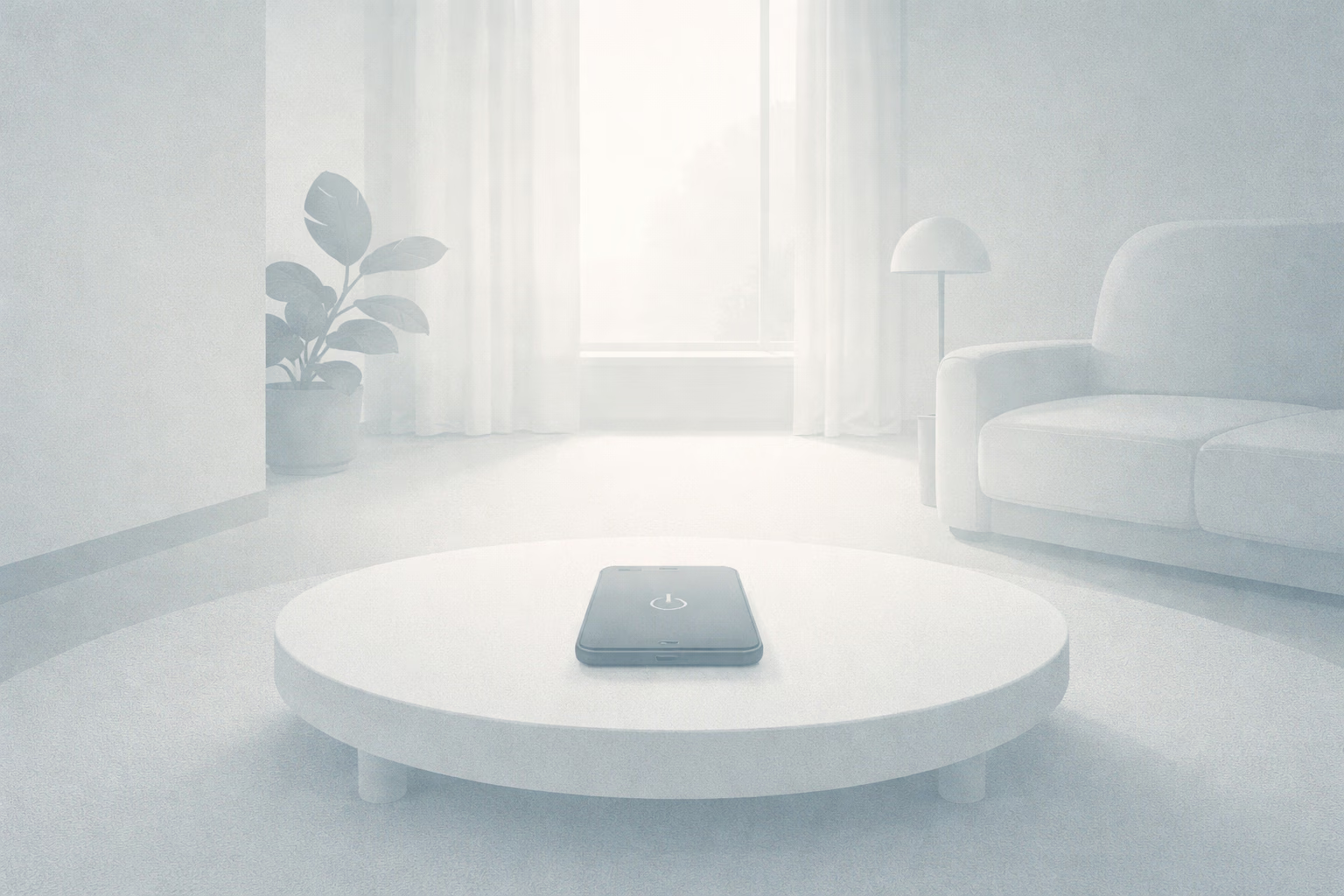
Feeling did not disappear— it powered down.
Like a system conserving energy when demand exceeded capacity.
This was not failure.
It was efficiency.
Signals were reduced so stability could be maintained.
Understanding shutdown as mechanics, not meaning, removes fear.
Power returns when conditions allow.
Until then, low output is not a loss.
It is a functional setting keeping the system intact.
Understand shutdown mechanics clearly with DojoWell.
Explore DojowellArticles exploring the psychology behind these patterns.
Understand why low motivation often signals nervous system exhaustion—not laziness.
Learn how to let emotions out safely without losing control.
Learn fast techniques to exit fight-or-flight state.
Your system followed a very understandable mechanic: it "powered down" to preserve stability. When the Narrative & Identity system is bombarded with more data than it can integrate, the "Meaning Integrator" hits a limit. To prevent a total collapse or fragmentation of self, the nervous system cuts the power to the emotional systems. It’s a protective shutdown designed to keep your core identity from being overwhelmed by a high-intensity "meaning deficit."
Powering up happens when the "load" on the system decreases. In DojoWell, we don't force feelings; we focus on closing the open loops that caused the power-down in the first place. By simplifying your daily demands and achieving small "landings," you prove to your Safety system that the crisis is over. As the backlog of unprocessed experiences clears, the system will naturally restore power to your emotions because it no longer needs to prioritize "emergency stability."
One Quiet Window, one insight, one reflection — every Sunday