Emotional Congestion: When Too Many Feelings Pile Up
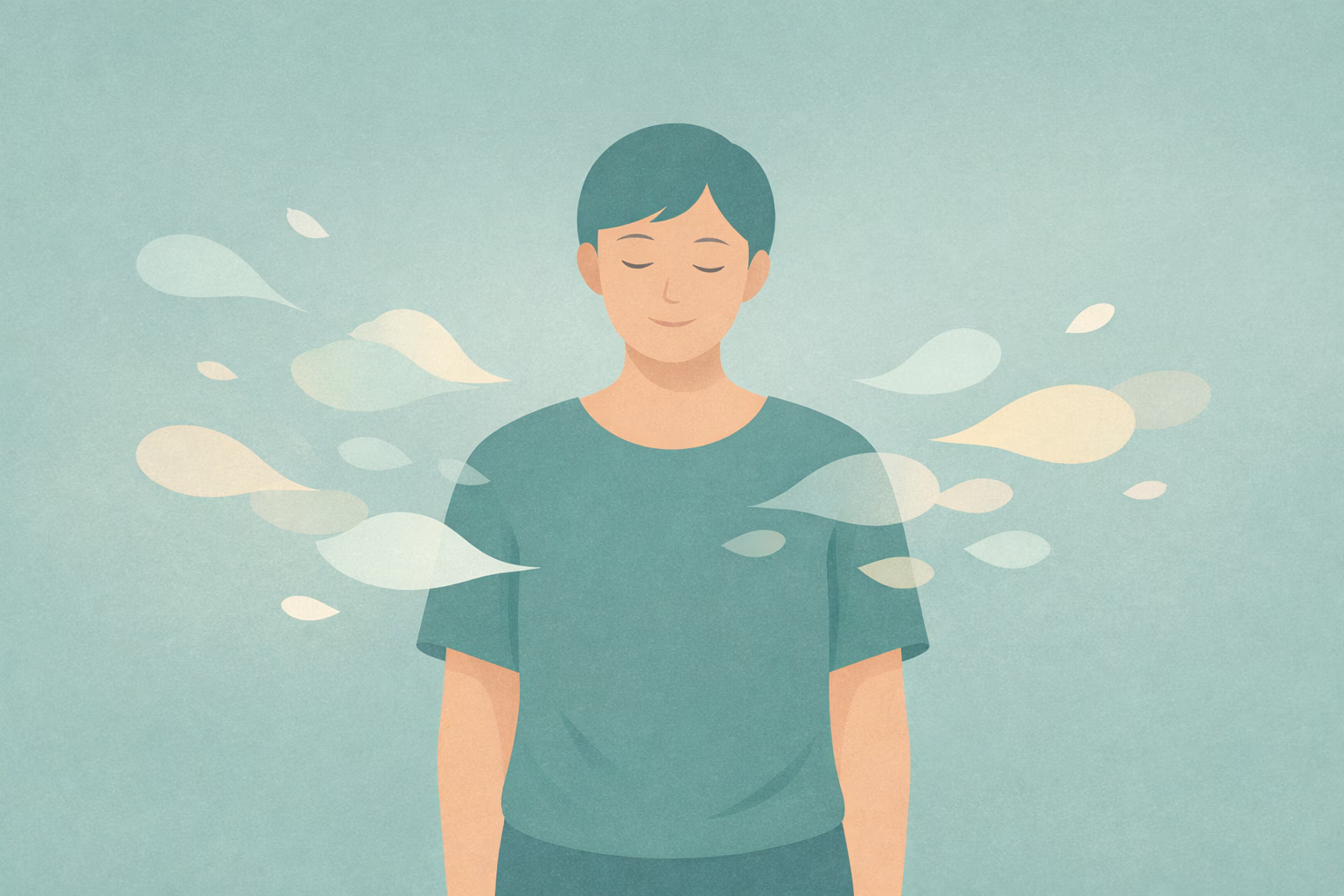
In short: Many people want emotional relief, but hesitate at the same time. Not because they are “avoidant,” but because they’ve learned—through experience—that once something starts moving inside, it might not stop on time.
Many people want emotional relief, but hesitate at the same time. Not because they are “avoidant,” but because they’ve learned—through experience—that once something starts moving inside, it might not stop on time.
What if emotional release isn’t a floodgate problem, but a containment problem?
In a regulated system, release is more like pressure normalization: activation finally getting permission to complete. It can look quiet or intense, brief or slow, but its defining feature is that it resolves rather than escalates.
When people say they’re afraid to “let it out,” they’re often describing a very practical concern: If I start, will I still be able to work, parent, think, or make decisions? That fear is not irrational. It’s a memory of overload—times when the system didn’t have enough support, time, or safety cues to come back down.
From a nervous-system perspective, this isn’t about weakness. It’s about prediction. Your body is trying to prevent a state shift that previously lasted too long or cost too much. In that sense, holding it in can function like an emergency brake: imperfect, but protective. [Ref-1]
So the core question is less “Why can’t I feel?” and more “What conditions would make feeling finishable?”
Emotions are not just thoughts. They are coordinated biological programs—changes in breath, muscle tone, attention, hormones, and impulse readiness. When a situation isn’t fully processed, the activation can stay partially “on,” like a paused song that still drains battery.
Regulated emotional release tends to occur when the nervous system registers sufficient safety and capacity: enough steadiness to let activation move through without needing to clamp down or scatter into distraction. This is why people sometimes cry unexpectedly after a deadline passes, after conflict ends, or when they finally get quiet—because the body notices, “We can stand down now.” [Ref-2]
Importantly, safety here doesn’t have to mean perfect comfort. It means the system senses containment: boundaries, time, support, and a low likelihood of immediate punishment for having a human response.
Across evolution, showing distress at the wrong time could increase risk. If you were exposed, isolated, or surrounded by threat, broadcasting vulnerability wasn’t neutral—it could be dangerous.
So the body learned a sequence: first scan for safety cues (proximity, predictability, protection), then allow softer states like grief, tenderness, or surrender. When safety cues are weak, the system often defaults to tension, numbing, irritability, or control—not as personality traits, but as stabilizers that keep you operational. [Ref-3]
This is why “just express it” often fails as a cultural message. Expression isn’t the missing ingredient. The missing ingredient is the felt sense that expression will not create additional hazard or endless aftermath.
When release is contained, it often creates a specific kind of relief: not euphoria, but a decrease in internal pressure. Breath becomes less guarded. Muscles soften. Attention returns to the room. Sleep and appetite sometimes become easier because the system is no longer using so much energy to suppress or brace.
This isn’t “being more emotional.” It’s a physiological downshift. Activation that was stuck in preparation mode finally completes, and the body reassigns resources back to repair, digestion, and connection. [Ref-4]
Relief isn’t the absence of feeling. It’s the end of the unfinished signal.
The popular fear is: If I let go, I’ll fall apart. The more accurate nervous-system version is: If activation moves too fast, too big, or too alone, I may lose my capacity to stay oriented.
“Falling apart” is often a pacing mismatch—more load moving through than the system can metabolize in that moment. Structure (time limits, supportive presence, predictable context) changes the outcome because it lowers allostatic strain: the cumulative cost of staying chronically activated. [Ref-5]
So the distinction isn’t between “holding it in” and “letting it out.” It’s between discharge that has a beginning-middle-end versus activation that keeps re-triggering itself because nothing completes.
Avoidance is often described as fear-based, but structurally it can be understood as a workaround: a way to keep life moving when the internal system can’t afford the full cost of processing. The bill doesn’t disappear—it gets deferred.
When expression occurs within enough containment, something different can happen: the experience becomes owned rather than merely survived. Not as a motivational pep talk, but as a shift in agency—“This happened, it matters, and it can be held in my life without running it.” Emotional approach and disclosure research suggests that when people can engage emotion in an organized way, it can support health and adaptation rather than destabilize functioning. [Ref-6]
In meaning terms, release is a movement from fragmentation (bits of experience stored as pressure) toward coherence (a life that can include what happened without constant bracing).
Regulated release often has recognizable signatures. It tends to feel like a wave that rises, crests, and falls—not like an endless escalation. And afterward, there is often a quieter kind of organization: the mind stops chasing the same loop from multiple angles.
Common signs include:
Research on emotional disclosure and expression often notes benefits when expression is coherent and not retraumatizing—more like organized processing than repeated activation. [Ref-7]
When release stays blocked, it’s rarely because someone “doesn’t want healing.” More often, the environment keeps rewarding immediate continuation: keep working, keep performing, keep being pleasant, keep scrolling, keep moving. The nervous system learns that stopping is expensive.
Over time, blocked release can look like increased pressure with fewer clear feelings: irritability without a story, fatigue without restfulness, cravings without satisfaction, or overcontrol without true security. Interoceptive signals (the body’s internal cues) can become either amplified and noisy or flattened and hard to read—both are adaptations to ongoing load. [Ref-8]
In this frame, the issue isn’t a lack of insight. It’s a lack of completion. Without a “done” signal, the body keeps allocating resources to something it can’t finish.
Every time activation rises and then reliably returns, the nervous system updates its expectations. This is one of the quiet ways resilience is built—not by never getting activated, but by having repeated proof that activation can resolve.
Supportive contexts matter here. When another person’s steadiness (or a felt sense of belonging) reduces threat load, the body can process more without tipping into overwhelm. This “social buffering” effect is well-documented: connection can measurably change stress responses and recovery. [Ref-9]
Over time, this builds a specific form of self-trust: not “I’ll never struggle,” but “If something moves through me, I’m not automatically at risk of losing my life to it.”
It helps to separate two things that often get confused: awareness and stability. Awareness can name what’s happening, but stability is what prevents the process from turning into flooding. Stability is also not the same as willpower; it’s the presence of enough orienting cues that the nervous system doesn’t interpret emotion as an emergency.
In real life, stability often comes from simple anchor points the body can register: predictable time, grounded posture, a sense of physical boundary, and the felt presence of a safe relationship or community. When isolation is high, the system may treat emotion as more dangerous because there are fewer external regulators available. [Ref-10]
What changes when you’re not alone with the entire load?
Pacing is not a mental trick here. It’s the difference between a system completing a loop versus becoming re-activated by its own intensity.
Humans are relational regulators. Being understood—without being managed, corrected, or evaluated—can function like a container: it reduces the need to self-monitor every signal while you’re already under load.
This is not about “needing someone.” It’s about how nervous systems work. When there is attunement, the body often settles faster; signals become clearer; the impulse to shut down or over-explain decreases. Self-attunement and supportive witnessing are linked with restored self-trust, especially after periods where internal cues were unreliable or unsafe to show. [Ref-11]
Being witnessed doesn’t solve the past. It makes the present safe enough for the past to finish.
After a regulated release, people often describe something understated but profound: more internal space. Not necessarily happiness—just less compression. The body is less braced, and decisions feel less reactive because fewer resources are being spent on suppression or scanning.
This is where self-compassion can be understood in a non-sentimental way: as reduced inner threat. When self-attack decreases, the nervous system doesn’t have to defend against you while also dealing with life. That reduced internal threat load supports steadier regulation and recovery. [Ref-12]
The fear of feeling often decreases here—not because the feelings became “nice,” but because the system learned that feelings can have an endpoint.
Unprocessed emotion tends to stay state-based: it pulls you into urgency, numbness, or looping. When it completes, it can reorganize into something more usable—memory that feels located in time, information about boundaries, and clearer priorities. This is one way meaning gets rebuilt: experience moves from raw activation into integrated narrative.
Research on memory and trauma highlights how high arousal and threat can fragment memory and keep it reactive; processing and contextualization support a more organized, time-stamped quality that reduces involuntary reactivation. [Ref-13]
Clarity here isn’t just insight. It’s a bodily permission to move forward without dragging the entire unfinished load behind you.
In a culture that rewards speed and surface-level functioning, holding it together can look like success. But the nervous system keeps its own accounting: unfinished experiences continue to signal, even when the mind tries to move on.
Emotional release—when it is safe and contained—can be understood as an act of meaning. Not dramatic. Not performative. Simply a refusal to live in permanent partialness. It’s the body completing what it started so the present can be lived more fully.
Many modern models of healing emphasize that the body carries what wasn’t finished, and that restoration involves completion rather than constant management. [Ref-14]
Emotions don’t ask to be worshiped or feared. They ask to be completed. When they are allowed to resolve within enough safety, they tend to become supportive signals—pointing toward what matters, what needs protection, and what is true.
And when that completion happens, something dignified shifts: emotions no longer control your direction. They contribute to it—like weather passing through a sky that knows how to clear. [Ref-15]
From theory to practice — meaning forms when insight meets action.
The fear usually isn't about emotion itself — it's about losing the ability to function. People hesitate because they remember times when the system didn't have enough support, time, or safety cues to come back down. That fear is prediction, not weakness: your body is trying to prevent a state shift that previously lasted too long or cost too much. Holding it in functions like an emergency brake — imperfect, but protective. The core question isn't why can't I feel? It's what conditions would make feeling finishable? Release becomes possible when the body senses containment, not when willpower is deployed.
Falling apart is a pacing mismatch — more load moving through than the system can metabolize in that moment. Regulated release tends to feel like a wave that rises, crests, and falls — not endless escalation. Afterward there's quieter organization: the mind stops chasing the same loop. The defining feature is that activation resolves rather than re-triggers itself. Structure changes the outcome: time limits, supportive presence, predictable context. Collapse is what happens without structure; release is what happens with it. Relief isn't the absence of feeling — it's the end of the unfinished signal, the body finally getting to stand down.
Because the body waits for safety cues before allowing softer states. Across evolution, broadcasting vulnerability at the wrong time could increase risk, so the system learned a sequence: scan for safety first, then permit grief, tenderness, or surrender. When safety cues are weak, the system defaults to tension, numbing, irritability, or control. After a deadline passes, after conflict ends, when you finally get quiet — the body notices, we can stand down now, and what was held finally moves. This isn't a breakdown; it's the Threat & Safety system finally registering enough containment for completion.
Because humans are relational regulators. Being understood without being managed, corrected, or evaluated functions as a container — it reduces the need to self-monitor every signal while you're already under load. Co-regulation lets the body settle faster, signals become clearer, and the impulse to shut down or over-explain decreases. When isolation is high, the system may treat emotion as more dangerous because there are fewer external regulators available. Being witnessed doesn't solve the past — it makes the present safe enough for the past to finish. Each successful resolution updates expectations and builds the felt sense that activation can come back to baseline.
From Science to Art.
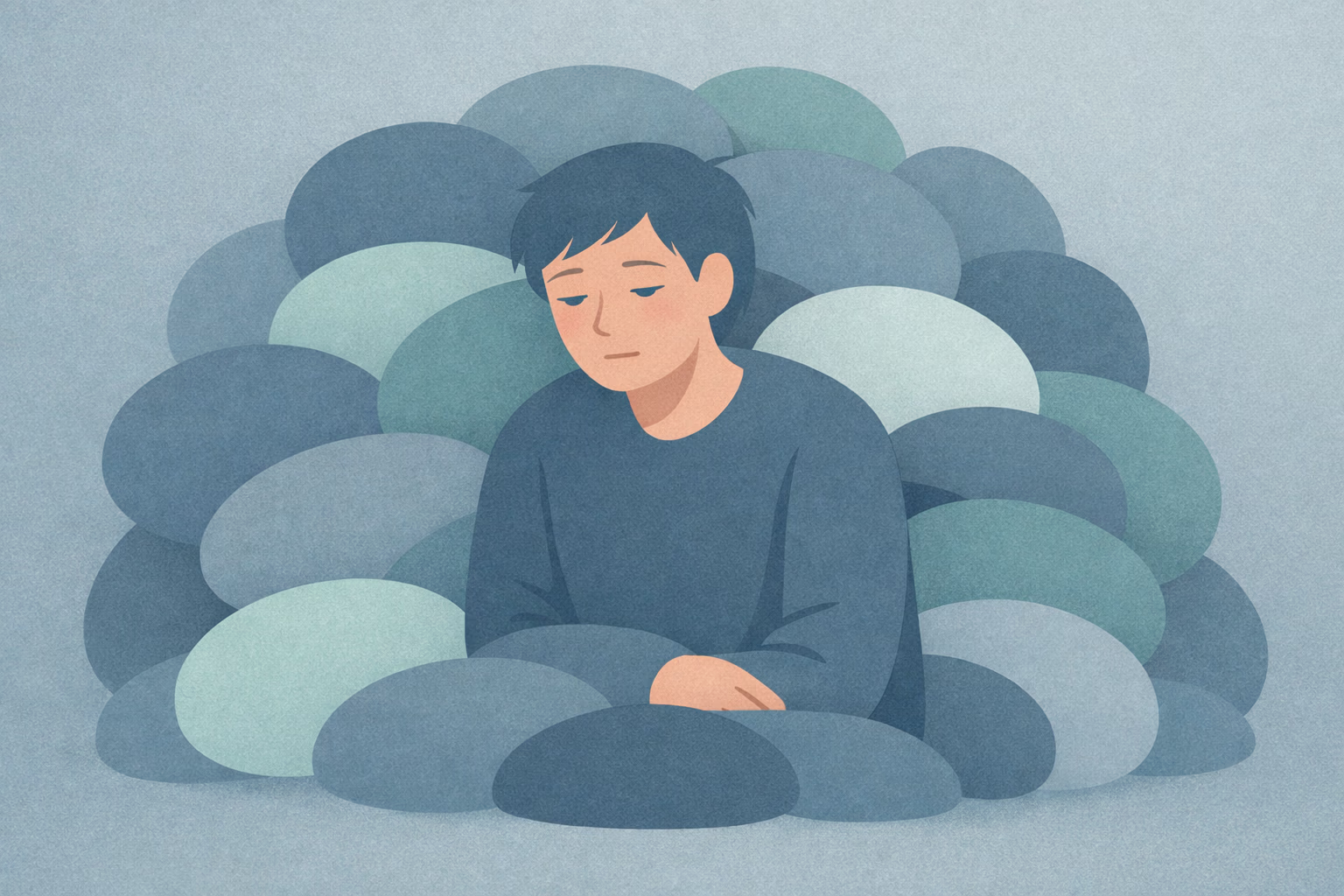
Understanding explains what is happening. Art allows you to feel it—without fixing, judging, or naming. Pause here. Let the images work quietly. Sometimes meaning settles before words do.
One Quiet Window, one insight, one reflection — every Sunday