
The Weight of Suppressed Emotions: What You Don’t Express Stays Inside
In short: Emotional congestion isn’t the same as being “too sensitive” or “bad at coping.” It often feels more like internal crowding: too many signals arriving at once, too many unfinished experiences asking for airtime, and not enough space for anything to land. When this happens, the nervous system doesn’t typically respond with elegant clarity.
Emotional congestion isn’t the same as being “too sensitive” or “bad at coping.” It often feels more like internal crowding: too many signals arriving at once, too many unfinished experiences asking for airtime, and not enough space for anything to land.
When this happens, the nervous system doesn’t typically respond with elegant clarity. It responds with regulation: speeding up, numbing out, tightening control, seeking quick relief, or going offline. These patterns aren’t identities. They’re ways a system tries to keep functioning when there isn’t enough capacity for completion.
What if the problem isn’t your feelings—but the lack of closure around them?
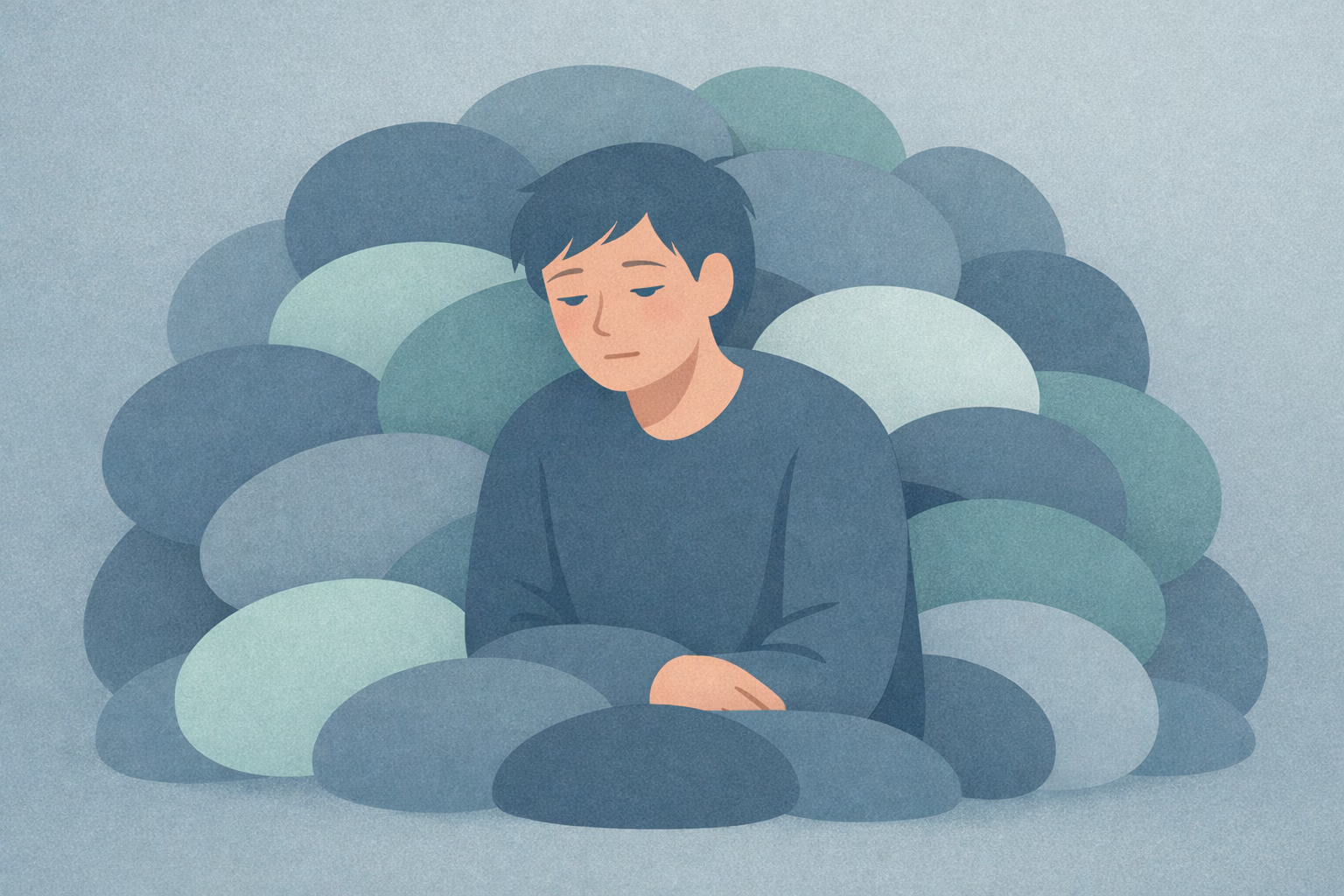
Emotional congestion often shows up as “everything at once.” Not a single clean feeling, but a pile: sadness mixed with pressure, irritation mixed with grief, worry mixed with exhaustion. The internal experience can be crowded enough that even small events feel like they tip the whole stack.
This isn’t just poetic language. When regulatory load is high, affect can feel less like a message and more like a flood—hard to sort, hard to name, and hard to sequence. What you may notice is intensity without clarity, urgency without direction, and a sense that your inner world is louder than your day can hold. [Ref-1]
It can feel like there’s no “one thing” to address—just a full room inside.
The body is designed to track what hasn’t resolved. Experiences that didn’t reach a “done” signal—because you had to keep going, keep working, keep caring for others, keep moving—can remain physiologically present even when you’re not thinking about them.
Over time, this adds up as allostatic load: the wear-and-tear of running stress physiology without enough stand-down. When that load is high, emotional signals compete for limited regulatory capacity, and the system can start to feel like it’s managing a backlog rather than living in real time. [Ref-2]
Humans didn’t evolve to process every emotional event immediately. In conditions of ongoing demand—threat, instability, social tension, scarcity—biology prioritizes mobilization and task completion over reflection or emotional sorting.
Stress systems change how attention, memory, and threat detection operate. Under chronic strain, the relationship between acute stress responses and mood can shift, not because someone is failing, but because the system has been asked to run hot for too long. Emotional congestion can be one downstream sign of that long-running mode. [Ref-3]
Sometimes postponing emotional processing is how people keep a household running, finish a degree, get through a medical crisis, survive a volatile workplace, or make it through a season of caretaking. In those contexts, “not dealing with it right now” may be the most coherent move available.
Stress and the brain are deeply adaptive: when time, safety, or support aren’t available, the system narrows to what’s immediately solvable. [Ref-4] Emotional deferral can be the nervous system’s way of protecting continuity—keeping you operational until conditions allow closure.
What if your system wasn’t avoiding life—what if it was conserving you?
A common hope is that emotions will naturally settle if we ignore them long enough. Sometimes they do—especially when the experience truly completed and the environment became safe again. But when an experience stayed unfinished, the body may keep tagging it as relevant.
Stress neurobiology helps explain why: once the system learns that certain cues predict demand or danger, it can remain sensitized, ready to respond quickly. [Ref-5] In that state, new stressors don’t arrive to a calm baseline—they arrive to an already busy internal dashboard.
So the issue isn’t that you “should have been over it.” The issue is that the underlying loop didn’t get to close.
Emotional congestion often becomes self-reinforcing. The more crowded the inside feels, the harder it is to sort anything. And the harder it is to sort anything, the more likely the system is to defer again—because opening the pile can feel like it will spill everywhere.
This is an avoidance loop in a structural sense: not “I’m afraid of feelings,” but “the current load makes sequencing difficult.” Deferral reduces immediate friction, but it also prevents completion, which keeps the internal queue active. Over time, the nervous system learns that inner contact equals overload, and it shifts toward bypassing, numbing, or controlling as a way to maintain function. [Ref-6]
Emotional congestion can look different from person to person, but it often has recognizable patterns. Memory and emotion are tightly linked, so old material can be reactivated by present cues even when you can’t immediately explain why. [Ref-7]
Some common signs include:
None of these are character flaws. They’re signals that capacity is being used up by managing too much at once.
When the system is congested, emotional signals can lose definition. Instead of “I feel disappointed about this,” it becomes “something is wrong,” or “I can’t handle anything,” or “I need to fix it now.” That shift matters because clarity supports choice, while undifferentiated distress tends to trigger reflex.
Part of this is how memory works. Emotional learning can operate implicitly—outside deliberate awareness—so the body can respond as if something is happening again, even when the conscious mind doesn’t have the full story. [Ref-8] In congestion, those implicit activations stack, and reactivity can rise simply because the system is crowded, not because you’re irrational.
When old material remains active, new emotional input doesn’t arrive alone. It arrives into a body already tracking multiple unfinished threads. That can make ordinary disappointments feel surprisingly heavy, or minor conflicts feel like they threaten the whole foundation.
Interoception—the brain’s ongoing reading of internal body states—plays a role here. When internal cues signal strain (tightness, agitation, fatigue), the mind often interprets the world through that lens. [Ref-9] It’s not “making things up”; it’s building meaning from the state it has. If the state is overloaded, the meaning can skew toward urgency, danger, or collapse.
In this way, avoiding emotional sorting preserves congestion, and congestion makes future sorting feel less accessible. The loop stays intact because the system rarely receives the physiological “completed” signal that would let it stand down.
There’s an important distinction between relief and integration. Relief changes state for a moment. Integration is what happens when an experience reaches completion and becomes part of your lived story—no longer demanding the same physiological attention.
For many people, emotional congestion begins to shift not through insight, analysis, or “figuring it out,” but through conditions that allow the nervous system to pace contact. Safety cues matter here: when the body senses enough steadiness, it can approach what’s been deferred in smaller, more tolerable sequences. [Ref-10]
When there is room to go slowly, the backlog doesn’t need to arrive as a wave.
This isn’t a matter of pushing harder. It’s a matter of the system finally having enough margin to complete what it had to postpone.
Humans are co-regulating creatures. When another person offers steady attention—without rushing, fixing, or evaluating—the nervous system often gains containment. The experience becomes more sequence-able: one thread can come forward while the rest stays held in the background.
This is one reason shutdown can happen when emotions feel big: it’s a protective brake when internal intensity exceeds perceived support. [Ref-11] When support is present, the system may not need the same protective collapse. The pile can disperse not because you “talked it out” perfectly, but because the body sensed enough steadiness to let the material move toward completion.
What changes when you’re not carrying the whole room alone?
As congestion reduces, many people notice something surprisingly practical: emotional separation returns. Instead of a single blended pressure, feelings become more distinct—annoyance is annoyance, disappointment is disappointment, tiredness is tiredness. That distinction is a form of capacity.
Social buffering research suggests that supportive connection can dampen stress responses and help the body return toward baseline. [Ref-12] When baseline is more available, emotions don’t have to shout to be noticed. They can arrive, register, and pass through with less internal traffic.
In this state, the system doesn’t require constant management. It has more “signal return”—more ability to come back after activation.
When emotional congestion eases, agency often returns in a quiet way. Not as a dramatic breakthrough, but as orientation: you can tell what matters, what’s next, and what belongs to now versus then. The inner world becomes less like an emergency and more like a map.
This shift isn’t about being “calm all the time.” It’s about coherence—when your signals, values, and actions can line up without constant internal interruption. Self-attunement becomes more reliable when the system isn’t crowded, which can restore a felt sense of self-trust over time. [Ref-13]
When the inside isn’t packed, you don’t have to react to yourself.
Emotional congestion is often evidence of endurance: a nervous system that kept going through too much, for too long, with too little completion. The problem isn’t that you have feelings. The problem is that too many experiences stayed open, and your system has been trying to hold them without enough room to resolve.
Shame tends to add load—more monitoring, more self-criticism, more internal pressure. A kinder interpretation can reduce that load, not by “positive thinking,” but by restoring coherence: this is what bodies do when closure is delayed. Self-compassion is associated with lower self-criticism and more stable coping, which can create conditions where signals settle more readily. [Ref-14]
When you see congestion as a backlog rather than a defect, the story changes. You’re not broken—you’re carrying unfinished weight.
When experiences are allowed to complete—at a pace the body can tolerate—they tend to stop demanding surprise entrances. The nervous system doesn’t have to flood or shut down to get your attention. It can signal, recover, and return.
Over time, this restores a steadier identity-level sense of direction: not because life becomes easy, but because your inner world becomes less crowded and more livable. The parts that were piled up can become part of your story instead of an ongoing interruption. [Ref-15]
From theory to practice — meaning forms when insight meets action.
Emotional congestion isn't being too sensitive or bad at coping — it's internal crowding. Too many signals arriving at once, too many unfinished experiences asking for airtime, not enough space for anything to land. The result is intensity without clarity, urgency without direction. The body tracks what hasn't resolved: experiences that didn't reach a Done Signal — because you had to keep going, keep working, keep caring for others — remain physiologically present even when you're not thinking about them. Over time this accumulates as load, and emotional signals compete for limited regulatory capacity. It can feel like there's no one thing to address, just a full room inside.
Often it's how people keep a household running, finish a degree, get through a medical crisis, or survive a season of caretaking. In high-demand contexts, not dealing with it right now may be the most coherent move available. The Threat & Safety System narrows to what's immediately solvable when time, safety, or support aren't available. Emotional deferral is the nervous system protecting continuity — keeping you operational until conditions allow closure. Your system wasn't avoiding life; it was conserving you. The cost only shows up later, when deferred material starts asking for the airtime it was never given.
It becomes self-reinforcing structurally, not psychologically. The more crowded the inside feels, the harder it is to sort anything; the harder it is to sort, the more likely the system defers again — because opening the pile feels like it will spill everywhere. This is an Avoidance Loop in form: short-term relief increases long-term crowding, and long-term crowding makes future contact feel more expensive. The nervous system learns inner contact equals overload and shifts toward bypassing, numbing, or controlling to maintain function. Reactivity rises not because you're irrational but because the system is too crowded for clean signals.
Through space and pacing, not insight or analysis. The shift comes when the nervous system has enough margin to complete what it had to postpone. Safety cues matter: when the body senses enough steadiness — often through co-regulation with someone offering attention without rushing, fixing, or evaluating — it can approach what's been deferred in smaller, more tolerable sequences. The pile disperses not because you talked it out perfectly, but because the body sensed enough steadiness to let material move toward completion. As congestion eases, emotional separation returns: annoyance is annoyance, disappointment is disappointment. That distinction is a form of capacity inside the window of tolerance.
From Science to Art.
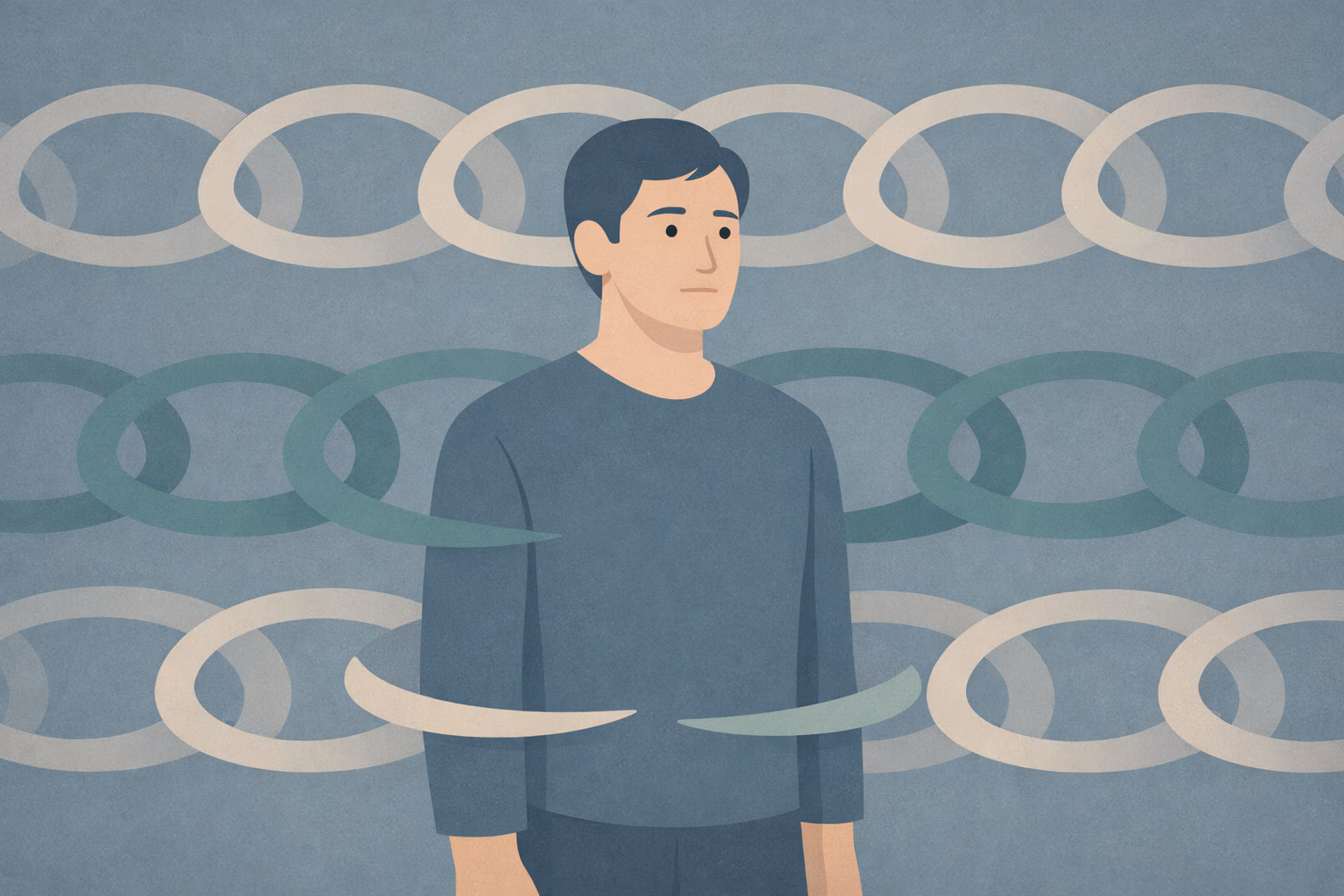
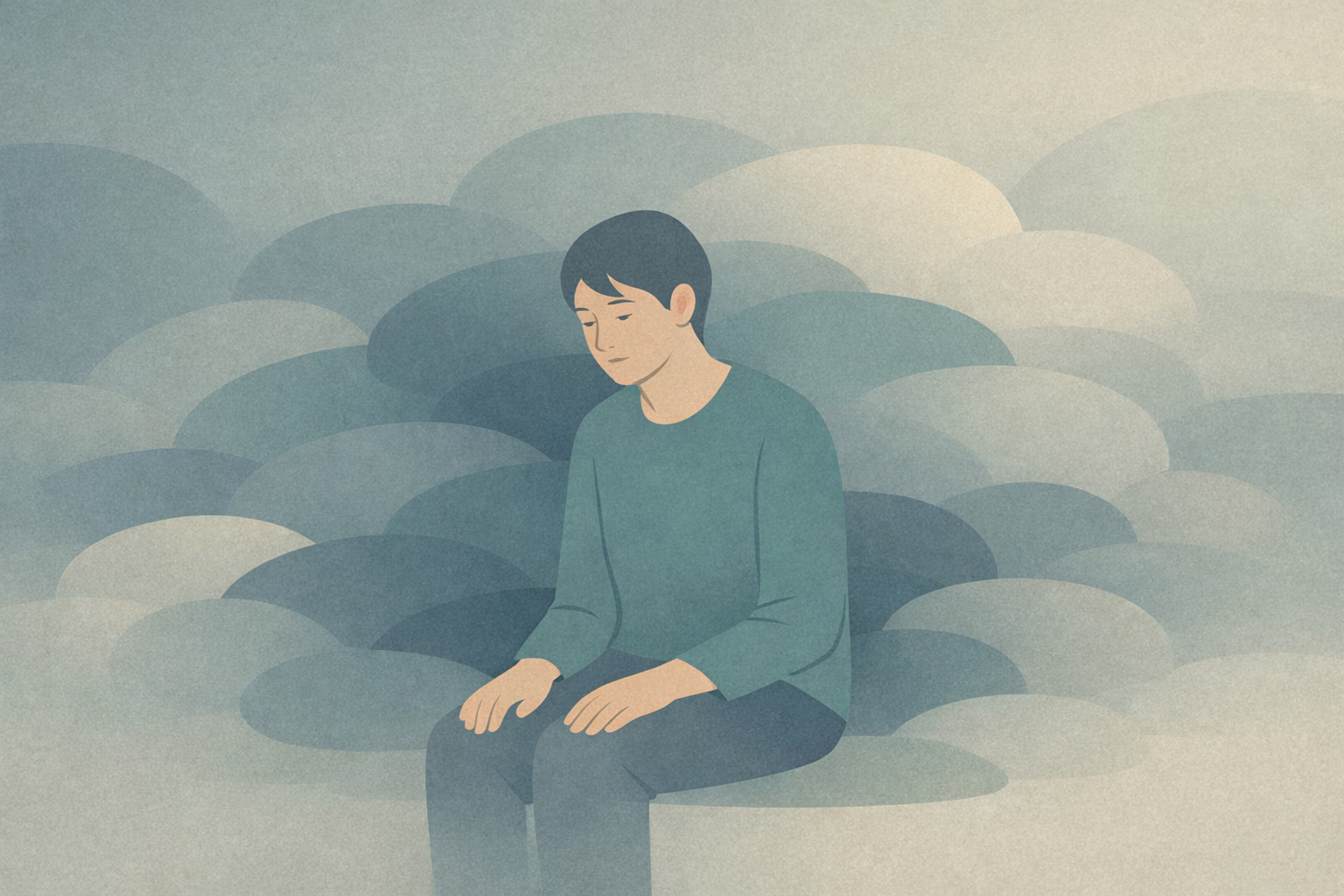
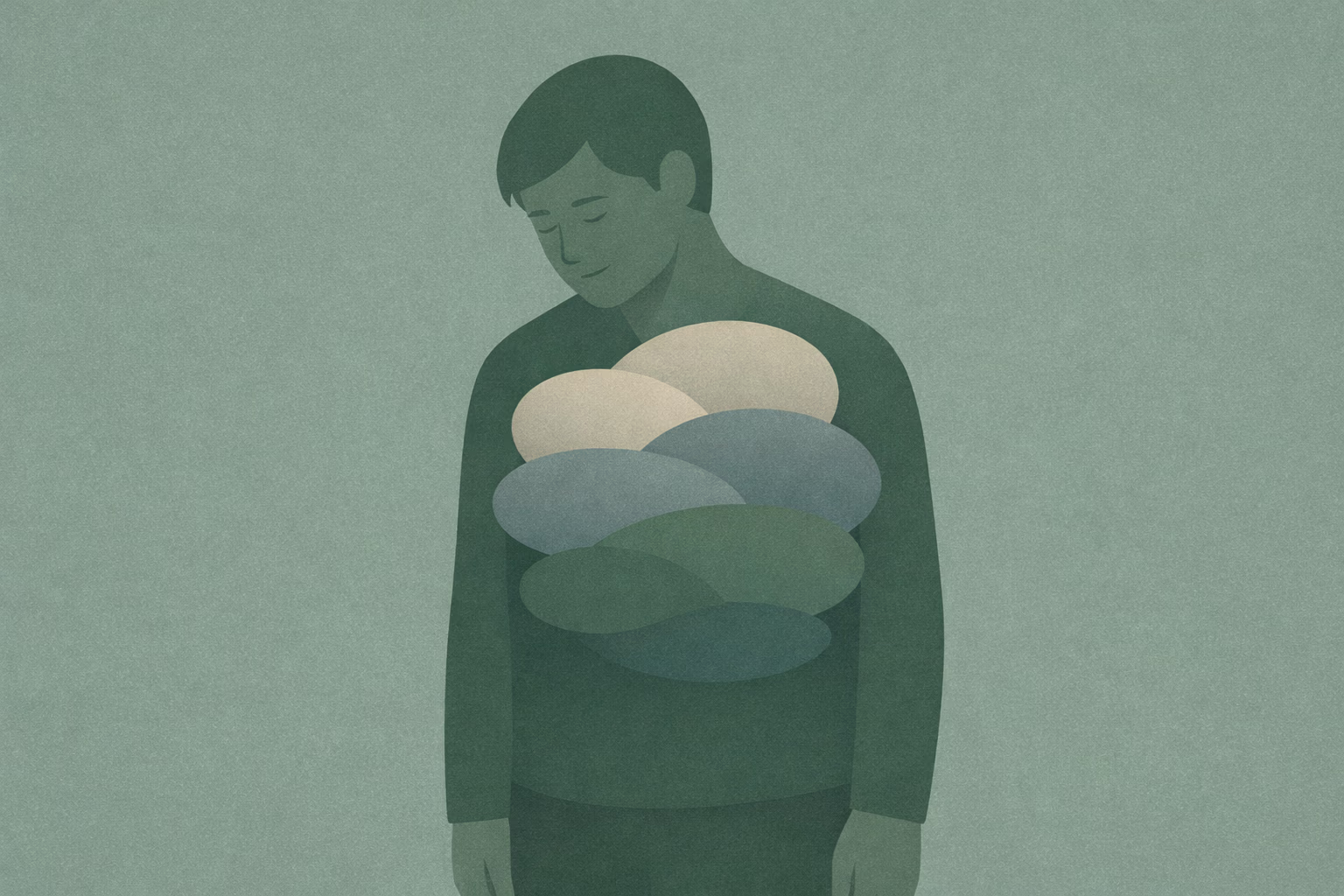
Understanding explains what is happening. Art allows you to feel it—without fixing, judging, or naming. Pause here. Let the images work quietly. Sometimes meaning settles before words do.
One Quiet Window, one insight, one reflection — every Sunday