
Emotional Compression: When You Push Everything Down to Function
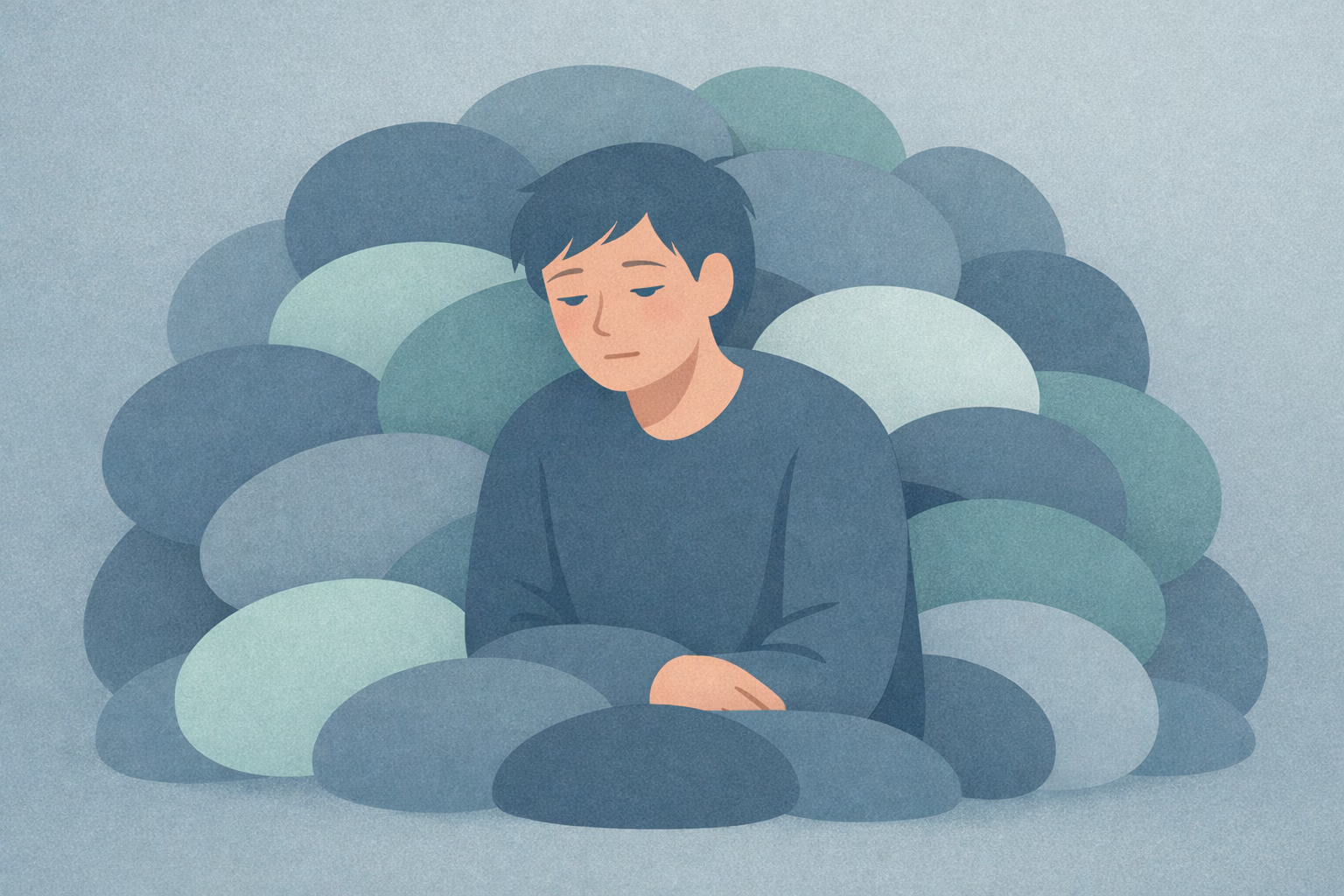
In short: Many people describe a quiet heaviness that doesn’t match their circumstances: a tight chest with no obvious reason, a tiredness that sleep doesn’t fix, a sense of carrying something unnamed. It can look like “nothing is wrong,” yet feel like something is always on.
Many people describe a quiet heaviness that doesn’t match their circumstances: a tight chest with no obvious reason, a tiredness that sleep doesn’t fix, a sense of carrying something unnamed. It can look like “nothing is wrong,” yet feel like something is always on.
In a meaning-and-nervous-system frame, this isn’t a character flaw. It’s often what happens when emotional signals don’t get to complete. The system keeps allocating energy to hold, contain, or manage what didn’t get a clear endpoint—so the experience remains active in the background, like an app that never fully closes.
What if the “weight” isn’t who you are—but what your system has been carrying without closure?
Suppressed emotions often don’t show up as recognizable “feelings.” They show up as atmosphere: fog, pressure, a low-grade strain, a sense of effort in ordinary moments. The mind may search for explanations—work, relationships, health—yet the body keeps reporting load.
This is one reason shame arrives so easily. When there isn’t a clean narrative (“I’m sad because X”), people assume the heaviness means they’re broken or ungrateful. But a nervous system can carry activation without a clear label when experiences don’t reach completion and settle into the past.
Over time, that vague heaviness can become familiar enough to feel like personality. In reality, it’s often a state: a sign that something inside is still being held in place. [Ref-1]
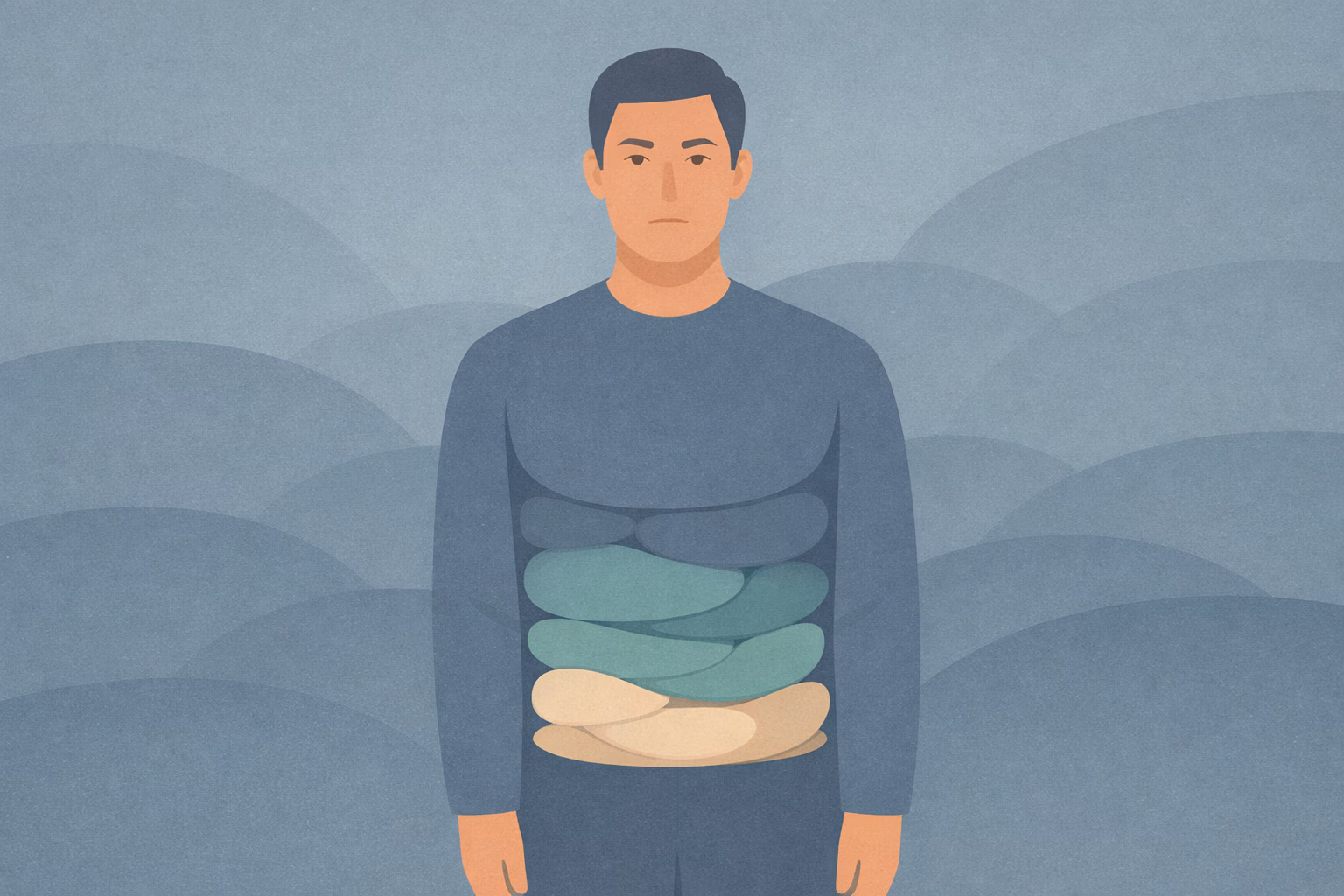
When emotional signals don’t move through to completion, the body doesn’t simply “delete” them. It reorganizes around them. Muscles brace. Breathing patterns become smaller or more controlled. The jaw, throat, belly, and pelvic floor often take on the job of containment—not by choice, but by automatic regulation.
This ongoing management has a cost. Even if life looks stable, the system may operate as if it’s still in a demanding context: monitoring, inhibiting, compensating. Over time, the cumulative burden resembles allostatic load—wear and tear from prolonged adaptation. [Ref-2]
From an evolutionary perspective, emotional expression has always been contextual. Visibility can bring support—or it can increase risk. In many environments, signaling distress could attract threat, reduce status, or destabilize group dynamics. So nervous systems developed options: not only fight or flee, but also contain, flatten, and minimize expression when the social cost was high.
That history matters because “suppression” is often a strategy that once worked. It helped someone stay employed, stay safe, stay attached, stay unnoticed, or stay functional. The body remembers what protected it, especially under chronic stress. [Ref-3]
Sometimes the body chooses quiet not because it’s afraid of feelings, but because it learned that visibility had consequences.
Suppressing emotion can create short-term stability. It can help a person make it through a meeting, a caregiving season, a conflict-filled home, or a high-stakes week. In the moment, control over expression can reduce social friction and keep tasks moving.
Biologically, this can look like a stress response being redirected into “hold it together.” The system prioritizes performance, politeness, or predictability. That isn’t a moral choice; it’s allocation. When demand is high, the body spends resources on staying operational. [Ref-4]
But what happens when the emergency mode becomes the default?
A common cultural myth is that if you don’t express something, it fades. But nervous systems don’t run on “ignore.” They run on cues of safety, completion, and consequence. When a signal is inhibited, the energy behind it often remains active—just redirected into tension, vigilance, numbness, or rumination.
In safety-oriented models of regulation, the system downshifts when it receives enough cues that the situation is resolved and connection is possible. When cues are inconsistent—when life is outwardly fine but inwardly unresolved—the body may hover between activation and shutdown. [Ref-5]
This is why people can feel both “too much” and “nothing” at once: a pressured interior with a muted surface. That combination is not paradoxical; it’s a compromise.
Suppression often becomes self-reinforcing, not because of personal weakness, but because it works in the short run. Containing expression reduces immediate disruption—social consequences are avoided, conflict is delayed, tasks stay intact. The nervous system registers that as success.
But inside, the uncompleted signal remains. The more the person relies on control over expression, the more internal pressure accumulates. Over time, the system may shift toward hypoarousal states—numbness, collapse, “I can’t access anything”—as a way to reduce load when activation becomes too expensive. [Ref-6]
Because the loop is primarily physiological, the first signs are often physical or attentional—not dramatic emotion. People may say they feel “fine,” yet their body looks like it’s bracing. Or they can describe their life clearly but can’t locate what their system is responding to.
Common patterns include:
These are not proof that someone is “out of touch.” They’re signs that expression has been traded for control, and control has become the body’s primary tool for stability.
Over time, suppression can create a life that is technically functional but energetically expensive. When significant portions of the day are spent managing internal load, there is less capacity for play, curiosity, intimacy, and flexible attention. The system is busy holding.
This can contribute to fatigue, headaches, digestive strain, sleep disruption, and a general sense of “wearing down.” Emotional rigidity can also appear: not as harshness, but as reduced range—fewer peaks and fewer soft landings. Some people describe it as feeling older than they are.
When freeze or shutdown becomes prominent, it can be misread as laziness or lack of care. Structurally, it’s often a nervous system protecting itself from too much unfinished activation. [Ref-8]
An emotion is not just a feeling; it’s a whole-body message about what happened and what it meant. When the message can’t reach an endpoint—when the system can’t register “handled,” “recognized,” or “resolved”—it stays in circulation. Not consciously, necessarily. Physiologically.
In this sense, suppression is less about “not wanting to feel,” and more about bypassed consequence and incomplete closure. If the body doesn’t get a credible “done” signal, it keeps preparing. That preparation can look like tension, scanning, or a compulsion to control the environment to prevent further overload. [Ref-9]
What isn’t completed doesn’t simply stop. It becomes background work.
Coherence often begins not with insight, but with signal return. When load decreases and the environment becomes more workable, the body may start to send clearer data: where the tightness is, what situations intensify it, what moments create a small exhale.
This isn’t a dramatic “breakthrough.” It’s a gradual reappearance of micro-sensations that were previously muted because they were too costly to carry consciously. As the system finds safer pacing, emotional energy can move in smaller, safer increments—less like a flood and more like circulation. [Ref-10]
In Meaning Density terms, this is the early bridge back to integration: the internal world starts to behave as if completion is possible again, not merely understandable.
Humans regulate in relationship. When an inner experience is met with steady attention—when it is not argued with, minimized, or escalated—the nervous system updates: “This can exist without danger.” That update reduces the need for containment.
This is not about performing emotion for others. It’s about what happens when a signal is allowed to land somewhere: in a trustworthy relationship, in a respectful conversation, or even in a private moment where the body doesn’t have to brace against itself. Over time, the self can become more reliable as a place where experience is held without immediate compression. [Ref-11]
What changes when your internal experience no longer has to fight for a place to go?
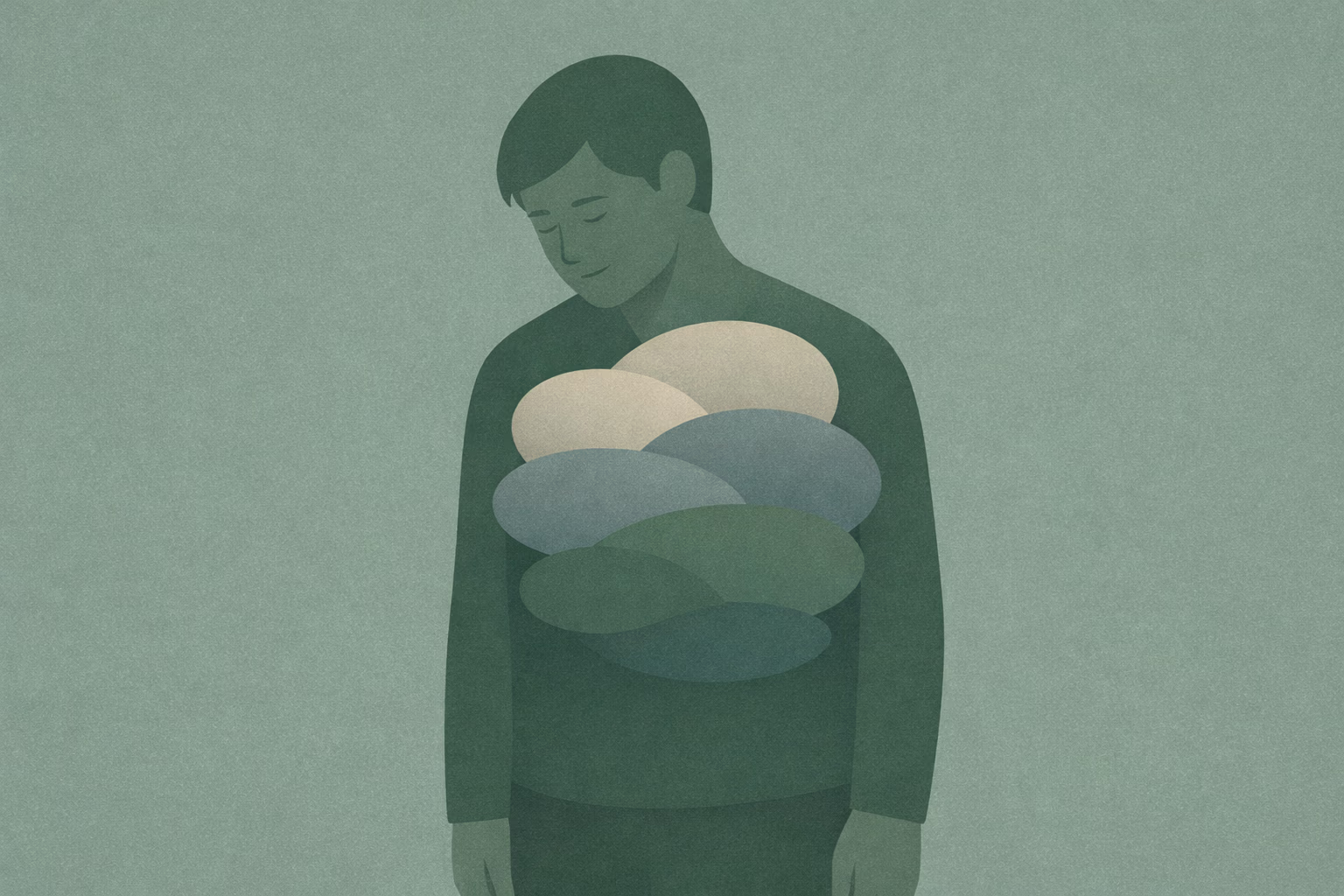
When suppressed material begins to complete, people often report a specific kind of relief: not euphoria, but less effort. Breathing feels more available. Muscles let go more easily. Sleep becomes more restorative. The mind spends less time doing background monitoring.
Another marker is increased range. Life feels less brittle. There is more space between stimulus and response, not because of better willpower, but because the system is no longer maxed out. This is also where self-compassion often becomes less like a concept and more like a natural tone—an internal climate that reduces friction and supports settling. [Ref-12]
Lighter isn’t “nothing hurts.” Lighter is “less is being carried at once.”
As somatic load decreases, attention becomes available for orientation: values, relationships, creativity, and direction. This is one of the quiet gifts of completion—less time spent managing the internal weight, more capacity to engage with what matters.
Agency tends to feel different here. It’s not the strained agency of forcing yourself through. It’s the calmer agency of having bandwidth. Identity also becomes clearer, because the self is no longer organized primarily around containment. Instead, it can organize around meaning: what you stand for, what you’re protecting, what you’re building. [Ref-13]
When the nervous system can stand down, the future stops feeling like something to survive and starts feeling like something to inhabit.
In many cultures and families, expression is framed as dangerous—something that threatens control, relationships, or productivity. But from a regulation lens, chronic non-expression is also destabilizing, because it keeps experiences unfinished inside the body.
What people often want is not “more emotion.” They want less internal pressure and more coherent living. Expression—when it leads toward completion—can be a pathway to that coherence, especially when it happens in contexts that provide steadiness and social buffering rather than escalation. [Ref-14]
When experience can complete, the system doesn’t have to keep carrying it. And that is where aliveness becomes less effortful: not as a performance, but as a natural result of reduced load.
Suppressed emotions are not evidence of fragility. They are evidence of adaptation: a nervous system that learned to contain in order to keep life moving. The “weight” is often the cost of that containment over time.
As experiences find completion, the body can shift from vigilance to recovery, and from recovery to steadier presence. Stress becomes less sticky. Identity becomes less defined by what must be managed and more defined by what is real and meaningful. [Ref-15]
When what was carried can finally settle, the space that opens is not empty. It’s where direction, connection, and a quieter kind of strength tend to return.
From theory to practice — meaning forms when insight meets action.
Because suppressed emotions don't show up as recognizable feelings — they show up as atmosphere. Fog, pressure, low-grade strain, a sense of effort in ordinary moments. The mind searches for explanations while the body keeps reporting load. When emotional signals don't complete, the system doesn't delete them; it reorganizes around them. Muscles brace, breathing controls, the jaw and belly take on containment by automatic regulation. That ongoing management has a cost. Even if life looks stable, the system operates as if it's still in a demanding context — monitoring, inhibiting, compensating. Over time, that vague heaviness can feel like personality. In reality, it's a state — something still being held in place.
It's almost always learned, and usually for good reasons. Emotional expression has always been contextual — visibility can bring support, but it can also increase risk. In many environments, signaling distress could attract threat, reduce status, or destabilize relationships. So nervous systems developed options beyond fight-or-flight: contain, flatten, minimize. Suppression is often a strategy that once worked. It helped someone stay employed, stay safe, stay attached, stay functional. The body remembers what protected it. Sometimes the body chooses quiet not because it's afraid of feelings, but because it learned that visibility had consequences. That's adaptation, not defect.
Because nervous systems don't run on 'ignore' — they run on cues of safety, completion, and consequence. When a signal is inhibited, the energy behind it remains active and gets redirected into tension, vigilance, numbness, or rumination. People can feel both 'too much' and 'nothing' at once: a pressured interior with a muted surface. That isn't paradoxical; it's a compromise. An emotion is a whole-body message about what happened and what it meant. When the message can't reach an endpoint — when the system can't register 'handled' or 'resolved' — it stays in circulation. Not consciously. Physiologically. What isn't completed becomes background work.
Less effort, not euphoria. Breathing becomes more available. Muscles let go more easily. Sleep becomes more restorative. The mind spends less time on background monitoring. Another marker is increased range — life feels less brittle, with more space between stimulus and response, not because of better willpower but because the system is no longer maxed out. As somatic load decreases, attention becomes available for orientation: values, relationships, creativity, direction. Identity becomes less organized around containment and more organized around meaning — what you stand for, what you're protecting, what you're building. Lighter isn't 'nothing hurts.' Lighter is 'less is being carried at once.'
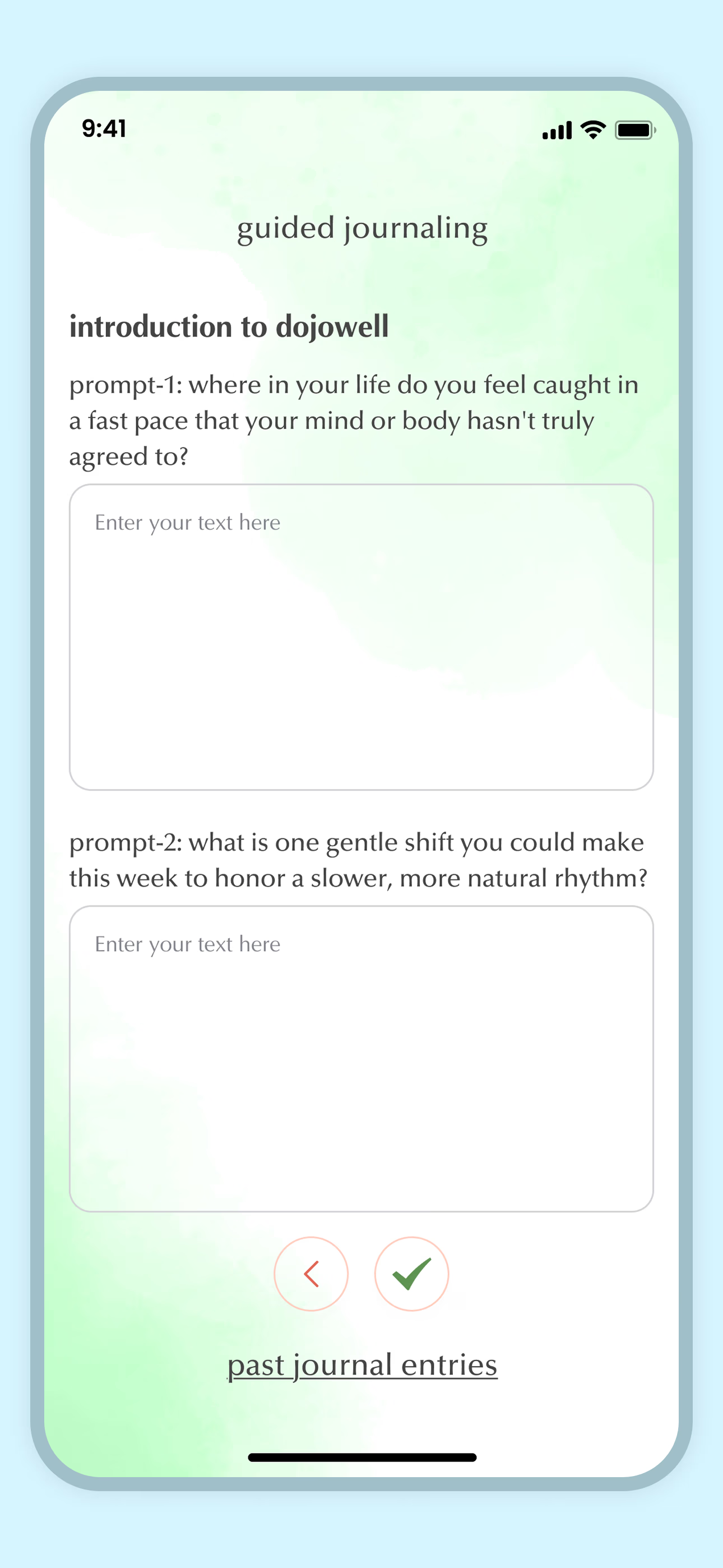
From Science to Art.
Understanding explains what is happening. Art allows you to feel it—without fixing, judging, or naming. Pause here. Let the images work quietly. Sometimes meaning settles before words do.
One Quiet Window, one insight, one reflection — every Sunday