Stress Threshold: Why Some Days You Break Faster Than Others
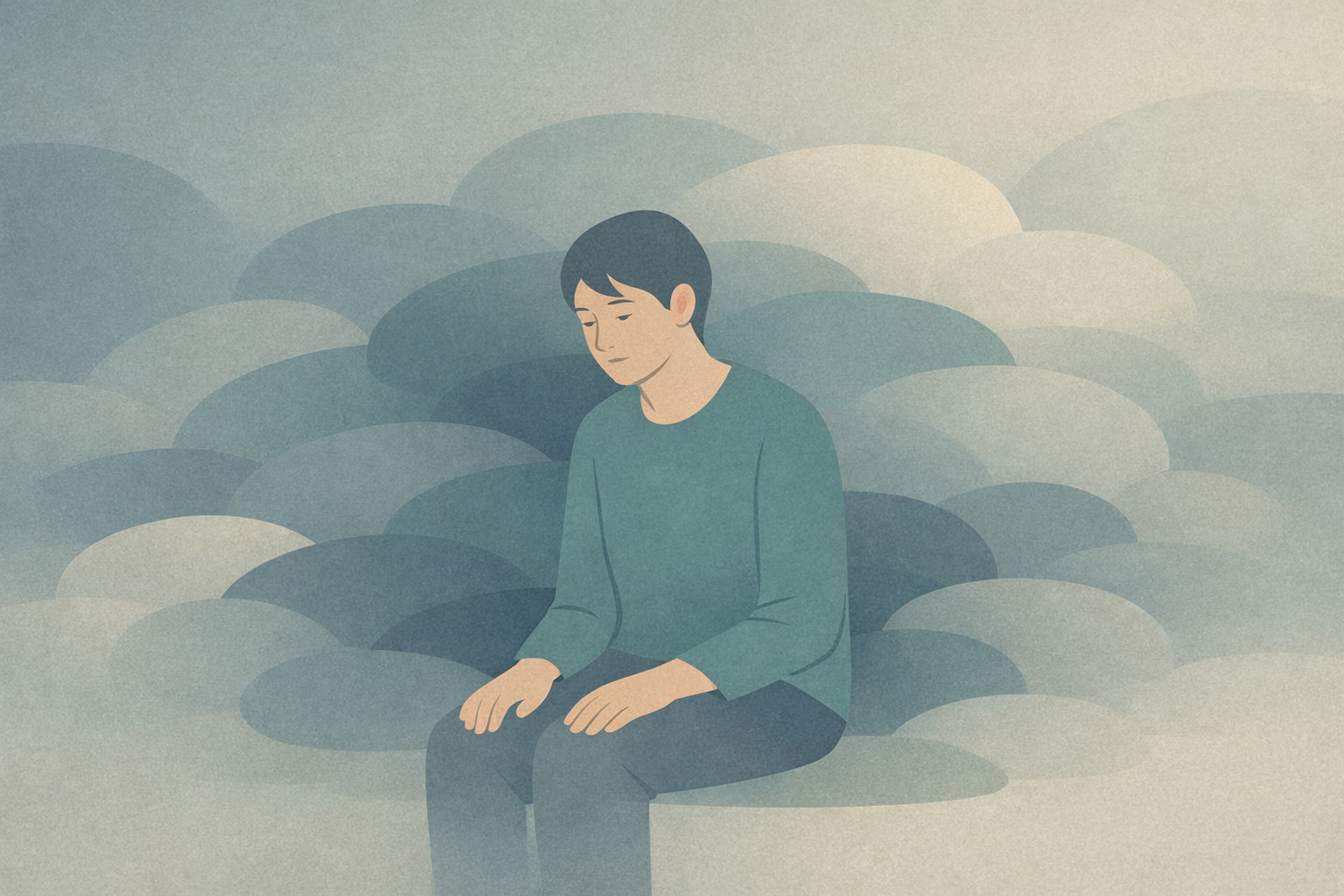
In short: Why Some Days Feel Heavier Than Others Some days don’t feel “sad” or “anxious” in a clear way. They feel thick. Getting started takes more fuel. Small choices feel oddly expensive. Even neutral moments can land with weight.
Some days don’t feel “sad” or “anxious” in a clear way. They feel thick. Getting started takes more fuel. Small choices feel oddly expensive. Even neutral moments can land with weight.
That heaviness is often less about what’s happening today and more about what your system is carrying forward—unfinished stress, incomplete recovery, and a body-mind that hasn’t received enough “done” signals to fully stand down.
What if a heavy day isn’t a verdict about you, but a readable signal about load and capacity?
Emotional density can show up before anything has happened. You open your eyes and it’s already there: a slowed inner pace, a sense that moving from one thing to the next will cost more than usual. This isn’t imagination—it’s often the nervous system starting the day with a higher baseline load. [Ref-1]
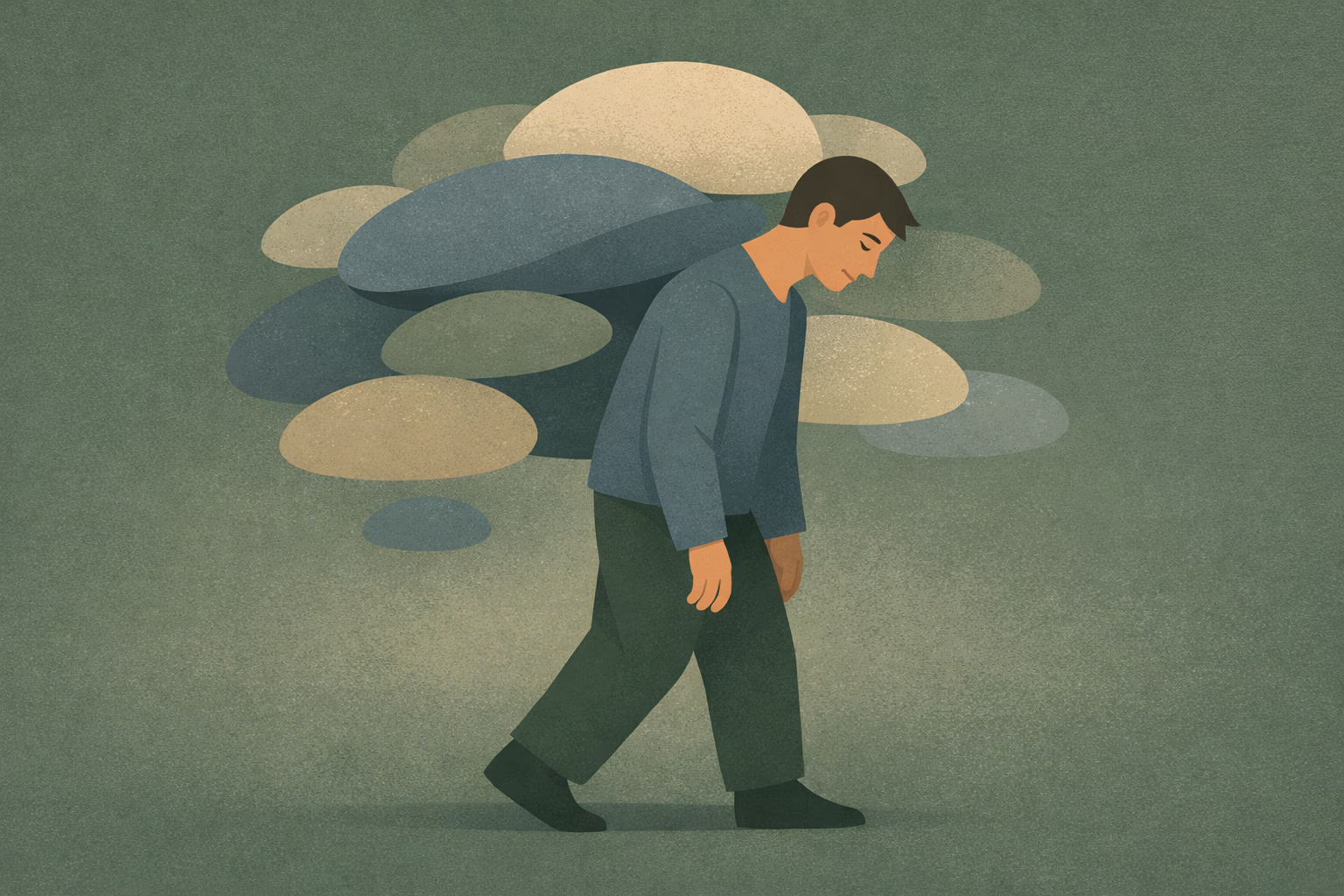
On these days, ordinary inputs can feel amplified. A message that would normally feel neutral may read as demanding. A small task may feel like it has “edges,” as if it requires bracing. The heaviness isn’t always dramatic; it can be quiet, but persistent—like walking with a weighted backpack you didn’t choose.
“Nothing is wrong, but everything feels like it takes more.”
One useful way to understand heaviness is as a ratio: how much internal load is present relative to how much regulatory capacity is available. When capacity is lower—because of disrupted sleep, prolonged demands, ongoing uncertainty, or cumulative stress—whatever is still “in the system” becomes harder to move through.
This can create an internal resistance that doesn’t come from attitude or character. It comes from a body-mind that is managing resources: attention, energy, and responsiveness. When the system is already allocating effort to staying steady, there’s less available for flexibility, curiosity, and initiative. [Ref-2]
In that state, the felt sense of life can become dense: not necessarily more emotional content, but less room around it.
Humans are built to adapt to changing demands, but adaptation has a cost. Over time, repeated stress activation can shift the way acute challenges are processed—often making the system more reactive to small stressors, or conversely more flattened and slowed. [Ref-3]
When the nervous system has been running “hot” for long stretches, it may conserve by reducing engagement. This isn’t laziness; it’s physiology. The body prioritizes stability over exploration when it reads the environment (or the internal state) as resource-thin.
That conservation can feel like emotional density: slower thinking, reduced spark, less buoyancy, and a narrower range of felt options.
When load rises, the system often tries to prevent further depletion. One way it does this is by decreasing responsiveness: fewer impulses to initiate, less appetite for novelty, and a tendency to simplify life into the minimum required. This can look like shutdown or “going offline,” but it can also be subtler—more like moving through the day with the volume turned down. [Ref-4]
Importantly, this slowing isn’t a moral problem to overcome. It’s often a temporary protective setting. Under strain, the nervous system can prioritize containment: keeping things from escalating, limiting exposure, and reducing additional inputs.
What if heaviness is your system saying, “I can’t take on more right now”?
Many people interpret dense days as regression: “I’m not doing well,” “I’m falling behind,” “I should be able to handle this.” But capacity is not a fixed trait. It changes with stress hormones, sleep, social safety cues, recovery time, and how much uncertainty you’ve been holding. [Ref-5]
Two people can face the same calendar and feel entirely different internal load. And the same person can feel capable on Monday and weighed down on Thursday—without any dramatic event to “explain” it.
When heavy days are treated as personal failure, an extra layer gets added: self-criticism becomes additional load. When heavy days are treated as information, the system often has more room to stabilize.
Emotional density often maintains itself through a loop that is structural, not psychological in the simplistic sense. When the system is carrying unresolved load, it has less capacity. With less capacity, the easiest path is to reduce contact with anything that might increase activation—hard conversations, decisions, even mildly complex tasks.
This reduced contact can prevent completion. Not because someone is “afraid of feelings,” but because the body-mind is already near its limit. So experience stays partly unfinished: tasks remain open, relational signals remain unclear, and internal tension doesn’t get a chance to resolve into closure.
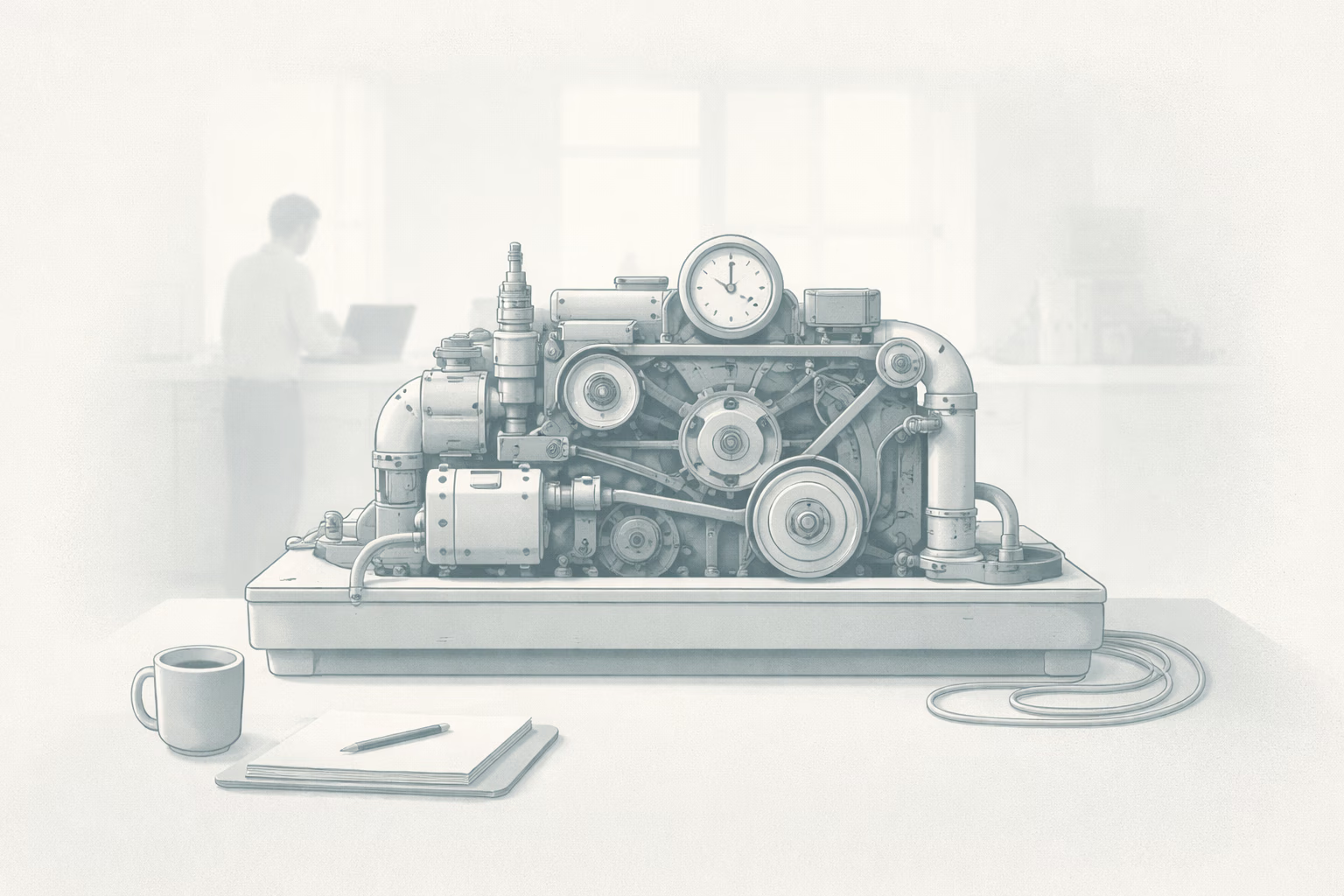
Over time, the loop can look like: load carried forward → capacity drops → engagement narrows → fewer “done” signals → more load carried forward. This is one reason heaviness can feel sticky and self-reinforcing. [Ref-6]
Dense days have a recognizable texture. People often report not a single emotion, but an overall drag on mental and physical movement—like the body’s signals are harder to read and the mind’s gears have more friction. Interoceptive signals (your sense of internal state) can become louder, fuzzier, or more effortful to interpret when load is high. [Ref-7]
These aren’t character flaws. They’re often the nervous system running a protective budget.
If dense states become frequent, the main cost is not just discomfort—it’s reduced flexibility. Life starts to feel like endurance rather than engagement. Plans feel risky because the system can’t reliably predict its own capacity.
Over time, a person may stop trusting their ability to move through ordinary demands. That loss of trust isn’t a belief problem; it’s a pattern formed when the body repeatedly encounters “too much” without enough completion afterward.
From a safety-cue perspective, the system becomes more vigilant about conserving and less confident about exploration—especially when social or environmental cues feel inconsistent. [Ref-8]
Modern life often requires postponing. You keep going. You stay functional. You delay the processing of a hard interaction, the impact of a loss, the strain of a season, the exhaustion of constant role-demand.
The issue is that postponement can preserve internal load in an “active storage” state. The body may remain partially mobilized—still tracking unfinished obligations, unresolved relational tension, and incomplete recovery. This can increase the frequency of dense days because the baseline never fully returns. [Ref-9]
In this frame, heaviness isn’t mysterious. It’s what it feels like when the system is asked to build a new day on top of yesterday’s unclosed loops.
It can be tempting to treat a heavy day as something to defeat with intensity—more effort, more force, more self-pressure. But pressure often adds activation without adding closure. Relief changes state; completion changes baseline.
Over time, internal density tends to reduce when experiences are allowed to finish—when the system receives credible “done” signals across body, attention, and relationships. That completion can be small and consistent, and it doesn’t require dramatic breakthroughs. It’s less like a mindset shift and more like a physiological settling that happens after enough loops actually close.
In other words: density often lifts not because you understand it better, but because your system finally has less to carry.
Humans regulate in connection. When another person reliably signals safety—through steadiness, attunement, and non-demanding presence—load becomes easier to hold and metabolize. This isn’t about “being fixed” by someone else; it’s about the nervous system receiving cues that it doesn’t have to manage everything alone. [Ref-10]
Isolation can make density feel heavier because there are fewer external stabilizers. When support is absent or feels unreliable, the system may stay braced, using extra energy for self-monitoring and prediction. Over time, that can increase perceived strain.
“I didn’t need solutions. I needed the day to feel shareable.”
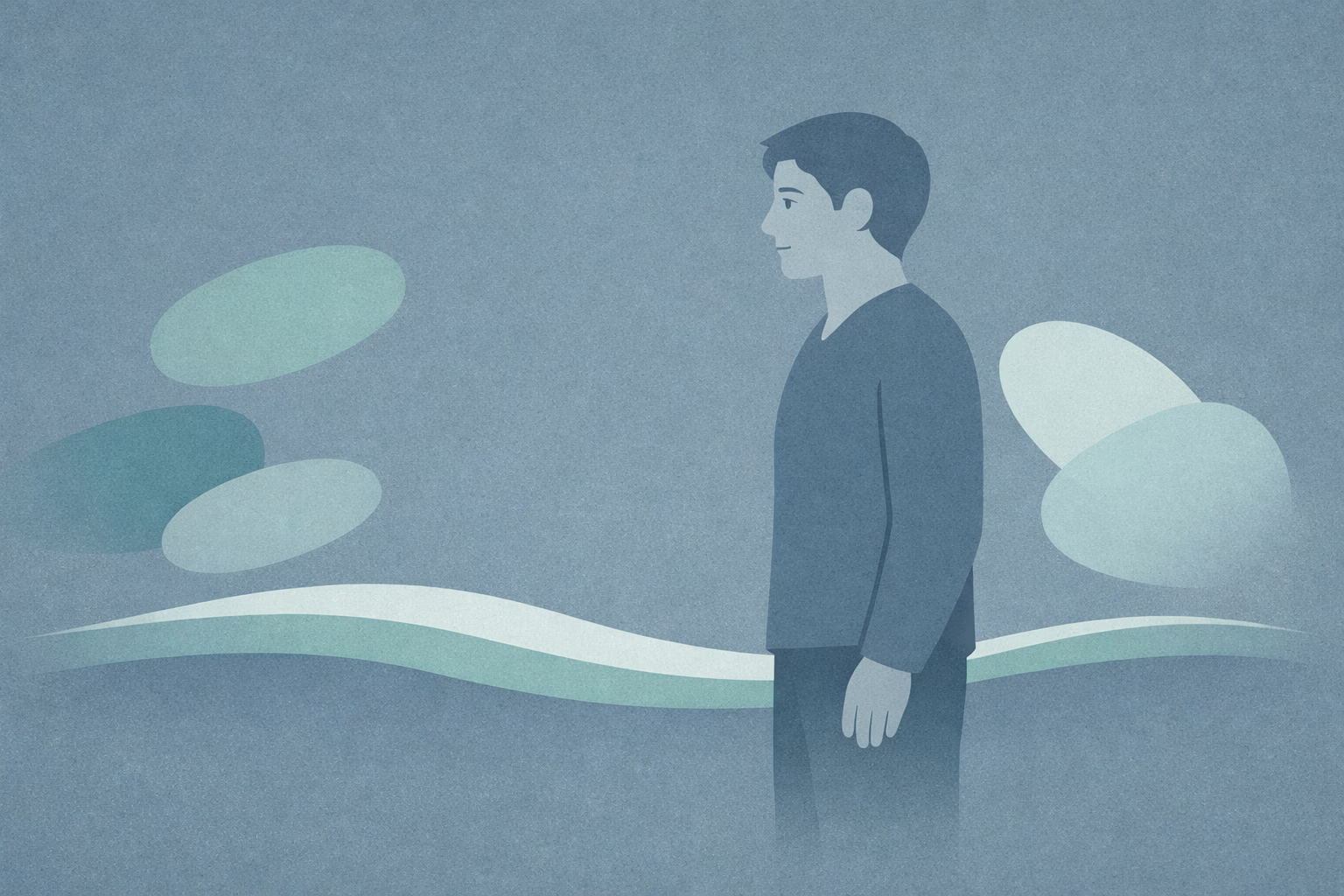
As internal load decreases and completion increases, many people describe a return of emotional mobility. Not constant happiness—more like the ability to shift states without getting stuck. The day starts to have contours again: effort here, ease there, interest returning in small pockets.
Often, the first sign isn’t big energy. It’s micro-lightness: quicker recovery after a stressor, more access to neutral calm, more reliable “I can handle this” signals. This is the nervous system regaining trust in its own capacity to move through experience and come back to baseline. [Ref-12]
Density lifting can feel like space returning between stimuli and response—more options, less bracing, less need to manage everything at once.
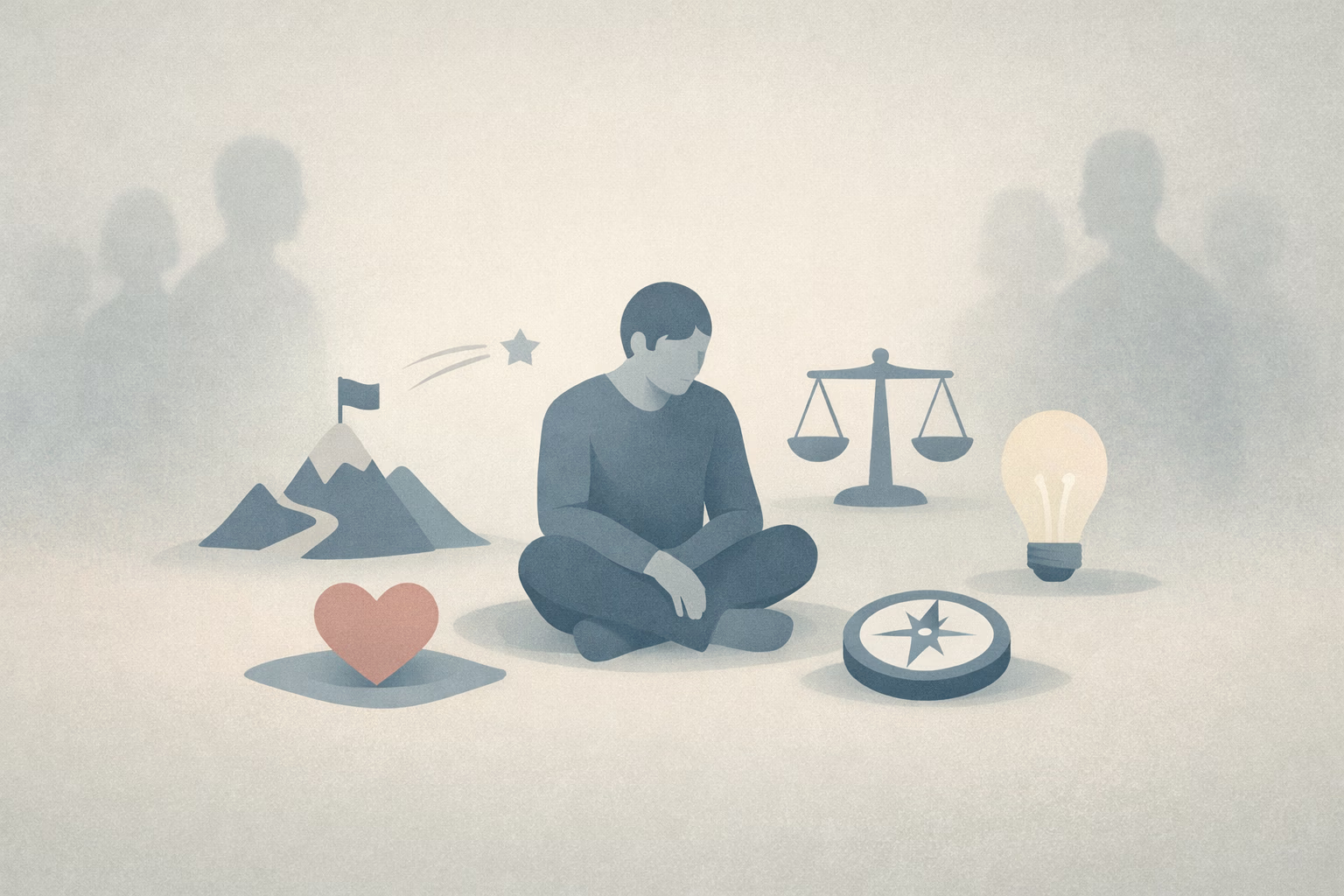
In dense states, attention is often organized around endurance: what must be gotten through, what must be prevented, what might tip things over. When the baseline softens, attention can reorient toward meaning—toward what matters, what fits, what feels coherent with identity.
This shift isn’t about becoming more motivated. It’s about becoming less internally occupied. With fewer unfinished loops consuming bandwidth, values can become more legible again, and choices can feel less like pressure and more like direction.
Self-kindness also becomes more available—not as a technique, but as a natural consequence of reduced strain and reduced self-attack. That gentler stance tends to support steadier regulation over time. [Ref-13]
A heavy day can be understood as accumulated care-needs becoming visible: a system asking for closure, for reduced load, for signals of safety, for the chance to come back online without being chased. Seen this way, heaviness is not an identity. It’s a state that makes sense given the conditions.
When the meaning of the day changes—from “something is wrong with me” to “something in me is carrying too much”—shame often loosens. And in that space, agency can quietly return: not as a push, but as a clearer sense of what matters and what can wait.
This is how coherence begins to rebuild: not through force, but through experiences becoming finishable again, inside a life that offers more true endings. [Ref-14]
Some days feel heavier because your system is doing intelligent conservation in the face of too much carried forward. That response is not a defect—it’s a protective setting.
When heaviness is met with dignity and allowed to be informative, the body often finds its way back toward baseline. And as density softens, direction tends to re-emerge on its own: not as a command, but as a quiet return of ease, clarity, and forward pull. [Ref-15]
From theory to practice — meaning forms when insight meets action.
Because heaviness is rarely about today — it's about what your system is carrying forward. The article describes emotional density as a ratio: how much internal load is present relative to how much regulatory capacity is available. When sleep, prolonged demand, or cumulative stress lower capacity, whatever's still in the system becomes harder to move through. The day arrives pre-loaded. Ordinary inputs feel amplified, small tasks have edges, neutral moments land with weight. Nothing is wrong — but everything takes more, because the body is allocating effort to staying steady rather than engaging.
No, and treating it that way adds load. The article emphasizes that capacity isn't a fixed trait — it shifts with stress hormones, sleep, social safety cues, and how much uncertainty you've been holding. Two people facing the same calendar can feel entirely different internal load, and the same person can feel capable Monday and weighed down Thursday without any explaining event. When heavy days are read as personal failure, self-criticism becomes additional load. When they're read as information about a system carrying unfinished completion, the body usually has more room to stabilize. Density is fluctuation, not regression.
Because we're trained to treat reduced engagement as failure. The article reframes it: slowing is often a protective regulation strategy. Under load, the nervous system decreases responsiveness — fewer impulses to initiate, less appetite for novelty, simpler choices — to prevent further depletion. This isn't laziness; it's intelligent conservation. The body prioritizes containment over exploration when it reads conditions as resource-thin. Heaviness can be your system saying 'I can't take on more right now,' which is information worth respecting. Pressure adds activation without adding closure; what density actually needs is less to carry.
Accumulated completion, not more force. The article makes this distinction clearly: relief changes state, but completion changes baseline. Density tends to soften when experiences are allowed to finish — when the system gets credible Done Signals across body, attention, and relationships. Co-regulation helps too: when another person reliably signals safety through steadiness and non-demanding presence, load becomes easier to metabolize because the system gets cues that it doesn't have to manage everything alone. Density respected is density that can soften. Heaviness lifting often shows up as micro-lightness — quicker recovery, more access to neutral calm — before it shows up as energy.
From Science to Art.
Understanding explains what is happening. Art allows you to feel it—without fixing, judging, or naming. Pause here. Let the images work quietly. Sometimes meaning settles before words do.
One Quiet Window, one insight, one reflection — every Sunday