Fight, Flight, Freeze: Understanding Shutdown Mode
In short: Heart rate eases, breath deepens, attention widens, and the sense of urgency loses its grip. It’s not a personality trait, and it’s not proof that you’re “doing life wrong.” It’s a biological shift—an interruption of a threat cascade that was designed to be brief.
Stress deactivation is the moment the body begins to stand down: heart rate eases, breath deepens, attention widens, and the sense of urgency loses its grip. It’s not a personality trait, and it’s not proof that you’re “doing life wrong.” It’s a biological shift—an interruption of a threat cascade that was designed to be brief.
What if the goal isn’t to convince yourself you’re safe—but to let your system detect safety?
In modern life, stress often stays “on” not because danger is constant, but because closure is scarce. When tasks, alerts, conversations, and self-evaluation never fully complete, the body doesn’t receive the internal “done” signal that allows recovery. Deactivation is what makes completion possible.
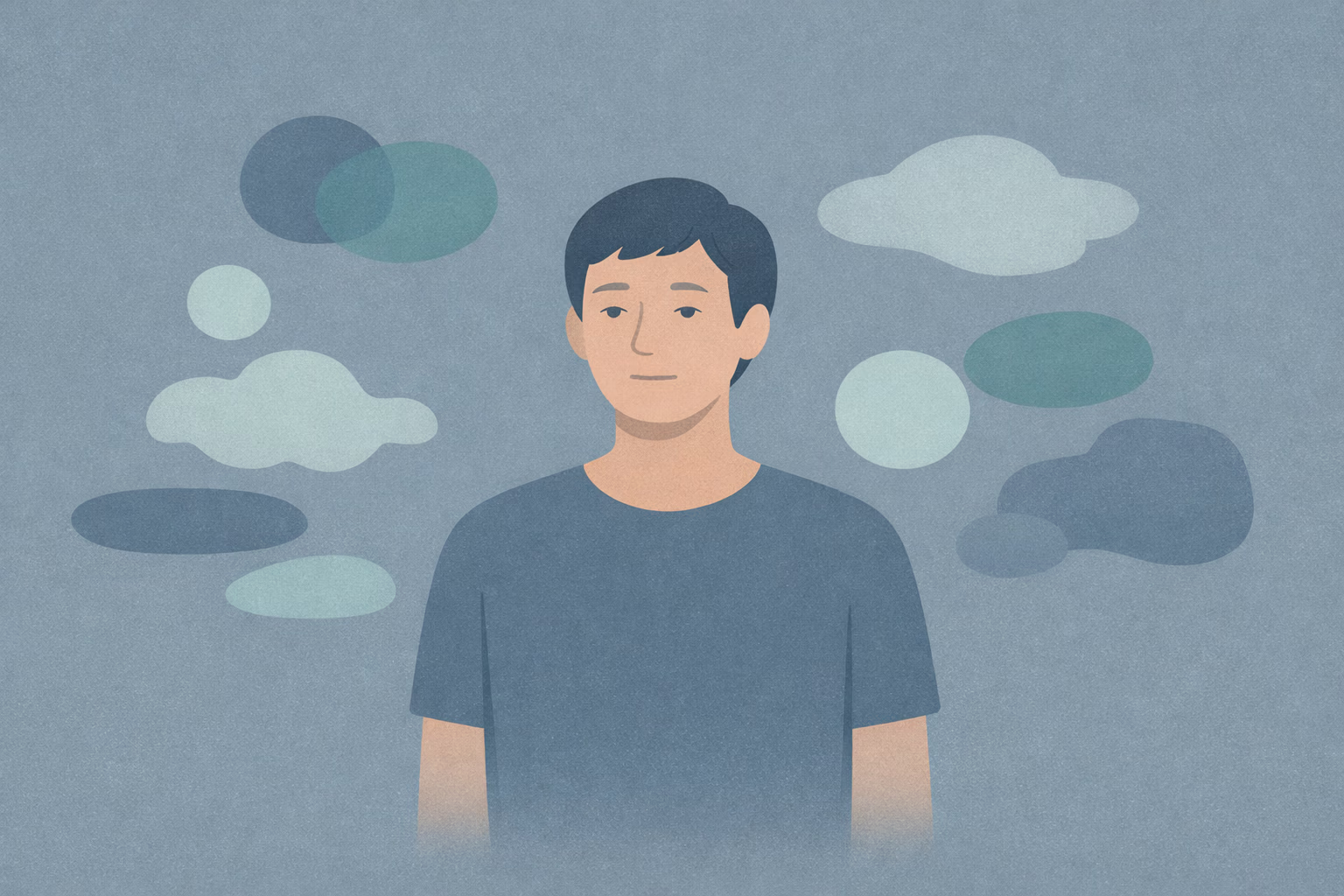
Being stuck in fight-or-flight can look deceptively ordinary from the outside: you’re still answering emails, holding conversations, and moving through the day. Inside, it can feel like a stuck accelerator—racing heart, tight jaw, restless scanning, looping thoughts, and a push to resolve something immediately. [Ref-1]
That urgency isn’t drama; it’s a state. The body organizes around potential threat, prioritizing speed and protection over nuance. In that state, “just relax” can land like a mismatch—because the system isn’t asking for a better argument, it’s asking for a different signal.
When your body is mobilized, it doesn’t need a pep talk. It needs a clear cue that the emergency is over.
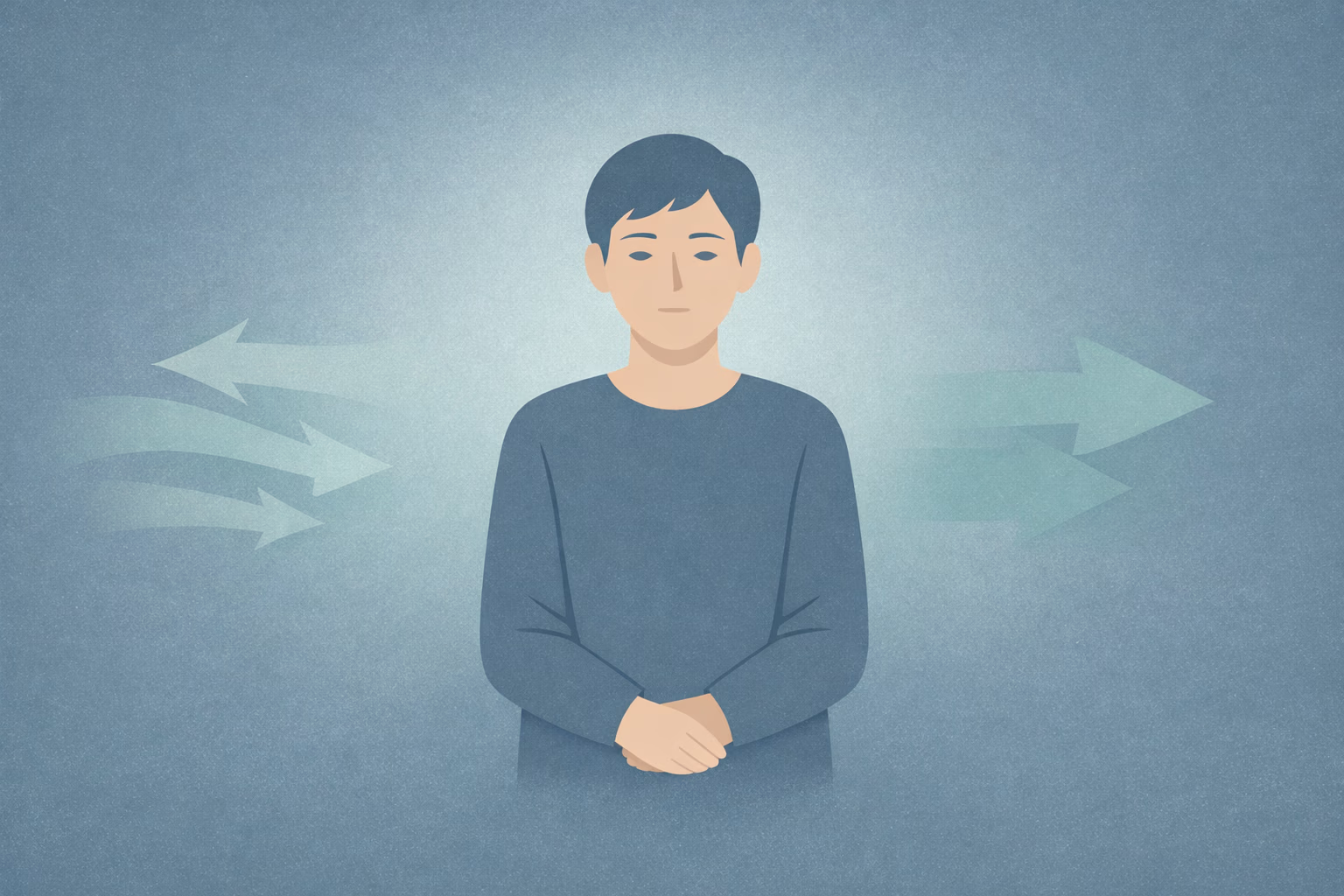
Fight-or-flight is amplified by inputs that suggest uncertainty: unpredictable timing, ambiguous outcomes, social evaluation, and rapid changes in context. Deactivation, in contrast, begins when the nervous system receives concrete cues that the environment is workable and non-urgent. [Ref-2]
Those cues are often sensory and physiological: steadier breathing, predictable rhythm, stable temperature, supportive contact, slower pacing, and environments that reduce sudden demands. This isn’t “mind over matter.” It’s matter informing mind—body-to-brain information that changes what the system expects next.
Notice the difference: a thought like “I’m okay” can coexist with a body that is still braced. A safety cue is something the body can register without debate.
Stress chemistry evolved for quick, decisive bursts: detect threat, mobilize energy, and then return to baseline once the situation resolves. Modern stress often doesn’t resolve cleanly. It shifts forms—meeting to message, message to news, news to self-judgment—keeping the body in partial mobilization.
Over time, this creates allostatic load: the “wear and tear” of running adaptation systems too often, for too long, without enough completion. [Ref-3] The issue isn’t that your body is malfunctioning; it’s that it’s functioning in a context that rarely offers a true ending.
When there’s no closure, the nervous system may keep checking, tightening, rehearsing, or speeding up—because unfinished loops don’t give reliable stand-down signals.
Deactivation doesn’t erase stressors. It changes the state from which you meet them. As the nervous system downshifts, cognitive flexibility tends to return: you can take in more information, interpret signals more accurately, and make choices with less compulsion. [Ref-4]
This is one reason fast deactivation can matter. When high alert escalates, the system can tip into panic-like surges or into shutdown-like numbness—not because you’re “too sensitive,” but because the body is trying to resolve overload with the tools it has available.
Downshifting is not a performance of calm. It’s a biological permission slip to re-enter time, sequencing, and proportion.
Many people carry an unspoken belief: once stress starts, you have to endure it until it burns out. But physiology doesn’t work like a moral lesson. Threat activation can be interrupted by safety inputs, and interruption can support recovery rather than “avoid” it. [Ref-5]
Endurance is often praised because it looks like strength. Yet inside the body, prolonged activation usually just means more expenditure—more muscle tension, more vigilance, more internal noise. Stress deactivation is not denial; it’s a change in conditions that tells the nervous system it can stop spending.
There’s a difference between “getting through it” and “getting to completion.” Completion is what allows the system to close the loop.
Avoidance loops don’t begin with laziness or lack of character. They often begin with an overwhelmed nervous system that learns, very practically, that certain situations keep activation high with no clean endpoint. When the body anticipates that there will be no closure, it shifts toward escape routes: scrolling, over-researching, delaying, controlling details, or leaving early.
Deactivation breaks the reinforcement cycle. When the system experiences a reliable downshift, it receives new data: “activation can end,” “urgency can soften,” “I can return.” That’s not merely insight; it’s a state-based learning process that changes what the body predicts. [Ref-6]
People often miss early mobilization because it can masquerade as “being on top of things.” The nervous system can be activated even while you’re functioning. Interoception—your body’s internal sensing—often picks up the shift before your story about it does. [Ref-7]
Common indicators include:
These are not verdicts about who you are. They’re readouts of load, pace, and incomplete resolution.
When high alert continues, the body stays in a spending mode. Even if the external event is over, the internal cascade can keep running—especially when the day is full of micro-threats like unpredictability, social evaluation, and constant switching.
Prolonged activation can show up as fatigue that doesn’t restore, increased sensitivity to noise or conflict, brittle concentration, and a lower threshold for overwhelm. Breathing patterns are part of this picture: respiratory changes can both reflect and influence autonomic state, shaping heart rate variability and recovery capacity. [Ref-8]
In other words: it’s not just “in your head.” It’s in the system’s timing. Without closure, the body keeps preparing for what’s next.
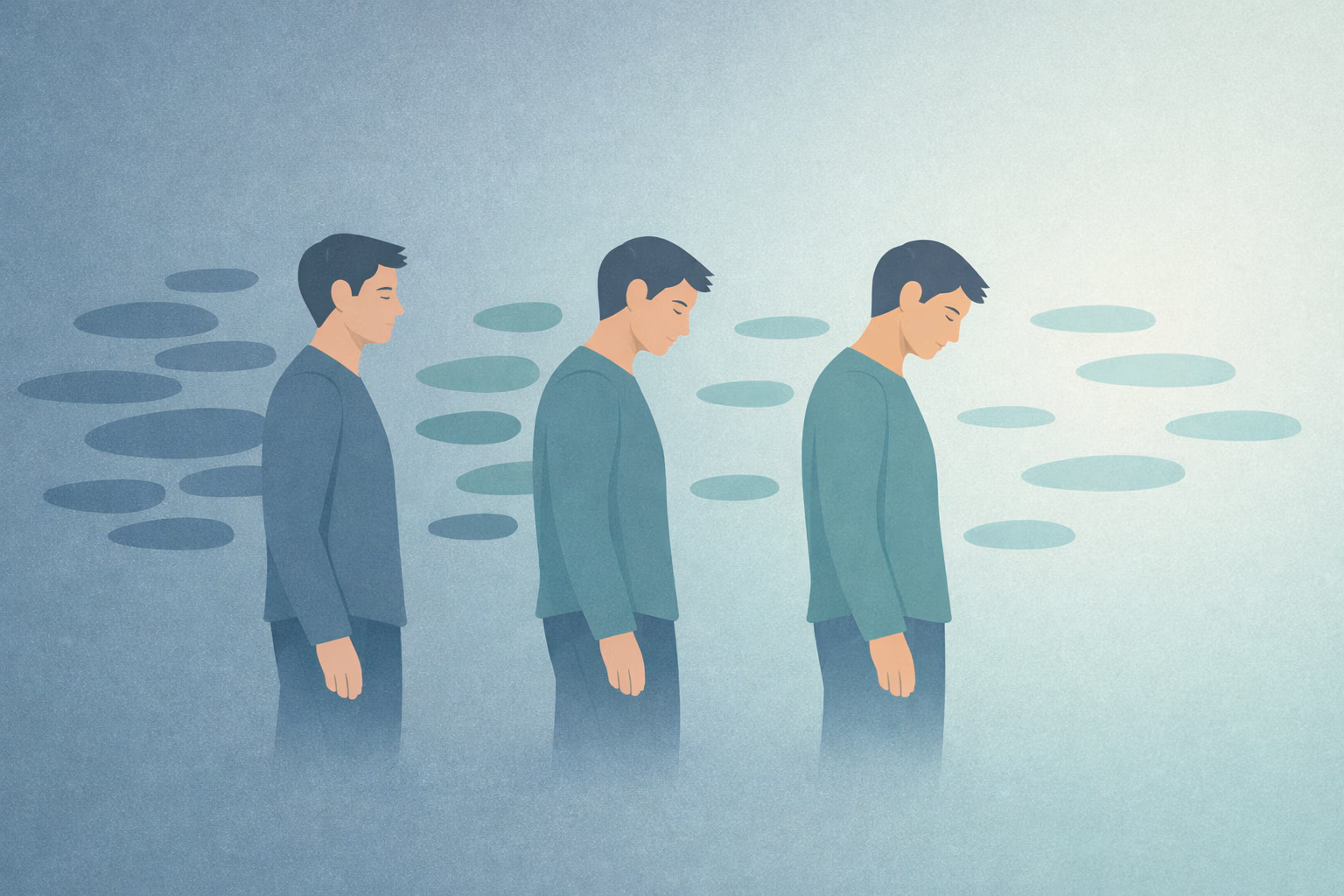
Nervous systems learn from repeated endings. Each time activation rises and then reliably drops, the body updates its expectations about duration and danger. Over time, downshifting can become more efficient—not because life got perfect, but because the system got better evidence that mobilization can complete.
This is one reason brief, body-based state shifts (including movement) can correlate with reduced stress reactivity over time: they provide a physiological arc—upshift, discharge, return—that the brain can treat as a finished loop. [Ref-9]
Stability is often the product of many completed cycles, not one heroic moment.
It can help to separate two things: relief and integration. Relief is a change in state—less intensity, less urgency. Integration is what happens when the system has had enough completion that it no longer has to keep re-initiating the same alarm.
Consistent deactivation experiences can support autonomic balance by reducing how long the body stays mobilized and by increasing the availability of “safe enough” states where thinking, connection, and discernment are possible. Social buffering—being in contexts where another regulated presence is available—can also support this shift. [Ref-10]
Over time, balance looks less like constant calm and more like range: the ability to activate when needed and return when the need has passed.
Humans are social nervous systems. Tone of voice, facial softness, pacing, and predictable presence can function as safety signals—especially when your body is already mobilized. This is not dependence; it’s biology. [Ref-11]
When someone speaks slowly, stays oriented, and doesn’t escalate urgency, your system receives a message about the environment: “there is time,” “this is manageable,” “we are not alone with it.” These cues can reduce threat amplification and make deactivation more accessible than internal self-pressure ever could.
Sometimes the most regulating message is not “you’re fine,” but “I’m here, and we’re not rushing.”
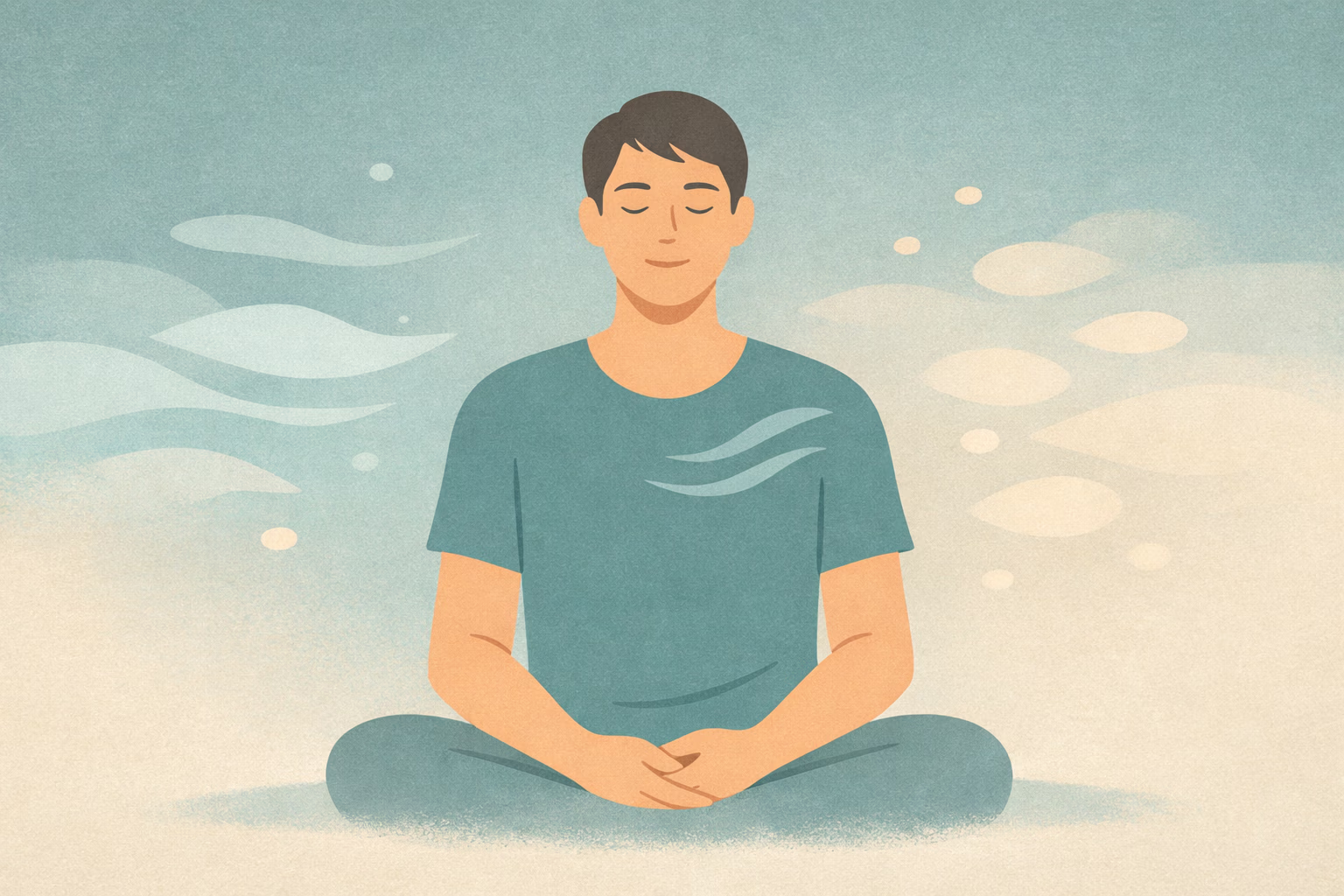
Deactivation is often subtle at first. It may not feel like bliss; it may feel like the absence of compulsion. The breath becomes less guarded, shoulders drop without being forced, and attention stops snapping to every possible problem. Perception widens—more room in the mind, more room in the scene. [Ref-12]
Common markers include:
This “return” is a capacity signal. It suggests the system can complete an activation and come back online, instead of staying braced.
When fight-or-flight is running the show, coping tends to become reactive: you reach for the fastest reduction in intensity, even if it creates more unfinished business later. When the nervous system deactivates, behavior often becomes more intentional—not because you “try harder,” but because the brain has access to broader options. [Ref-13]
That shift is deeply meaningful. It’s where agency returns: not a grand reinvention, but the ability to choose a next step that aligns with your actual values instead of the body’s emergency timer.
In a downshifted state, you’re not a different person—you’re the same person with more bandwidth.
Stress deactivation is sometimes framed as a technique to “perform better.” A more dignified frame is that it’s an act of self-respect: choosing safety over endurance, and completion over constant bracing. Acute stress reactions are normal human responses; what hurts is when the system has no reliable off-ramp. [Ref-14]
When your body learns that alarms can end, life becomes less about managing urgency and more about inhabiting your day. Meaning coherence grows when experiences complete—when your nervous system can close the loop and your identity doesn’t have to be organized around emergency.
Learning to downshift doesn’t remove the realities you’re facing. It restores the internal conditions needed to meet them without being commandeered by alarm. Over time, that can look like fewer stuck spirals, faster returns, and a steadier sense of “I’m here, and I can choose.” [Ref-15]
Not because you forced calm—but because your system finally received what it needed most: a clear ending.
From theory to practice — meaning forms when insight meets action.
Because the body isn't asking for a better argument — it's asking for a different signal. When fight-or-flight is running, the nervous system is organized around potential threat: speed and protection get priority over nuance. A thought like 'I'm okay' can coexist with a body that's still braced. Safety is a signal, not an idea. Deactivation begins when the system receives concrete cues the environment is workable: steadier breathing, predictable rhythm, supportive contact, slower pacing. These are body-to-brain inputs that change what the system expects next. When your body is mobilized, it doesn't need a pep talk. It needs a clear cue that the emergency is over.
No. That's a moral framing physiology doesn't follow. Threat activation can be interrupted by safety inputs, and interruption supports recovery rather than avoiding it. Endurance gets praised because it looks like strength, but inside the body, prolonged activation just means more expenditure — more muscle tension, more vigilance, more internal noise. There's a real difference between 'getting through it' and 'getting to completion.' Completion is what allows the loop to close. The Threat & Safety System evolved for quick, decisive bursts followed by return to baseline. Modern stress often doesn't resolve cleanly — it shifts forms, keeping the body in partial mobilization. Closure, not endurance, is what lets the system stand down.
By giving the system new data: activation can end. Avoidance loops often begin when an overwhelmed nervous system learns that certain situations keep activation high without a clean endpoint. When the body anticipates no closure, it shifts toward escape — scrolling, over-researching, delaying, leaving early. Each exit feels like the fastest relief. Deactivation breaks the reinforcement cycle by demonstrating that activation is time-limited: it can rise and reliably drop. That isn't insight — it's state-based learning that changes what the body predicts. Without deactivation, activation feels like a trap. With it, activation becomes survivable, and staying present becomes more possible. The Done Signal becomes available again.
Often subtle. Not bliss — the absence of compulsion. Breathing becomes less guarded. Shoulders drop without being forced. Attention stops snapping to every possible problem. Perception widens — more room in the mind, more room in the scene. The urge to fix everything right now reduces. Hearing and vision feel less narrowed. Thoughts become less repetitive and more sequenced. After a stressor ends, the body actually follows it and settles. This 'return' is a capacity signal: the system can complete an activation and come back online instead of staying braced. Co-regulation matters here — a steady voice, slower pacing, presence that doesn't escalate urgency works on the body in ways internal self-pressure can't.
From Science to Art.
Understanding explains what is happening. Art allows you to feel it—without fixing, judging, or naming. Pause here. Let the images work quietly. Sometimes meaning settles before words do.
One Quiet Window, one insight, one reflection — every Sunday