Stress Deactivation: Techniques to Exit Fight-or-Flight Fast
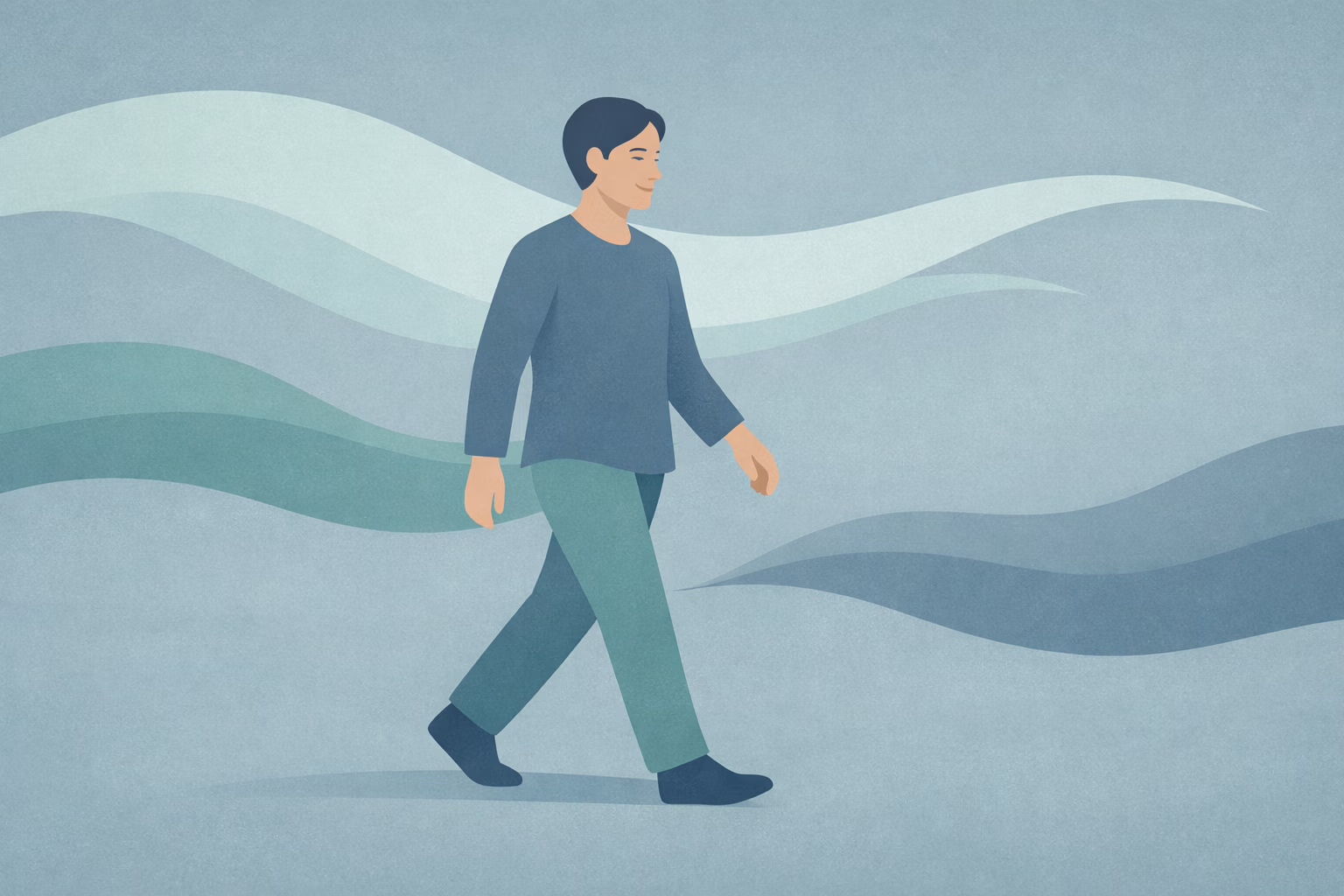
In short: Gradually Reducing Emotional Speed Some stress doesn’t feel like “a lot.” It feels like fast . A quick jump from okay to overwhelmed. A mind that accelerates before you can track what happened.
Some stress doesn’t feel like “a lot.” It feels like fast. A quick jump from okay to overwhelmed. A mind that accelerates before you can track what happened. A body that seems to shift into urgency as if it’s the only available gear.
Stress downshifting is a way to name a biological reality: nervous systems can change speed gradually, and that gradual change matters. Not because you should be calmer, but because speed itself increases load—and load changes what your system can process, complete, and settle.
What if the problem isn’t that you’re “too sensitive,” but that your system rarely gets an in-between?
Many people recognize a particular pattern: there’s no gentle ramp-up. The day can be fine, even pleasant, and then suddenly there’s tightness, heat, irritability, urgency, or a need to escape. It can feel confusing because it doesn’t always match the size of the situation.
This “quick escalation” isn’t a character flaw; it’s often what a nervous system does when it’s operating with limited spare capacity. When baseline load is already high, small demands can push the system over a threshold, and it switches states quickly. Stress biology is designed for fast transitions when conditions might require action. [Ref-1]
In that state, the experience of choice can narrow. Not because you’re failing, but because your system is prioritizing speed over nuance.
The autonomic nervous system continuously adjusts heart rate, breathing, muscle tone, digestion, and attention based on perceived demand. Under stress, these adjustments can accelerate rapidly—an efficient design for mobilizing energy. [Ref-2]
Downshifting, in this context, isn’t a mindset. It’s a change in the body’s pacing—breath, movement, and attention slowing enough that the system receives a different kind of information: not “push harder,” but “the environment is not requiring maximum mobilization right now.” The nervous system uses these internal cues as part of how it updates state.
Importantly, gradual slowing tends to be more believable to the body than abrupt calmness. The system often needs a bridge, not a command.
Rapid escalation is not random. It’s a conserved survival feature. When a threat is possible, speed keeps you alive: quick energy release, quick scanning, quick readiness. In ancestral conditions, “false alarms” were less costly than missing something dangerous.
But the same machinery that helps you mobilize can also rack up wear and tear when it’s activated too often or for too long. Stress biology is adaptive in bursts; it becomes destabilizing when mobilization is chronic and recovery is incomplete. [Ref-3]
So the question often isn’t “Why am I like this?” The question becomes: “What keeps my system from reaching a clear stand-down?”
Even when it’s unpleasant, speed can function as protection. High intensity creates readiness: it narrows focus, increases muscle tension, and can produce a decisive, driven feeling. In uncertain conditions, that readiness can prevent hesitation.
Over time, the body can begin to treat intensity as a kind of safety strategy: if you’re already braced, you can’t be caught off guard as easily. This isn’t about “choosing anxiety.” It’s about a system that learned that being revved up reduces risk.
Chronic stress can keep the autonomic system biased toward activation, making it harder to access slower rhythms even when nothing is urgently wrong. [Ref-4]
Modern life quietly teaches that fast reactions are responsible reactions: reply quickly, decide quickly, keep up. But the nervous system doesn’t only measure tasks; it measures context—uncertainty, social evaluation, and the absence of clear endings.
When speed becomes the default, it often overshoots what the moment actually demands. The body prepares for impact when the situation requires presence. This is one reason stress can feel disproportionate: the mobilization level doesn’t match the true threat level.
Safety isn’t only the absence of danger; it’s the presence of cues that allow the system to de-escalate. When safety cues are weak or inconsistent, the body may stay “ready” as the safest available option. [Ref-5]
It’s common to assume that “calming down” means shutting something off. But suppression often keeps the body working hard in the background—tightening, bracing, holding breath, forcing stillness.
Downshifting is different in structure. It’s not a negation of your response; it’s a reduction in rate—less acceleration in the body’s signals, less sprinting in attention, less urgency in internal timing. That gradual change can interrupt avoidance loops because it restores the ability to stay present long enough for experiences to reach completion.
Body–brain pathways continuously exchange information about internal state (interoception). When the internal signals slow, the system has a better chance of updating from “immediate action required” to “this can be metabolized.” [Ref-6]
“Emotional speed” isn’t only about feeling distressed. It’s about the tempo of your whole system—how quickly thoughts, sensations, impulses, and interpretations cascade.
Common signs of a high-speed state can include:
These patterns are not identities. They’re regulatory responses—ways a system tries to regain coherence when it senses overload. [Ref-7]
High-speed states use energy. They also amplify signal. When you’re revved up, sensations can feel louder, interruptions feel sharper, and small uncertainties can feel bigger than they are. That isn’t you being dramatic; it’s the predictable output of an activated system.
Over time, sustained arousal can lead to exhaustion that doesn’t fully repair, because the body isn’t receiving enough “done” signals—clear endpoints that allow full down-regulation. This can look like being tired but wired, numb but reactive, or functional but brittle.
Practices that increase stress recovery capacity are often associated with improved health outcomes, in part because they support the return from activation states. [Ref-8]
When the system can’t find an ending, it keeps searching by speeding up.
Nervous systems are predictive. They learn from repetition. If escalation happens frequently—especially in ambiguous or socially evaluative contexts—the body starts preparing earlier. The threshold for “go time” lowers. What used to be a peak response becomes a baseline tendency.
This is not a moral problem. It’s conditioning plus physiology: the system is trying to reduce surprise and increase readiness. The cost is that slower states can start to feel unfamiliar, or even slightly unsafe, simply because they’re not well-practiced.
Research on breathing and autonomic regulation often uses markers like heart rate variability to describe how the body shifts between activation and recovery states. These markers tend to improve when physiological pacing becomes more flexible. [Ref-9]
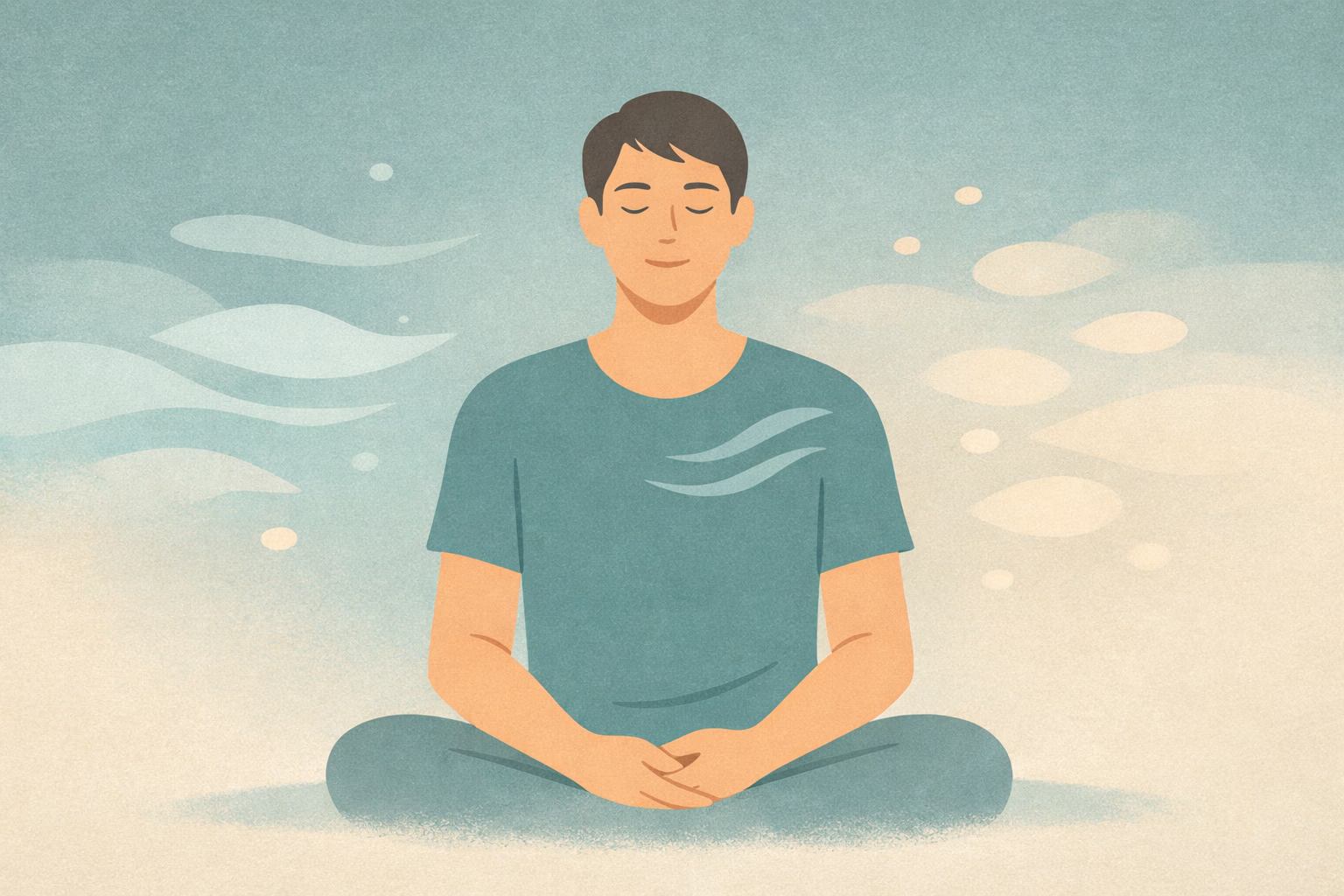
It helps to reframe “slowing down” as recalibration. When breath, movement, and attention gradually reduce speed, the autonomic system gets a coherent message: the moment is survivable without maximum output. That message isn’t cognitive; it’s physiological.
This matters for meaning, too. When you’re moving at high speed, life becomes a sequence of urgent fragments—things to handle, avoid, or endure. When pace decreases, experiences have enough time to complete. Completion is where coherence forms: the sense that something has a beginning, middle, and end, and that it belongs in your life narrative rather than hovering as unfinished pressure.
Notably, many pathways known to reduce stress load in the body involve graded, rhythmic activity and recovery rather than abrupt stops. [Ref-10]
Humans regulate in relationship. The tone, timing, and steadiness of other people can provide “safety cues” that the nervous system trusts more than internal self-talk—especially when you’re already activated.
A calm presence can function like an external metronome: slower voice cadence, fewer abrupt shifts, patient pauses. This isn’t about someone rescuing you. It’s about biology: social environments help set autonomic rhythm, particularly under stress. [Ref-11]
What changes when you’re around someone who isn’t in a hurry with you?
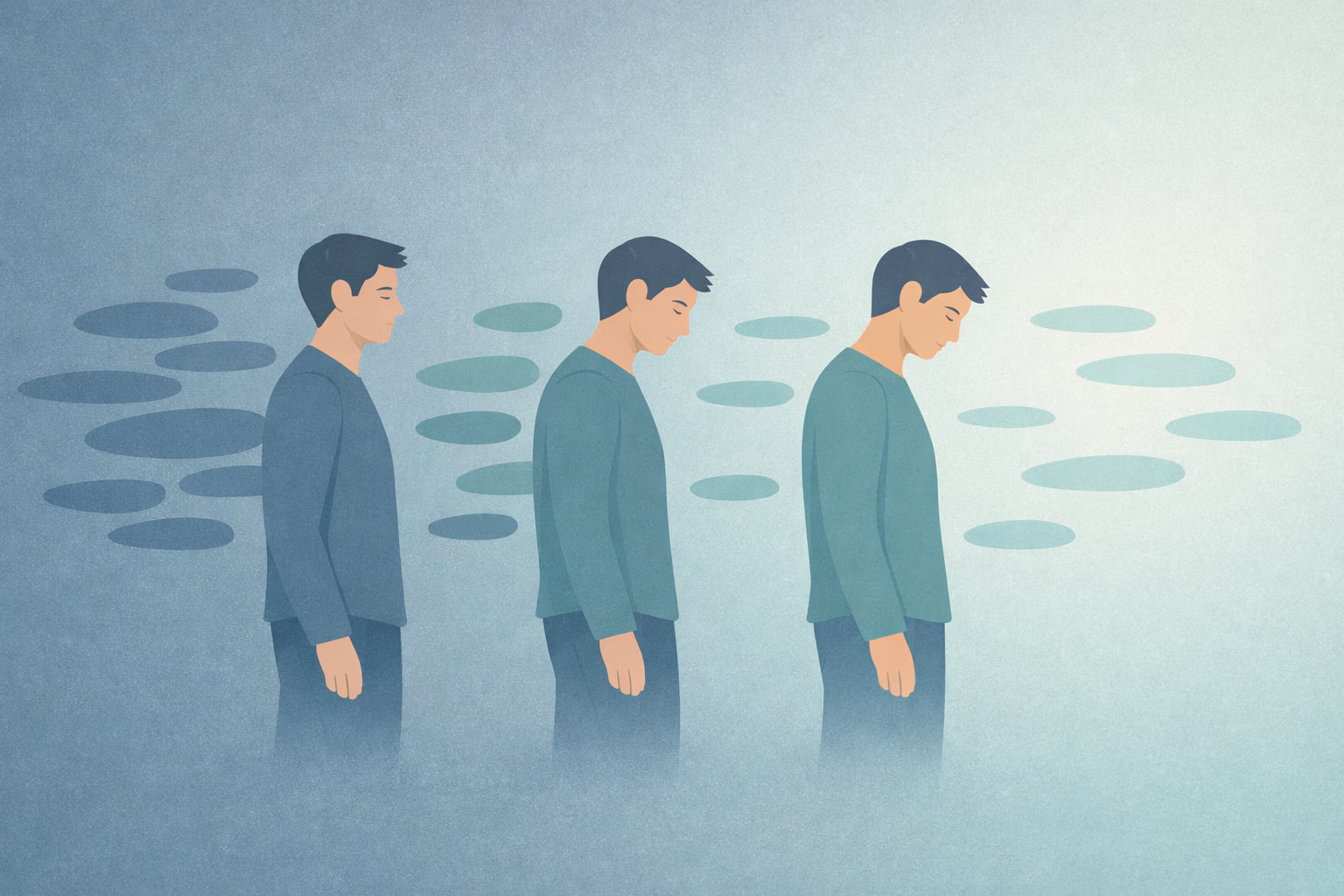
As emotional speed reduces over time, many people notice something subtle but profound: intermediate states reappear. Not just “fine” or “flooded,” but mildly concerned, gently energized, pleasantly tired, quietly focused. These mid-range experiences are signs of increased capacity for signal return—your system can move away from extremes and come back again.
This is also where tolerance grows, not as grit, but as steadiness. When the body is less overloaded, it can stay with ordinary friction long enough for it to resolve. Social buffering research suggests that supportive connection can measurably reduce stress responses, making regulation more available. [Ref-12]
Stability isn’t the absence of activation; it’s the ability to come back.
High-speed stress collapses options. It pushes you toward the fastest available behaviors: react, control, escape, numb, scroll, fix. These aren’t personal failures; they’re what a system does when it can’t access enough time and space to evaluate.
When speed decreases, space reappears between signal and response. That space is where reflection becomes possible—not as “thinking harder,” but as having enough physiological room to notice what matters. In that room, values can re-enter the picture: what you care about, what you’re willing to carry, what you want to be true of you.
Safety signals are known to shape threat responding by updating the nervous system’s predictions about what will happen next. When the system detects safety, it can allocate resources back to learning, connection, and choice. [Ref-13]
Stress downshifting can be understood as choosing a more sustainable internal tempo—not by pushing yourself into calm, but by allowing the nervous system to locate believable endpoints. When life contains more completion, it contains fewer dangling alarms.
This is one way meaning returns: not as a new idea, but as a lived sense that experiences can finish and be filed away. When your system isn’t constantly braced for the next interruption, presence becomes less effortful, and coherence becomes more likely.
In many modern environments, speed is rewarded while recovery is invisible. Downshifting quietly restores what pressure tends to erase: the feeling that your life is inhabitable from the inside. [Ref-14]
There’s a particular relief that arrives when emotional speed slows—not a thrill, not a breakthrough, but a settling. The body stops scanning quite so aggressively. The mind stops needing to sprint to stay ahead. Moments start to feel like they have edges again.
That shift is not about becoming a different person. It’s about your nervous system getting enough closure to stand down, and enough steadiness to let meaning collect naturally—through completion, through continuity, through a life that moves at a human rate. [Ref-15]
From theory to practice — meaning forms when insight meets action.
Because your baseline load is already high, so small demands push the system over a threshold and it switches states quickly. That 'no gentle ramp-up' pattern isn't a character flaw — it's what a nervous system does when it's operating with limited spare capacity. Stress biology is designed for fast transitions when conditions might require action, and under chronic load the autonomic system stays biased toward activation. Intermediate states — mildly concerned, gently energized, pleasantly tired — disappear because the body doesn't have enough headroom to occupy them. The fix isn't less feeling. It's enough capacity for the in-between to come back online.
Suppression keeps the body working hard in the background — tightening, bracing, holding breath, forcing stillness. Downshifting is a reduction in rate, not a negation of response: less acceleration in the body's signals, less sprinting in attention, less urgency in internal timing. That gradual change interrupts Avoidance Loops because it restores the ability to stay present long enough for experiences to reach completion. Body-brain pathways exchange information about internal state continuously; when those signals slow, the system has a better chance of updating from 'immediate action required' to 'this can be metabolized.' The body believes gradual change more than abrupt commands.
Because speed has been protective, and the body remembers. High intensity creates readiness — narrowed focus, increased muscle tone, a decisive driven feeling. In uncertain conditions, that readiness prevents hesitation. Over time, the body can treat intensity itself as a safety strategy: if you're already braced, you can't be caught off guard. Modern life rewards that bias by teaching that fast reactions are responsible reactions. But the system doesn't only measure tasks; it measures context — uncertainty, social evaluation, the absence of clear endings. When safety cues are weak or inconsistent, the body stays revved up as the safest available option.
Stability that isn't the absence of activation — it's the ability to come back. As emotional speed reduces, mid-range experiences reappear: pleasantly tired, quietly focused, mildly concerned without spiraling. Tolerance grows not as grit but as steadiness; the body can stay with ordinary friction long enough for it to resolve. Other people's pacing helps measurably — calm presence functions like an external metronome with slower cadence and patient pauses. The window of tolerance widens. When pace softens, coherence has room to form: moments stop being urgent fragments and start having edges again, which is what lets meaning collect at a human rate.
From Science to Art.
Understanding explains what is happening. Art allows you to feel it—without fixing, judging, or naming. Pause here. Let the images work quietly. Sometimes meaning settles before words do.
One Quiet Window, one insight, one reflection — every Sunday