
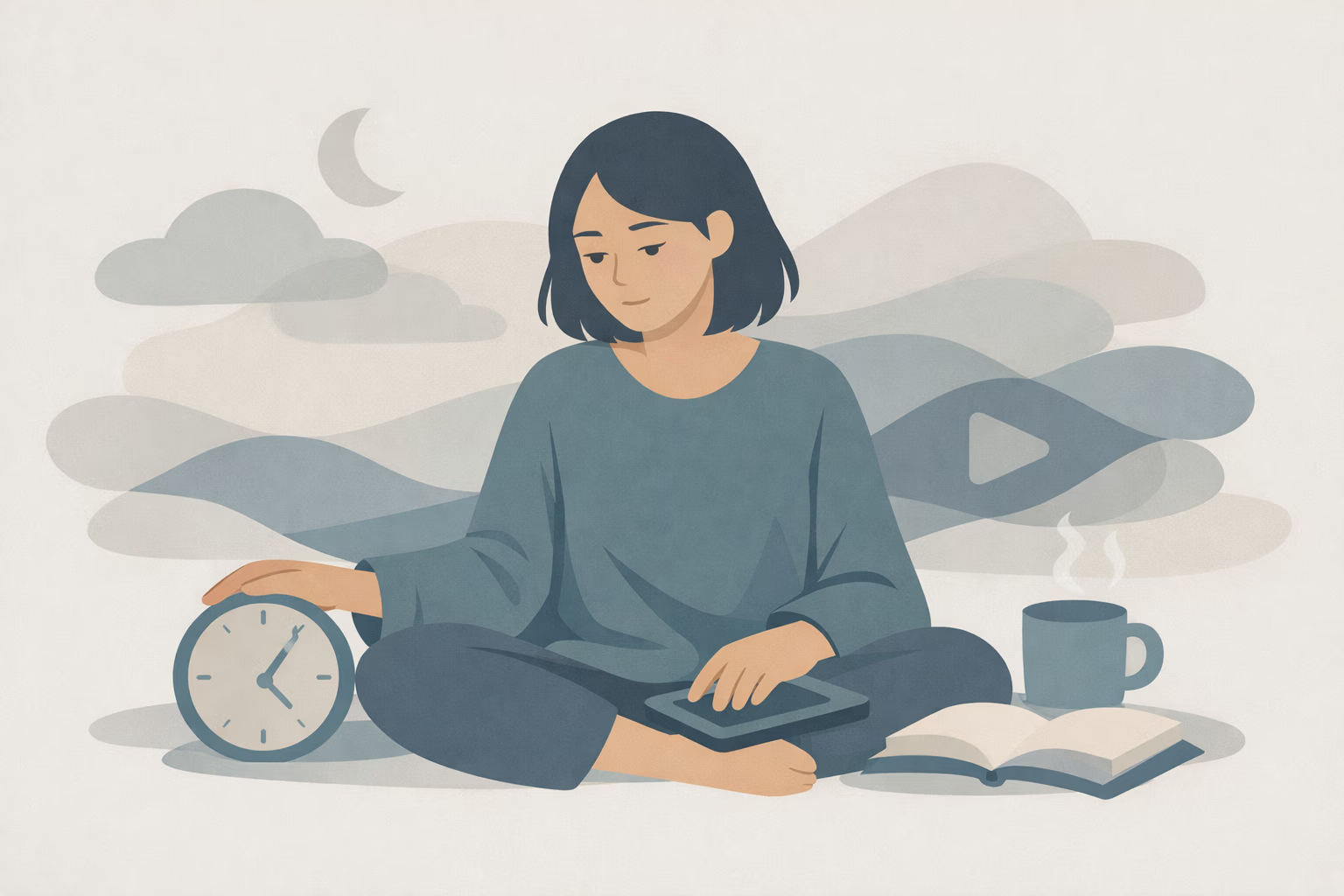
Revenge Bedtime Procrastination: Why You Delay Rest
In short: For many people, “rest” sounds like a luxury: something you earn after everything is finished. But modern life rarely delivers a clean finish line. Responsibilities keep arriving, and the mind keeps running—even when the body is technically off the clock.
For many people, “rest” sounds like a luxury: something you earn after everything is finished. But modern life rarely delivers a clean finish line. Responsibilities keep arriving, and the mind keeps running—even when the body is technically off the clock.
What if restoration isn’t the opposite of activity, but a quality you can weave into it?
Active rest is a way of describing recovery that happens during life, not only away from it. It’s not about squeezing more out of yourself. It’s about how the nervous system gets the “stand down” signals it needs—briefly, repeatedly—so strain doesn’t quietly accumulate into fog, irritability, or that brittle kind of endurance.
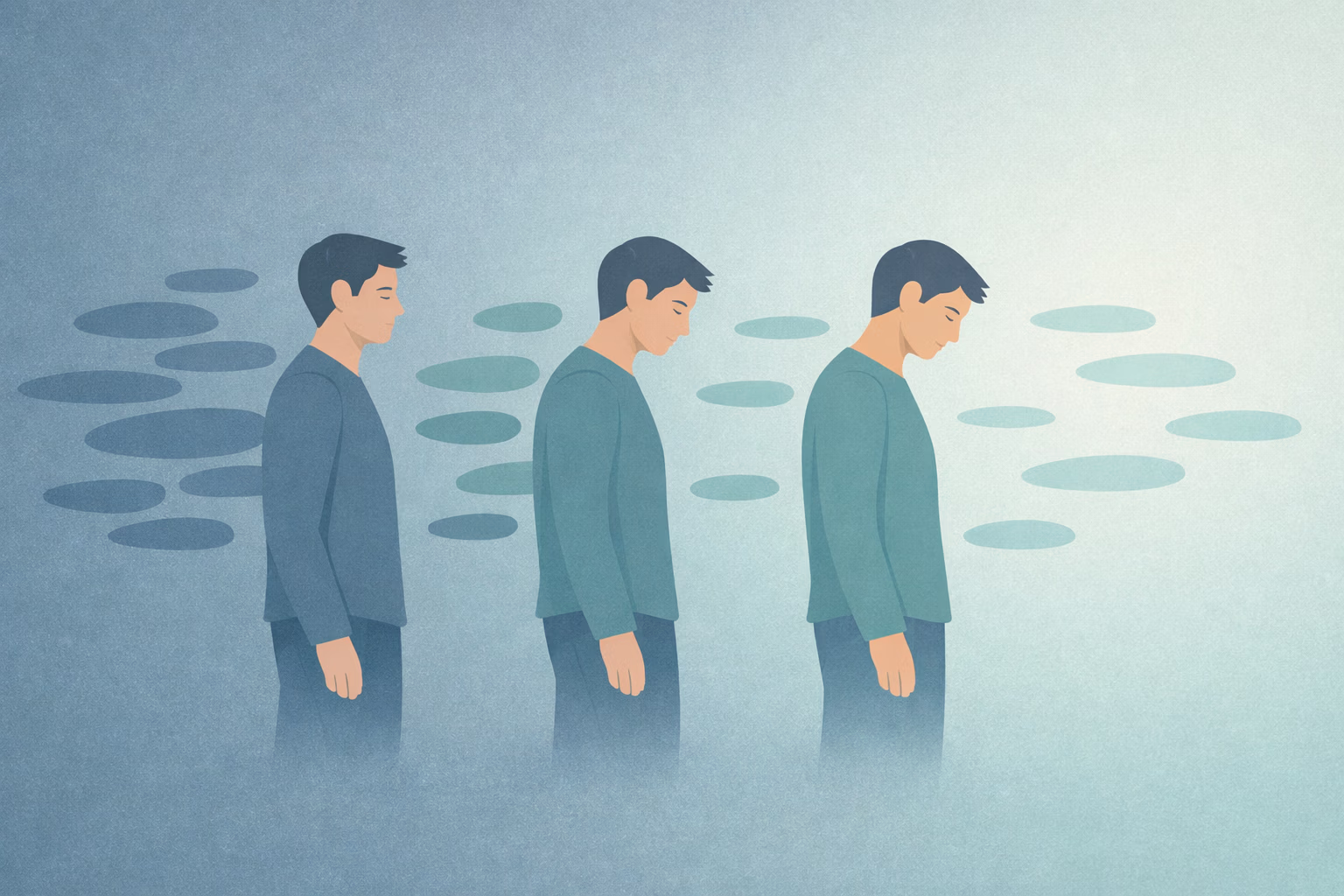
Many people aren’t avoiding rest. They’re navigating a mismatch: their system is carrying high load while the day still demands output. When there’s no spacious break, the body often shifts into a “push-through” strategy—staying mobilized because tasks, people, and consequences keep coming.
Over time, that constant mobilization isn’t just tiring; it’s costly. It’s the nervous system paying ongoing “wear and tear” to keep you functional under pressure, even when replenishment hasn’t had a chance to land. [Ref-1]
When someone says, “I can’t stop,” it’s often not a personality trait. It’s a structural reality: unfinished responsibilities, continuous inputs, and too few moments that register as complete.
Recovery isn’t only a long break. The nervous system also restores through brief signals of safety and predictability—especially when those signals arrive in a steady rhythm. In practical terms, regulation can happen in the middle of doing something when the body receives a consistent cue that the situation is not escalating.
This is one reason rhythmic, low-complexity actions (walking, tidying, simple repetitive motions) can feel surprisingly settling. They can support parasympathetic repair processes without requiring a full disengagement from life. [Ref-2]
Active rest, in this sense, isn’t “resting harder.” It’s giving the system small, trustworthy closures while momentum continues.
For most of human history, daily effort wasn’t a single uninterrupted sprint. It was a pattern: move, orient, scan, carry, pause, eat, walk, connect, continue. The body learned regulation inside activity, not only after it.
Modern stress often breaks that pattern. Not because we move too much, but because our movement is layered with cognitive churn: switching contexts, tracking invisible demands, anticipating messages, monitoring performance. That kind of persistent vigilance keeps the brain’s stress circuitry more easily activated. [Ref-3]
Active rest is a way of remembering an older rhythm: not withdrawal from life, but intermittent completion inside it.
When load runs continuously, the system doesn’t get clear “done” signals. Micro-rest moments—tiny pockets of settling during ordinary tasks—can interrupt escalation before it becomes a full crash. This isn’t about insight or mindset. It’s about physiological downshifts that reduce the background cost of staying online. [Ref-4]
What changes is often subtle: less internal noise, fewer snap-reactions, a little more room between stimulus and response. Not because you forced calm, but because strain stopped accumulating at the same rate.
“I didn’t become a new person. I just stopped running my engine at redline all day.”
Many people learned a narrow definition of rest: lying down, doing nothing, shutting the world out. That kind of rest can be valuable, but it’s not the only route to recovery. The body doesn’t restore based on whether you’re moving; it restores based on whether threat, urgency, and evaluation have eased.
In high-burn environments, the belief that recovery requires total stoppage can backfire. If you can’t fully stop, you might conclude you can’t recover at all—and then load quietly intensifies until burnout-like depletion shows up. [Ref-5]
Active rest broadens the map: restoration can occur in motion when the motion carries regulation rather than pressure.
When people can’t pause, they often adapt by narrowing: less presence, less contact, less internal signal. This isn’t a moral failing, and it isn’t always “avoidance” in the usual sense. It can be a smart way to keep functioning when life won’t slow down.
Active rest matters because it supports a different adaptation: continued participation without needing to flatten experience. It helps the system keep enough capacity to register small completions—finishing a task, closing a conversation, transitioning cleanly—so the day isn’t one long unfinished loop. [Ref-6]
In meaning terms, this is less about motivation and more about coherence: life feels more livable when moments resolve instead of stacking.
When regulation isn’t arriving along the way, the body often communicates through broad, unspecific signals. They’re easy to misread as “I’m not doing life right,” when they’re often “I’m doing life without enough closure.”
Even brief bouts of movement can change stress physiology, but the context matters: whether the movement reduces load or adds another layer of demand. [Ref-7]
Without embedded recovery, stress doesn’t simply “stay the same.” It tends to accumulate. The system begins to treat normal life as if it requires constant defense—more bracing, more scanning, more urgency.
Over time, people can drift toward two protective strategies: chronic activation (wired, tense, always behind) or shutdown-like disconnection (flat, distant, hard to initiate). These are not identities; they are regulatory states shaped by safety cues and load. [Ref-8]
And because neither state offers a satisfying “done,” meaning can start to thin out: days feel repetitive, effort feels disconnected from values, and accomplishments don’t register as completion.
A nervous system becomes skilled at what it practices. If the day repeatedly demands fast switching, constant responsiveness, and continuous evaluation, the body learns to stay mobilized by default. Eventually, calm can feel unfamiliar—not because something is wrong with you, but because the set point has shifted.
In chronic activation, attention narrows. Sensations get interpreted as urgency. Small problems feel larger because the body is already working hard. Practices that emphasize present-moment attention and body-based regulation are often studied precisely because they can influence these patterns of arousal and recovery. [Ref-9]
Active rest fits here as an environmental counter-signal: small, repeated reminders that not every moment requires full mobilization.
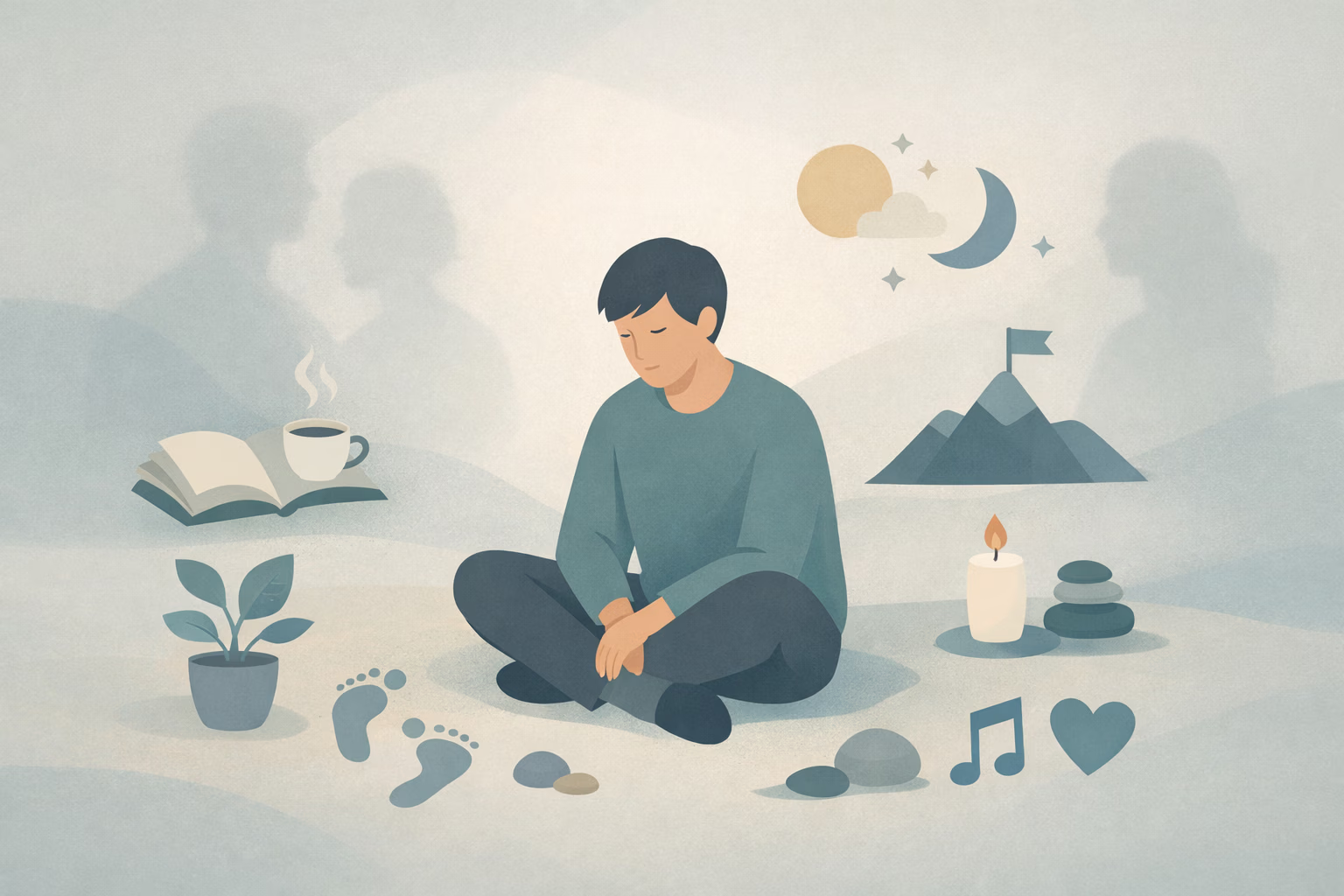
Active rest is less a technique and more a category of cues. Certain inputs tend to communicate “manageable” to the nervous system while you remain engaged: steadier breath, less bracing in posture, a pace that matches reality, and sensory contact with the immediate environment.
These cues don’t work because you “understood something.” They work when the body actually receives a new pattern: a moment that completes, a transition that closes, a rhythm that reduces load. Research on mindfulness-based approaches often highlights elements like attention, breathing, and body awareness as pathways that can shift stress-related physiology. [Ref-10]
What changes when regulation is woven into the day?
Not constant calm—more like fewer internal alarms. More moments that feel concluded rather than left open.
Many people can’t “rest more” because the issue isn’t private time management; it’s shared timing. Homes, workplaces, and relationships create expectation climates: how fast we respond, how available we are, how much urgency is considered normal.
When groups normalize realistic pacing and small pauses, individual nervous systems get more chances to settle. Even the way people breathe and speak around one another can influence autonomic state, which is part of why breathing and rhythm show up in regulation research. [Ref-11]
In other words, active rest isn’t only personal. It’s also social: recovery becomes possible when the environment stops insisting that everything is an emergency.
When recovery begins to appear inside the day, people often report a specific kind of shift: not euphoria, not a dramatic breakthrough—just increased capacity for signals to return. Hunger cues become clearer. Fatigue becomes more accurate. Focus becomes less brittle.
You may notice:
Social buffering matters here too: supportive contact can reduce stress load and make regulation more available, which can amplify the effects of small recovery moments. [Ref-12]
Endurance mode is when life becomes something you survive through. Rhythm is when life becomes something you can inhabit. The difference isn’t willpower; it’s whether the nervous system gets enough closure to stop treating every hour as unfinished business.
As rhythm returns, meaning often thickens. Actions connect more easily to values. Identity feels less like a performance and more like a lived pattern: “This is how I move through my day.” And because humans are relational, rhythm is strengthened by belonging and shared stability—not isolation. [Ref-13]
Active rest supports this shift by helping the system register completion while participation continues.
It can be a relief to name the real issue: many people aren’t failing to cope—they’re coping in environments that don’t provide enough closure. Active rest is a way of recognizing that restoration isn’t only a destination; it’s also a signal the nervous system needs along the route.
When regulation is woven into ordinary motion, agency tends to feel less like forcing and more like steering. You’re still meeting life, but with fewer invisible costs. That’s not self-indulgence; it’s how participation stays sustainable. [Ref-14]
If you’ve been living in push-through mode, it makes sense that stopping feels complicated. Your system likely learned to stay online because it had to. There’s dignity in that adaptation.
And there’s also dignity in recovery that doesn’t demand disappearing. Sometimes the most stabilizing shift isn’t doing less—it’s allowing life to include more moments that actually land as complete. A kinder inner stance supports that process, not as a slogan, but as a reduction in internal threat. [Ref-15]
From theory to practice — meaning forms when insight meets action.
Active rest is recovery that happens during life rather than away from it. Traditional rest assumes a clean finish line — lie down, shut the world out, recover later. But the nervous system doesn't restore based on whether you're moving; it restores when threat, urgency, and evaluation ease. Active rest supplies small, repeated Done Signals inside ordinary motion: a transition that closes, a task that completes, a pace that matches reality. Rhythmic, low-complexity actions like walking or tidying can deliver these cues without requiring full disengagement, which is why they can feel surprisingly settling even mid-day.
Sleep restores some systems, but it can't compensate for a day spent in continuous mobilization. If your nervous system stays in push-through mode for hours — switching contexts, anticipating messages, monitoring performance — the cost accumulates as background wear and tear. Without small completion moments along the way, the body treats normal life as if it requires constant defense. The fatigue you feel isn't really about sleep hours; it's about how few moments registered as concluded. Active rest weaves closure into the day so strain stops compounding at the same rate.
This is the structural mismatch most people are navigating, not a personal failing. The article reframes it: you don't need a clean break to recover — you need cues that tell your body the situation is not escalating. Steadier breath, less bracing, sensory contact with the immediate environment, a transition that closes cleanly. These micro-rest moments interrupt escalation before it becomes a crash. Active rest isn't about withdrawing; it's about allowing more moments to land as complete inside a continuing day, which is closer to how humans evolved to regulate.
More often, it's a sign you're operating without recovery embedded in the day. Common signals include mental fog, slower word-finding, irritability, energy that doesn't match your sleep, and going through motions without landing in them. These aren't character flaws — they're the body communicating that closures aren't arriving. Over time, chronic activation can shift the nervous system's set point, so calm itself starts to feel unfamiliar. Active rest works as a counter-signal: small, repeated reminders that not every moment requires full mobilization, helping the system relearn that rest can happen inside life.
From Science to Art.
Understanding explains what is happening. Art allows you to feel it—without fixing, judging, or naming. Pause here. Let the images work quietly. Sometimes meaning settles before words do.
One Quiet Window, one insight, one reflection — every Sunday