Avoidance Loops: Why You Delay What You Care About
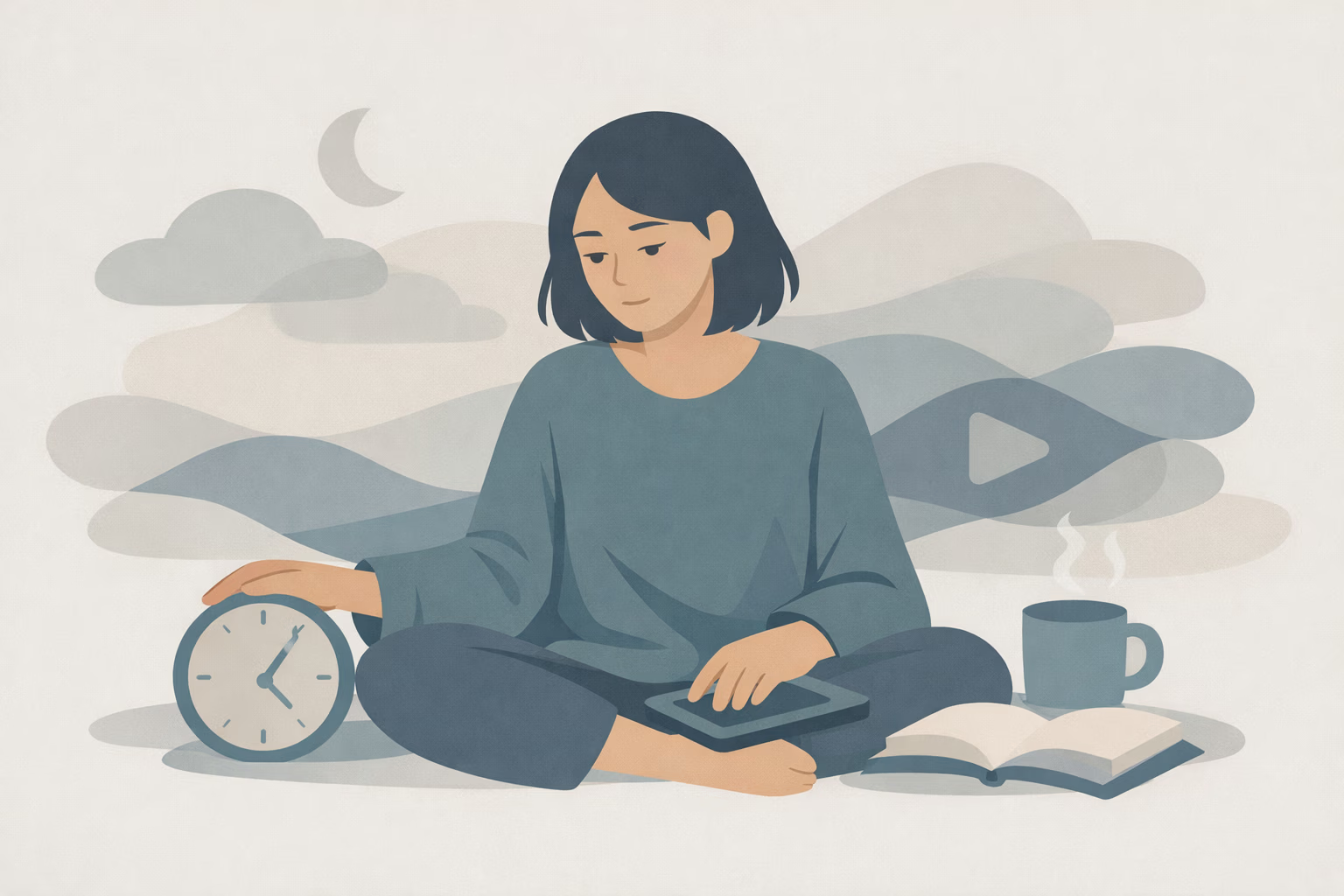
In short: Revenge bedtime procrastination is the pattern of staying up later than you intended—often while feeling exhausted—because nighttime is the first slice of time that feels self-directed. It can look like “just one more episode,” “one more scroll,” or a sudden burst of interest in anything that isn’t tomorrow.
Revenge bedtime procrastination is the pattern of staying up later than you intended—often while feeling exhausted—because nighttime is the first slice of time that feels self-directed. It can look like “just one more episode,” “one more scroll,” or a sudden burst of interest in anything that isn’t tomorrow.
What if the late-night delay isn’t a discipline problem, but a nervous system and meaning problem?
In the Meaning Density Model™ frame, this pattern makes sense: when the day is packed with demands, your system may not receive enough “done” signals—enough closure, choice, and self-authorship—to settle. Night becomes a small, improvised place to complete what didn’t get completed: autonomy, identity, and relief.
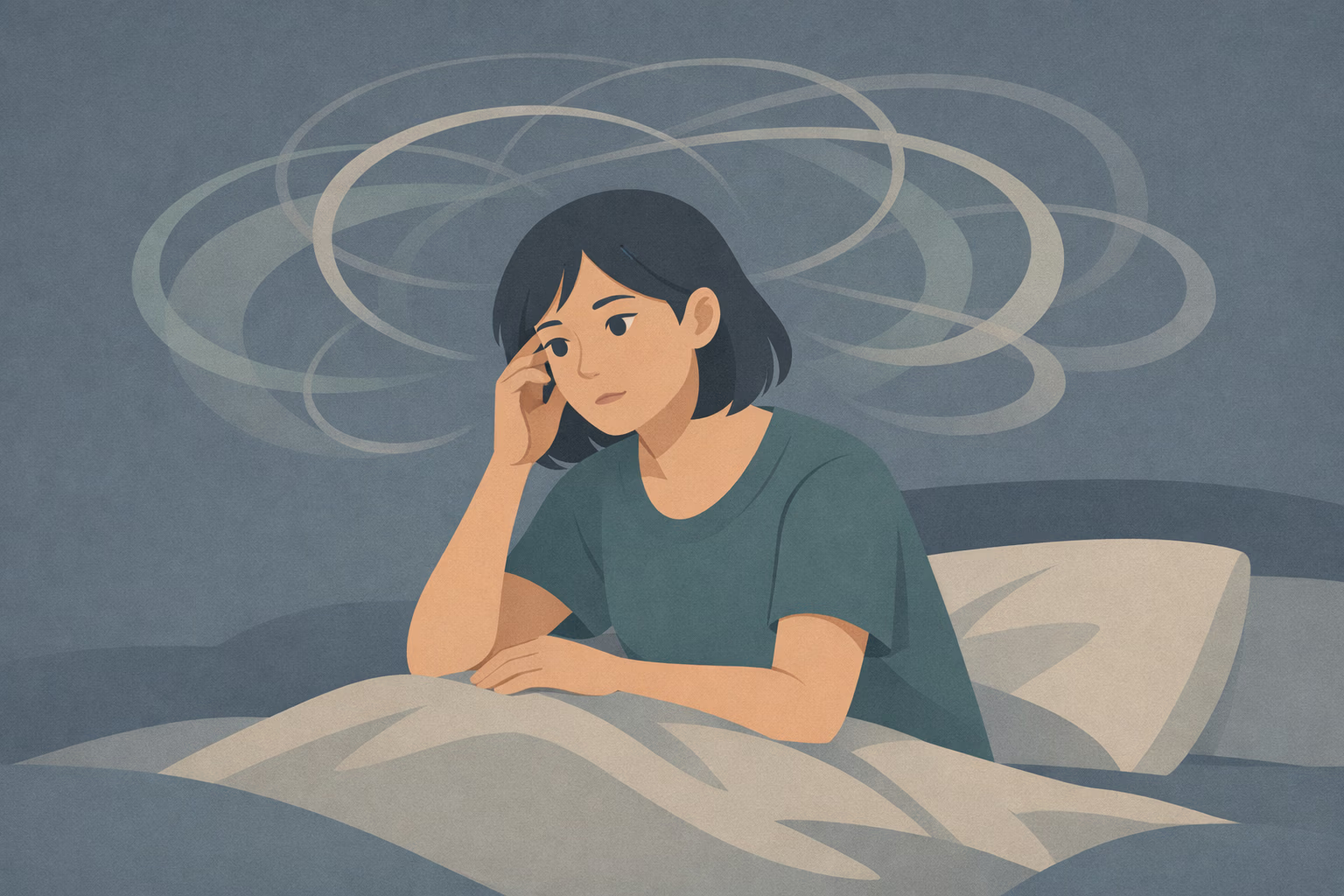
Many people describe the same sequence: fatigue is present, the body is ready, and yet bedtime feels oddly charged—like it would confirm that the day is over and you didn’t get a turn. The result can be a strange mix of comfort and regret: a little freedom now, a heavier morning later. [Ref-1]
This is why the experience can carry guilt without changing. The nervous system isn’t making a moral choice; it’s negotiating. When daytime hours feel “spoken for,” sleep can start to register as another thing taken from you—even though it’s also what restores you.
Sometimes it’s not that you can’t sleep. It’s that sleep feels like agreeing that today was all obligation.
Sleep pressure builds across the day, and the body sends clear cues: heaviness, yawning, slower thinking. But the executive system can temporarily override those cues by recruiting alerting inputs—light, novelty, social information, emotional content, and open-ended choice. [Ref-2]
Screens are especially effective at keeping wakefulness online because they offer quick switching and intermittent rewards. Each new post, clip, message, or tab acts like a small “not done yet” signal—keeping attention engaged and delaying the physiological stand-down that makes sleep easy.
Why is it easier to stop when you’re not on a screen?
Because many digital environments are designed to prevent natural endpoints. Without clear completion, the brain keeps scanning for the next unit of relevance, and bedtime becomes less of a transition and more of a tug-of-war.
Revenge bedtime procrastination often shows up after days with high constraint: schedules, caretaking, constant responsiveness, tight performance expectations, or work that requires sustained self-monitoring. In those conditions, choice becomes scarce—especially choice that feels personal rather than “approved.” [Ref-3]
Under prolonged constraint, the executive system doesn’t only manage tasks; it also tracks self-direction. If there’s little room to author your own sequence of events, the system can remain on alert, waiting for a time when “my decision” is finally possible.
This is less about wanting to be awake and more about wanting the day to contain a recognizable signature of you—something that lands as identity, not just compliance.
At night, demands often drop. Messages slow. Requests pause. The environment changes in a way the nervous system can interpret as safer and less evaluative. In that window, staying up late can feel like reclaiming autonomy: you choose what happens next, even if it’s small. [Ref-4]
That “reclaimed” feeling is not imaginary. It’s a genuine state shift: more perceived control, less external pressure, and a sense of private territory. The problem is that it usually comes through activities that keep arousal and attention engaged, which postpones the biological conditions that allow sleep to arrive naturally.
The next morning, the bill shows up quietly: less patience, slower thinking, more reactivity, and fewer internal resources for choice. The day can feel even more controlled, not because you did anything wrong, but because sleep loss reduces the capacity that makes agency possible. [Ref-5]
So the loop can deepen: a constrained day leads to a late-night autonomy grab; the late night leads to a lower-capacity day; the lower-capacity day increases the craving for autonomy at night. In that cycle, “freedom” is purchased with the very fuel that allows freedom to be expressed during daylight.
In an avoidance-loop frame, the pattern isn’t driven by a character flaw. It’s a structural workaround: the system simulates autonomy through behaviors that bypass resistance in the short term, while muting or postponing consequences until later. That delay is part of why it works—temporarily. [Ref-6]
Notice the structure: nighttime activities offer immediate relief and self-direction, while the cost arrives when external demands return. The brain learns, “This is where I get to be me,” even if the method steadily reduces overall stability.
Importantly, insight alone doesn’t dissolve this. Many people understand the loop clearly and still repeat it, because understanding is not the same as completion. Integration happens when the body starts receiving enough closure and safety cues that it can stand down without needing rebellion.
This pattern often looks consistent across households and personalities because the environment offers the same tools: endless content, low-effort stimulation, and no natural finish line. [Ref-7]
These behaviors aren’t random. They are reliable ways to generate a sense of choice quickly, especially when the day contained more output than completion.
Sleep isn’t only rest; it’s a core maintenance window for cognitive flexibility, affective stability, and behavioral control. When sleep is shortened or fragmented, people tend to experience more irritability, more impulsive choices, and less capacity to evaluate trade-offs in the moment. [Ref-8]
That matters here because revenge bedtime procrastination is already a trade-off problem: immediate autonomy versus next-day agency. With less sleep, the system has fewer resources to hold that tension. As a result, the late-night pull can feel stronger, and daytime constraints can feel sharper.
Over time, the nervous system may treat evenings as the only predictable place to downshift—ironically by using stimulation that prevents downshifting from completing.
When sleep deprivation accumulates, daytime can become more reactive and less self-authored: more urgency, more dependency on external structure, more sensitivity to evaluation. In that state, autonomy doesn’t just feel nice—it feels necessary. [Ref-9]
This is one reason the pattern can persist even when life circumstances improve. The body remembers the night as a guaranteed pocket of control, while the day feels like a series of demands that arrive before you’re fully online.
Night becomes the only time that feels like it belongs to you, even if it leaves you with less of yourself the next day.
One helpful reframe is to treat autonomy as a biological and narrative requirement, not a reward you earn after being “good.” When autonomy is missing, the system stays oriented toward unfinished business: “When do I get to choose? When does my life feel like mine?” [Ref-10]
This is not the same as telling yourself a new story. Reframing can be clarifying, but integration only happens when the nervous system receives enough real-world completion: moments that land as choice, boundaries that hold, transitions that actually end, and evenings that contain a recognizable “done.”
What if the goal isn’t to force bedtime, but to restore the conditions where bedtime stops feeling like surrender?
Sleep timing is strongly influenced by cues: light exposure, social stimulation, emotional intensity, and whether the evening contains clear endpoints. When late hours are filled with active conversation, unresolved work threads, or high-novelty content, the system keeps scanning and responding rather than closing. [Ref-11]
In many lives, bedtime is also relational: partners, roommates, children, group chats, or global teams can unintentionally keep the nervous system in a semi-alert social mode. Shared routines and predictable boundaries can reduce ambiguity—less “Should I respond?” and more “This part of the day is complete.”
When the environment supports closure, sleepiness can return as a signal you can trust, rather than a demand you must resist.
As the loop loosens, people often notice a different kind of evening: fewer internal negotiations, less late-night urgency, and a more natural slope into sleep. Not because life is suddenly easy, but because the system is receiving enough completion that it doesn’t need rebellion to feel real. [Ref-12]
Coherence tends to show up as subtle “signal return”: you can sense tiredness earlier, decision-making feels less brittle, and the day holds more room for self-direction. Rest starts to register as supportive—an ally of autonomy—rather than a thief of personal time.
That settling is physiological and identity-level: the body begins to trust that you will have a life again tomorrow, not just obligations.
The deepest shift is not simply earlier sleep. It’s that autonomy becomes expressible without sabotage. When you’re better resourced, small daytime choices carry more weight: you can author your pace, you can end things, you can preserve pieces of yourself even in demanding seasons. [Ref-13]
In a meaning-density sense, rest supports a more integrated identity: not a person who must steal time, but a person whose life contains legitimate ownership. Night doesn’t need to be a protest when the day contains real signatures of self-direction and completion.
Autonomy that arrives through restoration feels different from autonomy that arrives through depletion.
Revenge bedtime procrastination often carries shame because it looks like “choosing the wrong thing.” But structurally, it’s a coherent response to a day that didn’t provide enough closure or self-authorship. Naming it this way can return dignity: the system is not broken; it is trying to complete something important. [Ref-14]
When rest is framed as self-respect and agency—rather than a rule to obey—sleep can stop feeling like the end of your freedom. It can become the condition that makes freedom possible, not only at night, but across the whole day.
True control isn’t taken from sleep. It’s rebuilt by it—through steadier attention, more reliable regulation, and a body that can give “done” signals again. [Ref-15]
If you’ve been delaying rest, it doesn’t mean you don’t care about yourself. It can mean your life has been asking for more than it has allowed you to complete. And the desire to reclaim something of your own is worth taking seriously.
From theory to practice — meaning forms when insight meets action.
Because nighttime often becomes the first slice of time that feels self-directed. After a day packed with demands, schedules, and constant responsiveness, the system hasn't received enough Done Signals — enough closure, choice, and self-authorship — to settle. Sleep starts to register as another thing taken from you, even though it's also what restores you. The fatigue is real and the body is ready, but bedtime feels charged because going to sleep would confirm that the day was all obligation and you didn't get a turn. The nervous system isn't making a moral choice. It's negotiating for autonomy it didn't get during daylight.
It's structural, not moral. Nighttime activities offer immediate relief and self-direction while postponing the cost until external demands return. The brain learns: this is where I get to be me. Screens are especially effective because they prevent natural endpoints — each new clip, post, or auto-playing episode is a small not-done-yet signal that delays physiological stand-down. The loop deepens because sleep loss reduces capacity for choice the next day, which makes the day feel even more constrained, which intensifies the night-time autonomy grab. Insight alone doesn't dissolve it. Integration only happens when the body receives enough closure that it doesn't need rebellion to feel real.
Because at night demands genuinely drop — messages slow, requests pause, the environment becomes less evaluative. The Threat & Safety System reads that as a safer window, and staying up late delivers a real state shift: more perceived control, less external pressure, a sense of private territory. That reclaimed feeling isn't imaginary. The catch is that it's typically purchased through activities that keep arousal and attention engaged, so closure stays deferred. Autonomy gets felt as immediate choice while the conditions for sleep keep getting postponed. Rest becomes the cost of keeping the freedom signal online — a Pleasure Loop running over a regulation gap.
Evenings shift in a way that's subtle but significant: fewer internal negotiations, less late-night urgency, a more natural slope into sleep. Not because life suddenly got easy, but because the system is receiving enough completion across the day that it doesn't need rebellion at night to feel real. The deeper move is that autonomy becomes expressible during daylight — small daytime choices carry more weight, you can author pace, end things, preserve pieces of yourself even in demanding seasons. Rest stops being a thief of personal time and becomes the condition that makes Loop Sovereignty possible across the whole day, not just stolen at night.
From Science to Art.
Understanding explains what is happening. Art allows you to feel it—without fixing, judging, or naming. Pause here. Let the images work quietly. Sometimes meaning settles before words do.
One Quiet Window, one insight, one reflection — every Sunday