Dopamine, Screens & Sleeplessness: The Hidden Connection
In short: Why Your Mind Races at Night: The Overactive Brain Loop Nighttime racing thoughts can feel strangely unfair: your body is tired, but your mind behaves like it’s clocking in for a second shift. Conversations replay.
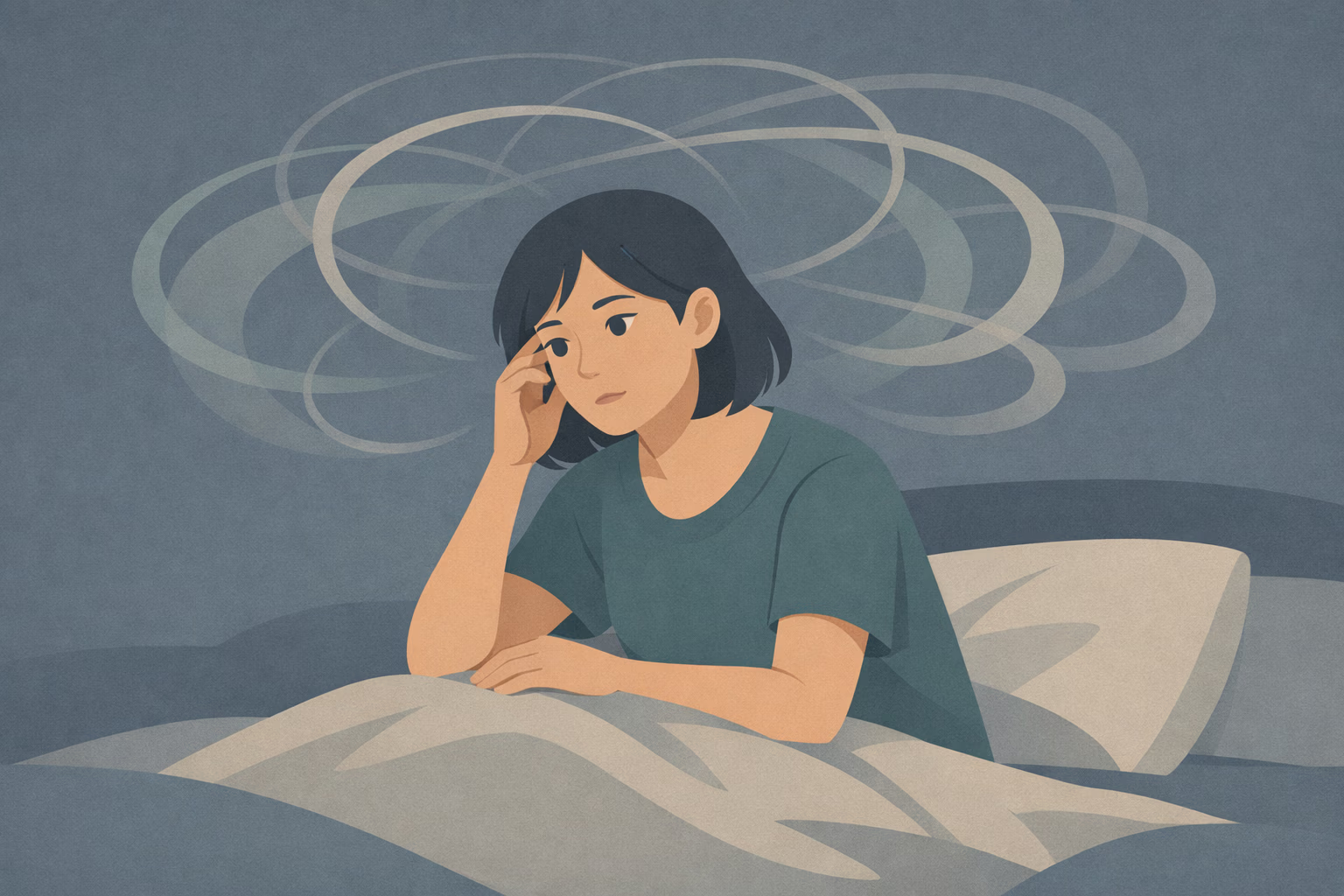
Nighttime racing thoughts can feel strangely unfair: your body is tired, but your mind behaves like it’s clocking in for a second shift. Conversations replay. Future scenarios line up. Small decisions suddenly feel urgent and unsolved.
What if the problem isn’t “you overthink,” but that your system is still waiting for closure?
In a low-stimulation environment—when screens are off, tasks are paused, and social demands drop—unfinished loops become easier to detect. The mind’s speed can look like anxiety, but often it’s a regulation strategy: scanning for what’s unresolved so the body doesn’t fully power down while something important is “still open.”
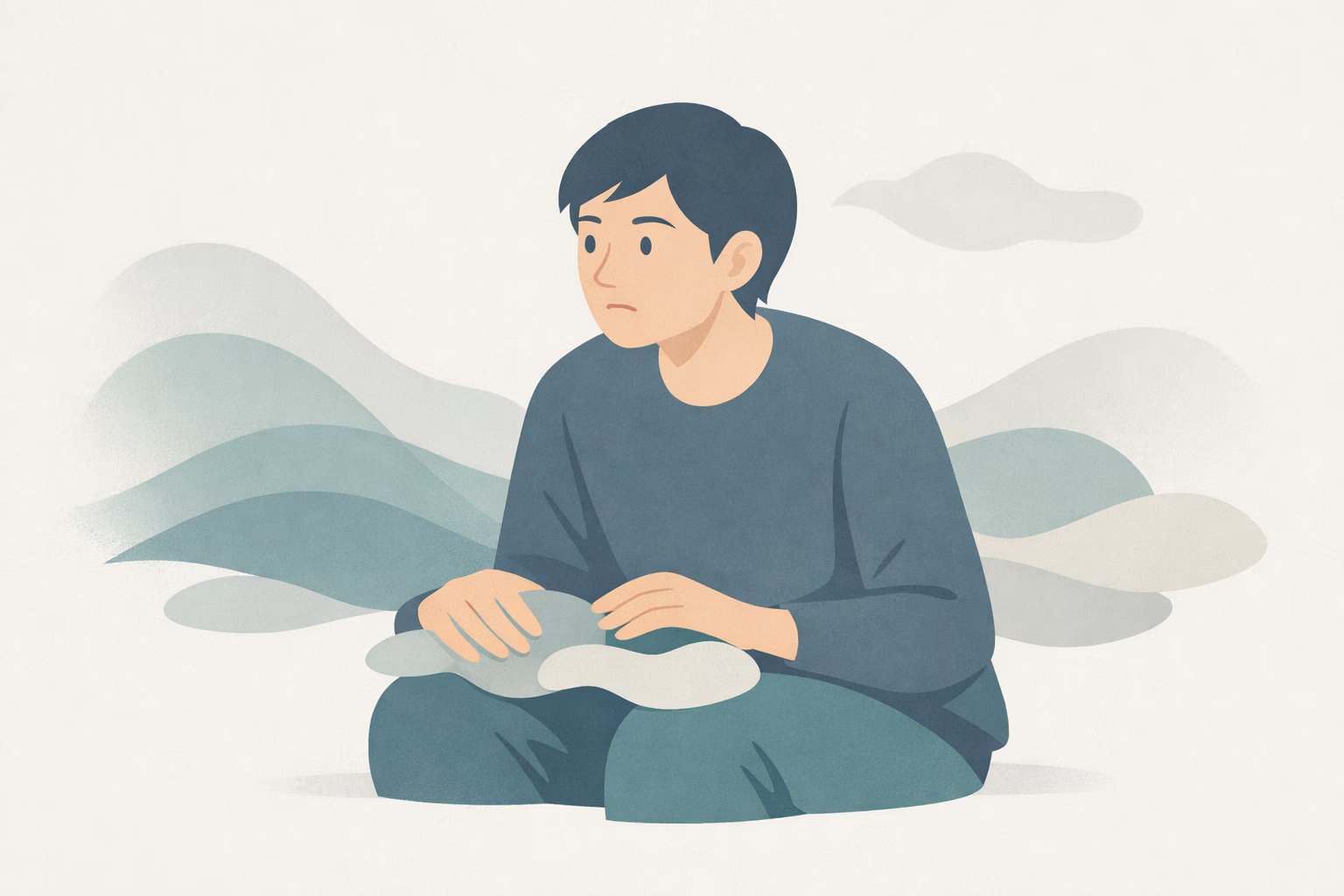
Many people describe the same contrast: heavy eyelids, a fatigued body, and yet a mind that won’t stop generating material. It can be replaying a moment that felt awkward, composing tomorrow’s messages, reviewing finances, or mentally reorganizing the day.
This doesn’t mean your brain is broken or “too much.” It means you’re noticing a common state mismatch: the body is signaling sleep, while the threat-and-control system is signaling “not yet.” In sleep science, this kind of nighttime alertness is often discussed as a form of hyperarousal—an activated system that stays online even when rest is desired. [Ref-1]
It can feel like being stuck in a bright room inside your own head, even when the lights are off.
During the day, your senses are busy: movement, noise, conversation, problem-solving, and constant micro-decisions. At night, much of that input disappears. The brain doesn’t simply “turn off” when stimulation drops—it often uses the quiet to run internal checks.
When external cues fade, the nervous system is more likely to notice unresolved signals: uncertainty, unfinished tasks, relational ambiguity, and unanswered questions. That internal scanning can keep the system activated, which is one reason insomnia is commonly linked with ongoing arousal rather than a simple lack of sleepiness. [Ref-2]
In other words: the silence isn’t creating problems; it’s revealing what never got a clear ending.
Darkness historically meant vulnerability. Across human history, nighttime reduced visibility, increased unpredictability, and limited options for repair if something went wrong. A system that stayed at least partly vigilant had survival value.
Modern nights are physically safer for many people, but the brain still runs older software. It learns patterns: “when it’s dark and still, check the perimeter.” Those checks can become habitual—less a conscious choice and more a well-worn pathway that activates when the context matches (bed, quiet, lights out). Habit circuitry is designed to conserve energy by repeating what it has learned, even when the environment has changed. [Ref-3]
Racing thoughts often carry a hidden promise: if you think long enough, you’ll arrive at certainty. The mind loops through possibilities, rehearses conversations, and tries to prevent regret. In the moment, this can feel like responsibility or problem-solving.
But cognitively, scanning isn’t the same as completion. It’s closer to “keeping the file open” so nothing is missed. Research on insomnia and anxiety-linked cognitive processes describes how worry and rumination can maintain arousal, even while masquerading as coping. [Ref-4]
The mind isn’t trying to ruin your sleep; it’s trying to reduce risk in the only way it can—by staying active.
There’s a common belief: “If I can just figure it out tonight, I’ll relax.” The trouble is that the conditions of night—low resources, depleted glucose, reduced perspective, fewer options for real-world follow-through—make true resolution less likely.
Instead, worry tends to keep the stress response running: the body remains on standby, the heart and breath can stay subtly mobilized, and sleep becomes less accessible. Studies examining worry and sleep consistently show that ongoing cognitive activity at night is associated with poorer sleep quality and greater sleep disruption. [Ref-5]
So the loop continues: the mind works harder, the body stays activated, and the “done” signal never arrives.
It may help to think of nighttime overthinking as an avoidance loop in a structural sense: mental activity becomes a substitute for the settling that sleep requires. Not because you’re afraid to rest, and not because you’re suppressing something—simply because scanning is a familiar regulation route, and rest requires a sense of safety and completion.
When closure is missing, the system often chooses what’s available: rehearsal, analysis, planning, list-making in the mind. The loop is self-reinforcing: the more the mind scans, the more the body reads “still unsafe / still unfinished.” Approaches that target nocturnal cognitive arousal and rumination treat this as a modifiable loop, not a character trait. [Ref-6]
Thinking becomes the stand-in for certainty when certainty isn’t available.
Nighttime racing rarely feels like one thought. It often behaves like a rotating playlist of incomplete threads. Many people notice themes that repeat regardless of what the day was “about.” [Ref-7]
These aren’t random. They’re the mind’s attempt to locate unresolved risk and create a sense of readiness.
When this pattern repeats, the impact isn’t only “feeling tired.” Ongoing nighttime arousal reduces recovery: the body gets fewer full stand-down signals, and the next day begins with less capacity. Over time, that can shift mood, patience, appetite cues, and concentration.
It can also make the mind more reactive to normal stressors. Small problems feel louder. Decisions feel heavier. Social ambiguity feels more loaded. Many sleep resources describe how racing thoughts and reduced sleep reinforce each other, leaving the system more sensitive and less buffered. [Ref-8]
None of this is a personal failure. It’s what nervous systems do when they’re asked to restore while important loops still feel incomplete.
Poor sleep doesn’t just create fatigue—it changes how the brain evaluates signals. With less recovery, the threshold for “this matters” drops. The mind flags more items as urgent, and the body mobilizes sooner.
That means the next bedtime can arrive with a preloaded system: more sensitivity, less flexibility, and an increased likelihood that scanning will start again as soon as the room gets quiet. Many explanations of nighttime overthinking emphasize this feedback loop: fragmented sleep makes nighttime rumination more likely, which then further fragments sleep. [Ref-9]
In this loop, the problem isn’t lack of discipline. It’s a body trying to compensate for reduced recovery.
If racing thoughts are framed only as “too much thinking,” the response often becomes more control: forcing silence, wrestling with thoughts, judging the mind for not cooperating. That tends to add pressure, not closure.
A different framing is more accurate and more humane: the brain is searching for cues of safety, predictability, and completion. Not intellectual reassurance—something more body-level, like a sense that the day is over, that nothing critical is being missed, that tomorrow has a place to land. When those cues are present, scanning is less necessary, and disengagement becomes possible. [Ref-10]
Rest isn’t earned by perfect thoughts. It arrives when the system receives enough “done” signals to stand down.
Nighttime rumination often intensifies when the day contains unresolved social or practical uncertainty. Humans regulate through contact and predictability: clear expectations, repaired moments, and reliable routines reduce the need for internal monitoring.
This is one reason sleep and anxiety are so intertwined: when the system carries unprocessed load into the evening, the quiet hours become the first time it can “audit” everything. Supportive connection, steadier routines, and earlier reassurance can reduce the amount that needs auditing later. [Ref-11]
Not because you need to “talk more” or “process everything,” but because clarity and mutual orientation create closure cues the nervous system can trust.
People often imagine the goal as an empty mind. But physiological settling is different: thoughts may still appear, yet they carry less urgency. The body’s signals shift—breath lengthens, muscles release, the sense of time widens. The mind stops treating every thought as a task.
Importantly, this isn’t the same as insight, positive thinking, or “figuring it out.” Integration is more like completion: a quiet internal click that something has ended enough for the system to downshift. Many descriptions of nighttime racing thoughts note that reducing stress load and increasing safety cues changes the state that makes thoughts sticky in the first place. [Ref-12]
Settling is a capacity returning—not a performance.
As recovery improves, people often notice a subtle but meaningful shift the next day: decisions feel more proportionate, attention is less fragmented, and problems regain edges and sequence. The mind can prioritize instead of spinning.
That’s partly because sleep supports cognitive flexibility and emotional balance, but it’s also because rest restores the sense of continuity: yesterday is more “done,” today is more workable, tomorrow is less of an emergency. Some sleep-writing on racing thoughts points to this regained mental order—less spiraling, more natural transitions—as the system becomes less chronically activated. [Ref-13]
With enough rest, the mind doesn’t need to guard the night so aggressively.
If your mind races at night, it may be signaling unmet needs for safety, predictability, and closure—not a personal defect and not a lack of willpower. The loop makes sense in context: quiet arrives, the world stops providing structure, and the brain tries to supply structure internally.
Some people find it helpful to view racing thoughts as “mental noise used for regulation,” rather than as truth that must be solved. Sleep resources sometimes describe attention-shifting approaches (like cognitive shuffling) as ways of changing the brain’s channel at bedtime—less as a victory over thoughts, more as a different kind of signal to the nervous system. [Ref-14]
Agency can begin with orientation: recognizing that what’s happening is a protective pattern under load, and that patterns can change when the system receives more completion cues.
Nighttime overthinking is often the mind doing its best work in the wrong setting: trying to prevent loss, prevent mistakes, prevent tomorrow from becoming unmanageable. When life supplies clearer endings, steadier safety cues, and fewer open tabs, the brain doesn’t have to patrol the dark so intensely.
Over time, the shift isn’t “never having thoughts.” It’s the gradual return of an internal off-switch—when scanning feels unnecessary and the system can finally mark the day as complete. [Ref-15]
From theory to practice — meaning forms when insight meets action.
Because quiet doesn't create the problem — it reveals it. During the day, senses are busy: movement, noise, conversation, micro-decisions. At night, much of that input disappears, and the brain doesn't simply turn off. It uses the quiet to run internal checks — replaying conversations, composing tomorrow's messages, reviewing what's unresolved. That scanning isn't anxiety in the simple sense. It's a regulation strategy: the system noticing what didn't reach closure and refusing to fully power down while important loops remain open. The body signals sleep; the threat-and-control system signals 'not yet.' That mismatch is what sleep researchers call hyperarousal.
Because the conditions of night make true resolution unlikely. Low resources, depleted glucose, reduced perspective, and few options for real-world follow-through mean the mind can churn without arriving anywhere. Worry tends to keep the stress response running: heart and breath stay subtly mobilized, sleep becomes less accessible, and the loop continues. The mind isn't trying to ruin your sleep. It's trying to reduce risk in the only way it can — by staying active. Scanning isn't the same as completion. It's closer to keeping the file open so nothing is missed. The Done Signal needs more than thought; it needs credible safety cues the body trusts.
Usually a rotating playlist of incomplete threads. Replay loops review conversations, tone, what you should have said. Forecast loops run tomorrow's schedule, anticipating conflict and outcomes. Open-tab loops list tasks, paperwork, errands, decisions. Self-evaluation loops score the day, compare, second-guess. These aren't random. They're the mind's attempt to locate unresolved risk and create readiness. Underneath, this is an Avoidance Loop in a structural sense: mental activity becomes a substitute for the settling sleep requires. The more the mind scans, the more the body reads 'still unsafe, still unfinished,' and the harder the next night gets to enter.
Not an empty mind. Thoughts may still appear, but they carry less urgency. Breath lengthens, muscles release, the sense of time widens. The mind stops treating every thought as a task. This is closer to completion than to insight or positive thinking — a quiet internal click that something has ended enough for the system to downshift. The brain is asking for cues of safety, predictability, and completion at the body level: that the day is over, nothing critical is being missed, tomorrow has a place to land. When those cues arrive, scanning becomes unnecessary and disengagement becomes possible. Rest is a capacity returning, not a performance.
From Science to Art.
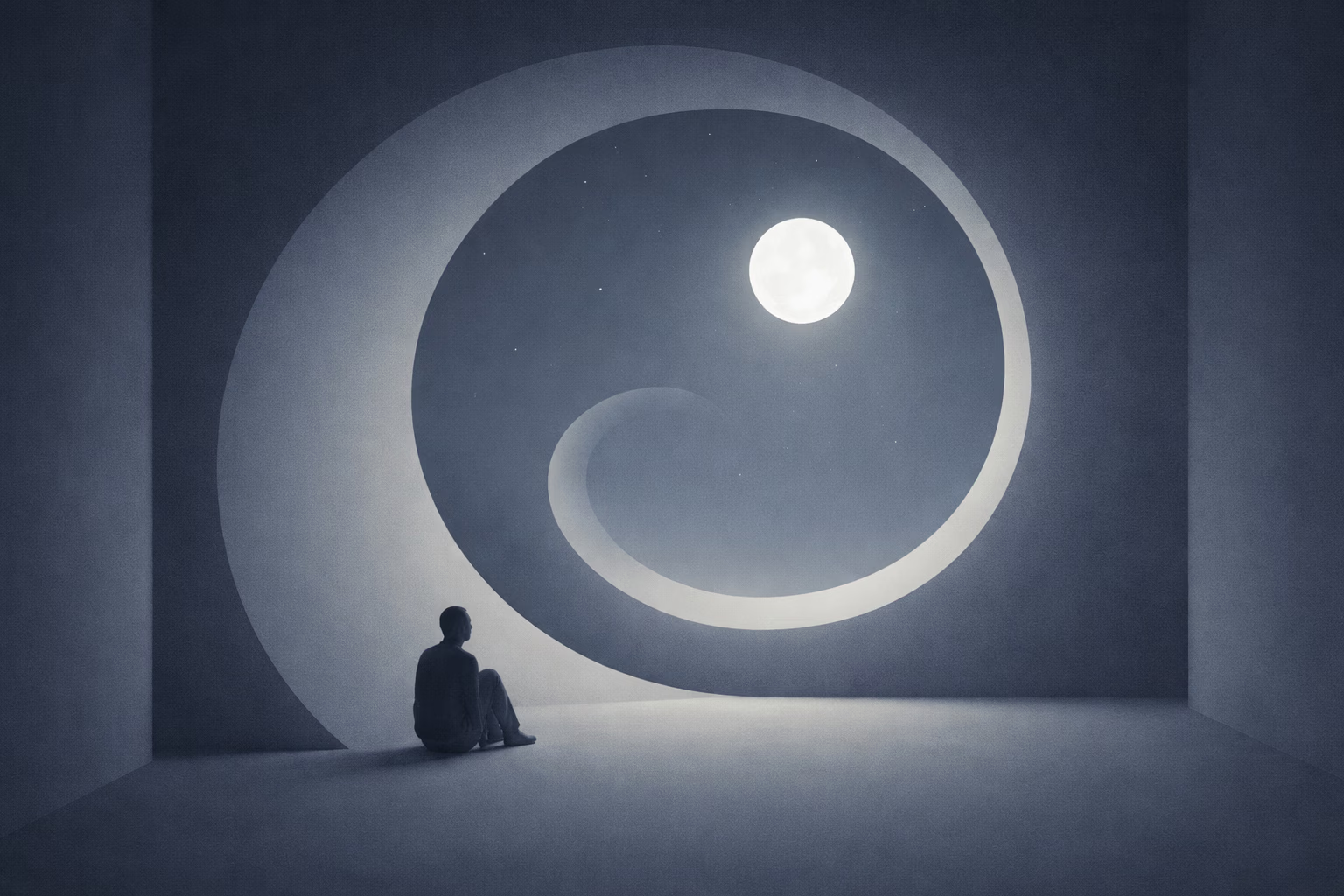
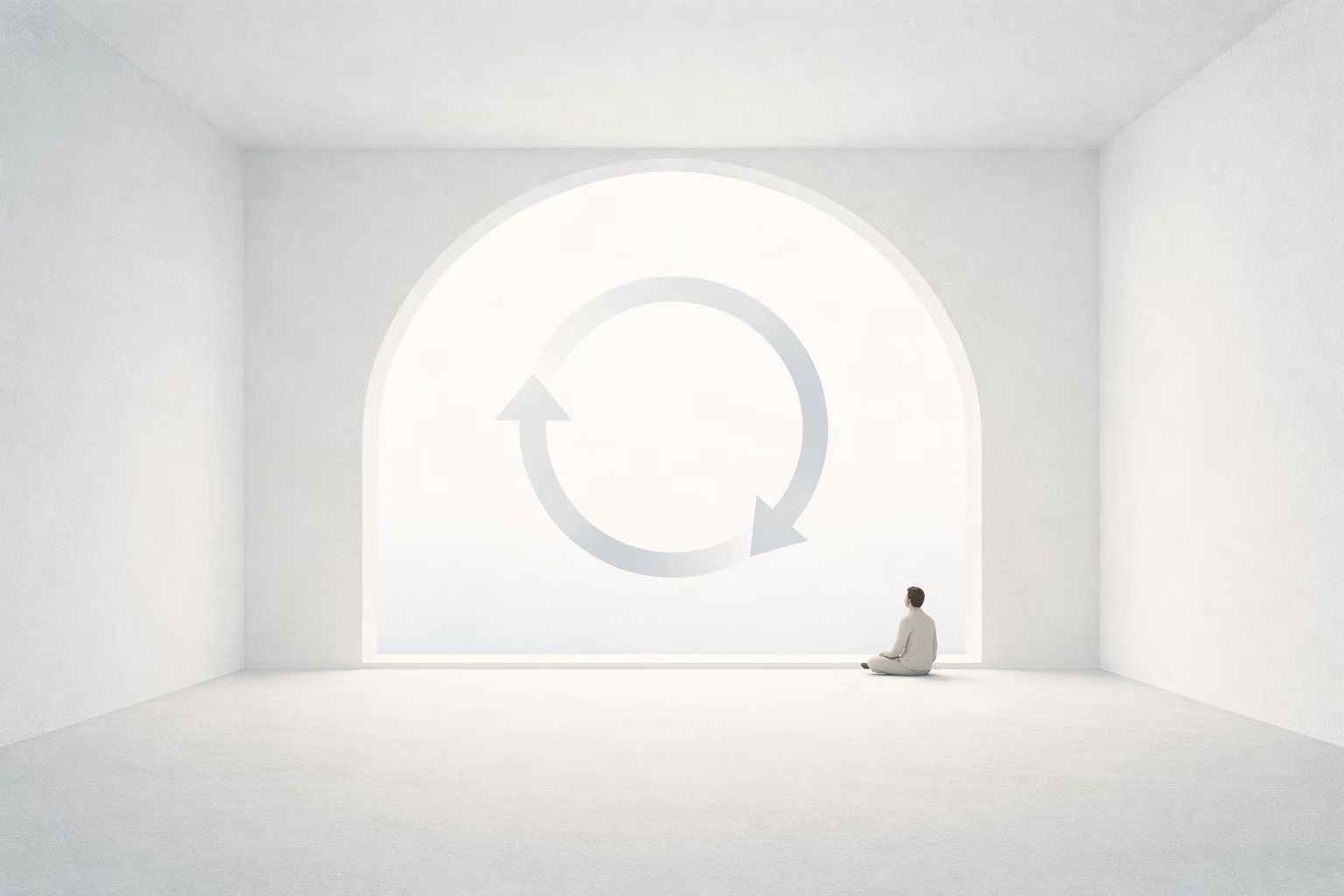
Understanding explains what is happening. Art allows you to feel it—without fixing, judging, or naming. Pause here. Let the images work quietly. Sometimes meaning settles before words do.
One Quiet Window, one insight, one reflection — every Sunday