Revenge Bedtime Procrastination: Why You Delay Rest
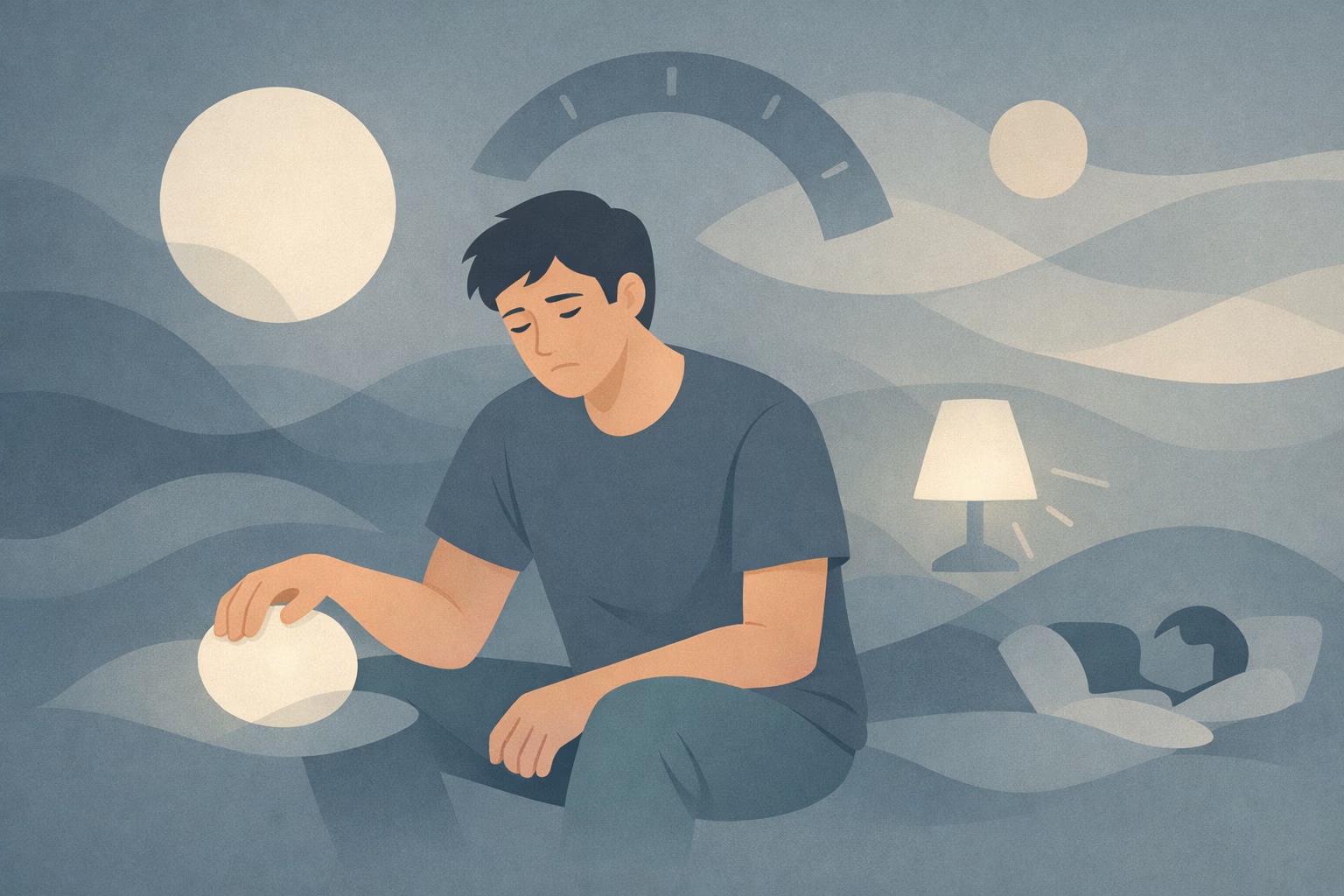
In short: Many people recognize the same nighttime pattern: the body is tired, but the mind feels switched on. You close your eyes and it’s like your system is still processing—images, conversations, headlines, ideas, unfinished tasks.
Many people recognize the same nighttime pattern: the body is tired, but the mind feels switched on. You close your eyes and it’s like your system is still processing—images, conversations, headlines, ideas, unfinished tasks. The result isn’t always obvious insomnia; sometimes it’s simply sleep that arrives late, stays light, and doesn’t restore.
What if sleeplessness isn’t a personal failure of willpower, but a predictable biology-meets-environment mismatch?
Screens don’t just “fill time.” They deliver novelty, social signals, and micro-rewards at the exact hour when the brain is built to downshift. When stimulation keeps arriving, the nervous system doesn’t receive a clear “done” signal, and sleep chemistry struggles to lead.
Feeling mentally wired at night often shows up as racing thoughts, sudden alertness, or a strange second wind that appears right when you want to sleep. This isn’t necessarily stress in the dramatic sense; it can be the body staying in an activated mode because the evening still contains bright input, fast information, and a steady stream of “new.” [Ref-1]
In this state, sleep is less likely to feel like a clean drop into rest. It may arrive as delayed sleep onset, frequent micro-waking, or shallow sleep that ends without the sense of completion your system expects.
Sometimes the problem isn’t that you can’t sleep. It’s that your body hasn’t received enough evidence that the day is truly over.
Sleep depends on a coordinated handoff: circadian timing, reduced stimulation, and the gradual rise of melatonin-supported nighttime physiology. Screens disrupt that handoff in two main ways—light and novelty.
Bright, blue-leaning light can signal “daytime” to the brain, nudging circadian timing later. At the same time, the content itself (new posts, new messages, new clips) tends to elevate reward-related signaling, which keeps attention oriented outward and forward. When the brain is still scanning for the next salient item, the downshift to sleep is delayed or made fragile. [Ref-2]
The reward system didn’t evolve for endless, late-night stimulation. It evolved to support daylight effort: seek, learn, find food, connect, problem-solve—then return to rest. In a stable environment, night was a boundary with fewer inputs and fewer decisions.
Modern screens blur that boundary. They extend daylight-style reward signals into the hours meant for recovery, which can create a chronic “not finished yet” feeling in the nervous system. This is part of why heavy or late smartphone use is consistently linked with sleep disruption across studies. [Ref-3]
Evening screen use often isn’t random. After a long day, the nervous system is depleted, and screens can provide low-effort engagement: a place to land, a predictable stream, a sense of company, a soft escape from the weight of decisions.
This isn’t about a person being weak or “addicted to their phone” as an identity. It’s the system reaching for a quick form of relief and orientation when capacity is low and the day hasn’t fully resolved. Patterns of smartphone use and sleep behavior often cluster around this exact window—when fatigue rises but closure hasn’t arrived. [Ref-4]
When the day hasn’t settled, where does your attention go to feel held?
Screens can feel relaxing because they reduce friction: no cleanup, no hard conversations, no final decisions. But “less friction” isn’t the same as nervous-system stand-down.
Physiologically, scrolling can maintain arousal—eyes engaged, attention captured, reward anticipation kept alive. The mind may experience it as downtime while the body remains in a lightly activated state. Research linking nighttime smartphone use with poorer sleep quality supports this mismatch: the activity may feel soothing, yet it correlates with reduced sleep restoration. [Ref-5]
It can be calming in the moment and still keep your system from reaching “done.”
Screen-related sleeplessness often forms a self-reinforcing loop. Evening stimulation delays sleep timing and reduces sleep depth. The next day arrives with lower capacity—more fatigue, less focus, less emotional buffer—which makes quick stimulation more appealing again.
By evening, the body is tired earlier, but the reward system is primed for easy relief. That sets the stage for another night of “just a bit more,” not because of a character flaw, but because the system is trying to regulate itself with the most available lever.
Studies examining evening smartphone use show measurable impacts on melatonin and sleep timing, consistent with this cycle. [Ref-6]
People often describe the same cluster of experiences: intending to rest, then getting pulled into content; feeling awake at the exact time they “should” be sleepy; using the phone to unwind, but waking up feeling unfinished.
These aren’t mysteries once you view them as regulation patterns under load. Nighttime electronics use tends to keep the brain in an attention-ready posture—tracking new information, responding to cues, staying slightly vigilant. Sleep resources often describe this as a common pathway: electronics affect sleep through both stimulation and light exposure. [Ref-7]
Over time, sleep debt doesn’t only create tiredness. It changes the nervous system’s baseline. Many people notice more irritability, more emotional reactivity, lower frustration tolerance, and a narrower attention span. In that narrower bandwidth, fast reward becomes even more attractive because it’s one of the few things that reliably “moves the needle” on state.
This is how screens become less of a choice and more of a default: not because someone lost their values, but because their capacity shrank while stimulation stayed abundant. Popular sleep education sources emphasize that nighttime screen time can erode sleep quality and next-day functioning, making the cycle feel increasingly sticky. [Ref-8]
Sleep loss alters reward processing. When rest is reduced, the brain often becomes more responsive to rewards and more motivated by immediate payoff, which can intensify stimulation-seeking the next day. This helps explain why a tired day can feel like a day of cravings—for scrolling, snacking, shopping, or anything that offers a quick hit of “better now.” [Ref-9]
Then nighttime arrives with two forces at once: accumulated fatigue and a reward system trained by the day’s compensations. The body wants recovery, but the brain has learned that stimulation is the fastest available regulator.
In a fragmented environment, the nervous system can start treating nighttime as “spare time”—a place to finish, catch up, or finally get relief. But biology tends to restore itself when the inputs that signal seeking and evaluation fade enough for circadian chemistry to take the lead.
This isn’t about adding more effort. It’s about recognizing that sleep is a built-in closure process: the brain consolidates, the body repairs, and many unfinished signals get metabolized into a quieter baseline. When evening dopamine input is high, that closure can’t fully initiate; when it lowers, sleep becomes more available as a natural consequence. [Ref-10]
Rest is not a reward you earn. It’s a phase your body enters when the day truly ends.
Sleep is not only individual. It’s also cultural and relational. When group norms assume fast replies, late-night availability, or constant checking, the nervous system receives fewer safety cues that it’s allowed to power down.
Even simple realities—bright devices in shared spaces, bedtime routines shaped by notifications, or the sense that you might miss something important—can keep sleep fragile. Public-facing health education often highlights how blue light and evening device habits can affect sleep, especially for teens, but the underlying principle applies broadly: routines and expectations shape physiology. [Ref-11]
What does your environment communicate about whether “off-duty” is permitted?
One subtle cost of constant evening input is that people stop recognizing what natural sleepiness feels like. Instead of a gentle downward drift, the night becomes a push-pull: fatigue rises, attention gets re-captured, and the body’s signals become easy to miss.
As stimulation decreases, many report a different experience—not an emotional breakthrough, but a physiological reorganization: slower thoughts, heavier eyelids, less urge to check, more consistent “downshift” timing. This is the nervous system regaining the ability to return to baseline when load is reduced and cues become consistent. Research in communication and media patterns has increasingly examined how digital engagement shapes arousal and bedtime behavior, aligning with this observed shift. [Ref-12]
When nighttime becomes an extension of daytime stimulation, the brain loses a reliable boundary. Without that boundary, the sense of completion—of being done, safe, and off-duty—can stay out of reach.
Sleep loss itself can amplify dopamine activity and reward responsiveness, which makes the next day louder and the next night harder to settle. This is one reason the cycle can feel so self-perpetuating: the more you miss rest, the more the brain leans toward stimulation. [Ref-13]
Reframing night as restoration isn’t a moral stance. It’s a biological one. It’s recognizing that the brain has a designed mode for repair, consolidation, and stand-down—and it needs conditions that allow that mode to begin.
Sleep isn’t merely a break from life; it’s one of the main ways the nervous system restores coherence. With enough rest, attention becomes less fragmented, impulses soften, and decisions feel less like emergencies. When sleep is consistently disrupted, the brain becomes more reward-sensitive and more driven by immediate relief, which can shrink agency and enlarge compulsive loops. [Ref-14]
Seeing the pattern structurally can reduce shame. If screens have been standing in for closure, comfort, or “done,” it makes sense that removing them would feel like losing a regulator. The deeper story is that your system may be trying to complete the day—and sleep is one of the few processes that can truly finish it.
When sleep has been hard, it’s tempting to look for more tools, more strategies, more effort. But sleep often returns through subtraction: fewer late signals, fewer prompts to seek, fewer reasons for the brain to stay online.
Sleep loss has measurable effects on dopamine and reward processing, which means the problem can be self-reinforcing even when your intentions are sincere. [Ref-15]
What if the most meaningful shift isn’t adding something new—but letting the day actually end?
From theory to practice — meaning forms when insight meets action.
Because the body is staying in an activated mode while the evening still contains bright input, fast information, and a steady stream of new. That's not stress in the dramatic sense — it's a real nervous-system condition. Sleep depends on a coordinated handoff: circadian timing, reduced stimulation, and rising melatonin physiology. Screens disrupt that handoff through light (signaling daytime to the brain) and novelty (keeping reward signaling elevated). When the system is still scanning for the next salient item, the downshift to sleep gets delayed or fragile. The problem isn't that you can't sleep. It's that your body hasn't received enough evidence the day is truly over.
It's a self-reinforcing cycle. Evening stimulation delays sleep timing and reduces sleep depth. The next day arrives with lower capacity — more fatigue, less focus, less emotional buffer — which makes quick stimulation more appealing. By evening, the body is tired earlier, but the reward system is primed for easy relief. That sets the stage for another night of just a bit more. This is the Pleasure Loop running at the Reward & Stimulation level: stimulation provides a short-term state shift, sleep delay creates a longer-term cost, fatigue increases reliance on easy reward. Sleep loss itself amplifies dopamine responsiveness, which makes the next day louder and the next night harder to settle.
Because after a long day the nervous system is depleted, and screens provide low-effort engagement: a place to land, a predictable stream, a sense of company, a soft escape from the weight of decisions. It's the system reaching for a quick form of relief and orientation when capacity is low and the day hasn't fully resolved. The trap is that screens reduce friction (no cleanup, no hard conversations) without delivering nervous-system stand-down. The mind experiences scrolling as downtime while the body remains in a lightly activated state. It can be calming in the moment and still keep your system from reaching done.
Sleepiness can reappear as a body signal rather than something you have to negotiate against. Many people stop recognizing what natural sleepiness feels like under constant evening input — fatigue rises, attention gets re-captured, signals get easy to miss. As stimulation decreases, what often shows up isn't an emotional breakthrough but a physiological reorganization: slower thoughts, heavier eyelids, less urge to check, more consistent downshift timing. Nighttime is not extra daytime — it's the restoration phase. Sleep is a built-in closure process where the brain consolidates and unfinished signals get metabolized. Sleep often returns through subtraction, not by adding more tools.
From Science to Art.
Understanding explains what is happening. Art allows you to feel it—without fixing, judging, or naming. Pause here. Let the images work quietly. Sometimes meaning settles before words do.
One Quiet Window, one insight, one reflection — every Sunday