Always-On Society: When Your Rhythm Never Gets to Reset
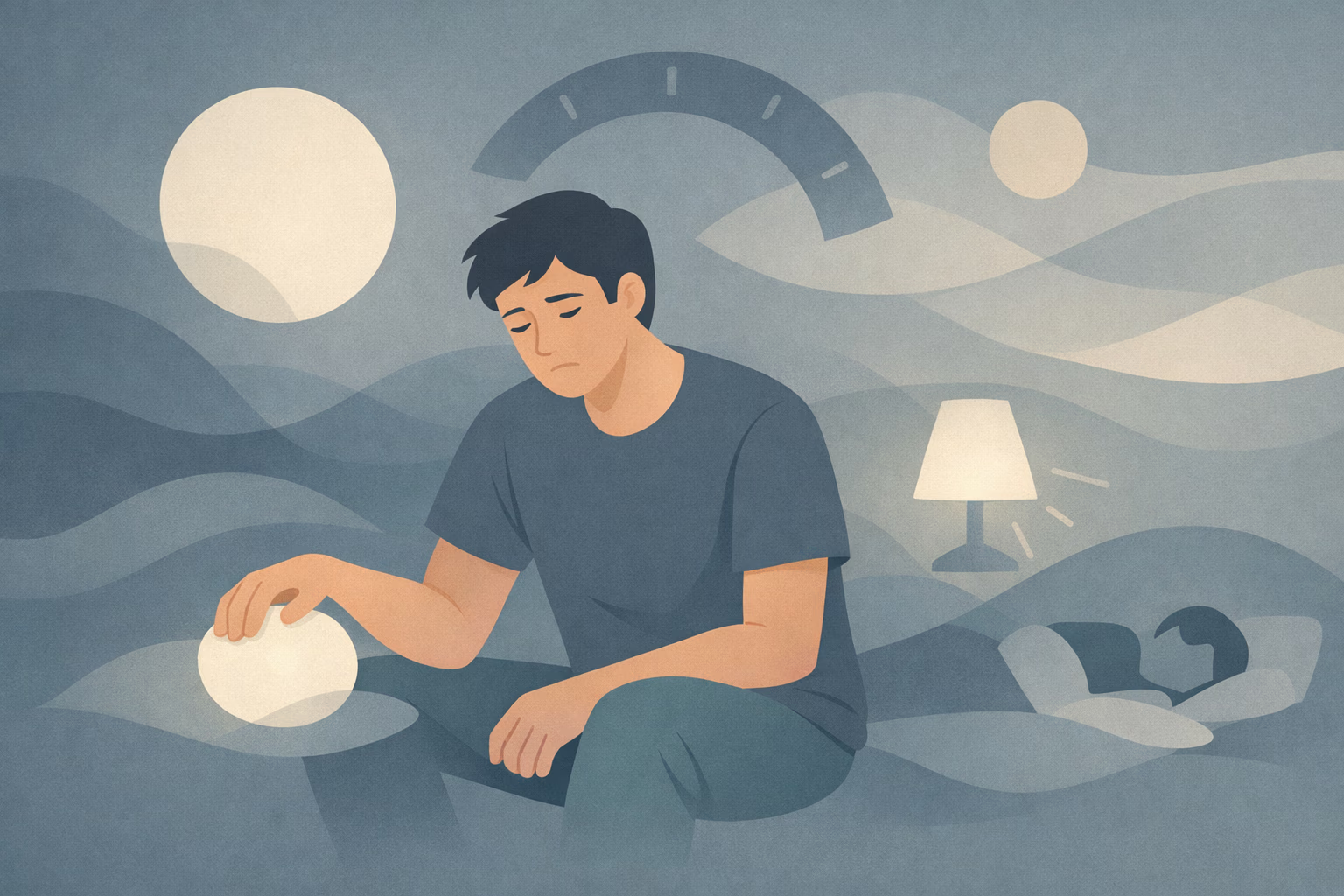
In short: Circadian rhythm disruption isn’t a character flaw or a “bad sleep habit.” It’s what can happen when an ancient timing system—built to track sunrise and darkness—has to operate inside a world where light is available on demand. What if the problem isn’t you being “undisciplined,” but your biology receiving mixed signals?
Circadian rhythm disruption isn’t a character flaw or a “bad sleep habit.” It’s what can happen when an ancient timing system—built to track sunrise and darkness—has to operate inside a world where light is available on demand.
What if the problem isn’t you being “undisciplined,” but your biology receiving mixed signals?
In the Meaning Density view, many modern struggles come from fragmentation: too many inputs, too few endings, and not enough physiological closure. Light is one of the strongest inputs we have. When it arrives at the wrong time, it can keep the nervous system in a state of partial readiness, even when life is asking for rest.
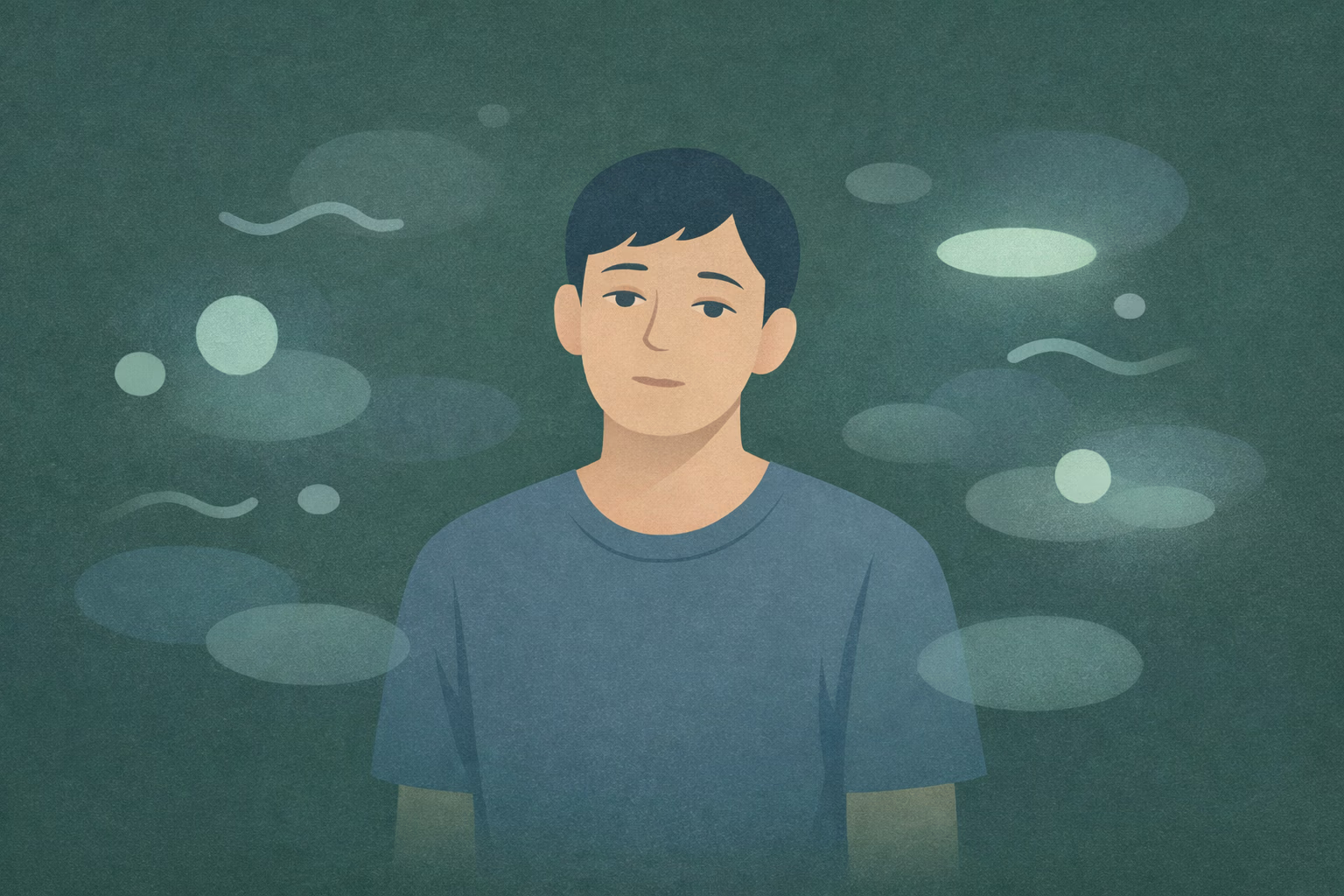
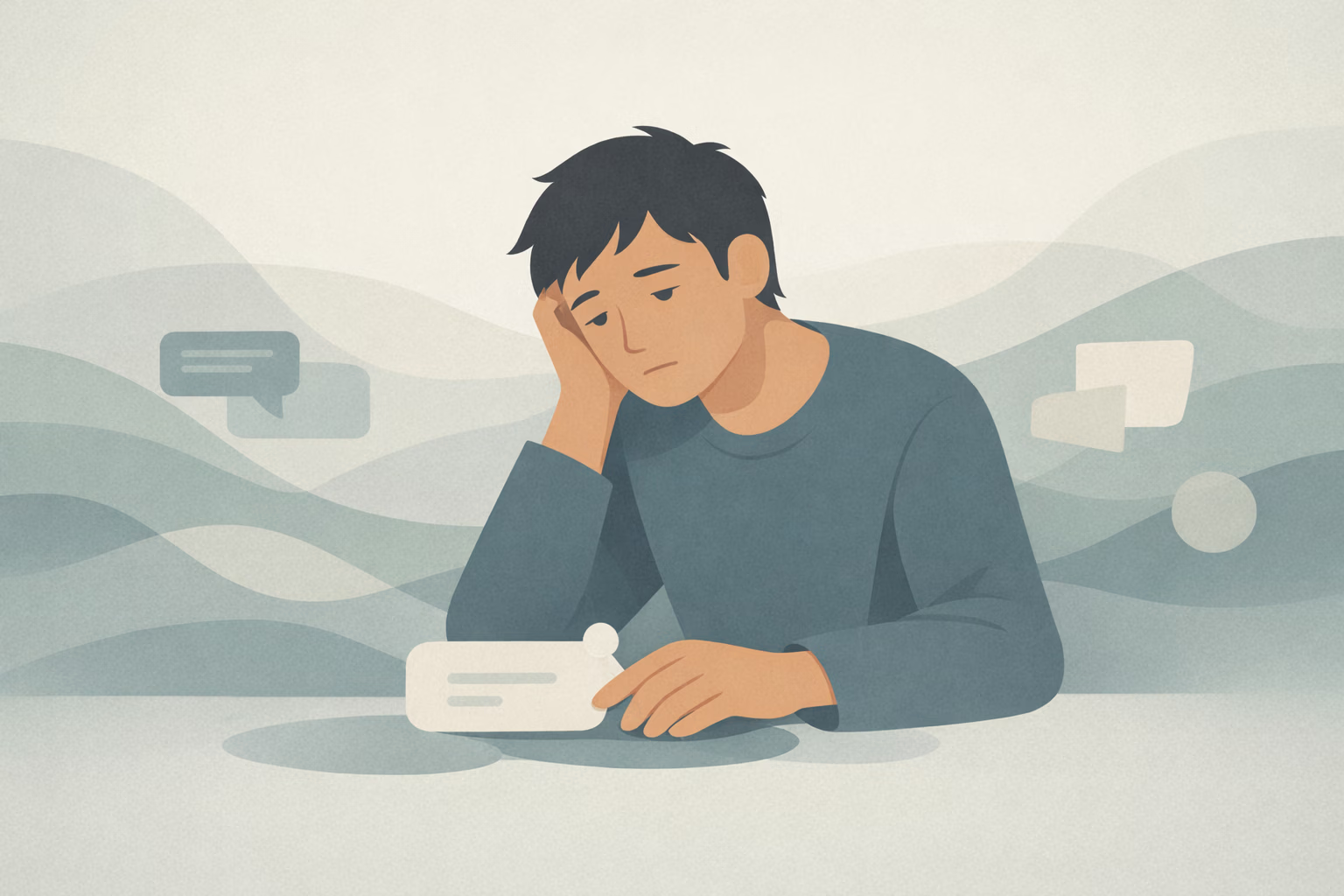
Circadian disruption often shows up less like a single symptom and more like a daily misalignment: you’re tired at the wrong times, alert at the wrong times, and never quite sure when your body will cooperate. The experience can feel oddly personal—like your system is “not working right”—but it’s often a predictable response to timing cues. [Ref-1]
Common signals include a delayed bedtime you didn’t exactly choose, a mind that becomes busiest at night, and mornings that feel like wading into the day through fog. Even when sleep happens, it may not register as complete rest—more like the body powered down without fully closing the loop.
The body doesn’t decide it’s night because a clock says so. It decides based on incoming cues—especially light. In the evening, light exposure can suppress or delay melatonin onset and shorten the duration of the melatonin signal, shifting the timing of sleepiness later. [Ref-2]
This matters because melatonin is not just “sleep juice.” It’s part of a wider communication system that tells tissues and brain networks what time it is. When the “night message” arrives late or arrives in fragments, sleep can become lighter, later, and less consolidated—even if you spend enough hours in bed.
When the environment keeps saying “day,” the body can’t fully receive “night.”
For most of human history, the strongest light arrived in the morning and midday, and darkness reliably arrived at night. Our circadian system evolved to use those regular patterns to coordinate sleep, temperature, appetite, alertness, and repair processes across the body. [Ref-3]
Modern light is powerful not because it’s “bad,” but because it can override the old signal hierarchy. A bright screen at 10 p.m. can resemble, to your biology, a time cue that used to be rare: daylight after dusk. The nervous system adapts the way it’s designed to—by updating timing and keeping capacity online.
Artificial light has given humans extraordinary flexibility: work can continue, connection can happen, entertainment can be immediate, and households can function on varied schedules. This is not a moral problem; it’s an environmental shift. [Ref-4]
The issue is that “extended evening” can quietly become “biological night postponed.” The body may still need darkness to transition into full downshift, but the modern world can keep providing day-like cues—brightness, novelty, social feedback, and continuous information.
What happens when night is available, but not clearly signaled?
It’s easy to assume that light simply adds hours to the day. Biologically, it can do something more consequential: it can move the day later, reducing the depth and timing of night. Evening blue-enriched light is especially effective at pushing circadian timing later and reducing the body’s sense of settled darkness. [Ref-5]
So the cost isn’t always obvious. You may still “get to bed,” but the internal system may not be in the same place. The result can be a kind of partial sleep: enough to function, not enough to restore. Over time, this can feel like living without a true off-switch.
In an Avoidance Loop, the system bypasses rest because rest doesn’t arrive with enough closure. Stimulation—light, scrolling, shows, late work, late conversations—can become the bridge across the uncomfortable gap between “I’m done” and “I’m still activated.” This isn’t about fear or emotional suppression; it’s about incomplete stand-down.
When the body is overlit and under-closed, it may not generate a clean “done signal.” So stimulation can serve a regulatory function: it keeps the mind occupied while the body waits for conditions that allow release. Over time, the loop strengthens because the consequences are muted until morning, when the cost finally arrives. [Ref-6]
Circadian disruption tends to create a consistent cluster of patterns, not random chaos. The system learns that night is a time for input, not closure—so it becomes easier to be alert late and harder to land. Blue light from screens is a common contributor because it strongly signals “daytime” to the circadian system. [Ref-7]
These patterns are regulatory responses: the body is trying to stay functional inside a schedule that keeps moving. The person isn’t “choosing wrong” so much as adapting to the available cues.
Circadian rhythms coordinate far more than sleep. When timing is chronically disrupted, multiple systems lose their shared schedule: mood regulation, appetite and glucose handling, immune signaling, and cognitive clarity can all be affected. [Ref-8]
This is one reason circadian disruption can feel like “everything is harder.” Not because you’re broken, but because your body is doing complex work without a reliable night phase to complete it. The result is often a background sense of strain—more irritability, slower recovery, and a thinner margin for stress.
When the timing system can’t coordinate the day, life starts to feel like constant catching up.
After a day of low sleep, the brain may lean harder on quick sources of activation and reward in the evening—partly because daytime capacity was spent just getting through. This can look like “I can’t stop scrolling” or “I’m suddenly wide awake,” but structurally it’s a predictable rebound: the system is searching for enough energy and engagement to feel coherent. [Ref-9]
At the same time, fatigue can reduce the clarity of internal cues. When the body’s signals are dampened, it becomes harder to detect the subtle slope into sleepiness. So the night can keep going—not from poor intention, but from weakened signal return and easy access to bright, interesting inputs.
“Fixing sleep” is often framed as effort: more discipline, more tracking, more pressure. But circadian realignment is less like self-control and more like restoring an environmental conversation—light and darkness arriving in a pattern the body can recognize. Research on circadian-healthy lighting emphasizes that timing and intensity of light exposure can help protect the melatonin rhythm. [Ref-10]
In Meaning Density terms, re-anchoring is about giving the system clearer beginnings and endings. When night reliably looks and feels like night, the nervous system can complete its daily cycle with less negotiation. That completion is what allows a physiological stand-down—an identity-level sense of “I’m done for today” that doesn’t require constant management.
What changes when the day has a real edge, and night has a real boundary?
Circadian stability is not only individual; it’s social and environmental. Household lighting choices, shared evening routines, work messaging expectations, and even when friends are most active can all act as “time cues.” When a community runs late, the body has to choose between belonging and biology—and it often chooses belonging first. [Ref-11]
This is a key reason people can feel stuck: the environment keeps re-opening the day. When light, sound, and interaction stay “on,” the nervous system receives fewer safety cues that it’s allowed to power down.
When circadian cues become more coherent, many people describe a quiet but profound change: sleepiness becomes more predictable. Instead of needing to force rest, the body starts to offer it—like a natural descent rather than a crash. Light exposure patterns are known to influence circadian timing, sleep, and mood, which is why changes in cue consistency can alter the felt experience of night. [Ref-12]
Restoration here doesn’t mean being “more emotional” or more introspective. It often looks simpler: deeper rest, fewer abrupt awakenings, and mornings that arrive with less friction. The nervous system doesn’t have to spend as much of the day compensating for an incomplete night.
Not perfect sleep—just a body that remembers how to land.
Chronic circadian disruption can push life into survival-mode logistics: getting through the day, recovering at night, repeating. When rhythms stabilize, energy becomes available for something more than maintenance—attention can return, choices can feel less forced, and values can be easier to act on. Circadian disruption has broad health impacts, and restoring alignment can support a more stable baseline across systems. [Ref-13]
This is where meaning becomes practical. When the body is no longer fighting time itself, identity can feel more continuous: you recognize yourself across the day. Plans are not just aspirations; they become livable. Coherence grows not from pushing harder, but from needing fewer emergency compensations.
In a bright, always-on culture, struggling with sleep can carry unnecessary shame. But circadian disruption is often a sign of biology responding intelligently to the cues it’s given. Misalignment can increase vulnerability in mood and stress systems, not because you’re fragile, but because timing is a foundational stabilizer. [Ref-14]
Seen this way, sleep isn’t a nightly test you pass or fail. It’s a daily relationship with ancient rhythms—light, darkness, and the body’s need for closure. When those rhythms are respected by the environment, the nervous system gets to stand down, and life stops requiring so much force.
Artificial light is one of humanity’s great tools—and also one of the strongest signals the body receives. When that signal arrives late and bright, sleep can become shallow, delayed, and effortful. When light and darkness are allowed to look distinct again, the body’s timing system can return to what it does best: coordinating a real night so the next day doesn’t begin in depletion. [Ref-15]
That shift is not self-improvement. It’s coherence—an old biological promise kept in a modern world.
From theory to practice — meaning forms when insight meets action.
Because the body decides it's night based on incoming cues — especially light — not the clock. Evening light suppresses or delays melatonin onset and shortens its duration, shifting sleepiness later. Bright screens at 10 p.m. resemble, biologically, a time cue that used to be rare: daylight after dusk. So the environment keeps saying 'day' while you're trying to receive 'night.' That's not poor discipline; it's an Evolutionary Mismatch between an ancient timing system and an always-lit world. The body adapts the only way it can — by keeping capacity online.
It can be. When the body is overlit and under-closed, it doesn't generate a clean Done Signal — so stimulation becomes a bridge across the gap between 'I'm done' and 'I'm still activated.' Light, scrolling, late shows extend activation while sleepiness gets delayed. The loop strengthens because consequences are muted until morning, when the cost arrives. This isn't fear or emotional suppression; it's incomplete stand-down. The nervous system is searching for closure and the environment keeps re-opening the day.
After a low-sleep day, the brain leans harder on quick activation in the evening — partly because daytime capacity was already spent. What looks like 'I can't stop scrolling' is structurally a rebound: the system searching for enough engagement to feel coherent. At the same time, fatigue dampens internal cues, so the subtle slope into sleepiness becomes harder to detect. The night extends — not from poor intention, but from weakened signal return paired with easy access to bright, interesting inputs.
Quieter than people expect. Sleepiness becomes predictable again — a natural descent rather than a crash. Mornings arrive with less friction. Rest registers as actually restful, not just as 'powering down.' This isn't about being more emotional or introspective; it's the nervous system not having to spend the day compensating for an incomplete night. When light and darkness look distinct again, the system can complete its daily cycle without negotiation, and identity feels more continuous across the day.
From Science to Art.
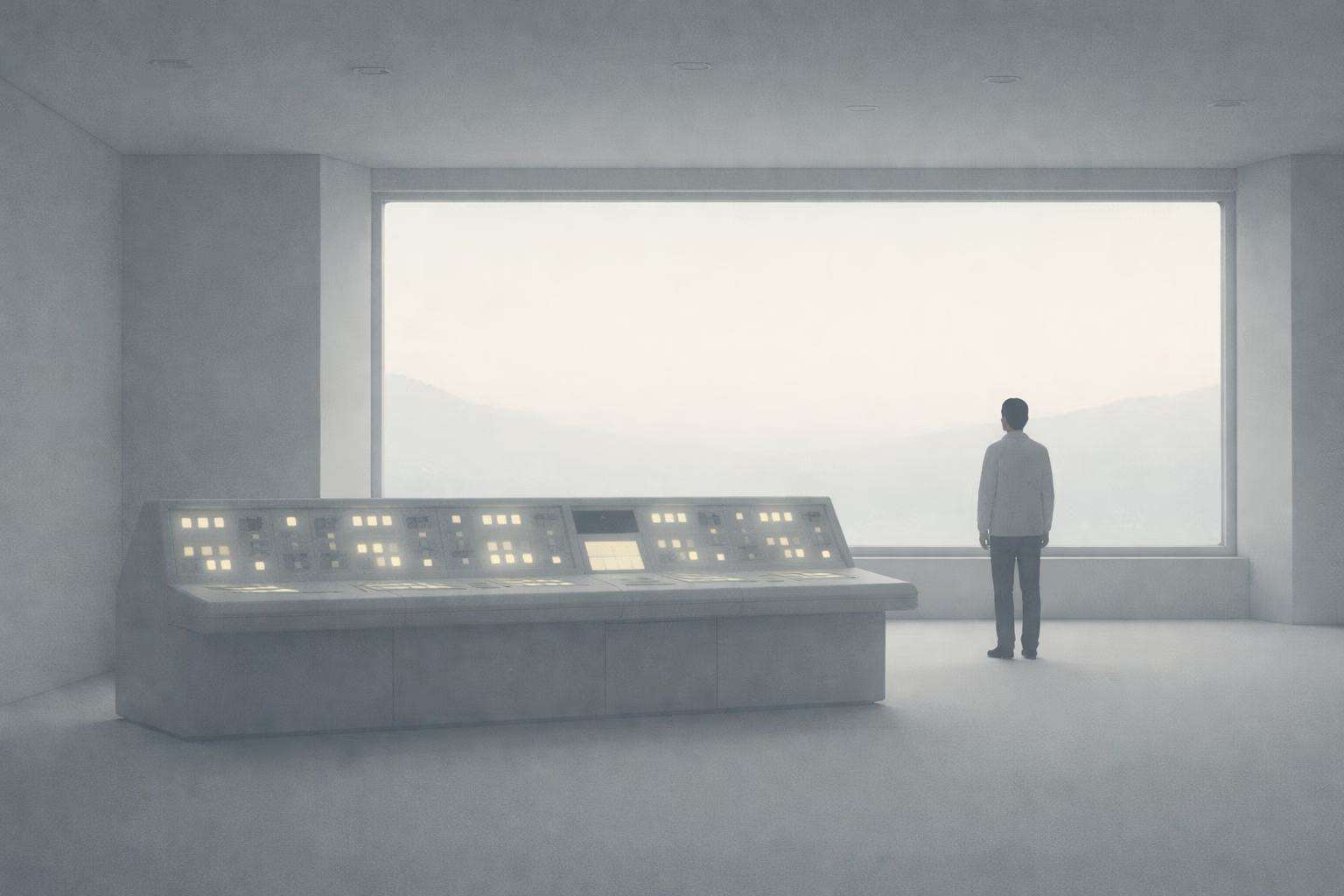
Understanding explains what is happening. Art allows you to feel it—without fixing, judging, or naming. Pause here. Let the images work quietly. Sometimes meaning settles before words do.
One Quiet Window, one insight, one reflection — every Sunday