
Active Rest: How to Restore Your Mind Without Stopping Life
In short: Many people can name the strange experience of “resting” and still feeling depleted: you slept, you canceled plans, you lay down, you scrolled, you took a day off—and yet your system didn’t come back online. What if the problem isn’t that you’re doing rest wrong, but that rest and recovery are different biological events?
Many people can name the strange experience of “resting” and still feeling depleted: you slept, you canceled plans, you lay down, you scrolled, you took a day off—and yet your system didn’t come back online.
What if the problem isn’t that you’re doing rest wrong, but that rest and recovery are different biological events?
Rest often reduces demands. Recovery is what happens when your body and nervous system get the conditions they need to complete repair, settle stress chemistry, and restore the sense of internal roominess that makes life feel doable again.
When you’re depleted, your body isn’t only asking for a pause—it’s tracking how much “wear and tear” has accumulated across days, months, or years. This is sometimes described as allostatic load: the cost of repeated adaptation to ongoing demands. [Ref-1]
So it’s possible to stop moving while your system stays in a high-cost mode internally. You can be physically still while your physiology continues running an emergency budget: scanning, bracing, pushing, and conserving at the same time.
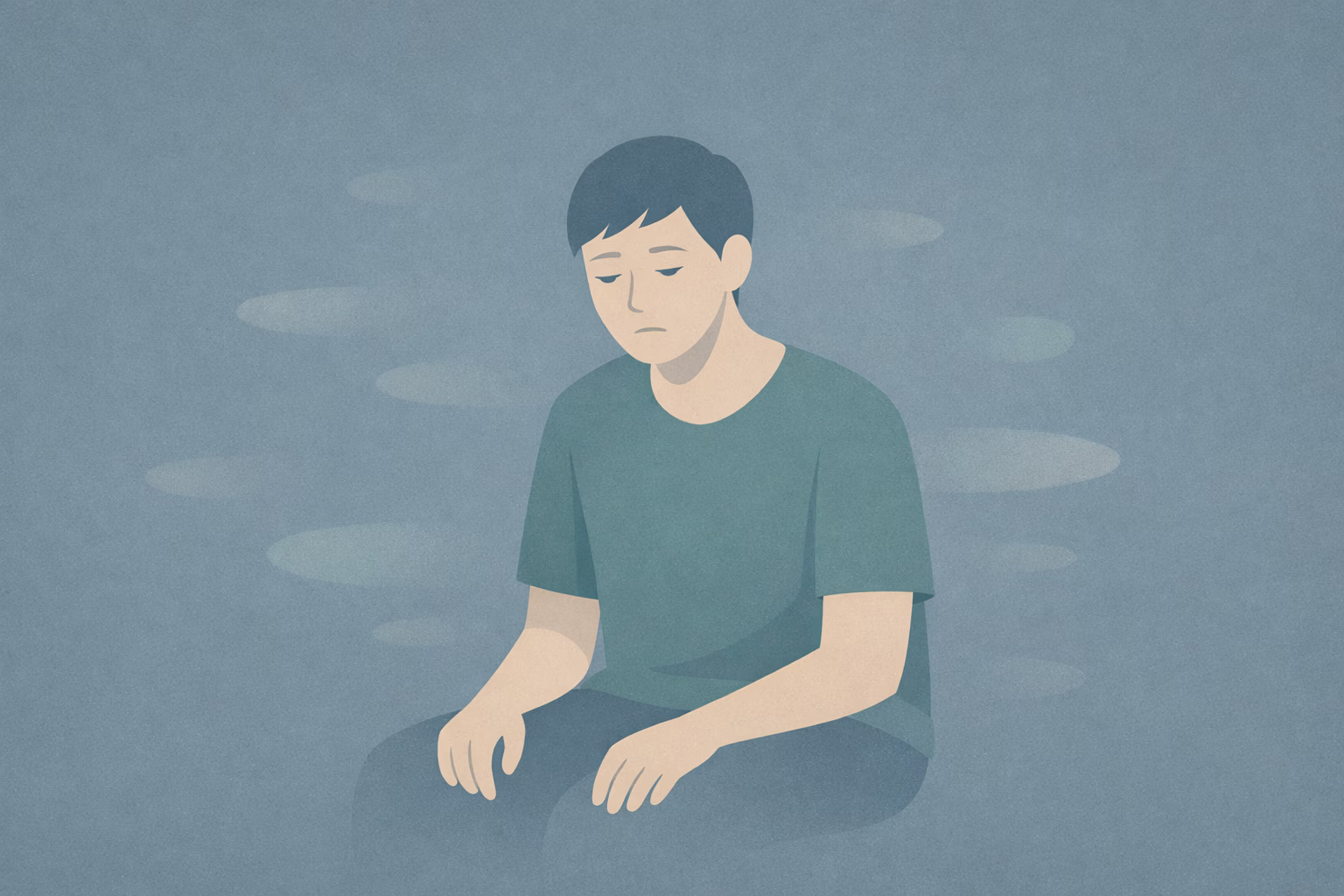
In that state, rest can feel like a thin blanket over a loud engine. You’re not failing at downtime; your system may simply not be receiving the cues that allow it to stand down.
Recovery is a set of active biological processes: replenishing energy stores, repairing tissue, recalibrating stress hormones, and returning the nervous system toward a state where signals can come and go without sticking. Burnout research often points to the body-wide imprint of sustained stress load, not just a mental experience. [Ref-2]
One way to say it: rest reduces input; recovery restores function. For recovery to occur, the body typically needs enough safety and enough time in a lower-threat state for repair and recalibration to actually run.
This is why two people can take the same “day off” and have different outcomes. The calendar event (rest) is identical; the internal conditions (recovery) are not.
Human systems are built around cycles. Effort rises, a task completes, a signal resolves, the body repairs, and the loop closes. Over time, those closures build resilience and a stable sense of capability.
Chronic stress disrupts this rhythm by keeping the body in a prolonged “adaptive” stance—always compensating, rarely finishing. Research on chronic stress and allostatic load describes how ongoing demand can keep systems activated past their intended window. [Ref-3]
In a rhythmic world, recovery follows exertion like an exhale after an inhale. In a world without clear endings, the exhale can get postponed indefinitely.
Stopping can bring immediate relief: fewer emails, fewer decisions, fewer social demands, fewer micro-threats. That relief matters—it reduces incoming load.
But relief isn’t the same as rebuilding. The brain and body can remain in a stress-adapted configuration even when the external stressor is gone, especially after long periods of pressure or unpredictability. [Ref-4]
This is one reason rest can feel “thin.” The demand has lowered, but the system hasn’t yet received enough closure to switch from protecting to repairing.
It’s a reasonable assumption: if you’re depleted, you rest; if you rest, you recover. The mismatch appears when the physiology of repair requires specific internal conditions—especially reduced threat signaling and more parasympathetic influence (the branch associated with digestion, repair, and restoration).
When stress circuitry stays active, the body prioritizes immediate readiness over long-term maintenance. That tradeoff can be adaptive short-term, but over time it can narrow the window where recovery processes run effectively. [Ref-5]
So rest can be present on the outside while the body remains on-duty inside. The result is not a character flaw; it’s a predictable outcome of how stress biology is designed.
When recovery doesn’t happen, the next day begins with less capacity. That makes normal tasks feel heavier, more urgent, and more costly. You then “need more rest,” but the rest you can access may not change the underlying depletion.
Over time, this can become a self-reinforcing loop: reduced capacity leads to more strain; more strain leads to more depletion; depletion makes recovery less accessible. Burnout reviews describe how persistent exhaustion can continue even when someone attempts to reduce workload, because the system has been running beyond its repair budget. [Ref-6]
In that loop, people often blame motivation. But what’s happening is more structural: the body is asking for restoration, not merely a pause.
When recovery is under-supplied, the signs are often subtle at first—less a dramatic crash and more a slow shrinkage of flexibility. Chronic stress can reduce frustration tolerance and increase irritability not because someone is “becoming reactive,” but because the system has less buffer to absorb normal friction. [Ref-7]
Sleep that happens, but doesn’t feel restoring
Persistent fatigue that doesn’t match your activity level
Emotional flatness or a sense of “muted color” in daily life
Slower return to baseline after small stressors
Low initiative—not from laziness, but from a reduced internal surplus
These are not personality descriptors. They are often capacity signals: the system is conserving because the account is low.
Chronic under-recovery can lead to more than tiredness. It can narrow attention, shorten patience, and compress the sense of future. Life becomes a set of tasks to manage rather than a place to inhabit.
Sleep and chronic stress influence each other in a feedback loop: stress disrupts sleep quality, and disrupted sleep increases stress reactivity. [Ref-8] Over time, this can contribute to emotional shutdown—not as avoidance, but as an energy-saving mode when the system can’t afford high-intensity processing.
When capacity drops, meaning often drops with it. Not because meaning is “in your head,” but because coherence requires enough internal space for experiences to complete and settle into identity.
Modern life offers many ways to stop without recovering: endless content, low-effort entertainment, constant checking, background noise, and small bursts of reward. These can reduce discomfort in the moment, but they don’t necessarily provide the physiological conditions needed for repair.
Some forms of downtime keep the nervous system lightly activated—alert, tracking, anticipating, comparing. The body may interpret that as “still on call.” Research on rest and sustainable performance notes that recovery depends on the quality of restoration, not simply time away from work. [Ref-9]
Sometimes we don’t need more time off. We need an off-switch that actually takes.
Distraction can feel like relief because it changes state. Recovery is different: it supports completion, so the system can truly stand down.
Recovery is often less about intensity and more about conditions: rhythm, embodiment, predictability, and enough safety cues for the nervous system to exit “monitoring mode.” Over time, those conditions help autonomic patterns become less stuck and more responsive. [Ref-10]
This matters for meaning, because coherence is not built by forcing yourself forward. Coherence tends to return when your system has enough settled capacity to register completion: this happened, it ended, I’m here now.
What changes when recovery is present?
Not necessarily your insight. More often, your internal timing changes. Stress responses rise and fall more cleanly, and the day contains more natural punctuation—small “done” signals that reduce carryover.
Humans are regulated not only by solitude and sleep, but also by connection. A safe other can provide cues—tone of voice, facial expression, pacing—that signal “you don’t have to brace right now.” Polyvagal-informed research emphasizes how safety cues shape autonomic state and social engagement capacity. [Ref-11]
This isn’t about being “more emotional” or talking everything out. It’s about physiology: when the body detects safety through relationship, it may allocate more resources toward repair rather than defense.
Social buffering research also describes how supportive presence can reduce stress responses and help the system return to baseline more efficiently.
When recovery begins to land, the signs are often ordinary and deeply telling. Thoughts have more spacing. Decisions require fewer internal negotiations. You rebound faster after a hard moment. The body stops feeling like it’s dragging an invisible weight.
Importantly, this is not constant calm or permanent ease. It’s flexibility: the ability to mobilize for life and then return. Social buffering and reduced stress reactivity are associated with improved recovery dynamics over time. [Ref-12]
More consistent “baseline” energy across the day
Clearer thinking under mild pressure
Less need for numbing or urgency spikes
A sense that tasks can finish, not just pause
In Meaning Density terms, this is where experiences can integrate—not as a mental reframe, but as a bodily settling that leaves you more available for the next moment.
When the system is under-recovered, life often becomes “pacing”: calculating what you can endure, minimizing exposure, managing the next hit of demand. That’s not weakness; it’s conservation. It’s a nervous system protecting function when resources are low.
As capacity returns, agency tends to reappear in a specific way: you can choose with less internal drag. Attention is less fragmented. Values become easier to access, not as slogans, but as lived orientation.
Research connecting mindfulness, emotion regulation, and the body highlights how embodied regulation supports more adaptive responding rather than automatic reacting. [Ref-13] In everyday terms: you’re not constantly negotiating with your own stress chemistry, so you can meet life with more coherence.
In a culture that treats exhaustion like a personal problem to solve, it can be stabilizing to remember: depletion is often a signal of load, not a verdict on you. Recovery isn’t indulgence; it’s the biological foundation that allows you to show up for what matters.
When you view recovery as preserving the capacity to live—think, connect, create, repair, and complete—shame has less room to grow. Self-compassion research suggests that a kinder internal stance is linked with better well-being and reduced self-criticism, which can lower additional stress load. [Ref-14]
Rest is a pause. Recovery is what lets the pause actually count.
Vitality isn’t something you force into existence. It tends to return when your system has enough closure to stop guarding and enough safety to start repairing.
Over time, that restoration can rebuild not just energy, but trust in your own signals—so life feels less like constant management and more like a place you can inhabit. Relationships and attachment-informed pathways are often part of that restoration, shaping how safety and self-care become possible in the first place. [Ref-15]
Rest can help you stop. Recovery helps you come back.
From theory to practice — meaning forms when insight meets action.
Because rest and recovery are different biological events. Rest reduces input. Recovery restores function. You can stop moving while your system stays in a high-cost mode internally — physically still while your physiology runs an emergency budget: scanning, bracing, conserving. In that state, rest feels like a thin blanket over a loud engine. The body isn't only asking for a pause; it's tracking accumulated wear-and-tear from repeated adaptation. For recovery to actually run, the body needs enough safety and enough time in a lower-threat state for repair to occur. Calendar events for rest don't guarantee internal conditions for recovery.
They reduce discomfort without delivering the conditions repair needs. Endless content, low-effort entertainment, constant checking, background noise, small bursts of reward — these change state but keep the nervous system lightly activated. Alert, tracking, anticipating, comparing. The body interprets that as 'still on call.' Distraction can feel like relief because it shifts state. Recovery is different: it supports completion so the system can truly stand down. Sometimes we don't need more time off — we need an off-switch that actually takes. Recovery requires reduced threat signaling and more parasympathetic influence, the branch associated with digestion, repair, and restoration. Stimulation blocks that pathway even when it feels passive.
Subtle ones, at first. Sleep that happens but doesn't feel restoring. Persistent fatigue that doesn't match your activity level. Emotional flatness or 'muted color' in daily life. Slower return to baseline after small stressors. Low initiative — not from laziness, but from a reduced internal surplus. Frustration tolerance shrinks. Small friction lands harder. These aren't personality descriptors; they're capacity signals. The system is conserving because the account is low. Over time, this creates a depletion loop: less capacity makes normal tasks heavier, heavier tasks deplete more, and rest you can access doesn't change the underlying budget. Burnout often runs along this rail.
Rhythm, embodiment, predictability, and enough safety cues for the nervous system to exit monitoring mode. Recovery isn't intensity; it's conditions. Co-regulation matters here too — a safe other can provide tone, pacing, and facial cues that signal 'you don't have to brace right now,' which lets the body allocate resources toward repair rather than defense. When restoration lands, the markers are ordinary: thoughts have more spacing, decisions need fewer internal negotiations, you rebound faster after a hard moment. The sense that tasks can finish, not just pause. Rest is a pause. Recovery is what lets the pause actually count, and what restores capacity to live.
From Science to Art.
Understanding explains what is happening. Art allows you to feel it—without fixing, judging, or naming. Pause here. Let the images work quietly. Sometimes meaning settles before words do.
One Quiet Window, one insight, one reflection — every Sunday