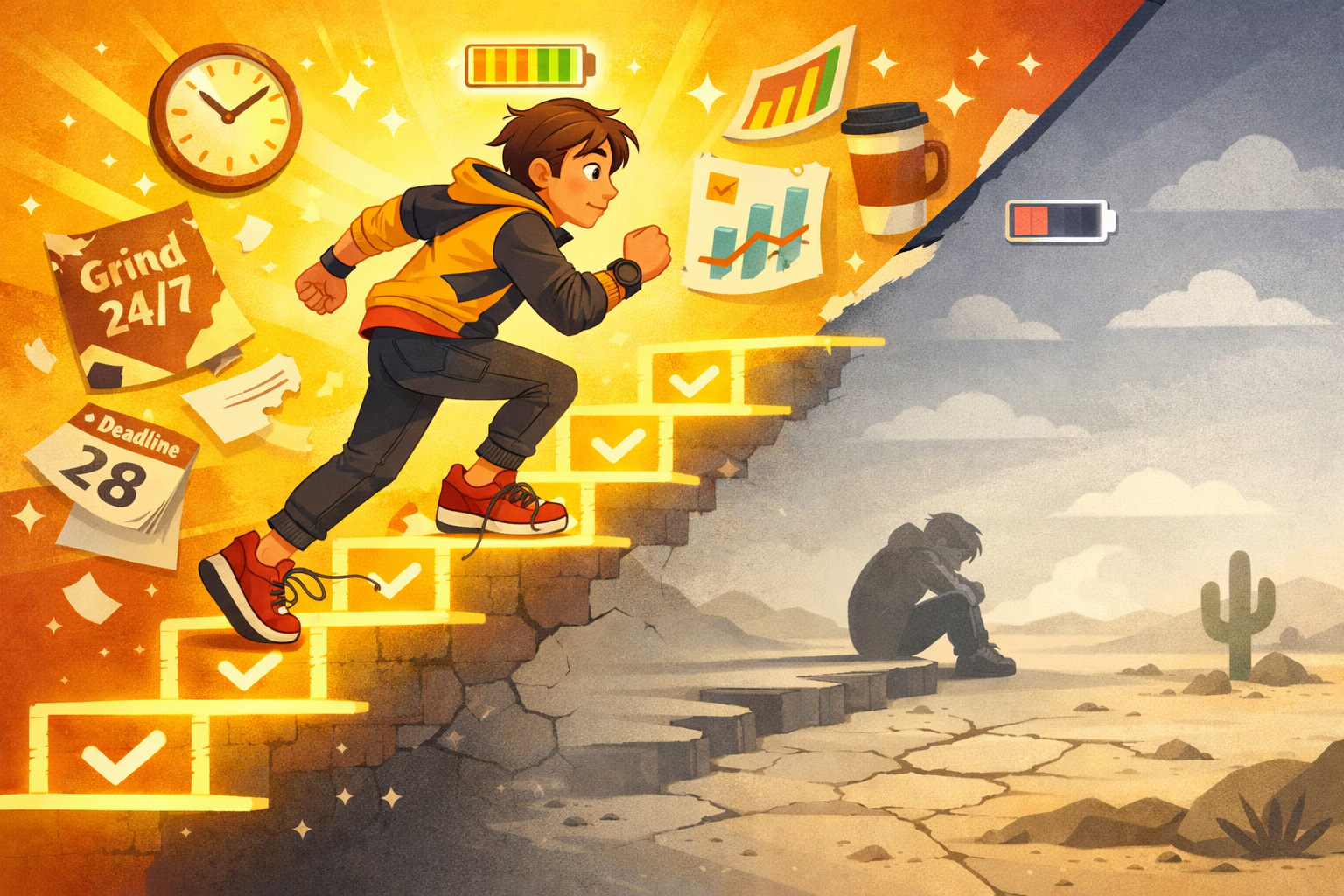
The Myth of Hustle Energy: Why You Crash Later
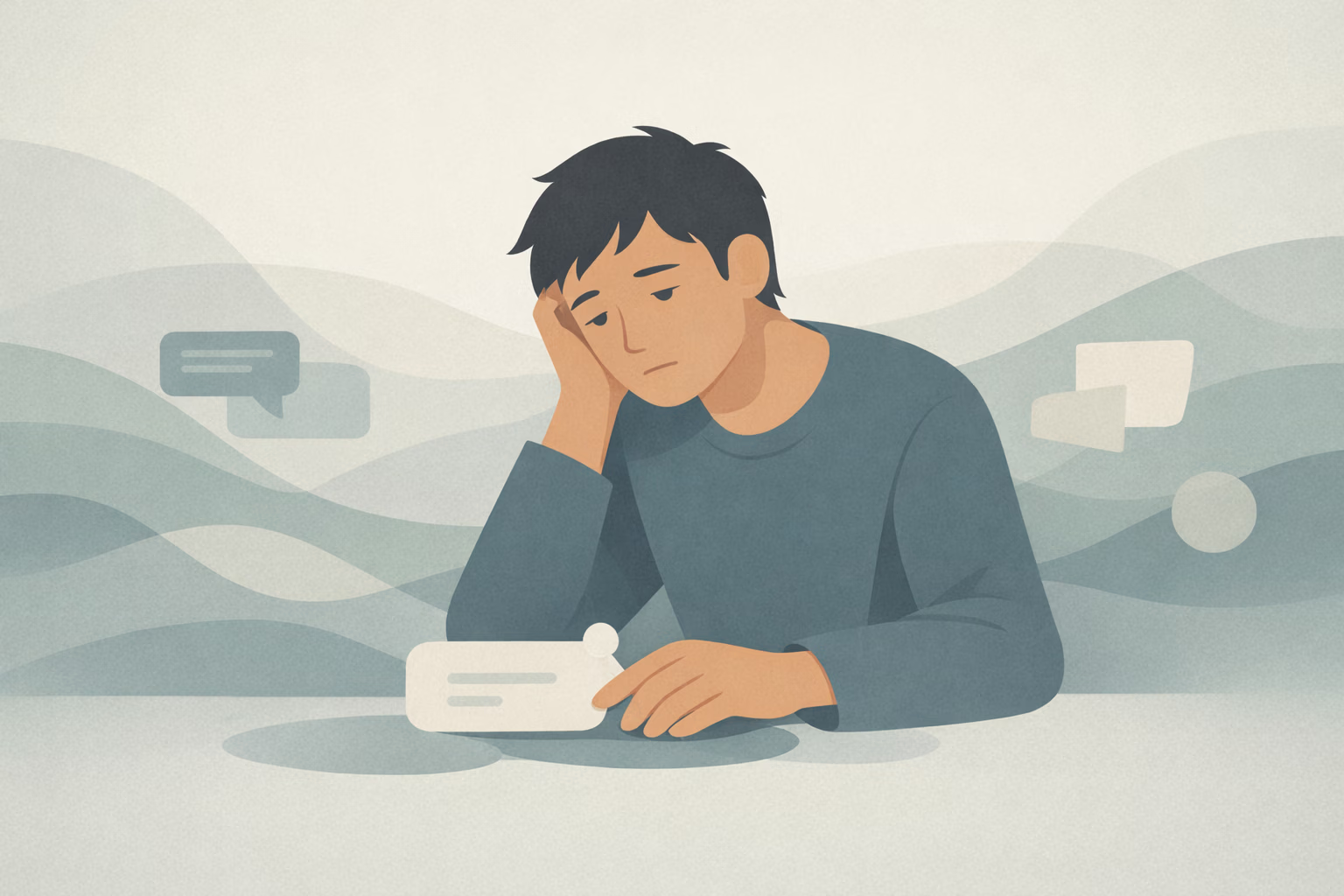
In short: Many people aren’t exactly “insomniac,” and they aren’t exactly “fine” either. They sleep, they take breaks, they even have moments that look like downtime—yet the inside of the system doesn’t register recovery.
Many people aren’t exactly “insomniac,” and they aren’t exactly “fine” either. They sleep, they take breaks, they even have moments that look like downtime—yet the inside of the system doesn’t register recovery. Energy returns shallowly. Mood stays thin. The day begins already partly spent.
What if the problem isn’t you—what if your rhythm never gets a true “done” signal?
In an always-on culture, the body is repeatedly asked to stay reachable, responsive, and slightly braced. Over time, this can disrupt the biological cycle that normally moves from effort to completion to stand-down. When those cycles don’t complete, regulation becomes a constant maintenance task rather than a natural reset.
Persistent tiredness often isn’t just “low energy.” It can feel like the system can’t finish recharging—even after sleep, time off, or a quiet evening. Instead of waking with a sense of replenishment, there’s a lingering sense of unfinishedness: like the body has been on duty in the background. [Ref-1]
This kind of fatigue is frequently paired with subtle signs of incomplete recovery: slower patience, less emotional bandwidth, more sensitivity to noise or conflict, and a narrower window between “I can handle this” and “this is too much.” None of that implies a character problem. It suggests load that hasn’t been given a chance to resolve.
Rest is not only time without work; it’s the body receiving enough closure to power down.
The nervous system is designed to shift states: mobilize when something requires response, then return toward baseline when the moment passes. Stress physiology works well when activation is time-limited and followed by downshifts. [Ref-2]
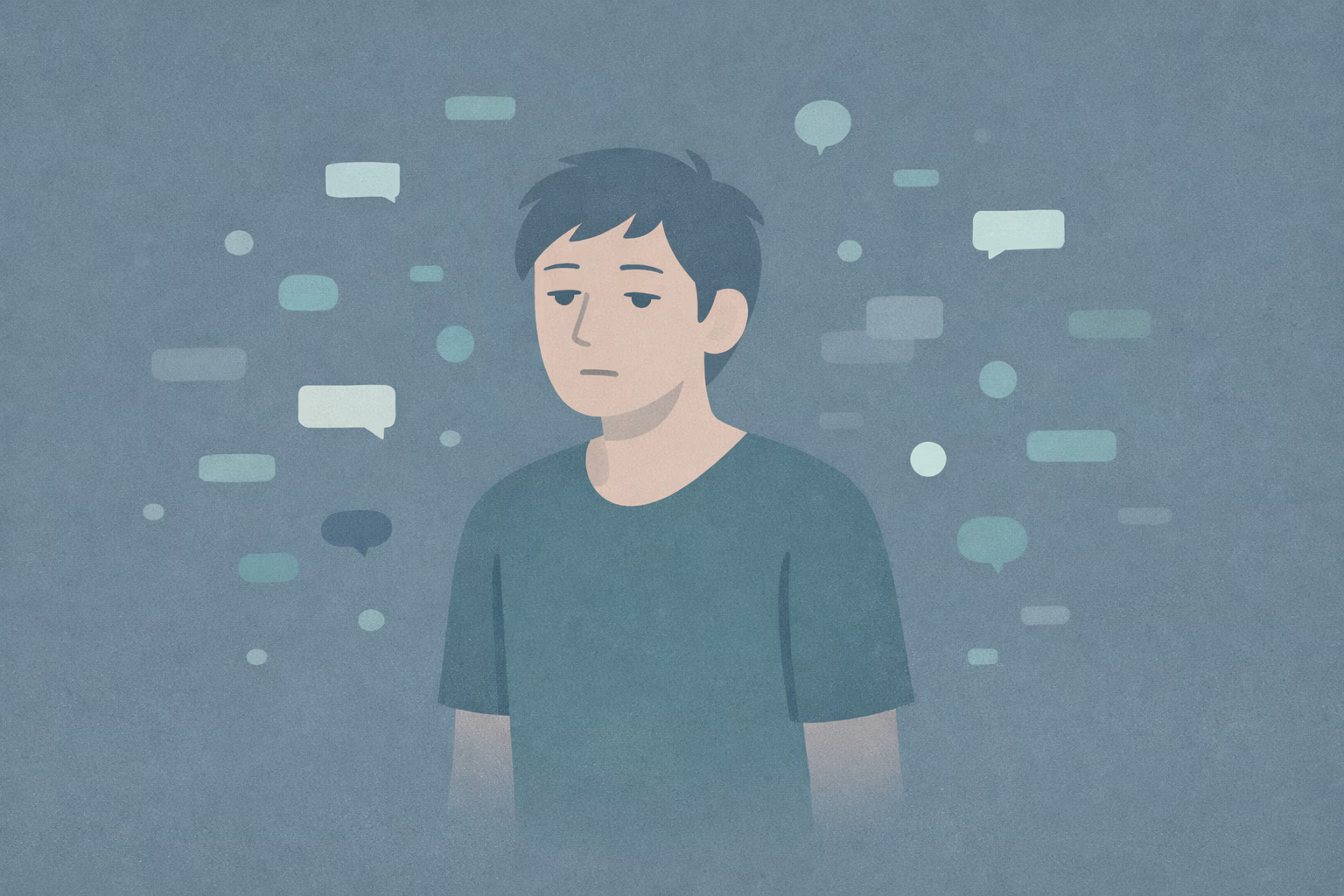
Always-on living can keep activation “quietly on.” Not panic—more like ongoing readiness. Notifications, open loops, time pressure, and social monitoring provide repeated micro-signals that something is pending. The body reads “still needed,” and it stays partially engaged.
Why can’t I fully switch off even when nothing is happening?
Because “nothing is happening” on the outside doesn’t always equal “completion” on the inside. Without completion signals, the system doesn’t stand down; it maintains a manageable hum of vigilance.
Across evolutionary time, most effort came in pulses: hunt, gather, solve the problem, return; watch for danger, then settle; connect, then separate. Our biology expects alternating phases—exertion and release, engagement and recovery. Modern round-the-clock schedules and irregular timing can create a mismatch between social demands and circadian organization. [Ref-3]
When the environment stops providing clear endpoints, the body has to guess. And when it keeps guessing wrong—because the next message, task, or update is always near—physiology begins to treat “on-ness” as the default.
It’s important to name what constant connectivity gives: convenience, coordination, access, responsiveness, and sometimes a stabilizing sense of relevance or control. Digital connection can genuinely support productivity and social contact—both of which can be protective in the right doses. [Ref-4]
That’s why always-on isn’t simply “bad.” It’s attractive because it reduces friction. It creates immediate feedback and quick resolution to small uncertainties. The issue is not the tool; it’s the absence of a reliable boundary where engagement concludes and recovery can be uninterrupted.
When responsiveness becomes a baseline expectation, the nervous system can start treating “available” as a safety requirement—less as a choice, more as the cost of staying afloat.
Always-on culture often carries an implicit story: if you pause, you’ll lose ground. If you’re not reachable, you’re less dependable. If you slow down, you’ll be overtaken. Work culture trends toward extended availability and after-hours responsiveness, which can gradually redefine what counts as “normal.” [Ref-5]
But rhythms don’t obey cultural narratives. Biological cycles erode when there are no protected pauses. The cost isn’t always immediate; it appears as a slow flattening—less depth of rest, less clarity in decision-making, less capacity to handle the ordinary.
When pausing feels risky, the body learns that recovery is optional—and then it stops arriving on schedule.
In an always-on environment, stimulation can replace recovery—not because someone is afraid to be alone with themselves, but because stimulation keeps the system in a workable middle state. It prevents the sharp drop that would reveal how depleted the body actually is. It keeps discomfort muted and momentum intact.
This is how an avoidance loop forms structurally: unfinished load builds; stimulation provides temporary state change; the deeper “reset” never completes; the baseline becomes more strained; and stimulation becomes even more necessary to feel okay.
Workplace norms and digital expectations can reinforce this loop by keeping availability ambiguous: not officially required, yet quietly rewarded. [Ref-6]
Always-on disruption often shows up as patterns that look like personality—“I’m just someone who can’t relax”—when they’re actually regulatory responses to constant partial engagement.
After-hours connectivity has been associated with increased strain and difficulty detaching from work demands, especially when expectations are unclear. [Ref-7]
These aren’t identities. They’re adaptive ways a nervous system stays coordinated when the environment won’t provide a clean end.
When circadian rhythm and social timing drift apart—often called “social jetlag”—the effects can accumulate across mood, metabolism, and resilience. It’s not only about sleep quantity; it’s about timing, predictability, and whether the system gets consistent downshifts. [Ref-8]
Over time, chronic disruption may contribute to burnout-like depletion, irritability, reduced stress tolerance, and a sense that small demands feel disproportionately heavy. The body becomes less able to buffer change because it’s operating without full recovery cycles.
In this state, even good things can feel like “too much”—not because the person is fragile, but because the system has less spare capacity. That’s physiology, not moral failure.
As fatigue deepens, boundaries often get softer. Not through poor choices—through reduced capacity. When the nervous system is taxed, it becomes harder to tolerate uncertainty, delay, or silence. Reaching for quick inputs can feel like the simplest way to keep functioning.
This is how the spiral maintains itself: tiredness makes it harder to hold limits; weaker limits increase exposure to noise and demands; increased exposure disrupts rhythm further; and further disruption produces more tiredness. Many people recognize this as a drifting schedule—late nights, irregular mornings, and a persistent sense of being “off.” Social jetlag is often described as a hidden risk because it can feel normal until health and mood begin to shift. [Ref-9]
Why does everything feel urgent when I’m exhausted?
Because exhaustion reduces the buffer that makes life feel spacious. Without buffer, the system treats small signals as larger ones, and it recruits urgency to compensate.
In an always-on world, “rest” gets framed like a personal project: something to earn, optimize, or perform correctly. But downshift is not a performance. It’s the body receiving enough safety and predictability to complete its cycle and stand down.
Protected downtime, sensory quiet, and predictable rest windows matter because they create conditions where the nervous system can stop scanning and finish what it started: moving from activation to completion. Approaches that emphasize recovery through intentional restoration highlight that stress resolution requires more than stopping work; it requires enabling the body’s recovery mechanisms to engage. [Ref-10]
This is a shift in meaning: from “I should be able to handle more” to “my system needs endpoints.” Not as an attitude change, but as a recognition that closure is a physical event—an internal settling that can’t be forced by insight.
Rhythm is not created by one person alone. It’s supported—or undermined—by collective norms: when messages are expected to be answered, how quickly “responsiveness” is rewarded, whether rest is treated as legitimate or suspicious.
When groups establish clear expectations around availability, people’s nervous systems get a rare gift: predictability. That predictability reduces background scanning. It allows the body to trust that “off” is real. Organizational energy management increasingly recognizes that constant digital connectivity drains capacity and increases burnout risk, especially when boundaries are unclear. [Ref-11]
Rest becomes possible when it’s socially believable—when the world signals, “Nothing is required of you right now.”
As rhythm returns, many people notice changes that are more structural than emotional. There is more signal clarity: the body can distinguish effort from recovery again. Sleep may feel denser. Energy may become steadier rather than spiky. The day may start with more internal space.
Another marker is the return of feedback: you can feel when you’ve had enough stimulation, enough conversation, enough screen time. Instead of pushing through with adrenaline, the system offers earlier cues. Discussions of recovery and nervous system fatigue often note that restoration is reflected in improved capacity and more reliable physiological signals—not simply in willpower. [Ref-12]
This is integration in the body’s language: not “I understand my limits,” but “my limits register, and I can feel them in time.”
Restored rhythm doesn’t just reduce tiredness; it changes how life organizes. When the nervous system isn’t constantly compensating for disruption, attention becomes less fragmented. Decisions require less force. Relationships feel less like one more demand. The future becomes easier to imagine.
This is where meaning density grows: actions and values can align because there is enough steadiness to choose rather than react. In circadian research, misalignment between social schedules and biological timing is linked with strain; reducing that misalignment supports resilience and more consistent functioning. [Ref-13]
Instead of living in continual response mode, life begins to include genuine endpoints: work concludes, connection concludes, input concludes. And in those completions, identity can settle—“this is what my life holds,” not “this is what I’m barely keeping up with.”
In an always-on society, protecting rhythm can be misread as opting out. But biologically, rhythm is participation: it’s how humans stay capable of attention, care, creativity, and steadiness over time.
When workplaces and cultures normalize constant availability, the cost is often paid quietly in health, mood, and coherence. Naming the condition reduces shame: many “personal” struggles are actually predictable outcomes of a system that rarely allows completion. Research on always-on culture highlights how structural expectations shape stress and recovery far beyond individual preference. [Ref-14]
Agency doesn’t require pushing harder. It often returns when the body is finally permitted to complete its cycles—so the self can reappear as more than a responder.
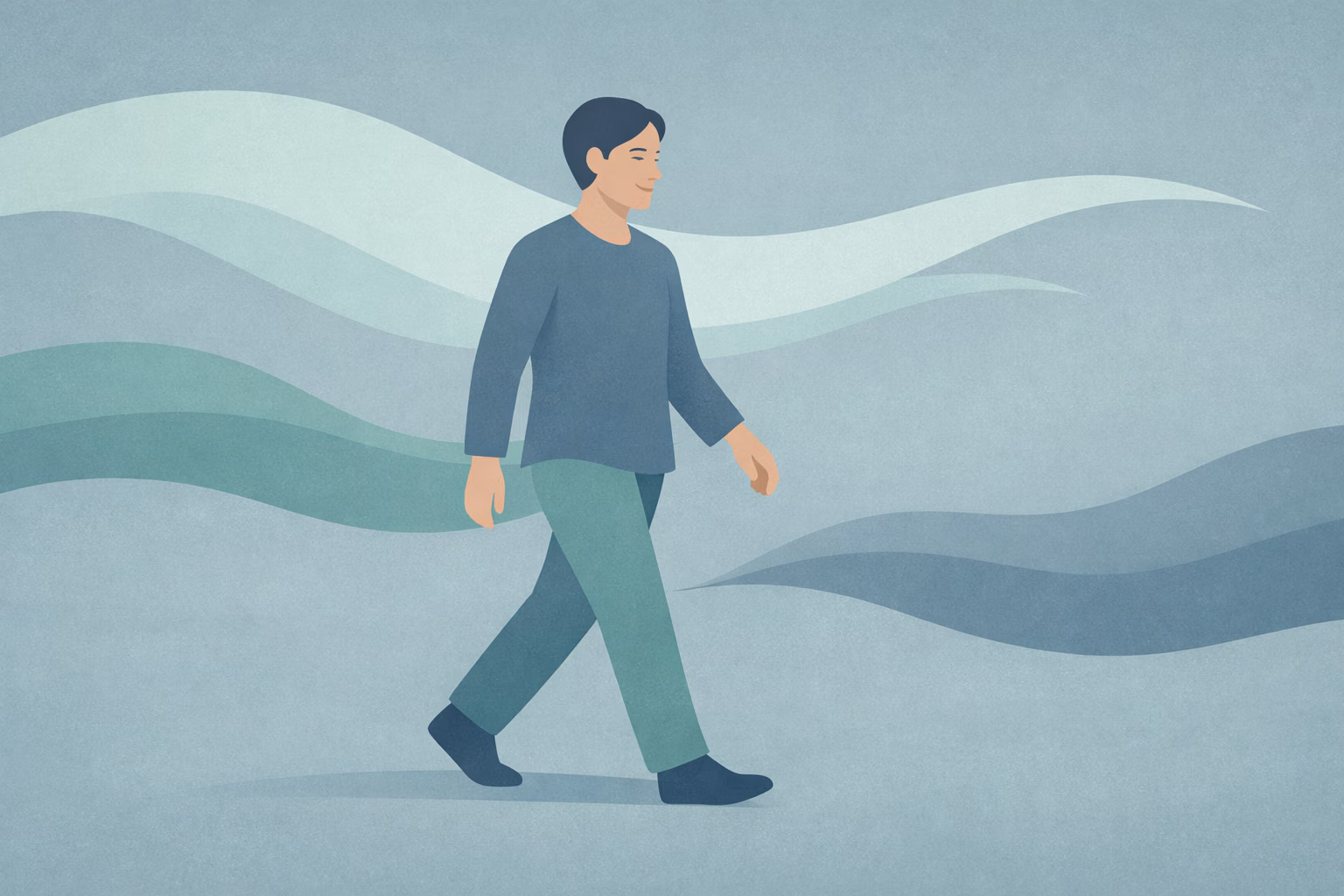
There is a particular kind of relief that arrives when the system no longer has to stay half-ready. It’s not excitement. It’s a quiet “stand-down.” In that steadier state, rest becomes regenerative rather than merely absent activity, and daily life becomes more navigable.
Always-on culture can make constant engagement seem like the price of relevance, even when it erodes well-being. Holding both truths—connection can help, and connection can overrun rhythm—lets the story become more accurate and less blaming. [Ref-15]
When the body is allowed enough closure, meaning doesn’t need to be chased. It has room to form—one complete day, one complete night, and one honest endpoint at a time.
From theory to practice — meaning forms when insight meets action.
Rest stops working when the nervous system never receives a Done Signal. You may sleep, take breaks, even have quiet evenings, yet the body keeps a low-grade hum of vigilance because notifications, open loops, and ambient social monitoring tell it something is still pending. Without a clean endpoint, recovery cycles don't complete; the next day begins already partly spent. This is biology, not weakness. Rest is not just absence of work — it is the body receiving enough closure to power down. When closure never arrives, fatigue accumulates underneath what looks like normal functioning, and the window of tolerance quietly narrows.
An Avoidance Loop forms structurally, not by choice. Unfinished load builds in the system, stimulation provides a temporary state change, the deeper reset never completes, baseline becomes more strained, and stimulation becomes more necessary just to feel okay. The Reward & Stimulation System keeps the body in a workable middle state, preventing the sharp drop that would reveal how depleted you actually are. Workplace norms reinforce this by making availability ambiguous — not officially required, yet quietly rewarded. Over time, stimulation replaces recovery, and what started as convenience hardens into a regulatory dependency the Threat & Safety System now relies on.
Social jetlag is the drift between your circadian rhythm and your social schedule — late nights, irregular mornings, no consistent downshift. Humans evolved for pulsed effort: hunt and return, watch and settle, connect and separate. This is Evolutionary Mismatch in action: round-the-clock connectivity removes the alternating phases biology expects. When the environment stops providing clear endpoints, the body has to guess, and chronic mis-guessing erodes mood, metabolism, and stress tolerance. Small demands start to feel disproportionately heavy because the system is operating without full recovery cycles, not because you've become fragile.
Exhaustion shrinks the buffer that makes life feel spacious. Without that buffer, the nervous system reads small signals as larger ones and recruits urgency to compensate. Fatigue weakens the capacity to hold limits, weaker limits increase exposure to noise and demands, increased exposure further disrupts rhythm, and disrupted rhythm produces more tiredness — a self-maintaining spiral. Loop Sovereignty here begins with recognition: the urgency isn't a verdict on what matters, it's a depletion signal. Restoration doesn't require pushing harder; it requires protected downshift so the body can finish what it started and re-enter its window of tolerance.
From Science to Art.
Understanding explains what is happening. Art allows you to feel it—without fixing, judging, or naming. Pause here. Let the images work quietly. Sometimes meaning settles before words do.
One Quiet Window, one insight, one reflection — every Sunday