

Notification Anticipation: Micro-Stress You Don’t Notice
In short: Constant notifications don’t just “distract” you. They repeatedly interrupt your nervous system’s ability to complete a loop—finish a thought, settle a decision, or let a moment land as done. Over time, that can feel like mental fragmentation: many small pulls, very few real endings.
Constant notifications don’t just “distract” you. They repeatedly interrupt your nervous system’s ability to complete a loop—finish a thought, settle a decision, or let a moment land as done. Over time, that can feel like mental fragmentation: many small pulls, very few real endings.
It’s also not a character issue. When your environment delivers frequent, unpredictable signals, your brain does what it evolved to do: it prioritizes detection. The cost is that your attention gets trained toward alertness rather than completion.
What if the exhaustion isn’t from what you’re doing—so much as from how often your mind is being restarted?
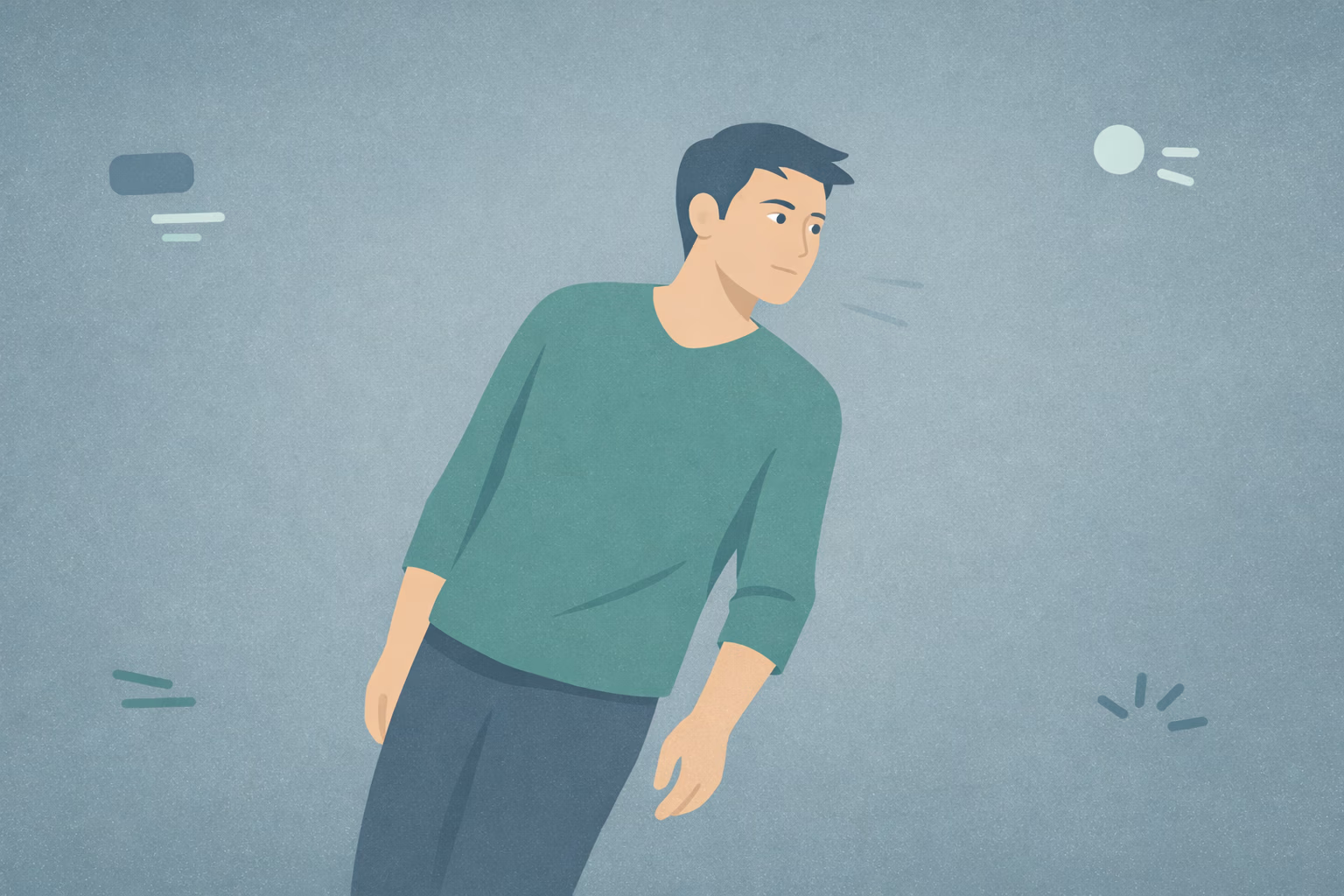
That quick urge—checking even when you didn’t decide to—often shows up as a body-level pull: a tiny jolt, a reflexive reach, a sense that something is waiting. The mind may interpret it as “I should see what it is,” but the deeper experience is interruption: your attention gets unseated before it can fully settle.
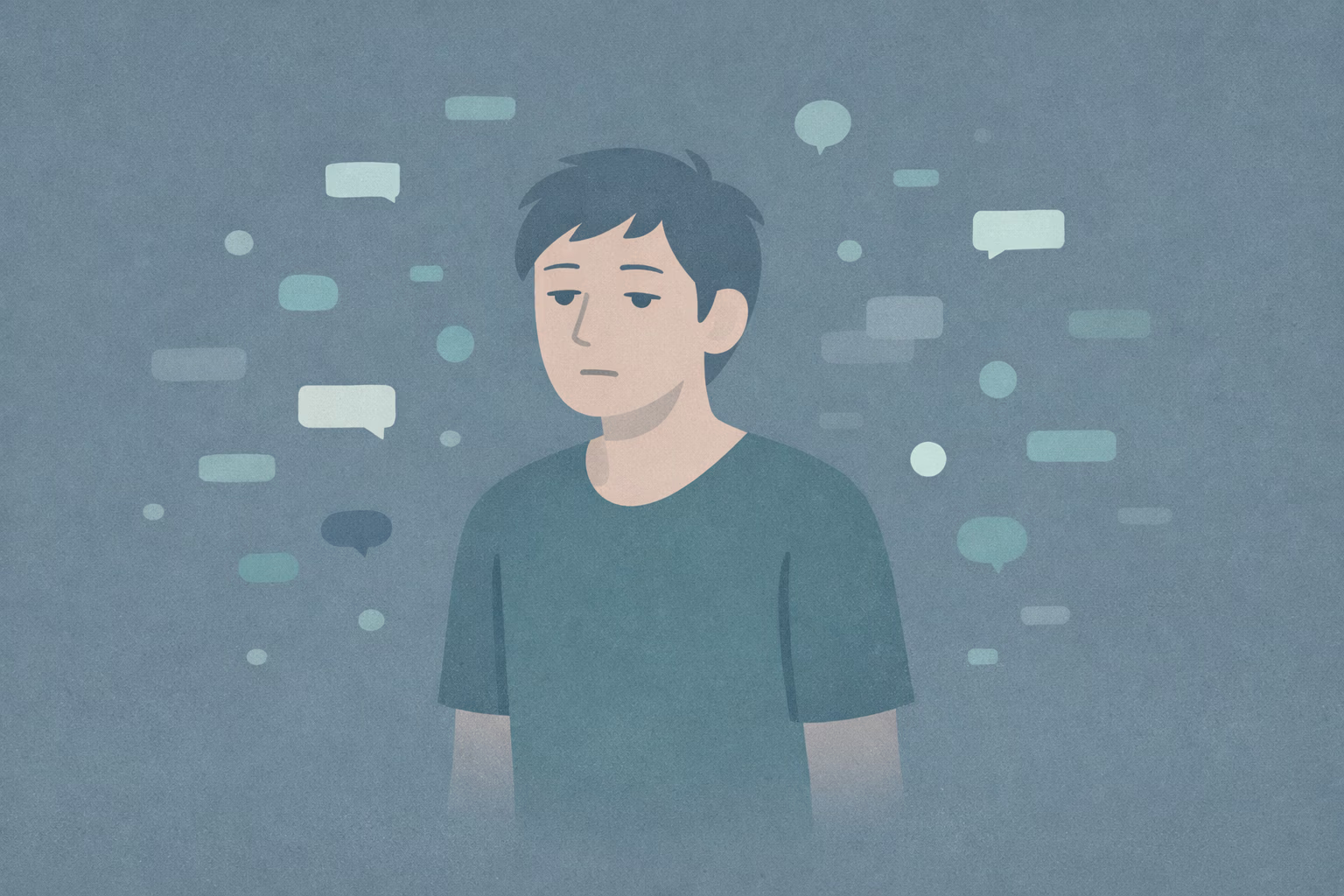
When this happens repeatedly, life can start to feel like open tabs. You may still be doing plenty, but less of it arrives with a clear internal “done” signal. That’s the tiring part: not effort, but incompletion.
This is a regulatory response to the conditions—not a verdict on your focus. [Ref-1]
Many alerts function less like information and more like a trigger for anticipation. The brain’s reward chemistry is strongly oriented toward “maybe”—the possibility of something relevant, pleasing, or urgent. That anticipation can spike attention, then rapidly redirect it.
Because the reward is variable (sometimes meaningful, sometimes nothing), checking gets reinforced. You don’t just learn the content; you learn the rhythm: cue → scan → brief relief. Each cycle resets attention and makes the next interruption easier to accept. [Ref-2]
In this sense, the notification isn’t only a message. It’s a timing signal that repeatedly teaches your nervous system to stay ready—rather than to finish what it started.
From an evolutionary perspective, missing a signal could be costly. Nervous systems are biased toward detection: movement in the bushes, a change in the group, a new sound. Even when the “signal” is small, uncertainty makes it compelling.
Smartphone alerts can mimic this ancient ecology: brief, salient, ambiguous cues that suggest possible opportunity or social information. In other words, the pull isn’t simply habit—it’s the nervous system treating the ping as a meaningful environmental change that deserves a quick check. [Ref-3]
When the world keeps tapping you on the shoulder, your attention learns to stand half-upright all day.
It matters to name what notifications can provide. A ping can offer immediate reassurance: “I’m not missing something.” It can create a sense of social inclusion, relevance, or momentary certainty—especially when life feels fast, evaluated, or relationally diffuse. [Ref-4]
That doesn’t make you dependent or shallow. It means your system is responding to cues of belonging and orientation. The nervous system often treats connection and status signals as safety cues, so a notification can briefly soften tension.
The challenge is that reassurance delivered in tiny, frequent bursts often doesn’t integrate. It changes state—then the question returns.
Notifications can create a sense of coverage: if you’re seeing everything, you’re handling everything. But constant partial checking isn’t the same as completion. Many people notice that while they are more “updated,” they feel less rested—and their focus feels more brittle. [Ref-5]
Each interruption has a switching cost. The brain must reorient, re-remember, re-enter. Over a day, the total load can resemble cognitive jet lag: you’re present, but not fully landed anywhere for long.
When you’re constantly available to alerts, when does your attention get to belong to you?
Many notification cycles follow a predictable loop: a cue arrives, anticipation rises, you check, relief or novelty lands, and then your baseline attention drops slightly—because the system has learned that stimulation is the regulator. [Ref-6]
The relief is real. It’s also brief. The nervous system doesn’t get closure; it gets a reset. Over time, the “quiet baseline” can feel less accessible, because the brain has been conditioned to expect external timing signals to manage internal state.
As the loop repeats, the body can begin to “pre-load” for alerts. This is why people report phantom vibrations, reflexive unlocking, and checking without conscious intention. It’s not a mystery so much as a learned readiness response. [Ref-7]
Silencing alerts can also feel strangely activating—not because you’re doing something wrong, but because the system has been relying on the next cue to resolve uncertainty. When the cue doesn’t come, the loop stays incomplete.
One ping isn’t the problem. The cumulative pattern is. Frequent micro-interruptions can erode sustained attention and keep the nervous system in a light, persistent mobilization—alert, scanning, ready. [Ref-8]
When that becomes the background state, deep focus can feel effortful not because you lack discipline, but because your system is trained to expect frequent context shifts. Your brain doesn’t just lose time; it loses continuity.
And without continuity, meaning becomes harder to consolidate. You may remember what happened, but it doesn’t always “land” as a coherent story you inhabit.
Over time, attention tolerance can shrink: the space between stimuli feels longer than it is, and the mind reaches outward sooner. This can look like dependence on external input, but structurally it’s a reduced capacity to stay with one stream long enough for closure to occur.
Phantom vibration experiences are one example of how strongly the nervous system can predict the cue—and sometimes generate the sensation in the absence of the cue. The body is not being dramatic; it’s being trained. [Ref-9]
When a system is repeatedly interrupted before it completes, it learns to prioritize “next” over “finished.” That’s a subtle but profound shift in how agency feels.
There’s a difference between being reachable and being governed. Attentional sovereignty is not a mindset; it’s what emerges when your nervous system is allowed to complete loops without constant re-initiation.
In practical terms, environments can be shaped so cues are less frequent and rewards are less immediate. But the deeper shift is timing: when signals stop fragmenting the day, the brain can relearn longer arcs of engagement—where actions have beginnings, middles, and endings that register as complete. [Ref-10]
This is why “more awareness” isn’t the same as restoration. Stability comes when your attention has enough uninterrupted continuity for completion to settle into identity: this is what I’m doing; this is who I am while I do it.
Many notification pressures are social, not personal: workplace responsiveness, group chats, read receipts, platform expectations, customer service culture. When the surrounding norm implies “instant,” the nervous system treats delay as risk.
In healthier communication ecosystems, responsiveness has shape—windows, roles, mutual understanding—so attention can rest without relational penalty. When expectations are coherent, the body doesn’t have to keep scanning for the next demand. [Ref-11]
Sometimes what looks like “phone dependency” is a nervous system trying to stay safe inside unclear expectations.
When notification load decreases, many people describe a particular kind of quiet—not emptiness, but fewer abrupt starts. The mind can stay with one thing long enough to form continuity, and the body stops bracing for the next cue.
This shift is often subtle at first: fewer phantom buzz moments, less reflexive reaching, more tolerance for silence. Over time, the nervous system regains the ability to “return” after disruption instead of needing another stimulus to regulate. [Ref-12]
Importantly, this isn’t about feeling more. It’s about having more capacity for signal return: attention drifts, then comes back—without being yanked.
When alerts are frequent, attention gets treated like a public utility—always available, always reroutable. In that state, identity can become reactive: you are who responds, who keeps up, who doesn’t miss. The self is organized around interruption.
As coherence returns, attention starts to behave like a values signal. What you stay with begins to reflect what matters—not because you forced it, but because your system is no longer being constantly re-timed by external cues.
Meaning becomes more available when your day contains completion: fewer fragments, more finished moments that can integrate into a stable sense of “this is my life.” [Ref-13]
Notifications are small, but they are not neutral. Each one is a claim on your timing—often made by systems optimized for engagement rather than for your closure. [Ref-14]
When you begin to see attention as finite life energy, the conversation changes. It’s less about being “strong enough” to resist and more about whether your environment is supporting continuity, completion, and a coherent day you can actually inhabit.
Agency doesn’t always look like effort. Sometimes it looks like fewer interruptions between you and the moments that would otherwise become your life.
It can be clarifying to notice what your attention is trained to serve: the next ping, the next update, the next reassurance—or the meanings you want your days to accumulate into. [Ref-15]
Not as a self-improvement project, and not as a moral test. Just as a dignity question: when your nervous system gets enough closure to settle, what becomes possible that constant alertness kept postponing?
From theory to practice — meaning forms when insight meets action.
Because the exhaustion isn't from effort — it's from incompletion. Each ping interrupts your nervous system before it can finish a thought, settle a decision, or let a moment land as Done. Life starts feeling like open tabs: thoughts restart frequently, attention feels thin, even quiet moments contain a faint readiness for the next cue. You may still be doing plenty, but less of it arrives with a clear internal Done Signal. That's the tiring part — not the work, but how often your mind is being restarted. It's a regulatory response to your environment, not a verdict on your focus.
It's a five-step cycle: ping interrupts attention, anticipation mobilizes checking, checking delivers variable reward, relief reduces tension briefly, then baseline drops slightly because the system has learned that stimulation is the regulator. The relief is real — and brief. The Reward & Stimulation System never gets closure; it gets a reset. Because the reward is variable (sometimes meaningful, sometimes nothing), checking gets reinforced through the same mechanism that drives slot machines. Over time, the quiet baseline becomes less accessible, because the brain has been conditioned to expect external timing signals to manage internal state.
Because the system has been relying on the next cue to resolve uncertainty. When the cue doesn't come, the loop stays incomplete. The body has learned to pre-load for alerts — phantom vibrations, reflexive unlocking, checking without conscious intention are all examples of this learned readiness response. This is an Evolutionary Mismatch in action: nervous systems built to detect rare, meaningful environmental signals are now exposed to ambiguous cues all day. Silencing alerts removes the trigger but doesn't immediately remove the readiness. The nervous system needs uninterrupted continuity to relearn that quiet is safe.
When alerts are frequent, attention gets treated like a public utility — always available, always reroutable — and identity becomes reactive: you are who responds, who keeps up, who doesn't miss. As coherence returns, attention starts behaving like a values signal. What you stay with begins to reflect what matters, not because you forced it, but because your system is no longer being constantly re-timed. Meaning Density grows when the day contains completion: fewer fragments, more finished moments that integrate into a stable sense of 'this is my life.' Loop Sovereignty isn't effort — it's fewer interruptions between you and your own days.
From Science to Art.
Understanding explains what is happening. Art allows you to feel it—without fixing, judging, or naming. Pause here. Let the images work quietly. Sometimes meaning settles before words do.
One Quiet Window, one insight, one reflection — every Sunday