Emotional Numbing Habits: How You Avoid Feeling
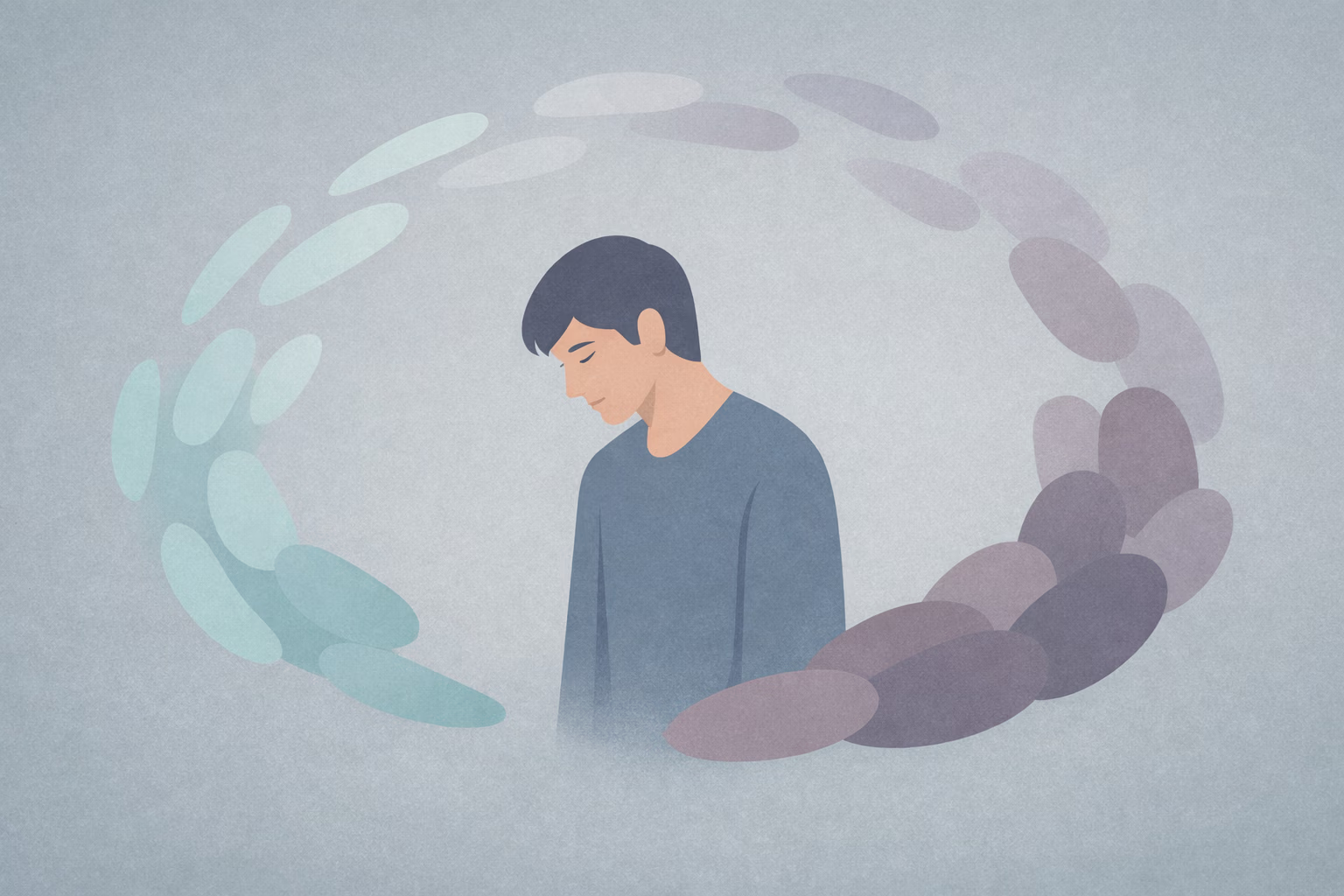
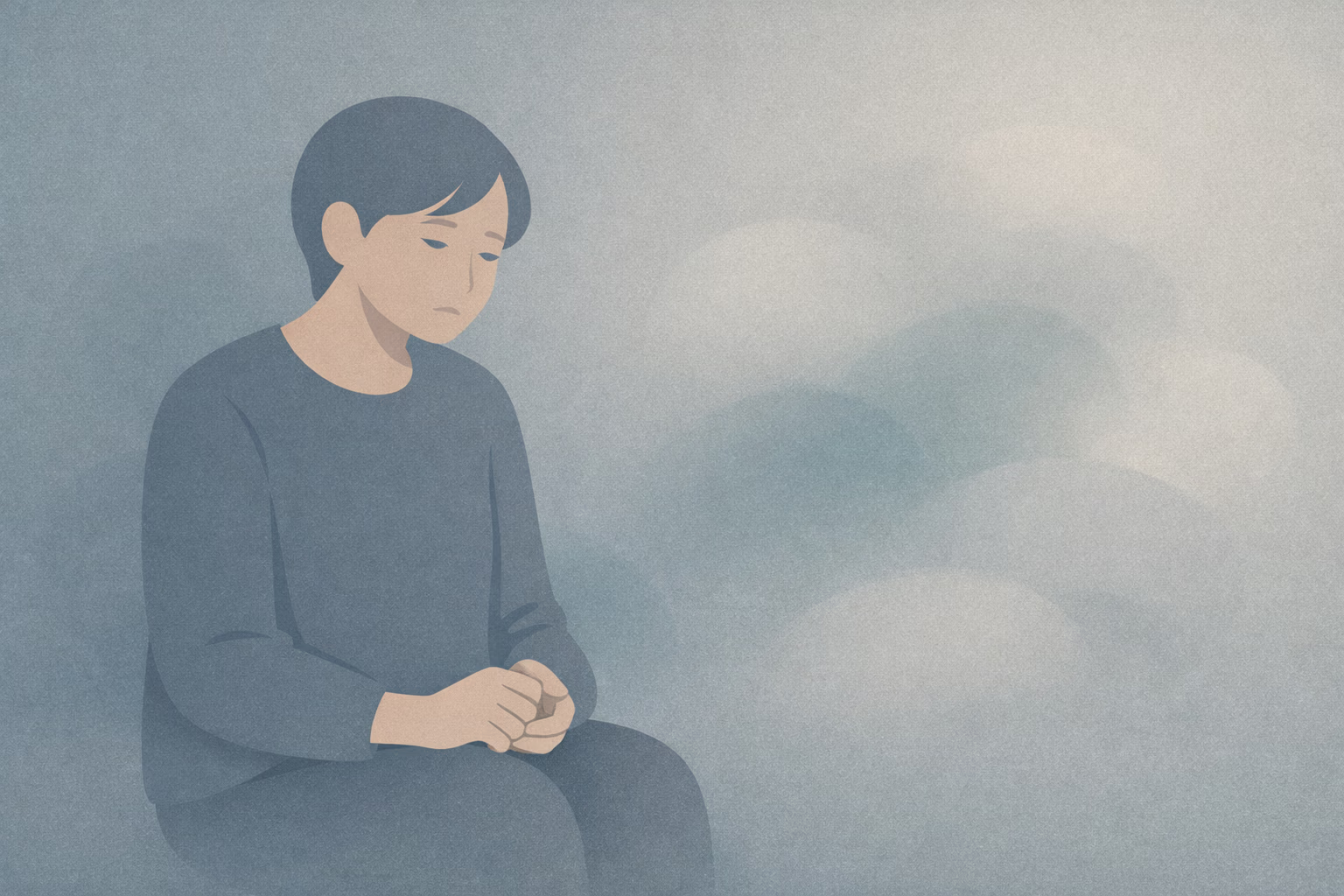
In short: Emotional numbness can feel like living behind glass: you can see your life happening, but the color and impact don’t quite land. Many people describe it as “fine, but not really here,” or as if their inner volume has been turned down so far that even good news arrives without much movement.
Emotional numbness can feel like living behind glass: you can see your life happening, but the color and impact don’t quite land. Many people describe it as “fine, but not really here,” or as if their inner volume has been turned down so far that even good news arrives without much movement.
What if numbness isn’t a personality trait—what if it’s your system’s way of reducing load?
When feeling “nothing” becomes the default, it often isn’t because you’re broken or detached by choice. It can be what happens when the nervous system has had to carry too much, for too long, without enough completion—without enough signals that something is truly done, safe, and settled.
Chronic numbness isn’t always dramatic. Sometimes it’s a quiet absence: muted joy, thin sadness, a distant sense of affection, a “blank” response where emotion used to show up. People often report feeling robotic, foggy, or oddly calm in situations that used to matter.
The fear underneath is rarely about any single moment. It’s more existential: a worry that something essential is missing, or that the ability to respond is gone for good. That fear makes sense—emotions are part of how humans register relevance, connection, and direction. When those signals go dim, it can feel like you’ve lost your internal compass. [Ref-1]
Numbness isn’t just “not feeling.” It can be the body’s way of keeping life manageable.
Nervous systems adapt to what they repeatedly have to survive. If high emotional output has reliably been followed by conflict, overwhelm, punishment, or more demands, the system can begin to prefer a lower-output setting—not as a belief, but as conditioning.
Over time, this “turning down” can become the baseline. Not because a person decided to disengage, but because the body learned that fewer signals meant fewer consequences. In that sense, numbness can function like a protective dimmer switch: it reduces intensity so the system can keep operating. [Ref-2]
In persistently unsafe environments, high sensitivity can be costly. When resources are limited and threat is frequent, the body benefits from conserving energy, limiting distraction, and staying less emotionally exposed.
What we now call “freeze” or shutdown can be understood as a survival strategy: reducing movement, reducing visibility, reducing internal noise. Emotional dampening fits that logic. It can help a person endure what can’t be solved quickly by action. In modern life, the triggers are different, but the circuitry is old. [Ref-3]
Numbness often arrives with a kind of immediate relief: less sting, less urgency, less friction. If your system is already saturated—by noise, social demand, grief, uncertainty, or constant decision-making—emotional flattening can reduce total input.
This is why numbness can feel stabilizing. It creates distance from pain and from the ripple effects of emotion (conversations, needs, disagreements, change). It also reduces sensory and interoceptive intensity—fewer strong body signals to interpret, fewer internal alarms to manage. In polyvagal terms, this resembles a low-energy protective state that prioritizes conservation. [Ref-4]
When your system can’t find “done,” it may choose “down.”
The same mechanism that reduces pain also reduces pleasure. Emotional range tends to narrow as a package deal. People often notice that music doesn’t move them, achievements don’t register, relationships feel distant, and even rest doesn’t feel restorative.
Over time, this can affect identity: if you can’t feel what matters, it becomes harder to know what matters. That doesn’t mean meaning is gone—it means the system isn’t delivering the internal “this is important” signal reliably. The person may look functional on the outside while feeling oddly absent on the inside. [Ref-5]
In an avoidance loop, the system discovers a state that reduces immediate load and then returns to it automatically. Numbness can be mistaken for control because it quiets the feedback that would otherwise demand response.
What reinforces the loop isn’t “fear of feelings” as a personal flaw. It’s structural: activation creates more internal signal, more relational consequence, and more unfinished business. Shutdown reduces signal and therefore reduces consequence—at least temporarily. The nervous system learns: low output equals fewer problems to process today. [Ref-6]
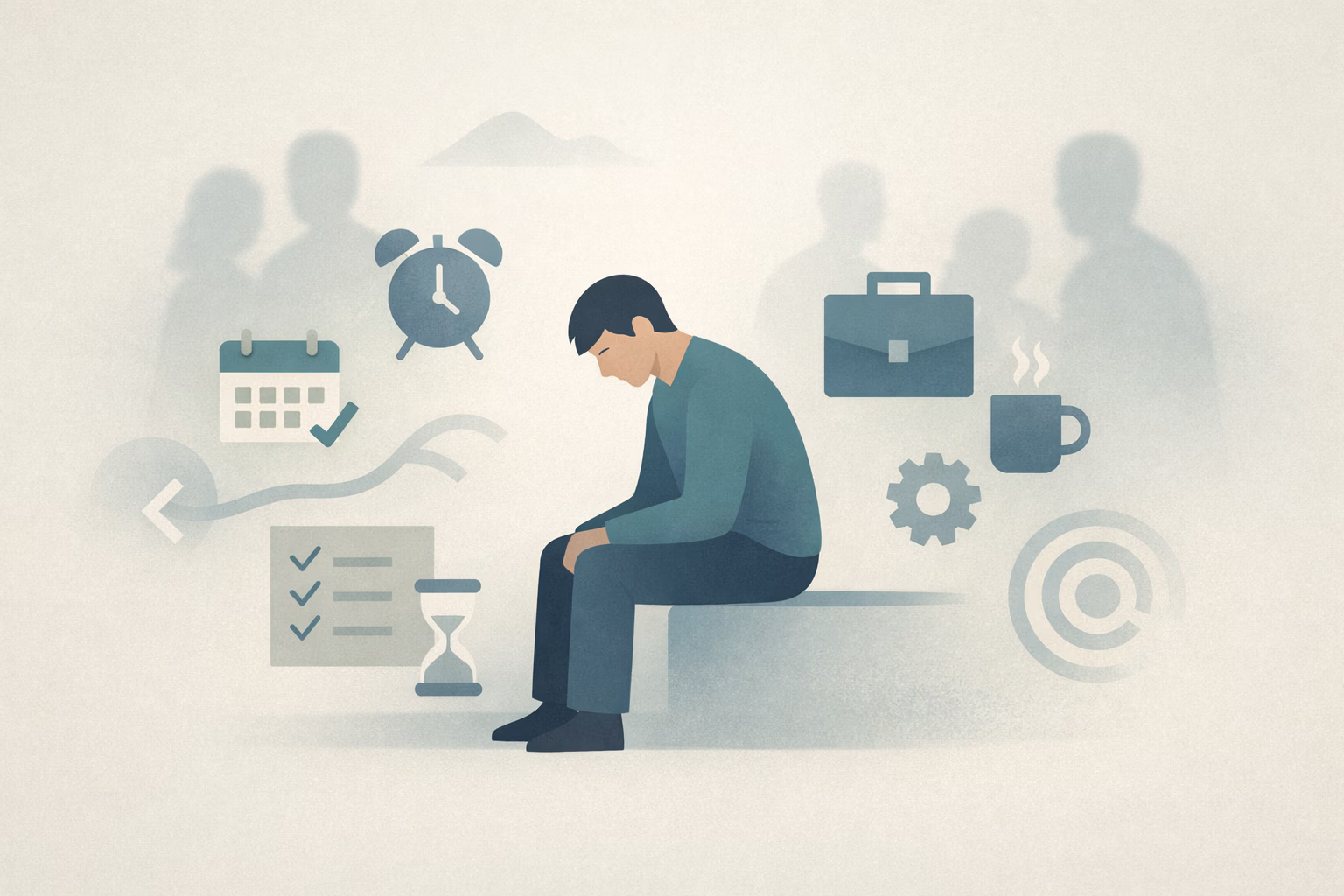
Habitual numbness often shows up as a cluster of small, practical experiences rather than one dramatic symptom. It can look like “I’m okay” said automatically, even when life is objectively heavy. It can also look like constant background scrolling, noise, or busyness—not because someone is shallow, but because stillness would increase signal.
Some common patterns include: [Ref-7]
When internal signals are unreliable, external stimulation can become the temporary steering wheel.
Emotions are not only about expression; they’re also data. They help the system tag experiences as significant, register relational safety, and consolidate memory into identity. When emotion stays low for long stretches, the body may have less material to integrate into a coherent “this is who I am, and this is what my life is about.”
Relational depth can suffer, not because a person doesn’t care, but because connection often requires responsiveness—micro-signals of interest, warmth, resonance, and repair. When those signals are muted, relationships can start to feel like obligations rather than living exchanges. Meaning can feel thin, not from lack of gratitude, but from lack of completion and internal registration. [Ref-8]
Capacity tends to rebuild through cycles: activation rises, the system processes and completes, then it stands down. When shutdown prevents activation from rising at all, the system doesn’t get many opportunities to practice returning from intensity back to settled baseline.
This is one reason numbness can feel sticky. If emotional activation repeatedly gets truncated—cut off before it resolves—your nervous system doesn’t receive many “we can handle this and come back down” signals. Without those completion experiences, the safest prediction becomes: stay low, stay quiet, stay contained. [Ref-9]
Not feeling can become the only state that reliably prevents overflow.
It’s understandable to interpret numbness as a problem of insight—“If I could just understand why, I’d feel again.” But understanding alone doesn’t necessarily change the body’s chosen setting. Integration is not the same as explanation; it’s the quieter outcome that comes after enough experiences fully complete and settle into the system.
From this angle, the bridge isn’t intensity. It’s tolerance: the nervous system gradually recognizing that more signal can arrive without immediate overload, conflict, or collapse. As tolerance returns, the system doesn’t need numbness as much. Emotional responsiveness can reappear as a byproduct of restored capacity and reliable “done” signals, not as a performance. [Ref-10]
When the body trusts that experiences can finish, it has less reason to stay shut down.
Humans regulate in relationship. When connection feels unpredictable, evaluative, or demanding, the nervous system may treat emotional expression as high-consequence—something that creates work without guaranteeing repair. In that context, numbness can be an efficient social survival strategy: fewer bids, fewer conflicts, fewer exposures.
Attuned connection—where signals are met with steadiness, room, and respect—can reduce allostatic load over time. It provides external cues that activation won’t automatically lead to rupture or escalation. When the environment becomes more reliably non-punishing, the body can revise its predictions about what emotions will cost. [Ref-11]
When emotional responsiveness begins to come back, it often doesn’t arrive as big catharsis. More commonly, it shows up as nuance: mild interest, a brief wave of tenderness, irritation with clearer edges, or the ability to feel tiredness as tiredness rather than blankness.
People also notice more bodily specificity—temperature, appetite, tension, breath rhythm—because emotion and sensation are tightly linked. This isn’t “more emotion” as an achievement; it’s signal return as stress load reduces and the nervous system regains flexibility. Over time, the brain and body can shift from protective dampening back toward adaptive responsiveness. [Ref-12]
Meaning becomes easier when your internal signals can be trusted. With emotional access, you can register what nourishes you, what depletes you, what feels aligned, and what feels like drift. This doesn’t guarantee a perfect life—but it restores orientation.
As responsiveness returns, values become more than ideas. They start to feel real in the body: connection feels worth protecting, boundaries feel like self-respect rather than confrontation, and choices carry a clearer sense of consequence. In this way, emotional life supports identity: not as a label, but as a lived coherence between what you care about and how you move through the world. [Ref-13]
Agency often returns as quiet clarity, not as a surge of motivation.
If you’ve been numb, your system likely found a way to keep you functioning when full responsiveness was too costly. That isn’t weakness; it’s adaptation. And adaptation can update when conditions change.
Meaning tends to re-emerge when life offers more completion—when experiences can land, resolve, and become part of a coherent story rather than a backlog of unfinished loops. Patient reconnection isn’t about forcing feeling on demand; it’s about the gradual restoration of self-trust and internal reliability—signals that you can meet your own experience and still remain intact. [Ref-14]
Emotional numbness can make people conclude they are “too far gone,” when what’s actually happened is a prolonged protective state. The nervous system doesn’t usually flip back all at once; it reopens in increments as safety cues become believable and as life provides more true endings.
A compassionate stance matters here—not as a slogan, but as a relational signal to the self: less inner threat, less internal punishment, more room for the body to recalibrate. Over time, that kind of gentleness can support the conditions under which responsiveness and meaning naturally re-form. [Ref-15]
From theory to practice — meaning forms when insight meets action.
Numbness can co-occur with depression, but the article frames it more structurally: a learned baseline shift in the nervous system rather than only a mood disorder. When high emotional output has reliably been followed by conflict, overload, or more demands, the system can begin to prefer a lower-output setting as conditioning. That's the Threat & Safety System favoring a protective dimmer switch — fewer signals, fewer consequences. It can feel like living behind glass: muted joy, thin sadness, distant affection. Naming it as adaptation rather than identity tends to help, because adaptations can update when conditions change, while identities feel fixed.
Capacity tends to rebuild through cycles — activation rises, the system processes and completes, then it stands down. When shutdown prevents activation from rising at all, the body doesn't get many opportunities to practice returning from intensity back to settled baseline. Without those completion experiences, the safest prediction the system can make is: stay low, stay quiet, stay contained. That's why numbness can feel sticky. It isn't getting worse from neglect; it's reinforcing itself because the truncation of activation prevents the very 'we can handle this and come back down' Done Signal that would loosen it.
Usually as nuance, not catharsis. The return shows up first as small specific signals — mild interest, a brief wave of tenderness, irritation with clearer edges, tiredness that registers as tiredness rather than blankness. Body-based cues come back too: temperature, appetite, breath rhythm, tension. This isn't 'more emotion' as an achievement; it's signal return as load reduces and the nervous system regains flexibility. Co-regulation matters here — attuned connection that meets signals with steadiness rather than evaluation lets the body revise its predictions about what feeling will cost. Range tends to broaden gradually as tolerance rebuilds.
The article is direct that intensity isn't the bridge — tolerance is. Trying to force feeling tends to read to the system as the same overload it's been protecting against, which can deepen shutdown rather than loosen it. What actually changes the body's chosen setting is repeated experiences of activation that complete: signals that arrive, get met, and settle, without rupture or escalation. That rebuilds the window of tolerance. Numbness loosens not because feeling is forced through it but because the nervous system stops needing it — capacity returns, the Done Signal becomes reliable again, and emotional responsiveness reappears as a byproduct.
From Science to Art.
Understanding explains what is happening. Art allows you to feel it—without fixing, judging, or naming. Pause here. Let the images work quietly. Sometimes meaning settles before words do.
One Quiet Window, one insight, one reflection — every Sunday