Emotional Numbness: Why You Feel Disconnected From Yourself
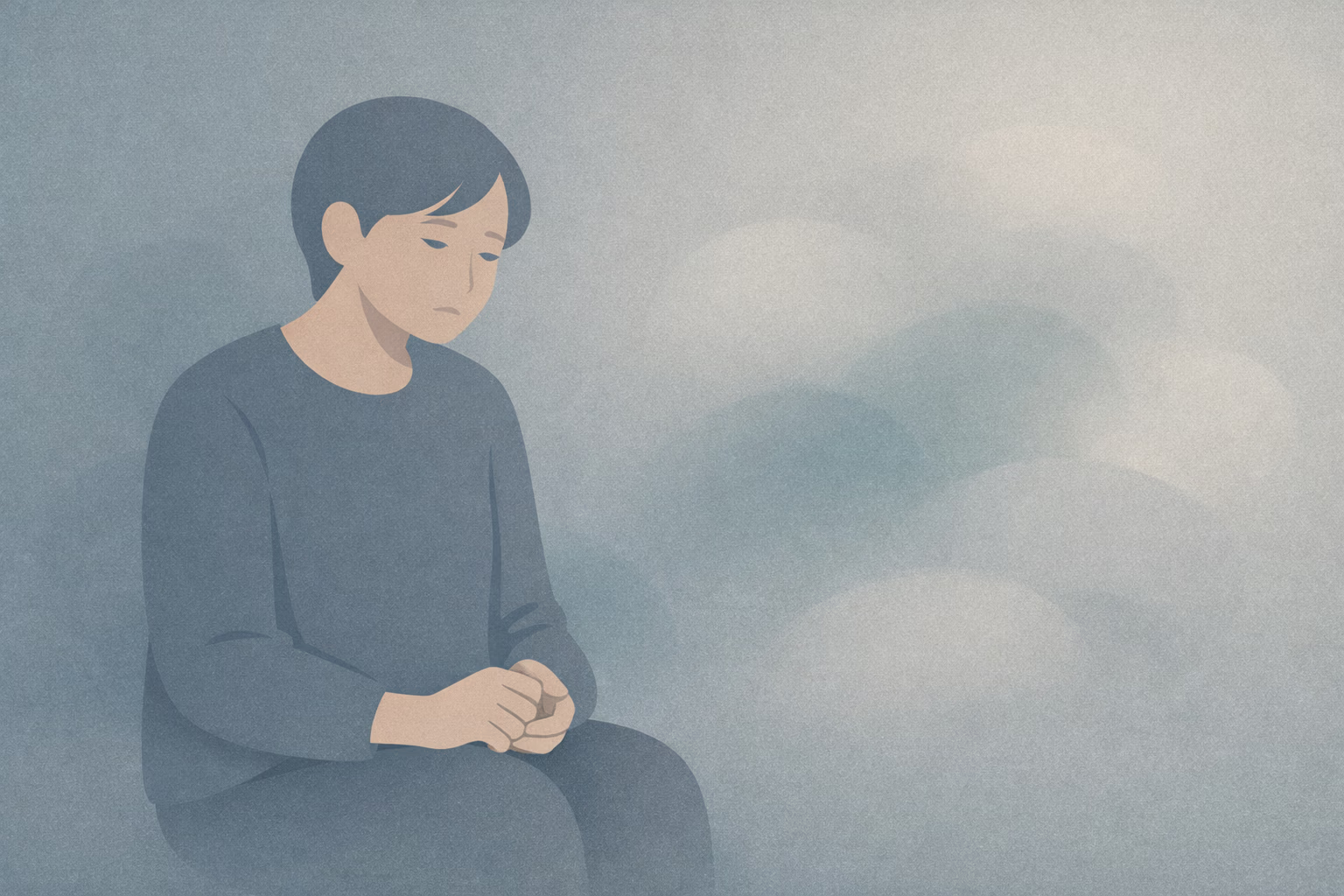
In short: Emotional numbing is often described as “not feeling,” but it’s usually more accurate to say: your system is reducing signal . Not because you’re broken, and not because you lack depth—because your nervous system is managing load, threat, and complexity with the tools it has.
Emotional numbing is often described as “not feeling,” but it’s usually more accurate to say: your system is reducing signal. Not because you’re broken, and not because you lack depth—because your nervous system is managing load, threat, and complexity with the tools it has.
Many people can function, relate, and even care deeply while still feeling oddly distant from their own inner life. The outside can look “fine,” while the inside feels muted, foggy, blank, or oddly neutral. That experience can be unsettling, especially in a culture that treats emotions as the main proof of aliveness.
What if numbness isn’t a flaw—what if it’s your body’s way of creating stability when life won’t provide closure?
Emotional numbing often shows up as a kind of internal distance. You might know what you “should” feel, or what you used to feel, yet the felt sense doesn’t arrive. It can be confusing because it doesn’t always feel dramatic—it can feel like nothing is wrong, and that can be the problem.
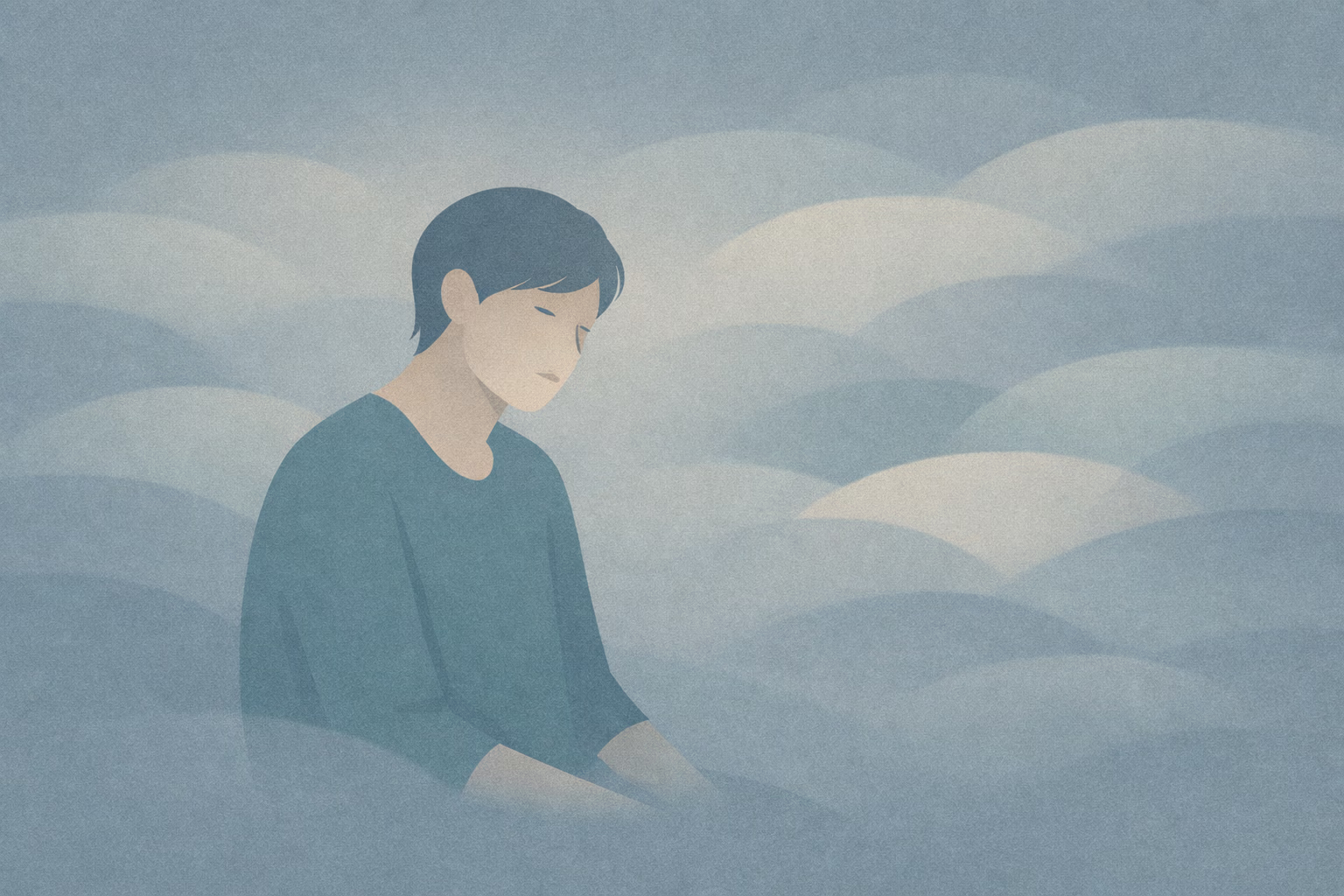
People describe it as being behind glass, on autopilot, or watching life rather than inhabiting it. Sometimes there’s calm. Sometimes there’s flatness. Sometimes there’s a tired kind of neutrality that makes decisions and relationships feel strangely heavy. [Ref-1]
Emotion is not just a story in the mind—it’s a whole-body event: sensation, impulse, attention, memory, and social signaling moving together. When that event becomes too intense for current capacity, the nervous system can reduce amplification. It’s not an opinion about your character; it’s a safety strategy.
Under high stress load, some systems shift away from mobilization and toward shutdown-like states where energy conservation and disconnection become more available than engagement. This can include dissociation, hypoarousal, or “going away” internally—less signal, less urgency, fewer edges. [Ref-2]
In other words: numbness can be the body’s way of saying, “We can’t metabolize all of this right now, so we’re going to simplify the channel.”
For many people, numbing wasn’t learned as an abstract preference—it emerged inside relationships. If emotional expression led to conflict, withdrawal, ridicule, unpredictability, or increased demands, dampening internal signal could become a reliable way to stay connected, stay safe, or stay unnoticed.
This is where emotional numbing can have an attachment root: your system learned that certain signals didn’t create repair or support; they created consequences. Over time, the body can begin pre-emptively reducing access to emotional intensity, not as suppression by willpower, but as an ingrained, efficient pattern. [Ref-3]
Some systems don’t “avoid feelings.” They avoid what historically happened next.
Numbing can reduce immediate friction. Less inner intensity can mean fewer arguments, fewer spirals, fewer sleepless nights, fewer moments of feeling overwhelmed by needs you can’t meet. When life is demanding, emotionally complex, or socially risky, lowered signal can feel like relief.
From a safety perspective, reducing activation can be protective. It can decrease threat responses, soften internal alarms, and create a sense of distance from experiences that might otherwise flood the system. This is one reason shutdown states can feel strangely steady: they lower the amplitude of everything. [Ref-4]
If numbness gives relief, why would the system give it up?
The tricky part is that numbing can feel like stability, especially compared to chaos. It can create a kind of control: fewer surprises, fewer vulnerable moments, fewer internal demands. But over time, that control often comes with a narrowing of experience.
When the nervous system relies on low-signal states, life can start to feel muted across the board. Not only pain gets turned down—so do interest, warmth, spontaneity, and the subtle “yes” signals that help you recognize what matters. This is why some people describe numbness as safe but dim. [Ref-5]
It’s not that meaning disappears because you lack gratitude or insight. Meaning often thins when the internal channel is repeatedly set to low volume.
Emotional numbing often becomes a loop because it reliably reduces strain in the moment. If a certain state (scrolling, overworking, zoning out, staying “fine,” staying busy) lowers internal intensity, the nervous system marks it as effective. Next time intensity rises, the system reaches for the same downshift.
Over time, this becomes less like a choice and more like a default pathway: discomfort appears, signal drops, functioning continues, and the short-term relief teaches the body, “This is how we get through.” [Ref-6]
The loop doesn’t need dramatic trauma to form. Repeated unfinished stress—ongoing evaluation, unresolved conflict, chronic uncertainty—can keep the system looking for fast closure wherever it can find it.
Numbing doesn’t always look like lying in bed or feeling blank. It can look like high performance, caretaking, humor, or constant input. The point isn’t the behavior itself—it’s the function: lowering signal and avoiding internal collision when capacity is thin.
These patterns are not identities. They’re regulatory responses shaped by what reliably reduced overwhelm in your environment. [Ref-7]
When low-signal states become frequent, the emotional range can narrow. This doesn’t mean you become less caring; it means fewer internal cues are available to guide connection in real time. Relationships can become harder to navigate because nuance is part of bonding—tone, timing, the small shifts that create repair.
Meaning is also affected. Meaning tends to arise when experiences complete: when a moment lands, integrates, and becomes part of who you are. When the system is repeatedly in shutdown-like states, experiences can pass through without registering as “done,” leaving life feeling repetitive, blurry, or unreal. [Ref-8]
Numbness can protect you from pain, and it can also protect you from the sense of being here.
One of the most frustrating parts of emotional numbing is that it can make emotion feel less tolerable long-term. Not because you “lost emotional skills,” but because tolerance is partly built through successful completion: intensity rises, the system meets it with enough support, and then it resolves.
When intensity is repeatedly bypassed—through shutdown, distraction, or constant management—the nervous system doesn’t get many “we survived and it settled” endings. As a result, future intensity may register as a bigger threat to stability, since there’s less evidence in the body of safe return. [Ref-9]
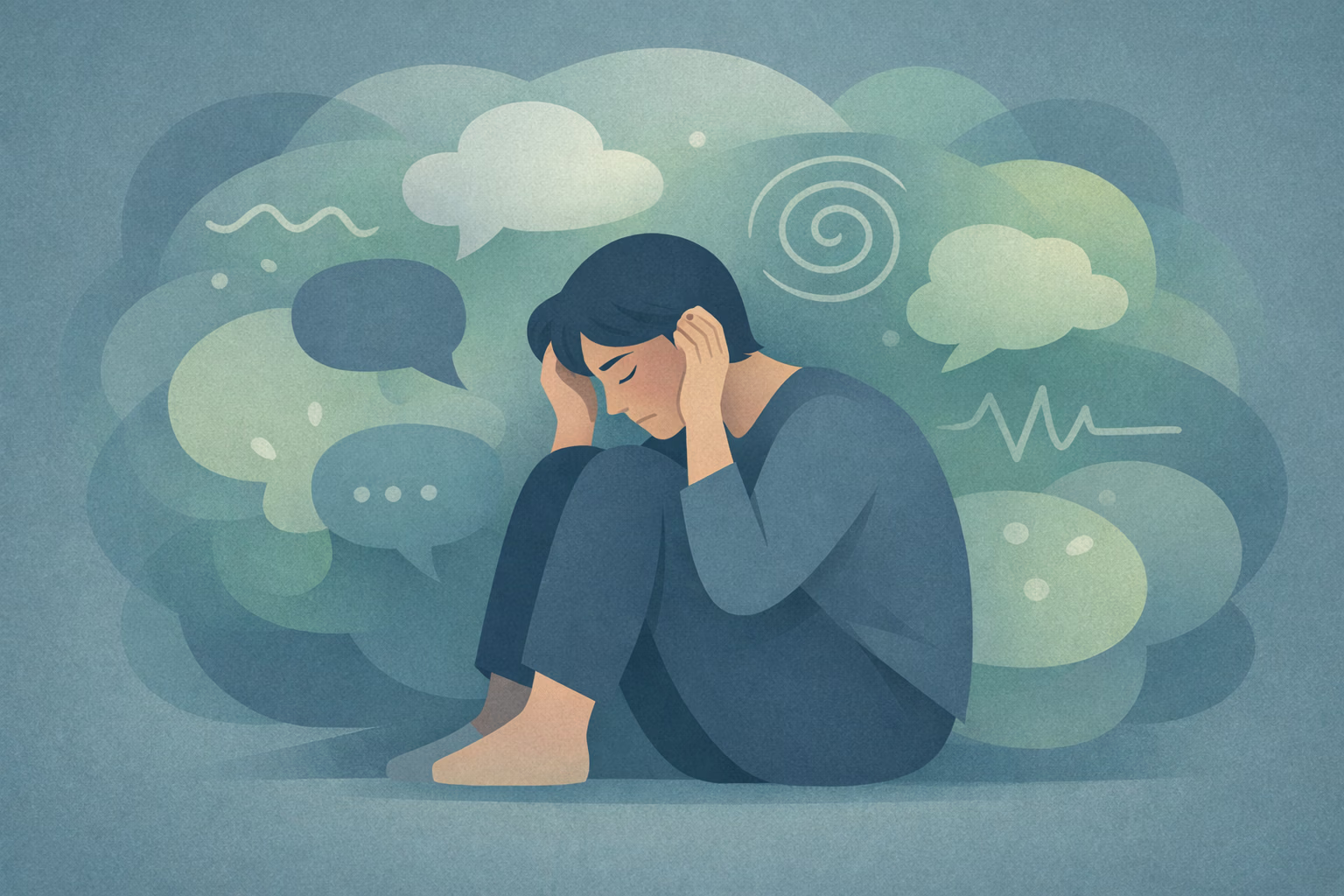
This is how someone can feel both numb and easily overwhelmed: low baseline signal, with occasional spikes that feel uncontainable.
It can be tempting to treat numbness as something to “break through” with intensity, catharsis, or pressure to be more expressive. But nervous systems rarely restore signal through force. They restore signal when conditions support completion—when sensation can rise and fall without creating extra danger, conflict, or overload.
Over time, many people notice that feeling returns in a gradual, layered way: first as small physical cues, then as clearer preferences, then as more emotional nuance. The key distinction is that this isn’t just insight or reframing; it’s a physiological settling that comes from repeated experiences of activation resolving into stand-down. [Ref-10]
What changes when your body learns, again, that intensity can end?
Because numbing often formed in relational contexts, it often softens in relational contexts too—especially where there is steadiness, respect, and room to be imperfect. In attuned relationships, the nervous system gets new data: emotional signal does not automatically create rupture, rejection, or escalation.
This isn’t about “being more vulnerable” as a task. It’s about what happens when the body detects safety cues: consistent responsiveness, non-punitive repair, and a sense that you won’t be abandoned for having a human internal life. These conditions can support regulation and reduce the need for shutdown. [Ref-11]
Sometimes the system doesn’t need more courage. It needs more reliable repair.
When emotional access begins to return, it’s often not a dramatic flood. It can feel like increased nuance: clearer hunger and fatigue signals, stronger likes and dislikes, a more precise sense of “too much” versus “not for me.” Small moments register more fully, and the day feels less like a blur.
With restored nuance, self-criticism sometimes loses some of its grip—not because you argued yourself out of it, but because internal trust becomes more available when your signals are readable. Over time, this can support steadier self-worth and less defensive overcontrol. [Ref-12]
This is a form of coherence: your system can take in experience, make sense of it, and return to baseline without needing to disappear from itself.
Emotions are not only “reactions.” They’re also orientation cues: what matters, what hurts, what fits, what needs closure, what you’re ready to move toward. When emotional signal is muted, values can become abstract—something you endorse rather than something you live from.
As signal returns, identity often feels less performative and more grounded. Not because life becomes easy, but because your inner data starts matching your outer choices more often. Meaning density increases when experiences complete and settle into a lived sense of self—less fragmentation, more continuity. [Ref-13]
In that state, agency doesn’t require constant motivation. It tends to emerge as a quieter capacity to choose what aligns, and to let misaligned loops finish instead of repeating.
Emotional numbing is frequently misunderstood as a refusal to engage with life. More often, it’s a sign that life has asked for too much processing without enough closure. The system adapts by turning down volume so you can keep going.
When you view numbness through this lens, shame has less to cling to. The question shifts from “What’s wrong with me?” to “What has my system been carrying, and where has it lacked a safe ending?” That shift can restore a sense of dignity and self-trust—an internal sense that your signals are worth listening to when conditions allow. [Ref-14]
Meaning doesn’t usually return as a sudden breakthrough. It often returns as your life becoming more finishable: moments landing, choices aligning, and your nervous system spending less energy on holding everything down.
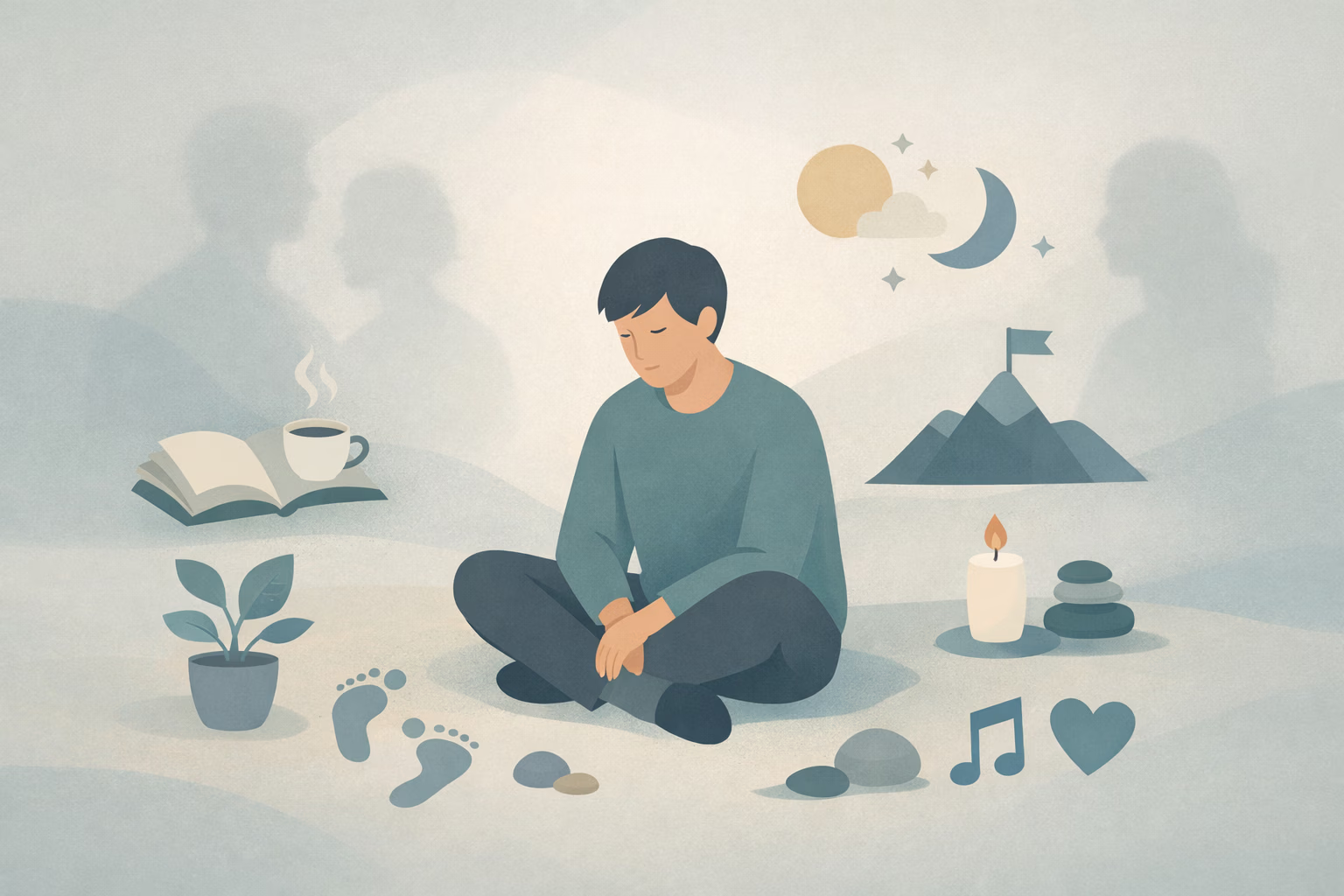
If you’ve relied on numbness, it’s because it worked—at least enough to keep you intact. Reconnecting with feeling doesn’t have to mean losing control or being flooded. In many lives, it means something simpler and steadier: the ability to register experience and then come back from it.
There’s a kind of self-respect in recognizing that your protective patterns formed for reasons. And there’s a quiet hope in remembering that protection and tenderness don’t have to be opposites; they can become parts of the same coherent system. That stance—less self-attack, more humane interpretation—has real psychological and physiological weight. [Ref-15]
From theory to practice — meaning forms when insight meets action.
Because numbing is more accurately described as the system reducing signal, not refusing to engage. Emotion is a whole-body event — sensation, impulse, attention, memory, social signaling moving together — and when that event becomes too intense for current capacity, the nervous system can reduce amplification as a safety strategy. People describe it as being behind glass, on autopilot, watching life rather than inhabiting it. Stress registers as fatigue rather than emotion; words for internal state feel unavailable. The system isn't broken or shallow. It's saying: we can't metabolize all of this right now, so we're going to simplify the channel.
More often, the system avoids what historically happened next. If emotional expression led to conflict, withdrawal, ridicule, unpredictability, or increased demands, dampening internal signal could become a reliable way to stay connected, safe, or unnoticed. Numbing then has an attachment root: your system learned that certain signals didn't create repair or support; they created consequences. Over time, the body pre-emptively reduces access to emotional intensity, not as suppression by willpower but as an ingrained efficient pattern. That's why some systems don't avoid feelings as a category — they avoid the predicted aftermath of having them in environments where co-regulation wasn't reliable.
Because tolerance is built through completion. Intensity rises, the system meets it with enough support, and then it resolves — that's how the body files 'we survived and it settled.' When intensity is repeatedly bypassed through shutdown, distraction, or constant management, the nervous system doesn't get many of those endings. As a result, future intensity registers as a bigger threat to stability, since there's less evidence in the body of safe return. That's how someone can feel both numb and easily overwhelmed at once: low baseline signal, with occasional spikes that feel uncontainable. The window of tolerance hasn't been built up.
Through completion, not force. Nervous systems rarely restore signal through catharsis or intensity pressure; they restore it when conditions support sensation rising and falling without creating extra danger, conflict, or overload. Many people notice feeling returns gradually and in layers — first as small physical cues, then as clearer preferences, then as more emotional nuance. Safe connection helps because numbing often formed in relational contexts and softens in them too: consistent responsiveness, non-punitive repair, a sense that you won't be abandoned for having a human inner life. Sometimes the system doesn't need more courage. It needs more reliable repair.
From Science to Art.
Understanding explains what is happening. Art allows you to feel it—without fixing, judging, or naming. Pause here. Let the images work quietly. Sometimes meaning settles before words do.
One Quiet Window, one insight, one reflection — every Sunday