Emotional Numbing Habits: How You Avoid Feeling
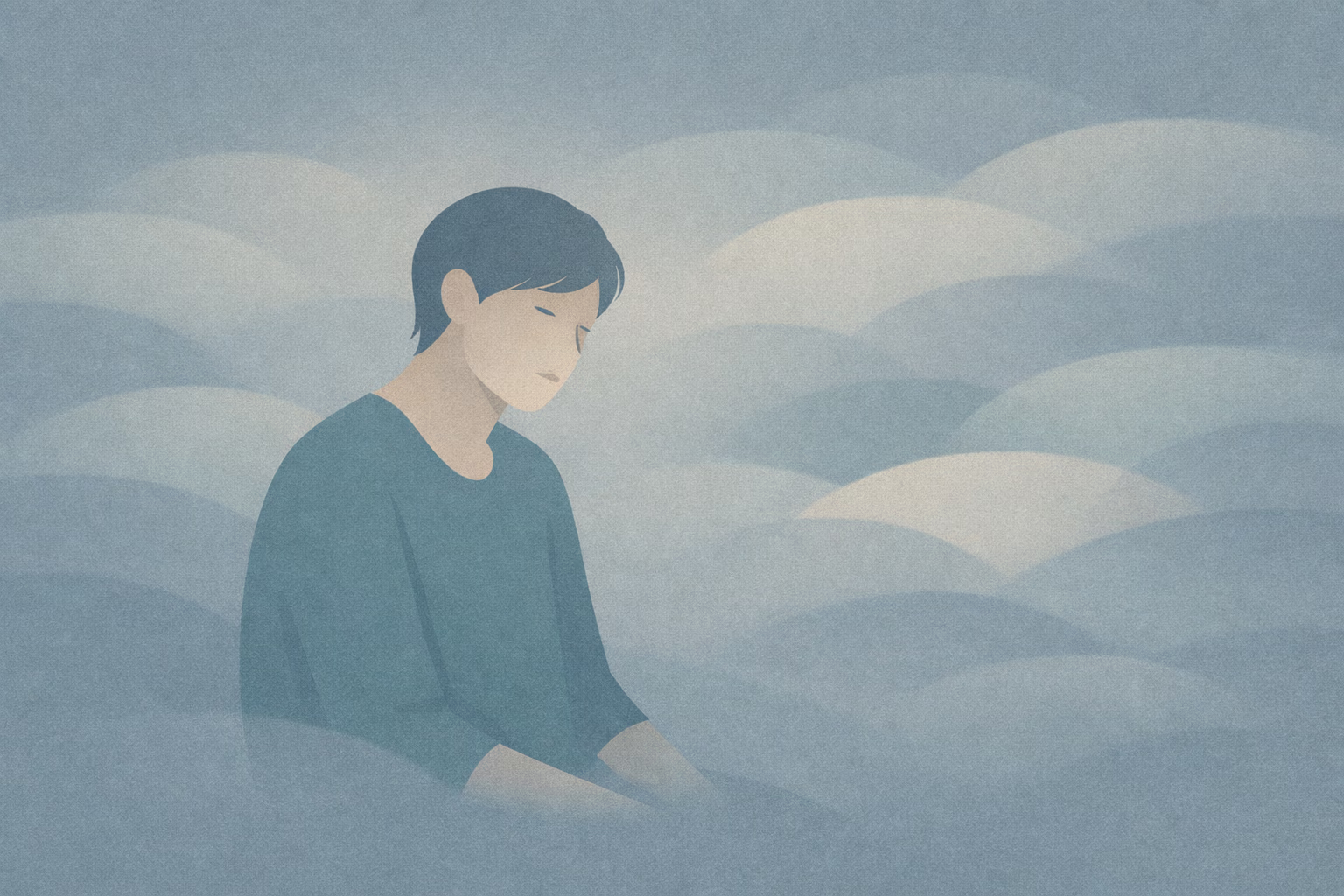
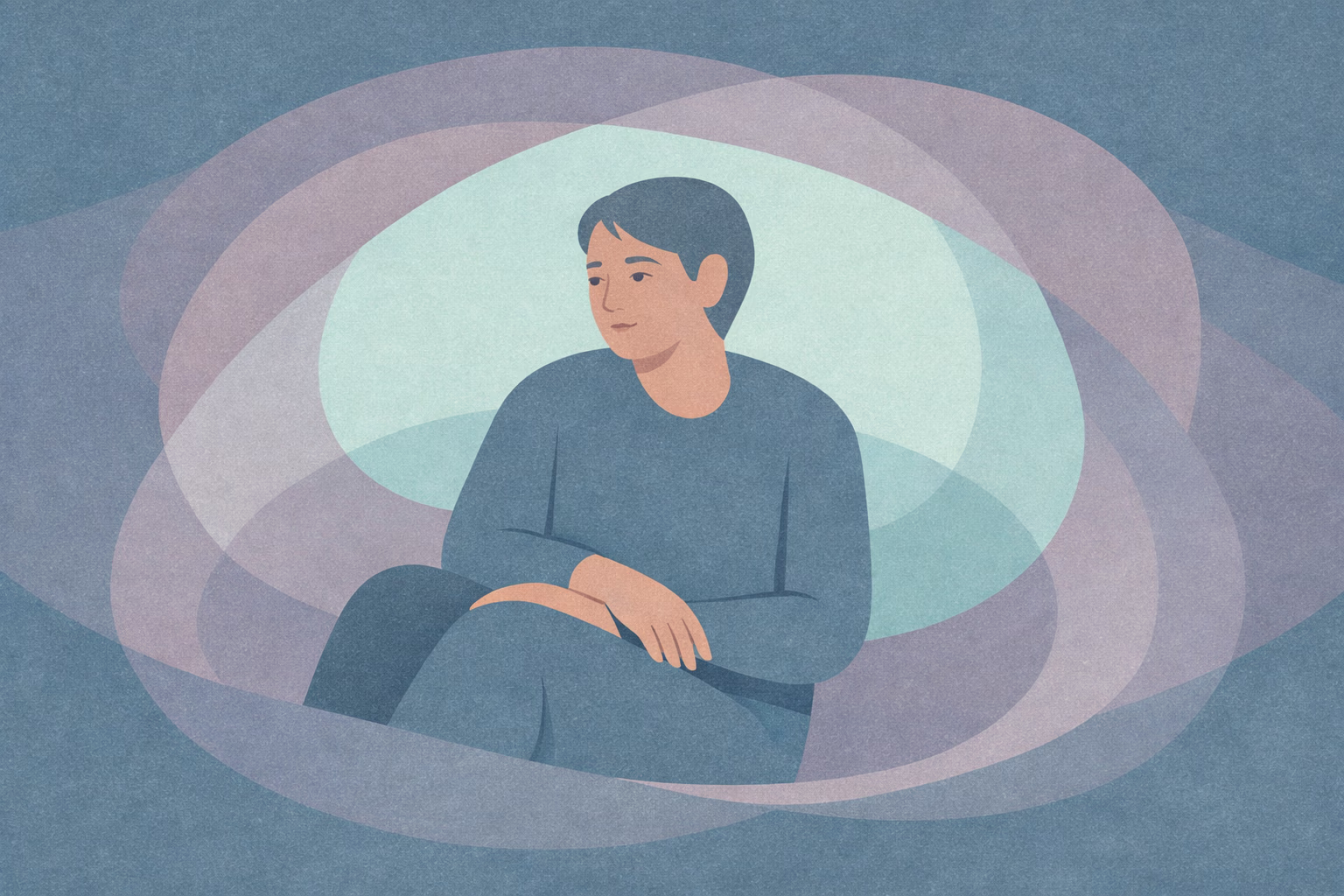
In short: Many people imagine numbing as something dramatic: total shutdown, blankness, or a crisis. But more often, it’s quiet. It looks like staying busy, staying entertained, staying “on,” while something inside goes slightly offline—just enough to keep functioning.
Many people imagine numbing as something dramatic: total shutdown, blankness, or a crisis. But more often, it’s quiet. It looks like staying busy, staying entertained, staying “on,” while something inside goes slightly offline—just enough to keep functioning.
This isn’t a character flaw. It’s a coherence move: a nervous system under load reducing signal intensity so you can keep going without getting flooded. The problem is that what helps you get through a day can also, over time, create distance from your own needs, preferences, and sense of direction.
What if “numbing” isn’t you escaping yourself—so much as your system trying to protect you from unfinished, overwhelming loops?
Subtle numbing often shows up as a mild drift away from the present. You might read the same sentence repeatedly, open your phone without choosing to, or move through chores as if someone else is steering. Later there’s a strange aftertaste: confusion, irritation, or self-criticism for not being “more present.” [Ref-1]
What’s important is that this can happen without feeling intensely distressed. That’s part of why it’s hard to name. The mind stays functional enough to keep tasks moving, while the body reduces incoming signals—especially the ones that would require a bigger response or change.
Afterward, people often judge themselves: “Why can’t I focus?” “Why am I wasting my life?” But that judgment misses the underlying mechanism: your system may have been choosing stability over intensity, even if you didn’t consciously decide it.
Numbing is frequently a form of attention reallocation. When internal signals (stress, grief, pressure, uncertainty) rise above current capacity, the nervous system can shift away from them—toward neutral tasks, repetitive input, or low-stakes stimulation—because those are easier to manage. [Ref-2]
This can look like dissociation, distraction, or habitual soothing. Not because you’re “avoiding feelings,” but because your system is protecting continuity: staying able to work, parent, socialize, or simply get through the next hour without tipping into overwhelm.
In many environments—especially unsafe or high-demand ones—strong emotion and full awareness were not always usable. Paying attention to grief, anger, or fear could increase risk, slow you down, or make you more visible. In those contexts, dampening internal signals wasn’t “unhealthy.” It was adaptive.
Survival systems are conservative: they repeat what once preserved functioning. If a person learned (implicitly, through experience) that staying emotionally “small” kept life manageable, the body can keep offering that solution even when the original conditions have changed. [Ref-3]
This is one reason numbing can feel confusing: it isn’t a decision. It’s a legacy pattern—an old safety technology still running in the background.
People often recognize shutdown only when it becomes dramatic: exhaustion, inability to move, or total disconnection. But there’s a quieter band of physiology where someone can still perform while feeling oddly muted. In this band, the system is lowering load without triggering full stop.
You could think of it as partial braking: less intensity, fewer internal interruptions, fewer cues demanding action. It can resemble “calm,” but it’s often more like reduced signal range—especially for subtle cues like preference, pleasure, fatigue, or “this doesn’t fit me.” [Ref-4]
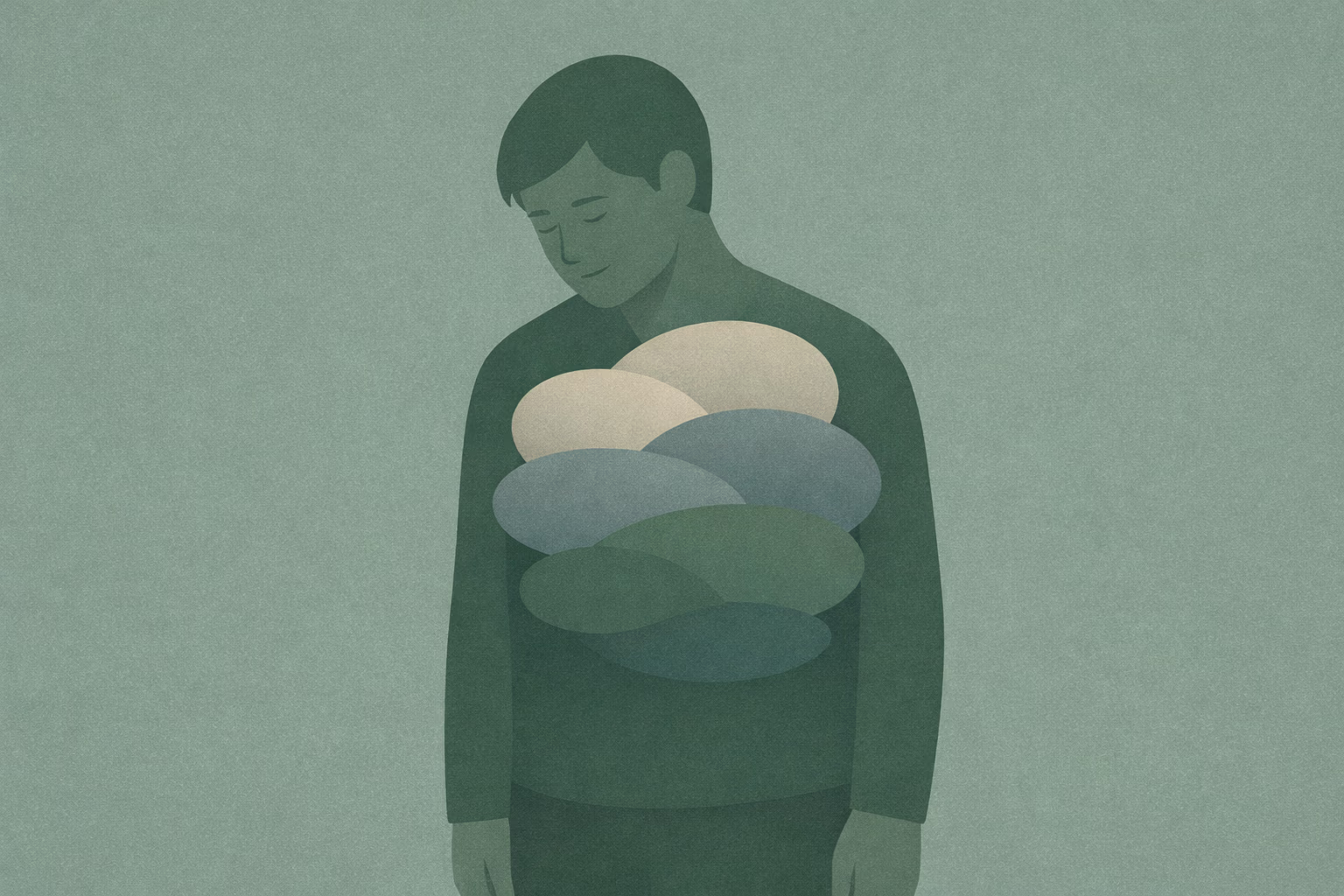
Sometimes numb isn’t empty. Sometimes numb is “too much, for too long,” made livable.
Numbing often brings a sense of normalcy because it decreases friction. When your internal world gets quieter, you may feel more efficient, less reactive, and less bothered. That can be a relief—especially in a life with chronic pressure.
But the cost tends to be cumulative. The same dampening that reduces distress can also reduce self-contact: the ability to sense what matters, what hurts, what’s too much, and what needs to change. Over time, “I’m fine” can become a default state that hides a gradual thinning of aliveness and orientation. [Ref-5]
It can be functional—and still be a sign that your system is carrying more than it can complete.
In an avoidance loop, the nervous system learns that stepping away from inner signals brings immediate stability. That stability reinforces the pattern, not through willpower but through relief: the body registers “less load” and tags the pathway as useful.
Over time, the loop can normalize. You don’t experience it as escape; you experience it as life. Moments of true presence can then feel oddly loud or even disorganizing—not because presence is dangerous, but because your system has been calibrated around lowered signal. [Ref-6]
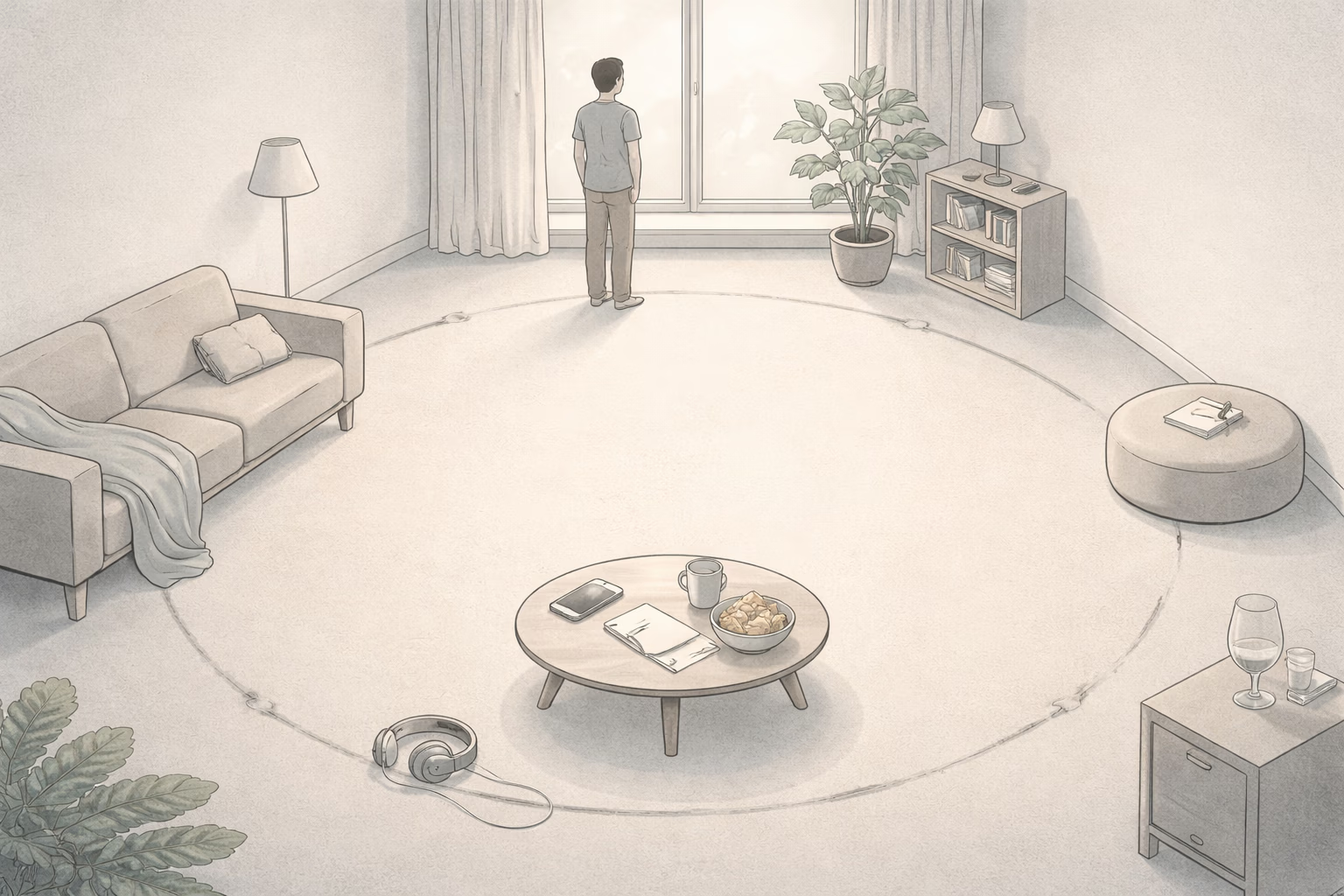
This is how someone can be “high-functioning” and still feel vaguely absent from their own days: the loop is optimized for getting through, not for completion and closure.
Subtle numbing is often socially rewarded, which makes it even harder to recognize. It can look like competence, responsiveness, and staying updated—while quietly reducing the space where you would normally register yourself.
These aren’t moral failures. They’re ways a system reduces consequence and resistance: if you never fully arrive, you don’t have to fully respond. [Ref-7]
When numbing becomes frequent, it doesn’t just reduce pain; it reduces informational clarity. Emotional signals are part of how humans track needs, boundaries, belonging, and value alignment. If those signals are consistently dimmed, life can start to feel vague.
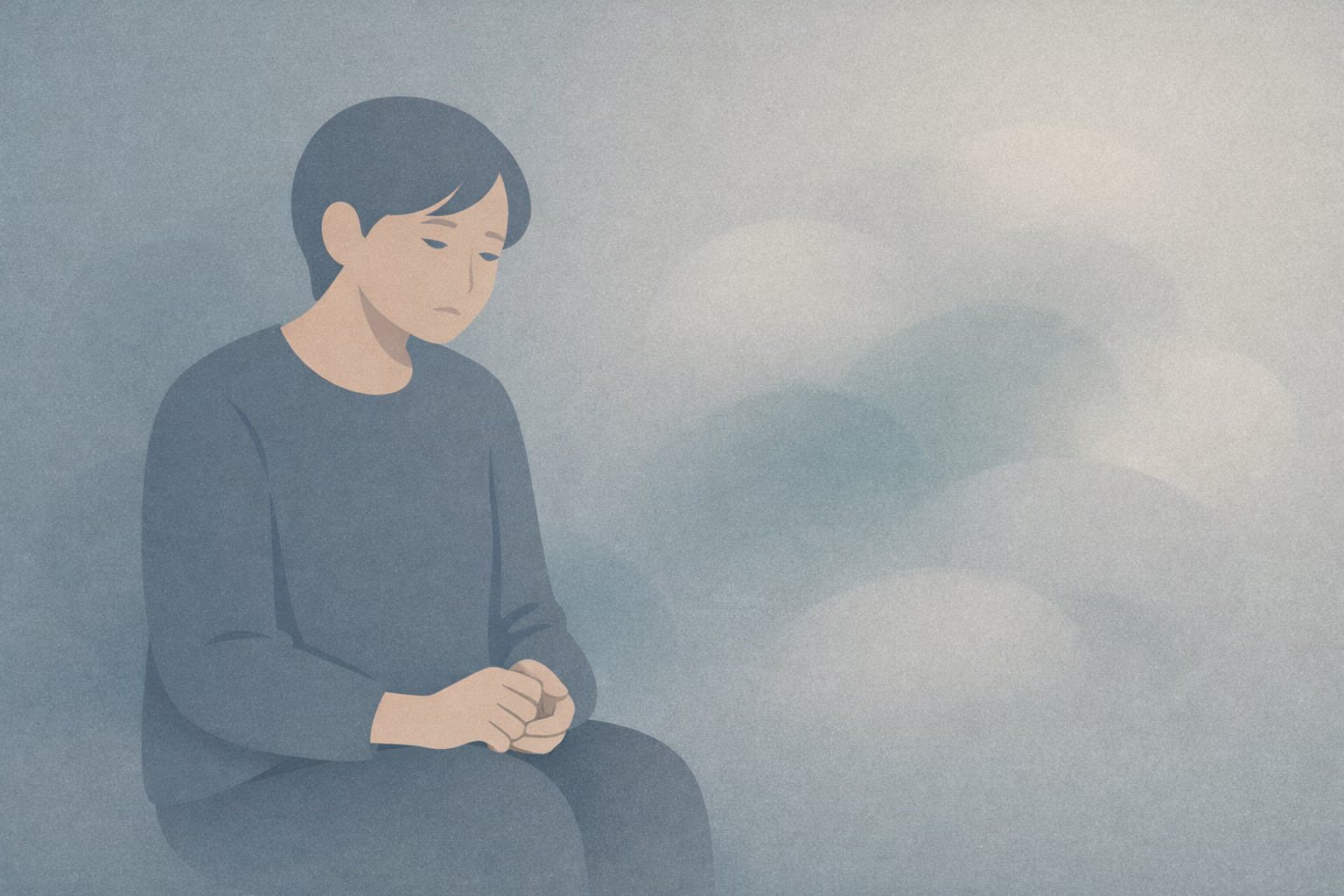
This is where people describe a particular kind of stuckness: not intense suffering, but a flat sense that nothing lands. Decisions feel harder. Connection feels thinner. Even good events can feel like they happen “at a distance.” [Ref-8]
Importantly, this isn’t because you’re not trying hard enough. It’s because meaning requires completion. Without enough internal signal to know what’s happening, experiences can’t fully “close,” and the system stays subtly unfinished.
Regulation isn’t something the mind forces; it’s something the body earns through successful completion—moments where signal rises, is met by adequate support, and then settles. When life repeatedly spikes beyond capacity, the system learns a different rule: don’t let the signal rise in the first place.
That’s how numbing can become increasingly reflexive. It’s not primarily about fear or suppression; it’s about preventing overload by flattening input early. In this state, emotional awareness can feel like it would create more work than the day can hold, so the system pre-emptively narrows experience. [Ref-9]
And because the pattern reduces immediate discomfort, it can appear “effective,” even as it slowly reduces the sense of agency that comes from being able to register and respond.
There’s a common misconception that the opposite of numbing is intensity. But often, what restores coherence is not a dramatic flood of emotion—it’s the gradual return of discriminating signal: the ability to notice small internal shifts and let them complete without rushing, fixing, or overriding.
This return tends to happen when load reduces and pacing becomes possible. Instead of forcing awareness, the system allows it in measured doses—enough to register, not enough to destabilize. In that middle zone, signals can become usable information rather than an emergency.
When that happens, meaning starts to reappear as a lived sense of “this matters” and “this doesn’t fit,” not as a motivational slogan. Regulation looks like the body’s ability to rise and settle, rather than staying flattened. [Ref-10]
Humans regulate in relationship. Not because someone else “fixes” you, but because attuned contact provides safety cues: steadier rhythm, clearer boundaries, slower tempo, and a felt sense that you don’t have to manage everything alone.
In many people, numbing loosens not through internal pressure, but through being with someone (or something) that makes attention feel safe to hold. This could be a conversation where you’re not performing, a space where you’re not evaluated, or a connection that doesn’t demand speed.
In that kind of environment, the nervous system is more likely to permit signal to return, because the consequences feel manageable. The body doesn’t need to stay on autopilot to preserve stability. [Ref-11]
When numbing softens, people often notice something simple first: time feels more contiguous. You remember your day. You notice transitions. You can sense when you’re getting tired, when a conversation is pulling you away from yourself, or when you need a different pace.
This isn’t constant happiness or emotional intensity. It’s increased capacity for signal return—subtle cues coming back online. The body becomes better able to register early, small changes rather than requiring a big crash to recognize “too much.” [Ref-12]
Coherence often feels like: “I’m here, and I can tell what’s happening.”
As awareness becomes more available, the system gains options. Not options in the motivational sense—more like structural choice points. You can notice the moment you reach for the scroll, the snack, the extra task, the extra noise. And because you can notice it, you’re not already gone.
This is where agency returns: not as self-control, but as alignment. You can engage because you’re oriented—toward what matters, what fits, what’s sustainable. The nervous system is no longer relying only on dampening to stay functional; it can move through activation and settle again.
Over time, this reduces allostatic strain: fewer prolonged states of unresolved load, more opportunities for completion. Meaning becomes less performative and more embodied—something you recognize by how your system steadies when life aligns. [Ref-13]
If you recognize yourself in these patterns, it may help to hold one stabilizing truth: numbing is often an intelligent response to conditions that exceeded capacity. It’s a way the body reduces demand when the environment, expectations, or pace don’t allow for completion.
Shame usually adds load. And more load usually increases the need to numb. A more coherent frame is to see the pattern as communication: something in life has been too much, too fast, or too unfinished—and your system found a workable workaround.
When the nervous system senses safety cues—internally or relationally—self-kindness and self-care become more accessible, not as virtue but as physiology. You don’t have to earn that access through harshness. [Ref-14]
Many people have tried to “push through” numbness with more force, more intensity, more self-improvement. But numbness is often a signal that force has already been the atmosphere for too long.
What tends to change things is the return of trustworthy signal in tolerable increments—enough contact to orient, enough closure to let the system stand down. Not a new identity, not a dramatic breakthrough—just the lived sense that you can be with your life again, and it can integrate.
In that sense, awareness isn’t a performance. It’s a quiet homecoming: the conditions where your system can recognize itself and regain direction. [Ref-15]
From theory to practice — meaning forms when insight meets action.
Usually it's quiet. It looks like staying busy, staying entertained, staying "on," while something inside goes slightly offline — just enough to keep functioning. Subtle numbing shows up as autopilot, lost time, the "what was I even doing?" moment. You read the same sentence repeatedly, open your phone without choosing to, move through chores as if someone else is steering. The mind stays functional enough to keep tasks moving while the body reduces incoming signals — especially the ones that would require a bigger response. It's not a character flaw. It's a coherence move under load.
Not really. Structurally, it's attention reallocation — when internal signals rise above current capacity, the system shifts toward neutral tasks, repetitive input, or low-stakes stimulation because those are easier to manage. Dissociation reduces felt intensity; distraction narrows focus to what's manageable; soothing routines provide predictable input when life feels unpredictable. These aren't avoidance of feelings as a moral failure. They're protecting continuity — staying able to work, parent, socialize, get through the next hour without flooding. Numbing is an intelligent response to conditions that exceeded capacity, often a legacy pattern still running because it once worked.
Because it decreases friction. When the internal world gets quieter, you may feel more efficient, less reactive, less bothered. That can be a relief under chronic pressure. The cost is cumulative: the same dampening that reduces distress also reduces self-contact — the ability to sense what matters, what hurts, what's too much, what needs to change. "I'm fine" becomes a default state that hides a gradual thinning of aliveness. You can be high-functioning and still feel vaguely absent from your own days. The Avoidance Loop optimizes for getting through, not for completion.
Through tolerable increments, not floods. The opposite of numbing isn't intensity — what restores coherence is the gradual return of discriminating signal: noticing small internal shifts and letting them complete without rushing or overriding. This happens when load reduces and pacing becomes possible. Co-regulation matters more than self-pressure; numbing often loosens through being with someone or something that makes attention feel safe to hold. People notice time becomes contiguous again — they remember their day, sense fatigue earlier, register transitions. Coherence often feels like: "I'm here, and I can tell what's happening."
From Science to Art.
Understanding explains what is happening. Art allows you to feel it—without fixing, judging, or naming. Pause here. Let the images work quietly. Sometimes meaning settles before words do.
One Quiet Window, one insight, one reflection — every Sunday