


The Neuroscience of Avoidance
Learn why avoidance is neurologically rewarding and how to break the cycle.
In context: No, “The Mind Finds Something Else“ because it's looking for a “Meaning Hit.“ Often, this “Diversion Carries Intelligence.“ In the Meaning Density Model™, your mind redirects to something “Expansive“ (like a vacation) because the “Constriction“ of chores feels like a Threat to your Identity.

The mind finds something else to look at.
Not to escape, but to regulate.
Diversion lowers intensity when direct contact feels too much.
Let this shift be acknowledged without judgment.
It is part of staying functional.
Acknowledge diversion with DojoWell.
Explore DojowellArticles exploring the psychology behind these patterns.
Learn why avoidance is neurologically rewarding and how to break the cycle.

Understand why your brain auto-opens apps and how to interrupt the loop.
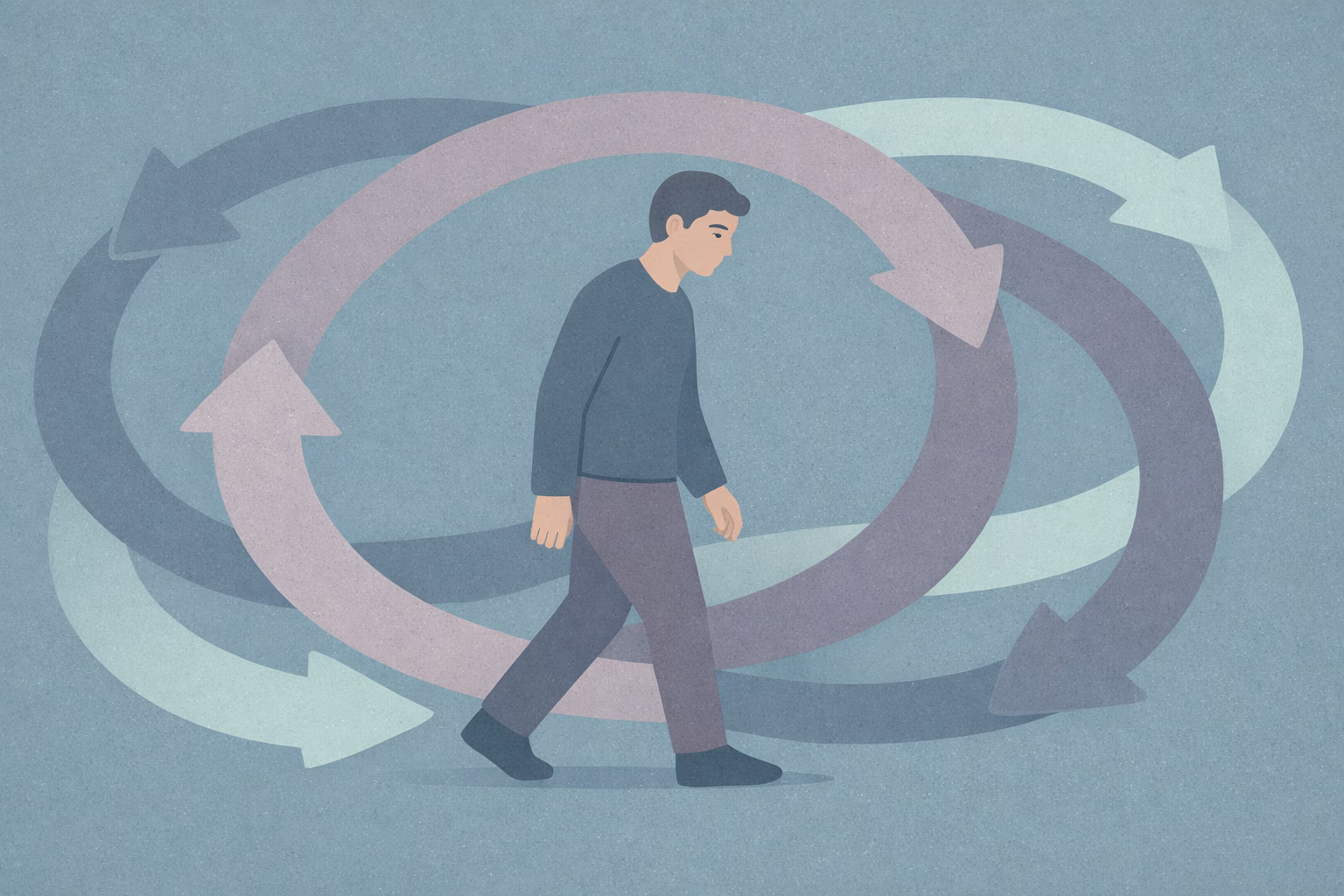
Discover why you scroll against your will and how to break the loop.
No, "The Mind Finds Something Else" because it’s looking for a "Meaning Hit." Often, this "Diversion Carries Intelligence." In the Meaning Density Model™, your mind redirects to something "Expansive" (like a vacation) because the "Constriction" of chores feels like a Threat to your Identity. Your mind is trying to remind you that you are "Larger" than your to-do list. This redirection is protective, not harmful.
Acknowledge the "Meaning" behind the diversion. "My mind wants to feel expansive right now." This satisfies the Reward & Narrative systems. Once that need is recognized, the "Urgency" of the diversion often drops. DojoWell suggests a "Hybrid Approach": give yourself 5 minutes to enjoy the diversion, then bring that "Expansive Feeling" back to the chores. You aren't "choosing between them"; you are using one to fuel the other.
One Quiet Window, one insight, one reflection — every Sunday