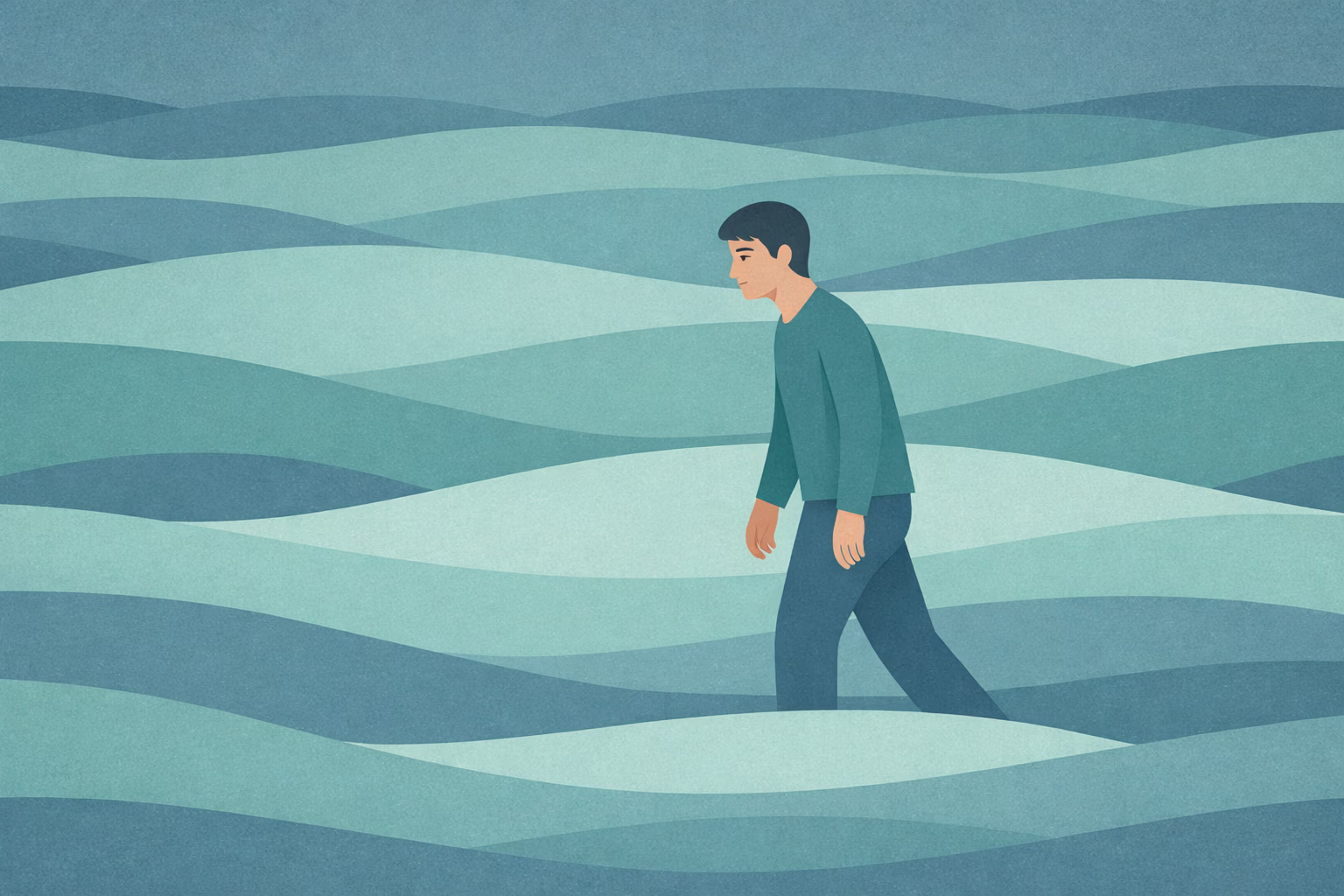
Endless Scrolling: The Internet’s Most Addictive Loop
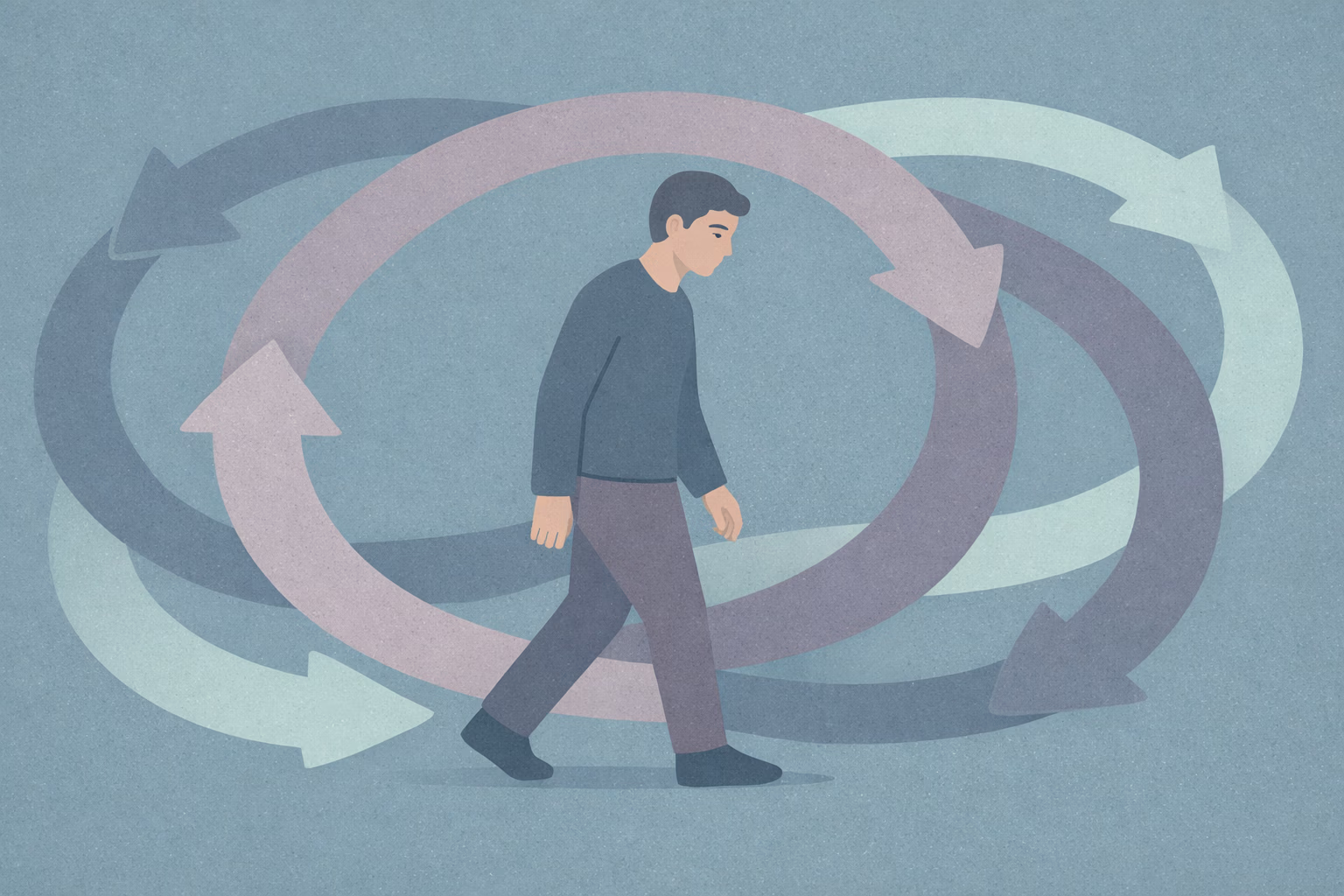
In short: Many people know the moment: your thumb keeps moving, time gets fuzzy, and a part of you is quietly watching it happen. It can feel like you’re choosing it and not choosing it at the same time—like your attention has been rented out without your full consent.
Many people know the moment: your thumb keeps moving, time gets fuzzy, and a part of you is quietly watching it happen. It can feel like you’re choosing it and not choosing it at the same time—like your attention has been rented out without your full consent.
Why does scrolling keep going even when you don’t want it to?
This isn’t a moral problem or a motivation problem. It’s what happens when a powerful learning system (built to help humans survive uncertainty) meets an environment engineered to keep “not-yet-finished” signals running. The result is a loop: cue, pull, reward possibility, and another pull—often without a clean sense of done.
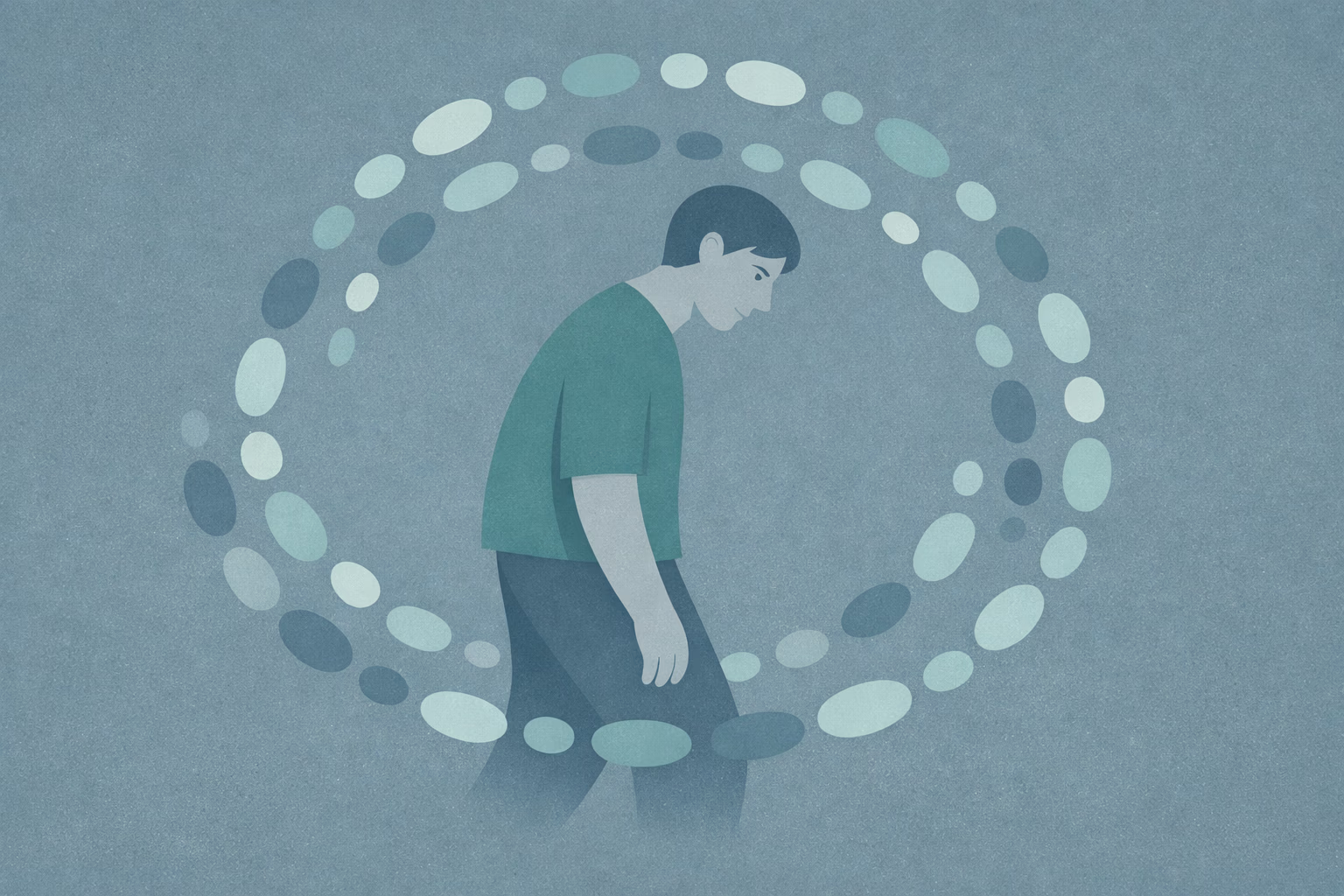
The most unsettling part of scrolling isn’t always the content—it’s the feeling of being slightly overridden. You may pick up your phone for a practical reason, and then realize you’ve been in a feed for 20 minutes with no clear memory of why you stayed. That gap can land as shame, self-criticism, or a sense of “What is wrong with me?” [Ref-1]
But this pattern is often a predictable response to load. When the nervous system is already carrying pressure—social evaluation, unfinished tasks, uncertainty—attention becomes easier to capture. Not because you’re weak, but because your system is looking for quick state-change and a clean stopping point, and the feed is designed to prevent closure.
It can look like “no self-control,” but it often behaves more like an unfinished loop searching for an ending.
Scrolling is a learning loop powered by prediction: your brain makes tiny forecasts about what the next swipe might deliver. Sometimes it’s boring. Sometimes it’s funny, relieving, socially relevant, or personally resonant. That variability is not a side detail—it’s the engine.
When rewards are unpredictable, the brain’s dopamine system tends to stay engaged, not because dopamine equals pleasure, but because dopamine tracks “what might happen next” and updates learning when outcomes differ from expectation (often described as prediction error). The feed keeps supplying “maybe the next one” moments, which strengthens the habit cycle over time. [Ref-2]
Humans evolved to scan for novelty because novelty can signal opportunity (food, social connection, information) and risk (threats, exclusion). A brain that updates quickly to new data is a brain that survives. Social media takes that adaptive novelty-seeking system and gives it an environment where novelty is cheap, constant, and socially loaded. [Ref-3]
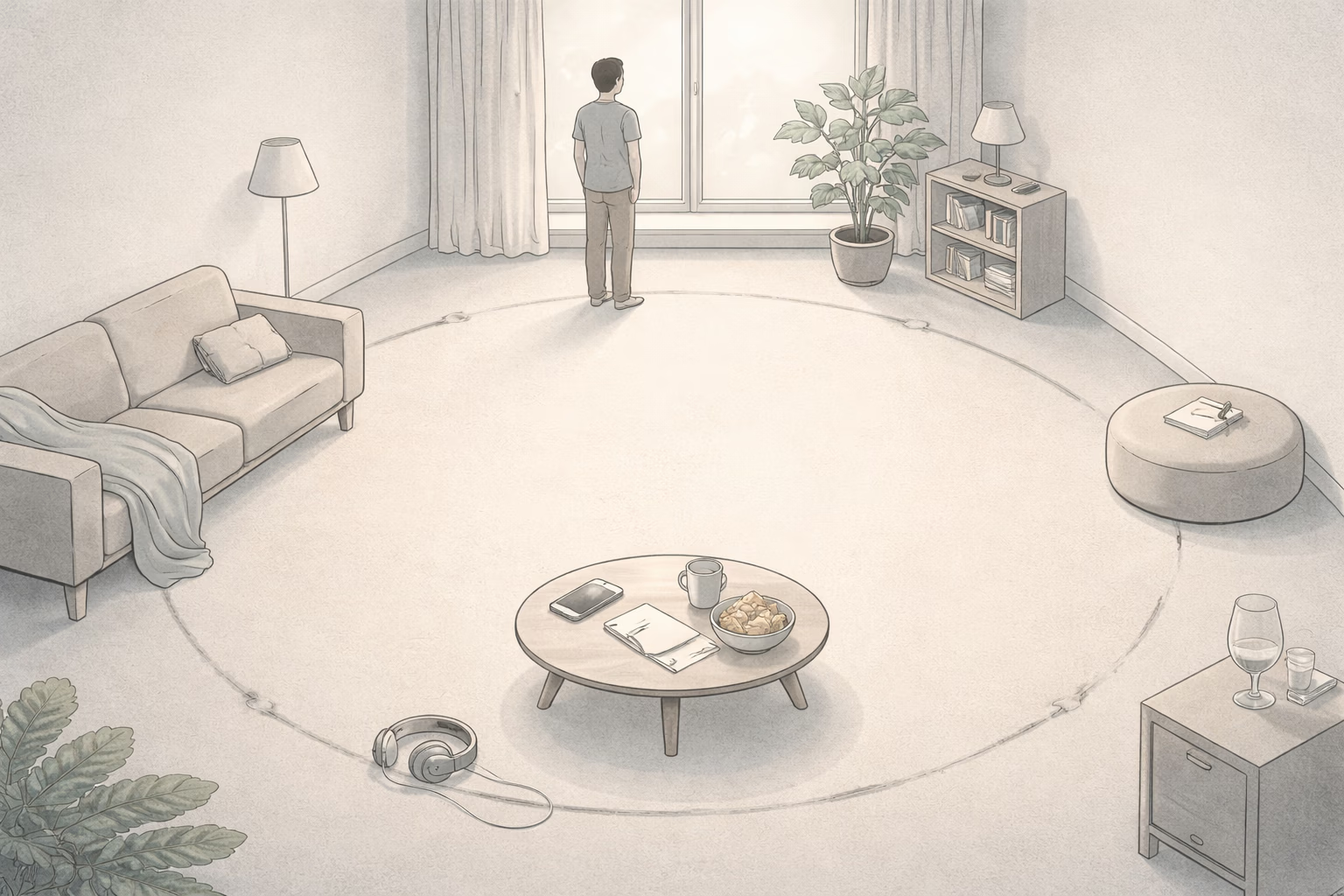
In natural settings, novelty tends to be followed by completion: you find the berry patch, you meet the person, you learn the information, and the system can settle. In a feed, novelty is decoupled from completion. There’s always more, and the “end” signal never arrives.
What would your nervous system do if “new” never stopped?
Scrolling can create a quick shift in state: a small lift, a distraction from pressure, or a temporary narrowing of awareness. For a nervous system carrying high demand, that narrowing can register as relief—not because it solves anything, but because it changes the internal weather for a moment. [Ref-4]
This is also why people often scroll when they’re not even enjoying it. The point may not be pleasure; it may be short-term regulation: dampening intensity, muting uncertainty, or giving the mind something “trackable” when everything else feels open-ended. The feed offers stimulation without requiring completion, and that can be deceptively soothing in the moment.
It can feel confusing because it looks like a choice: you opened the app, you scrolled, you stayed. But modern feeds are built around behavioral capture—systems that learn what holds your attention and then deliver more of it, with minimal friction to exit. [Ref-5]
In other words, your attention is not meeting a neutral environment. It’s meeting a responsive environment that is actively adapting to you. That doesn’t erase agency, but it does change the fairness of the contest. “Just decide to stop” is an incomplete explanation when the design is optimized to remove stopping cues.
Infinite scroll is structurally different from older media. A book ends. A show has credits. Even a newspaper runs out of pages. Those edges matter: they give the nervous system a boundary where it can downshift and register completion.
An infinite feed replaces boundaries with continuous novelty. Each swipe is a new draw—close in spirit to variable reward systems that keep behavior repeating. This is one reason dopamine-linked learning stays engaged: the environment keeps offering uncertainty plus possibility, on repeat. [Ref-6]
When there is no built-in “done,” stopping requires extra internal resources—resources that are often already taxed.
Over time, the body learns the sequence. You don’t have to decide; you just find yourself there. Apps open quickly, feeds refresh endlessly, and micro-interruptions (a notification, a lull, an awkward moment) become reliable cues that trigger the same pathway. [Ref-7]
This is why many people don’t stop because they “want more” in a clear way. They stop because something external interrupts: a meeting starts, the battery dies, someone walks in, it’s suddenly late. The exit point is often imposed from the outside because the environment is built to reduce internal stopping signals.
Constant feed consumption can fragment attention into short bursts. The mind becomes trained for rapid switching, which makes sustained focus feel unusually effortful—not because focus is broken, but because the baseline rhythm has been changed by repeated interruption and novelty. [Ref-8]
Many people also describe a kind of emotional flatness after long scrolling sessions: not necessarily sadness, just a muted sense of “aliveness” or personal contact with the day. That can happen when stimulation is high but completion is low—lots of input, few settled conclusions.
Agency tends to thin under these conditions. Not because the self disappears, but because intention has fewer chances to land. When attention is repeatedly redirected before an experience completes, the nervous system has less opportunity to register: “That’s done. I chose that. I’m finished now.”
Variable rewards don’t just keep you engaged; they can repeatedly teach the system to prioritize the next potential reward over the original plan. Each time the feed delivers something compelling “just in time,” it strengthens the association between continuing and payoff—even if most swipes are neutral. [Ref-9]
Over many repetitions, this can create a structural mismatch: your values and intentions may remain stable (“I want to sleep,” “I want to read,” “I want to be present”), while your learned loop is optimized for quick uncertainty resolution (“maybe the next swipe will deliver something important”). The result can feel like inner conflict, but it’s often two different systems responding to two different kinds of signals.
The feed doesn’t have to be better than your life. It only has to be more immediately unpredictable.
One of the most overlooked parts of this cycle is that the “urge” to keep going is often nonverbal. It can be a body-level momentum: a readiness, a reach, a continuation signal. When there is even a brief pause—long enough for the nervous system to notice the sequence—the spell can loosen. [Ref-10]
This isn’t about forcing insight or using understanding as a fix. It’s about what becomes possible when the loop is interrupted enough for intention to reappear. Naming what’s happening (“this is the scroll loop”) can function less like a cognitive trick and more like a boundary marker—an internal sign that says, “I’m inside a system that runs on continuation.”
In that moment, a different question can enter the room—not “Why am I like this?” but “What am I actually seeking right now: stimulation, relief, contact, closure?”
Because the feed is designed to reduce stopping cues, many people find that the biggest shift comes not from trying harder, but from changing the conditions around the behavior—adding friction, altering cues, or reshaping what “default” looks like. This is not a personal failing; it’s a recognition that learning loops respond to environment. [Ref-11]
It can also help to notice that “replacement” isn’t just swapping one activity for another. It’s the nervous system finding a different path to completion: something that ends, something that settles, something that leaves a clearer “done” signal. In that sense, the opposite of scrolling isn’t productivity. It’s closure.
As problematic use eases, people often describe not a constant uplift, but a return of basic signals: clearer time awareness, less internal urgency, more stable attention, and fewer moments of “How did I get here?” [Ref-12]
Importantly, this shift is not just feeling differently—it’s functioning differently. There may be more space between impulse and action, and more continuity across the day. Instead of attention being repeatedly “reset” by the feed, experiences have a chance to complete and consolidate into memory, preference, and identity.
What changes when your day contains more endings?
When feeds shape attention, identity can start to feel externally directed: your sense of what matters is repeatedly nudged by what is most engaging, most provocative, or most socially charged. Over time, that can thin personal orientation—less “this is who I am,” more “this is what grabbed me.” Research on problematic social media use consistently notes functional impacts that extend beyond screen time into sleep, mood stability, and daily life organization. [Ref-13]
Values-led attention is different. It doesn’t mean never being captured; it means your attention more often returns to what you recognize as yours—relationships, work that feels meaningful, rest that actually resolves tiredness, information that supports real decisions. This is how agency tends to rebuild: not through constant resistance, but through repeated experiences of alignment that settle into lived identity.
Agency grows when attention comes home often enough to remember what it belongs to.
In many modern settings, attention is treated like something to spend, optimize, or trade. But attention is also how humans create coherence: it’s how moments connect into a day, and how days connect into a life. When attention is repeatedly fragmented, meaning can feel thin—not because you’re empty, but because your experiences don’t get to finish and integrate. [Ref-14]
Seen this way, the “scroll loop” is not a personal defect. It’s a predictable outcome of high-speed reward, social evaluation cues, and missing boundaries. And the longing underneath it is often simple: relief, orientation, and a sense of completion.
If scrolling has been a place you disappear into, it can be tempting to conclude you can’t rely on yourself. A kinder and more accurate reading is that your nervous system adapted to an environment that is unusually good at keeping loops open. That adaptation says something about your learning capacity, not your worth. [Ref-15]
When the loop loosens, what often returns first is not dramatic transformation, but a quiet reconnection: time feels real again, choices feel more yours, and the day has more natural endpoints. From there, meaning tends to rebuild the way it always has—through experiences that complete, settle, and become part of who you are.
From theory to practice — meaning forms when insight meets action.
Because the goal often isn't pleasure — it's regulation. The feed offers stimulation without requiring completion, which can feel deceptively soothing when the nervous system is already loaded. Scrolling creates a quick state shift: a small lift, a distraction from pressure, a temporary narrowing of awareness. For a system carrying high demand, narrowing registers as relief, even though nothing was solved. The loop runs on cue, anticipation, variable reward, reinforcement — the brain stays engaged not because dopamine equals pleasure, but because dopamine tracks 'what might happen next' and updates with prediction error. Each swipe is another 'maybe.' Enjoyment isn't required for the loop to keep running.
It's more accurately framed as choice meeting capture. You opened the app and stayed — that looks like a choice. But modern feeds are built around behavioral capture: systems that learn what holds your attention and deliver more of it with minimal friction to exit. Your attention isn't meeting a neutral environment; it's meeting a responsive one actively adapting to you. Infinite scroll is structurally different from older media — a book ends, a show has credits, even a newspaper runs out. Edges matter because they give the nervous system a boundary where it can register completion. Replacing edges with continuous novelty keeps prediction-based learning engaged. 'Just decide to stop' is incomplete advice when the design removes stopping cues.
Because the body learns the sequence and runs it before conscious decision. Apps open quickly, feeds refresh endlessly, and micro-interruptions — a notification, a lull, an awkward moment — become reliable cues that trigger the same pathway. Many people don't stop because they 'want more.' They stop because something external interrupts: a meeting starts, the battery dies, someone walks in. The exit is imposed from outside because the environment is built to reduce internal stopping signals. Variable rewards train the override of intention: each compelling 'just-in-time' delivery strengthens the association between continuing and payoff. Your values stay stable while your learned loop is optimized for quick uncertainty resolution.
Quietly, basic signals return. Clearer time awareness. Less internal urgency. More stable attention. Fewer 'how did I get here?' moments. There's more space between impulse and action, and more continuity across the day — instead of attention being repeatedly reset by the feed, experiences get a chance to complete and consolidate into memory and identity. Agency rebuilds not through constant resistance but through repeated experiences of alignment. Attention, in this view, isn't just a resource to spend — it's how humans create coherence. When fragmentation drops, meaning thickens, because experiences finally finish. The opposite of scrolling isn't productivity. It's closure.
From Science to Art.
Understanding explains what is happening. Art allows you to feel it—without fixing, judging, or naming. Pause here. Let the images work quietly. Sometimes meaning settles before words do.
One Quiet Window, one insight, one reflection — every Sunday