Endless Scrolling: The Internet’s Most Addictive Loop
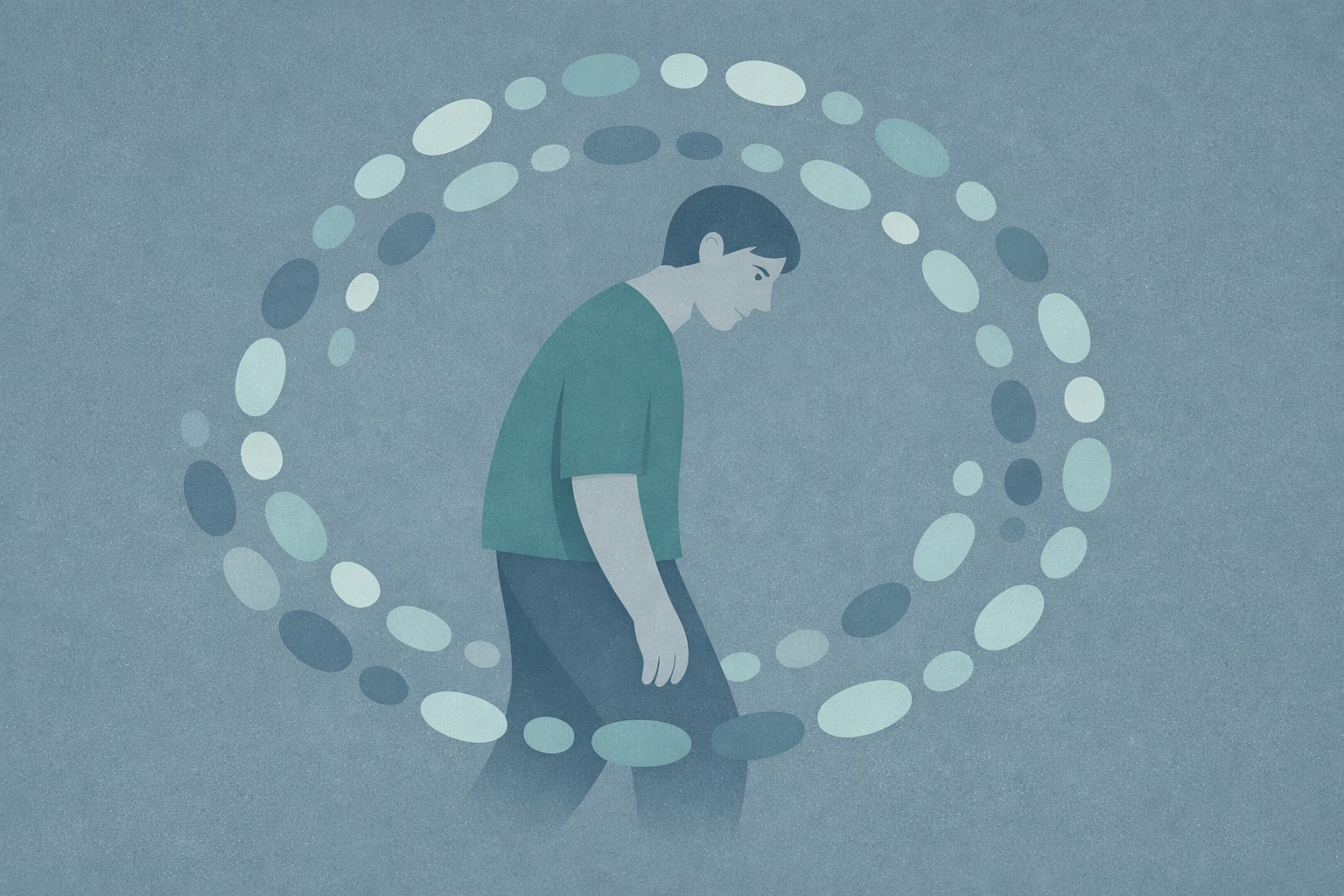
In short: Compulsive scrolling often gets described as a self-control problem. But for many people, it’s closer to a nervous-system shortcut: a fast, repeating cycle of anticipation, tiny payoff, and immediate reset.
Compulsive scrolling often gets described as a self-control problem. But for many people, it’s closer to a nervous-system shortcut: a fast, repeating cycle of anticipation, tiny payoff, and immediate reset. The behavior can look like choice from the outside while feeling strangely unchosen on the inside.
What if the point isn’t that you’re weak—but that the loop is designed to stay open?
This article explores scrolling as a reward-and-stimulation pattern that thrives when the mind can’t get a clean “done” signal. Not because you’re broken, but because modern feeds are built around continuation, not completion—and the brain’s reward system is especially sensitive to that difference.
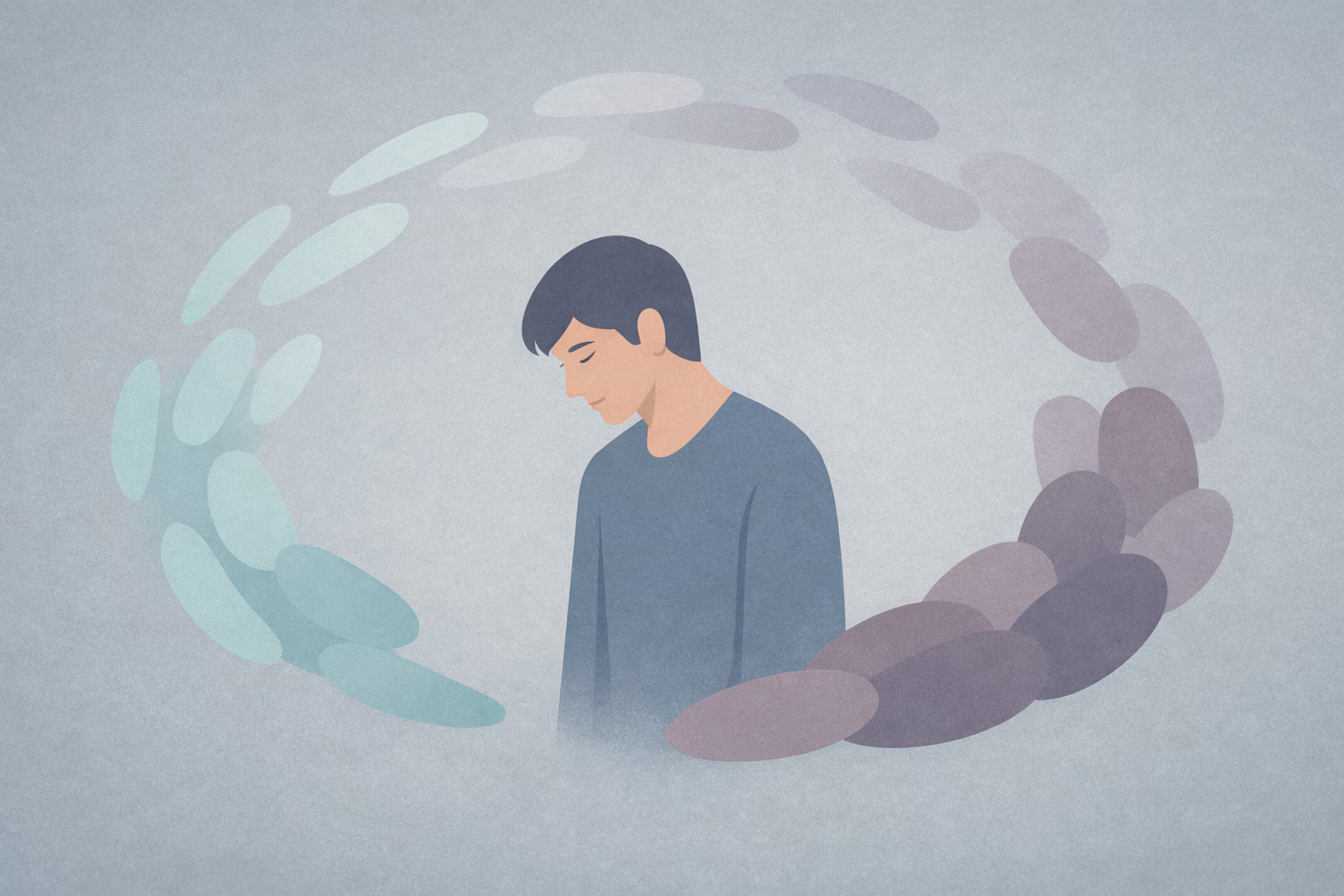
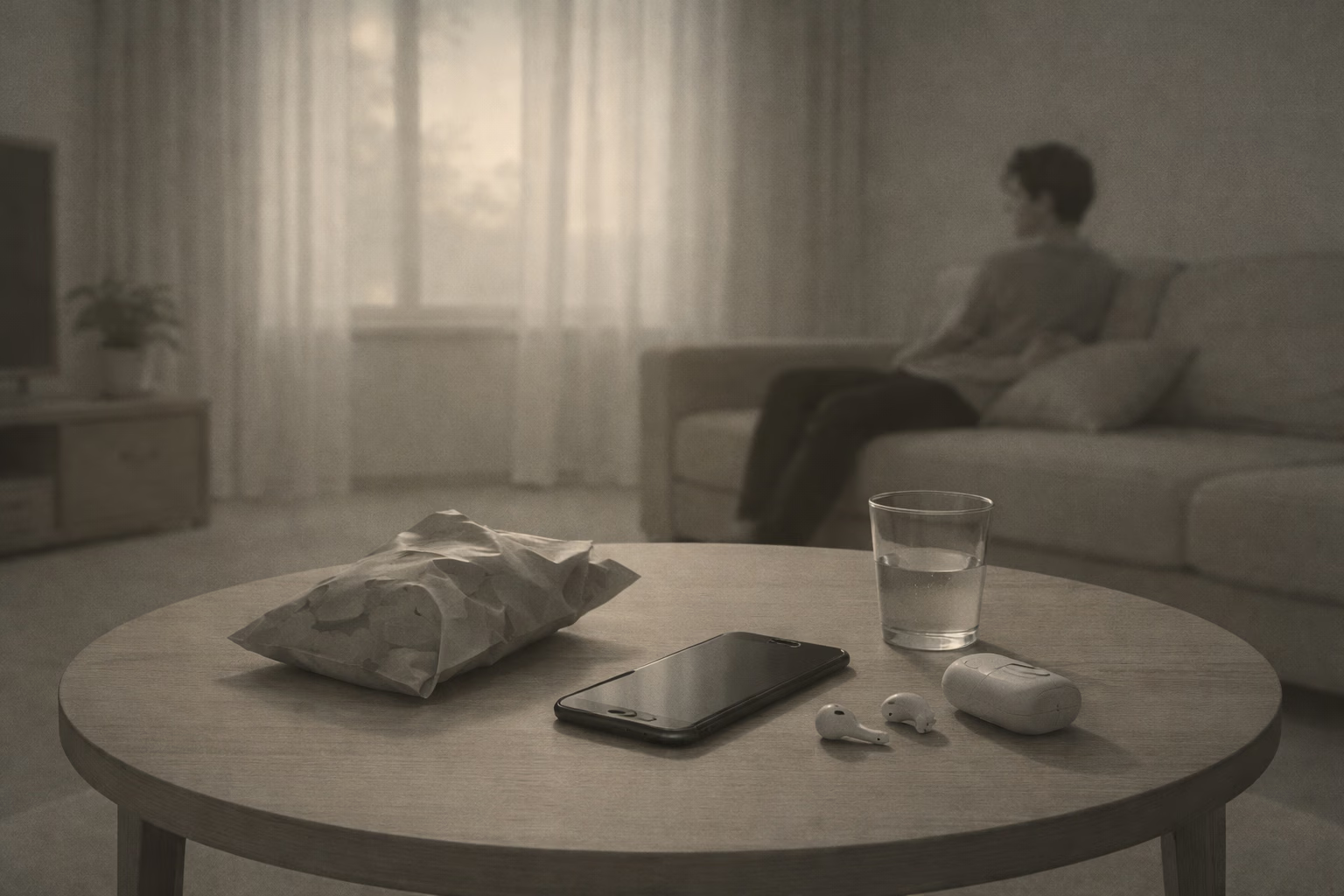
A common experience with compulsive scrolling is the sudden realization that an hour is gone. There may be a mental fog, a vague restlessness, and then a sharp swing into guilt or self-critique. The sequence can feel confusing: you didn’t exactly “choose” it, but you also weren’t fully absent.
From a regulation perspective, this makes sense. Scrolling can move the nervous system into a narrower channel—less contact with time, less contact with body signals, fewer friction points. In that channel, the brain is not weighing life priorities; it’s tracking micro-cues and micro-rewards.
This isn’t an identity. It’s a pattern that often appears when the system is loaded and looking for quick stabilization. [Ref-1]
The reward system is built to learn from patterns: cue → action → outcome. In scrolling, the “outcome” is often unpredictable—sometimes interesting, sometimes nothing. That unpredictability matters because it keeps anticipation high. In neuroscience terms, variable rewards and “prediction errors” (surprises) intensify the drive to check again. [Ref-2]
Importantly, dopamine signaling is strongly tied to wanting and seeking—especially when the next outcome is uncertain. The body can mobilize for the possibility of reward even when the actual reward is small. That’s why someone can feel compelled to keep going despite not enjoying what they’re seeing.
Anticipation can be more activating than satisfaction—especially when the system never gets a clear ending.
Human attention evolved to orient toward new information: changes in the environment, social signals, potential opportunities, potential threats. In ancestral settings, novelty was relatively sparse and often meaningful—worth investigating because it could change outcomes.
Modern feeds compress novelty into a rapid stream. Each swipe offers a new “maybe.” That repeatedly recruits orienting networks and reward anticipation, even when the content doesn’t add up to anything that resolves or completes. Research on distraction and social media highlights how cues and reward anticipation can become habitual drivers of attention. [Ref-3]
In other words, the brain is doing what it was built to do—only now, the environment supplies endless novelty without requiring resolution.
Scrolling isn’t only about entertainment. For many people it provides quick relief: from boredom, from a vague inner pressure, from the discomfort of stillness, or from the sense that there are too many open loops in life.
Stimulation can temporarily shift state—like changing the channel in the nervous system. Curiosity gets small satisfactions, and the mind gets momentary “something to do” that doesn’t demand much commitment. This is one reason the loop can feel both comforting and draining.
When people say, “I don’t even like it, but I keep doing it,” that often reflects a mismatch between stimulation (state change) and integration (settling after completion). The first is quick; the second requires an ending.
Popular explanations of dopamine and social media often emphasize how these platforms leverage reward circuitry to keep engagement going. [Ref-4]
Scrolling can resemble exploration: learning, staying informed, finding inspiration. But the felt experience often shifts from curiosity into drift—attention moving without a clear aim, body signals getting quieter, and the sense of “I’m choosing” becoming less available.
One reason is information overload. When inputs arrive faster than they can be organized into a coherent picture, the mind can keep scanning without arriving anywhere. That scanning can be a way to search for meaning while simultaneously fragmenting it. [Ref-5]
When there’s no completion point, what would “enough” even feel like?
Many human systems regulate through endings: finishing a task, closing a conversation, arriving at a conclusion. Those endings provide closure signals—physiological permission to stand down.
Infinite scroll removes the natural stopping cues that help the brain mark something as complete. There’s no last page, no “you’re done here,” no built-in exhale. The design favors sustained engagement, which means the loop can continue even when the person is tired. Discussions of infinite scroll often describe it as a mechanism optimized for keeping users moving forward, not for helping them feel finished. [Ref-6]
Without completion, the nervous system may stay in a low-grade seeking mode—activated enough to continue, but not satisfied enough to stop.
Autopilot scrolling tends to show up when two things happen at once: the loop provides fast reward cues, and there are few barriers to continuing. A thumb movement is enough to restart anticipation. No planning required. No cleanup required.
People often notice discomfort when the feed ends, the phone battery dies, or the app stalls. That discomfort isn’t proof of brokenness; it’s what a continuation-optimized loop feels like when it suddenly meets an edge. Design commentary on infinite scroll highlights how removing “stop points” reduces natural breaks that would otherwise help people disengage. [Ref-7]
When attention is repeatedly trained on rapid shifts, the nervous system adapts. The baseline expectation becomes: quick input, quick change, quick payoff. Over time, slower experiences—reading, listening, thinking, being with someone—can feel strangely effortful, not because they’re “too hard,” but because they run on a different rhythm.
This is less about moral strength and more about capacity. Depth requires sustained signal return: the ability to stay with one channel long enough for it to become coherent. Addictive-platform research often discusses how infinite scrolling behaviors can be associated with diminished satisfaction and continued use without completion. [Ref-8]
In this landscape, the mind can start to confuse motion with progress—because motion reliably produces the next cue.
The distinctive feature of compulsive scrolling is how quickly the promise returns. A post is consumed, and within milliseconds the next one appears. The brain doesn’t have time to consolidate what mattered, discard what didn’t, or register a clean end. The system is invited to re-enter anticipation immediately.
This creates a repeating structure: cue → seek → tiny payoff → reset. Because the reset is so fast, the loop can become self-sustaining even when the content quality is low. Analyses of platform design describe infinite scroll as “addiction by design” precisely because it reduces stopping cues and rapidly restarts the cycle. [Ref-9]
The loop isn’t asking, “Was that meaningful?” It’s asking, “What’s next?”
When people frame scrolling as a willpower contest, they often add more internal pressure to an already loaded system. But pressure doesn’t create closure; it usually creates more activation. And activation tends to make fast loops more attractive.
A different bridge is to understand attentional control as state-dependent. When the nervous system is overloaded—by stress, uncertainty, constant evaluation, lack of rest, social disconnection—attention naturally narrows toward quick stabilization. In that condition, “choosing differently” can be less available, not because you don’t care, but because the system is busy keeping itself moving.
Research linking heavy social media use and attention patterns points toward measurable shifts in attention span and focus. [Ref-10] That doesn’t mean people are doomed; it means the environment and the nervous system are interacting, and the result is predictable.
Feeds often mimic the ingredients of real connection: faces, voices, humor, shared outrage, shared tenderness, the sense of “being in the know.” But imitation isn’t the same as completion. Real interaction tends to include reciprocity, pacing, and an ending—signals that help the body register, “That counted.”
When those signals are missing, the system may keep searching. It’s not that someone is secretly “afraid” of connection; it’s that the loop provides partial cues (social information, novelty, validation metrics) without the physiological closure that comes from being met in real time.
Public health discussions about algorithm-driven engagement often note how platform mechanics can intensify compulsive use patterns, especially in younger users. [Ref-11]
Many people describe a noticeable shift when the loop loosens: time feels more trackable, the mind feels less scattered, and the body’s quieter cues become easier to register. Not as a dramatic emotional breakthrough, but as a functional return of internal signals.
This is what reduced load and restored closure can feel like—more space between impulse and action, and more ability to stay with one thing long enough for it to become coherent. Work on cues, reward anticipation, and habit helps explain why, as the cue-driven cycle weakens, attention can re-stabilize. [Ref-12]
At the far end of compulsive scrolling, life can start to feel like it’s being lived in response—responding to cues, reacting to stimuli, following the next prompt. Over time, that can subtly reshape identity: not who you “are,” but what your days repeatedly become.
As coherence returns, attention starts to behave less like a reflex and more like an orientation. You’re more likely to notice what actually matters to you because you’re not constantly being redirected before meaning can settle. Research on problematic social media use and inhibitory control aligns with the idea that sustained high-cue environments can erode the very brake systems that support deliberate choice. [Ref-13]
Agency often returns as a quiet realism: “I can feel what matters again.”
Attention doesn’t only determine what you see; it shapes what becomes real to you. What you repeatedly return to becomes familiar, and what becomes familiar starts to feel like “me” and “my world.” Over time, this can influence values, relationships, and the stories you carry about your own capacity.
When compulsive scrolling is understood as a regulatory loop under modern conditions, shame becomes less useful—and orientation becomes more possible. The important question shifts from “Why can’t I stop?” to “What kind of closure does my system keep missing?” Public health literature increasingly treats problematic social media use as an interaction between human vulnerability and engineered environments, not a simple personal failing. [Ref-14]
In that frame, meaning isn’t something you force yourself to believe. It’s something that emerges when experiences can complete—when your attention has enough steadiness to let life register as lived.
Infinite feeds offer continuation without conclusion. And a nervous system can stay mobilized for a long time when it’s repeatedly promised “next” without receiving “done.”
Compulsive scrolling doesn’t prove you lack depth. It often proves you’ve been living in a world that withholds natural stopping cues while demanding constant adaptation. When completion returns—when experiences can land, settle, and become part of your lived identity—the loop has less to grip.
Not because you fought harder, but because your system finally got what it’s been trying to find: a clean finish line, and the permission to stand down. [Ref-15]
From theory to practice — meaning forms when insight meets action.
Because the loop isn't powered by enjoyment. Dopamine is closer to an anticipation engine than a pleasure chemical, and feeds are built around variable, uncertain outcomes — sometimes interesting, often nothing. That unpredictability keeps wanting and seeking active even when satisfaction is thin. Each swipe resets the promise within milliseconds, so the brain doesn't get time to consolidate or register an ending before the next 'maybe' appears. The Pleasure Loop self-sustains on continuation rather than content quality. That's why people genuinely report 'I don't even like it, but I keep going' — the system is mobilized by the next, not nourished by the now.
The design clearly favors continuation over completion. Many human systems regulate through endings — a finished task, a closed conversation, an arrived-at conclusion — and those endings provide closure cues that physiologically permit stand-down. Infinite scroll removes those natural stopping points: no last page, no 'you're done here,' no built-in exhale. The article quotes design analyses that describe this as addiction by design, because removing stop points reduces the breaks that would otherwise help people disengage. That doesn't mean people are doomed; it means the environment and the nervous system are interacting in a predictable way under sustained engagement pressure.
Because it's doing real short-term regulation. Stimulation can shift state quickly — like changing the channel in the nervous system — providing relief from boredom, the discomfort of stillness, or the sense that life has too many open loops. Curiosity gets small satisfactions; the mind gets something to do that doesn't demand commitment. The mismatch is between stimulation (state change) and integration (settling after completion). The first is quick; the second requires an ending that scrolling doesn't supply. So the loop genuinely soothes in the moment and genuinely drains over time, which is why both 'it helps' and 'it hurts' can be true at once.
Not through more pressure on yourself. Pressure adds activation, and activation makes fast loops more attractive. Attentional control is state-dependent: when the system is overloaded — by stress, evaluation, lack of rest, social disconnection — attention narrows toward quick stabilization, and 'choosing differently' becomes less available. The shift the article points to is closure rather than control. As life provides more genuine endings (work that finishes, conversations that complete, moments allowed to land), the cue-driven cycle weakens. Time becomes more trackable, the post-scroll haze thins, and attention starts behaving like an orientation rather than a reflex. Meaning needs endings.
From Science to Art.
Understanding explains what is happening. Art allows you to feel it—without fixing, judging, or naming. Pause here. Let the images work quietly. Sometimes meaning settles before words do.
One Quiet Window, one insight, one reflection — every Sunday