Decision Fatigue: Why Your Brain Shuts Down by Evening
In short: Many people describe the same strange tension: a day full of activity, a mind full of tabs, and yet a persistent sense that nothing is truly finished. Attention keeps slipping away—not once, but dozens of times—until “focus” starts to feel like a personality trait you either have or don’t.
Many people describe the same strange tension: a day full of activity, a mind full of tabs, and yet a persistent sense that nothing is truly finished. Attention keeps slipping away—not once, but dozens of times—until “focus” starts to feel like a personality trait you either have or don’t.
What if distraction isn’t a character problem, but a nervous-system pattern under modern conditions?
When attention is repeatedly reset by fast rewards and constant signals, the mind doesn’t get the “done” cues it needs to settle. What often shows up as restlessness, scrolling, or task-hopping can be understood as a regulatory response: the system searching for relief, completion, and coherence in an environment that keeps breaking the loop before it closes.
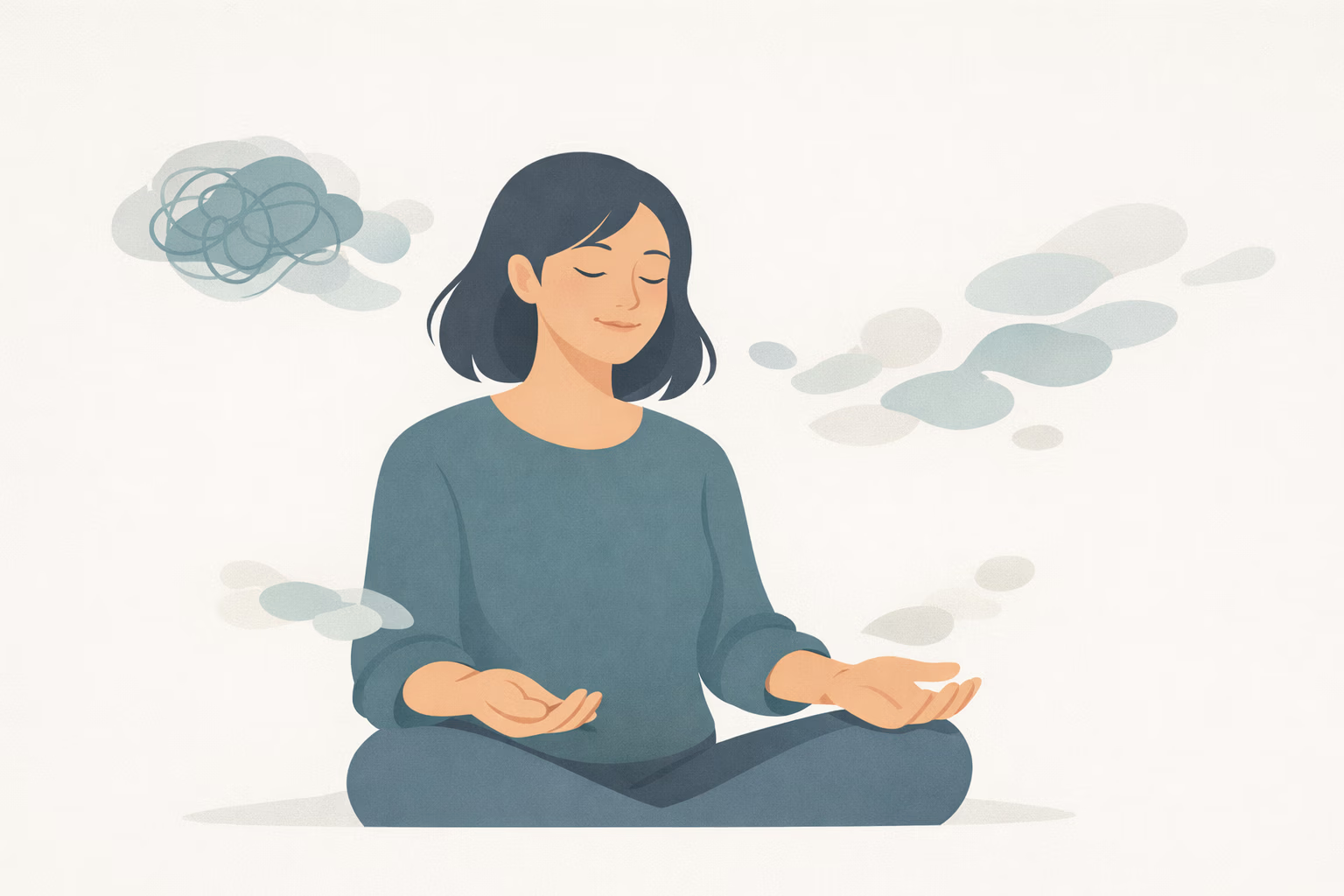
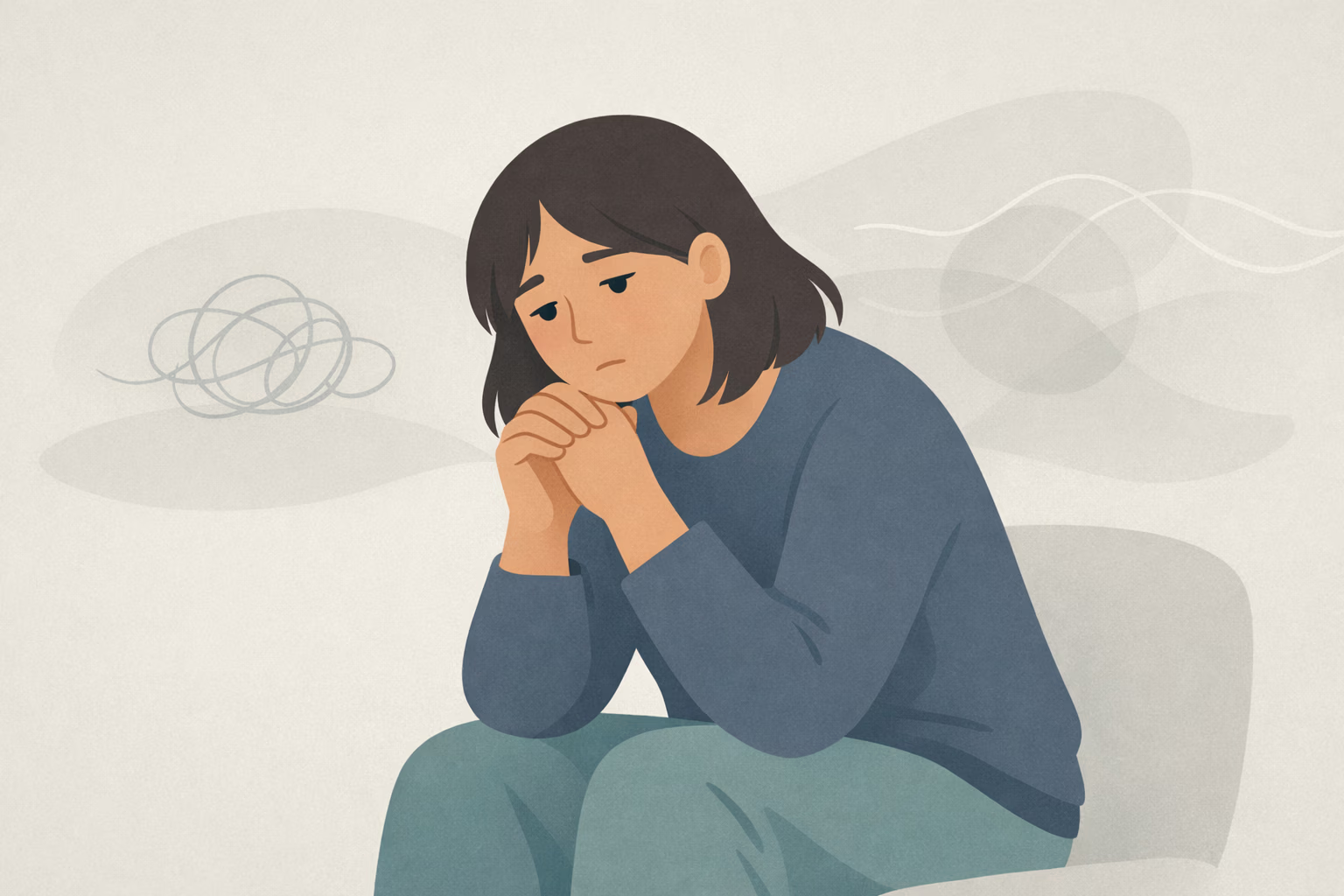
Frequent focus loss doesn’t only cost time. It can create a particular kind of cognitive fragmentation: you start something, get pulled away, return halfway, then start another. The brain holds multiple “open loops” at once—each one carrying a small amount of unresolved pressure.
Over time, this can feel like living in a near-constant state of mental pending: many beginnings, few completions. The frustration that follows is often less about productivity and more about the body’s sense that the day never truly lands. Even leisure can feel oddly jagged when attention keeps getting interrupted mid-settle. [Ref-1]
In that state, distraction isn’t random. It’s a predictable outcome of a system that isn’t getting enough continuity to form depth, sequence, and closure.
Modern digital environments don’t just “distract” in the casual sense. They introduce frequent, high-salience interrupts—pings, banners, badges, vibrations, previews—each one acting like a small alarm that demands orientation. Even when you don’t open them, they can pull cognitive control toward scanning and away from sustained engagement. [Ref-2]
Novelty also works as a powerful attention magnet. New information carries the promise of relevance—something you might need, something you might miss—so the brain treats it as a priority signal. When these inputs arrive in rapid succession, attention gets repeatedly restarted at the beginning of the focusing process, never reaching the “cruising speed” where depth becomes easier.
This is one reason distraction can feel involuntary: the environment is built to keep re-issuing “check now” cues before the mind has time to complete what it was doing.
From an evolutionary standpoint, attention is not primarily a “work tool.” It’s a survival function: detect changes, spot signals, update the map. A sudden sound, a flicker, a new piece of information—these are exactly the kinds of cues that historically mattered.
That bias toward novelty and signal detection becomes a mismatch in a world where change is constant and manufactured. A phone can deliver hundreds of “possible relevance” prompts per day, each one tapping the same orienting reflex that once helped humans stay alive. [Ref-3]
So when attention jumps, it may be less like a weak muscle and more like a well-trained alarm system responding to a high-noise environment. The mechanism is doing what it was built to do—just in conditions it was never designed to inhabit.
It can be tempting to explain distraction as a purely mental choice. But structurally, distraction often arrives as a form of state change—an immediate reduction in effort-load. When a task requires sustained ambiguity, precision, waiting, or uncertainty, the nervous system can register it as “costly” even if you care deeply about the outcome.
In that moment, a quick check, scroll, or switch offers a fast shift: effort drops, stimulation rises, and the body gets a brief sense of release. This doesn’t require dramatic emotional backstory. It’s a simple pattern: high demand without closure tends to recruit exits that lower activation quickly. [Ref-4]
Sometimes the pull isn’t toward the phone itself—it’s toward a moment where the mind doesn’t have to hold the weight of an unfinished thing.
Digital life can make a person look busy while their attention is repeatedly fragmented. Messages answered, tabs opened, small tasks cleared—there can be lots of movement without much cognitive settling.
Engagement is different from activity. Engagement has continuity: it allows ideas to connect, memory to consolidate, and decisions to complete. When the day is dominated by rapid switching, the mind may never fully enter the mode where one thing becomes “enough of the world” for a while to create depth. [Ref-5]
What gets lost when everything is “in progress”?
Often it’s the internal sense of completion—what tells the nervous system it can stand down, and what tells identity, over time, “this is what I do; this is who I am.” Without that, people can feel strangely unanchored even after a full day.
Distraction commonly runs on a short reward loop. An urge appears (to check, to switch, to refresh). The check happens. A small dose of relief or novelty arrives. And the nervous system learns: this pathway changes state quickly.
Over time, the loop can become self-reinforcing. Not because someone is “addicted” in a moral sense, but because the brain is efficient: it repeats what reliably reduces load or increases stimulation in the short term. Multitasking and rapid switching can also amplify this effect by training the mind to expect frequent novelty and making sustained attention feel more effortful by comparison. [Ref-6]
Because this is a nervous-system pattern, it often has recognizable surface signs. These signs can appear even in people who are motivated, capable, and sincerely trying.
Common presentations include:
These aren’t character verdicts. They’re coherence signals: the system has learned to regulate by switching contexts quickly, which makes continuity harder to access on demand. [Ref-7]
Sustained attention isn’t only about getting work done. It’s how experiences assemble into something coherent. When attention remains with a task or moment long enough, the brain can link details, form context, and consolidate memory. That is part of how life feels like a narrative rather than a slideshow.
Frequent context switching interrupts that process. Even if each switch is small, the cumulative effect can be a reduced ability to think in longer arcs—complex reasoning, creative incubation, and the quiet “thread” that connects one part of the day to another. [Ref-8]
When deep focus erodes, meaning can feel thinner—not because life is meaningless, but because the conditions for meaning formation (continuity, completion, integration into identity) are repeatedly disrupted before they can settle.
Repeated distraction changes what the nervous system expects. If stimulation is always available and relief is always one tap away, friction begins to feel unusually loud. Tasks that require waiting, sequencing, or uncertainty can trigger a stronger impulse to exit.
This is not laziness; it’s calibration. The system adapts to the level of stimulation and interruption it lives inside. With constant prompts, the baseline shifts: the absence of novelty can register like deprivation, and sustained effort can feel like an outsized demand. [Ref-9]
In that landscape, craving for stimulation often rises. Checking becomes less about interest and more about state regulation—an attempt to restore a familiar level of activation. And the more often the loop runs, the less often the mind reaches the “I’m done” signal that would allow true stand-down.
The cultural story says focus is a willpower contest. But in many cases, what’s happening is a mismatch between short-loop rewards and long-loop completion. The mind is being asked to stay with slow, uncertain processes while surrounded by fast, certain rewards.
When people talk about “reducing triggers” or “lengthening attention windows,” the deeper point is not self-control as virtue. It’s redesigning conditions so the nervous system can stay long enough for a task to actually complete—and for completion to register as satisfying. [Ref-10]
Importantly, understanding the loop is not the same as integration. Integration is what happens when the body repeatedly experiences completion: the effort rises, the process continues, the ending arrives, and the system learns, at a physiological level, that depth is survivable and worth staying with.
Many people notice they can concentrate better in certain social conditions: quietly alongside others, in a library, in a shared workspace, during a calm conversation. This isn’t magical—it’s rhythmic.
Human environments provide timing cues: beginnings, middles, endings. They also provide gentle accountability and reduced choice overload. When someone else is present, the nervous system often receives more stable safety cues, which can lower scanning and make sustained attention more accessible. [Ref-11]
In other words, focus is not purely an internal resource. It is also an emergent property of context—especially contexts that have predictable rhythm and fewer novelty spikes.
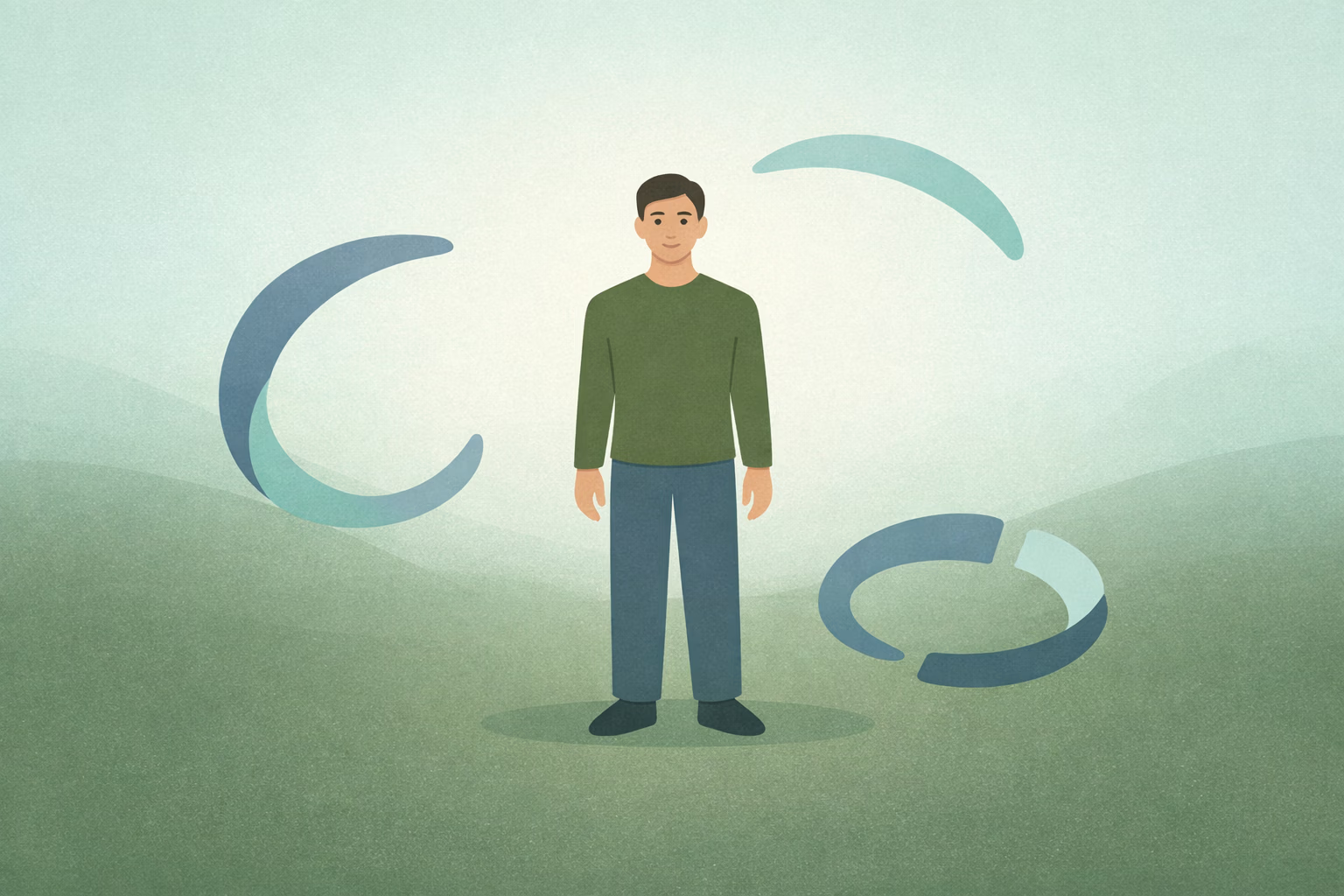
When distraction load decreases and experiences reach completion more often, the shift is usually subtle before it’s dramatic. It can show up as fewer internal restarts—less of the sensation that your mind is constantly leaving and coming back.
People often describe:
This isn’t about feeling intense or emotional. It’s about capacity returning: the nervous system regains its ability to hold one channel of experience long enough for the “done” signal to land—and for that completion to become part of lived identity. [Ref-12]
When focus is framed as a personal trait, every lapse becomes a referendum on who you are. That frame tends to add pressure, which adds load, which can increase the pull toward quick relief.
A more stabilizing frame is orientation: attention goes where life is being made. Focus becomes less about fighting yourself and more about what you are aligning with—what you are willing to complete, what you want to be able to say is true about your day and your mind.
In that sense, “reclaiming attention” is not primarily about restriction. It’s about protecting the conditions that allow continuity and closure—because closure is what turns effort into coherence, and coherence is what makes agency feel real. [Ref-13]
In a high-interruption world, distraction is an understandable regulatory outcome. The system is responding to constant prompts, rapid rewards, and incomplete loops—trying to manage load with the tools available. Over time, that can thin out the feeling of a coherent inner life, not because you’re broken, but because the environment keeps preventing psychological “done.” [Ref-14]
Meaning tends to reappear when experiences can finish. When sentences complete, conversations land, tasks reach an ending, and the nervous system receives the stand-down signal. That’s when attention stops feeling like a scarce commodity and starts feeling like a home you can return to—an orientation where learning, relationship, and identity can actually consolidate.
Focus isn’t just concentration; it’s selection. It determines what gets enough continuity to matter, what gets completed, and what becomes part of you over time.
When attention is repeatedly fragmented, life can feel scattered even when it’s full. When attention is allowed to gather and settle, experience becomes more connected—less like endless input, more like a lived sequence with endings. That shift isn’t a performance. It’s a return of coherence. [Ref-15]
From theory to practice — meaning forms when insight meets action.
Structurally, distraction often functions as relief, not irresponsibility. When a task requires sustained ambiguity or precision, the nervous system registers it as costly — even if you care about the outcome. A quick check or scroll offers a fast state change: effort drops, stimulation rises. This is a Pleasure Loop running on the urge → check → relief → weakened focus pattern. The brain repeats what reliably reduces load in the short term. Framing it as character failure adds pressure on top of pressure, which usually deepens the loop rather than breaking it.
Because attention evolved as a survival function — detect change, spot signals, update the map. A flicker or new sound used to matter for staying alive. Modern phones tap that same orienting reflex hundreds of times a day. This is an Evolutionary Mismatch: the mechanism is doing exactly what it was built to do, just in conditions it was never designed to inhabit. Notifications, badges, and previews each act like a small alarm demanding orientation, repeatedly resetting attention before depth can form.
Sustained attention is how experiences assemble into something coherent — how memory consolidates and life feels like a narrative rather than a slideshow. Frequent context switching interrupts that. The cumulative effect is reduced ability to think in longer arcs and a thinning sense of meaning, not because life is meaningless but because the conditions for meaning formation (continuity, completion, integration into identity) keep getting disrupted before they can settle. A day full of activity can still feel oddly unfinished.
It usually shows up subtle before dramatic. Fewer internal restarts. Reading that moves forward without repeated resets. Moments that feel continuous rather than fragmented. Less urgency to check even when the phone is nearby. Better recall of what actually happened yesterday, not just what was consumed. The shift isn't about feeling more intense or motivated — it's the system regaining capacity to hold one channel of experience long enough for the Done Signal to land. Focus stops feeling like a personality trait and starts feeling like a place you can return to.
From Science to Art.
Understanding explains what is happening. Art allows you to feel it—without fixing, judging, or naming. Pause here. Let the images work quietly. Sometimes meaning settles before words do.
One Quiet Window, one insight, one reflection — every Sunday