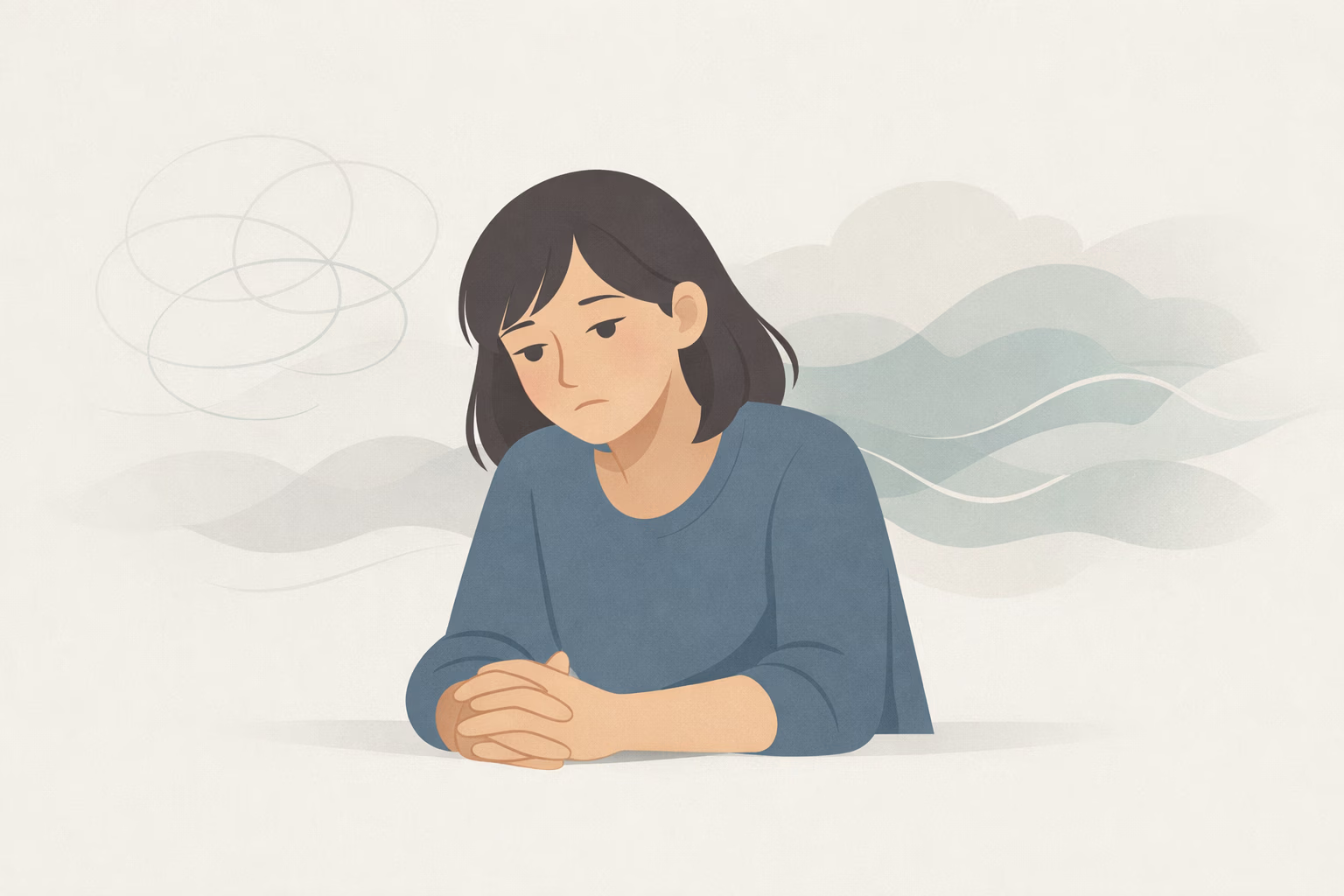
Paralysis by Overthinking: When Every Decision Feels Heavy
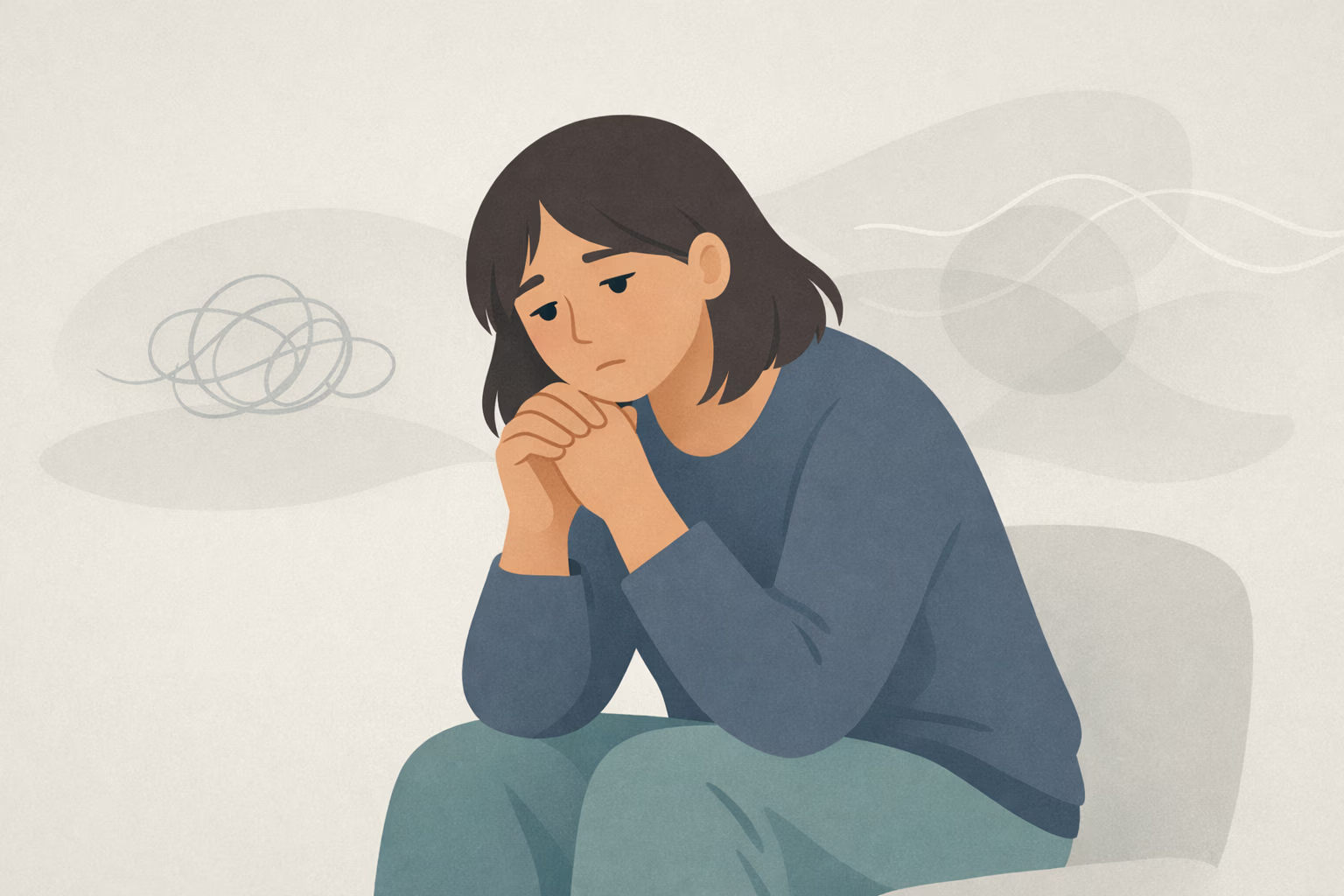
In short: By evening, many people don’t feel “tired” in a simple way—they feel mentally unavailable. Small questions start to land like heavy objects: what to eat, what to answer, what to wear, what to decide.
By evening, many people don’t feel “tired” in a simple way—they feel mentally unavailable. Small questions start to land like heavy objects: what to eat, what to answer, what to wear, what to decide. It can look like procrastination, irritability, scrolling, snacking, snapping, or a sudden need to be left alone.
What if that shutdown is your brain doing its job—protecting capacity when the day has already spent it?
Decision fatigue describes the predictable drop in executive resources after sustained choosing. It’s not about being weak or unmotivated; it’s about a nervous system and attention system that can only run “active selection” for so long before it starts defaulting, avoiding, or simplifying to preserve energy.
Decision fatigue often shows up as a specific end-of-day profile: foggier thinking, lower patience, and a stronger pull toward whatever is easiest, quickest, or already familiar. It can feel like your brain has gone offline, even if your body still has momentum.
That experience usually isn’t random. After hours of navigating demands, comparisons, messages, choices, and micro-corrections, the system that manages prioritizing and inhibition begins to conserve. You might notice more reliance on defaults (same meal, same show), more avoidance (not answering, not deciding), or more reactive choices (buying, eating, agreeing, quitting). [Ref-1]
Sometimes “I can’t decide” is not confusion. It’s capacity hitting the boundary where decisions stop being worth their cost.
It’s easy to underestimate how many decisions a modern day contains. Not only the big ones, but the constant micro-decisions: whether to respond now or later, how to phrase something, which tab to open, whether to check, whether to fix, whether to keep reading.
Each micro-decision draws from the same executive pool that supports working memory, impulse control, and planning. As that pool thins, the brain has less “buffer” for holding options in mind, less friction against impulse, and less bandwidth for sequencing steps. The result can look like scattered attention, lowered follow-through, and a growing sense that everything is too much at once. [Ref-2]
Human cognition evolved in environments where daily choices were fewer, slower, and more constrained by stable routines and shared roles. Many decisions were “closed” by the environment itself: seasons, daylight, community norms, limited menus, limited routes.
Modern life removes those natural boundaries. We can compare endlessly, revise endlessly, and keep options open indefinitely. That freedom is real—but it also means the brain must manufacture closure on its own, again and again, without the external “done” signals that used to end decision cycles. Decision fatigue is one way that mismatch becomes visible. [Ref-3]
When capacity is depleted, postponing a decision can be the brain’s way of reducing immediate expenditure. This isn’t primarily about fear or lack of caring; it’s often a structural response to limited executive bandwidth. Avoidance, delay, and disengagement can function like emergency power-saving mode.
In the short term, this can be protective: fewer active choices, fewer trade-offs, less cognitive load. But it also leaves open loops—unfinished messages, unresolved selections, pending tasks—that keep the system subtly activated. The nervous system doesn’t get a clear stand-down signal when too many threads remain incomplete. [Ref-4]
A common story is that more effort should solve the problem: if you just keep going, you’ll power past it. But under decision fatigue, effort can become expensive. The brain may keep moving, yet produce lower-quality decisions, narrower thinking, and more regret or rework.
In research conversations about self-control and depletion, the picture is nuanced—effects vary and context matters—but the lived pattern remains familiar: sustained demand without closure tends to raise stress load and reduce precision. When the system is drained, forcing more decisions can raise internal friction while delivering less clarity. [Ref-5]
What if the struggle isn’t a motivation problem, but a capacity problem?
Once the day’s decision load is high, the mind naturally starts to seek relief: fewer choices, faster routes, lower complexity. That can look like procrastination or “checking out,” but structurally it’s the system trying to reduce active selection.
The loop emerges when overload leads to disengagement, and disengagement creates more unfinished threads. Those open loops later return as more decisions—more catching up, more apologizing, more reorganizing, more sorting. Over time, the person can feel as if life keeps generating choices faster than they can close them, which can make evenings feel like a predictable crash. [Ref-6]
Decision fatigue rarely looks like one neat sign. It tends to appear as a cluster of regulatory patterns that make sense under load—ways the system narrows options and reaches for quicker closure. [Ref-7]
None of these are identities. They’re shapes the nervous system takes when it’s trying to stabilize with limited executive fuel.
When evenings repeatedly end in shutdown, people often start making meaning from it: “I’m inconsistent,” “I can’t follow through,” “I always waste the night,” “I’m not disciplined.” That story can hurt more than the fatigue itself, because it turns a capacity limit into a character verdict.
Over time, decision fatigue can undermine planning and continuity. If your later-day self can’t reliably close loops or make clean choices, you may start overcompensating earlier—overplanning, overcontrolling, or trying to decide everything in advance. That often increases the total decision load rather than reducing it, keeping the system in a churn of effort without completion. [Ref-8]
When the end of the day keeps falling apart, the mind tries to solve it with more control—often exactly when control is most expensive.
Under fatigue, the brain uses shortcuts: skip the email, pick the fastest meal, avoid the difficult conversation, postpone the choice. These moves can lower immediate load, but they sometimes generate “decision debt.” Later you face the same choice plus added complexity—missed context, tighter deadlines, social fallout, or extra cleanup.
This is how decision fatigue becomes self-reinforcing. The more rework and repair required, the more decisions accumulate, and the less capacity remains for decisions that would create real closure. The day ends with a sense of being surrounded by loose ends, which keeps the system feeling pressured even in supposed rest time. [Ref-9]
It can help to see simplification not as “doing less,” but as restoring the conditions where the brain can complete loops. When choice load is lower, decisions have room to land. They can become final rather than provisional, and the nervous system receives clearer “done” signals.
Routines and pre-made defaults are often discussed as practical tools, but their deeper effect is biological: they reduce repeated evaluation, which preserves executive resources for decisions that actually require your values and discernment. When fewer choices are constantly competing, the system can return to steadier baseline states instead of living in continuous selection mode. [Ref-10]
Not all decision load is personal; much of it is structural. When roles are unclear, every small moment becomes a negotiation: who handles what, what counts as “done,” what the standard is. That ambiguity forces repeated choices.
When decisions are shared—or when expectations and responsibilities are clarified—there’s less hidden cognitive labor. The mind doesn’t have to keep re-solving the same questions. In groups, families, and workplaces, this can be the difference between a day that closes cleanly and a day that keeps humming with unfinished coordination. [Ref-11]
When decision load is within capacity, people often describe a different internal texture: clearer sequencing (“first this, then that”), more stable mood, and fewer sudden drops into irritability or numb scrolling. Not because life becomes easy, but because the executive system can keep returning to signal rather than collapsing into shutdown. [Ref-12]
There’s also a noticeable change in decision quality. Choices become less reactive and less expensive. You may still prefer simplicity, but it no longer feels like desperation; it feels like clarity. Evenings can carry more genuine downshift—because the day produced more real closure, not just more activity.
When the brain isn’t spending itself on constant micro-selection, there’s more room for the kind of decisions that build identity: the ones that reflect what matters, what you’re committed to, what you want your life to stand for. Meaning isn’t created by intensity; it emerges when actions and closures accumulate into a coherent story you can live inside.
In that sense, decision capacity is not just a cognitive resource—it’s an agency resource. With more capacity available, choices can align with values more consistently, and that alignment tends to stabilize behavior over time. The system doesn’t need as many emergencies or compensations because life feels more internally coordinated. [Ref-13]
When your day has fewer unresolved threads, your choices start to sound more like you.
In a culture that treats constant choosing as freedom, it can be easy to miss the cost: a nervous system that never gets a clear completion signal, and an executive system forced to arbitrate everything. Protecting decision capacity is less about becoming “better” and more about making room for what is genuinely worth deciding.
When fewer daily choices compete for attention, the choices that remain can carry more meaning. Not because you try harder, but because the environment stops pulling you into endless evaluation. Simplification, in this frame, is not deprivation—it’s coherence protection. [Ref-14]
If your brain shuts down by evening, it may be responding exactly as a human system responds under sustained selection pressure. That response deserves dignity, not judgment.
Over time, fewer repeated decisions can translate into more stability: cleaner closure, steadier bandwidth, and choices that feel less like firefighting and more like orientation. In that steadier space, meaning isn’t something you chase—it’s something that quietly consolidates. [Ref-15]
From theory to practice — meaning forms when insight meets action.
Because executive resources are finite, and you've been spending them on micro-decisions all day — whether to respond, how to phrase, which tab to open, whether to fix, whether to keep reading. Each one draws from the same pool that supports working memory, impulse control, and planning. By evening, the pool thins. Defaults dominate, irritability rises, and ambiguity feels heavier than it should. This isn't failure of motivation. It's a capacity boundary the nervous system is honoring by conserving. "I can't decide" often means the decisions stopped being worth their cost.
Often yes. When capacity is depleted, postponing reduces immediate expenditure — fewer active choices, fewer trade-offs, less cognitive load. Avoidance functions like emergency power-saving mode. The catch is that it leaves open loops, and unfinished threads keep the system subtly activated, so the nervous system doesn't get a clear stand-down signal. That's how decision fatigue forms an Avoidance Loop: overload leads to disengagement, disengagement creates more unfinished threads, and those threads return as more decisions. Life starts generating choices faster than you can close them, which is why evenings feel like a predictable crash.
Because under decision fatigue, effort becomes expensive. The brain may keep moving, but it produces lower-quality decisions, narrower thinking, and more rework. Sustained demand without closure raises stress load and reduces precision. Forcing more decisions when the system is drained raises internal friction while delivering less clarity. Then comes the harder cost: the meaning people make of repeated shutdown — "I'm inconsistent," "I can't follow through." That story turns a capacity limit into a character verdict, which adds load and triggers overcompensation: trying to decide everything in advance, which only multiplies the total decision count.
By treating simplification as coherence protection, not deprivation. Routines and pre-made defaults reduce repeated evaluation, which preserves executive resources for decisions that actually require your values. Shared decisions help too — when responsibilities are clarified, there's less hidden cognitive labor and less re-solving the same question. The goal isn't fewer interesting choices; it's more closure. When choice load drops, decisions can land instead of staying provisional, and the nervous system gets clearer Done Signals. Evenings carry more genuine downshift because the day produced more real completion, not just more activity.
From Science to Art.
Understanding explains what is happening. Art allows you to feel it—without fixing, judging, or naming. Pause here. Let the images work quietly. Sometimes meaning settles before words do.
One Quiet Window, one insight, one reflection — every Sunday