The Pause Habit: One Second That Changes Everything
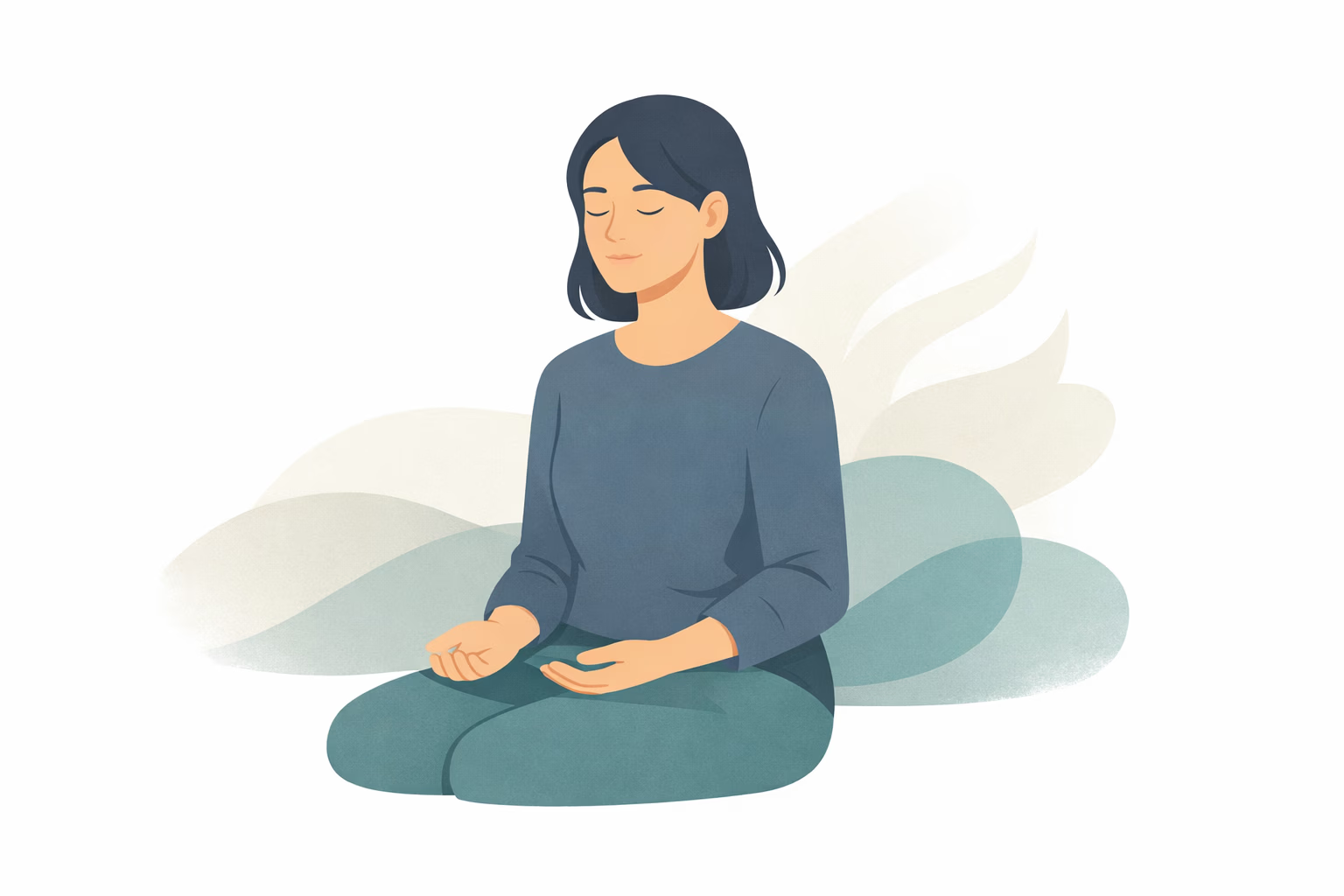
In short: Many people imagine change starts with a big decision: a fresh start, a strong promise, a new plan. But day-to-day life usually doesn’t offer clean beginnings. It offers moments—brief, ordinary moments—where the system could keep running on automatic, or slightly slow down.
Many people imagine change starts with a big decision: a fresh start, a strong promise, a new plan. But day-to-day life usually doesn’t offer clean beginnings. It offers moments—brief, ordinary moments—where the system could keep running on automatic, or slightly slow down.
What if the turning point isn’t a breakthrough, but a pause?
“Internal pause points” are those small gaps where a reaction doesn’t fully fire, where you notice even a fraction of choice. They aren’t a personality trait or a sign of “good self-control.” They’re a sign your nervous system has enough capacity to register what’s happening before it completes the loop.
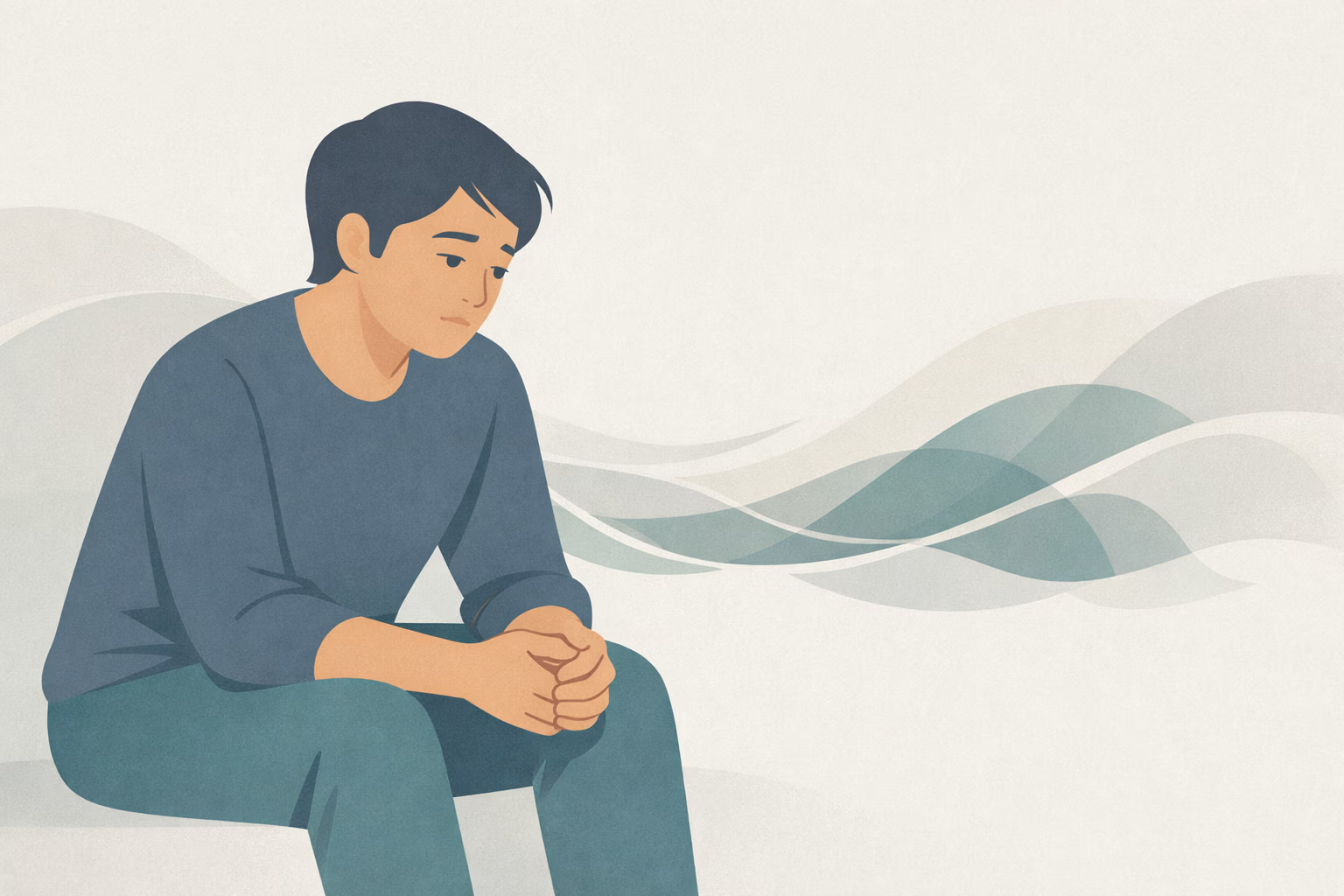
There’s a particular kind of frustration that comes from repeating a response you already recognize: the same tone in your voice, the same scroll-and-numb, the same snap decision, the same shutdown. You can see it happening, and still it feels like the train is already moving.
This is often described as “lacking willpower,” but what’s happening is usually more mechanical than moral. Fast reactions are fast for a reason: the brain and body are built to conserve energy and reduce uncertainty. Inhibitory control—the capacity to pause an action that’s already launching—can be present in some moments and absent in others, depending on load. [Ref-1]
When you miss the moment where change could occur, it isn’t because you didn’t care. It’s because the doorway was brief, and the system didn’t have enough space to register it.
In the nervous system, many responses run like short programs: cue → impulse → action → immediate consequence. A micro-pause is not a philosophical reflection. It’s a tiny interruption in the chain—just enough time for more regions of the brain to participate.
Research on response inhibition and stopping processes suggests that “stopping” isn’t one simple switch. There are different mechanisms involved in interrupting or withholding an already-initiated response, and they rely on moment-to-moment capacity. [Ref-2]
That matters because it reframes the experience. The goal isn’t to become a person who never reacts. The reality is that sometimes the circuitry for braking is online, and sometimes it’s temporarily outmatched by speed, stress, or repeated activation.
Human nervous systems were shaped in environments where fast, efficient responding protected life. Reflection was useful when there was time; speed was useful when there wasn’t. In that sense, automaticity is not the enemy—it’s the default.
Tasks used in neuroscience (like Go/No-Go and Stop-Signal paradigms) underline that stopping and withholding responses involve distinct processes, and they can be sensitive to context and strain. [Ref-3]
So when pausing feels impossible, it’s often not because you’re “bad at emotions” or “afraid of change.” It’s because your system is doing what systems do under pressure: narrowing options, accelerating decisions, and prioritizing immediate certainty.
Reactivity often carries a hidden relief: it ends the moment. It turns ambiguity into motion. Even when the outcome is messy, the nervous system gets a quick reduction in uncertainty—an immediate “done” signal.
From the standpoint of inhibitory control, that quick closure can come at a cost: less space for alternative responses, less time for context, less room for nuance. But in the moment, the speed can feel efficient, even stabilizing. [Ref-4]
This is why reactivity is so sticky. It doesn’t only create problems; it also produces short-term closure. And the system tends to repeat what reliably reduces immediate load.
In many modern settings, speed is rewarded: quick replies, quick opinions, quick solutions, quick self-explanations. The cultural message is subtle but steady—if you can respond instantly, you’re competent. If you need time, you’re behind.
But biologically, a pause is not wasted time. A pause is the difference between a reflex and a response. It’s the difference between repeating a loop and letting a wider map come online.
Popular descriptions of response inhibition often emphasize “stopping impulses,” but the deeper point is more humane: inhibition creates the conditions where more than one option can exist at once. [Ref-5]
If the system rarely experiences a pause, it learns a simple rule: cues equal actions. Over time, this can feel like life is happening “through you,” not “with you.” You’re still making choices, but they’re compressed into automatic sequences with little sense of authorship.
Neuroscience discussions of stopping and interference highlight that inhibition is not just about resisting temptation; it’s about resolving competition between responses. When load is high, the strongest, most practiced response tends to win—quickly. [Ref-6]
In that kind of loop, insight can accumulate without translating into change. Not because awareness is fake, but because the body hasn’t had enough completed interruptions for a new pathway to become credible.
When internal pause points are scarce, patterns can look confusing from the outside and demoralizing from the inside. Not dramatic, just repetitive. Not a crisis, just a loop.
Research linking inhibition, flexibility, and hypervigilance helps frame these as system-level patterns: when the environment feels demanding, the mind can become fast, narrow, and repetitive. [Ref-7]
Habits aren’t just repeated actions; they’re repeated completions. Each time the loop runs cue → reaction → short-term closure, the system learns that the fastest route is the safest route.
Executive control—including response inhibition—is often described as a hallmark of flexible behavior. When it’s compromised by stress load, sleep disruption, constant evaluation, or sustained activation, the result isn’t “weakness.” It’s reduced bandwidth for stopping and re-routing. [Ref-8]
Over time, the cost is not only behavioral. Meaning can thin out. Life can start to feel like a series of urgent fragments instead of a coherent story with endings, learnings, and settled identity.
Reactivity can become self-reinforcing. The more frequently you move from cue to action without interruption, the less the system expects a pause to be available. Awareness isn’t erased—it’s simply outrun.
Work on de-automatization describes how certain forms of attention can disrupt habitual sequences, not by “thinking harder,” but by changing the relationship to the automatic loop itself. [Ref-9]
When pausing feels inaccessible, it may not be because you “forgot.” It may be because the system has been trained—through repetition and speed—to skip the internal checkpoint where another response could form.
It’s tempting to treat pause points as something you should “remember to do.” But pause points are often an output of state, not a product of determination. When the nervous system is settled enough, attention naturally widens. When it’s overloaded, attention narrows and accelerates.
Physiological markers like heart rate variability have been associated with differences in inhibitory capacity—suggesting that the ability to inhibit a prepotent response is linked to regulatory resources, not just intention. [Ref-10]
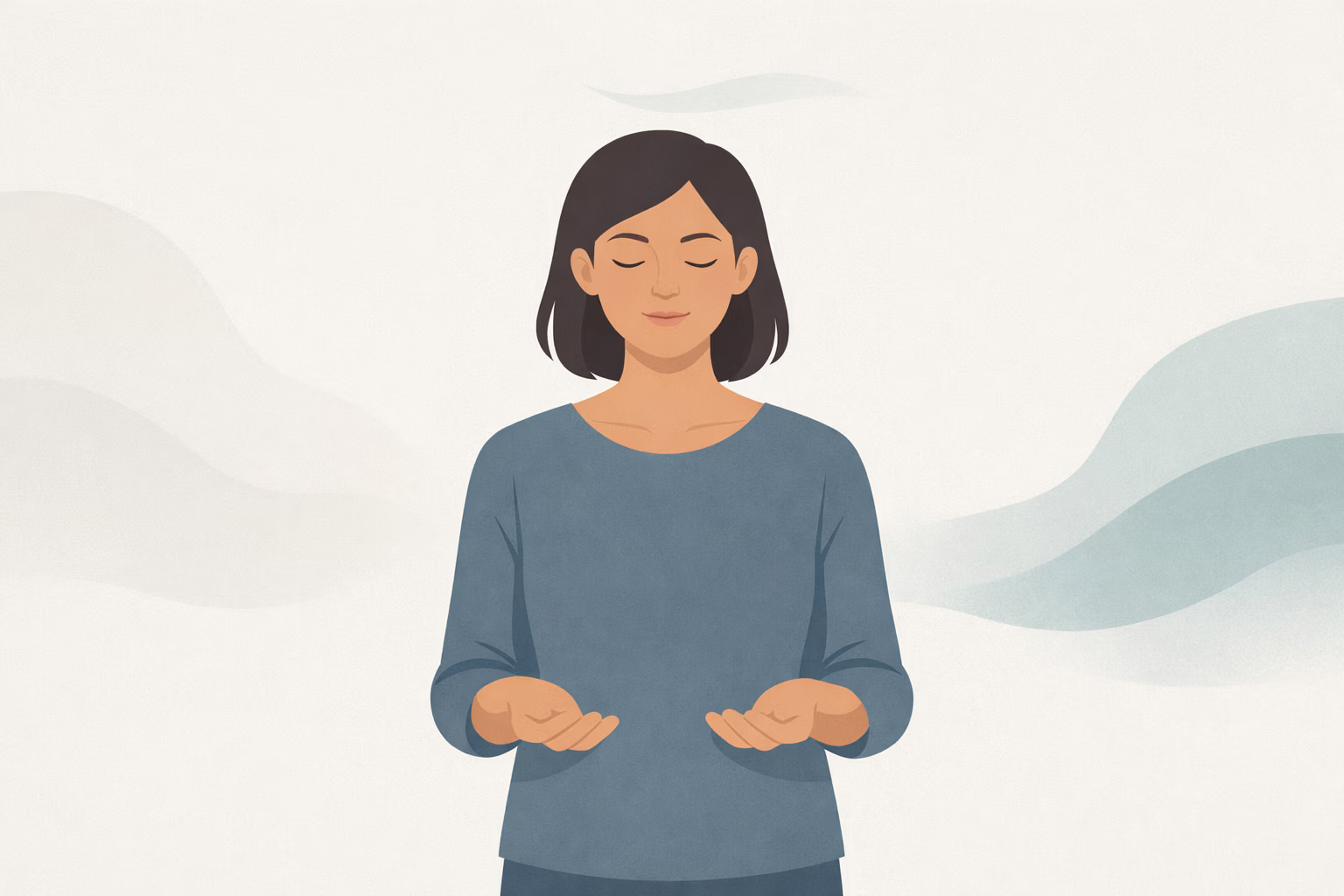
A pause isn’t a performance. It’s a sign the system has enough room to register more than one possible next step.
This is the meaning bridge: not “be better,” but “be less cornered.” When the body has more room, the mind has more options.
Humans regulate in relationship. Not only through words, but through rhythm: the pace of conversation, the spacing of responses, the safety cues of being understood without being rushed.
In environments where slowing down is welcomed, the system gets repeated evidence that a pause won’t be punished. That evidence matters. It gives the nervous system permission to reintroduce the checkpoint between impulse and action.
De-automatization work emphasizes that interrupting automatic patterns is easier when attention is stabilized rather than strained. In practice, supportive pacing can be one of the quiet ways stabilization happens. [Ref-11]
When internal pause points start showing up more often, the change is rarely dramatic. It tends to feel like a reduction in internal urgency. A little more time appears inside the same moment.
This shift isn’t about becoming endlessly reflective. It’s about capacity returning: the ability to inhibit, redirect, or delay a response long enough for context to arrive. Descriptions of inhibition as a cognitive ability often highlight this as a key ingredient in flexible responding. [Ref-12]
Not “Who am I supposed to be?” but “What is actually happening right now?”
Over time, repeated pauses can create a new kind of steadiness: not constant calm, but less whiplash—fewer moments where you surprise yourself and then have to repair the aftermath.
A pause point is small, but it can hold something big: orientation. When you don’t have to react immediately, you can sense what matters—what you’re protecting, what you’re building, what kind of person you’re being in this moment.
In behavior science, “if–then” formats and implementation intentions describe how linking a cue to a chosen response can support follow-through. [Ref-13] But at a lived level, what makes this powerful is not the formula—it’s the return of authorship. The moment becomes writable again.
As pauses accumulate, identity can start to feel less like a label and more like a direction. Not an image to maintain, but a pattern that resolves into coherence through completion.
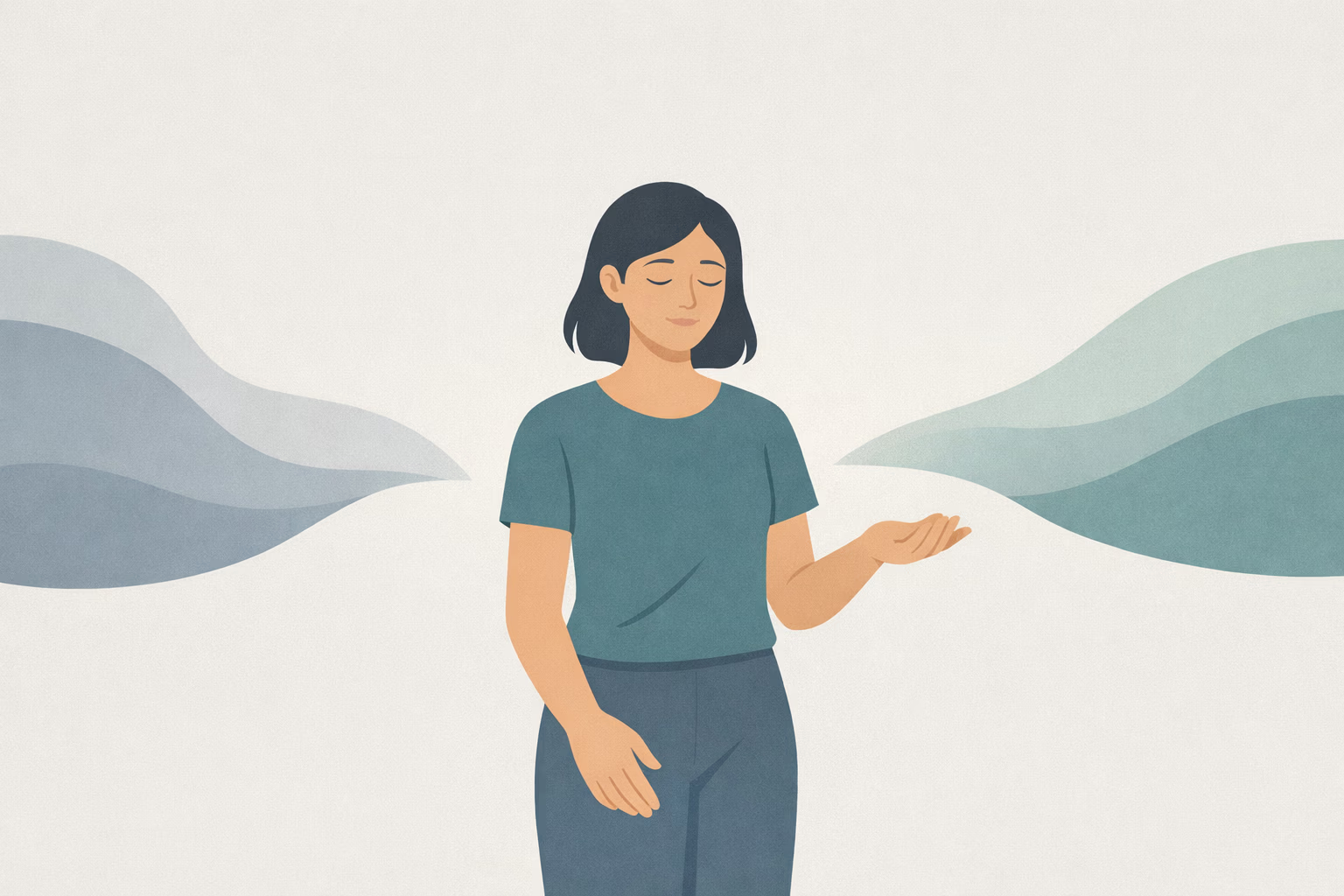
Agency doesn’t always arrive as confidence. Sometimes it arrives as a fraction of space: a breath of time where you’re not yet inside the old sequence.
From a meaning perspective, that space matters because it allows life to be guided, not just managed. When actions can align with values—even briefly—experience starts to close into something integrated rather than endlessly pending.
If–then planning is often discussed as a way of linking situations to responses. [Ref-14] What’s easy to miss is the deeper implication: there is a moment in which “then” is not predetermined. The pause point is that moment.
Many people wait for change to feel like motivation, certainty, or a fresh personality. But nervous systems tend to change through repetition of small completions: moments where the loop doesn’t fully close the old way, and a new ending becomes possible.
Implementation intentions are one formal way researchers describe translating a cue into a chosen response. [Ref-15] Yet the heart of it is simple and human: the future is often decided in a brief internal pause—quiet, unglamorous, and real.
When that pause appears, it doesn’t mean you’re fixed. It means you’re no longer fully trapped in speed. And that is often where a different life begins.
From theory to practice — meaning forms when insight meets action.
Because fast reactions are fast for a reason — the brain and body conserve energy and reduce uncertainty by running short programs: cue → impulse → action → consequence. Inhibitory control (the capacity to pause an action that's already launching) is present in some moments and absent in others, depending on load. When you miss the doorway where change could occur, it isn't because you didn't care. It's because the doorway was brief, and the system didn't have enough space to register it. Speed is a survival feature, not a character flaw.
Not philosophical reflection — a tiny interruption in the chain that lets more regions of the brain participate. Stopping isn't one simple switch; different mechanisms are involved in interrupting an already-initiated response, and they rely on moment-to-moment capacity. The goal isn't to become a person who never reacts. The reality is that sometimes the circuitry for braking is online, and sometimes it's temporarily outmatched by speed, stress, or repeated activation. A pause creates conditions where more than one option can exist at once. That's not nothing — it's the difference between a reflex and a response.
Because pause points are an output of state, not a product of determination. When the nervous system is settled, attention naturally widens. When overloaded, attention narrows and accelerates. Inhibitory capacity is linked to regulatory resources, not just intention. So the meaning bridge isn't 'be better' — it's 'be less cornered.' When the body has more room, the mind has more options. A pause isn't a performance; it's a sign the system has enough room to register more than one possible next step. Pauses follow capacity, capacity follows safety.
In a fraction of space — a breath of time where you're not yet inside the old sequence. Agency doesn't always arrive as confidence; sometimes it arrives as a small interval where your body can update, where meaning can cohere, where identity can lead. As pauses accumulate, identity feels less like a label to maintain and more like a direction. Change rarely starts with force. It starts with repeated small completions: moments where the loop doesn't fully close the old way, and a new ending becomes possible. Pause points are where agency begins — not loudly, but reliably.
From Science to Art.
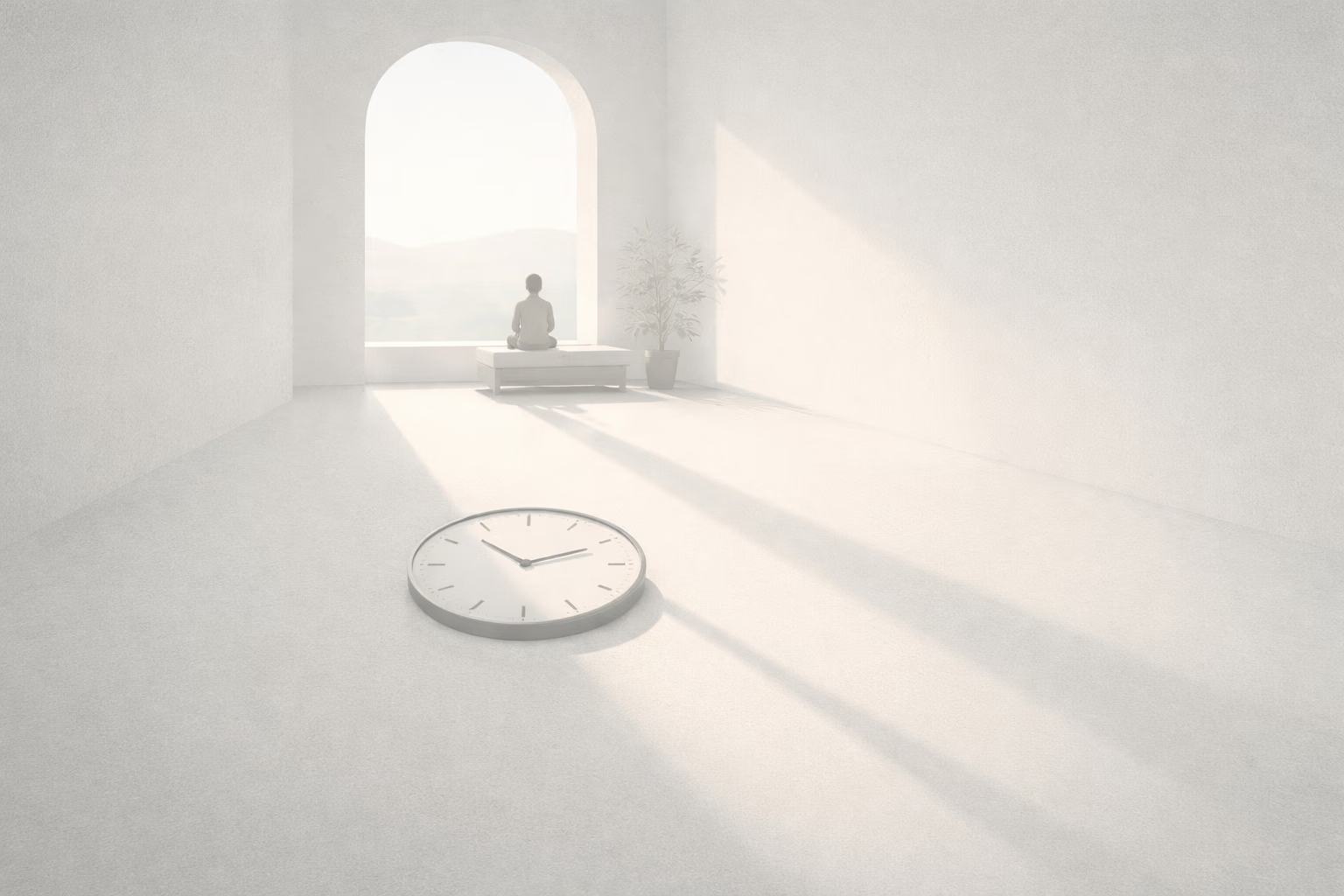
Understanding explains what is happening. Art allows you to feel it—without fixing, judging, or naming. Pause here. Let the images work quietly. Sometimes meaning settles before words do.
One Quiet Window, one insight, one reflection — every Sunday