Stress Preloading: The Tension You Carry Before Anything Happens
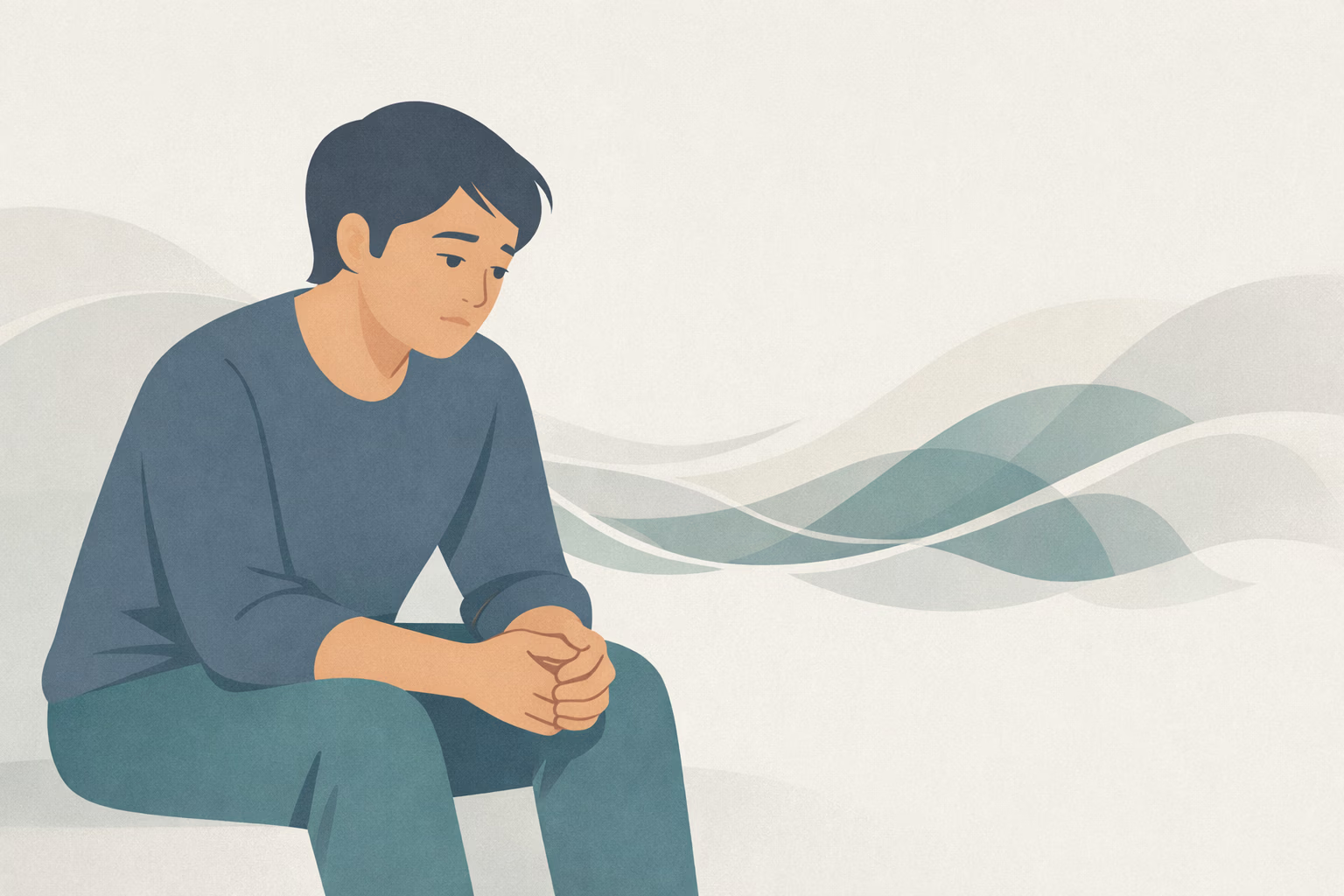
In short: Sometimes it’s one email, one awkward interaction, one spilled coffee—something small that shouldn’t matter much. And yet the whole day starts to tilt. Your body feels tighter, your attention narrows, and everything that follows seems to confirm that the day is “off.” That experience isn’t a character flaw or a lack of resilience.
Sometimes it’s one email, one awkward interaction, one spilled coffee—something small that shouldn’t matter much. And yet the whole day starts to tilt. Your body feels tighter, your attention narrows, and everything that follows seems to confirm that the day is “off.”
That experience isn’t a character flaw or a lack of resilience. It’s often stress momentum: unresolved activation that carries over from one moment to the next, like a nervous system that never received a clear “all done” signal.
What if your day isn’t ruined—just unfinished?
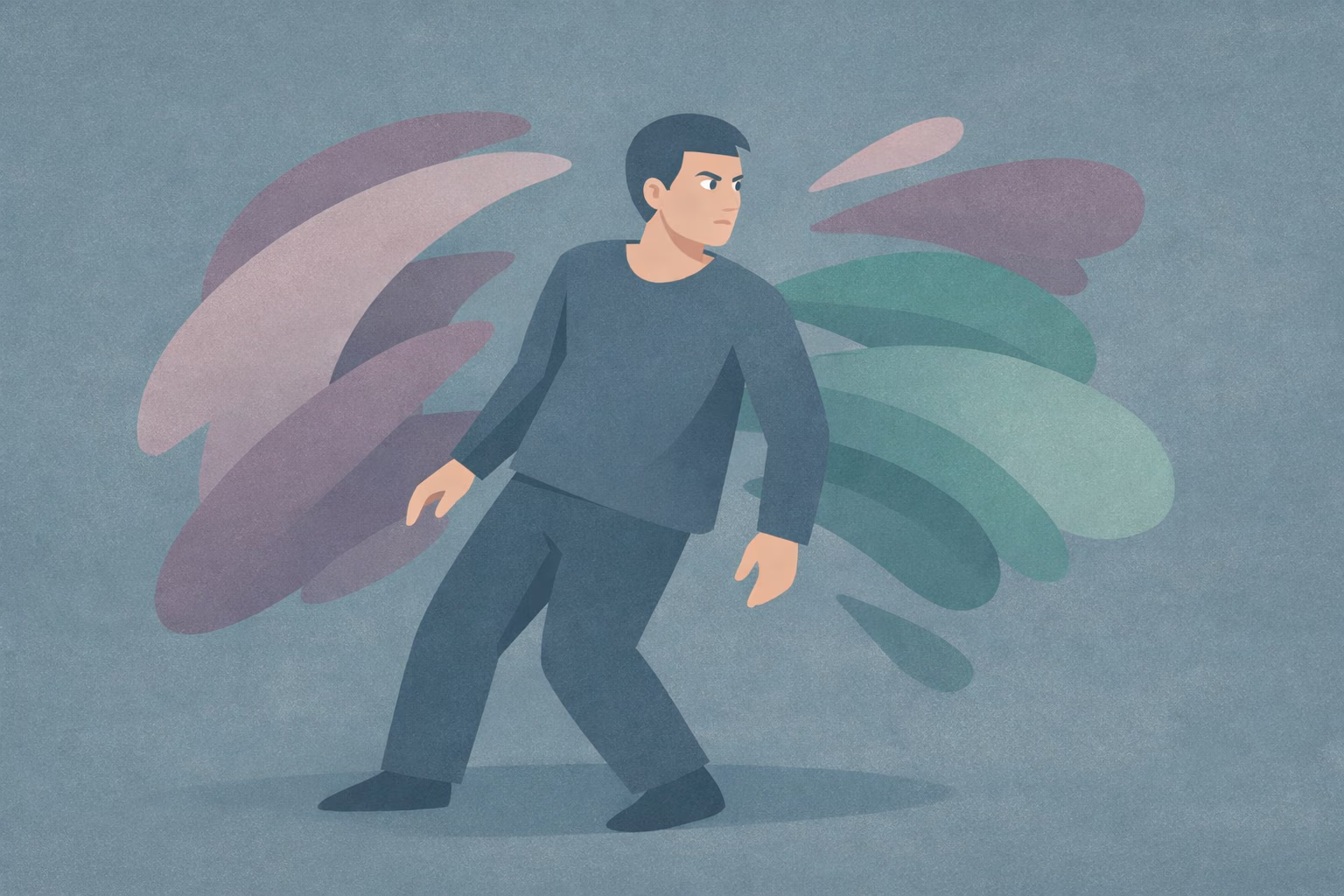
A difficult moment can act like dye in water: it doesn’t stay neatly contained. It spreads into how you interpret neutral events, how quickly you react, and how much effort simple tasks require. This is why a single incident can make the day feel irreversibly “wrong,” even when nothing else objectively changed.
Research on daily stress shows that emotional carryover is a real phenomenon—stress responses can spill into later mood and perception rather than resetting automatically. [Ref-1]
This isn’t “being dramatic.” It’s what happens when the system stays activated without closure: the next moment begins on top of the last one, instead of starting fresh.
When the nervous system detects threat—social, physical, or informational—it increases arousal. That raised baseline changes what stands out: irritation feels louder, uncertainty feels more urgent, and problems seem closer than solutions.
Under higher arousal, perception tends to narrow. The mind searches for confirming evidence that it should stay on guard. Even ordinary friction can start to look like a pattern, and your responses may become faster, sharper, or more protective than you intended.
Daily stress has been linked to shifts in negative mood and reactivity, especially when stressors accumulate across the day. [Ref-2]
Stress momentum makes more sense when you remember what stress systems evolved to do. After a danger signal, the goal isn’t to calm down quickly—it’s to stay ready until the environment reliably cues safety.
In other words, the nervous system doesn’t relax because time passed. It relaxes when it receives enough evidence that the loop has completed: the threat is over, the consequences are contained, and the body can stand down.
Studies on lingering negative affect suggest that when stress responses persist rather than resolving, they can have downstream effects over time. [Ref-3]
In an ancestral environment, premature relaxation could be costly. If a predator was nearby or a conflict remained unresolved, staying vigilant improved survival. A continued stress response was protective—an internal “keep watch” protocol.
That same protective design can become uncomfortable in modern life, where threats are rarely completed in clean, physical ways. Many stressors end with ambiguity: no clear signal, no shared resolution, no visible finish line.
Cumulative stress and daily stressors can combine, increasing negative affect and physical symptoms, especially when the system has little opportunity to downshift. [Ref-4]
When a day starts to wobble, many people experience an internal tightening that feels like vigilance, control, or bracing. It can feel like the body is trying to prevent another hit by staying ready.
But sustained tension often does the opposite: it amplifies sensitivity, makes interactions feel sharper, and reduces the capacity to appraise situations accurately. Instead of preventing spillover, bracing can become part of the spillover.
Stress doesn’t stay in one lane. Interpersonal strain, in particular, can carry into other contexts when activation remains unresolved. [Ref-5]
“It’s not that I’m choosing to overreact. It’s that my system is already loud.”
Stress momentum often functions like an avoidance loop—not in the sense of “running from feelings,” but in the structural sense of bypassed completion. The day moves on, but the nervous system doesn’t receive a clear endpoint, so activation compounds instead of resolving.
Modern life makes this easy to miss. You can keep operating—answering, driving, attending, scrolling—while the body remains in a partially mobilized state. Functioning continues, but closure doesn’t arrive.
Spillover effects in daily stress are widely observed: earlier strain can carry forward and shape later responses, especially when the system doesn’t reset between demands. [Ref-6]
Stress momentum has a distinct feel. It’s less about a single emotion and more about a chain reaction—small frictions gaining force because they land on a loaded baseline.
Research on daily stress describes mood spillover and emotional carryover as a measurable pattern, not a personal failing. [Ref-7]
What does it look like in real life?
If many days contain unresolved carryover, the body learns a new expectation: that pressure is continuous and stand-down is unsafe or unavailable. Over time, this can resemble chronic stress—not always dramatic, but persistent.
That persistence has costs. The system spends more time in activated states, and less time in the restorative states that rebuild capacity. Eventually the person may experience emotional exhaustion, cognitive fatigue, and reduced flexibility—classic ingredients of burnout.
Work-related daily negative affect and rumination have been linked with burnout processes, suggesting that “daily carryover” can become a long-term load. [Ref-8]
Stress momentum isn’t just “more stress.” It’s a priming effect: each unresolved stressor raises readiness for the next. That means the next irritation doesn’t arrive alone—it arrives with the residue of what came before.
As the day progresses, the threshold for activation can drop. The system becomes quicker to mobilize and slower to return. This is why the later hours can feel especially brittle, even if the problems are smaller.
Burnout and stress research often emphasizes accumulation and the way sustained demands reduce recovery and increase susceptibility to strain. [Ref-9]
It helps to name a critical distinction: understanding what happened is not the same as the nervous system completing it. Insight can be true and still leave the body braced.
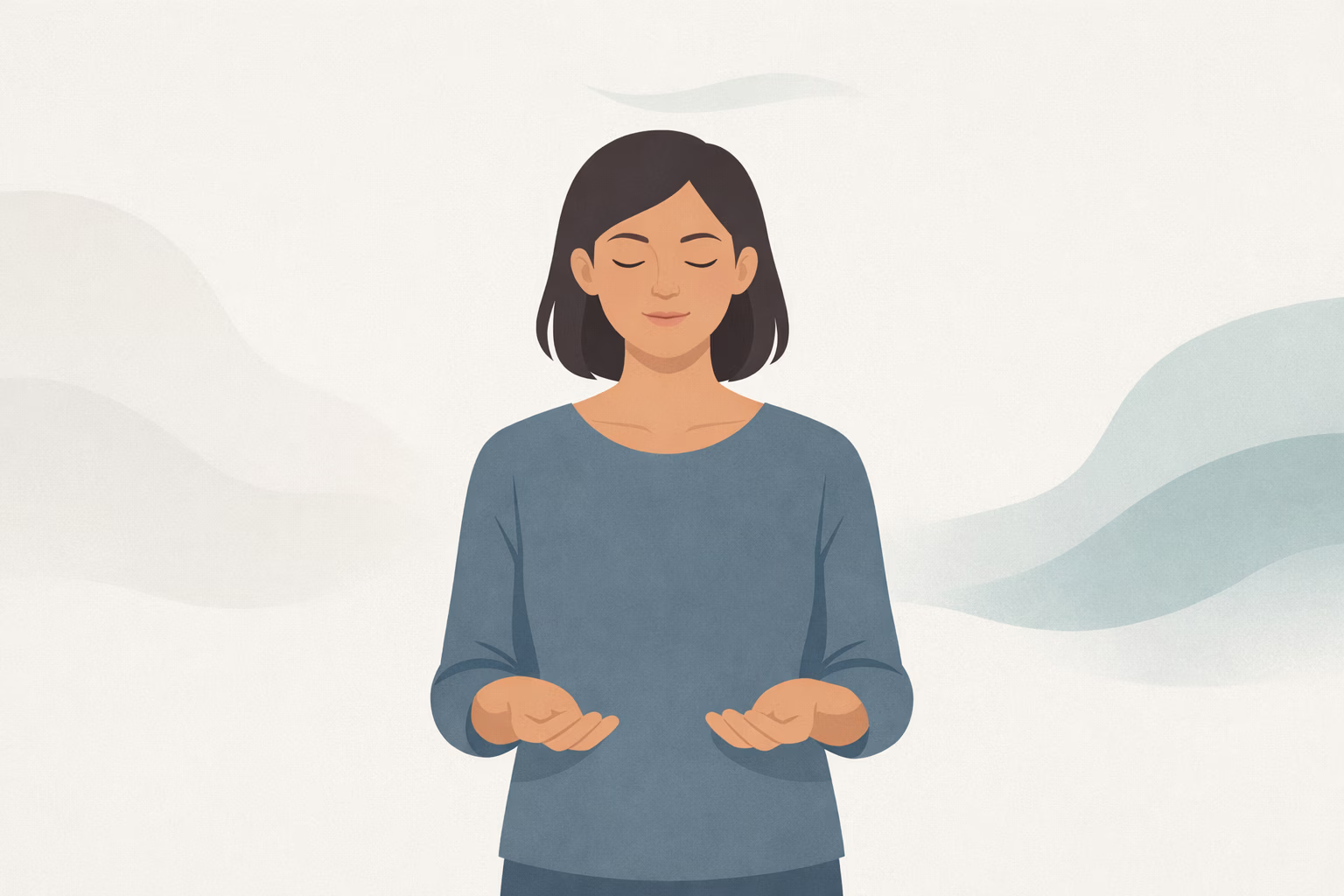
Completion is quieter and more physiological. It tends to show up as a “settling” signal: attention widens, breathing becomes less defended, and the day stops feeling like a single unbroken emergency. The event becomes something that happened, not something still happening.
Research on the wear-and-tear of daily stressors highlights how unresolved daily strain can accumulate—implying that what matters is not just the stressor, but whether the system gets to resolve and recover. [Ref-10]
“A day turns when your body finally believes the moment is over.”
Human nervous systems are social. Often, the fastest cue of safety is not an internal argument but an external signal: a steady voice, a warm exchange, eye contact that conveys “you’re not alone,” a shared moment that makes the environment feel less threatening.
This is not about depending on others to “fix” you. It’s about how biology works: regulation often returns more easily when safety cues are present and believable.
Research discussing the interplay of stress, burnout, and mental health frequently notes the protective role of social support and relational buffering in stress processes. [Ref-11]
When momentum breaks, people often notice a return of basic capacities: the ability to think in sequences, to prioritize without panic, to hear feedback without collapsing or hardening. The world feels less like a test and more like a place with options.
This isn’t a constant calm or a permanent positive mood. It’s a shift in baseline: more room between stimulus and response, more accurate perception, and less need for bracing.
Accounts of burnout and brain-related stress effects commonly describe cognitive changes under sustained strain—suggesting why restored recovery can correlate with clearer thinking and improved flexibility. [Ref-12]
The most meaningful change isn’t that everything feels good. It’s that the day becomes steerable again. When stress momentum eases, intention can reappear: not as forced positivity, but as a genuine sense of direction.
This is where meaning density quietly returns. Small actions and conversations start to “land” again. They register as part of who you are and what you stand for, rather than as more input to survive.
Burnout-oriented descriptions often include loss of control, cynicism, and depletion—signals that choice has narrowed under load, not that someone lacks character. [Ref-13]
One moment can knock you sideways. It doesn’t get to author the whole day.
If a bad moment keeps echoing, it may be less about weakness and more about an unfinished stress loop. The system stayed activated because it didn’t receive reliable closure—and modern life is full of endings that don’t feel like endings.
Seen this way, stress momentum becomes a signal: something in you is trying to protect direction under pressure. Not because you’re failing, but because your nervous system is working with limited safety cues and too many handoffs. Spillover is a known feature of stress, not a personal mystery. [Ref-14]
Agency often returns when the chain reaction stops being interpreted as “this is who I am,” and starts being recognized as “this is what my system is carrying.”
A difficult moment can be real and still be temporary. What determines the rest of the day is often not the event itself, but whether your system gets to complete it and stand down.
When closure returns, you don’t become a different person—you become less burdened. And that reduced load is often what makes steadiness possible again, even inside ordinary life demands associated with burnout and chronic strain. [Ref-15]
From theory to practice — meaning forms when insight meets action.
Because stress doesn't stay neatly contained. A difficult moment acts like dye in water — it spreads into how you interpret neutral events, how quickly you react, how much effort simple tasks require. This is stress momentum: unresolved activation that carries over because the nervous system never received a clear 'all done' signal. The system stays activated without closure, so the next moment begins on top of the last one instead of starting fresh. That's not being dramatic. Daily stress research describes emotional carryover as a real phenomenon. Threat activation raises the baseline and narrows perception, so the mind starts searching for confirming evidence that it should stay on guard. Even ordinary friction starts looking like a pattern.
It feels that way, but the math doesn't work. Sustained tension amplifies sensitivity, makes interactions feel sharper, and reduces capacity to appraise situations accurately. Instead of preventing spillover, bracing becomes part of the spillover. The Threat & Safety System evolved to wait for safety to be confirmed — premature relaxation could be costly in ancestral environments where danger was concrete. But modern stressors rarely complete in clean physical ways. Many end in ambiguity: no clear signal, no shared resolution, no visible finish line. So the 'keep watch' protocol stays running, and each unresolved stressor primes the next. The threshold drops as the day progresses, which is why later hours often feel especially brittle.
Functionally, not because you're running from feelings, but because completion gets bypassed. The day moves on, but the nervous system doesn't receive an endpoint, so activation compounds instead of resolving. You can keep operating — answering, driving, attending, scrolling — while the body remains partially mobilized. Functioning continues; closure doesn't arrive. The signature shows up as escalating irritability, pessimistic interpretation of neutral events, compressed patience, work strain bleeding into home life, and overcontrol (tightening rules, rushing, rechecking). These aren't character defects. They're regulatory responses to unfinished interactions, ambiguous outcomes, and continuous input without Done Signals. Each unresolved stressor adds residue to the next.
Understanding what happened is not the same as the nervous system completing it. Insight can be true and still leave the body braced. Completion is quieter and more physiological — a settling signal: attention widens, breathing becomes less defended, the day stops feeling like one unbroken emergency. The event becomes something that happened, not something still happening. Co-regulation often resets momentum faster than solo effort: a steady voice, eye contact that conveys 'you're not alone,' shared moments that make the environment feel less threatening. When momentum breaks, the day becomes steerable again. One moment can knock you sideways. Completion is what stops it from authoring the rest of the day.
From Science to Art.
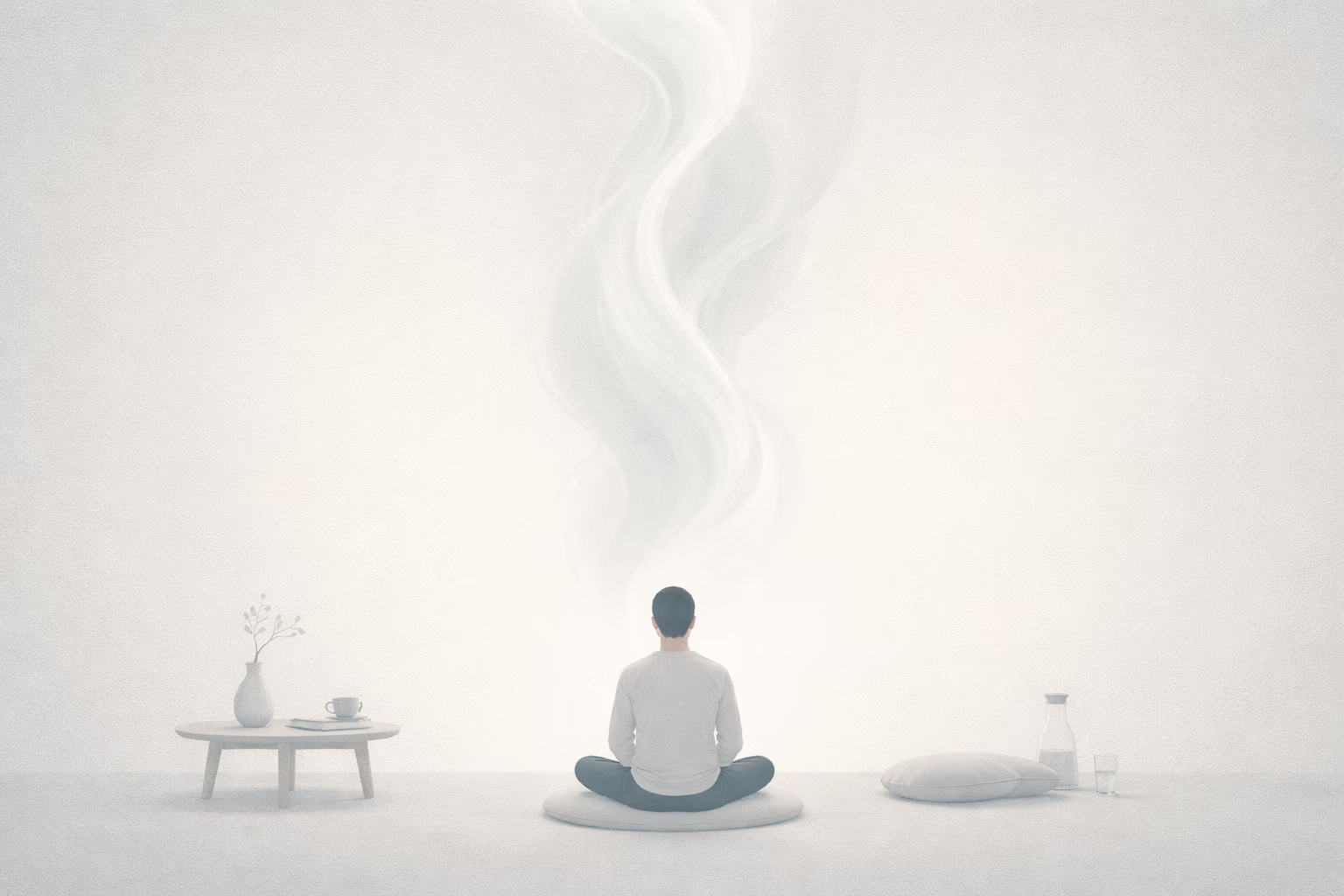
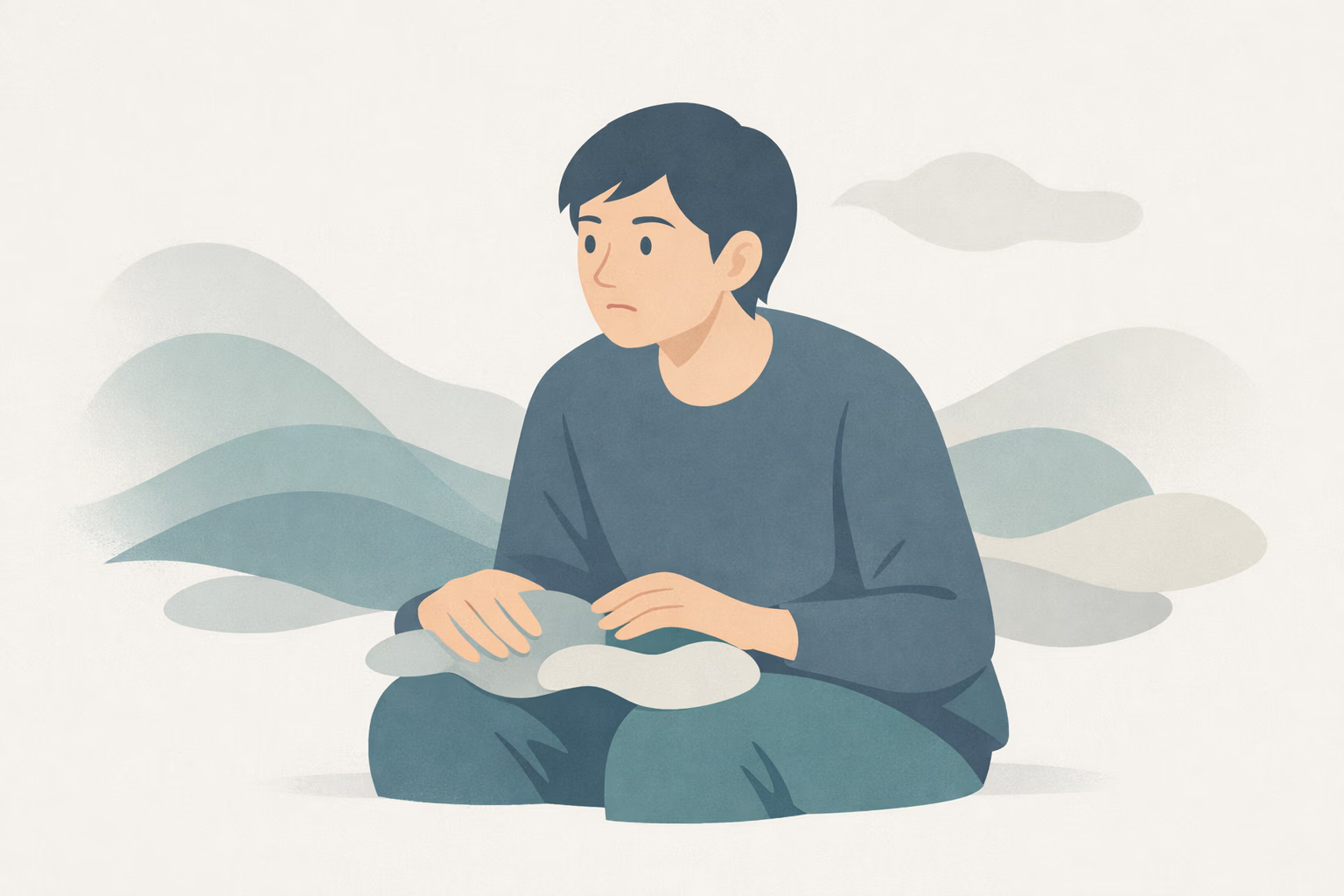
Understanding explains what is happening. Art allows you to feel it—without fixing, judging, or naming. Pause here. Let the images work quietly. Sometimes meaning settles before words do.
One Quiet Window, one insight, one reflection — every Sunday