Emotional Reflexes: Why You React Before You Think
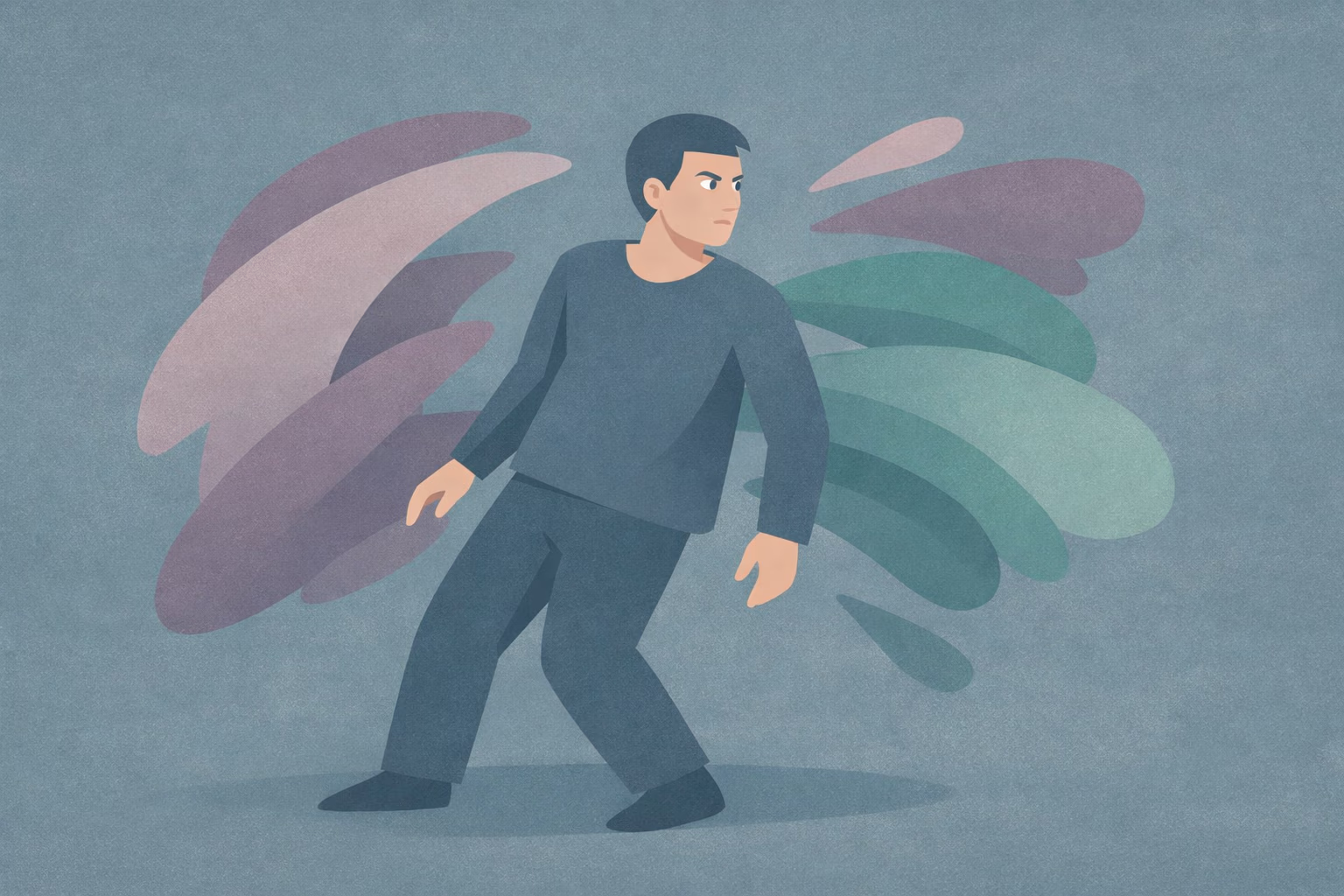
In short: Emotional reactivity can look like snapping, shutting down, sending the message you regret, or making a decision that feels nothing like “you” once the moment passes. It’s easy to label these moments as immaturity, lack of self-control, or being “too sensitive.” But a more accurate frame is simpler: sometimes the nervous system moves faster than the parts of us that weigh consequences and choose alignment.
Emotional reactivity can look like snapping, shutting down, sending the message you regret, or making a decision that feels nothing like “you” once the moment passes. It’s easy to label these moments as immaturity, lack of self-control, or being “too sensitive.” But a more accurate frame is simpler: sometimes the nervous system moves faster than the parts of us that weigh consequences and choose alignment.
What if the problem isn’t that you feel too much—but that your system is trying to get to safety too fast?
In that kind of urgency, behavior becomes a discharge valve. The body tries to complete a threat loop quickly, and it often does so by acting—before there’s time for reflection, nuance, or values. Understanding this as a speed-and-closure issue can reduce shame and restore orientation: you’re not broken; you’re responding to load.
A reactive moment often has a distinct “before and after.” In the moment, the body feels compelled: words come out sharp, boundaries get slammed down, or you move into defense without choosing it. Then later—sometimes minutes, sometimes days—you replay it and feel a painful mismatch: “Why did I do that?”
This mismatch is frequently followed by regret, rumination, or a quiet kind of shame that says, “I should be better than this.” Yet the regret itself can be evidence that your deeper orientation is intact. The problem wasn’t the existence of your values; it was that your system temporarily lost the bandwidth to express them. [Ref-1]
It can feel like your life has two versions of you: the one who wants to be steady, and the one who shows up when things get intense.
Under stress, the brain prioritizes survival functions. Threat circuits can become more influential, while the networks associated with planning, impulse control, and flexible perspective can become less available in real time. This doesn’t mean those capacities disappear; it means they’re harder to recruit when the system is running hot. [Ref-2]
From the inside, this can feel like narrowing: fewer options seem possible, and the “right now” becomes everything. The body is not trying to sabotage your relationships or your goals. It’s trying to reduce danger signals quickly—often by pushing, arguing, explaining harder, withdrawing, or doing something decisive just to end the tension.
Emotional reactivity is often a speed-first strategy. In environments where threats were physical and immediate, fast response mattered more than perfect interpretation. A system that mobilized quickly—even at the cost of some false alarms—had a survival advantage. [Ref-3]
That legacy still lives in modern bodies. A tone of voice, a delayed reply, a look that reads as disapproval—these can register as “something is wrong” before the mind has time to check the facts. Reactivity is not proof you’re irrational; it’s a sign that your system is running a rapid protection algorithm.
At a biological level, quick reactions help organisms move toward safety: defend, escape, submit, or signal. The body mobilizes energy, attention narrows, and the priority becomes immediate resolution. In that state, the nervous system is not oriented toward long-term coherence; it’s oriented toward short-term survival. [Ref-4]
In a genuinely dangerous situation, that’s wise. The cost is that the same circuitry can fire in social life, where the “threat” is often ambiguity, evaluation, or loss of connection. The body still tries to complete the loop as if the stakes are physical, even when the real need is slower: context, repair, and choice.
One reason reactivity persists is that it can bring a fast shift in state. A sharp text, a decisive breakup, a slammed door, an impulsive purchase, a perfect argument delivered at volume—these can create a momentary sense of relief. The pressure drops. The body gets a brief “discharge” signal. [Ref-5]
But relief is not always closure. Closure is when the system registers that something is complete—when consequences, meaning, and identity settle into a coherent “done.” Relief can happen without completion, especially when the action creates new relational fallout, new uncertainty, or a new self-story that doesn’t fit.
Why does it feel better for a second, and worse later?
Because the behavior resolved urgency, not the underlying loop. The bill arrives later: trust dents, complicated repairs, and the internal dissonance of acting outside your values.
In a Meaning Density frame, emotional reactivity often functions like an avoidance loop—not because you’re unwilling to face reality, but because the body uses action to exit discomfort quickly. The discomfort itself is a load signal; the action is a bypass that quiets it temporarily. [Ref-6]
This is why reactivity can feel almost mechanical. The sequence is short: activation → action → brief relief. The missing step is integration, which requires enough capacity for the experience to complete—so the body can stand down and the self can recognize what happened without being pulled into another round.
When reflection is skipped, the nervous system doesn’t receive the full “ended safely” message. So the system stays closer to the edge, ready to fire again next time.
Reactivity is not one behavior; it’s a family of fast exits from intensity. Different people discharge different ways, often depending on what has historically reduced consequences the fastest.
Some of these patterns are supported by after-loops like replaying the scene, rehearsing arguments, or running the “should have said” script—forms of cognitive activation that keep the system keyed up. [Ref-7]
Even when reactivity is understandable, its long arc can be costly. Relationships become less predictable. People may start monitoring moods, avoiding topics, or bracing for impact. Conflict starts to repeat in familiar grooves because each episode adds another incomplete ending—another interaction that never fully settles. [Ref-8]
Inside the person who reacts, there’s often a parallel erosion: a weakened sense of agency. Not because the person “lacks willpower,” but because repeated speed episodes teach the body a story: “When it matters, I don’t get a choice.” That story is not a moral verdict; it’s a learned expectation built from patterns that ended without closure.
When you can’t predict yourself under stress, life starts to feel like something happening to you.
Nervous systems learn from what reduces load. If a fast reaction reliably drops tension—at least for a moment—the brain tags it as effective. Under stress, the system tends to repeat the route with the quickest payoff, even when the longer-term costs are high.
Over time, this can create a bias toward immediacy: the moment of activation becomes a cue for action. Post-event rumination can deepen the groove by keeping arousal and threat focus online, making the next trigger feel even more charged. [Ref-9]
Seen structurally, reactivity isn’t “choosing chaos.” It’s the brain doing what brains do: selecting the path that previously brought a quick state change, especially when resources are low.
Choice doesn’t usually appear through lectures, self-criticism, or more analysis. Choice tends to return when urgency reduces enough for the nervous system to access a wider range of responses. In other words, the “window” for deliberation is often a physiological availability, not a moral achievement. [Ref-10]
This is a quiet but powerful bridge: when the body receives sufficient safety cues, the mind can hold more than one interpretation; the self can remember what matters; consequences come back into view. The same situation that once felt like a cliff edge can start to feel like a crossroads.
What changes first: the feeling, or the capacity to not act on it?
Often it’s capacity. Not by “controlling emotions,” but by reduced load and restored internal spacing—enough room for the system to pause without forcing a discharge.
Reactivity doesn’t occur in a vacuum. Social signals—tone, pace, facial expression, interruption, dismissal—can raise or lower nervous system load. When someone feels invalidated, pressured, or scrutinized, the body may treat the interaction as higher-stakes, amplifying urgency. When someone feels attuned to, paced with, or met with steadiness, the body often downshifts sooner. [Ref-11]
This isn’t about “needing others to regulate you.” It’s about the basic mammalian reality that humans co-regulate. Social environments can either compound activation or help the system find a safe ending—especially in moments where ambiguity is the trigger.
When reactivity loosens, it often doesn’t feel like constant calm. It can feel like a fraction more time before the words leave your mouth. A clearer sense of sequence: what happened, what it means, what matters, what it would cost to discharge. That “fraction” is enormous—it’s where agency lives.
Restored space can also show up as faster settling after conflict, less post-event replay, and fewer all-or-nothing conclusions. The nervous system isn’t eliminating signals; it’s gaining capacity to let signals rise and fall without immediate behavioral completion. Social buffering and felt safety can support this return of bandwidth. [Ref-12]
Not acting right away can start to feel like strength—not because you’re resisting yourself, but because your system isn’t cornered.
As the loop completes more often—meaning interactions reach clearer endings, consequences are metabolized, and repair becomes possible—the self-story changes. The identity becomes less “I’m reactive” and more “I’m someone who can stay with intensity without losing my direction.” That’s not a motivational slogan; it’s a lived prediction based on repeated completion.
Importantly, values-aligned responding is not the same as suppressing emotion. Suppression often keeps threat activation running under the surface, increasing internal load and later spillover. Acceptance, in the scientific sense, is closer to allowing signals to be present without needing immediate discharge—making room for behavior that matches what you actually stand for. [Ref-13]
Coherence tends to feel quiet: fewer dramatic reversals, fewer cleanup conversations, and a steadier sense that your actions belong to you.
An emotional surge can be read as information: “The system thinks something important is at stake.” The trap is when the only available response is discharge—doing something that creates instant relief but fragments meaning later.
When behavior is oriented toward purpose instead of urgency, life starts to generate more true endings: conversations that land, boundaries that make sense tomorrow, and choices that align with your deeper commitments. That alignment is one of the most stabilizing forms of regulation we have—because it reduces internal contradiction and builds a reliable self. [Ref-14]
This isn’t about becoming a person who never reacts. It’s about becoming a person whose system can return to choice more often—and whose actions create more completion than fallout.
The goal isn’t to win a war against emotion. Emotions are part of how humans track significance. The deeper shift is when feelings stop being a hijack and become a signal—something that can move through without deciding the whole next chapter.
That space between feeling and action is where narrative coherence forms: where you can recognize yourself in what you do, and where experiences can finally settle into a sense of “done.” Over time, that settling becomes identity—not as a label, but as a lived continuity you can trust. [Ref-15]
From theory to practice — meaning forms when insight meets action.
Because under stress your nervous system can move faster than the parts of you that weigh consequences and choose alignment. Threat circuits gain influence while planning, impulse control, and flexible perspective become harder to recruit in real time. From the inside, this feels like narrowing — fewer options seem possible, and 'right now' becomes everything. The body isn't trying to sabotage your relationships or values; it's trying to reduce danger signals quickly, often by pushing, arguing, withdrawing, or doing something decisive just to end the tension. The mismatch you feel afterward is evidence your deeper orientation is intact — your system temporarily lost the bandwidth to express it.
The article frames it differently — as a speed-and-closure issue rather than a willpower issue. Emotional reactivity is a speed-first strategy that made sense in environments where threats were physical and immediate. A system that mobilized quickly even at the cost of false alarms had a survival advantage. That legacy still lives in modern bodies, where a tone of voice or delayed reply can register as 'something is wrong' before the mind checks the facts. Reactivity isn't proof you're irrational; it's a sign your system is running a rapid protection algorithm. Naming it structurally tends to reduce shame, which restores more capacity than self-criticism does.
Because reactivity often delivers a fast shift in state. A sharp message, decisive exit, or perfect argument at volume creates a momentary discharge — the pressure drops. But relief is not the same as closure. Closure is when the system registers something as complete: consequences, meaning, and identity settling into a coherent done. Relief can happen without completion, especially when the action creates new fallout, new uncertainty, or a self-story that doesn't fit. The bill arrives later as trust dents, complicated repairs, and internal dissonance. The behavior resolved urgency, not the underlying loop, so the system stays close to the edge.
Not through self-criticism or analysis. Choice tends to return when urgency reduces enough for the nervous system to access a wider range of responses. The 'window' for deliberation is a physiological availability, not a moral achievement. Co-regulation matters here — social signals can raise or lower load, so attunement and steadiness from another person can help the system downshift sooner. Restored space often shows up as a fraction more time before words leave your mouth, faster settling after conflict, fewer all-or-nothing conclusions. That fraction is enormous; it's where agency lives. Not acting right away starts to feel like strength when the system isn't cornered.
From Science to Art.
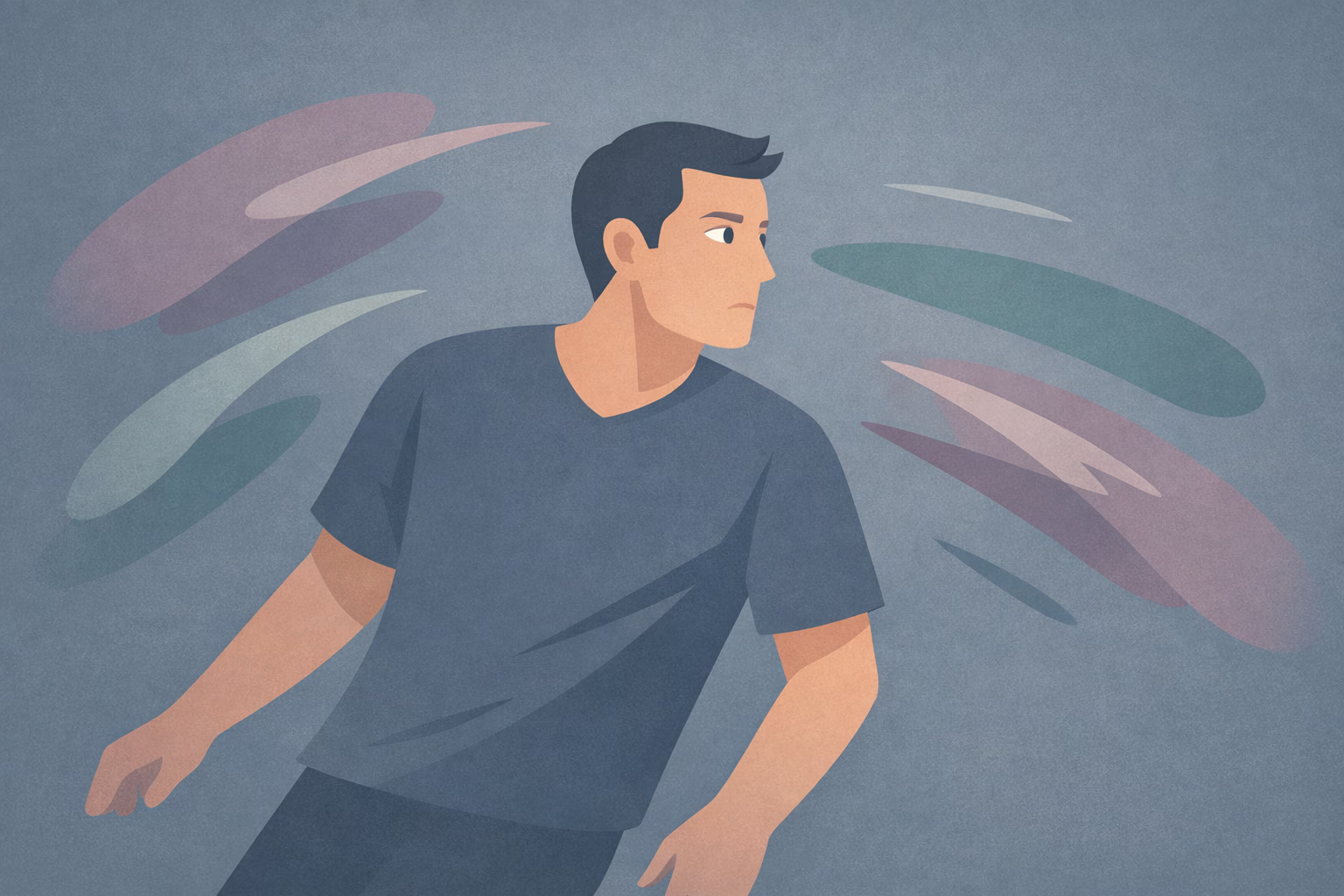
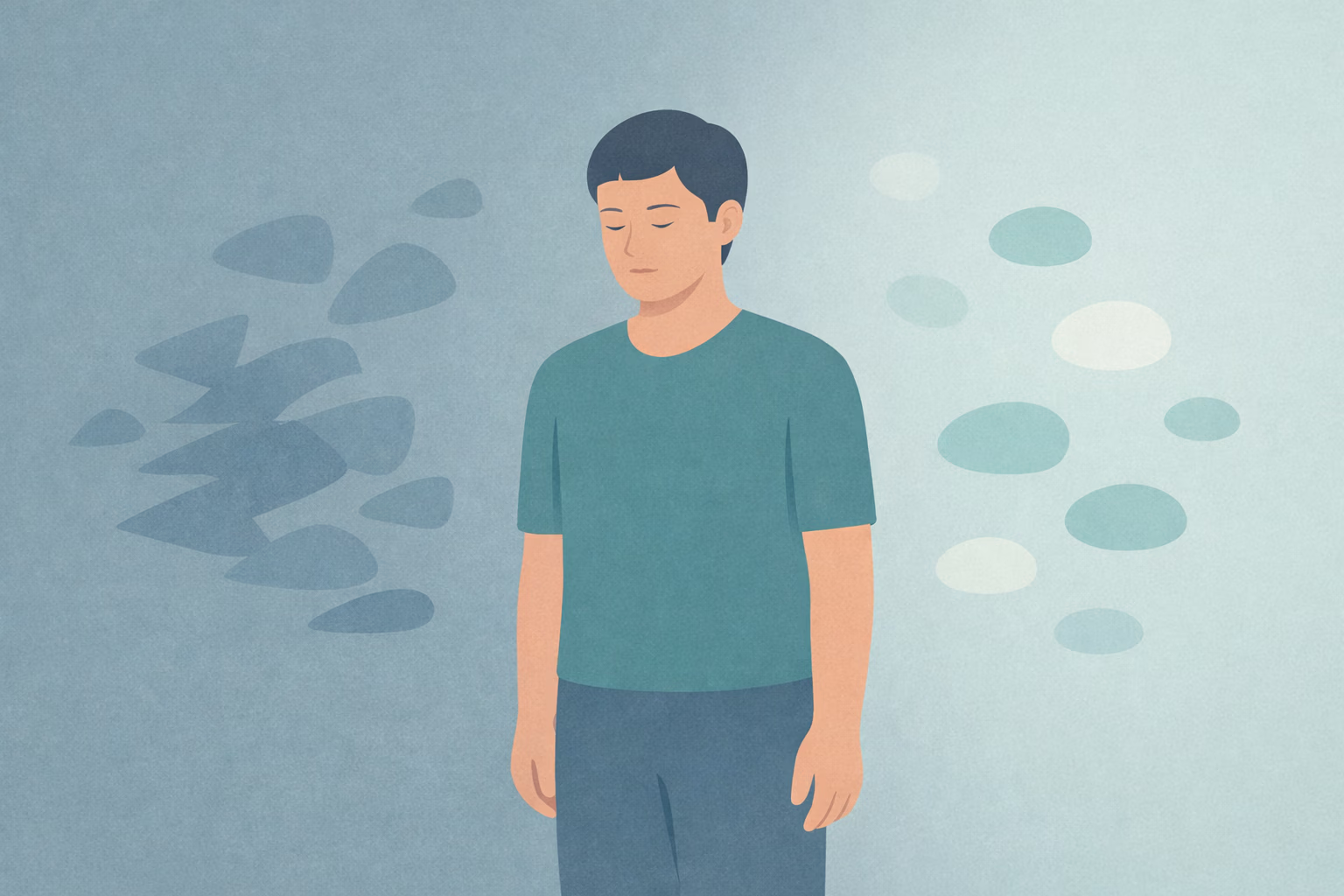
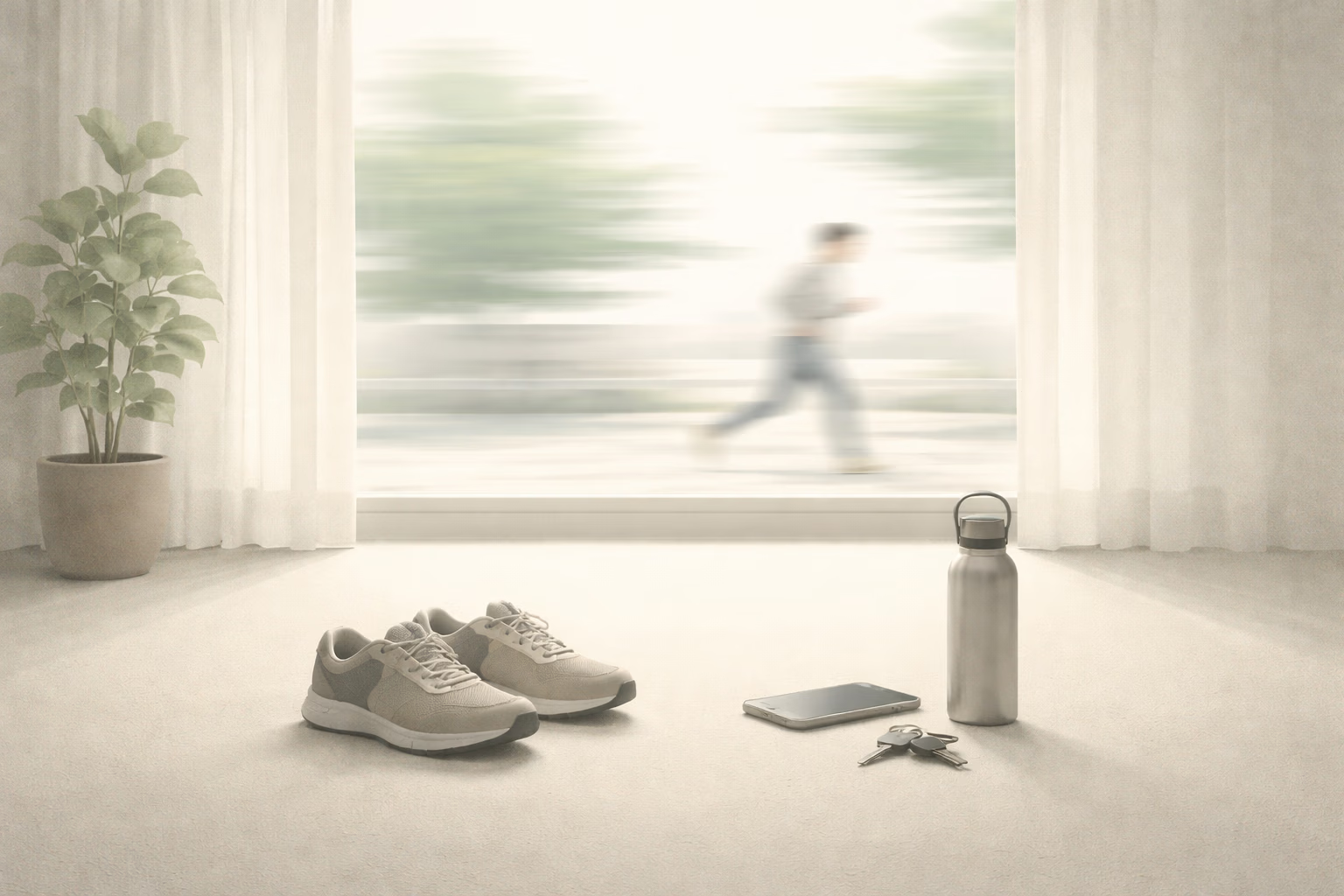
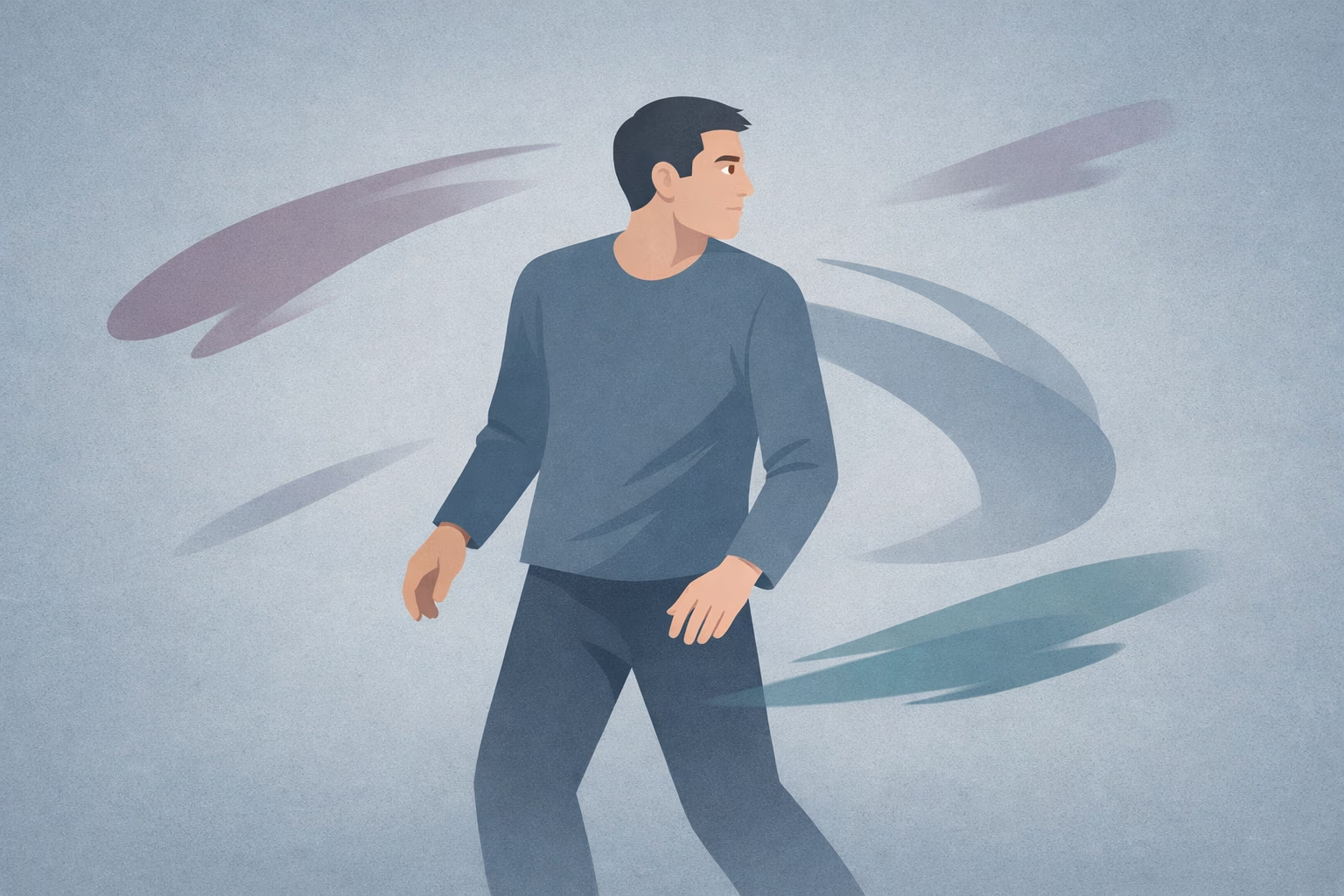
Understanding explains what is happening. Art allows you to feel it—without fixing, judging, or naming. Pause here. Let the images work quietly. Sometimes meaning settles before words do.
One Quiet Window, one insight, one reflection — every Sunday