Fight, Flight, Freeze: Understanding Shutdown Mode
In short: Most people have had the moment: a sharp reply comes out, your body pulls back, or you “go along” before you even know what you think. Later, you replay it with confusion— Why did I do that?
Most people have had the moment: a sharp reply comes out, your body pulls back, or you “go along” before you even know what you think. Later, you replay it with confusion—Why did I do that? The surprise can feel personal, like you missed something obvious.
But many instant reactions aren’t a character flaw or a lack of insight. They’re fast protective programs—built for speed, not nuance—running in a nervous system that’s trying to prevent danger and find closure.
What if your quickest reactions are not “the real you,” but a regulation reflex looking for safety?
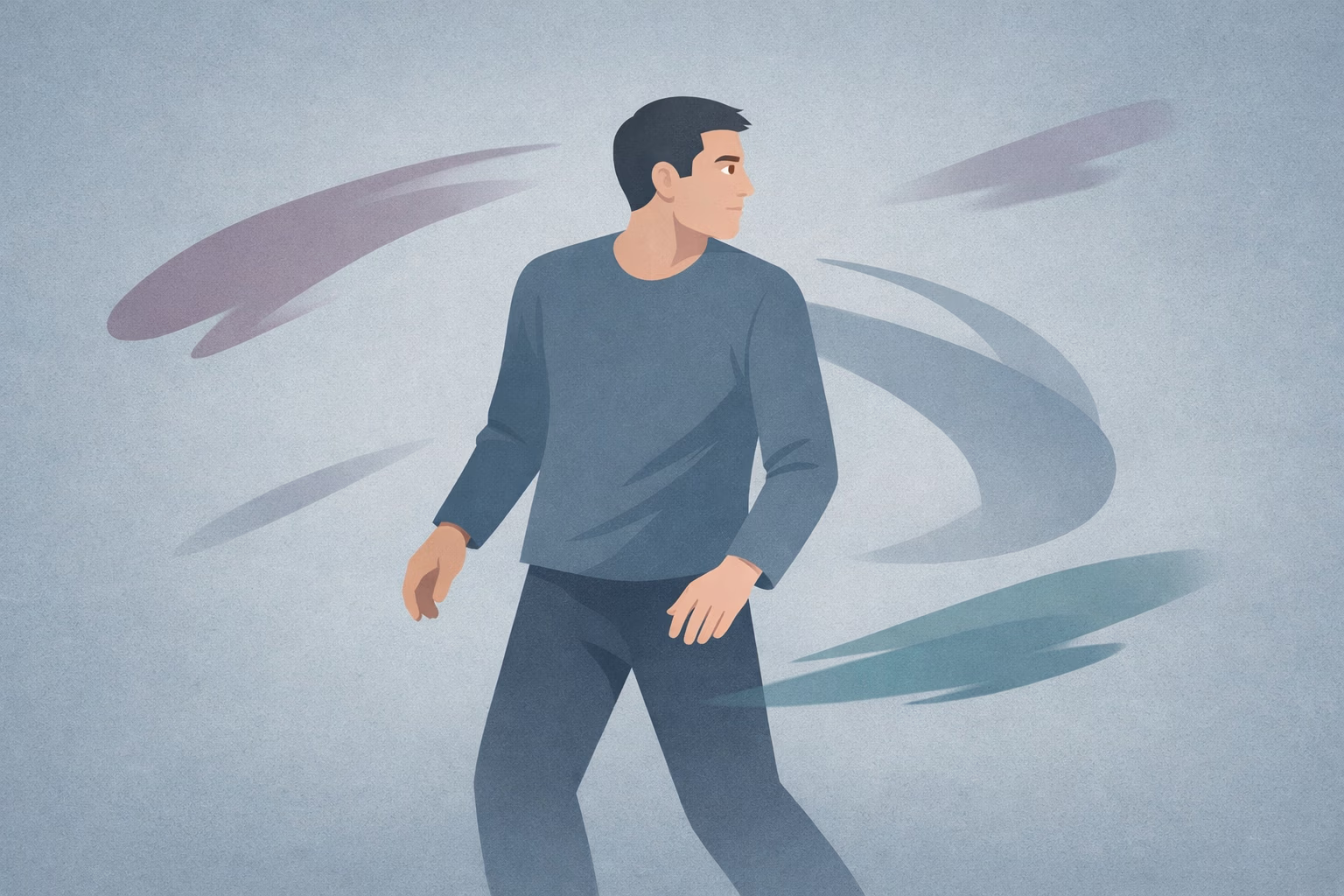
Emotional reflexes often show up as a sudden shift in tone, posture, or impulse: you interrupt, defend, withdraw, over-explain, or freeze. Then, as the moment passes, a second wave arrives—regret, self-critique, or a blank “I don’t know what happened.” This isn’t unusual; it’s a common sequence when stress systems take the lead. [Ref-1]
In that sequence, the body commits to a direction before the mind has built a coherent narrative. It can feel like being “taken over,” but what’s really happening is a speed-prioritizing system doing what it was shaped to do: reduce risk quickly.
Sometimes the hardest part isn’t the reaction. It’s the feeling that you weren’t consulted.
Your brain and body are built with layered timing. Some circuits scan for threat and mobilize responses in fractions of a second—shifts in heart rate, muscle readiness, attention narrowing, and a bias toward certain behaviors. Reflective evaluation—the part that weighs context, intentions, and long-term consequences—tends to arrive later, especially under load. [Ref-2]
This is not “irrationality.” It’s an architecture: when stress is high or cues resemble past danger, the nervous system can allocate resources toward action and away from deliberation. The result is a felt sense of urgency, certainty, or shutdown—even if the present situation is complex.
Why does it feel so convincing in the moment?
Because once the body is mobilized, the mind often organizes a story that matches the state. In other words: the state leads, and meaning follows.
Across human evolution, many dangers didn’t allow for careful analysis. If something moved in the bushes, delaying action could cost you. Fast emotional reactivity—startle, anger, disgust, withdrawal—helped people act quickly enough to survive. [Ref-3]
These reactions weren’t meant to be “accurate.” They were meant to be protective. A system that occasionally misfires but responds fast can be more survivable than a system that waits for certainty.
In immediate physical environments, reflexive action often produced a clear end point: danger removed, distance created, conflict resolved, body settling. That “done” signal matters. When a protective response successfully completes its loop—orient, act, return—systems can stand down. [Ref-4]
Even social threats in small groups could reach closure through visible repair: a gesture, a change in rank, a direct reconnection, or a clear separation. The nervous system could register an outcome.
When closure happens, the body doesn’t need to keep scanning. When closure doesn’t happen, the system stays partially mobilized—ready to re-launch the same response next time.
Today, many “threat cues” are informational rather than physical: a tone in a text, an unread email, a meeting invite, a facial expression you can’t interpret, a feed full of conflict. These inputs can activate implicit memory and pattern-matching—your system flags similarity and responds before context fully arrives. [Ref-5]
But unlike a predator or a storm, modern stressors often don’t complete. The conversation ends with “Seen.” The conflict goes unresolved. The evaluation continues in the background. Your nervous system may keep searching for a conclusion that never quite lands.
So speed can start to feel like safety: if you answer fast, defend fast, withdraw fast, you can temporarily reduce the discomfort of not knowing. The relief is real—but the loop may remain unfinished.
An avoidance loop isn’t about cowardice or denial. Structurally, it’s what happens when the system discharges activation through immediate action—before the full signal is processed and completed. The action provides short-term relief (less uncertainty, less exposure, less internal friction), but it can also skip the conditions that would allow the experience to resolve. [Ref-6]
In this frame, a reflex reaction is less a “choice” and more a rapid regulation strategy: the body tries to reduce load quickly, using whatever pathway has worked before.
What gets avoided?
Often it’s not an emotion in the abstract. It’s the incomplete middle: ambiguity, vulnerability to evaluation, the time it takes for context to update, or the slow work of mutual understanding. Those middle zones don’t provide quick closure, so the system reaches for speed.
People often recognize emotional reflexes only as anger or panic. But reflexive regulation comes in many forms, including responses that look “polite” or “high functioning.” The shared feature is immediacy: a fast move that reduces tension right now. [Ref-7]
These aren’t identities. They’re well-rehearsed pathways your nervous system can access faster than your reflective mind can negotiate.
Over time, repeated reflex cycles can create a predictable aftermath: strained relationships, misunderstandings, and a lingering sense that you can’t rely on yourself in high-stakes moments. Not because you lack values, but because your body keeps selecting speed over coherence. [Ref-8]
When this happens repeatedly, identity can start to fragment. One part of you sincerely wants closeness, honesty, or steadiness. Another part keeps mobilizing in ways that disrupt those aims. The tension isn’t a moral failing; it’s a mismatch between what your system learned to do under threat and what your life now asks of you.
When reactions repeat, people don’t just lose arguments. They can lose the feeling of being the author of their own life.
Reflexes become default partly because they work—at least in the short term. After a defensive reply, the surge drops. After withdrawal, the exposure ends. After saying yes, the tension quiets. That downshift is a powerful teacher: the nervous system links the reaction with relief and stores it as a reliable exit. [Ref-9]
The problem is that relief is not the same as completion. Relief changes state; completion creates an internal “done.” When the broader situation remains unresolved—unclear boundaries, unmet needs, ongoing evaluation—the system stays ready to fire again, because it never received a full closure signal.
So the loop tightens: cue → reaction → relief → reinforcement. The reaction becomes faster, not because you’re getting worse, but because your system is learning what ends discomfort quickly.
There’s a difference between understanding your triggers and having access to a pause. Insight can arrive after the fact—clear, accurate, even compassionate—while your body still reacts at full speed the next time. That’s because reflexes live in timing and physiology, not just in ideas.
When nervous system urgency reduces, even slightly, the interval between stimulus and action can reopen. That interval isn’t a motivational achievement; it’s a capacity state. In that state, more information can enter the system: tone, context, your own priorities, the reality that the present is not the past.
Many scientists describe safety as a biological condition that supports social engagement and flexible responding—less forced mobilization, more range. [Ref-10]
What changes in the pause?
Meaning has time to organize. Not as a pep talk, but as a real-time alignment between sensation, context, and the kind of person you intend to be in that moment.
Emotional reflexes are rarely only “inside you.” They are shaped and maintained by relational environments—especially cues of being judged, rejected, controlled, or misunderstood. When those cues are present, bodies tend to mobilize quickly.
Conversely, safety cues can soften reactivity: predictable responses, repair after rupture, clear consent, warm facial signals, steady tone, and a sense that mistakes won’t cost belonging. Research on safety signals suggests that when the system can reliably detect “this is safe enough,” fear and defensive activation decrease. [Ref-11]
This is why the same person can seem “fine” with one friend and reflexive with another. It’s not hypocrisy. It’s context-dependent nervous system learning.
As load reduces and more experiences reach closure, people often describe a subtle but profound shift: reactions still arise, but they don’t hijack the whole system. There’s more internal room for signals to arrive and pass through without requiring immediate discharge.
This can feel like more clarity and more choice—not because you’re forcing better behavior, but because your body has regained bandwidth. You can register multiple truths at once: “I’m activated” and “I can wait one beat.” “This feels risky” and “I don’t need to escalate.” Research linking body-based regulation capacity with emotion regulation supports this broader window of responding. [Ref-12]
Choice doesn’t always arrive as confidence. Sometimes it arrives as a slightly longer breath before the next sentence.
When reflexes run the show, behavior is organized around immediate threat reduction. When coherence returns, behavior can reorganize around values—what you want your life to stand for, how you want to treat people, what kind of patterns you want to live inside.
This is not about becoming unemotional. It’s about becoming less compelled. The nervous system no longer has to prove safety through speed, so identity has room to guide action. In relational contexts, supportive connection can buffer stress and reduce the pressure to react instantly. [Ref-13]
Over time, the “you” that feels most like you becomes easier to access—not through constant monitoring, but through repeated moments where the system completes its loops and stands down.
Many emotional reflexes formed in environments where quick responses reduced harm—socially, physically, or psychologically. If you currently live with frequent evaluation, ambiguity, or exposure, your system may stay primed for fast exits. Social-evaluative threat is a particularly strong activator for human stress responses, which helps explain why even small moments can feel huge in the body. [Ref-14]
Seen this way, the goal isn’t to “win” against your reactions. It’s to recognize them as outdated protection that’s still trying to create safety and closure with the tools it has.
Agency tends to return when your life begins to offer more completion: clearer endings, cleaner repair, fewer open loops, and more moments where your actions match your values closely enough that your system can register, we’re done here.
The most important shift is often not dramatic. It’s the quiet return of a moment between feeling and doing—a moment where your body can update, where meaning can cohere, where identity can lead.
That interval is not proof of willpower. It’s a sign of flexibility: the capacity to move with your values even when activation is present. Psychological flexibility and values-based behavior are strongly linked to well-being, not because they erase discomfort, but because they restore authorship. [Ref-15]
When that authorship returns, your reactions become information—not a life sentence.
From theory to practice — meaning forms when insight meets action.
Because the brain has layered processing systems with different timing. Fast threat circuits scan for danger and mobilize responses in fractions of a second; reflective evaluation arrives later, especially under load. In high-stress moments, the body commits to a direction before the mind has built a coherent narrative. It can feel like being 'taken over,' but it's a speed-prioritizing system doing what it was shaped to do — reduce risk quickly. Once the body is mobilized, the mind organizes a story that matches the state. State leads, meaning follows.
Speed is a survival design, not a personality trait. Across human evolution, dangers didn't allow for careful analysis — fast emotional reactivity (startle, anger, withdrawal) helped people act quickly enough to survive. Reactions weren't meant to be accurate; they were meant to be protective. The trouble is that modern threats are often informational — a tone in a text, an unread email, an ambiguous expression. The same architecture fires, but unlike a predator, modern stressors often don't complete. The system stays primed for fast exits.
Because reflexes work — at least in the short term. After a defensive reply, the surge drops. After withdrawal, the exposure ends. After saying yes, the tension quiets. That downshift is a powerful teacher: the nervous system links the reaction with relief and stores it as a reliable exit. The loop tightens — cue → reaction → relief → reinforcement. Relief is not the same as completion. Relief changes state; completion creates an internal 'done.' When the broader situation stays unresolved, the system stays ready to fire again.
From the interval between feeling and doing. The pause isn't a moral achievement; it's a capacity signal. When nervous system urgency reduces, even slightly, the gap between stimulus and action reopens. That interval isn't willpower — it's a physiological state in which more information can enter: tone, context, your own priorities, the reality that the present is not the past. Triggers can still arise, but they stop being commands. They become information. Reactions become information, not a life sentence.
From Science to Art.
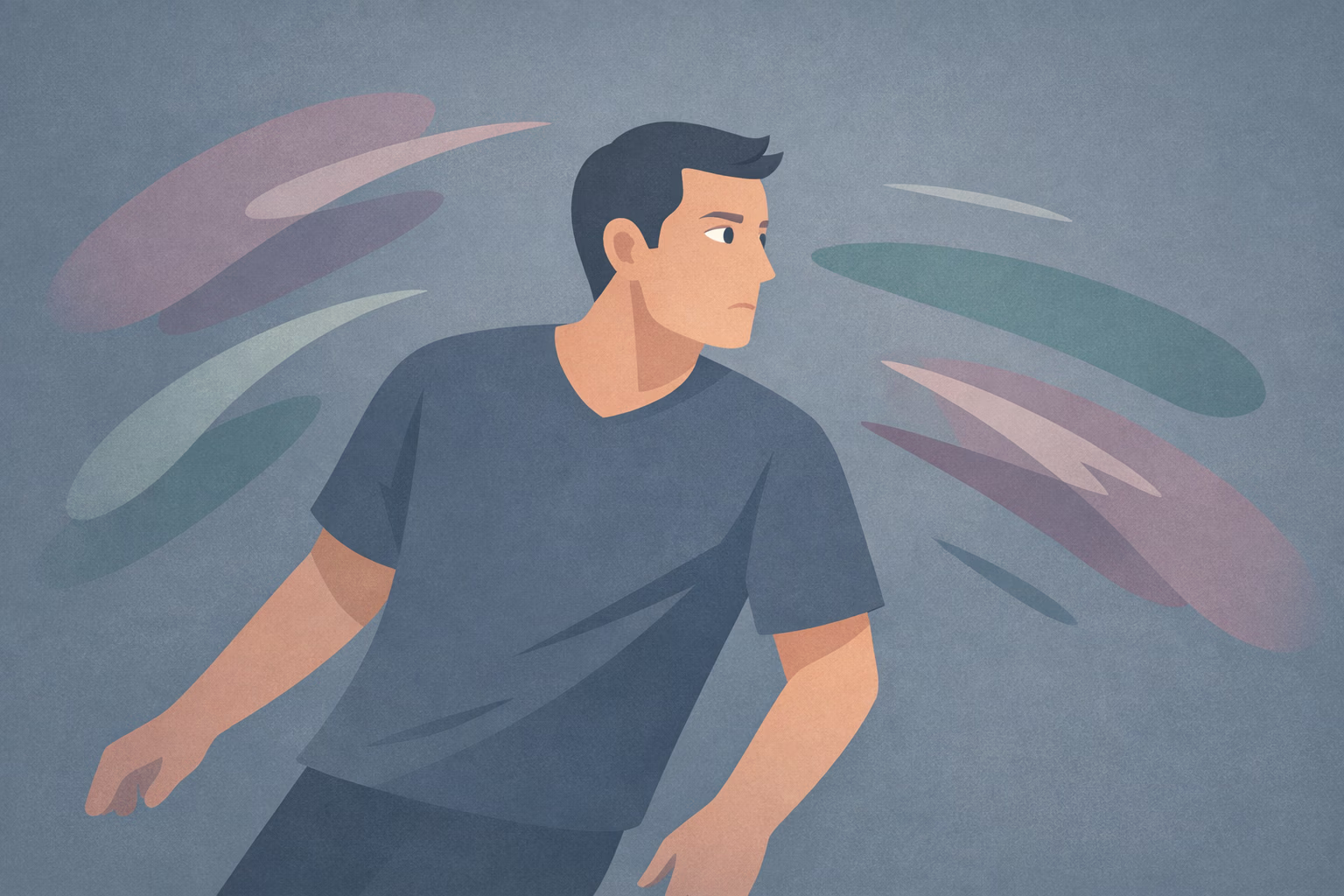
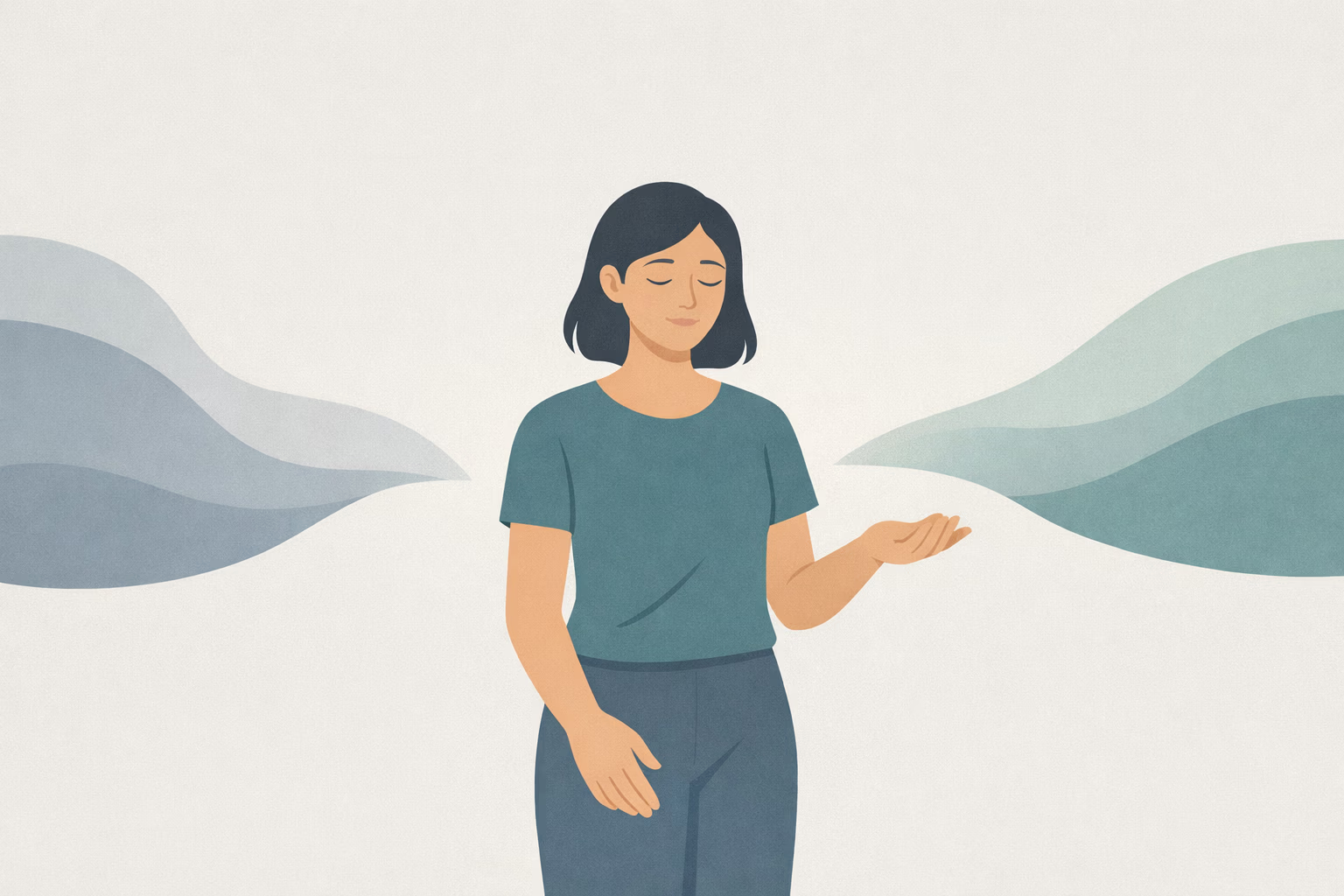
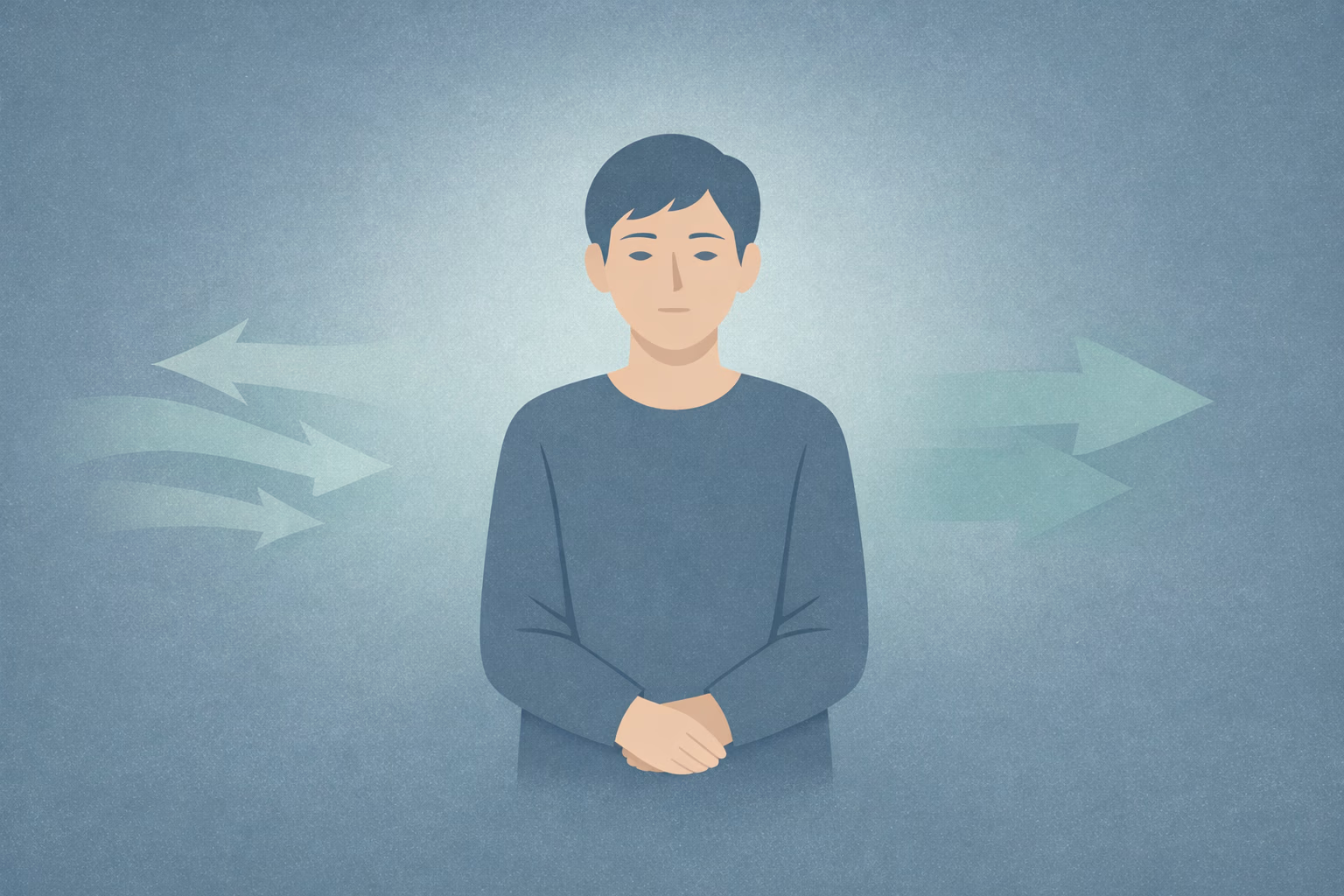
Understanding explains what is happening. Art allows you to feel it—without fixing, judging, or naming. Pause here. Let the images work quietly. Sometimes meaning settles before words do.
One Quiet Window, one insight, one reflection — every Sunday