

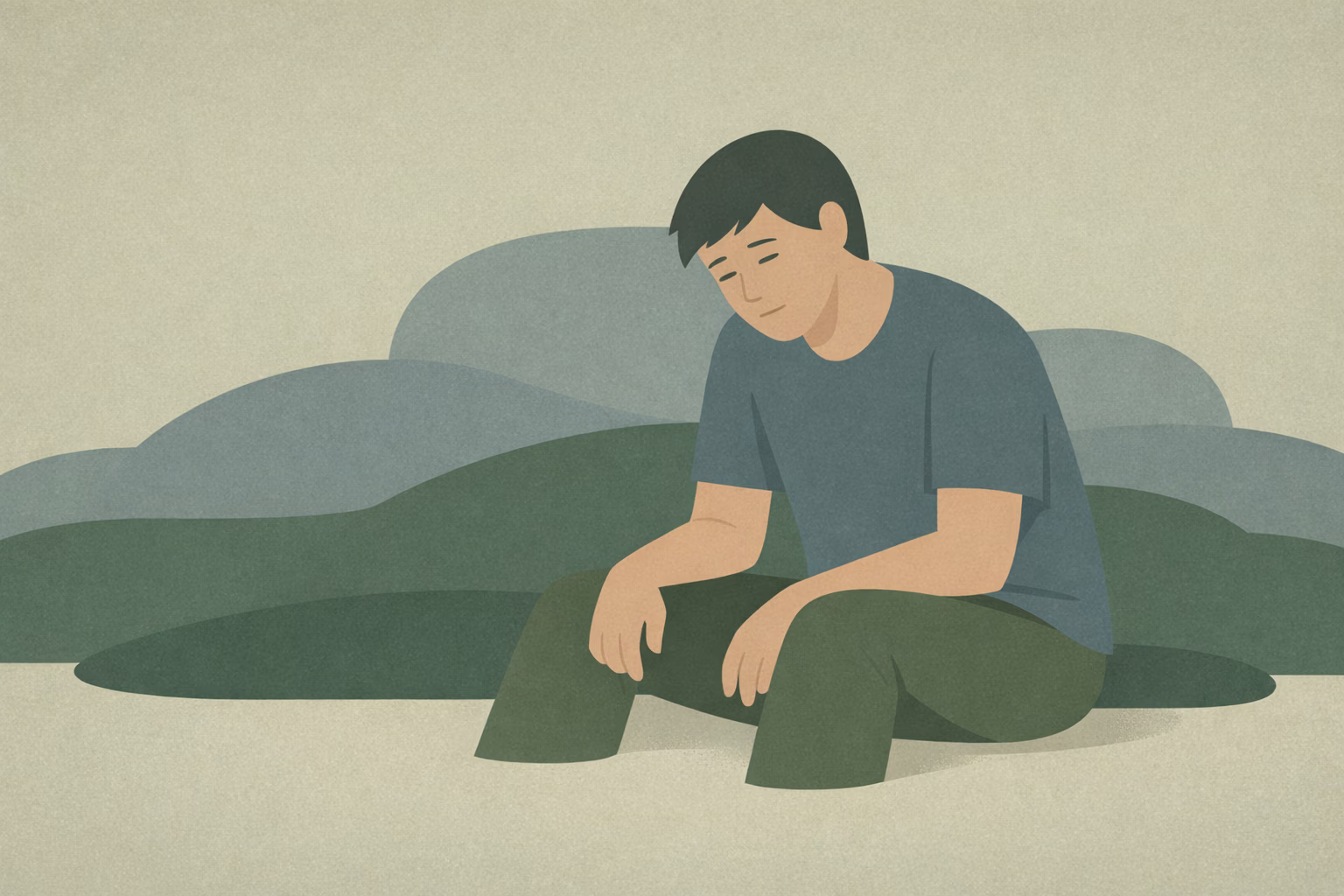
Low Motivation & Emotional Shutdown
Understand why low motivation often signals nervous system exhaustion—not laziness.
In context: You are experiencing “Signal Overload.“ In the Meaning Density Model™, when your Threat & Safety system is saturated, it loses the ability to distinguish between a “whisper“ and a “scream.“ Every cue is treated as a high-priority signal.
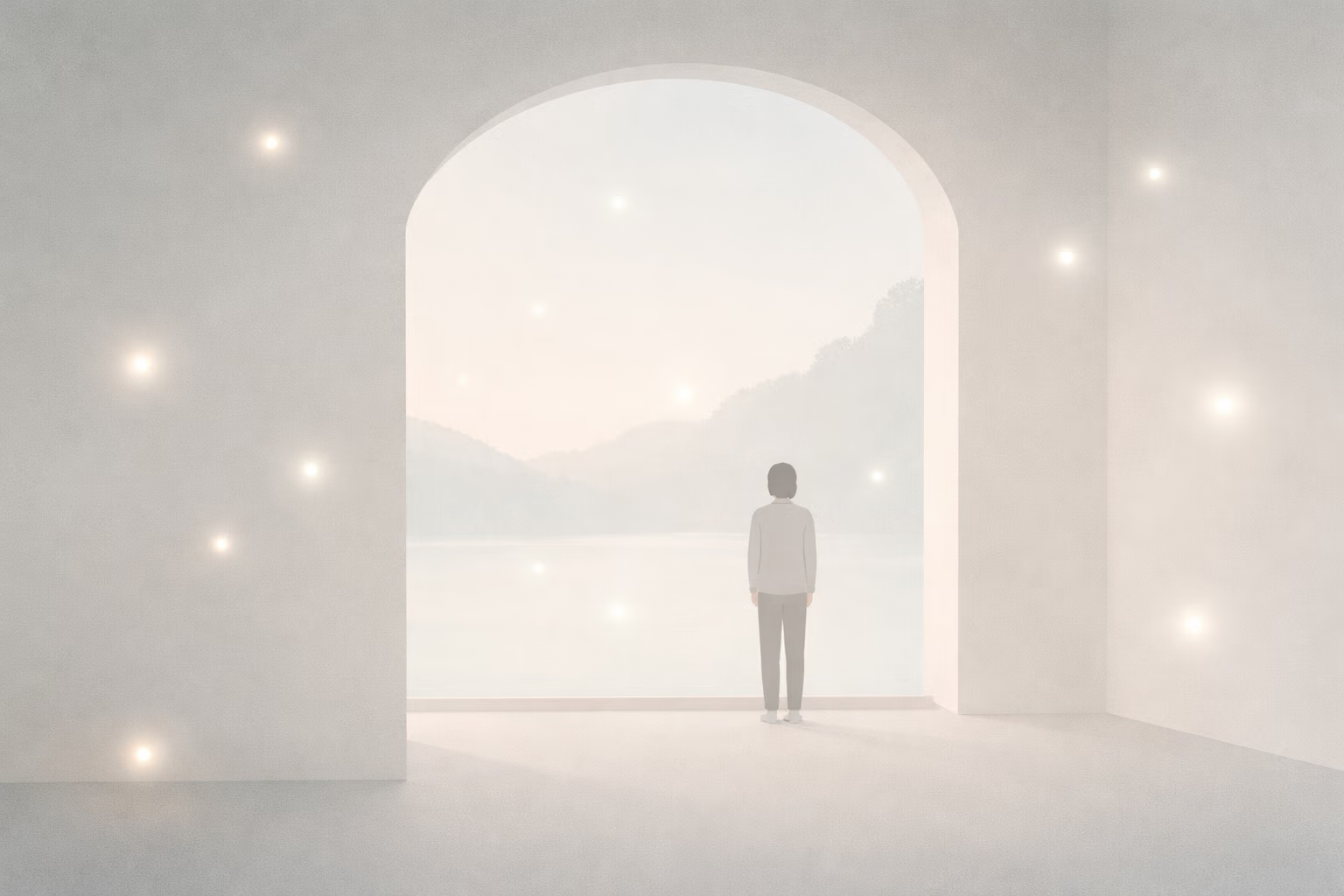
Everything feels like a signal.
A sound, a thought, a pause— each asks for interpretation.
The system stays alert because nothing is clearly neutral.
This is signal overload, not intuition.
Naming it matters.
When too many indicators glow at once, accuracy drops and strain rises.
You are not perceptive beyond reason— you are saturated.
Recognition allows the system to stop treating every cue as meaningful.
Name signal overload with DojoWell.
Explore DojowellArticles exploring the psychology behind these patterns.
Understand why low motivation often signals nervous system exhaustion—not laziness.
Learn why your brain can’t stop doomscrolling.
Understand why self-righteousness often hides insecurity and emotional fear.
You are experiencing "Signal Overload." In the Meaning Density Model™, when your Threat & Safety system is saturated, it loses the ability to distinguish between a "whisper" and a "scream." Every cue is treated as a high-priority signal. Naming this state—"I am currently in signal overload"—stops the Narrative system from inventing a "catastrophe" to explain the feeling, allowing you to treat the issue as a technical volume problem rather than a real-world threat.
Lower the "Sensitivity Gain" by acknowledging the saturation. Instead of trying to "fix" the signal, tell your system: "This is just a noise, and I am over-responsive right now." This creates a tiny bit of "Meaning Distance." By recognizing that the urgency is coming from your internal state, not the external cue, you give your Integrator permission to ignore the "false alarm" and start de-escalating the fear response.
One Quiet Window, one insight, one reflection — every Sunday