
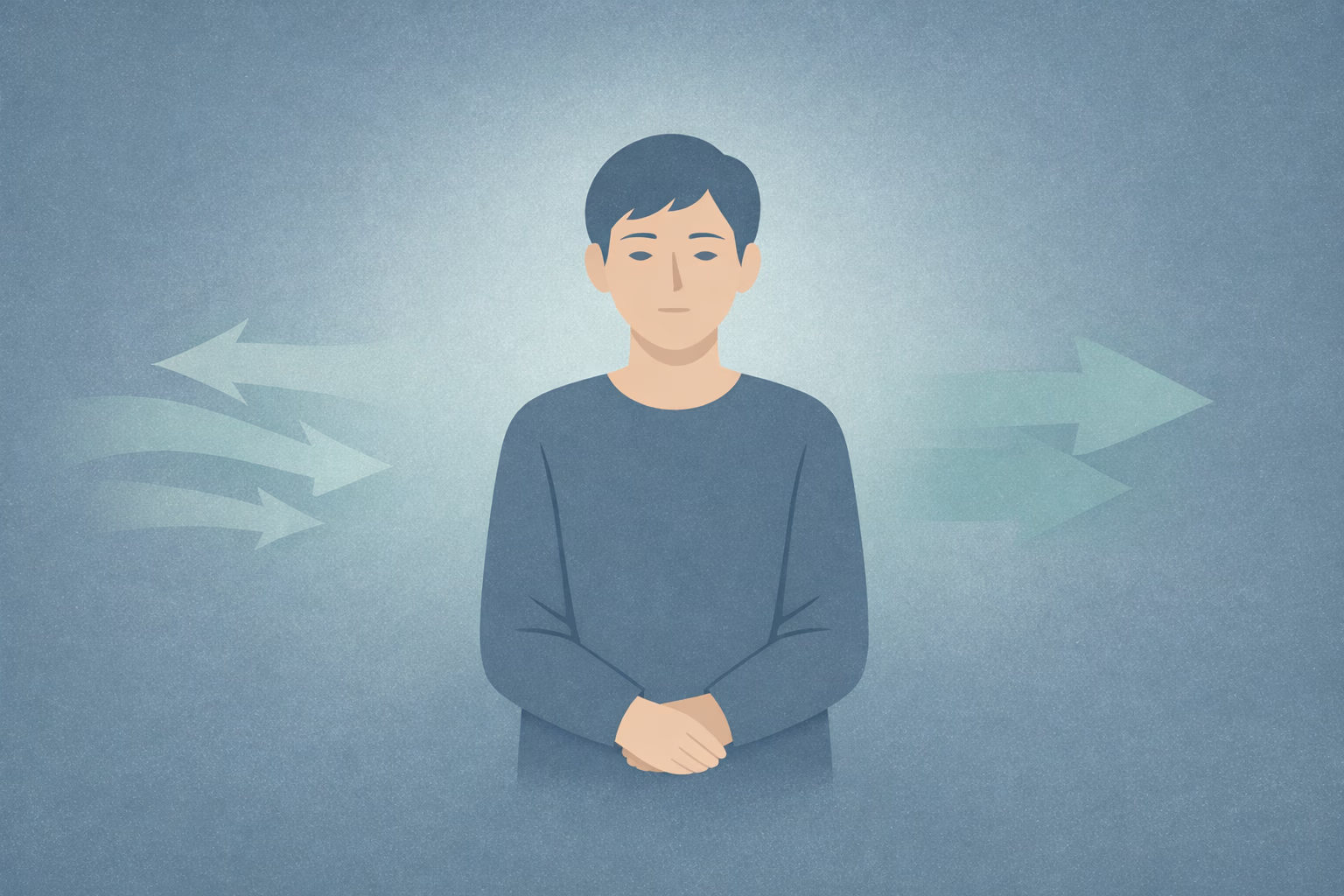
Fight, Flight, Freeze: Understanding Shutdown Mode
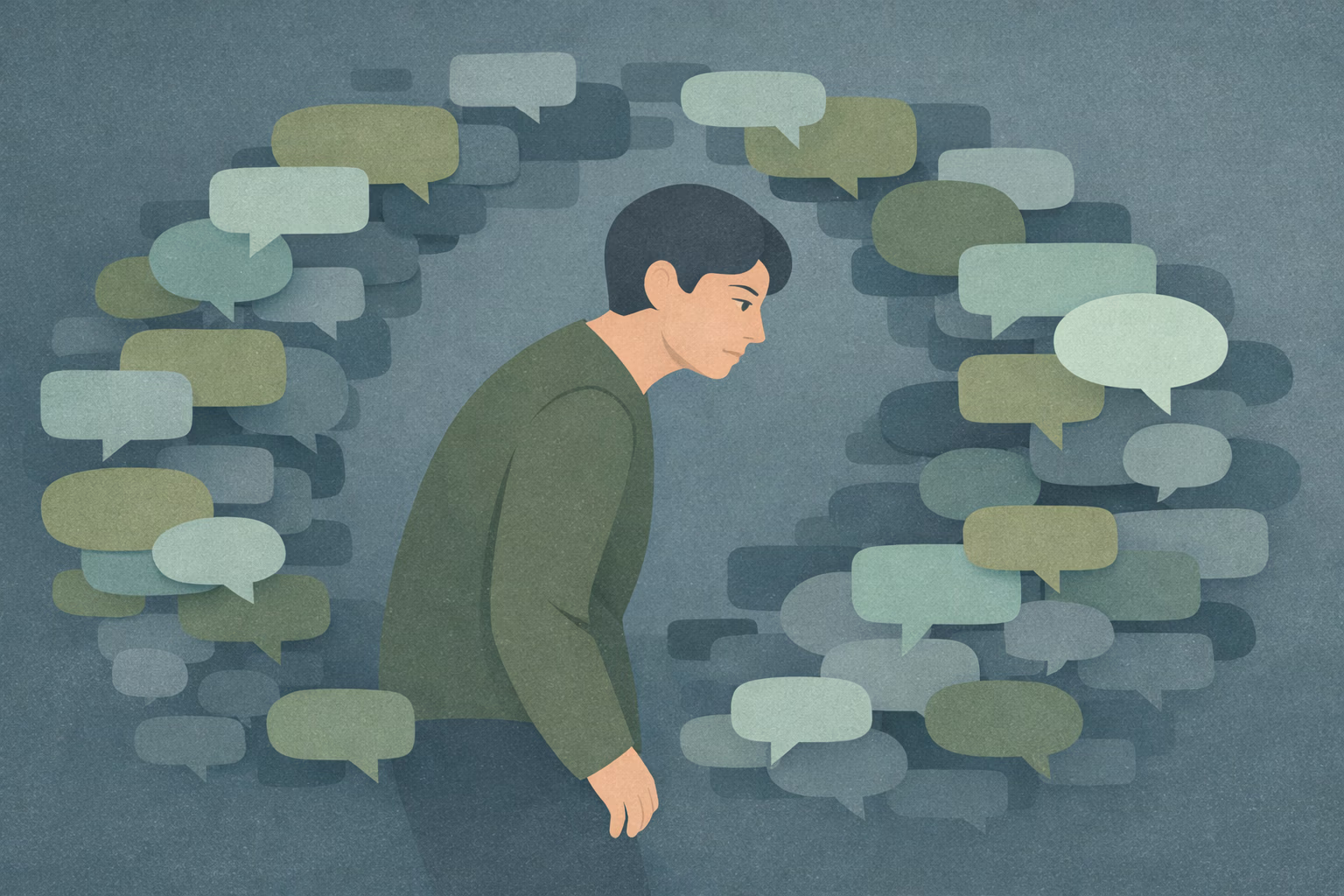
In short: Doomscrolling often gets framed as a “bad habit,” a self-control problem, or a personal flaw. But in many people, it functions more like threat-monitoring: a nervous system behavior aimed at reducing uncertainty by staying close to potential danger.
Doomscrolling often gets framed as a “bad habit,” a self-control problem, or a personal flaw. But in many people, it functions more like threat-monitoring: a nervous system behavior aimed at reducing uncertainty by staying close to potential danger.
What if the part of you that can’t stop scrolling isn’t broken—just trying to keep you safe?
In a world where alarms travel faster than context, the mind can learn that looking away is risky. The result isn’t just “too much screen time.” It’s a loop where attention stays recruited, the body stays braced, and the sense of “done” never arrives.
Many people recognize the moment: you’re reading something upsetting, your chest feels heavy, your jaw tightens—and still, your thumb keeps moving. The content doesn’t soothe you, yet stopping can feel oddly unfinished, like leaving the stove on.
This is one of the signatures of doomscrolling: distress plus continuation. Instead of relief, there’s a thicker kind of urgency—an “I have to know” pull that can override fatigue and discomfort. [Ref-1]
It can feel like the world is unsafe, and your only job is to keep watching.
Human attention is not neutral; it prioritizes information that might affect survival. When something reads as “important and dangerous,” attention narrows, scanning intensifies, and the nervous system prepares for what could happen next.
Digital feeds amplify this by delivering constant novelty—new headlines, new clips, new reactions—each one implying, “You need to update your map.” Under threat load, novelty can prolong engagement, not because it feels good, but because it keeps the system on alert and searching for a stopping point that never quite comes. [Ref-2]
When does the nervous system get permission to stand down?
Usually after completion: after the environment feels predictable enough, after a plan exists, after safety cues return. A feed, however, rarely supplies completion—only more inputs.
Long before phones, vigilance kept humans alive. If danger was possible, scanning the environment early mattered. A mind that checked the horizon—again and again—had a better chance of detecting threats in time.
Doomscrolling borrows this same architecture. The difference is that today’s “horizon” refreshes endlessly. The nervous system reads a stream of alarming signals as ongoing environmental instability, even if your physical surroundings are unchanged. [Ref-3]
So the behavior isn’t irrational. It’s a survival system doing what it was designed to do—just placed into an environment where the threat channel never closes.
Threat monitoring can create a temporary sense of control: “If I keep up, I’ll be prepared.” The mind treats information as a form of readiness, and readiness as safety.
But this kind of control is often informational rather than practical. It can reduce uncertainty for a moment while quietly increasing stress load—because the nervous system remains in a posture of “not yet safe.” [Ref-4]
These are understandable moves. They’re also easy to trap inside, because they don’t generate a clear “completed” signal.
There’s a common belief that more information equals more safety. But after a certain point, more exposure to alarming content can produce the opposite: more agitation, more fatigue, and less ability to respond effectively in real life.
When the mind is saturated with threat cues, the body pays the bill—sleep becomes lighter, attention becomes brittle, and small stressors can start feeling heavier than they “should.” Research and reporting on news overload has linked heavy consumption patterns with poorer mental and physical well-being in many people. [Ref-5]
Information can be useful. But nonstop threat input isn’t the same thing as preparedness.
Doomscrolling often functions as an avoidance loop in a structural sense: not “avoiding feelings,” but bypassing the friction of grounded response. The system stays busy with signal intake—checking, updating, verifying—while the parts of life that create real closure remain paused.
Scanning becomes a substitute for completion. It can mimic the sensation of engagement while postponing the conditions that would actually allow the nervous system to settle: stable routines, supportive contact, workable plans, and moments of true “enough.” Studies have found that excessive exposure to negative news can correlate with increased anxiety and depressive symptoms, which can further tighten this loop. [Ref-6]
If your attention is constantly recruited, when does your life get to feel finished for the day?
Doomscrolling doesn’t look the same for everyone, but it often carries recognizable features. These aren’t character traits; they’re signs of a nervous system trying to track danger in a high-volume environment.
During global crises, studies have noted associations between doomscrolling/news exposure and mental health strain, suggesting that the pattern is partly shaped by context, not just individual preference. [Ref-7]
Resilience isn’t a personality quality; it’s a capacity that depends on recovery cycles. When threat input is constant, the nervous system gets fewer chances to complete stress responses and return to baseline.
Over time, this can show up as lighter sleep, more irritability, reduced concentration, and a narrower window of tolerance for everyday demands. People may also feel less optimistic—not because they “choose negativity,” but because the brain is learning the world as an unstable place. [Ref-8]
In this state, the feed can become both the source of overload and the place the system keeps returning to, because it promises the missing ingredient: certainty.
Once the system is sensitized, the threshold for “this matters” drops. Neutral information can start reading as ominous; ambiguous events feel more urgent. That heightened perception drives more scanning, which increases exposure to alarming cues, which further sensitizes the system.
This loop is part of why doomscrolling can persist even when you know it isn’t helping. It’s not just a choice point; it’s a feedback system shaped by media volume and nervous system strain. The American Psychological Association has described media overload as a genuine stressor that can compound distress and reduce well-being. [Ref-9]
In a hyper-alert state, looking away can feel like taking a risk—so the system keeps looking.
There’s a difference between awareness and vigilance. Awareness can include information while still leaving room for digestion, orientation, and choice. Vigilance is a posture: the nervous system stays forward-leaning, scanning for what might go wrong next.
Restoring internal safety doesn’t require suppressing reality or pretending everything is fine. It’s more like the body regaining permission to downshift when the immediate environment is stable enough—so attention can widen, priorities can reorganize, and information can be assessed without becoming the whole atmosphere of the day. [Ref-10]
When internal safety returns, the mind can still care. It just doesn’t have to stay braced to prove it.
Humans are social regulators. Historically, danger assessment wasn’t meant to be done alone in the dark with an endless stream of alerts; it was shared, discussed, and translated into coordinated response.
Relational presence—trusted conversation, shared context, mutual reality-checking—can convert raw threat signals into something more metabolizable. Instead of isolated monitoring, the system gets cues of “we’re oriented together,” which can reduce the compulsion to keep scanning for certainty. [Ref-11]
What changes when you’re not carrying the whole world’s danger by yourself?
When the nervous system isn’t locked in vigilance, attention becomes more flexible. Information can arrive and be evaluated without automatically flooding the body with urgency. This isn’t indifference; it’s capacity.
In a steadier state, many people notice:
Hypervigilance is commonly described as an exaggerated scanning and startle readiness; the opposite isn’t blindness—it’s proportional engagement. [Ref-12]
Constant scanning narrows life to threat management. When that posture softens, space reopens for other forms of orientation: values, relationships, craft, care, contribution—elements that create a sense of lived meaning rather than perpetual emergency.
This is where agency returns in a structural way: not as a motivational speech, but as a felt sense that actions can complete. The system can move from “What am I missing?” to “What is mine to respond to?” Hypervigilance is often sustained by ongoing perceived threat; reducing that stance can make room for grounded response and restored coherence. [Ref-13]
Meaning doesn’t come from knowing everything. It comes from what your life can actually hold, complete, and carry forward.
Doomscrolling is often a signal of care. It can reflect responsibility, empathy, and a wish to be prepared. The problem isn’t that you care—it’s that the environment offers endless threat inputs with very little closure.
When people move from vigilance toward safe awareness, they don’t become uninformed. They become more usable to their own lives: more able to think, relate, choose, and follow through. And that shift tends to restore meaning more reliably than pressure ever could. [Ref-14]
If doomscrolling has been part of your rhythm, it makes sense in context: a survival system trying to reduce uncertainty by staying close to danger cues. That’s not a personal defect. It’s a sign your system has been carrying more threat than it can integrate.
Over time, stability comes less from scanning and more from moments that let the body stand down—where life feels coherent enough to register “done.” In that space, care can take a more grounded form, and awareness can exist without becoming a sentence. [Ref-15]
From theory to practice — meaning forms when insight meets action.
Because it isn't really pleasure-seeking — it's threat-monitoring. Your Threat & Safety System reads alarming content as ongoing environmental instability and refuses to stand down until it detects completion. The signature is distress plus continuation: chest heavy, jaw tight, thumb still moving. Stopping feels oddly unfinished, like leaving the stove on. The 'I have to know' pull overrides fatigue because the system has tagged looking away as risky. It's not a self-control problem; it's an ancient survival circuit running inside an environment that never closes the threat channel. The part of you that keeps scrolling is trying to keep you safe.
Long before phones, vigilance kept humans alive — checking the horizon for danger improved survival odds. Doomscrolling borrows the same architecture, but today's horizon refreshes endlessly. Each new headline, clip, or comment implies 'you need to update your map,' and the nervous system reads continuous alarming signals as an unstable world even when your physical surroundings are perfectly stable. This is Evolutionary Mismatch: a survival system designed for periodic threat detection placed inside an environment of constant threat input. The behavior isn't irrational — it's a circuit doing exactly what it was built to do, in conditions it was never built for.
Because monitoring creates informational control, not practical control. The mind treats information as readiness and readiness as safety, but the nervous system stays in a posture of 'not yet safe.' Past a certain point, more exposure produces the opposite of preparedness: more agitation, lighter sleep, brittle attention, smaller stressors that suddenly feel heavier. The Avoidance Loop closes here — scanning replaces grounded response, mimicking engagement while postponing the conditions that would let the system settle. If your attention is constantly recruited, your life never gets to feel finished for the day.
Awareness includes information while leaving room for digestion, orientation, and choice. Vigilance is a posture — the nervous system stays forward-leaning, scanning for what might go wrong next. Restoring internal safety doesn't require suppressing reality. It's the body regaining permission to downshift when the immediate environment is stable enough. Co-regulation accelerates this: trusted conversation and shared context convert raw threat signals into something metabolizable, so you're not carrying the whole world's danger alone. When vigilance relaxes, care can still be present — it just doesn't require staying braced. Meaning Density returns through completion, not constant watching.
From Science to Art.
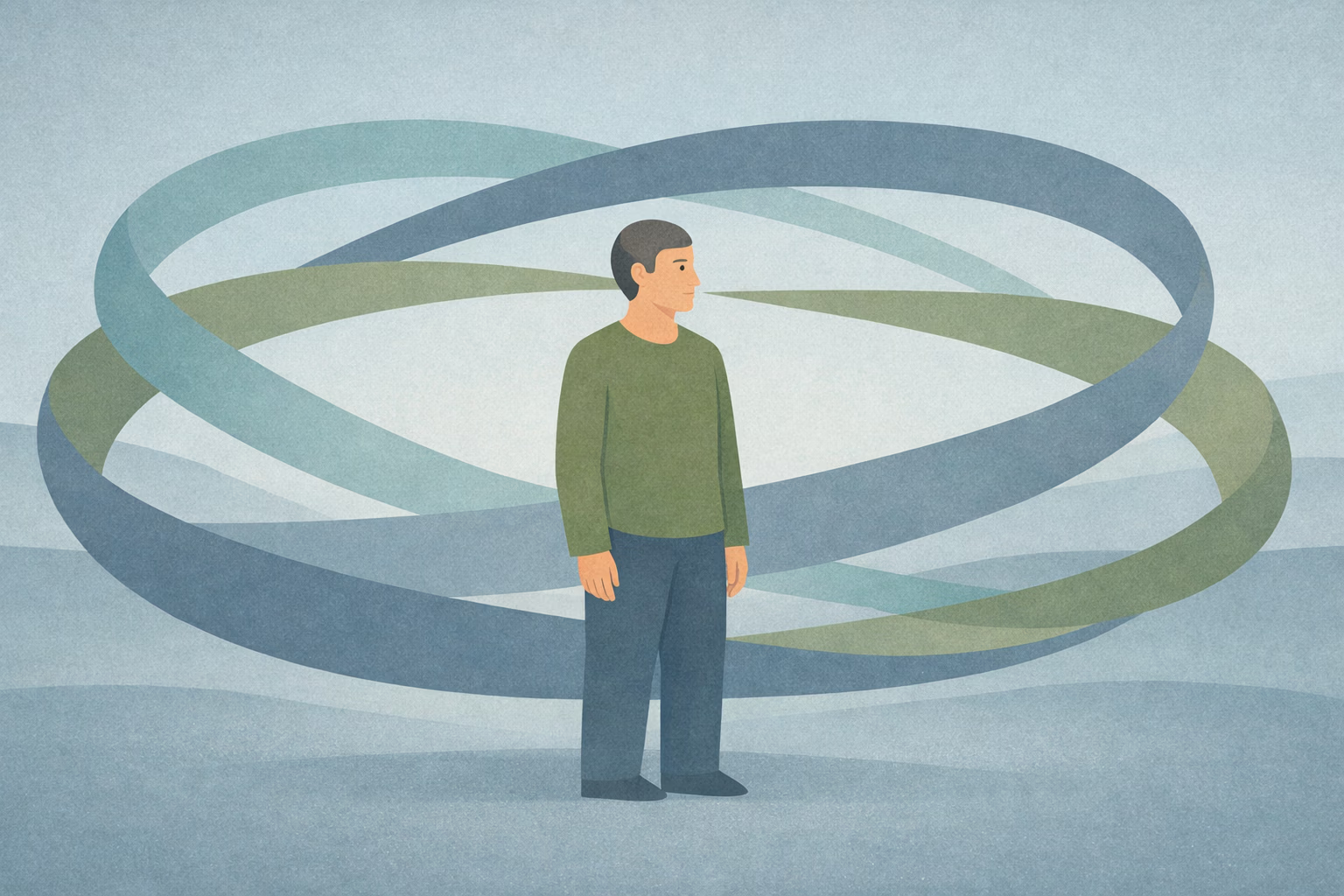
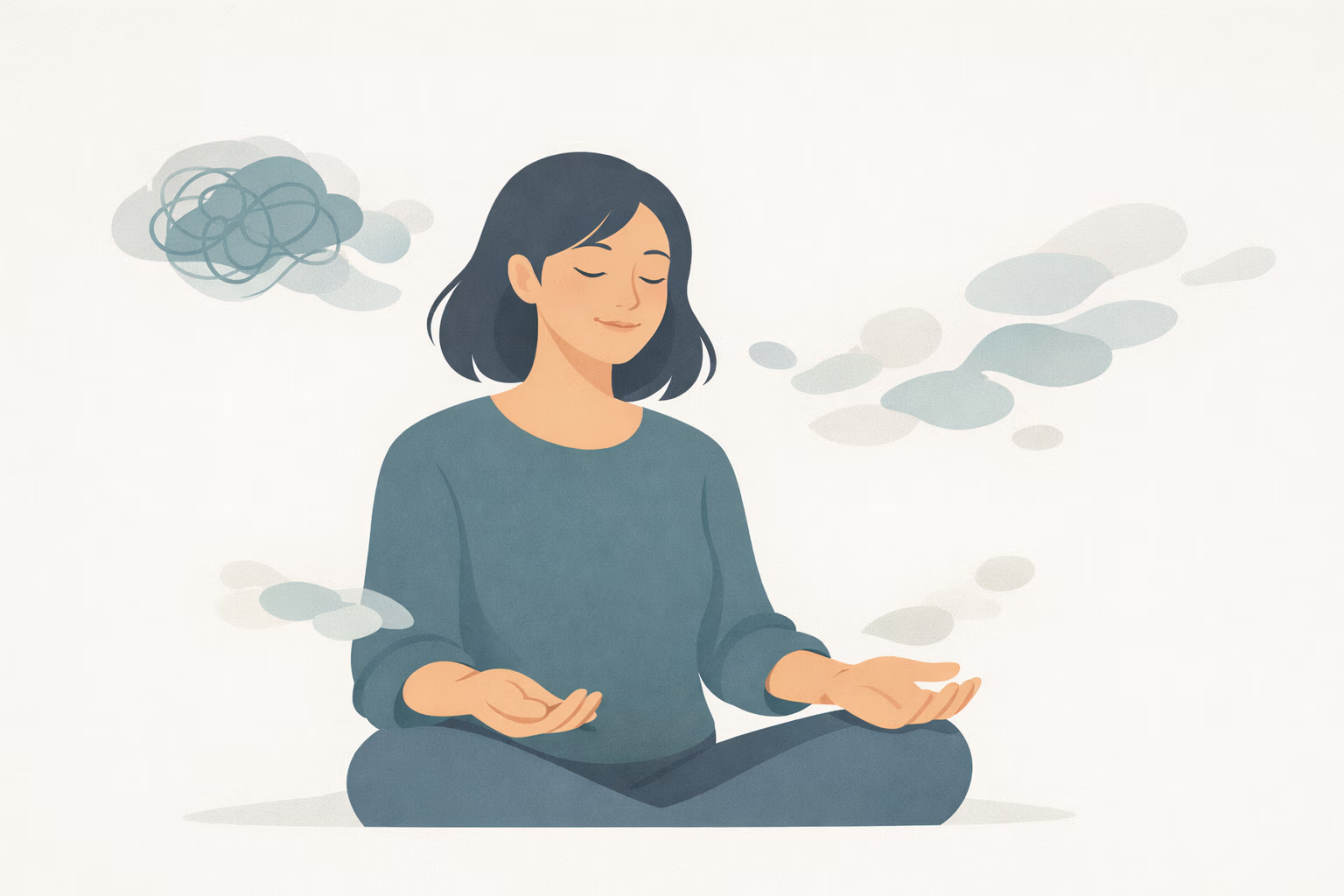
Understanding explains what is happening. Art allows you to feel it—without fixing, judging, or naming. Pause here. Let the images work quietly. Sometimes meaning settles before words do.
One Quiet Window, one insight, one reflection — every Sunday