Thought Spirals: When One Worry Turns Into Twenty
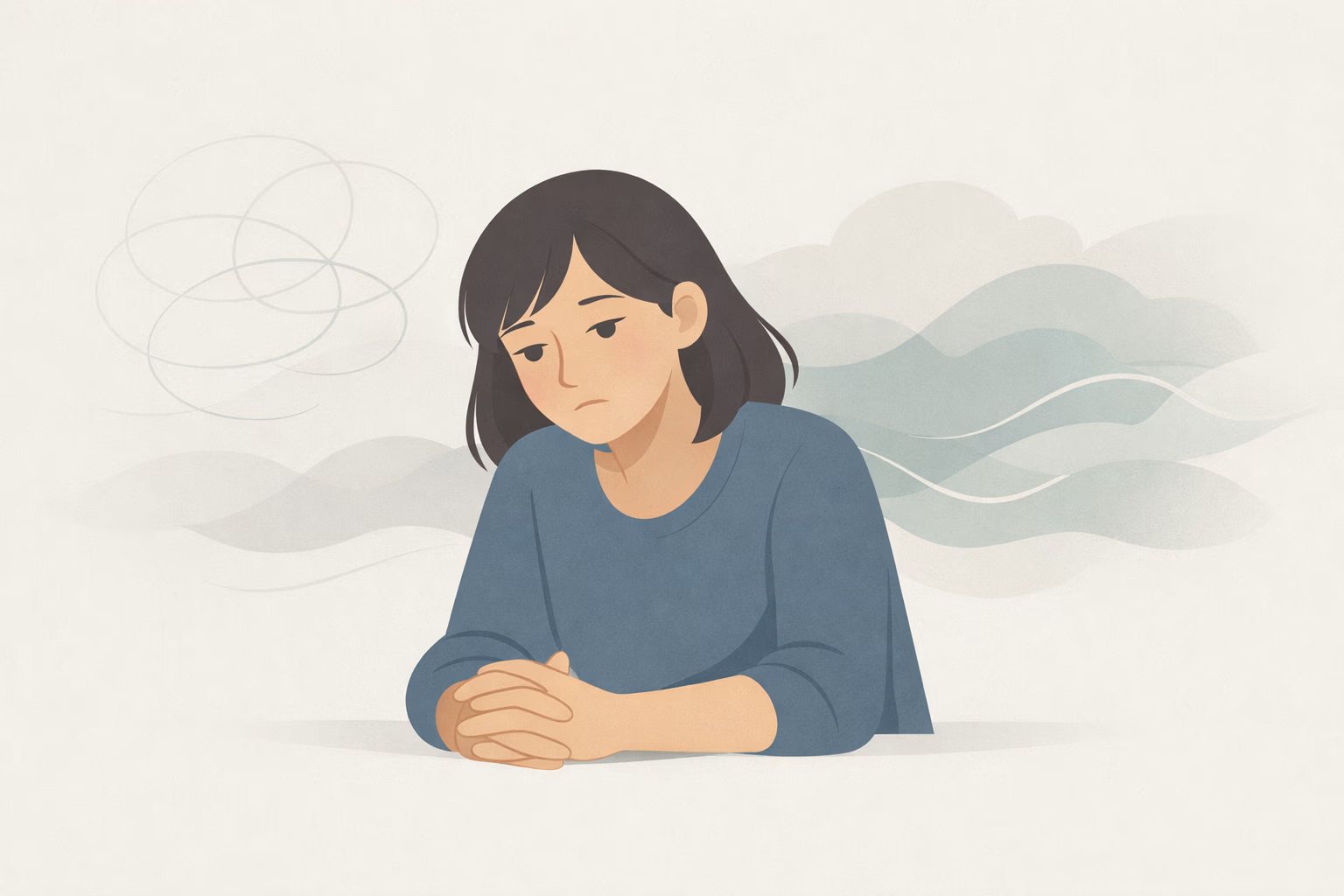
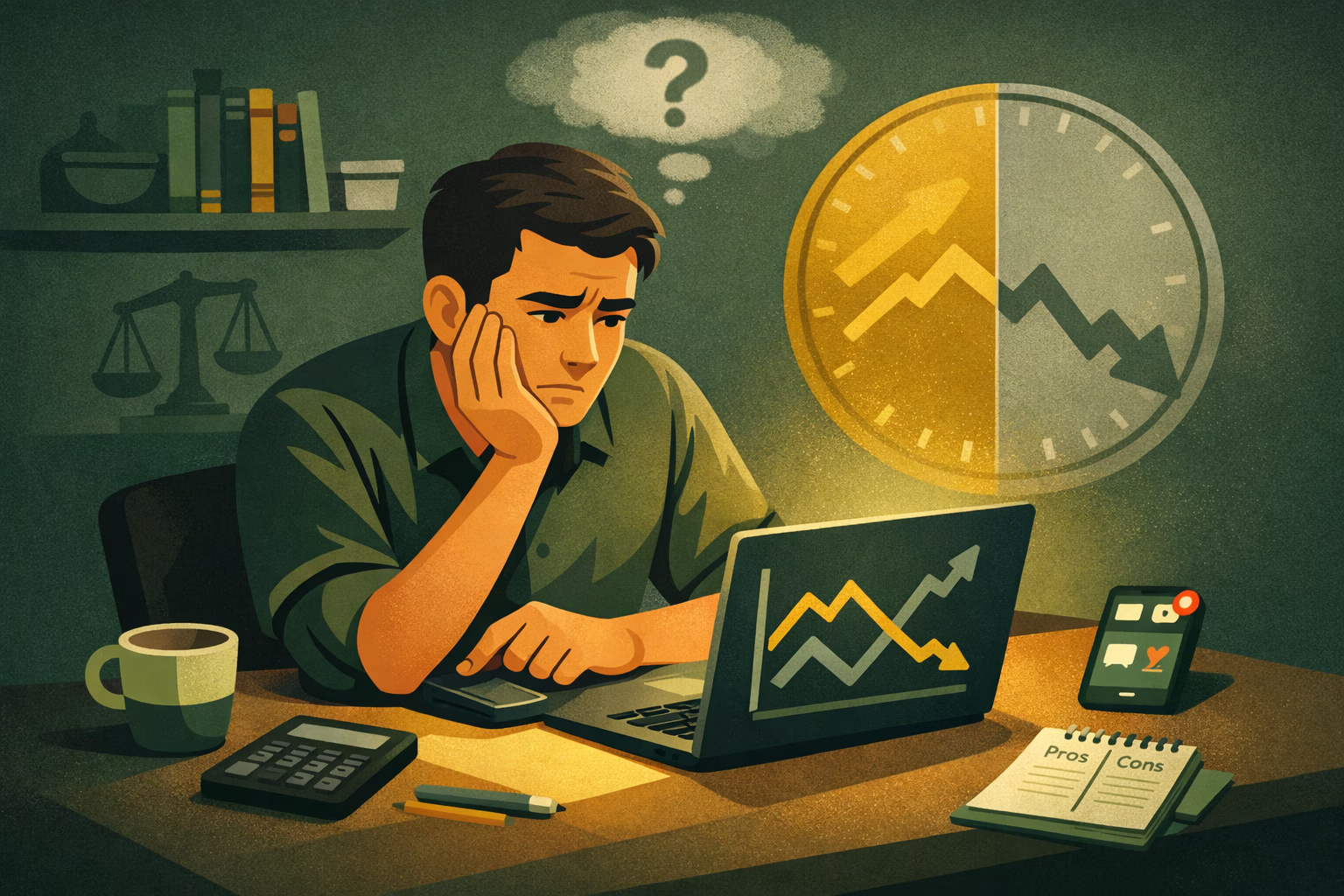
In short: Paralysis by overthinking often looks like “being careful,” but it feels like being pinned in place: researching, comparing, re-checking, and still not landing on a choice. The strange part is that the effort is real.
Paralysis by overthinking often looks like “being careful,” but it feels like being pinned in place: researching, comparing, re-checking, and still not landing on a choice. The strange part is that the effort is real. The brain is working hard—yet nothing completes.
What if the stuckness isn’t a character flaw, but a nervous system trying to prevent an expensive mistake?
In a high-load environment, decision-making can start to behave less like a skill and more like a protective state. The goal quietly shifts from choosing well to avoiding regret, responsibility, or irreversible outcomes. And when closure doesn’t arrive, the system stays activated.
Overthinking paralysis has a particular texture: mental fatigue paired with urgency. You may cycle through options repeatedly, but each pass feels less informative and more draining. Even small choices can start to carry the weight of big ones.
Instead of a clean internal “done” signal, there’s an ongoing sense that more checking is required. That can show up as stalled emails, unfinished purchases, delayed conversations, or an inability to start a project because the “right” approach won’t settle. [Ref-1]
It’s not that you don’t care. It’s that your system can’t find a safe ending point.
Decision circuits work best when the brain can weigh tradeoffs and accept a reasonable level of uncertainty. Under threat activation—social, financial, relational, or reputational—those circuits can narrow. The mind becomes more error-focused, scanning for what could go wrong and trying to preempt it.
Perfection pressure adds a second layer: the choice isn’t just about what works, it becomes a statement about who you are. When the stakes feel identity-sized, the brain treats ordinary ambiguity as risk and keeps generating “one more check” demands. The result is a loop: more analysis, less resolution. [Ref-2]
Humans evolved to pause when information is incomplete. Hesitation can be protective: it buys time, reduces impulsive error, and keeps energy available until the path is clearer. In small, slower environments, the pause usually ends because reality forces completion—resources run out, seasons change, a decision becomes unavoidable.
Modern life can interrupt that natural completion. Options multiply, information is endless, and feedback is continuous. Instead of a bounded decision moment, you get an ongoing stream of “maybe” inputs. The brain’s uncertainty-pause feature is still there—only now it’s being asked to operate in an environment that rarely delivers an endpoint. [Ref-3]
Delaying a decision can temporarily lower nervous system demand. Not choosing can reduce immediate consequence: no commitment, no visible failure, no hard conversation, no finality. In that sense, indecision isn’t “nothing”—it’s a short-term load management strategy.
The catch is that delay often trades short-term relief for prolonged activation. Open loops stay open. The brain keeps the issue tagged as unresolved, ready to re-surface at inconvenient times. This is why procrastinated decisions can feel like they follow you around: the system doesn’t stand down without closure. [Ref-4]
It’s easy to assume that if you think long enough, clarity will arrive. Sometimes it does—especially when the missing piece is real information. But when the missing piece is a guarantee (no regret, no conflict, no loss), thinking can’t deliver it.
As analysis expands, so does the cost: attention fragments, sleep quality can dip, and everyday tasks start to feel heavier. The decision becomes a constant background process. Instead of improving the choice, the extra cognitive load can make every option feel worse—because the chooser is running on strain. [Ref-5]
What if the “need to be sure” is actually a need for a safe ending?
In an avoidance loop, the mind stays busy while life stays paused. Thinking becomes a stand-in for action, conversation, or commitment. It can look like responsibility from the outside—research, lists, contingency plans—while internally the system remains unconvinced that it’s safe to finalize.
This isn’t about laziness or lack of willpower. It’s a structural pattern: the brain keeps generating analysis because analysis feels lower-risk than an irreversible step. Safety becomes defined as “not landing,” and over time, stagnation can masquerade as protection. [Ref-6]
Paralysis tends to repeat in recognizable forms. Not because you’re “the type,” but because the nervous system returns to strategies that reduce immediate consequence and keep options open.
These patterns can be especially intense when decisions involve visibility, belonging, money, or long-term identity (career, relationships, health, parenting). The mind treats them as high-stakes, even when the actual decision is one small move in a longer story.
When a decision stays open for a long time, the brain receives a quiet message: “We can’t land.” Over time that can reduce confidence—not as a belief problem, but as a lived signal. The system learns that choices are hazardous and that completion is costly.
Momentum matters for identity. Repeated non-completion can make you feel less like a person who acts and more like a person who waits. That shift is subtle, but it changes how future decisions feel: heavier, riskier, more loaded with self-evaluation. [Ref-8]
Confidence often isn’t something you think yourself into. It’s something your system registers after repeated completion.
Uncertainty tends to shrink when reality supplies feedback: you choose, you see what happens, you update. Inaction blocks that feedback loop. With no new data from the world, the brain keeps simulating outcomes internally, which can amplify doubt rather than resolve it.
That’s how overthinking becomes self-sustaining. The longer you wait, the more unknowns accumulate: circumstances change, opportunities shift, other people respond, your own needs evolve. The decision doesn’t stay still while you analyze—it grows. And a larger decision naturally feels harder to complete. [Ref-9]
Clarity is not just a mental insight. It often arrives when threat activation decreases enough for the brain to re-access bounded choice-making—where options can be compared, consequences can be tolerated, and “good enough” can register as complete. [Ref-10]
In that state, decisions stop behaving like identity verdicts and start behaving like directions. Not perfect, not final for all time—simply the next coherent step that closes a loop. When closure becomes possible, the mind doesn’t need to keep producing analysis as a substitute for safety.
When did decisions last feel like “a next step” instead of “a test”?
Overthinking often happens in isolation—inside a single nervous system trying to carry all the uncertainty alone. A steady outside perspective can reduce load by making the decision feel socially safer and more containable. It’s not about someone else choosing for you; it’s about your system receiving cues that you’re not alone with the outcome.
Validation can also interrupt perfection pressure. When another person reflects back that a choice can be workable without being flawless, the brain sometimes loosens its grip on total certainty. That shift can restore access to prioritizing, sequencing, and finishing—executive functions that tend to degrade under chronic self-surveillance. [Ref-11]
When cognitive load drops and decisions become more bounded, a different experience often appears: the decision feels proportionate to its true size. It may still matter, but it no longer feels like it determines your worth or your entire future.
People often describe a return of ordinary functioning: choosing meals without exhaustion, answering messages without rewriting, starting tasks without needing the perfect plan, and tolerating small imperfections without reopening the whole question. This is less a mood boost and more a capacity return—your system can complete and move on. [Ref-12]
Relief isn’t the same as integration. Integration shows up as fewer re-opened loops.
When decisions are driven mainly by avoiding regret, the center of gravity is threat. The mind scans for the option that prevents the most pain, protects reputation, or preserves maximum flexibility. That can feel responsible, but it often keeps life from taking shape.
Agency tends to rebuild when decisions are experienced as value-aligned direction setting. Not because values magically erase uncertainty, but because they provide a coherent “why” that can hold steady even when outcomes are imperfect. Over time, choices made from values create a more stable identity signal: “This is the kind of life I’m living.” That coherence reduces the need to keep re-litigating every step. [Ref-13]
Many people get stuck not because they lack intelligence, but because modern life trains the nervous system to treat uncertainty as intolerable. When uncertainty is framed as danger, the mind naturally keeps working—because work feels like control. [Ref-14]
But decision-making is rarely about eliminating the unknown. More often, it’s about choosing a direction that allows reality to respond. Direction creates feedback, feedback creates closure, and closure is what lets the system rest. In that sense, a decision is less a verdict and more a chapter ending—so the next one can begin.
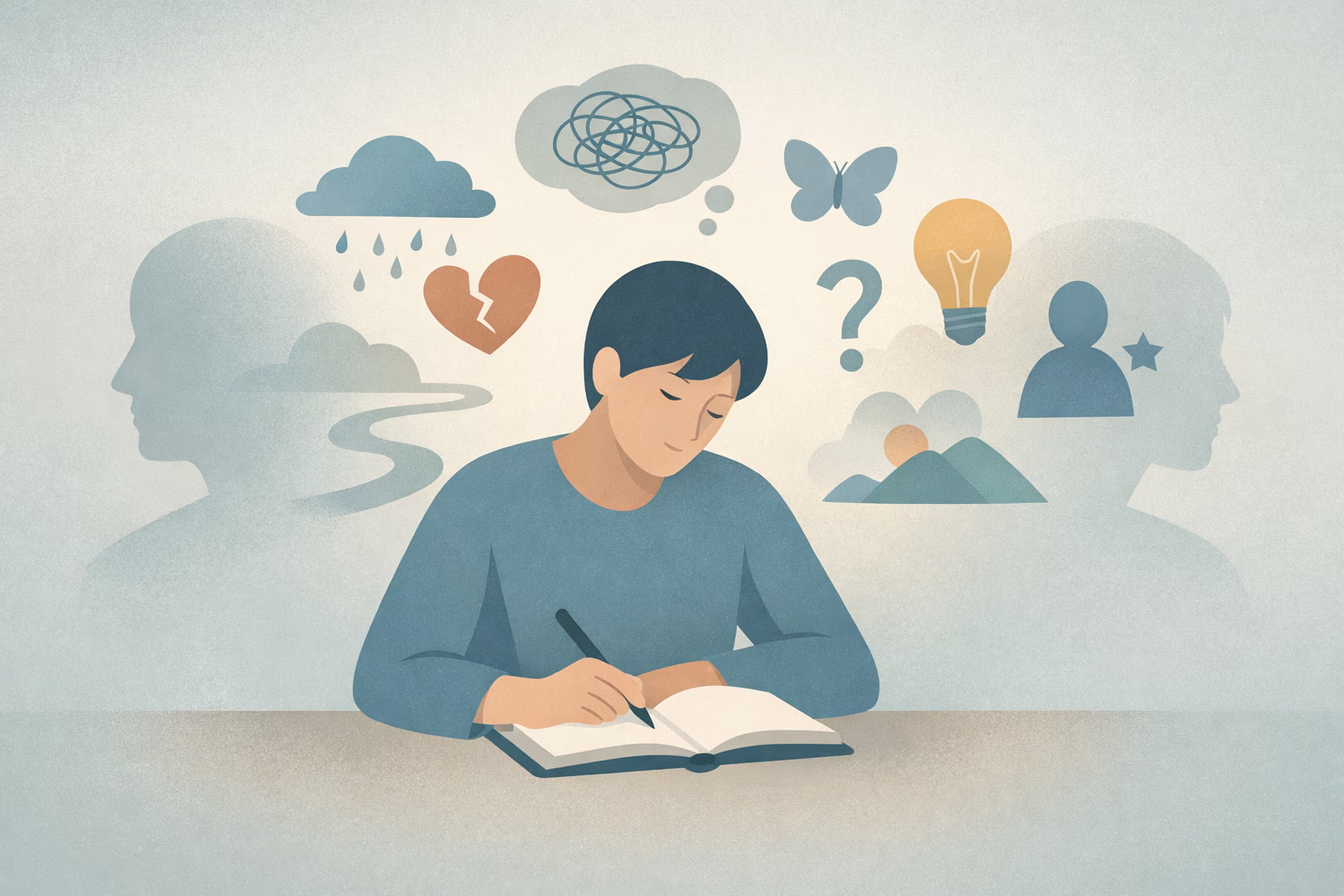
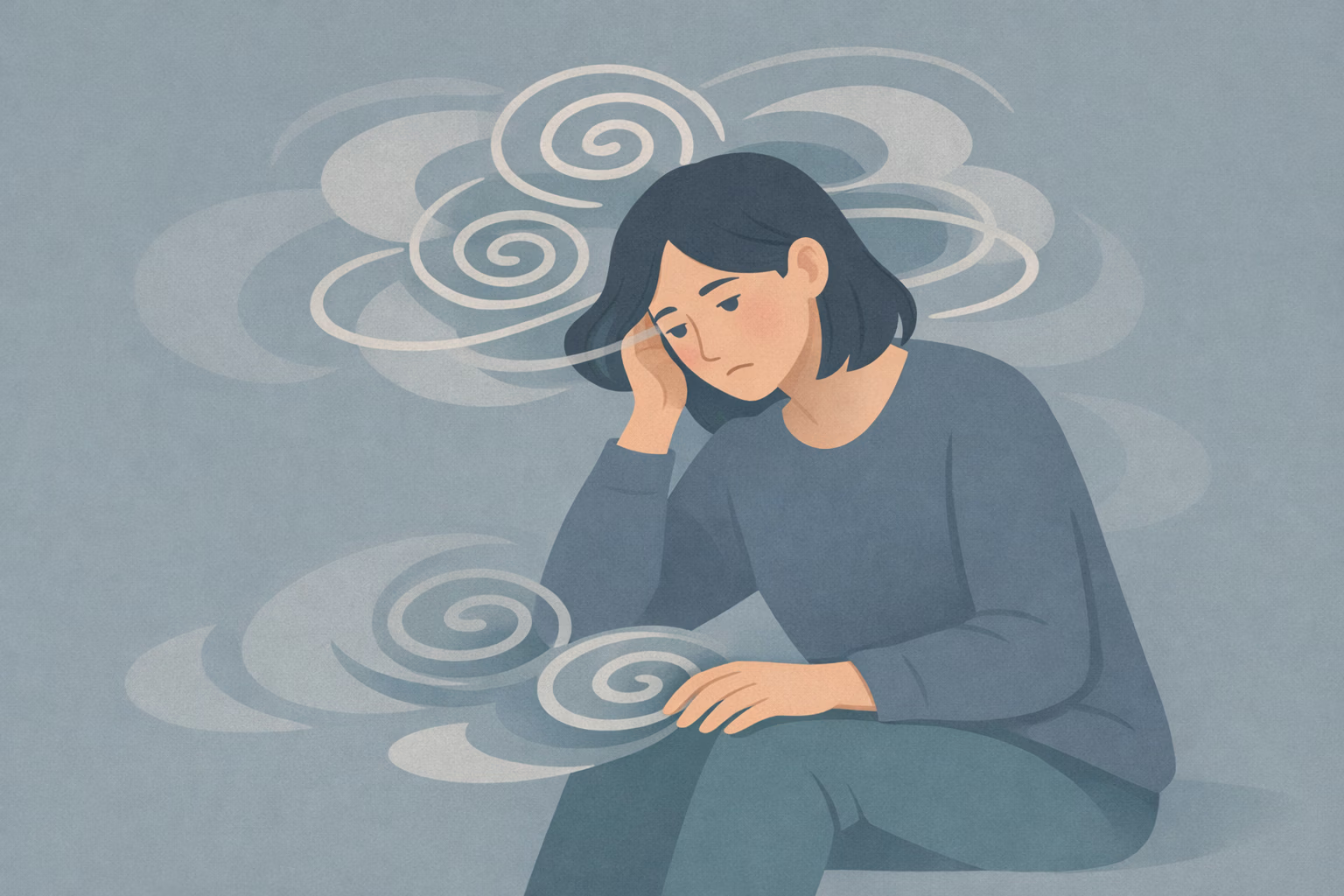
Overthinking can look like a problem of insight, but it often operates like a problem of unfinished loops. The mind keeps turning because the system hasn’t received a “resolved” signal yet.
Perfect certainty is rare in human life, and many nervous systems experience the unknown as especially loud. [Ref-15] Still, meaning often forms the way stability forms: through chosen direction that becomes lived, repeated, and eventually settled. Not because every choice is correct, but because life becomes coherent again when it can actually move.
From theory to practice — meaning forms when insight meets action.
Something else, usually. Paralysis by overthinking has a specific texture: real effort, no completion. The brain works hard, but each pass through the options feels less informative and more draining. Under threat activation — social, financial, relational — decision circuits narrow and the mind becomes error-focused, scanning for what could go wrong. Add perfection pressure and the choice stops being about what works and becomes a statement about who you are. When stakes feel identity-sized, the brain treats ordinary ambiguity as risk and keeps generating 'one more check' demands. That's not lack of discipline. It's a nervous system trying to prevent an expensive mistake.
Because delay temporarily lowers nervous system demand. Not choosing reduces immediate consequence: no commitment, no visible failure, no hard conversation, no finality. Indecision isn't 'nothing' — it's a short-term load management strategy. The catch is that the open loop stays open. The brain keeps the issue tagged as unresolved and re-surfaces it at inconvenient times. Procrastinated decisions follow you around because the system doesn't stand down without closure. So delay trades short-term relief for prolonged activation. Safety becomes redefined as 'not landing,' and over time stagnation can quietly masquerade as protection.
Sometimes — when the missing piece is real information. But often the missing piece isn't information. It's a guarantee: no regret, no conflict, no loss. Thinking can't deliver that. As analysis expands, attention fragments, sleep can dip, and the chooser starts running on strain. The extra cognitive load can make every option feel worse, because you're evaluating from a depleted state. The 'need to be sure' is often actually a need for a safe ending. Decisions are rarely about eliminating the unknown; they're about choosing a direction so reality can respond. Direction creates feedback. Feedback creates closure. Closure is what lets the system rest.
Through completion, not insight. When a decision stays open for a long time, the brain receives a quiet message: 'we can't land.' Repeated non-completion makes you feel less like a person who acts and more like a person who waits, which makes future decisions feel heavier. Confidence isn't usually something you think yourself into — it's something the system registers after repeated completion. Agency tends to rebuild when choices align with values rather than avoidance of regret. Values provide a coherent why that holds steady even when outcomes are imperfect, and that coherence reduces the need to keep re-litigating every step.
From Science to Art.
Understanding explains what is happening. Art allows you to feel it—without fixing, judging, or naming. Pause here. Let the images work quietly. Sometimes meaning settles before words do.
One Quiet Window, one insight, one reflection — every Sunday