

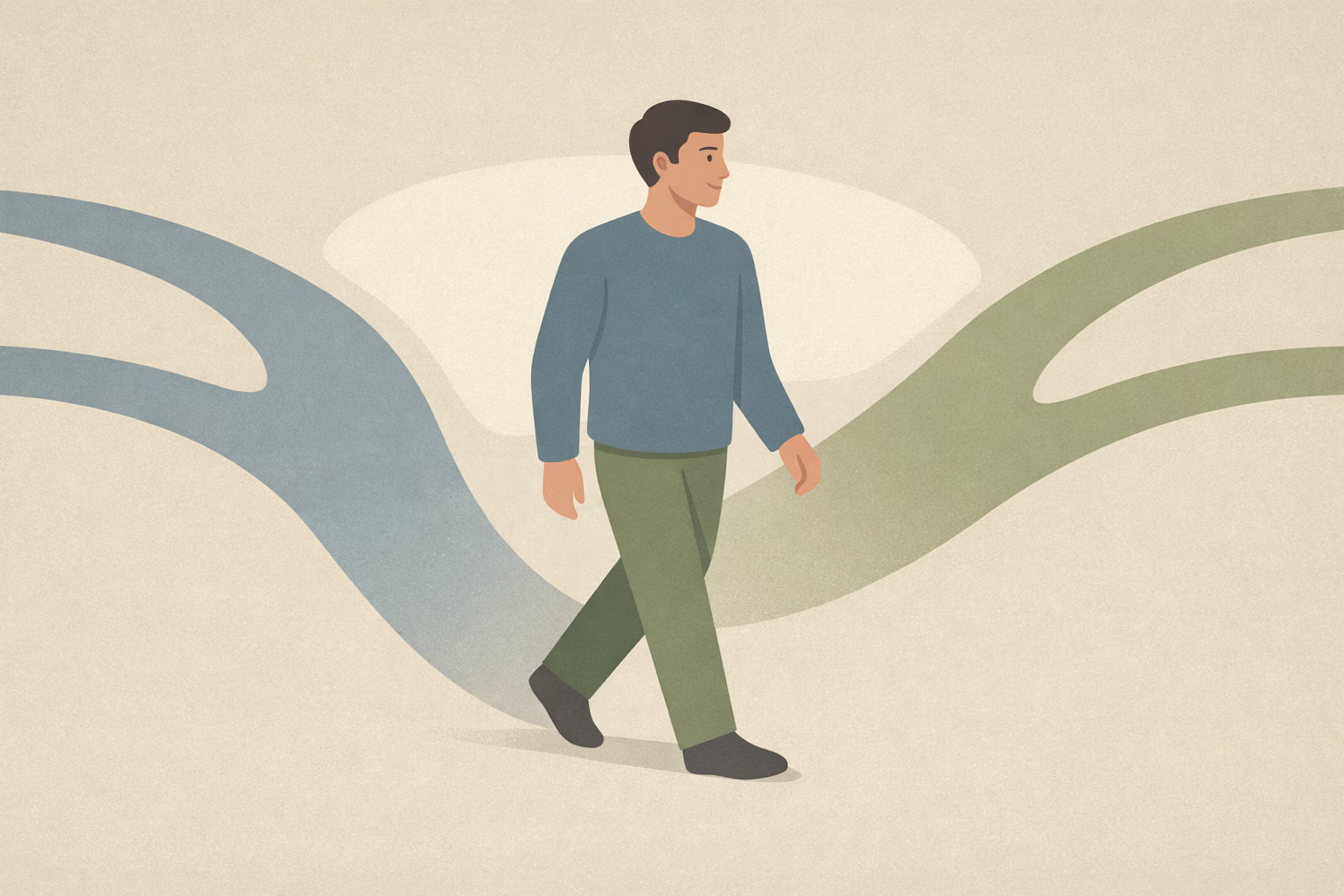
The Neuroscience of Avoidance
Learn why avoidance is neurologically rewarding and how to break the cycle.
In context: No, “Inner Walls Mark Limits, Not Finality.“ In the Meaning Density Model™, a wall is a “Localized Resistance.“ It means this specific path is currently at capacity. It's a “Structural Boundary“ protecting your Identity from over-extension. The wall isn't a permanent stop; it's a sign to “Pivoting“ or “Pause“ so your architecture can settle and expand.

Movement meets an inner wall— not high, not harsh.
It marks a boundary rather than a stop.
You can see beyond it.
This wall helps the body pause without collapsing.
Let the wall be information, not opposition.
Work with limits gently in DojoWell.
Explore DojowellArticles exploring the psychology behind these patterns.
Learn why avoidance is neurologically rewarding and how to break the cycle.

Understand why humans crave control and how it becomes emotionally addictive.

Learn why controlling everything backfires and how internal flexibility reduces suffering.
No, "Inner Walls Mark Limits, Not Finality." In the Meaning Density Model™, a wall is a "Localized Resistance." It means this specific path is currently at capacity. It’s a "Structural Boundary" protecting your Identity from over-extension. The wall isn't a permanent stop; it’s a sign to "Pivoting" or "Pause" so your architecture can settle and expand.
Stop trying to "Scale" it. Move "Sideways" instead. Engage in a different, lower-density activity to let the "Pressure" at the wall dissipate. DojoWell suggests that walls often "Dissolve" when the demand for "Progress" is removed. By respecting the limit, you allow your Safety system to stand down, which eventually makes the wall feel more like a "Door" that you can walk through later.
One Quiet Window, one insight, one reflection — every Sunday