The False Promise of Control: Why Letting Go Matters
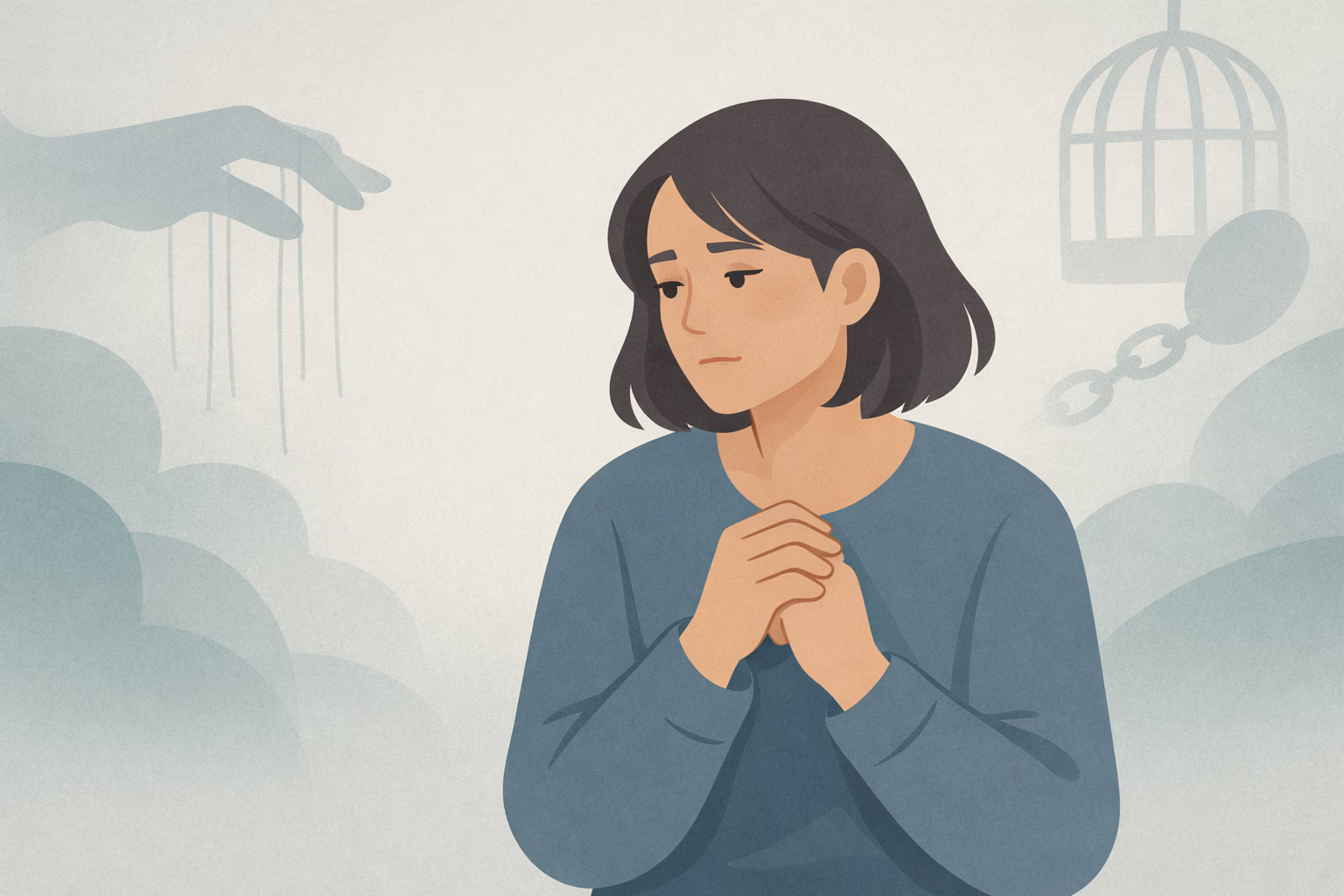
In short: Most people don’t reach for control because they want to be rigid. They reach for it because something in the environment (or inside the body) is registering “not safe yet” and searching for a way to stabilize.
Most people don’t reach for control because they want to be rigid. They reach for it because something in the environment (or inside the body) is registering “not safe yet” and searching for a way to stabilize.
What if the urge to control is less a personality trait—and more a temporary regulation strategy under pressure?
The paradox is that the harder you try to lock life down, the more your system can stay activated. Not because you’re doing it wrong, but because control often reduces uncertainty without creating closure. It changes the moment, but it doesn’t always complete the loop.
One of the strangest experiences is working harder to manage everything while feeling less steady inside. The mind gets busy, the body gets tense, and the day can start to feel like a series of micro-emergencies.
Control can look organized from the outside, but internally it often feels like holding a stack of plates that never quite gets put down. The effort is constant because the “stand down” signal doesn’t arrive. [Ref-1]
Sometimes control isn’t confidence. It’s an attempt to keep the next moment from tipping over.
Excessive control tends to recruit the body’s threat machinery: scanning, bracing, anticipating, correcting. That’s not a moral failure—it’s biology responding to conditions that feel uncertain or high-stakes.
When the nervous system treats uncertainty as danger, even small variables can keep arousal elevated. The effort to eliminate risk becomes its own source of load, keeping attention narrowed and the body prepared for impact rather than recovery. [Ref-2]
Humans evolved to respond to danger with quick decisions and clear hierarchy: what matters now, what gets controlled now, what reduces exposure now. In genuine threat, dominance and certainty can be protective because they simplify the world.
The issue isn’t that this response exists. The issue is that modern life can keep the same circuitry switched on for situations that don’t have a clean ending: ongoing work demands, social evaluation, unpredictable news cycles, financial ambiguity, and relationship complexity.
In that landscape, “more control” can become a default survival posture—useful for short bursts, destabilizing when it becomes a lifestyle. [Ref-3]
Control is not irrational. It often produces an immediate drop in uncertainty: a plan is made, a rule is set, a risk is minimized, a decision is forced. For a moment, the body reads that as increased safety.
But that relief can be state-based rather than completion-based. The system feels better because the noise quiets, not necessarily because the situation has reached closure. When closure is missing, the urge to re-check, re-plan, or re-secure tends to return. [Ref-4]
Have you noticed how control can feel like relief—and still not feel like “done”?
Many of us are taught, directly or indirectly, that stability is earned through tighter management: better discipline, better tracking, better outcomes. That belief makes sense in systems where inputs reliably produce results.
But life is not always that system. When relationships, health, timing, and other people are involved, outcomes remain partially uncontrollable. In those conditions, escalating control can create a mismatch: the more you try to force certainty, the more evidence you collect that certainty can’t be guaranteed—so the system doubles down. [Ref-5]
This is where suffering often intensifies: not from the original uncertainty alone, but from the endless labor of trying to erase it.
A useful way to understand the pattern is as a loop: pressure rises → the body mobilizes → control increases → uncertainty returns → pressure rises again. Over time, control stops being a tool and becomes the primary way the system tries to regulate itself.
In that loop, the mind often becomes a control-room: forecasting, correcting, rehearsing, policing. The body stays on call. The goal isn’t meaning or direction; it’s containment.
And because containment doesn’t equal closure, the loop keeps running—often with growing effort for shrinking relief. [Ref-6]
When control becomes a primary regulator, it tends to narrow life into what can be monitored and managed. The system prefers what is measurable, enforceable, or predictable—even if it costs spontaneity and ease.
Common expressions aren’t “symptoms” so much as adaptive shapes the nervous system takes under sustained uncertainty:
Notice what ties these together: each one aims to reduce variables and prevent surprise. [Ref-7]
Control is metabolically and psychologically expensive. When the system must constantly supervise, it has less capacity for play, exploration, and relational ease—the very states that naturally restore regulation.
Over time, high control can flatten options: you choose what’s safest, not what’s most meaningful. You repeat what’s proven, not what’s alive. Even rest can become another project to manage.
Perfectionism often enters here—not as vanity, but as an attempt to build an error-proof life in a world that doesn’t offer that contract. The body may stay tense because the standard for “safe enough” keeps moving. [Ref-8]
As demands rise, the nervous system looks for strategies that have worked before. If control once produced relief, it becomes the obvious lever to pull again. The problem is that repeated pulling can sensitize the system: it learns that safety depends on constant management.
In practical terms, pressure can compress time and reduce tolerance for iteration. Anything unfinished can feel intolerable, even if it’s normal. The result is a tightening cycle: increased standards, increased monitoring, increased urgency—followed by more activation when outcomes remain uncertain. [Ref-9]
When everything feels high-stakes, the system starts treating “not perfect” as “not safe.”
There’s a quiet reframing available here: internal safety often comes less from controlling outcomes and more from restoring conditions where the body can register completion. That is not the same as “thinking positively” or understanding the pattern. Integration is what happens when loops genuinely finish—when the system receives enough evidence that it can stand down.
Flexibility grows when the nervous system stops needing constant proof. In that state, uncertainty can exist without automatically requiring domination. The mind can plan without bracing, and effort can serve values rather than threat management. [Ref-10]
What changes when control stops being a shield and becomes a choice?
Control often intensifies in isolation. When it feels like everything depends on you, your system behaves accordingly: it tightens, monitors, and attempts to prevent loss.
Shared agency—feeling that other people, structures, or relationships can carry part of the load—changes the math. Trust is not naïveté; it’s a safety cue. When coordination is real, the nervous system doesn’t have to maintain full surveillance.
This is one reason relational balance matters so much: not because it fixes you, but because it changes the conditions your body is responding to. [Ref-11]
Calm is often described as a feeling, but it’s also a capacity: the ability to allow incomplete information without immediate tightening. When that capacity returns, the system can wait, adapt, and revise without treating every unknown as an alarm.
Research on intolerance of uncertainty consistently links heightened uncertainty sensitivity with anxious arousal and coping patterns aimed at closing gaps quickly. [Ref-12] When uncertainty becomes more tolerable, regulation looks less like urgency and more like responsiveness.
In lived experience, this can feel like:
Excessive control often organizes life around threat: avoid mistakes, prevent discomfort, guarantee outcomes. But meaning organizes life around direction: what you’re here for, what you stand for, what kind of person you are becoming through real-world contact.
When the system is less busy preventing every possible negative outcome, values can become legible again. Identity steadies not through intensity, but through coherence—when actions can settle into “this is how I live,” rather than “this is how I prevent disaster.”
Uncertainty doesn’t disappear, but it stops being the central authority. And because intolerance of uncertainty can amplify anxiety and depressive load, reducing the need for certainty can be a meaningful stabilizer over time. [Ref-13]
“Letting go” is often misread as passivity. In a nervous-system frame, it can be something else: reducing the extra layer of management that keeps the body on call. It’s a shift from constant prevention to enough safety for the system to register what has already been handled.
Uncertainty is a normal condition of being alive, and it can be stressful even for healthy systems. What helps most, over time, is not endless effort but the gradual return of internal cues of safety, closure, and agency. [Ref-14]
When life contains more true endings—more moments that get to be complete—control stops needing to do so much work.
The impulse to control is often a sincere attempt to protect what matters. Under enough strain, it can become the only language the nervous system trusts.
But life usually gets easier when orientation replaces domination—when your system can settle, your choices can align with what matters, and the day can contain real closure. That’s not a personality upgrade. It’s a return of coherence. [Ref-15]
From theory to practice — meaning forms when insight meets action.
Because excessive control recruits the body's threat machinery — scanning, bracing, anticipating, correcting. That's not a moral failure; it's biology responding to conditions that feel uncertain. When the nervous system treats uncertainty as danger, even small variables keep arousal elevated. The effort to eliminate risk becomes its own source of load, keeping attention narrowed and the body prepared for impact rather than recovery. Control can look organized from the outside but internally feels like holding a stack of plates that never quite gets put down. Sometimes control isn't confidence — it's an attempt to keep the next moment from tipping over.
Through self-reinforcing repetition: pressure rises, the body mobilizes, control increases, uncertainty returns, pressure rises again. Over time, control stops being a tool and becomes the primary way the system tries to regulate itself. The mind becomes a control-room — forecasting, correcting, rehearsing, policing — and the body stays on call. The goal isn't meaning or direction; it's containment. The Power Loop here is protective, not malicious. But containment doesn't equal closure, so the loop keeps running with growing effort for shrinking relief. Repeated pulling sensitizes the system, which learns that safety depends on constant management.
Because as demands rise, the nervous system reaches for strategies that worked before. If control once produced relief, it becomes the obvious lever to pull again. Pressure also compresses time and reduces tolerance for iteration — anything unfinished can feel intolerable, even when it's normal. The result is a tightening cycle: increased standards, increased monitoring, increased urgency, followed by more activation when outcomes remain uncertain. When everything feels high-stakes, the system starts treating not perfect as not safe. That's how perfectionism enters — not as vanity, but as an attempt to build an error-proof life in a world that doesn't offer that contract.
No. Letting go is about reducing the extra layer of management that keeps the body on call. It's a shift from constant prevention to enough safety for the system to register what has already been handled. Internal safety often comes less from controlling outcomes and more from restoring conditions where the body can register completion. Flexibility grows when the nervous system stops needing constant proof. Shared agency helps too — feeling that other people, structures, or relationships can carry part of the load is a real safety cue. Trust isn't naïveté; it changes the math the body is responding to. Effort can serve values rather than threat management.
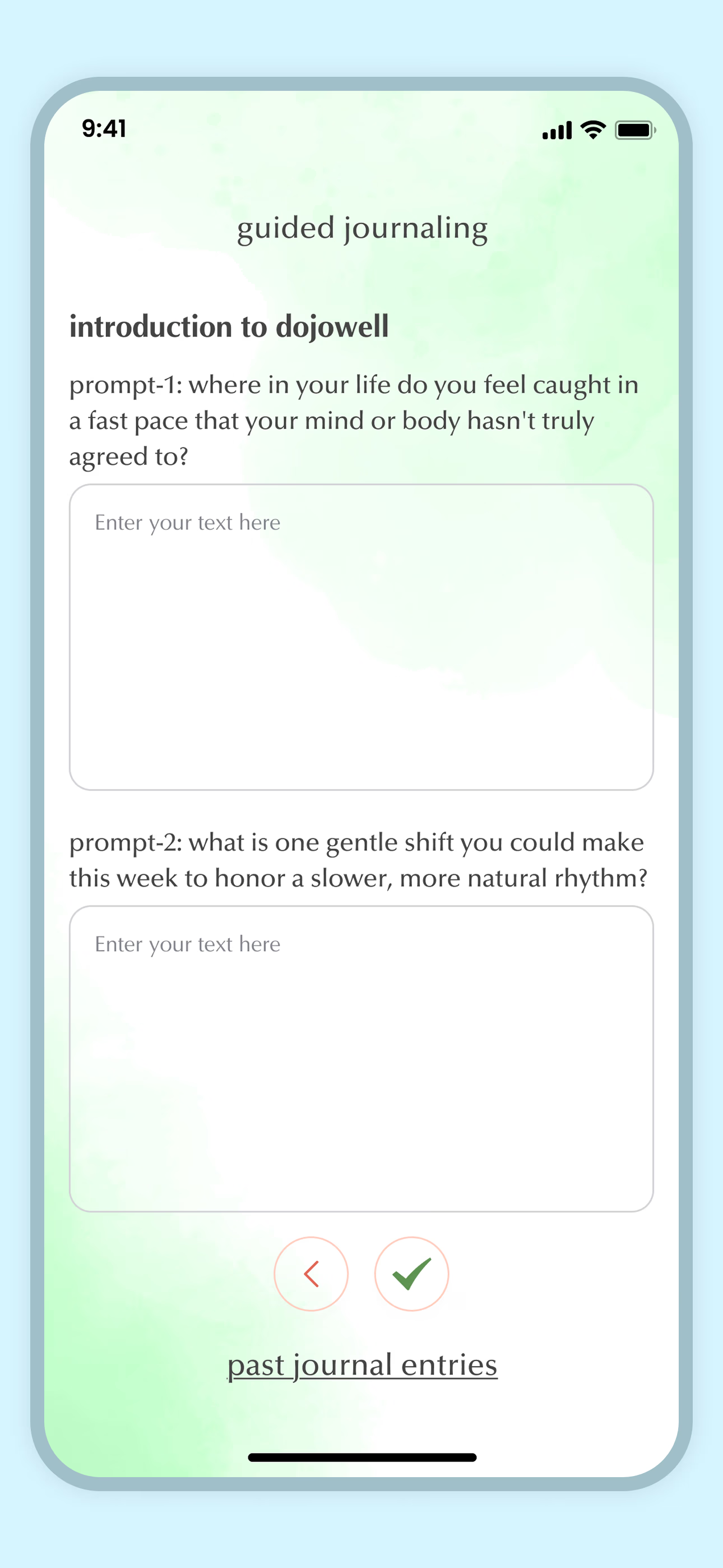
From Science to Art.
Understanding explains what is happening. Art allows you to feel it—without fixing, judging, or naming. Pause here. Let the images work quietly. Sometimes meaning settles before words do.
One Quiet Window, one insight, one reflection — every Sunday