Emotional Numbing Patterns & Escape
Learn subtle numbing patterns and why they appear.
In context: Staying with the absence prevents the “pursuit loop“—the exhausting cycle of trying to force yourself to feel something. When you sit with the absence, you are telling your Threat & Safety system that “nothingness“ is not a danger. This builds “meaning capacity.
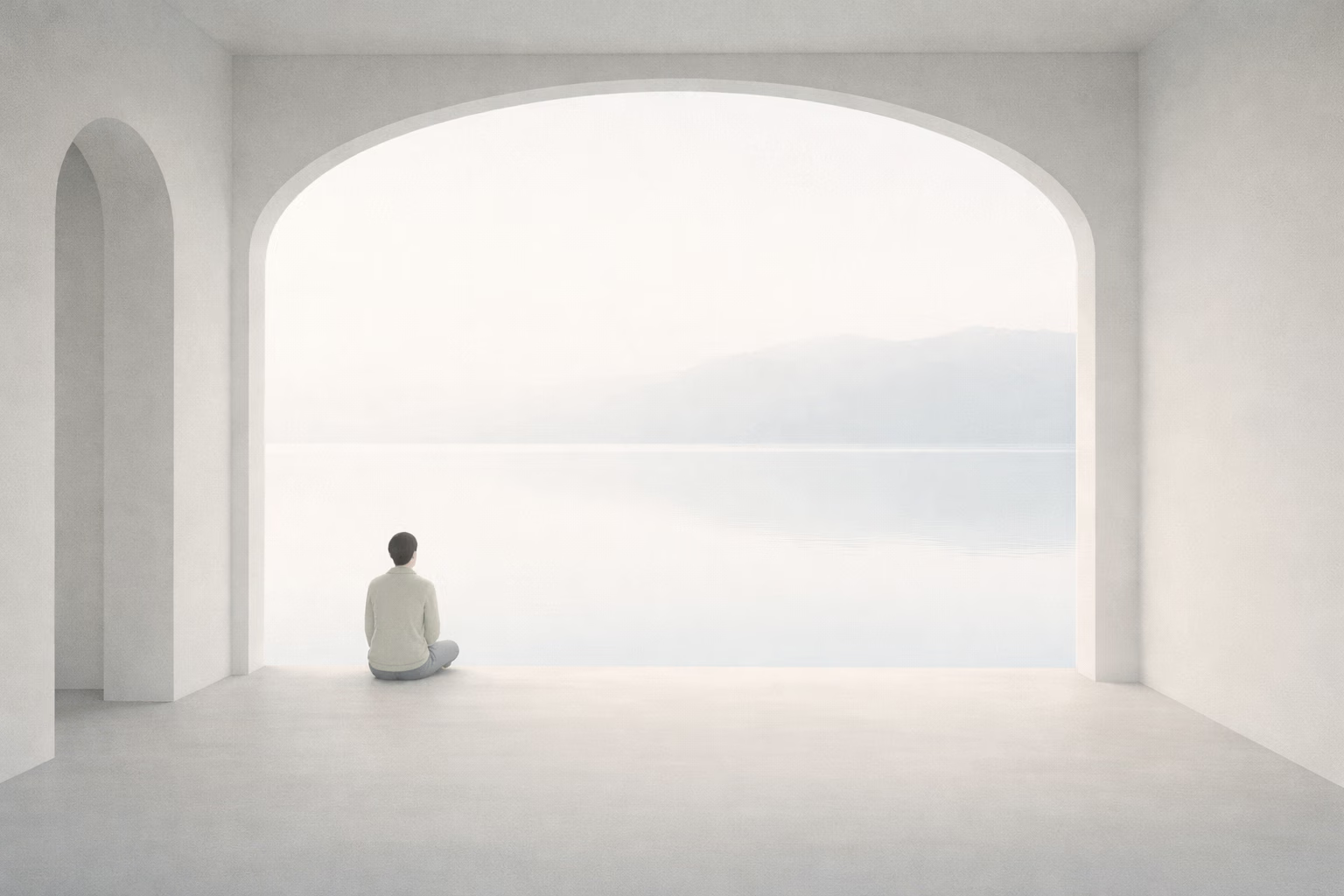
Absence can be met without panic.
Nothing rises, nothing falls, and that is okay.
The surface stays smooth because the system needs calm, not stimulation.
Resist the urge to disturb the water just to prove it moves.
Stillness held gently becomes capacity.
Over time, sensation returns not as a surge, but as a ripple.
Tolerance grows when absence is allowed to stay without threat.
Build tolerance for non-feeling safely with DojoWell.
Explore DojowellArticles exploring the psychology behind these patterns.
Staying with the absence prevents the "pursuit loop"—the exhausting cycle of trying to force yourself to feel something. When you sit with the absence, you are telling your Threat & Safety system that "nothingness" is not a danger. This builds "meaning capacity." By not rushing toward the next sensation, you allow your internal integrator to clear the backlog of incomplete experiences, eventually making room for higher-density feelings that actually stick to your identity.
Yes. Rushing creates a "pressure loop." When you demand sensation, you activate the Status & Control system (judging your progress) and the Threat system (fearing the void). This internal friction actually reinforces the need for the system to stay numb as a defense against the pressure you are putting on yourself. By letting go of the need for immediate sensation, you lower the internal "noise" and allow your nervous system the quiet it needs to safely reboot.
One Quiet Window, one insight, one reflection — every Sunday