Fear-Based Decisions: How Anxiety Shapes Your Choices
In short: Emotional safety is often described as something a relationship gives you, a childhood either provided or didn’t, or a mood you should be able to “get back” once life calms down. But for many people, the confusing part is this: circumstances can look stable, supportive, even successful—while the inside still feels reactive, guarded, or strangely fragile.
Emotional safety is often described as something a relationship gives you, a childhood either provided or didn’t, or a mood you should be able to “get back” once life calms down. But for many people, the confusing part is this: circumstances can look stable, supportive, even successful—while the inside still feels reactive, guarded, or strangely fragile.
What if that inner insecurity isn’t a personal flaw, but a nervous system doing its job under incomplete closure?
From a meaning-based perspective, emotional safety isn’t about feeling positive all the time. It’s a biologically grounded sense that your signals can rise, be met, and then return—without needing constant scanning, proving, or bracing. When that return doesn’t happen reliably, the system compensates. And those compensations can start to look like “you,” even when they’re really a response to load and fragmentation.
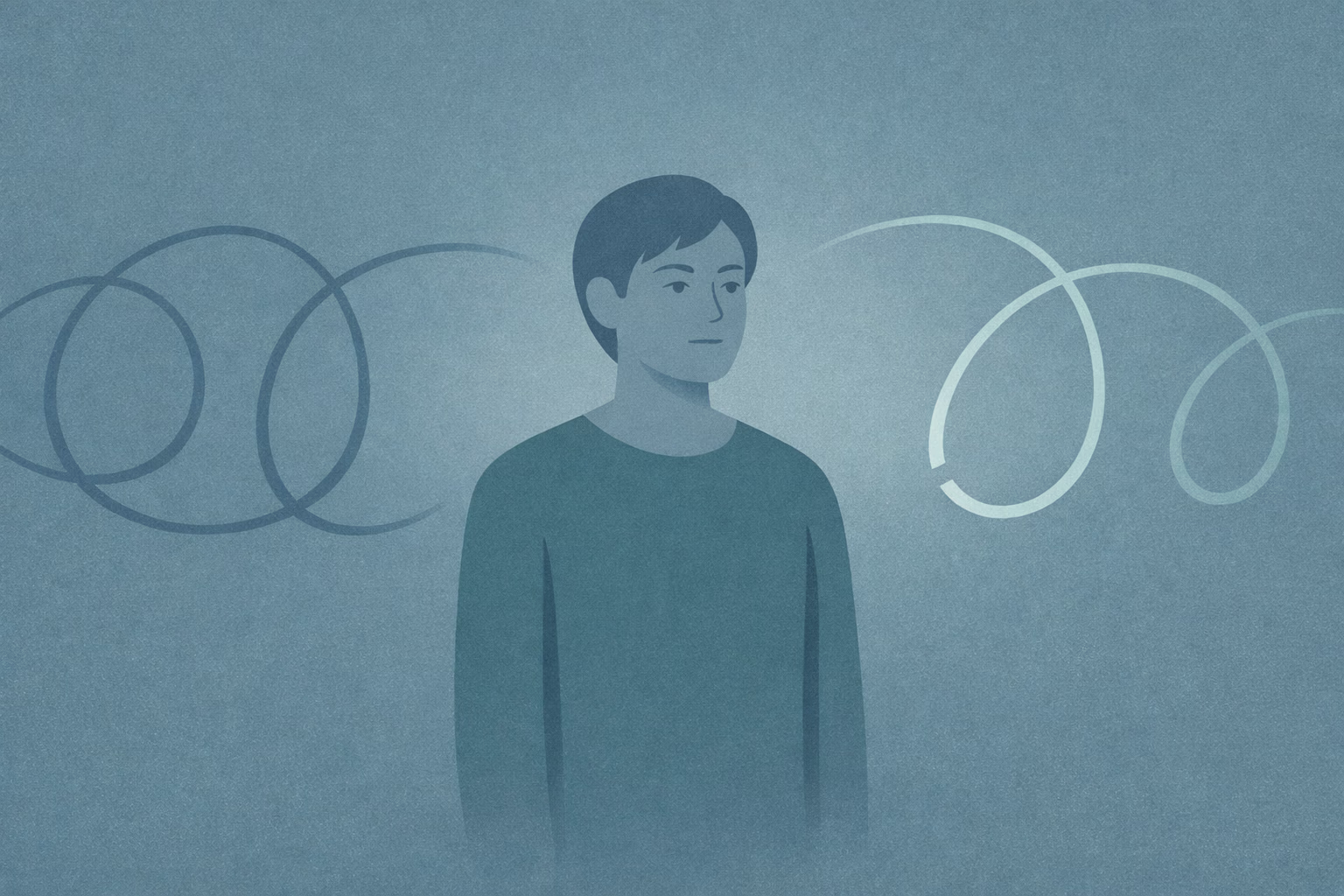
Many people can name a familiar mismatch: the calendar is manageable, the relationship is “good,” the job is okay, and yet the body stays on alert. Small cues land as big threats. Neutral silence feels loaded. A minor mistake feels like it could cost belonging.
This often comes with strategies that seem contradictory—wanting closeness but also keeping distance, craving reassurance but feeling irritated by it, appearing composed while internally tracking everything. These are not personality defects. They’re regulatory solutions when internal safety signals don’t arrive consistently. [Ref-1]
Sometimes the hardest part isn’t what’s happening—it’s that your system won’t stand down even when it’s safe enough.
Humans don’t generate safety purely through thought. Safety is a pattern of cues—tone of voice, predictability, repair after rupture, being met when you signal—that teaches the nervous system what “settled” feels like. Over time, those experiences become an internal template: not a belief, but a readiness to downshift. [Ref-2]
When that template is unreliable, the system leans toward hypervigilance (staying ready), hypo-attunement (not noticing signals until they’re loud), or control (trying to prevent surprise). The issue is less “you aren’t self-aware” and more “your body isn’t receiving enough completion signals to safely disengage.” In that state, self-attunement can be muted—not by choice, but by load.
For most of human history, safety was not an individual project. It was a social and environmental condition: a group, a shelter, a predictable rhythm of contact and protection. Our biology evolved to treat relational cues as primary data. [Ref-3]
That makes vulnerability inherently “expensive.” If closeness could mean rejection, ridicule, or withdrawal, the nervous system learns to keep options open: to stay watchful, to limit exposure, to manage impressions. In modern life, we often ask ourselves to feel internally secure while living with fewer stable cues—more mobility, more performance pressure, and more intermittent connection. The system is not broken for struggling with that; it is responding to the conditions it’s in.
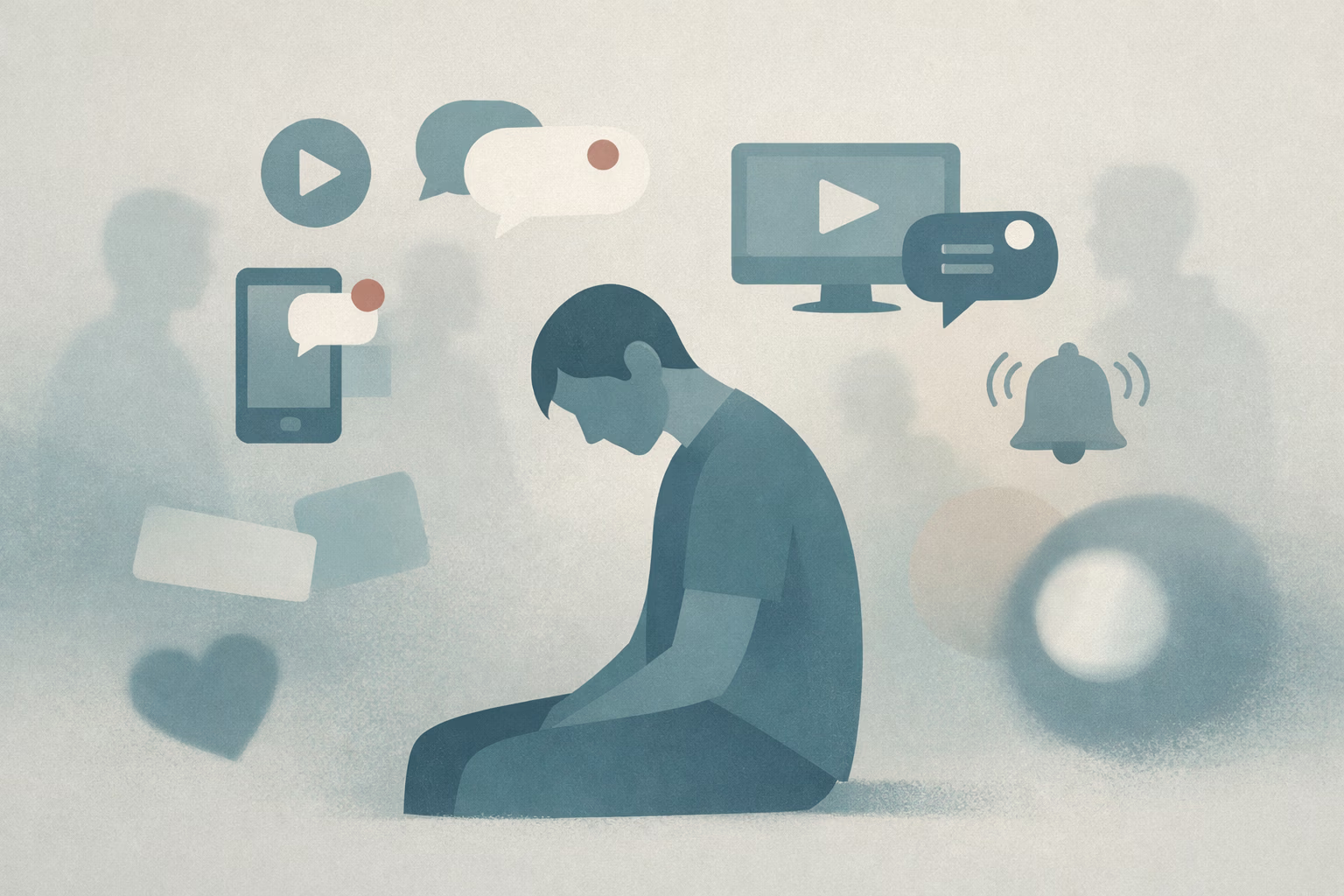
When internal safety signals are thin, external strategies can create rapid relief. Getting a reassuring text, checking a metric, rehearsing the conversation, perfecting the plan—these can quiet threat activation for a moment. The nervous system interprets the drop in uncertainty as “safer,” even if nothing truly completed. [Ref-4]
Similarly, keeping distance—staying pleasant but not fully reachable, avoiding the topic, switching to competence—can reduce exposure and lower immediate risk. This isn’t best understood as “fear of intimacy.” It’s a structural workaround: reducing the number of open loops that could end in pain, ambiguity, or loss of standing.
Relief changes state. Stability changes capacity.
Relief is what happens when a threat signal drops—when uncertainty reduces, when you get an answer, when you avoid a hard interaction. It’s real, and it can be protective. But it doesn’t necessarily build the internal conditions that allow the nervous system to settle without constant management.
Lasting stability is more like a “done signal”: experiences that reach completion and become usable as orientation. In early development, repeated cycles of needing, signaling, being met, and returning to baseline help build this capacity. [Ref-5] When those cycles are interrupted—by inconsistency, high stress, or chronic misattunement—the body may learn that standing down is risky, even when the mind says it’s fine.
Emotional insecurity can become a combined loop: avoidance reduces exposure, and power (control, certainty, management) reduces ambiguity. In the short term, this can look functional—less conflict, fewer surprises, more control over outcomes. But it also keeps the system dependent on external conditions to feel okay. [Ref-6]
In this loop, “safety” starts to mean: no hard feelings, no unpredictability, no disapproval, no misunderstandings. The nervous system isn’t chasing comfort; it’s chasing closure. Without closure, it keeps recruiting strategies that minimize risk, even if those strategies shrink the space where real security could form.
What if the goal isn’t to feel invulnerable—but to have enough internal support that signals can move through and resolve?
When internal safety is low, your system may adopt patterns that make sense for preserving connection and reducing threat load. These patterns can look like “issues,” but they often function as stabilizers.
These aren’t identities. They’re regulatory styles—often developed under real constraints—trying to make life livable with the resources available.
When the nervous system stays on guard, the cost isn’t only discomfort. It’s coherence. Over time, you can feel less sure what you want, what you believe, or what counts as “enough,” because so much attention is allocated to scanning and managing.
Relationally, depth can be hard not because you “can’t do intimacy,” but because depth requires slack—room for misunderstandings, repair, and slow trust-building. Under chronic activation, the system prioritizes immediate risk reduction over long-range integration. Polyvagal-informed models describe how safety cues support social engagement and flexibility, while threat states narrow options and increase defensive organization. [Ref-8]
When safety is scarce, even good things can feel like they require maintenance instead of being allowed to land.
If safety is mostly achieved through external management, internal signals don’t get the chance to complete their natural arc. The body learns: “I calm down when the environment changes,” not “I can return when the moment resolves.” That can create a sense of fragility—like one wrong cue could undo you.
This is less about lacking insight and more about lacking repeated “return to baseline” experiences under manageable load. When activation doesn’t resolve, the system updates its predictions: stay ready, keep scanning, don’t fully exhale. Over time, that prediction can feel like your personality. But it’s a learned posture of protection. [Ref-9]
Emotional safety tends to rebuild through experiences that are slow enough, rhythmic enough, and consistent enough for the nervous system to register: “This is not escalating.” In polyvagal-informed approaches, cues like regulated breath, gentle movement, steady cadence, and warm social tone are understood as inputs that support the social engagement system and reduce defensive load. [Ref-10]
This isn’t about “thinking your way” into safety. It’s about conditions that allow the body to re-learn return: moments where sensation, attention, and environment align long enough for settling to occur. Importantly, understanding your pattern is not the same as integration. Integration is what it looks like when a loop completes—when your system no longer has to keep re-solving the same threat because it has a reliable stand-down pathway.
Safety often arrives as a capacity to come back—not as a guarantee that nothing hard will happen.
Internal safety is personal, but it’s not purely private. Humans learn regulation in relationship: through being seen accurately, responded to consistently, and repaired with after rupture. Over time, those experiences become internalized as a steadier baseline—an expectation that disconnection can be addressed rather than endured. [Ref-11]
Attuned relationships act like mirrors that don’t distort. Not because they constantly reassure you, but because they offer predictable contact: they can hold complexity without punishment, and they can return after strain. In that context, your system gets evidence that it doesn’t have to manage every variable alone.
When internal safety becomes more available, the shift is often practical. You may still notice threat cues, but you’re less governed by them. There’s more room between stimulus and response, not because you’re forcing restraint, but because the body expects return.
People often describe:
In attachment terms, this reflects an updating of the internal working model—where closeness is less synonymous with danger, and repair feels more plausible. [Ref-12]
When emotional safety is more established, agency becomes simpler. Not louder. Not more intense. Simpler.
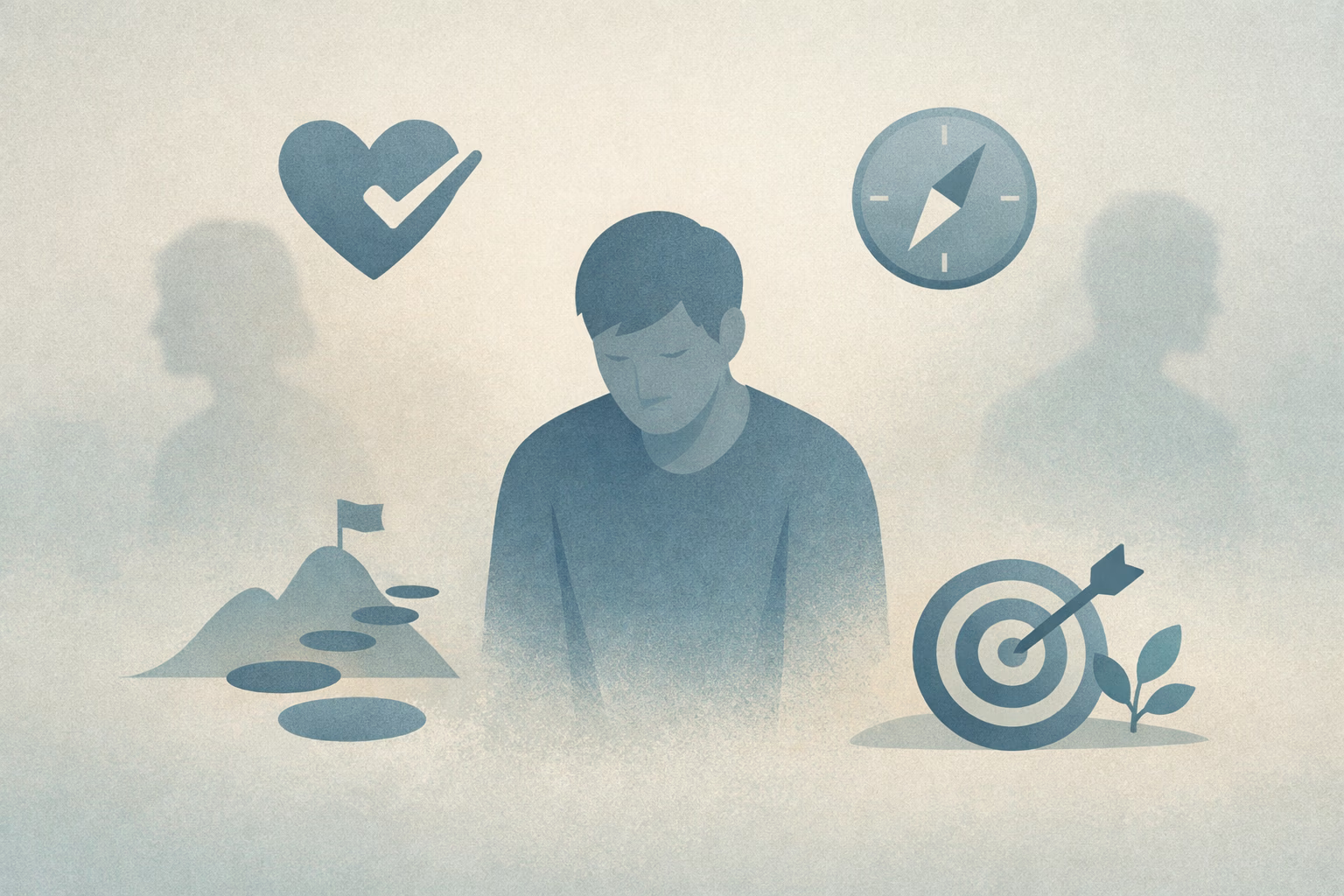
That’s because values can function as orientation only when the system isn’t constantly spending energy on threat management. With more internal security, choices can be guided by what matters rather than what will prevent discomfort in the next hour. You may find it easier to act in ways that align with your identity—even when outcomes aren’t fully controllable—because your nervous system trusts it can return. [Ref-13]
Coherence feels like moving from “How do I avoid the wrong thing?” to “What kind of person am I being here?”
If you’ve struggled to feel secure inside yourself, it doesn’t mean you’re broken or “too sensitive.” It can mean your system has been carrying unfinished relational and physiological loops—without enough consistent conditions for completion.
Seen this way, emotional insecurity becomes informative. It points to where safety has been outsourced to reassurance, performance, control, or distance—and where your body may still be waiting for reliable return cues. Lasting safety is often learned over time through attunement, consistency, and experiences that finally get to end. [Ref-14]
Emotional safety isn’t the absence of difficulty. It’s the presence of enough internal and relational support that your system can settle after activation—and your life can feel coherent again.
When safety is available, identity becomes less of a defense and more of an orientation. That’s when meaning has somewhere to live: not as motivation you must manufacture, but as a stable sense of who you are and what matters, carried by a nervous system that knows how to return. [Ref-15]
From theory to practice — meaning forms when insight meets action.
Because emotional safety isn't a mood — it's a biologically grounded sense that signals can rise, be met, and return without constant scanning, proving, or bracing. When the body's internal template for "settled" is unreliable, the system leans toward hypervigilance, hypo-attunement, or control. The issue isn't lack of self-awareness; it's that the body isn't receiving enough completion signals to safely disengage. Circumstances can look stable, supportive, even successful, while the inside still feels reactive or fragile. The Threat & Safety System won't stand down even when conditions are objectively safe enough.
Because reassurance changes state; stability changes capacity. Getting a kind text, a clear answer, or avoiding a hard interaction reduces threat signals momentarily. The system reads it as safer, even if nothing truly completed. But relief doesn't necessarily build the internal conditions that allow the nervous system to settle without constant management. Lasting stability is more like a Done Signal — experiences reaching completion and becoming usable as orientation. When that learning is interrupted by inconsistency or chronic misattunement, the body learns that standing down is risky, and external strategies can't substitute for internal return.
Often yes. Hypervigilance, self-doubt, avoiding emotional closeness, reassurance-seeking, chronic urgency — these aren't identities or character flaws. They're regulatory styles a system adopts to preserve connection and reduce threat load. Hypervigilance tracks tone and micro-shifts to prevent surprise. Self-doubt keeps your stance flexible so you don't lose belonging by being "wrong." Avoiding closeness limits exposure to uncertain outcomes. Each pattern was developed under real constraints, trying to make life livable with the resources available. Calling them defects misses what they were doing for you.
Through experiences slow enough, rhythmic enough, and consistent enough for the nervous system to register: "this is not escalating." Cues like regulated breath, steady cadence, warm social tone, and reliable repair after rupture support the social engagement system and reduce defensive load. This isn't thinking your way to safety — it's letting the body re-learn return. Attuned relationships act as mirrors that don't distort, offering predictable contact that holds complexity without punishment. Over time, the internal working model updates: closeness becomes less synonymous with danger, repair feels more plausible, and safety arrives as the capacity to come back rather than a guarantee that nothing hard will happen.
From Science to Art.
Understanding explains what is happening. Art allows you to feel it—without fixing, judging, or naming. Pause here. Let the images work quietly. Sometimes meaning settles before words do.
One Quiet Window, one insight, one reflection — every Sunday